




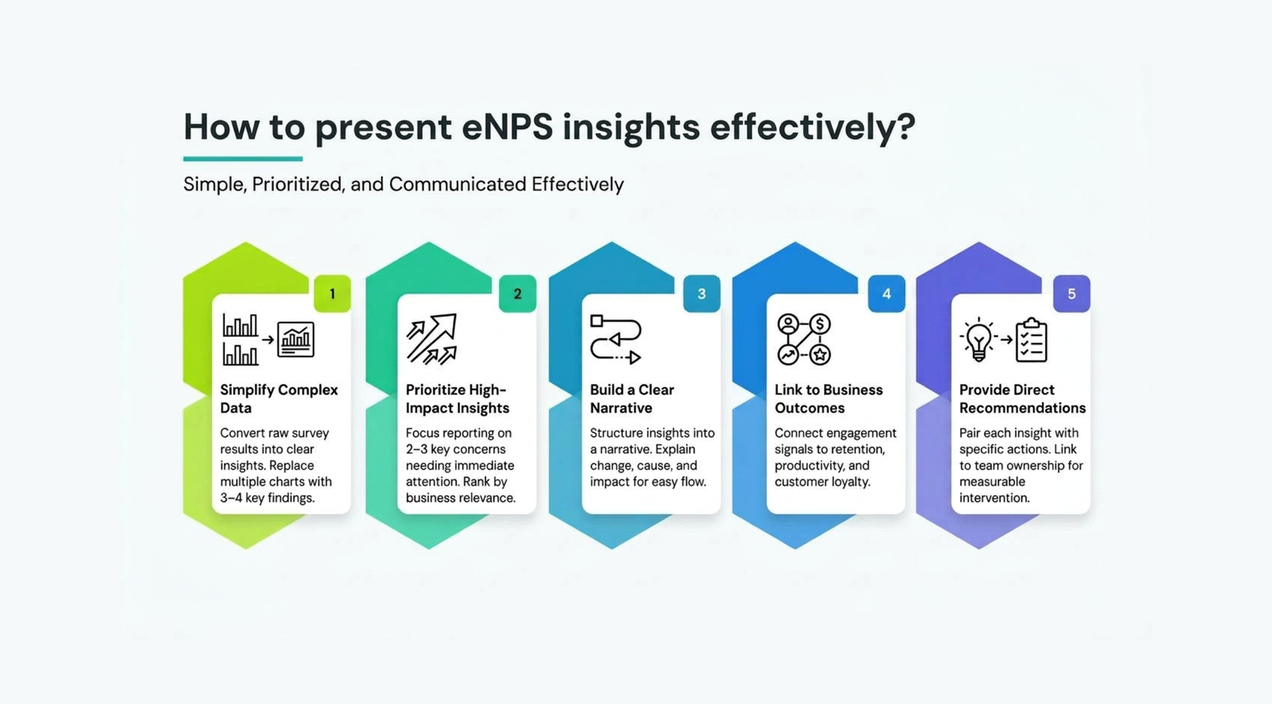
How to present eNPS reporting to leadership?
eNPS reporting matters because leadership needs structured, decision-ready insights. Net promoter scores, including eNPS, are used to benchmark engagement levels and track trends, providing valuable context for interpreting employee sentiment.
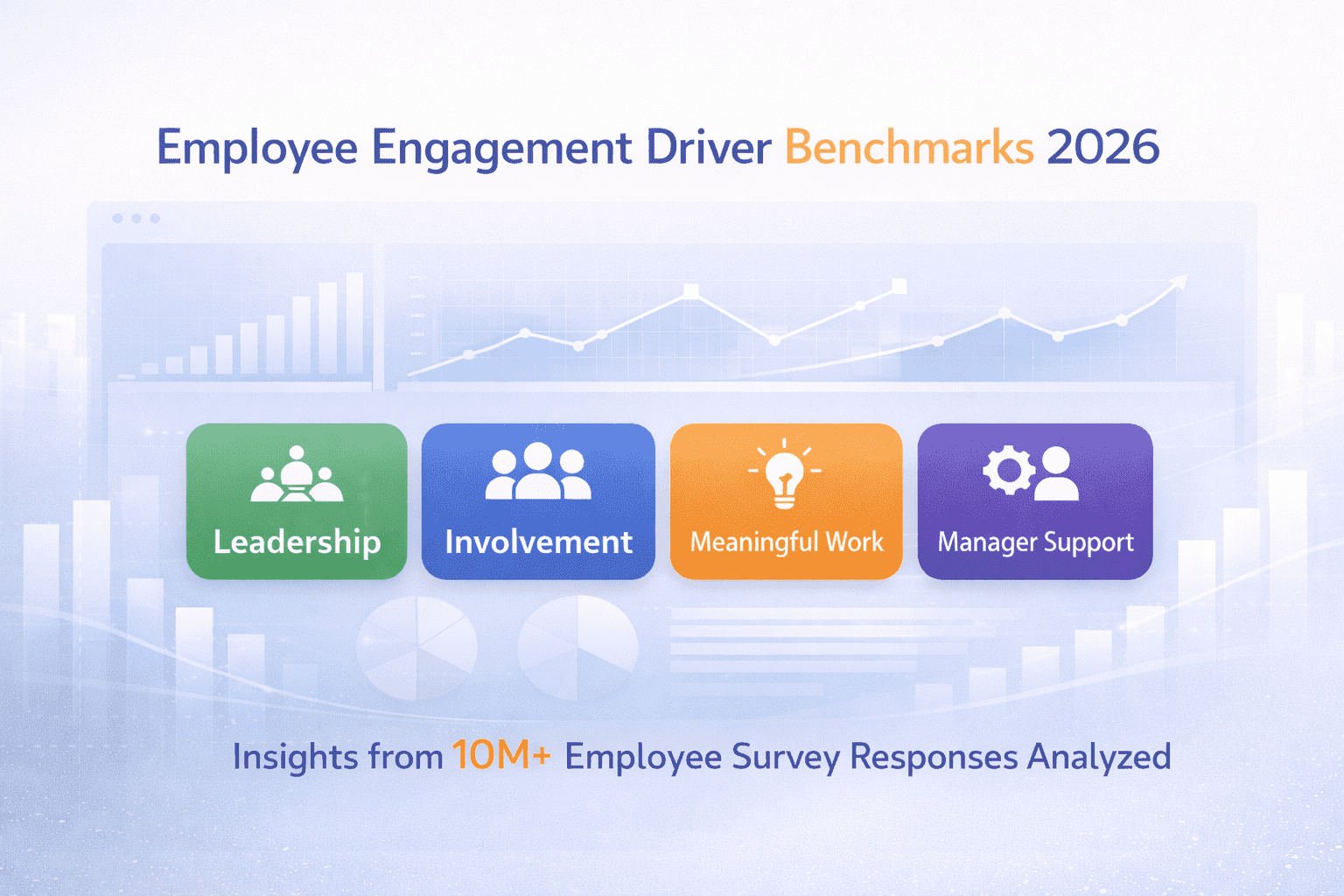
Employee engagement driver benchmarks 2026: CultureMonkey’s data-backed analysis
CultureMonkey analyzed over 10 million anonymized survey responses to identify the drivers that actually influence employee engagement growth. This benchmark reveals which workplace factors create measurable engagement lift and which initiatives show limited impact across organizations.
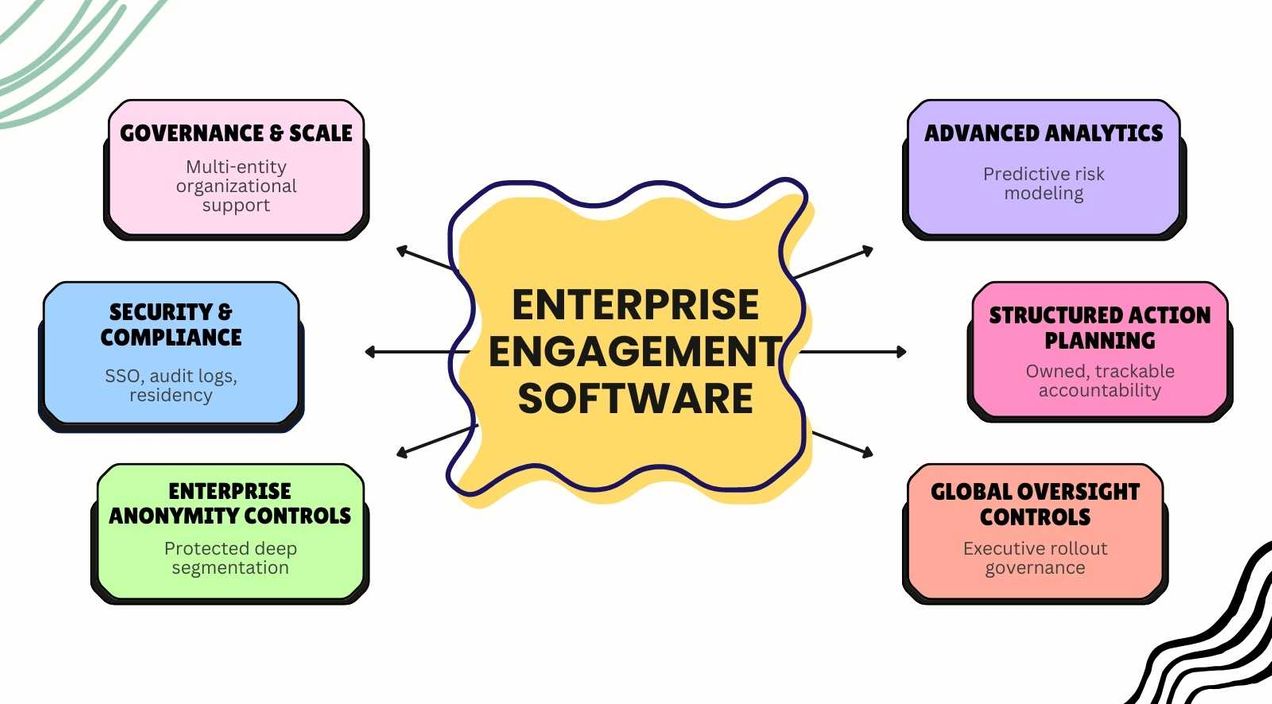
Employee engagement survey software for enterprise guide
Enterprise employee engagement survey software introduces governance layers, structured access control, and operational complexity required by large, multi-entity organizations. It is used by CHROs, HR operations, IT, and risk leaders to manage employee feedback across regions.
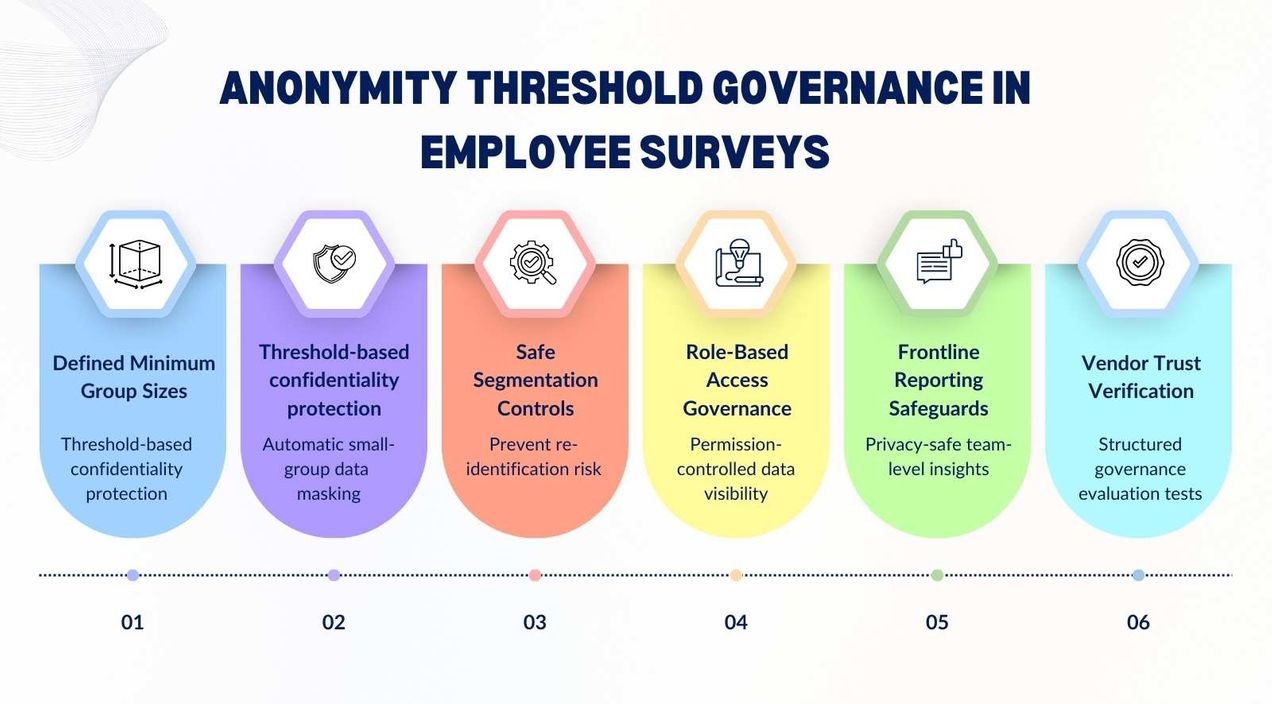
Anonymity thresholds in employee surveys: What right vendors can do
Anonymity thresholds in employee surveys are the minimum number of responses required before results are displayed for a group. If responses fall below that count, reporting is suppressed to protect individual identity while preserving meaningful, aggregated insights for leaders.
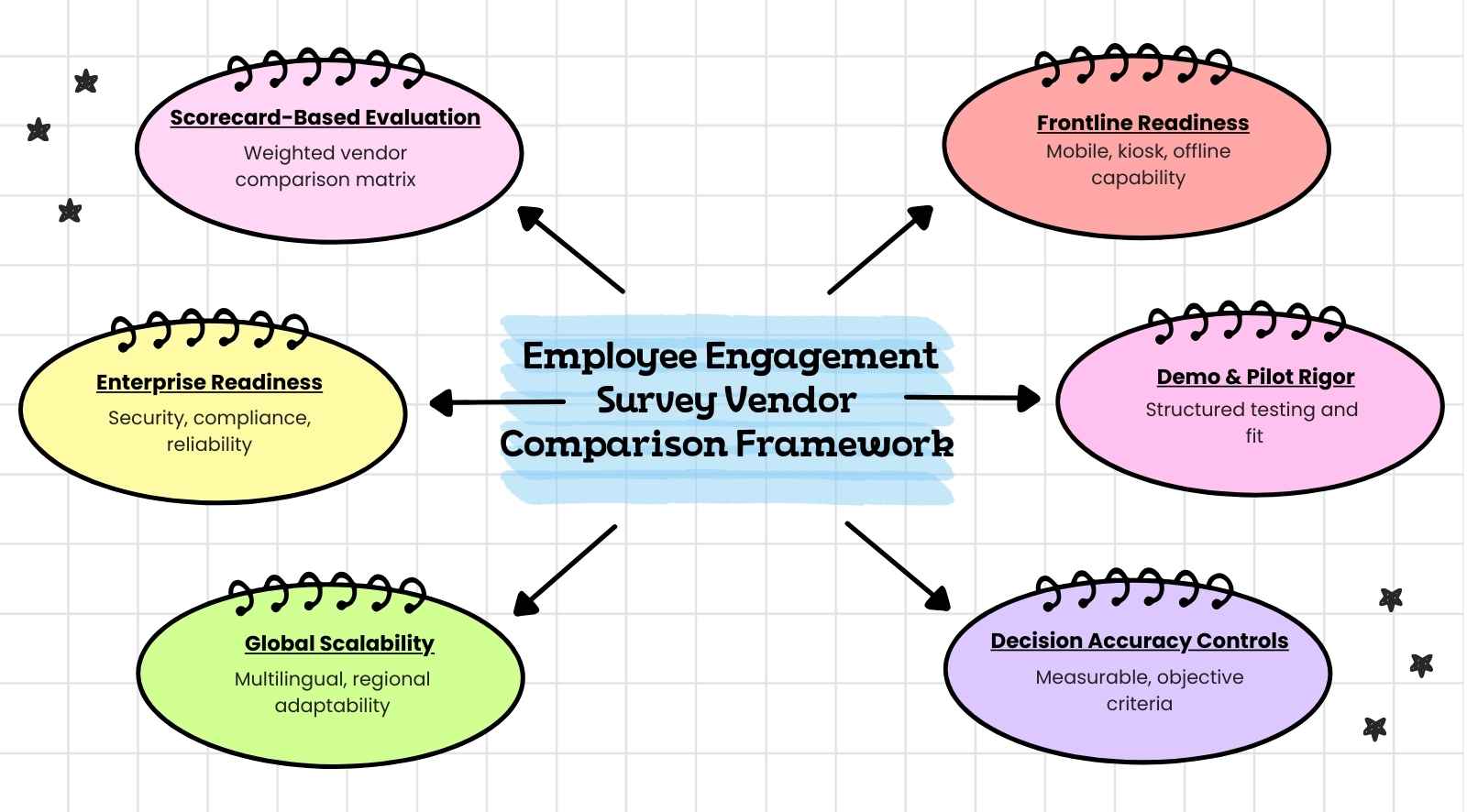
Employee engagement survey vendor comparison: The only scorecard you need
Employee engagement survey vendor comparison is the structured evaluation of survey platforms using weighted criteria such as analytics depth, anonymity controls, action workflows, integrations, and scalability to ensure feedback drives measurable business outcomes.
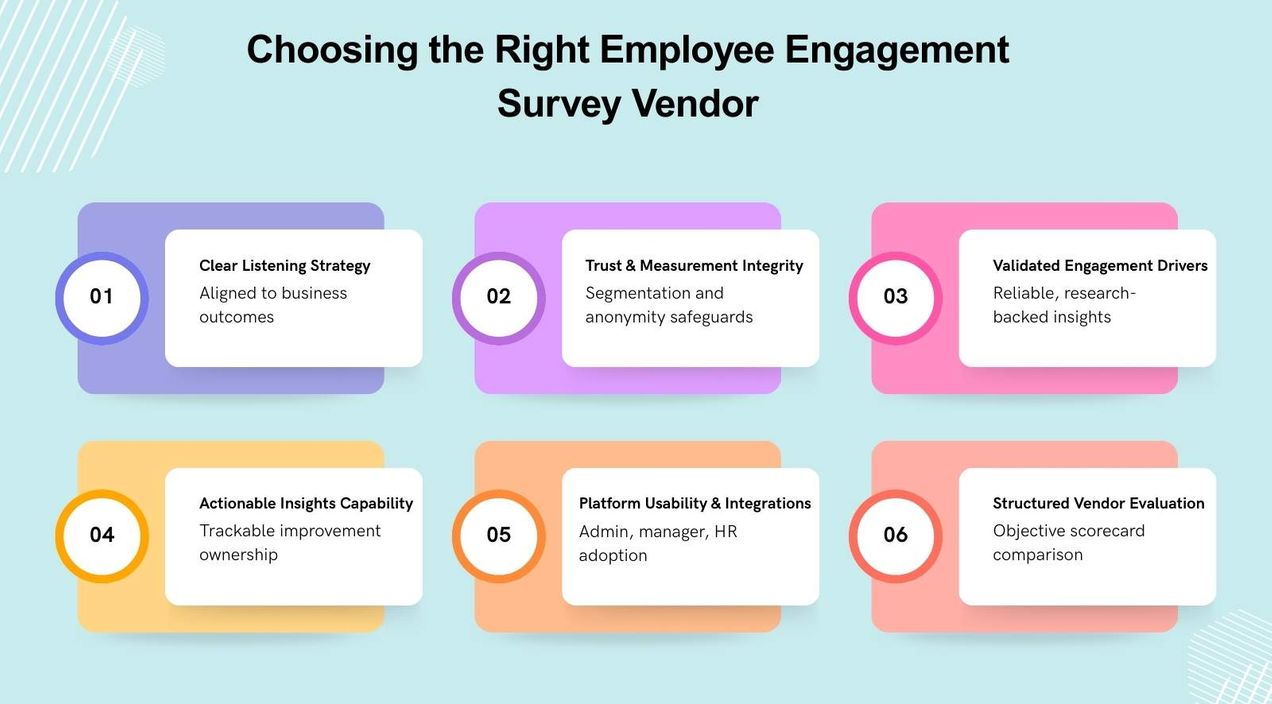
How to choose an employee engagement survey vendor: A practical 10-step framework
Choosing the Employee Engagement Survey Vendor is the process of selecting a survey platform that aligns with business goals, protects anonymity, supports segmentation, enables action planning, integrates with systems, and delivers reliable insights for sustained impact.
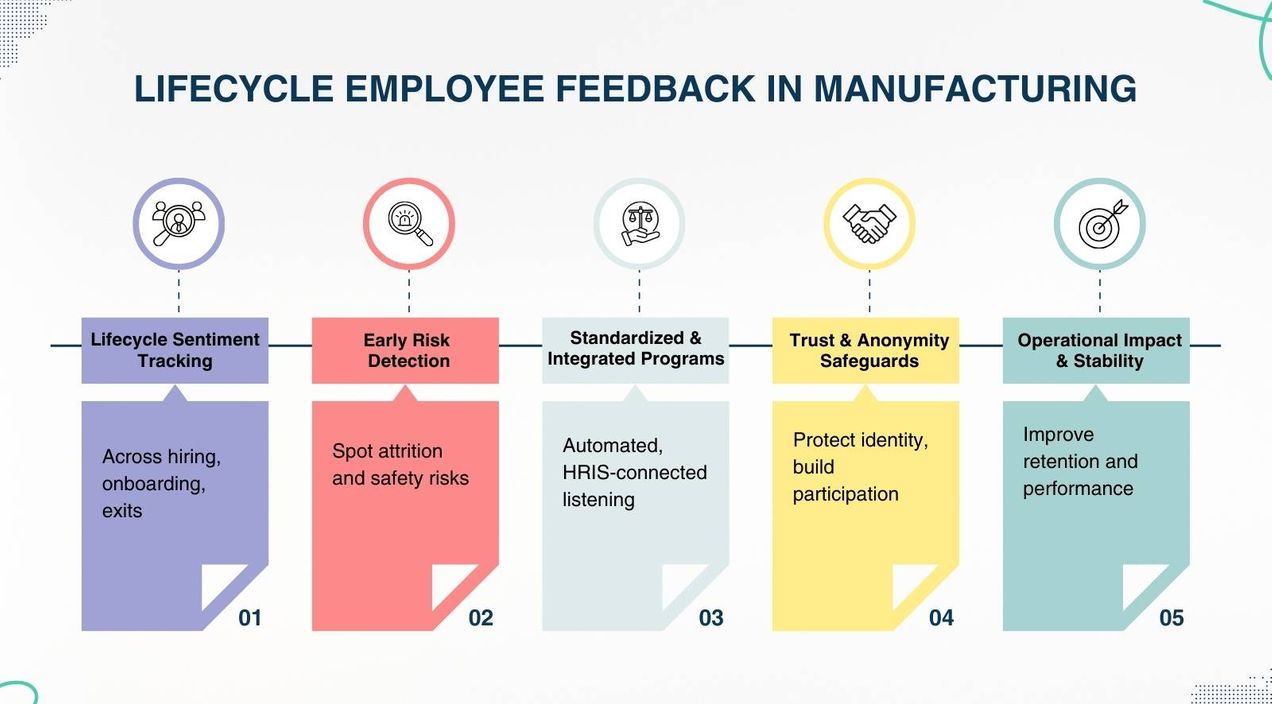
Lifecycle employee feedback in manufacturing: A practical guide to listening across the factory employee journey (2026)
Lifecycle employee feedback in manufacturing is a structured approach to collecting employee input at key stages of the factory journey, from hiring and onboarding to development and exit, helping leaders reduce attrition, improve safety, and strengthen operational stability.
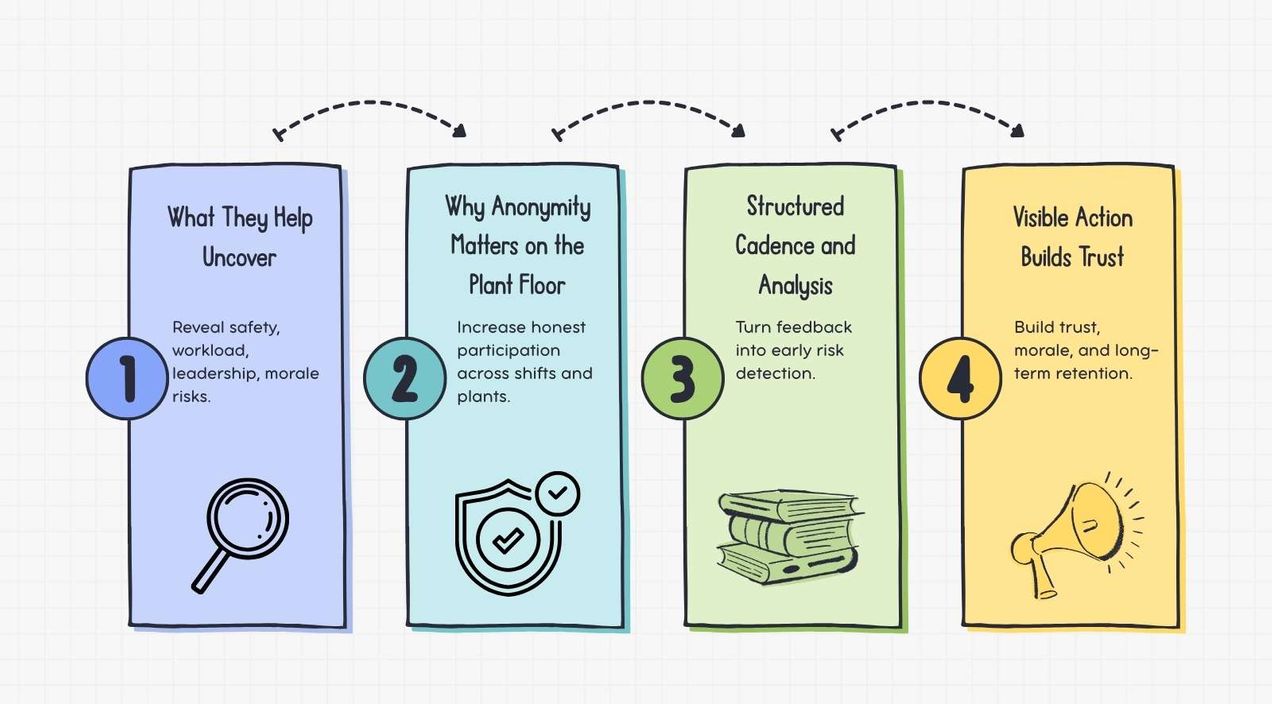
Anonymous employee surveys for manufacturing workforces: A practical guide for HR and plant leaders (2026)
Anonymous employee surveys for manufacturing workforces are safe and secure feedback tools that let frontline workers share concerns about safety, workload, supervision, and morale without revealing their identity, helping plant leaders detect risks early and improve operations.

15 Leadership goals behind manager effectiveness in warehouse operations
Manager effectiveness in warehouse operations is how managers translate plans into clear priorities, remove daily friction, support safety and morale, and guide teams through shifting demand with consistent, well-timed decisions.

12 Step-by-step actions to measure engagement in shift-based logistics operations
Measuring engagement in shift-based logistics operations means tracking shift-level sentiment, handovers, and fatigue across rotating shifts to understand alignment, detect risks early, and improve stability without disrupting day-to-day logistics work

The rise of employee listening software and what HR leaders need to know
Employee listening software helps organizations capture, analyze, and act on employee feedback at scale, promoting overall employee health and well-being. Unlike traditional surveys, it uses AI, sentiment analysis, and real-time data to give HR and leadership a clearer understanding of employees.

15+ Banking workforce communication challenges holding teams back
Banking workforce communication challenges describe breakdowns in how updates, decisions, and feedback move across branches, frontline teams, and leadership, often caused by silos, legacy systems, and compliance pressure in banks.

9 Practical strategies to close communication gaps in supply chain teams
Communication gaps rarely look dramatic, but they quietly derail handoffs, decisions, and trust. This guide breaks down why they happen in supply chain teams, how they impact daily execution, and what practical habits help leaders restore clarity across shifts and roles.

Kiosk surveys: How to capture real-time, on-the-ground employee feedback in 2026
A kiosk survey is a simple, on-site feedback method where employees respond to questions using a touchscreen device placed in shared areas. It’s fast and ideal for workers who rarely email.

What is employee recognition in HRM and why does it matter in today’s workplace?
Employee recognition directly shapes how engaged and motivated people feel at work. When employees know their efforts are valued, they’re more likely to stay committed, contribute innovative ideas, and build stronger relationships with their teams.

Building safety culture in manufacturing: How to strengthen team trust in 2026
A strong safety culture in manufacturing goes beyond ticking compliance checkboxes or holding annual safety drills. It’s a shared mindset where everyone, from the shop floor to the executive office, sees safety as a daily priority, not an afterthought.

Cultural competence in the workplace: Build inclusive teams in 2026
Cultural competence in the workplace is the ability to understand, respect, and adapt to diverse cultural perspectives, enabling inclusive collaboration, stronger communication, and team success.

Q12 survey questions: Drivers, benchmarks & ROI explained
The Gallup Q12 is a research-backed framework designed to measure and improve employee engagement across organizations. It consists of twelve core statements that reflect key elements of a thriving work environment, from clarity of expectations to opportunities for growth and recognition.

Career satisfaction survey: How to measure fulfillment and growth at work
A career satisfaction survey is a structured way to understand how employees feel about their growth, learning opportunities, and long-term career trajectory within the company. Unlike general engagement or job surveys, it dives deeper into future-oriented aspects, helping employers spot gaps.

Employee engagement survey communication sample: How to effectively engage your workforce in 2025
An employee engagement survey communication is the process of informing and engaging employees about an upcoming survey designed to assess their workplace experiences, satisfaction, and overall engagement. It involves sharing clear, concise, and motivating messages that explain the survey's purpose.

Employee engagement survey benchmark data: A complete guide for leaders in 2025
Benchmarks are like the scoreboards of employee engagement—they show how your team’s experience stacks up against others in your industry or region. But they’re more than just numbers; they offer crucial context. Let’s break down what employee engagement benchmarks really mean and why they matter.

White collar vs blue collar: How work, culture, and technology shape each sector
The term white collar refers to professionals who typically perform knowledge-based, administrative, or managerial work in offices. While, blue-collar jobs emphasize practical skills, on-the-job training, and apprenticeships over formal academic degrees mastering trades like welding and plumbing.

Why workforce optimization is the key to high-performing, happy teams
Workforce optimization is a strategic approach that ensures the right people are doing the right work at the right time—efficiently and effectively. It uses workforce data analytics, AI, and automation to align employee output with business goals and improve performance.

How to build a culture of job security in a changing workplace
Job security refers to the assurance that an individual’s employment is stable and not at immediate termination risk. It depends on industry demand, company performance, and employee skills. A stable job provides financial predictability, reduces stress, and enables long-term career planning.