





Employee survey portal: The future of feedback and engagement in 2025
An employee survey portal is an online platform that helps organizations collect, manage, and analyze feedback from their employees in one centralized place. Instead of relying on email chains, PDFs, or scattered forms, companies use these portals to streamline how they run surveys for employees.

50+ Brand survey questions for employees to understand internal perception in 2025
A brand survey for employees is an internal questionnaire designed to capture how your workforce perceives your company’s identity, values, messaging, and culture. These surveys go beyond external reputation, they highlight internal brand alignment and uncover whether employees truly believe in.

Employee survey results: How to interpret, communicate, and take action in 2025
Employee survey results are more than just numbers on a dashboard—they’re insights into how your team really feels about work. They highlight what’s working, what needs attention, and how employees view leadership, organizational culture, and growth.

30 Tactics on how to improve employee engagement and elevate employee experience in 2025
Are you struggling to keep your employees engaged and motivated? In today's competitive job market, retaining top talent is more important than ever. We've compiled 30 strategies to improve employee engagement and drive success, from prioritizing employee feedback to creating a positive culture.

What are employee satisfaction metrics: Best practices to measure them in 2025
Dive into the fundamental significance of employee satisfaction metrics in nurturing vibrant workplaces. Discover comprehensive strategies to meticulously measure, deeply analyze, and strategically enhance engagement, igniting a path toward sustained success while cultivating a positive culture.

13 Steps to improving employee engagement and building a team that stays
Improving employee engagement in 2025 isn’t a buzzword—it’s a shift in how companies think about people. Employees are no longer satisfied with paychecks and perks alone; they want purpose, flexibility, and professional development opportunities for their careers.

Enterprise survey rollout change-management plan: A step-by-step guide for 2025
Launching an enterprise-wide survey without a plan is like hiring a band with no conductor, chaotic and off-key. A structured change management strategy attuned to an employee survey rollout ensures clarity, consistency, and engagement from the start, and makes surveys more effective.

Employee experience vs employee engagement: How HR leaders can drive growth and trust in 2025
Imagine employee engagement as the pulse of your organisation. It's the excitement, motivation, and dedication your employees bring to the table. Alternatively, employee experience is all about the journey—the daily grind, the work culture, the tools and tech that make your employees' lives easier.

75+ Best employee communication survey questions to improve collaboration in 2025
Employee communication refers to the exchange of information, ideas, and feedback between employees and management. It ensures everyone is aligned with organizational goals, fosters collaboration, and trust. Effective communication is vital as it shapes workplace culture, and drives engagement.

50+ Employee happiness survey questions to ask your team in 2025
Creating a positive work environment begins with understanding your team's well-being. In 2024, it’s more important to ask the right questions in your employee happiness surveys. This curated list of 30+ questions is crafted to uncover key insights into what makes your employees happy and motivated.
What is a safe working environment: Benefits, best practices, and examples
Explore the advantages of a safe working environment. Learn the best practices that safeguard employees and find inspiration in real-world examples. Prioritize safety and well-being in your workplace journey. Achieve a thriving, secure, and productive work environment.

75+ Negative feedback examples: Learning and growing from constructive criticism
Transform negative feedback into growth opportunities with our collection of 75+ constructive examples. Learn how to embrace criticism, refine your skills, and enhance your professional journey. Constructive feedback is the catalyst for progress and success.

What is the average cost of employee turnover: Why does it matter & how is it calculated?
High turnover rates can wreak havoc on an organization, extending its impact across various facets of business operations. One of the most immediate concerns is the financial toll. The constant need to replace departing employees incurs significant recruitment costs.
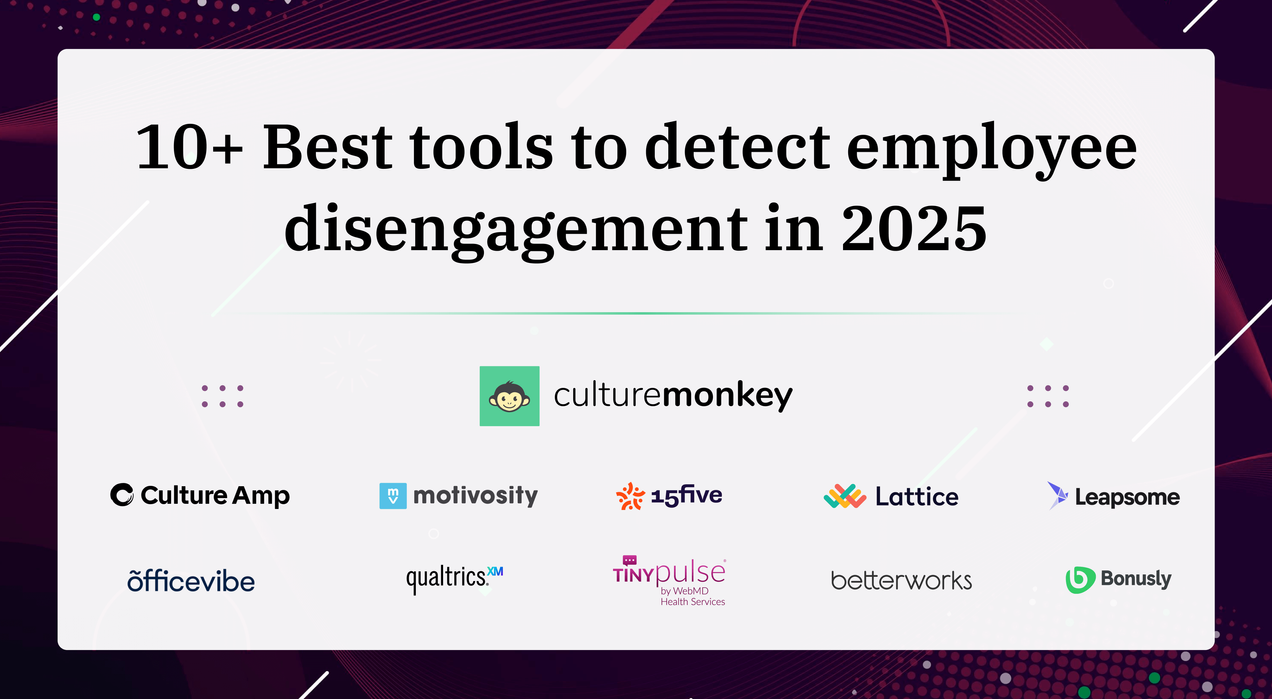
10+ Best tools to detect employee disengagement in 2025
Top tools to detect employee disengagement using pulse surveys, sentiment analysis, and real-time dashboards. Platforms like CultureMonkey, 15Five, WorkTango, Leapsome, and others help identify early warning signs and improve retention through continuous feedback and manager insights.

In-house vs vendor employee surveys: Which approach is best for your organization
Employee surveys are questionnaires used by organizations to gather feedback on topics like engagement, employee satisfaction, communication, and company culture. These surveys help gauge how employees feel about their roles and work environment, providing insights into the workplace culture.

Enterprise employee survey benchmarks: A complete guide for leaders in 2025
Enterprise employee survey benchmarks are reference points that help large organizations evaluate their employee engagement survey results against relevant external standards. Instead of interpreting results in isolation, benchmarks give context, letting you compare your data to industry peers.

75+ Team theme ideas to try at work for increased collaboration in 2025
Team themes at work refer to overarching concepts or focuses that guide the collective efforts and goals of a group within an organization. These themes serve as unifying principles, shaping the team's objectives, culture, and approach to work.

75+ Employee engagement survey questions that you should ask as a leader in 2025
Discover over 75 essential employee engagement survey questions every leader should ask in 2025 to gain valuable insights, foster a positive culture, and enhance team satisfaction and productivity. This comprehensive guide provides the tools to craft impactful surveys that drive real results.

Strengths in the workplace: Examples & tips to improve your people development plan
From leadership to creativity, discover examples of individual strengths that fuel success. Craft people development plans that focus on these strengths, boosting engagement and productivity. Learn how to align talents with roles and create a thriving, motivated team.

35+ Dichotomous questions and survey strategies to boost response in 2025
Dichotomous survey questions improve how data is collected, providing simplicity, efficiency, and precision in gathering responses. This format offers researchers a powerful tool to measure customer satisfaction, assess employee engagement, and gather valuable insights across various organizations.

20 Employee engagement survey ideas to get honest and actionable feedback in 2025
In 2025, with hybrid work, evolving tech, and rising employee expectations, HR needs sharper tools to keep up. That’s why employee engagement survey ideas matter more than ever—they help you hear what’s not being said, measure employee engagement outcomes, and ultimately improve employee retention.

The role of employee experience journey mapping in building meaningful culture in 2025
As a company leader or HR professional, it's essential to understand the employee journey and how it impacts the overall employee experience. Our complete guide to employee experience journey mapping covers everything from the benefits to the key stages and tips for creating an effective journey map

Favoritism in the workplace: Definition and top strategies to eliminate it
The allure of playing favorites can be enticing for those in positions of power, whether it's a manager subtly promoting a protege or a leader showing undue favor to a select few. Such actions not only undermine the principles of fairness but also jeopardize the very fabric of a workplace.

Disengaged employees: How to understand and motivate them in 2025
Disengaged employees can have a detrimental effect on workplace culture. They can bring down the morale of the entire team and create a toxic work environment. In this blog, we'll dive into the impact of disengaged employees on workplace culture and practical tips on how to prevent it.