



Anonymous feedback examples

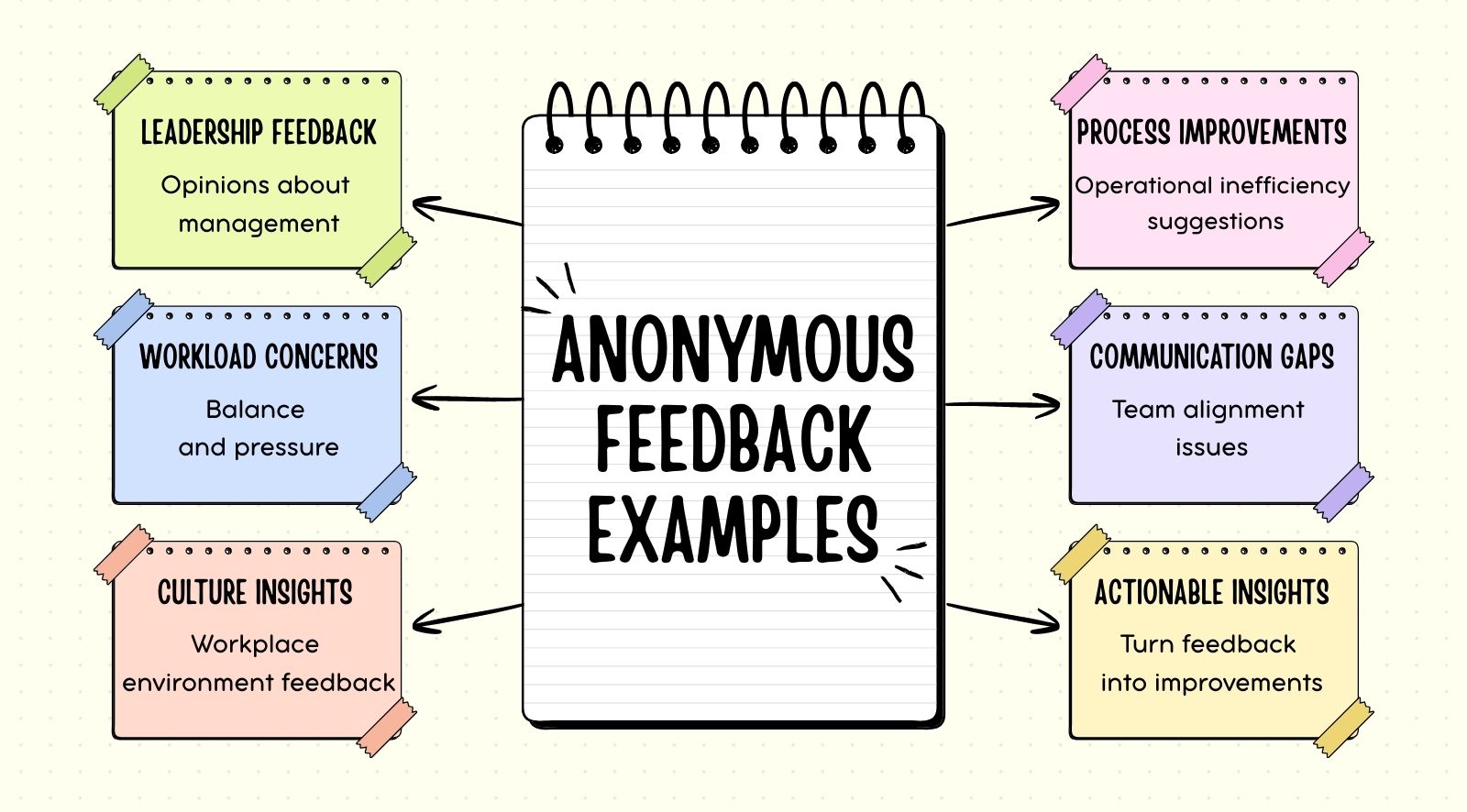
Collecting honest opinions can be difficult when people worry their feedback might be traced back to them. Anonymous feedback examples show how individuals share more direct and useful insights when their identity is protected. Organizations often discover concerns, suggestions, and improvement ideas that rarely surface in regular discussions.
This is why many leaders study anonymous feedback examples to understand what employees actually experience. When feedback is anonymous, comments tend to be clearer, more candid, and more actionable. In this blog, we’ll look at practical anonymous feedback examples that reveal how organizations can uncover hidden issues, improve communication, and make better decisions using honest input.


- Anonymous feedback examples show how employees share honest opinions about leadership, workload, culture, policies, and workplace improvements.
- Organizations use anonymous feedback examples from surveys, suggestion boxes, and peer reviews to uncover issues early.
- Workplace anonymous feedback examples help leaders identify communication gaps, fairness concerns, process inefficiencies, and engagement challenges.
- Reviewing anonymous feedback examples helps HR teams design better surveys, strengthen trust, and encourage honest employee participation.
- CultureMonkey helps organizations collect anonymous feedback securely, analyze insights instantly, and transform employee feedback into meaningful action.
Why employee feedback should be anonymous?

Organizations often struggle to gather honest insights when people worry their responses may be traced back to them. Anonymous systems reduce that hesitation and help leaders gather feedback that reflects real experiences. When anonymity is structured properly, survey responses become clearer, more balanced, and far more useful for decision-making.
1. Encourages honest feedback
When organizations collect anonymous employee feedback, people feel safer sharing honest feedback about challenges and improvements. This leads to more valuable feedback, clearer survey responses, and more reliable insights when gathering anonymous employee feedback through anonymous feedback channels.
2. Captures both positive and negative feedback
An anonymous employee feedback survey encourages people to share positive feedback and negative feedback without hesitation. Leaders gain a balanced perspective instead of overly polite answers that usually appear during direct conversations or visible employee survey discussions.
3. Improves the quality of employee survey responses
Anonymous employee surveys often produce more detailed survey responses because participants feel safer answering anonymous employee feedback questions. This makes gathering anonymous employee feedback more useful for identifying trends, concerns, and improvement opportunities within company culture.
4. Encourages wider participation
Anonymous survey participation increases when people know their identity will remain protected. Anonymous feedback channels allow individuals who hesitate in public discussions to gather feedback comfortably and contribute meaningful anonymous feedback comments.
5. Supports stronger employee engagement
When organizations gather feedback through anonymous feedback tools and act on the results, employees feel heard. This strengthens employee engagement, improves employee net promoter score, and reinforces trust in leadership and company culture.
6. Provides actionable workplace insights
Anonymous employee feedback examples and workplace anonymous feedback examples often highlight specific problems leaders may not hear directly. These employee anonymous feedback examples and anonymous feedback at work help organizations address issues faster and improve communication across teams.
Is anonymous feedback anonymous?
Many organizations encourage anonymous workplace feedback to help people share candid feedback without fear of consequences. However, whether feedback is truly anonymous depends on how the system collects, stores, and reports information. Understanding these factors helps organizations evaluate the benefits of anonymous systems and avoid issues with anonymous feedback.
- Technology determines how anonymous feedback really is: The level of anonymity depends on how the feedback form or anonymous employee survey feedback platform stores data. Reliable anonymous feedback tools remove identifying details so an anonymous employee can provide honest feedback without worrying about exposure.
- Data collection settings matter more than people realize: Some systems collect device details, timestamps, or login information. These technical traces may create issues with anonymous feedback if not managed carefully, even when organizations promise anonymous workplace feedback channels.
- Context can sometimes reveal the sender indirectly: Even when survey responses are anonymous, highly specific anonymous feedback messages may hint at who wrote them. This is one of the common challenges of anonymous feedback when teams are small or when feedback references unique situations.
- Strong safeguards increase psychological safety: When companies clearly explain how anonymous feedback responses are protected, employees feel safer sharing candid feedback. That psychological safety encourages more direct feedback during pulse surveys, performance reviews, and other regular feedback programs.
- Anonymity can limit follow-up conversations: Anonymous employee survey feedback can highlight concerns about work-life balance, leadership, or direct reports. However, anonymity also makes it harder to ask follow-up questions or clarify details about anonymous staff feedback examples shared in feedback responses.
- Multiple anonymous channels improve trust: Organizations often combine pulse surveys, an online suggestion box, and structured feedback form systems. Using several anonymous workplace feedback channels helps employees provide honest feedback consistently and increases the benefits of anonymous systems across teams.
What are the types of anonymous feedback?

Several types of anonymous feedback can be used in various settings. These types that collect anonymous feedback include:
Online surveys
Online surveys are a popular method for collecting anonymous feedback. Participants can respond to a series of questions or prompts without revealing their identities. Surveys can be customized to gather feedback on specific topics, such as employee satisfaction, customer experience, or event evaluations.
Suggestion boxes
Suggestion boxes are physical or virtual containers where individuals can drop anonymous feedback or suggestions. This method allows people to share their thoughts, ideas, and concerns without the need to disclose their identity. Suggestion boxes are commonly used in workplaces, educational institutions, and community settings to collect anonymous employee feedback.
Anonymous commenting
Many online platforms, such as blogs, forums, and social media, allow users to leave comments anonymously. This enables individuals to express their opinions without revealing their names or personal information. Anonymous commenting can be both a valuable source of feedback and a potential breeding ground for abusive or inappropriate behavior, requiring moderation and guidelines.
Whistleblower hotlines
Whistleblower hotlines are confidential reporting systems that allow individuals to report unethical behavior, misconduct, or illegal activities within an organization. These hotlines typically offer anonymous channels, such as phone lines or online reporting forms, to protect the identity of the whistleblower.
Peer-to-peer feedback
Peer-to-peer feedback refers to the process of individuals providing feedback to their colleagues or peers. This can be done anonymously through platforms or tools that facilitate anonymous communication within a group or organization.
Anonymous peer feedback can encourage open and honest communication among team members without fear of negative consequences.
360-degree feedback
In a 360-degree anonymous employee feedback, process, an individual receives feedback from multiple sources, including supervisors, peers, subordinates, and customers.
Anonymous 360-degree feedback ensures confidentiality, allowing participants to provide honest and comprehensive feedback without concerns about their identities being revealed.
Anonymous complaint channels
Anonymous complaint channels are mechanisms established within organizations to allow employees or stakeholders to report grievances or complaints while maintaining their anonymity. These channels can be crucial for addressing issues such as harassment, discrimination, or workplace misconduct.
It is important to note that while anonymous feedback can be beneficial, it also has its limitations. Anonymity may lead to the loss of contextual information or the inability to follow up on specific feedback.
Therefore, organizations should carefully consider the appropriate types of anonymous feedback for their specific needs and ensure that proper processes are in place to address any concerns or issues raised through anonymous channels.
When to listen to the anonymous feedback of your employees?
Organizations should pay close attention to anonymous feedback when patterns, concerns, or repeated suggestions begin to appear. Listening at the right time helps leaders gather thoughtful responses, understand employee sentiment, and address issues before they affect workplace morale, engagement, or the overall workplace environment.
- When patterns appear across multiple responses: If several anonymous feedback statements or anonymous feedback sample comments highlight the same issue, leaders should pay attention. Repeated anonymous company feedback examples often signal real concerns about workplace morale, leadership communication, or processes affecting engaged employees.
- When feedback highlights workplace environment concerns: Anonymous feedback for leadership often reveals issues employees hesitate to raise directly. Listening closely helps organizations address concerns early, improve workplace morale, and ensure employees feel empowered to share opinions that shape a healthier workplace environment.
- When open-ended responses reveal deeper context: Anonymous form responses often contain thoughtful responses that structured questions may miss. Open-ended responses allow employees to explain experiences clearly, making anonymous feedback examples for employees more actionable for leaders and managers.
- When feedback relates to leadership or management practices: Anonymous feedback for managers or anonymous performance feedback examples may highlight communication gaps, unclear expectations, or team challenges. Reviewing anonymous team feedback examples helps leaders identify patterns before issues affect engaged employees or long-term workplace morale.
- When employees signal they prefer anonymous channels: If employees rely on anonymous forms instead of direct feedback, it often indicates trust gaps. Listening to anonymous company feedback examples helps leaders reinforce that opinions matter and strengthen psychological safety in the workplace environment.
- When preparing improvements for future surveys: Anonymous feedback statements and survey insights help leaders refine questions and reduce the identification of data risks. This ensures future surveys gather more thoughtful responses while protecting anonymity and helping employees feel empowered to contribute honestly.
21 Examples of anonymous feedback in the workplace

Collecting feedback from employees is crucial for organizations to improve performance, foster employee engagement, and create a positive work environment. While open and transparent communication channels are valuable, anonymous feedback allows individuals to express their thoughts, concerns, and suggestions without fear of judgment or repercussions.
Let's explore 21 examples of how anonymous feedback can be utilized effectively in the workplace.
1. Employee satisfaction surveys
Anonymous surveys allow employees to share their level of satisfaction, identify areas of improvement, and provide suggestions for enhancing their work experience.
2. Project evaluation
Anonymous feedback on specific projects helps assess their success, identify areas for improvement, and gain insights into employee involvement and collaboration.
3. Suggestion boxes
Anonymous suggestion boxes allow employees to share innovative ideas, process improvements, and cost-saving measures.
4. Leadership evaluation
Anonymous feedback on leadership effectiveness helps assess managers' communication, decision-making, and employee support skills.
5. Training program assessment
Anonymous feedback on training programs evaluates their relevance, effectiveness, and impact on employee development.
6. Team dynamics
Anonymous feedback on team dynamics helps assess collaboration, communication, and the overall effectiveness of team interactions.
7. Workplace policies
Anonymous feedback on policies or procedures identifies areas that may hinder productivity or cause employee dissatisfaction.
8. Performance appraisal process
Anonymous feedback on the appraisal process assesses its fairness, clarity, and effectiveness in providing constructive feedback.
9. Technology implementation
Anonymous feedback on the implementation of new technology or software systems helps identify issues, streamline workflows, and improve user experiences.
10. Diversity and inclusion
Anonymous feedback on diversity and inclusion initiatives evaluates their effectiveness in creating an inclusive and equitable work environment.
11. Communication channels
Anonymous feedback on communication methods helps identify areas for improvement and ensures effective information flow within the organization.
12. Workload and resource allocation
Anonymous feedback on workload and resource allocation ensures fair distribution and prevents burnout or bottlenecks.
13. Workplace wellness programs
Anonymous feedback assesses the impact and effectiveness of wellness programs on employee well-being and satisfaction.
14. Company-wide meetings
Anonymous feedback on company-wide meetings or town halls helps evaluate engagement, relevance, and overall value.
15. Employee recognition programs
Anonymous feedback assesses the fairness, impact, and alignment of recognition programs with employee values.
16. Conflict resolution
Anonymous feedback on conflict resolution processes helps identify areas for improvement and maintain a healthy work environment.
17. Workplace safety
Anonymous feedback on safety measures identifies potential hazards and ensures a safe working environment.
18. Job descriptions
Anonymous feedback on job descriptions ensures clarity and understanding of roles and responsibilities among employees.
19. Onboarding process
Anonymous feedback on the onboarding process evaluates its effectiveness in helping new employees acclimate to the organization.
20. Career development
Anonymous feedback on career development opportunities helps identify growth avenues and advancement possibilities.
21. Performance feedback and coaching
Anonymous feedback on feedback and coaching processes ensures they are constructive and helpful for employee development.
These examples demonstrate the wide range of areas where anonymous feedback can be utilized to gather valuable insights, drive improvements, and create a more inclusive and transparent work environment.
Anonymous feedback helps organizations uncover honest insights, identify concerns early, and improve the workplace environment. When handled responsibly, it supports employee engagement, encourages open communication, and builds trust. Acting on anonymous feedback shows employees their voices matter and leads to meaningful improvements.
Conclusion
Anonymous feedback examples help organizations understand what employees truly experience across teams, processes, and leadership interactions. Studying real anonymous feedback examples allows leaders to recognize patterns, identify improvement areas, and turn everyday comments into meaningful action. These examples also guide how teams frame anonymous feedback suggestions and anonymous feedback ideas inside surveys and feedback channels.
Organizations that learn from anonymous feedback examples create safer spaces for open communication and honest participation.
CultureMonkey’s anonymous employee feedback software helps companies collect, analyze, and act on anonymous feedback efficiently through secure surveys, actionable insights, and structured listening programs that strengthen workplace culture and employee engagement.
Book a demo with CultureMonkey.
FAQs
1. What are some common anonymous feedback examples in the workplace?
Common anonymous feedback examples include comments about leadership communication, workload balance, unclear processes, or recognition gaps. These responses help organizations identify trends, improve team morale, and collect actionable data without linking the feedback to an individual employee.
2. How do employees typically write anonymous feedback comments?
Employees usually write concise anonymous feedback comments that focus on observations or suggestions rather than personal details. This approach helps organizations collect actionable data, identify trends in workplace concerns, and avoid revealing information that could point to an individual employee.
3. Where can anonymous feedback examples be used in employee surveys?
Anonymous feedback examples can appear in pulse surveys, engagement surveys, suggestion boxes, and open-ended employee survey questions. These responses help leaders identify trends, improve team morale, and turn feedback into actionable data while protecting the identity of each individual employee.
4. What types of workplace issues appear most often in anonymous feedback examples?
Common themes include workload pressure, unclear expectations, communication gaps, and recognition concerns. Reviewing these anonymous responses helps organizations identify trends, understand employee sentiment, and manage the common drawbacks of anonymous feedback while maintaining strong team morale.
5. How can organizations use anonymous feedback examples to improve workplace culture?
Organizations can review anonymous feedback to identify trends, address recurring concerns, and strengthen policies that support team morale. When leaders convert these insights into actionable data and improvements, employees see their voices matter without exposing any individual employee.