



Anonymous feedback for manager examples

Anonymous feedback for managers is structured statements employees use to share honest opinions about leadership, communication, and workplace practices without revealing their identity. These examples help employees provide clear upward feedback while reducing the fear of retaliation.
This guide presents tested frameworks institutions use to collect meaningful employee feedback on manager performance, leadership behavior, and team support. It explains how employees can give constructive feedback to managers, highlights practical examples, and outlines common mistakes that reduce the value of anonymous feedback.


- Anonymous feedback for manager examples are statements employees use to share honest leadership feedback without revealing identity.
- Organizations collect it through anonymous surveys, feedback platforms, suggestion channels, and 360-degree reviews.
- Effective feedback focuses on specific behaviors, explains team impact, and suggests practical improvements managers can act on.
- Common mistakes include vague criticism, emotional wording, delayed feedback, and offering complaints without solutions.
- CultureMonkey helps teams gather anonymous feedback for manager examples through secure surveys, anonymity protection, and actionable analytics.
What is anonymous feedback for managers?

Anonymous feedback for managers is a process where employees share opinions, concerns, and suggestions about their manager without revealing their identity. It allows teams to provide honest upward feedback about leadership, communication, and workplace decisions without fear of retaliation.
Organizations use anonymous survey feedback to uncover leadership blind spots, understand team sentiment, and improve management effectiveness. When employees can speak openly, the feedback tends to be more specific, candid, and actionable.
Why anonymous feedback for managers matters in the workplace
Anonymous feedback for managers matters because it allows employees to share honest opinions about leadership without fear of retaliation. When identities are protected, employees are more likely to provide direct insights.
Key reasons anonymous feedback matters:
- Encourages honest input: Employees feel safer sharing concerns on how to be a good manager when identity is protected.
- Reveals hidden issues: Anonymous insights often uncover morale problems, leadership gaps, or operational challenges affecting teams.
- Removes hierarchy bias: Feedback is judged on its value rather than the employee’s role or seniority.
- Improves leadership performance: Honest manager feedback helps leaders understand how their decisions and behavior affect teams.
- Strengthens workplace transparency: Acting on employee feedback for manager concerns builds trust and improves the quality of writing a review for your manager examples and feedback skills discussions.
How organizations collect anonymous feedback for managers
Organizations typically gather anonymous input through structured channels that protect employee identity to offer constructive feedback while allowing leaders to review patterns in feedback.
- Anonymous surveys: Employees submit structured responses about leadership behavior, communication, and team support.
- Dedicated feedback platforms: Tools designed for anonymous employee feedback help organizations analyze trends and protect respondent identity.
- Suggestion channels: Digital suggestion boxes allow employees to share concerns or ideas without attribution.
- Leadership or 360-degree reviews: Teams provide aggregated input on leadership performance reviews without revealing individual respondents.
These methods help organizations gather reliable feedback of manager performance reviews while ensuring employees feel safe sharing honest perspectives. Creating a feedback company culture requires strategic action and training for employees on feedback techniques.
How to write anonymous feedback for your manager

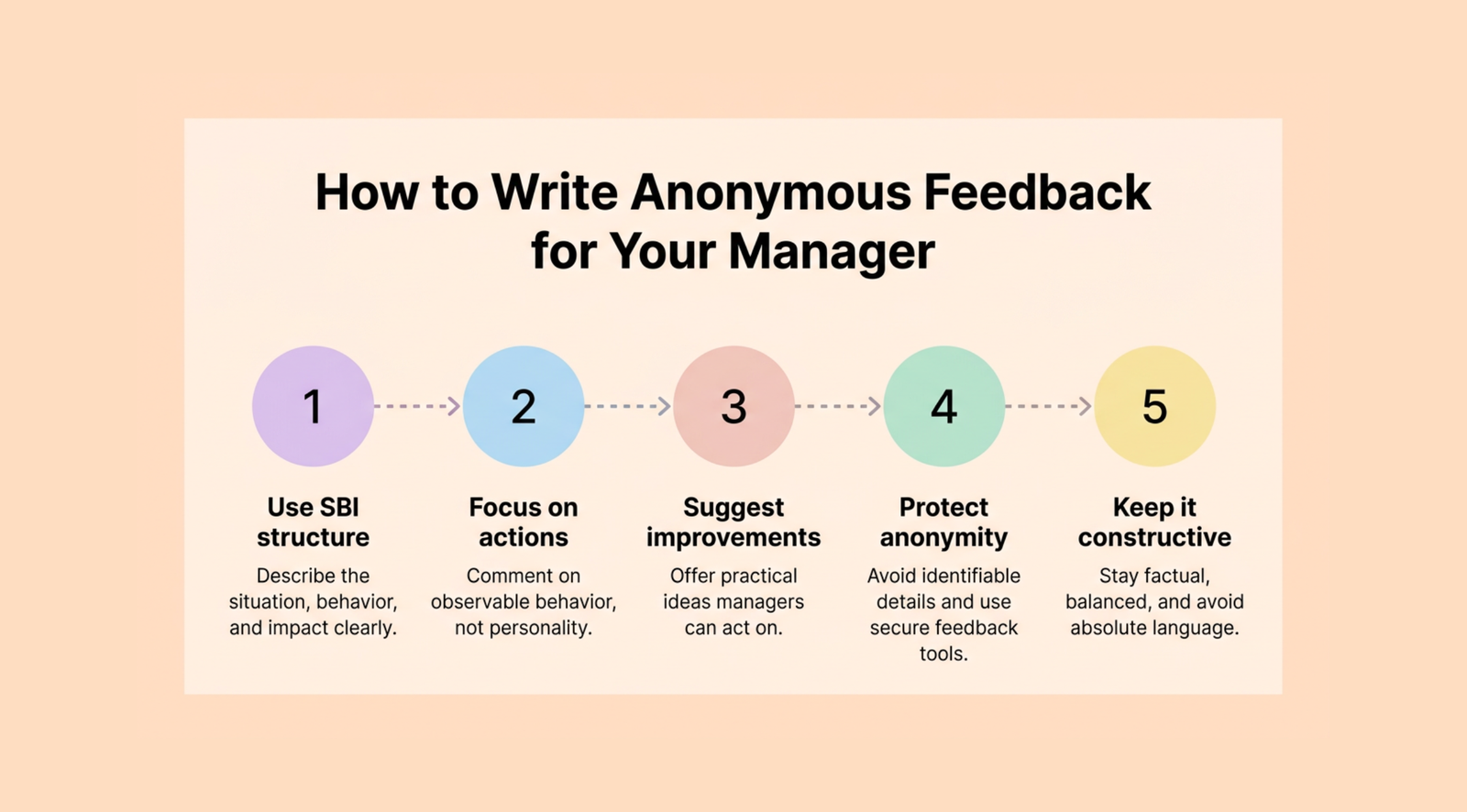
Writing anonymous feedback for your manager means describing specific leadership behaviors, explaining their impact on the team, and suggesting improvements without revealing your identity. Effective feedback focuses on actions rather than personality.
Use the SBI structure (Situation–Behavior–Impact)
- Describe the workplace situation where the issue occurred clearly in day-to-day work.
- Explain the manager’s observable behavior without assumptions or judgment.
- Describe the impact on teamwork, morale, or productivity.
Focus on behaviors instead of personal criticism
- Use clear feedback to manager examples based on real work situations.
- Avoid emotional language when giving employee feedback to manager insights.
- Keep feedback factual so feedback about the manager remains constructive.
Suggest improvements that managers can act on
- Offer ideas when sharing constructive feedback examples for manager development.
- Recommend clearer expectations, recognition, or communication improvements.
- Provide context so managers understand how decisions affect the team.
Protect anonymity when submitting feedback
- Use employee surveys or an anonymous employee feedback tool when possible.
- Avoid mentioning unique situations that could reveal your identity.
- Keep wording neutral when providing constructive feedback about leadership.
What to avoid:
- Use “I” statements.
- Balance positive and constructive feedback.
- Avoid absolute words like “always” or “never”.
Encouraging two-way feedback creates a strong sense of community and drives higher levels of employee engagement. Regular feedback is an ongoing conversation that strengthens workplace connections and lead to lower employee turnover.
Best practices for giving constructive anonymous feedback to managers
Giving constructive anonymous feedback to managers means sharing clear observations about leadership behavior, explaining their impact on the team, and suggesting improvements without revealing your identity. The goal is to help managers improve performance rather than trigger defensiveness.
Follow these best practices when giving anonymous feedback to managers.
Be specific and describe observable leadership behavior
Specific observations make feedback for manager examples clearer and more useful.
- Describe exact situations rather than vague criticism about leadership behavior.
- Use observable facts when sharing manager feedback examples with leadership.
- Focus feedback on communication, decisions, or workload expectations.
Upward feedback builds trust and psychological safety between employees and managers.
Explain the impact using personal experience
Impact-focused feedback helps managers understand workplace consequences.
- Use clear statements when providing feedback to manager about leadership actions.
- Explain how the behavior affected collaboration, productivity, or team morale.
- Share practical context when writing employee feedback to manager sample responses.
Offer actionable suggestions managers can implement
Constructive feedback should include solutions managers can realistically apply.
- Suggest improvements when sharing constructive feedback to the manager examples.
- Recommend clearer communication or better team involvement in decisions.
- Keep examples of feedback for the manager focused on practical improvements.
Giving upward feedback can lower employee turnover by making employees feel their voices matter.
Balance constructive criticism with positive observations
Balanced feedback encourages improvement without creating resistance.
- Start with good feedback for the manager before raising improvement points.
- Combine recognition with management feedback examples that suggest changes.
- Avoid extreme words like always or never when describing behavior.
Provide feedback soon after the situation occurs
Timely feedback helps managers connect comments to real events.
- Share examples soon after the issue rather than waiting months.
- Use recent situations when reviewing your manager examples in feedback.
- Ensure feedback stays constructive and relevant to team improvement.
Frequent feedback directly promotes performance improvement and aligns managers with company goals. Effective feedback builds better managers and drives personal development and leadership growth.
35+ Anonymous feedback for manager examples
Anonymous feedback for manager examples are short, practical statements employees use to share honest insights about leadership without revealing their identity. These sample feedback to managers help employees provide feedback for their manager by highlighting strengths, and identifying opportunities where leadership practices can improve.
Positive feedback examples
These positive feedback for manager examples highlight leadership behaviors employees value and want managers to continue.
- Your clear communication during projects helps with team alignment and focus.
- You create an environment where employees feel comfortable sharing ideas.
- Your encouragement during challenging deadlines keeps the team motivated.
- Recognizing individual contributions regularly makes employees feel valued.
360-degree feedback can come from a targeted survey that captures insights that managers might miss on their own.
Communication & transparency
These feedback about manager examples focus on improving clarity, transparency, and information sharing within teams.
- Sharing updates earlier would help the team prepare for upcoming priorities.
- Providing more context behind decisions would improve team understanding.
- Clearer expectations during team meetings would help employees plan work better.
Upward feedback is one piece of 360-degree feedback, given by employees to a manager.
Support & mentorship
These employee feedback for manager examples focus on guidance, mentorship, and professional development support.
- Regular check-ins could help employees discuss challenges sooner.
- Offering mentorship conversations could support career development.
- More feedback on completed work would help employees improve performance.
360-degree feedback of leadership skills helps managers identify blind spots and understand how their development conversations and actions impact the team and organization.
Leadership & Team morale
These leadership feedback examples highlight how managers influence motivation and team culture.
- Your recognition of team achievements significantly boosts morale.
- Encouraging open discussion during meetings helps the team collaborate better.
- Showing appreciation for progress motivates employees to stay engaged.
By gathering perspectives from multiple angles, managers get a more complete picture of their performance and leadership.
Workload management style
These areas of improvement for manager feedback examples address workload balance and realistic expectations.
- Clarifying task priorities would help employees manage responsibilities better.
- A more balanced distribution of work could reduce pressure across the team.
- Earlier planning discussions could help avoid last-minute workload spikes.
360-degree feedback is a structured process in which managers receive input from a variety of sources.
Constructive feedback examples
These constructive feedback for manager examples highlight improvement opportunities respectfully.
- Asking for team input earlier could improve collaboration.
- Providing clearer guidance on priorities could help the team stay aligned.
- More consistent communication would improve project coordination.
Using the Situation-Behavior-Impact (SBI) model helps keep manager feedback objective and actionable.
Delegation & micromanagement
These constructive feedback examples focus on delegation and employee autonomy.
- Allowing more ownership of tasks could build employee confidence.
- Reducing frequent status checks may help employees focus on work.
- Delegating responsibilities more consistently could strengthen accountability.
Regular check-ins and follow-ups after giving feedback signal its importance and encourage managers to implement changes.
Communication & process
These manager feedback examples focus on improving workflows and team processes.
- Providing one-on-one meeting agendas beforehand would help employees prepare better.
- Following up on action items could improve accountability across projects.
- Simplifying approval steps could reduce project delays.
Effective anonymous feedback to a manager must be specific, objective, and behavior-focused, utilizing the sandwich method to ensure it is actionable.
Visibility & recognition
These good feedback for manager examples emphasize recognizing employee contributions.
- Highlighting employee achievements during meetings would boost motivation.
- Public recognition of team success could improve engagement.
- Sharing team accomplishments with leadership would increase visibility.
Using structured models like the STAR method to deliver feedback helps keep meaningful feedback objective and actionable. The STAR method consists of Situation, Task, Action, and Result.
Decision making & feedback
This feedback on manager examples addresses how managers involve teams in decisions.
- Including employees earlier in discussions may improve decision outcomes.
- Explaining the reasoning behind decisions would improve understanding.
- Encouraging team input during planning could strengthen collaboration.
The feedback sandwich involves starting with praise, inserting constructive criticism, and finishing with a positive feedback example.
360-degree feedback examples
These management feedback examples combine strengths with improvement suggestions.
- Your leadership motivates the team, though clearer priorities would help execution.
- You support the team well, and earlier communication could improve planning.
- Meetings are productive, though more follow-up feedback would help employees grow.
- The team values your guidance, and more delegation could build ownership.
- Your openness encourages discussion, though structured agendas could improve meetings.
- Team morale is strong, and clearer expectations would help manage workloads.
When giving honest feedback, be specific and factual, using concrete, recent examples to illustrate your points.
(Source: Gallup)
Common mistakes employees make when giving feedback to managers

Common mistakes employees make when giving feedback to managers include being vague, delaying important concerns, or delivering criticism emotionally instead of constructively. Effective feedback for managers should be clear, specific, and focused on improving actionable outcomes rather than criticizing personality.
Avoid these common mistakes when employees give feedback to managers in professional settings.
Being vague or overly emotional
Unclear or emotionally charged comments make example feedback for the manager difficult to understand or act upon.
- Saying “communication is poor” without context confuses the real issue.
- Emotional reactions weaken negative feedback for manager discussions.
- Calm, factual wording helps leaders understand concerns objectively.
Waiting too long to share concerns
Delaying feedback reduces its usefulness and impact.
- Waiting months weakens the value of how to provide feedback to your manager in conversations.
- Recent situations make employee feedback on the manager more meaningful.
- Timely discussions support continuous management review and improvement.
Not providing specific examples
Feedback without context cannot guide leadership change.
- Quote clear incidents to strengthen feedback sample for manager discussions.
- Documented examples make reviewing your manager examples easier for leadership.
- Specific situations help managers connect behavior with team impact.
Focusing only on negative criticism
Only highlighting problems can make managers defensive.
- Balanced comments improve best feedback to manager conversations.
- Acknowledging strengths alongside negative feedback to manager examples builds credibility.
- Including positives creates more productive feedback discussions.
Offering criticism without solutions
Offering feedback becomes useful only when it suggests improvement and strategic planning.
- Solution-focused comments strengthen constructive feedback for manager discussions with more detail.
- Practical ideas improve the usefulness of examples of feedback for manager.
- Clear suggestions help managers respond positively to feedback on the right track.
Raising criticism during personal reviews unexpectedly
Giving unexpected criticism in performance reviews can appear confrontational.
- Surprise comments weaken how to give feedback to manager discussions.
- Planned conversations make giving feedback to your boss more productive.
- Structured dialogue supports more professional leadership feedback.
Upward feedback can help managers identify blind spots in their leadership style.
What managers should do after receiving anonymous feedback
After receiving anonymous feedback, managers should review the input calmly, identify recurring themes, communicate transparently with the team, and act on the insights to improve leadership effectiveness.
Managers can respond effectively by following these practical steps:
Start with the right mindset
Receiving feedback can feel uncomfortable, but it should be viewed as an opportunity for improvement.
- Treat feedback as insight for manager feedback improvement rather than criticism.
- Avoid trying to identify who shared the anonymous employee reviews.
- Acknowledge the value of input that improves feedback of manager practices.
Analyze feedback carefully before reacting
Managers should evaluate patterns rather than focusing on individual comments.
- Look for repeated concerns across feedback for the manager from employee examples.
- Assess whether issues affect the manager's ability, communication, or team performance outcomes.
- Identify the underlying concern behind negative feedback for the manager from employee examples.
Communicate openly with the team
Transparency encourages employees to trust the feedback to your manager process.
- Share summarized insights from feedback examples without revealing identities.
- Frame feedback of concerns raised through employee feedback to manager discussions.
- Reinforce the importance of open upward feedback examples within the team.
Create a realistic action plan
Managers should focus on improvements that can make a visible difference.
- Prioritize areas highlighted in areas of improvement for manager feedback examples.
- Develop practical steps based on management feedback examples shared by employees.
- Involve the team in identifying solutions when possible.
Follow up and close the feedback loop
Employees need to see that feedback leads to real improvements as a learning curve.
- Communicate changes that resulted from feedback on manager examples.
- Review progress during the next giving feedback to boss cycle.
- Encourage continued input using anonymous employee feedback tools.
What managers should avoid
Poor reactions to feedback can damage trust and discourage future participation.
- Do not dismiss or ignore concerns raised through employee feedback for manager.
- Avoid retaliation against employees who participate in anonymous feedback.
- Do not promise changes unless leaders are committed to implementing them.
Regular upward feedback can create a strong sense of community within an organization.
Conclusion
Anonymous feedback for managers helps employees share honest insights about leadership while protecting their identity. When used constructively, feedback for manager conversations highlight strengths, reveals improvement areas, and strengthen trust between managers and teams. Clear examples and actionable suggestions help organizations turn employee insights into better leadership practices.
CultureMonkey makes collecting anonymous employee feedback easier through secure surveys, anonymity protection, real-time analytics, and structured feedback channels, helping organizations gather meaningful insights and improve manager effectiveness at scale.
Book a demo with CultureMonkey.
FAQs
1. What are examples of feedback employees can give managers to help them improve?
Employees can give feedback, such as asking managers to communicate more clearly, involve the team in decisions, balance workloads better, provide more recognition, or offer clearer guidance on priorities. Constructive feedback should focus on behaviors, impact on work, and realistic suggestions.
2. What are some examples of positive feedback for a manager?
Positive feedback for a manager may include recognizing communication, supportive leadership, timely guidance, and appreciation of team efforts. Employees wondering how to give positive feedback to manager can highlight how a manager motivates the team and creates a respectful work environment.
3. How should employees give constructive feedback to their boss?
Employees should give constructive feedback by explaining the manager’s behavior, and outlining their impact on the team. If you’re wondering how to give constructive feedback to your boss, the feedback should stay professional, avoid personal criticism, and include suggestions for improvement.
4. What is anonymous feedback for managers in the workplace?
Anonymous feedback for managers is a process where employees share opinions about leadership, communication, and workplace practices without revealing their identity. It allows employees to speak honestly about management behavior while helping organizations gather insights that improve leadership effectiveness.
5. What types of anonymous feedback methods are used for managers?
Organizations collect anonymous feedback through employee surveys, digital feedback platforms, suggestion channels, and structured leadership reviews. These methods protect employee identity while allowing managers to review aggregated insights about communication, leadership style, and team experience.
6. Why does anonymous feedback sometimes fail in organizations?
Anonymous feedback can fail when organizations collect direct reports but do not act on them, when questions are vague, or when employees doubt anonymity. If leaders dismiss thoughtful feedback or fail to communicate improvements, employees may lose trust and participation rates can decline.
7. What challenges or issues can occur with anonymous feedback for managers?
Common issues that can occur with anonymous feedback for managers include comments without context, difficulty following up, and the risk of emotional criticism. Without clear survey design and proper analysis, anonymous feedback may highlight problems but fail to produce actionable insights for managers.