


Employee engagement strategy for hospitality

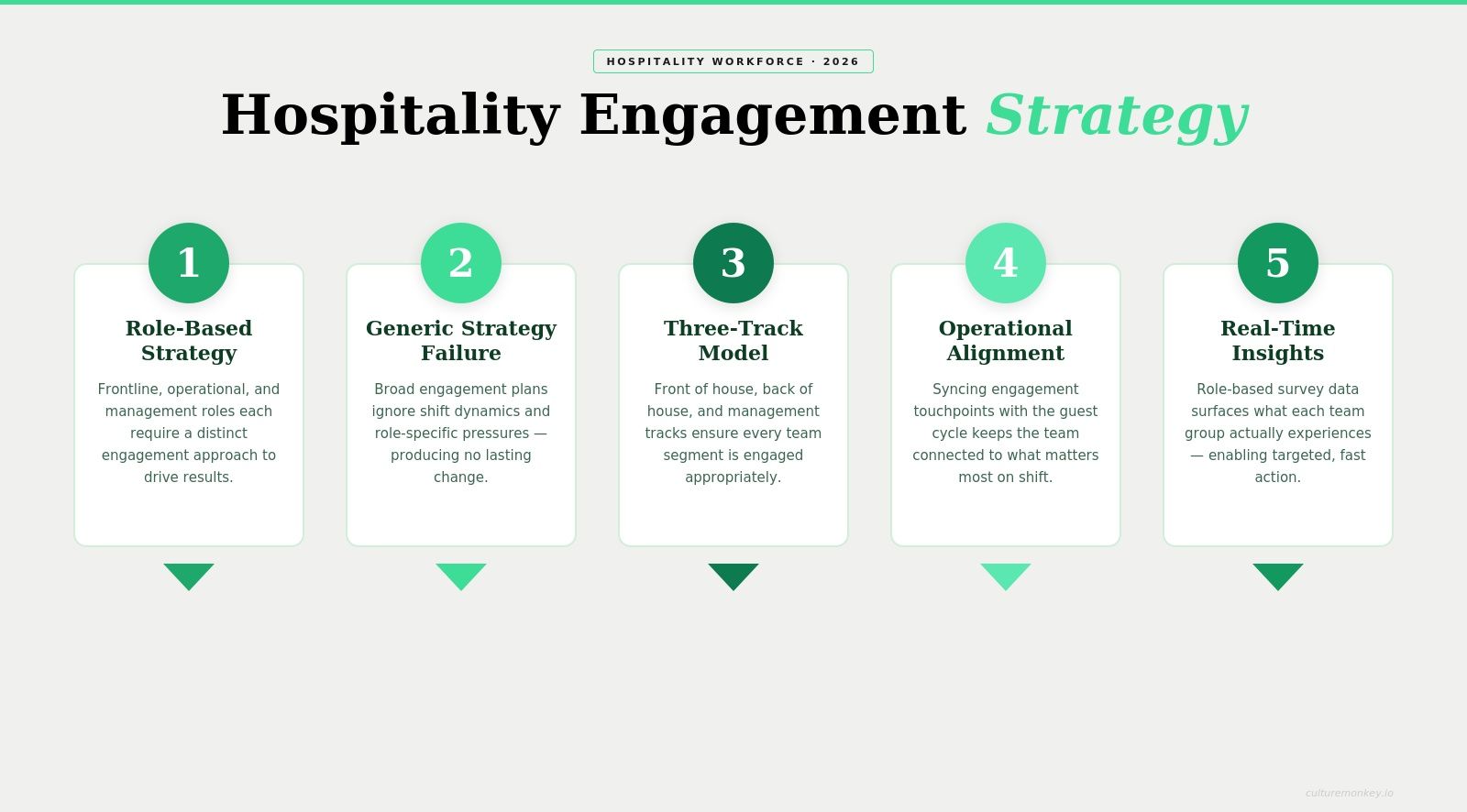
An effective employee engagement strategy for hospitality must be designed around how hotels actually operate, not adapted from corporate models. Hospitality teams function across three distinct workforce tracks: front-of-house, back-of-house, and management, each with different pressures, schedules, and engagement triggers. A single, uniform strategy fails because it ignores these structural differences.
This guide introduces a 3-track engagement framework built specifically for hospitality environments, helping you measure, manage, and improve engagement across roles that rarely experience work in the same way.


- A hospitality employee engagement strategy is a role-based plan for improving motivation, retention, and service quality across hotel teams.
- Generic strategies fail because hospitality work is shift-based, seasonal, deskless, and closely tied to guest experience.
- Front-of-house, back-of-house, and management teams need different engagement drivers, feedback channels, and recognition systems.
- Hotels should measure eNPS, absenteeism, turnover intent, survey participation, and guest-linked feedback to track engagement health.
- CultureMonkey helps hospitality teams capture real-time feedback, segment insights by role, track sentiment, and close the loop across distributed hotel workforces.
What makes an employee engagement strategy for hospitality different
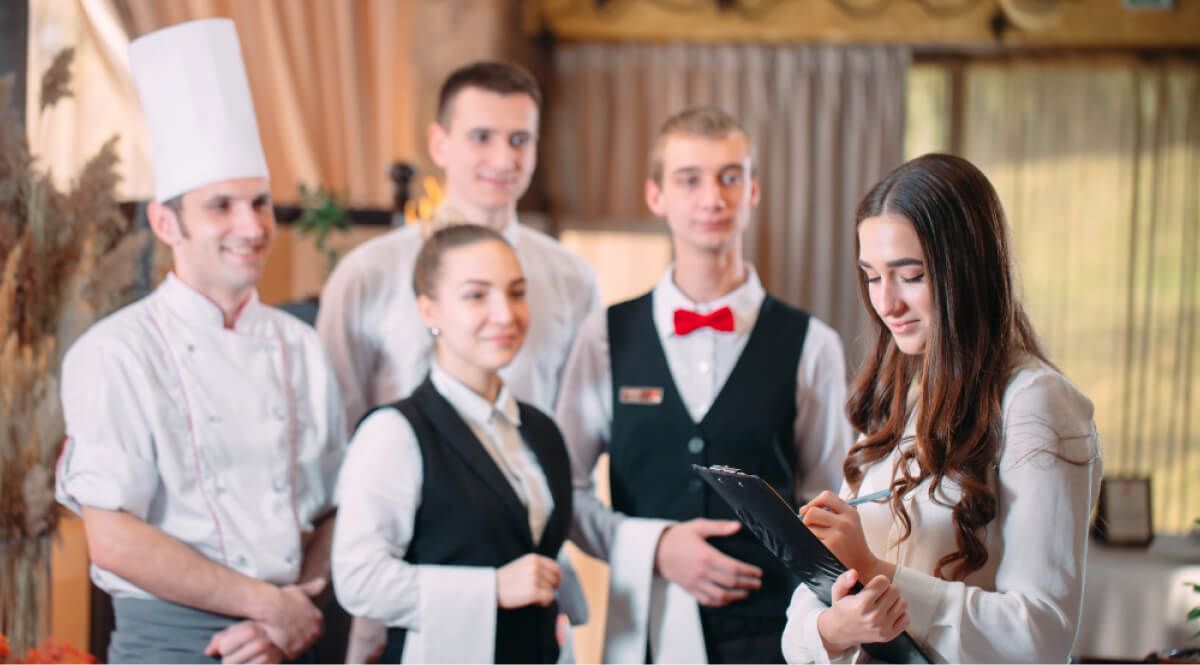
An employee engagement strategy for hospitality must operate in real time, adapting to shift-based roles and constant guest interaction. It directly impacts service quality, guest experience, and revenue, requiring continuous, role-specific engagement embedded into daily operations.
The three structural differences that change the engagement strategy
- 24/7 guest-facing operations
- Mixed employment models, including seasonal workers
- Direct link between engagement and guest experience
| Factor | Hospitality Reality | Engagement Implication |
|---|---|---|
| Operations | Always-on shifts, long hours | Requires shift-based listening and frequent check-ins |
| Workforce | Full-time, seasonal, gig staff | Needs segmented engagement strategies |
| Output | Guest experience and service | Engagement directly impacts guest feedback |
Generic engagement models fail because they ignore these key factors. Without adapting to these realities, organizations struggle to improve employee engagement, boost morale, and deliver consistent standout service.
Traditional vs Hospitality Engagement Strategy
| Factor | Traditional Strategy | Hospitality Strategy |
|---|---|---|
| Frequency | Annual | Continuous |
| Workforce | Stable | Dynamic and seasonal |
| Feedback | Email-based | Multi-channel, real-time |
| Impact | Internal | Guest-facing |
Why Generic Strategies Fail in Hospitality
Generic employee engagement strategies fail in hospitality because they assume stable schedules, desk-based communication, and uniform roles. At the same time, hotels operate with shift work, seasonal demand, and guest-facing pressure that require real-time, role-specific engagement systems.
A hotel workforce engagement plan must account for shift swaps, fluctuating staffing levels, and varying employee expectations. Without this alignment, engagement efforts become irrelevant, leading to disengaged employees, lower employee satisfaction, and increased turnover.
(Source: Gallup)
The three failure modes
- One strategy applied to all roles
- Annual surveys in seasonal cycles
- Office-first tools in deskless environments
| Generic Strategy | Hospitality Reality | Failure Outcome |
|---|---|---|
| Annual surveys | Seasonal workforce fluctuations | Misses critical engagement drops |
| Uniform strategy | Diverse roles across teams | Low relevance and poor participation |
| Email surveys | Deskless workforce | Weak employee feedback collection |
These gaps lead to poor employee sentiment, limited actionable insights, and declining team engagement. Over time, this impacts guest satisfaction, reduces service quality, and makes it harder to improve retention or maintain a strong workplace culture.
What is the 3-track hospitality workforce engagement model
The most effective employee engagement framework for the hospitality sector segments the workforce into front-of-house, back-of-house, and management tracks, as each group operates under different pressures, schedules, and engagement drivers.
The Hospitality Workforce Archetype Model segments employees into three distinct tracks, enabling more precise and effective engagement strategies.
This model moves away from one-size-fits-all approaches and instead focuses on role-specific drivers of engagement. It helps organizations design targeted interventions that improve employee experience, support employees to grow, and create meaningful performance improvements.
| Track | Workforce Type | Core Engagement Driver |
|---|---|---|
| Track 1 | Front-of-house | Guest identity and recognition |
| Track 2 | Back-of-house | Fairness, visibility, craft recognition |
| Track 3 | Management | Autonomy and growth opportunities |
Front-of-house vs back-of-house vs management engagement
| Workforce Track | Engagement Risk | Best Strategy | Best Feedback Channel |
|---|---|---|---|
| Front-of-house | Emotional labor, guest conflict, recognition gaps | Shift-end pulses and guest-linked recognition | Mobile pulse surveys |
| Back-of-house | Low visibility, fairness concerns, isolation | Visibility programs and cross-team communication | Anonymous feedback |
| Management | Burnout, limited autonomy, and workload pressure | Leadership development and workload review | Manager-specific surveys |
Why segmentation improves engagement accuracy
Segmenting engagement allows organizations to collect more relevant employee feedback and generate targeted, actionable insights. Instead of broad metrics, leaders gain clarity on what drives job satisfaction, what causes disengagement, and how to impact engagement at a team level.
This model also improves communication. With clear communication and two-way communication, teams feel heard, which increases trust and encourages employees to contribute ideas.
This framework becomes the foundation for a scalable employee engagement strategy for hospitality, helping organizations reduce high turnover, strengthen team engagement, and build a more resilient workforce.
Track 1: How to engage front-of-house hospitality staff
Front-of-house hospitality staff is engaged through real-time support, recognition, fair scheduling, and feedback systems that address emotional labor and directly impact guest experience during daily operations.
These employees are the face of the brand, responsible for delivering guest service and shaping the guest experience.
Front-of-house teams often operate under intense pressure. They manage guest expectations, resolve conflicts, and maintain a positive attitude even during high-stress situations. This makes their engagement critical to delivering better service and maintaining strong customer satisfaction.
What drives engagement for front-of-house staff
- Recognition tied to guest experience and guest feedback
- Real-time communication and immediate support
- Emotional recovery space after difficult interactions
What breaks engagement in FOH roles
- Lack of support during guest conflicts
- Tip inequity affects fairness perception
- Limited recognition despite delivering standout service
Engagement strategies that work
- Shift-end check in surveys to capture employee sentiment
- Recognition programs linked to customer feedback
- Manager escalation loops led by the general manager
- Open communication channels for faster issue resolution
When done right, these strategies help employees feel valued, improve employee satisfaction, and encourage staff to go the extra mile.
Track 2: How to engage back-of-house hospitality staff
Back-of-house hospitality staff are engaged through visibility, fair recognition, and strong communication systems that connect their work to guest outcomes, even without direct guest interaction.
Back-of-house employees, including housekeeping teams, often operate behind the scenes but play a critical role in delivering service quality.
The back-of-house recognition gap
Back-of-house teams often feel disconnected from outcomes because they do not interact directly with guests. This can reduce job satisfaction and create disengagement. Without proper communication, employees may not see how their work contributes to the overall success of the business.
| Challenge | Root Cause | Engagement Fix |
|---|---|---|
| Low visibility | No direct guest interaction | Connect work to guest experience outcomes |
| Pay inequity | Tip disparity | Transparent compensation and benefits |
| Isolation | Limited communication | Enable cross-team communication |
Strategies that improve BOH engagement
- Share guest feedback that highlights BOH contributions
- Enable real-time communication between FOH and BOH
- Provide growth opportunities, such as internal promotions
- Offer benefits like health insurance and tuition assistance
These steps help improve employee experience, strengthen staff engagement, and create a more inclusive workplace culture.
Track 3: How to engage hospitality management teams
Hospitality management teams disengage when they lack autonomy, support, and clear growth paths, making leadership-focused engagement strategies critical to improving team performance and operational outcomes.
Despite being responsible for execution. These leaders manage operations, support teams, and drive performance, often under intense pressure.
Why hospitality managers disengage
- Operational overload and long hours
- Limited autonomy in decision-making
- Lack of career growth opportunities

In hospitality, employee engagement is not an HR metric; it’s a business driver. The way your people feel is exactly how your guests will feel.


Engagement strategies for management
- Provide decision-making autonomy
- Create leadership development programs
- Link engagement metrics to performance outcomes
- Support work-life balance and reasonable workloads
When managers are engaged, they create stronger teams, improve communication, and drive better overall engagement across the organization.
The Guest-Facing Engagement Model
Employee engagement in hospitality directly drives guest experience outcomes because employee behavior, service quality, and communication determine how guests perceive the brand in real time.
Engaged employees deliver better service, communicate more effectively, and contribute to a stronger guest experience.
How engagement translates into guest outcomes
| Engagement Signal | Employee Behavior | Guest Outcome |
|---|---|---|
| High engagement | Proactive service, strong effort | Higher reviews and satisfaction |
| Low engagement | Minimal effort, reactive service | More complaints and poor reviews |
Why this model matters
This model highlights the direct link between engagement and business performance. High engagement leads to better customer satisfaction, improved service quality, and a clear competitive advantage.
What employee engagement metrics should hospitality teams track
The most important hospitality engagement metrics include eNPS, absenteeism, participation rates, turnover intent, and guest-linked feedback, because they reveal employee sentiment, manager effectiveness, and impact on service quality.
| Metric | What it shows | Why it matters |
|---|---|---|
| eNPS | Employee loyalty | Predicts retention |
| Absenteeism rate | Workforce stress | Signals burnout |
| Guest-linked feedback | Service impact | Links engagement to revenue |
| Participation rate | Trust level | Indicates openness |
| Turnover intent | Exit risk | Early warning signal |
How to build a hospitality employee engagement calendar
A hospitality engagement calendar structures feedback and action around seasonal demand cycles, ensuring engagement is measured continuously and aligned with operational pressure, staffing changes, and guest experience peaks. Engagement should be continuous and adaptive, not static.
| Phase | Engagement Activity | Purpose |
|---|---|---|
| Pre-season | Baseline survey | Establish employee sentiment baseline |
| Peak | Pulse surveys | Monitor stress and engagement |
| Shoulder | Feedback review | Identify improvements |
| Off-season | Retention survey | Reduce turnover |
| Re-opening | Engagement campaigns | Reset culture |
How to operationalize the calendar
- Map your business cycle
- Align engagement activities to key moments
- Assign ownership to management teams
- Track follow-ups and improvements
This approach helps organizations start engaging employees consistently, improve communication, and create a sustainable system to boost morale, lower turnover, and strengthen overall engagement.
What tools support a hospitality employee engagement strategy
Hospitality employee engagement tools must capture real-time feedback, support deskless employees, and enable role-based insights, because traditional tools fail in shift-based, multi-location environments.
To improve engagement in hotels, organizations need tools that capture real-time feedback, reach deskless employees, and enable role-based insights across teams.
| Capability | Why it matters |
|---|---|
| Multi-channel surveys | Reaches deskless employees |
| Real-time feedback | Captures shift-based issues |
| Role segmentation | Enables targeted engagement |
| Anonymous feedback | Builds trust |
| Mobile-first access | Increases participation |
Conclusion
An effective employee engagement strategy for hospitality is essential for aligning workforce performance with guest experience and business outcomes. In the hospitality industry, engagement drives service quality, employee satisfaction, and retention, directly impacting revenue and brand reputation. Without a structured approach, organisations risk disengaged employees, inconsistent service, and high turnover.
CultureMonkey helps hospitality businesses overcome these challenges by enabling real-time employee feedback, role-based segmentation, and actionable insights across teams. By embedding continuous listening into daily operations, CultureMonkey empowers organisations to improve employee engagement, strengthen workplace culture, and deliver consistently better guest experiences at scale.
Book a demo with CultureMonkey.
“Last reviewed: April 2026.”
FAQs
1. How do hotels build an employee engagement strategy for hourly staff?
Hotels build engagement for hourly staff by segmenting feedback by role, shift, and location. Use short mobile surveys, manager follow-ups, recognition tied to guest outcomes, and seasonal check-ins so hourly employees feel heard during peak and off-peak periods, not only in annual reviews.
2. What is the best way to engage front-of-house hotel employees?
The best way to engage front-of-house hotel employees is to support emotional labor, recognize guest-facing wins, and capture shift-end feedback. These teams need quick escalation paths, fair scheduling, visible appreciation, and manager support after difficult guest interactions, every day.
3. How should hospitality companies engage back-of-house teams?
Hospitality companies should engage back-of-house teams by improving visibility, fairness, and communication. Share guest feedback that reflects their work, address tip or pay inequity, create internal growth paths, and include housekeeping, kitchen, and maintenance staff in listening programs.
4. Why do generic employee engagement strategies fail in hospitality?
Generic engagement strategies fail in hospitality because they assume stable schedules, desk-based communication, and uniform roles. Hotels operate with shifts, seasonal demand, guest pressure, and mixed workforce types, so engagement must be continuous, segmented, and mobile-first for every team.
5. Which metrics should hotels track for employee engagement?
Hotels should track eNPS, survey participation, absenteeism, turnover intent, manager follow-up rate, and guest-linked feedback. These metrics show whether employees feel loyal, supported, and able to deliver strong service across front-of-house, back-of-house, and management roles over time.
6. How often should hospitality teams run engagement surveys?
Hospitality teams should run engagement surveys around operating cycles: baseline before peak season, short pulses during peak periods, review surveys after shoulder season, and retention surveys in the off-season. This timing captures stress, staffing risk, and recovery needs before turnover rises.
7. How does CultureMonkey support hospitality employee engagement?
CultureMonkey supports hospitality engagement with mobile-friendly surveys, anonymous feedback, role-based segmentation, sentiment insights, and action tracking. Hotels can hear deskless teams in real time, compare engagement by workforce track, and close feedback loops faster across properties.