




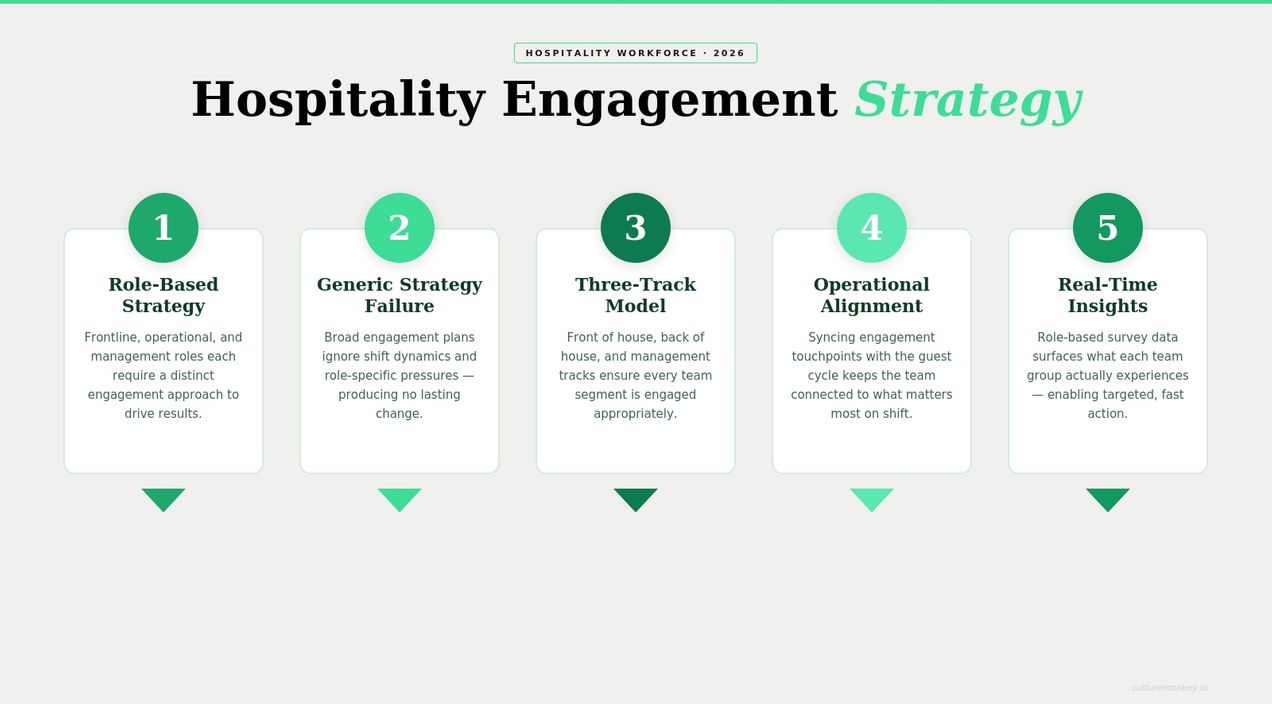
Employee engagement strategy for hospitality
Build an employee engagement strategy for hospitality with a 3-track framework for front-of-house, back-of-house, and management teams. Learn metrics, seasonal survey timing, and tools to improve retention, engagement, and guest experience.
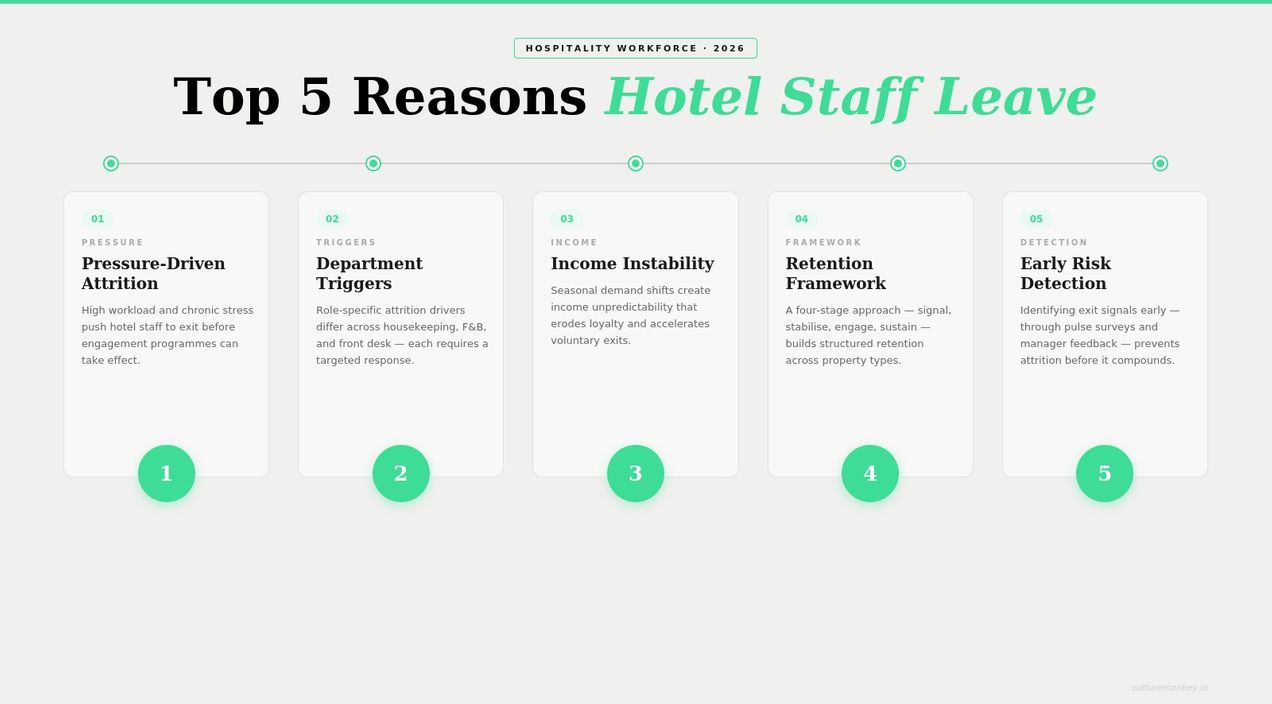
Reducing attrition in hotel staff: A practical guide
Learn how to reduce attrition in hotel staff with department-specific retention strategies, early warning metrics, and a practical framework for front desk, housekeeping, F&B, and events teams.
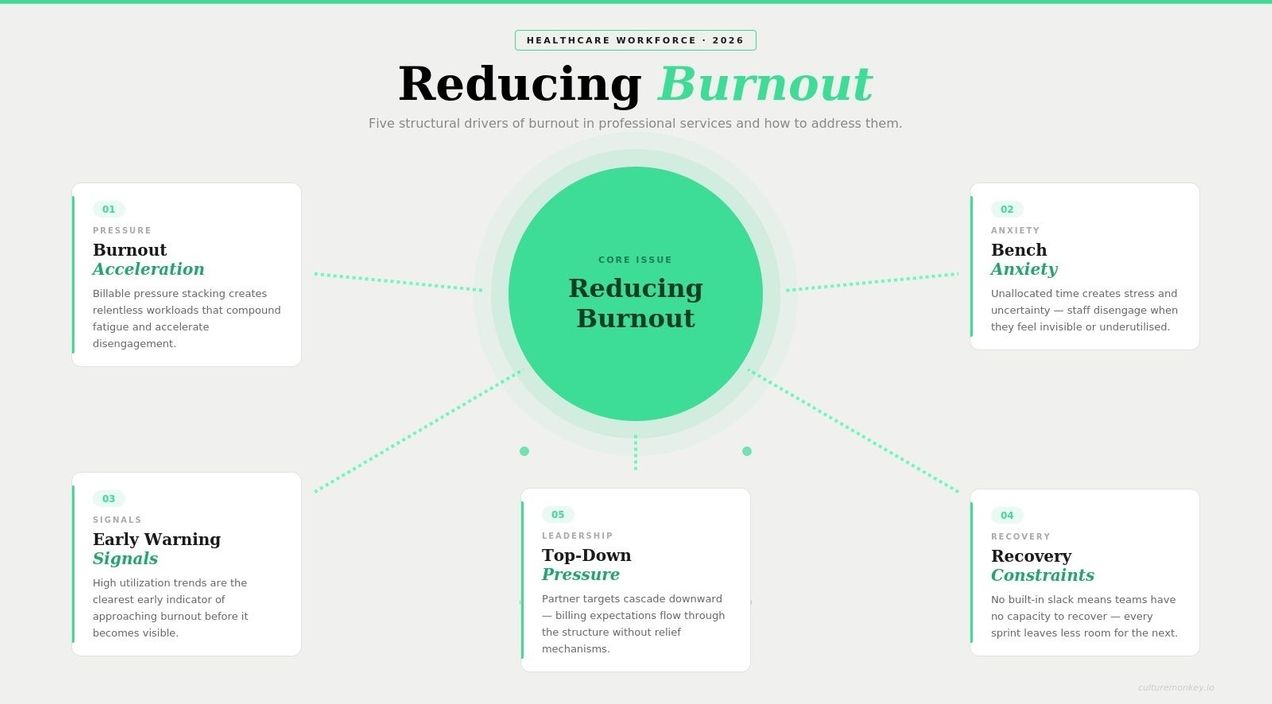
Reducing burnout in professional service teams guide
Professional service teams burn out for structural reasons, billable pressure, project stacking, and bench anxiety compound over time. This guide breaks down the Utilization-Burnout Acceleration Model and a 4-stage reduction framework built specifically for PS firm dynamics.
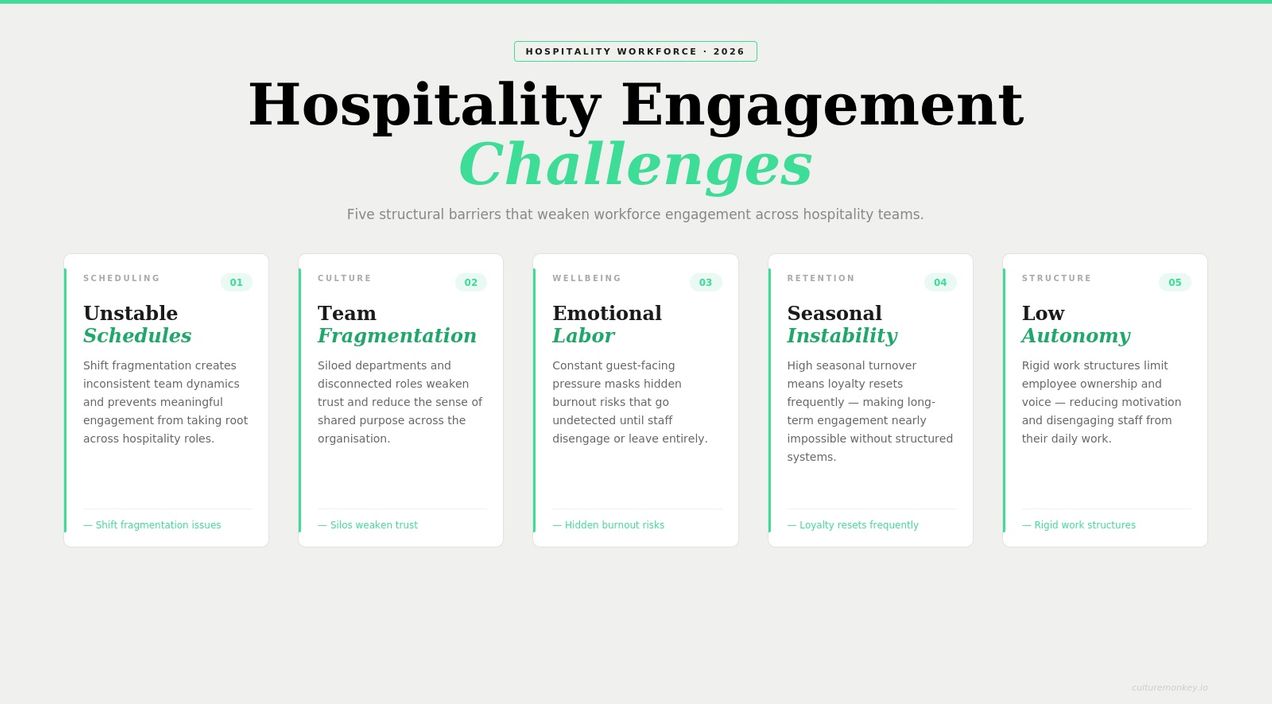
Employee engagement challenges in the hospitality industry
Discover 7 structural challenges causing high turnover in hospitality. Learn why employee engagement fails in the hospitality industry and how to fix shift fragmentation, emotional labour burnout, seasonal hiring gaps, and tipping inequity.
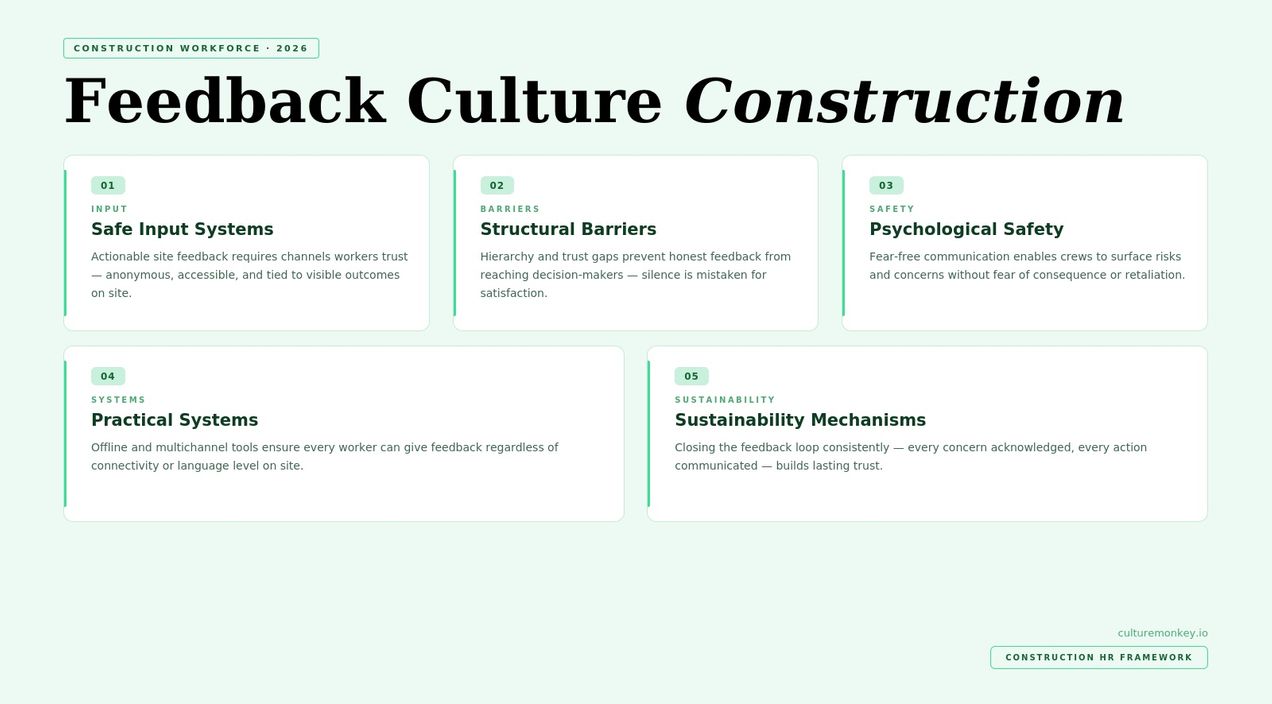
Building a feedback culture in construction organizations
Building a feedback culture in construction organizations requires site-level systems that work without digital infrastructure. Learn how to enable safe worker input, close the feedback loop, and develop foreman-level accountability to drive trust and engagement across all job sites.
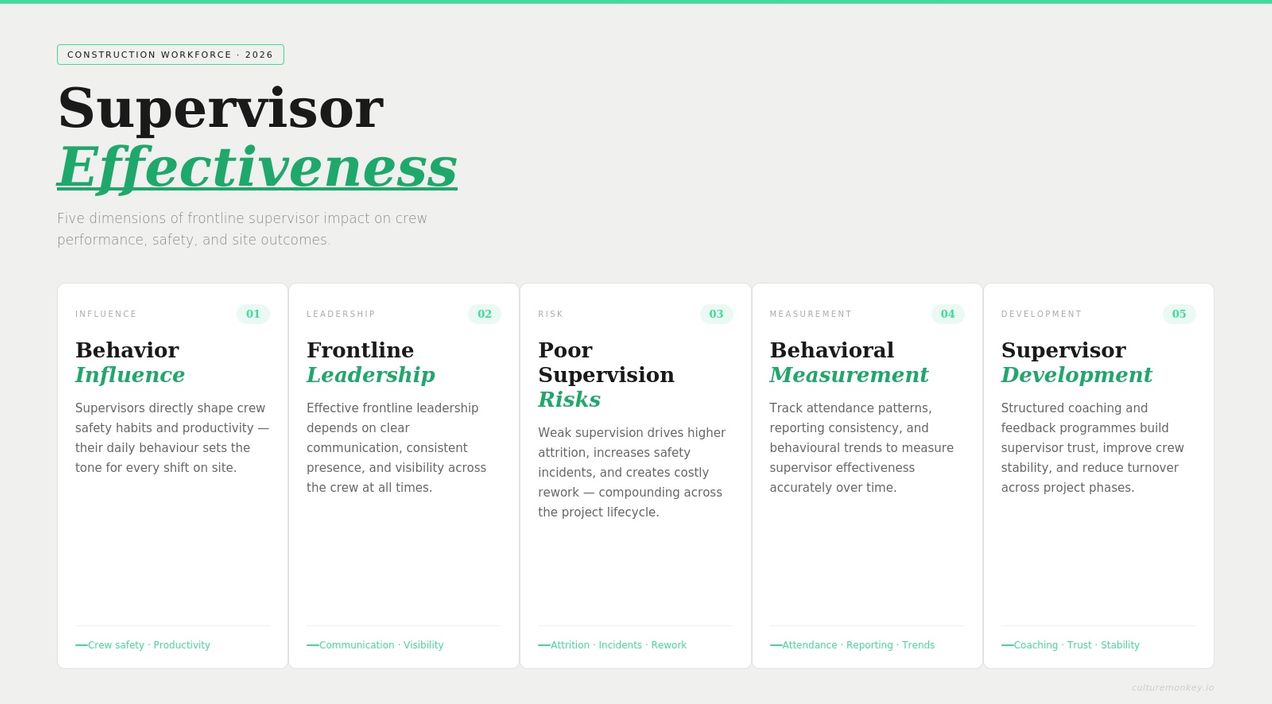
Supervisor effectiveness in construction projects explained
Supervisor effectiveness in construction projects directly impacts safety, productivity, and workforce engagement. This guide explains how to measure it, improve site leadership, and track the right performance indicators across projects.
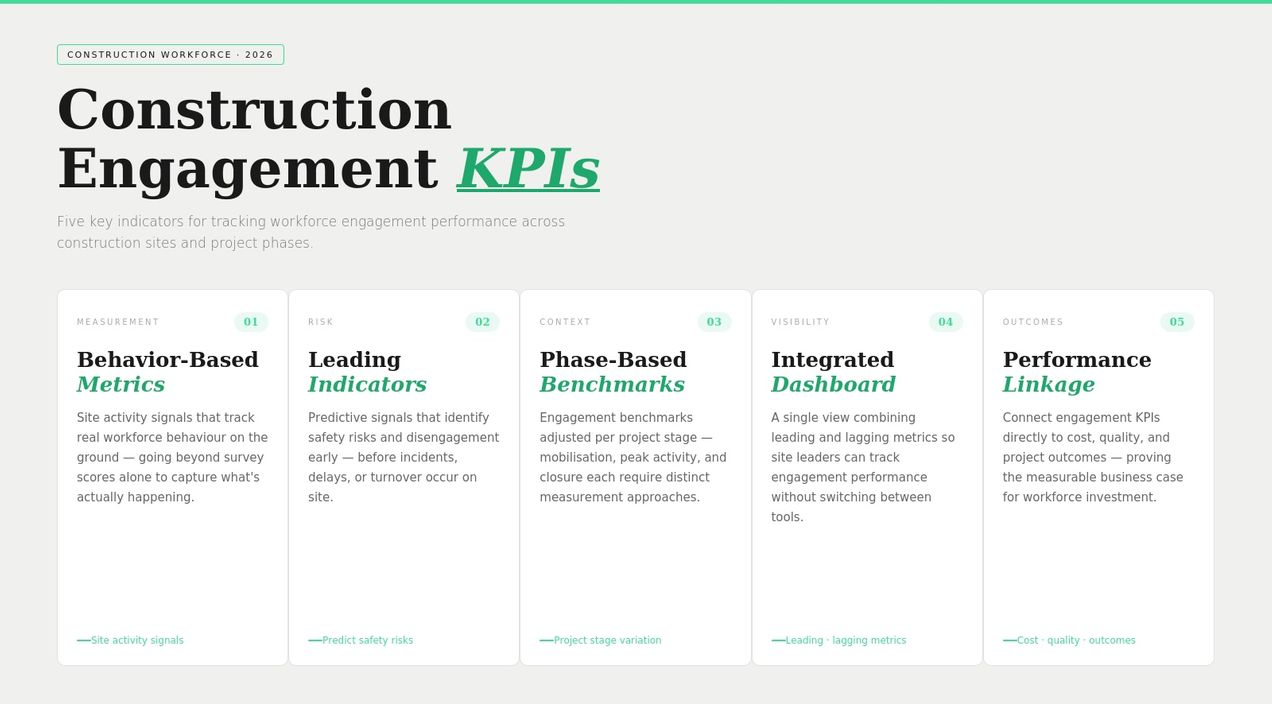
Engagement KPIs for construction operations: 8 to track
Discover the most important engagement KPIs for construction operations, including site-level metrics, benchmarks, and tracking methods to improve workforce productivity, safety outcomes, and retention across multi-site projects.
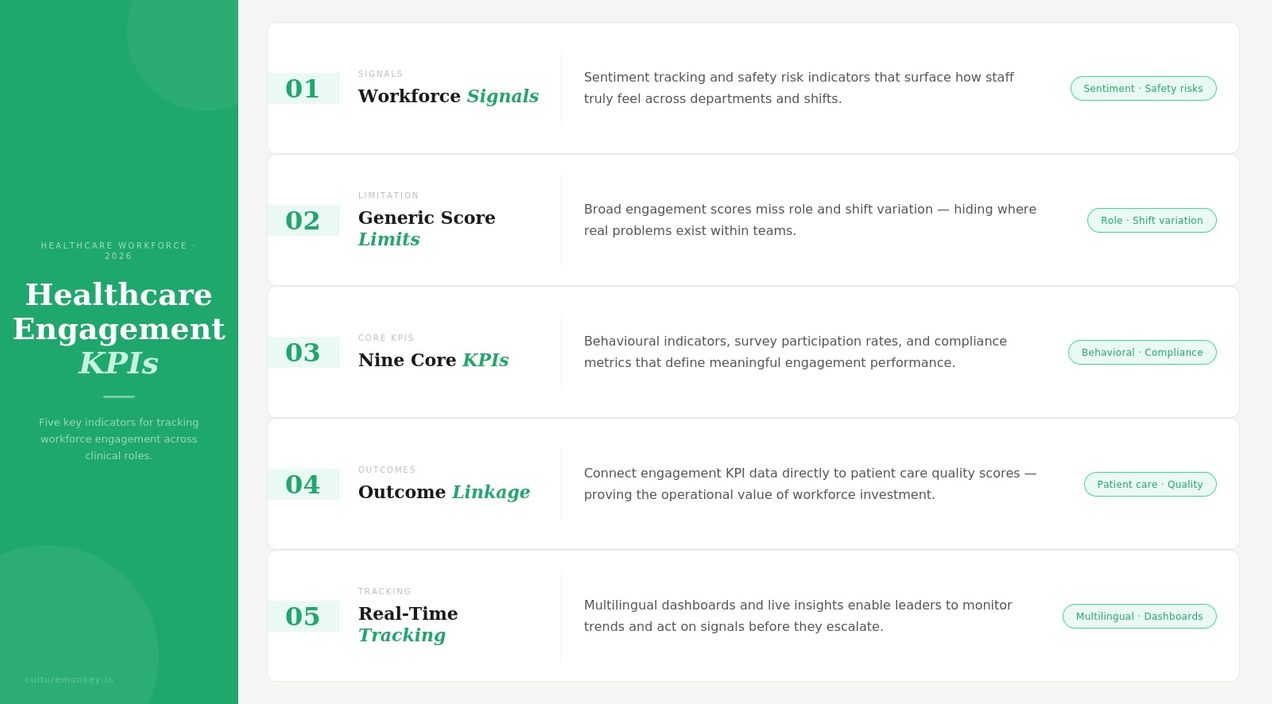
9 Engagement KPIs for healthcare organizations guide
Engagement KPIs for healthcare organizations are explained with key metrics, benchmarks, and strategies to improve employee engagement, patient outcomes, safety, and operational efficiency across healthcare organizations and teams.
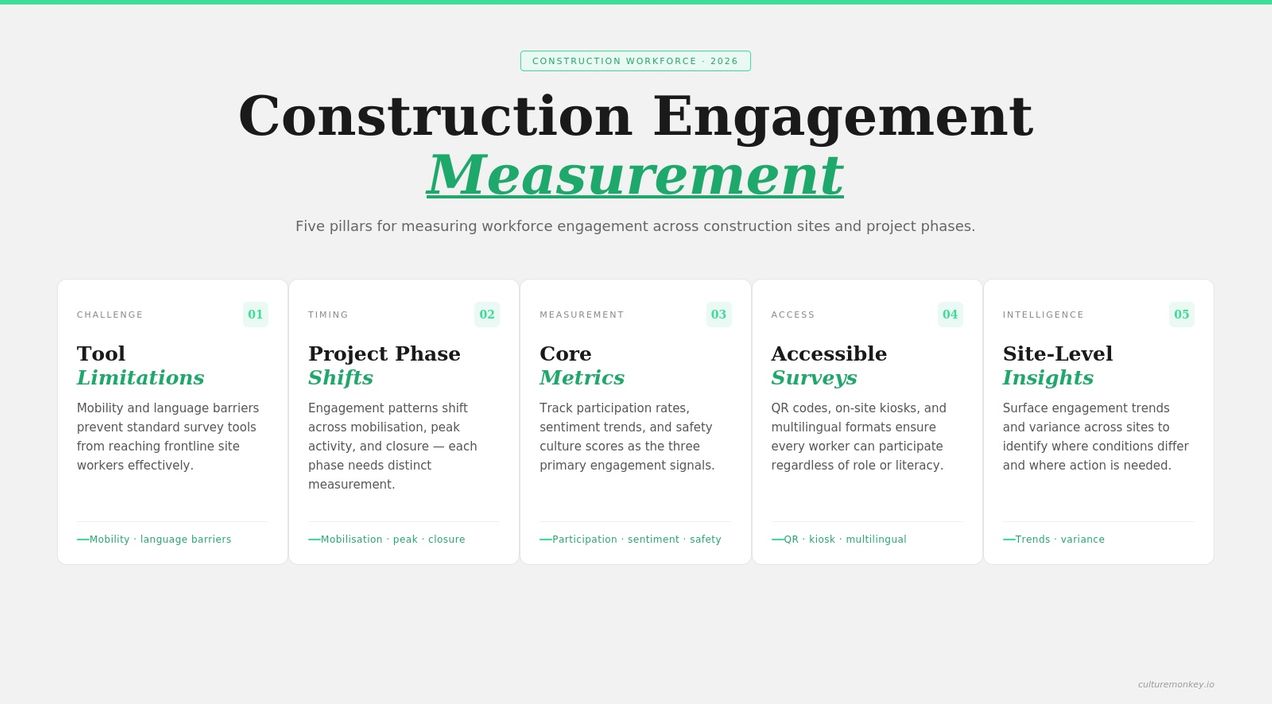
Measuring engagement across multi-site construction projects
Learn how to measure employee engagement in construction across multiple sites using pulse surveys, behavioral metrics, and phase-aligned dashboards that capture real-time insights, improve participation, and help teams act on engagement data effectively.
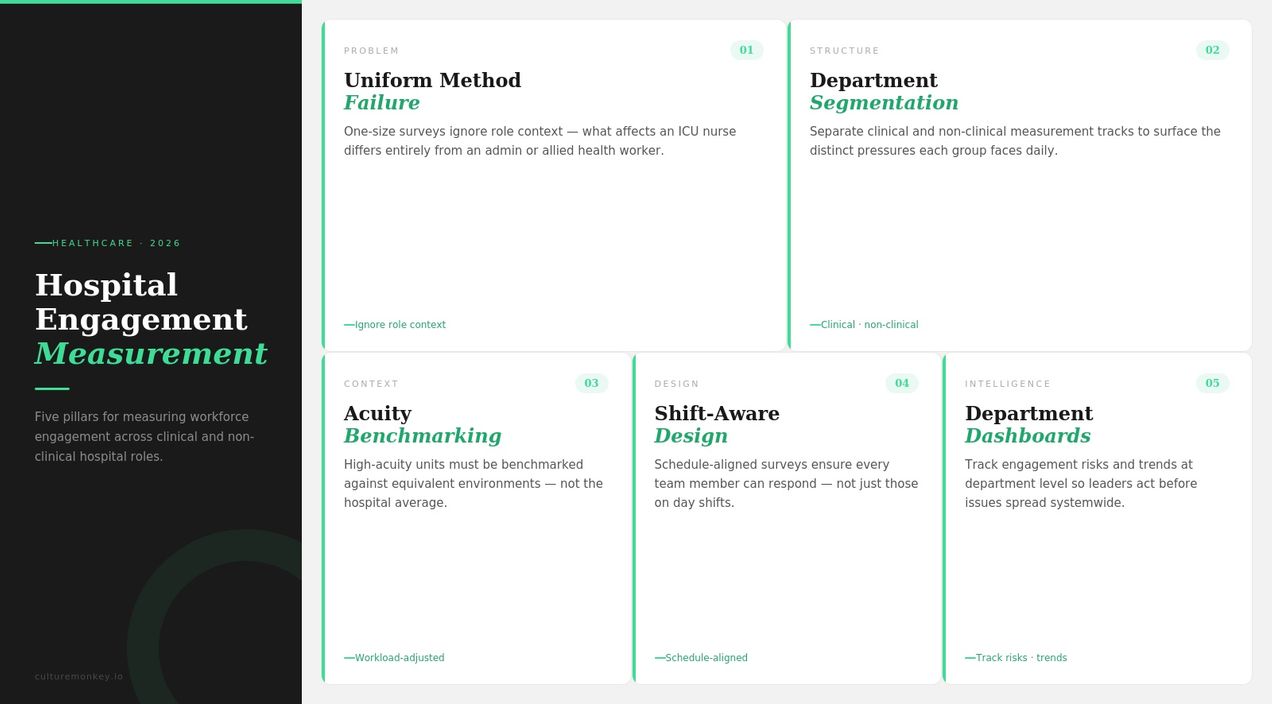
Measuring engagement across hospital departments in 2026
Measuring employee engagement across hospital departments requires segmentation, acuity-adjusted benchmarking, and shift-aware survey design. Learn how healthcare organizations capture accurate data from the ICU, ED, wards, and admin teams without misleading comparisons.
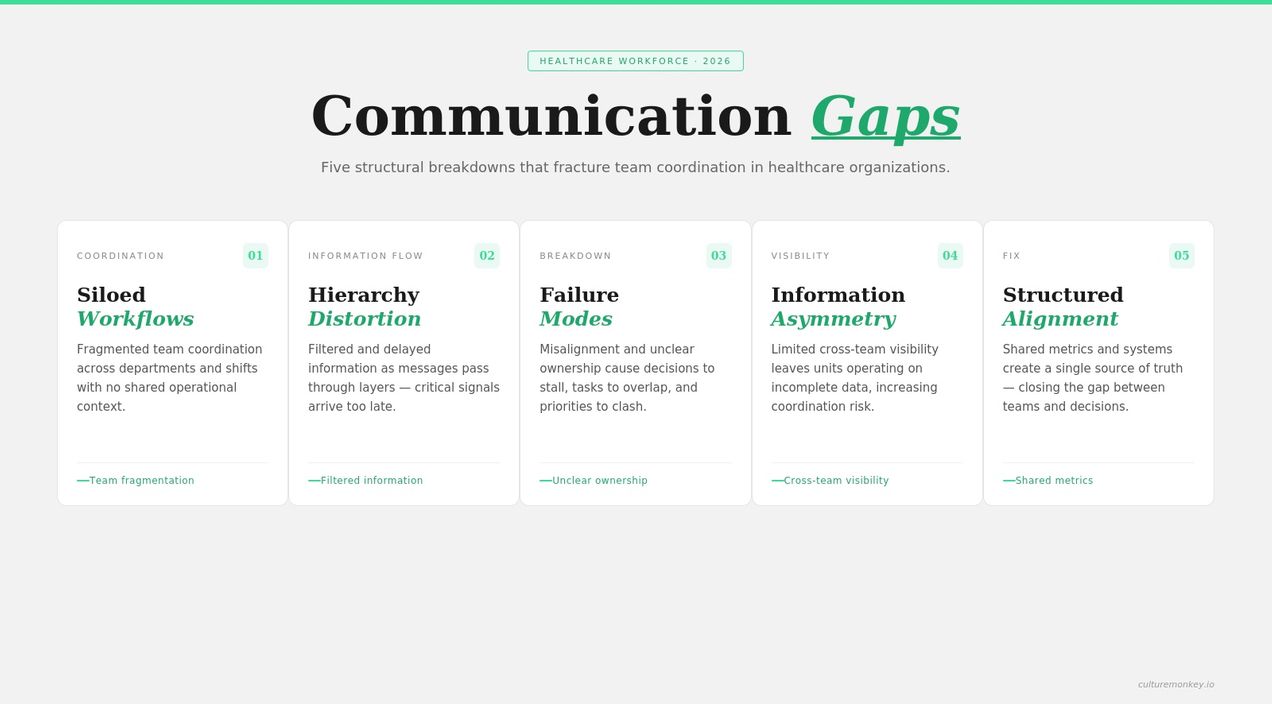
Communication gaps between clinical and non-clinical staff
Communication gaps between clinical and non-clinical staff occur when teams operate with different priorities, language, and workflows. These gaps delay decisions, reduce coordination, and increase risk, impacting patient care, staff engagement, and overall hospital efficiency.
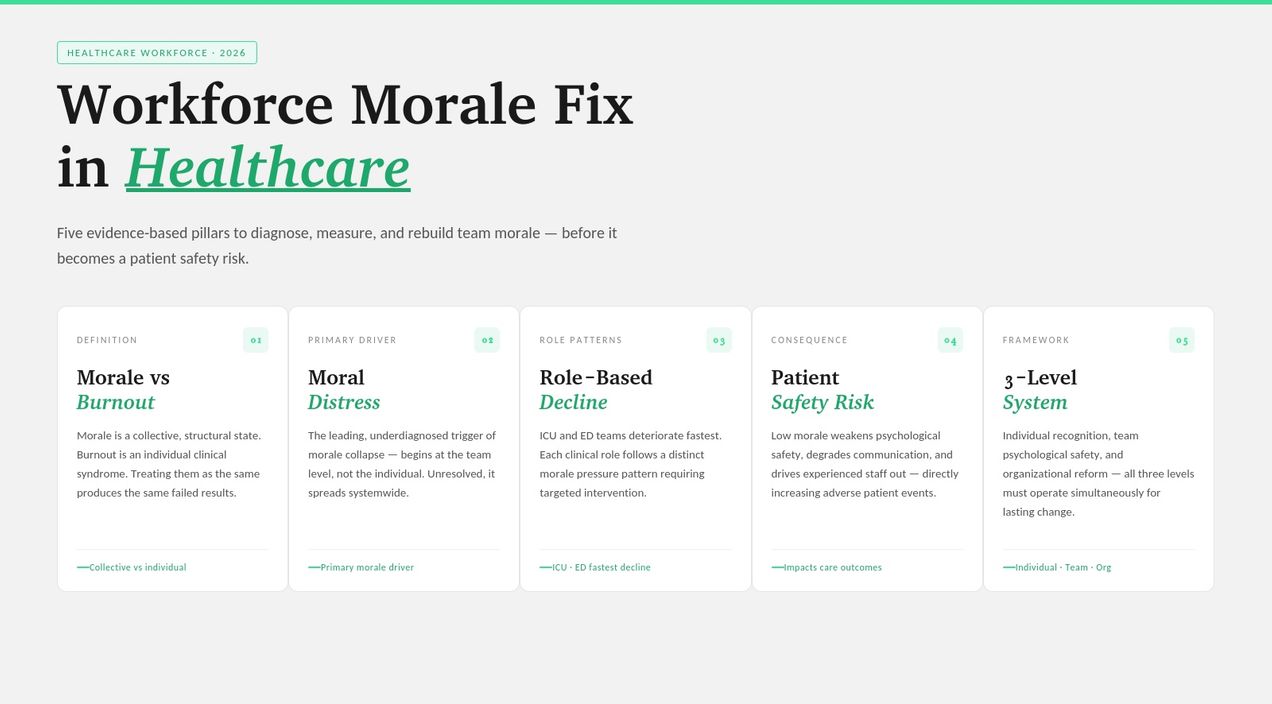
Improving workforce morale in healthcare organizations
Improving workforce morale in healthcare organizations: exploring structural causes, impact on patient care, and a 3-level system to fix morale decline. Learn how to measure morale, reduce risks, improve retention, and build high-performing healthcare teams.
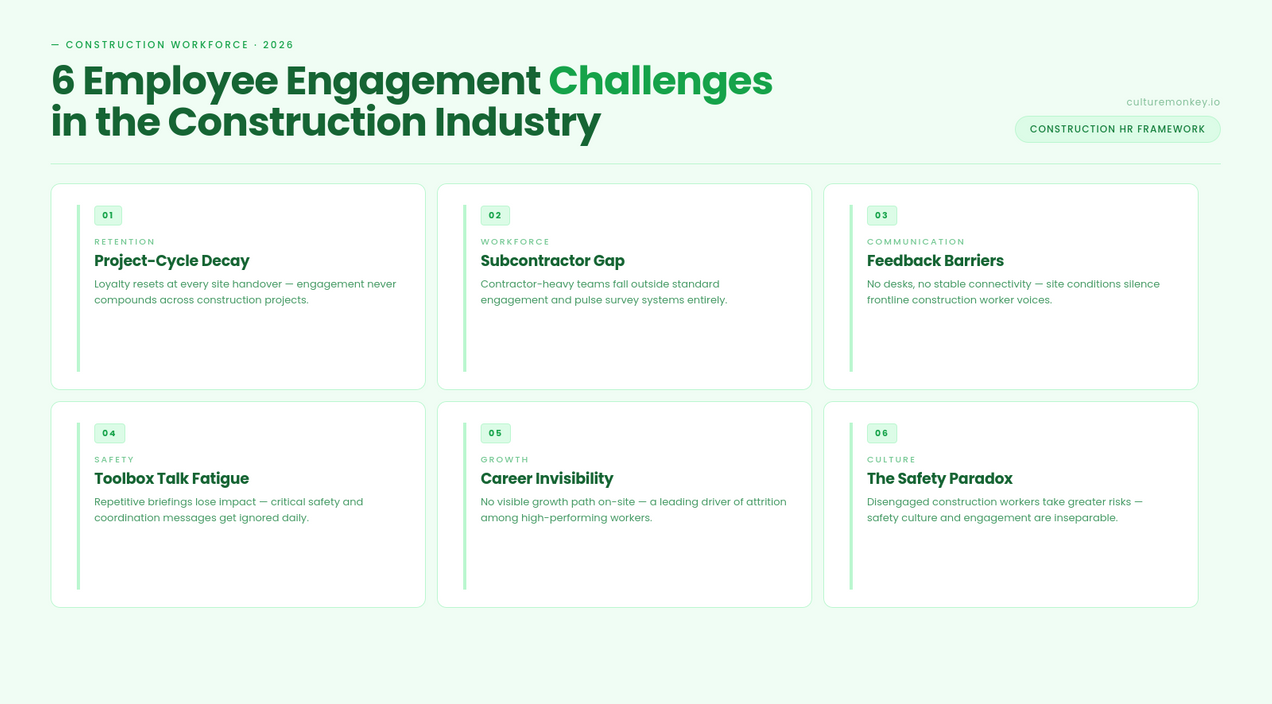
6 Workforce engagement challenges in construction industry explained
Workforce engagement challenges in construction industry are explained with key causes, safety risks, and practical fixes. Learn how to improve retention, reduce disengagement, and build stronger, safer, high-performing construction teams across projects.
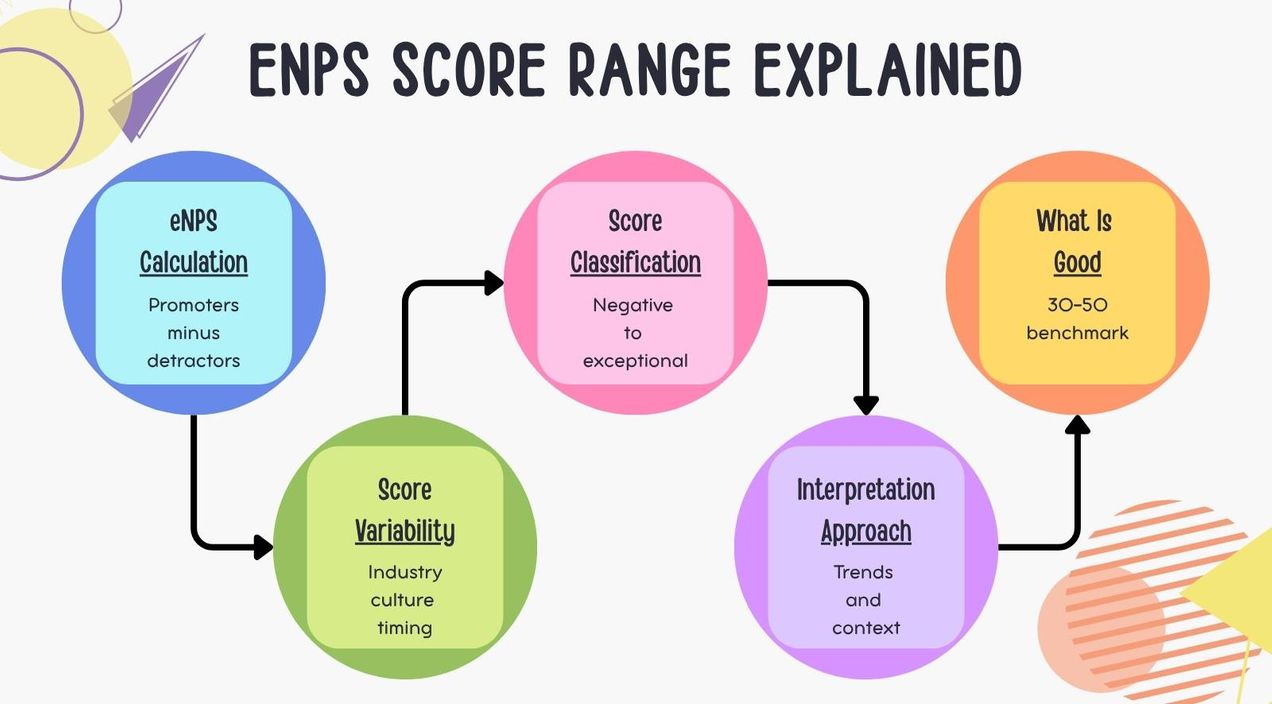
eNPS score range Explained (What’s a Good Score?)
Learn what eNPS scores really mean with clear benchmarks, ranges, and practical interpretation tips. This guide explains how to evaluate employee sentiment accurately, and when comparing scores across organizations makes sense for better decision-making.
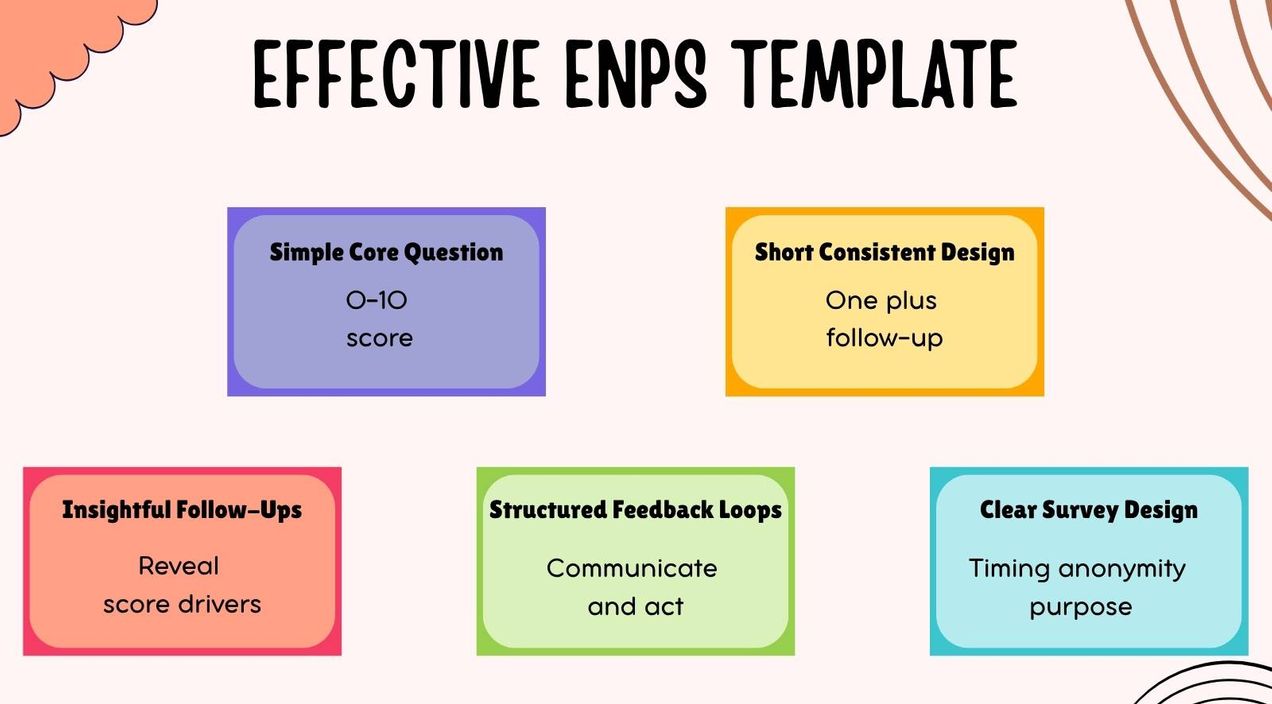
Effective eNPS Survey Template for 2026 (Best Format)
A practical guide to eNPS templates: what eNPS measures, core and follow up questions, template types, and how to turn scores into real culture engagement and retention improvements across all teams!
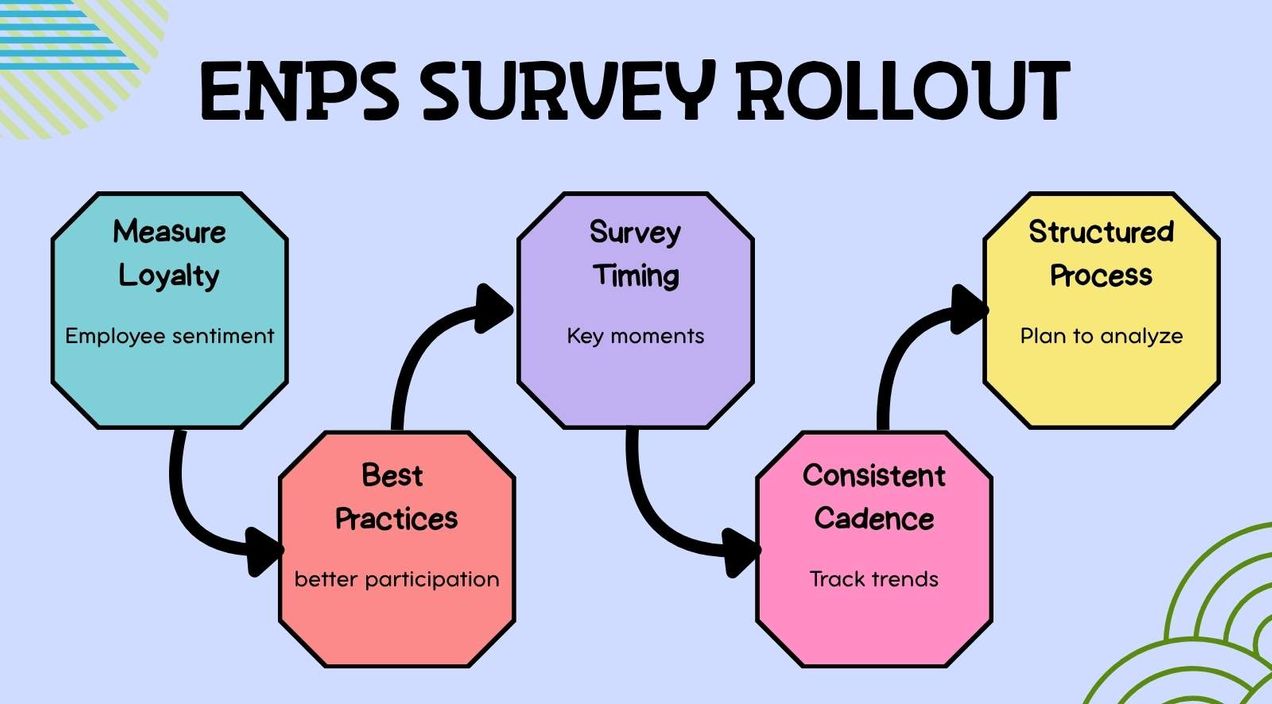
eNPS survey rollout (Step-by-step guide to get it right)
Plan your eNPS survey rollout with clear steps, a structured process, and proven implementation strategies. Learn best practices for launching surveys, boosting participation, analyzing feedback, and turning insights into meaningful improvements in employee engagement.
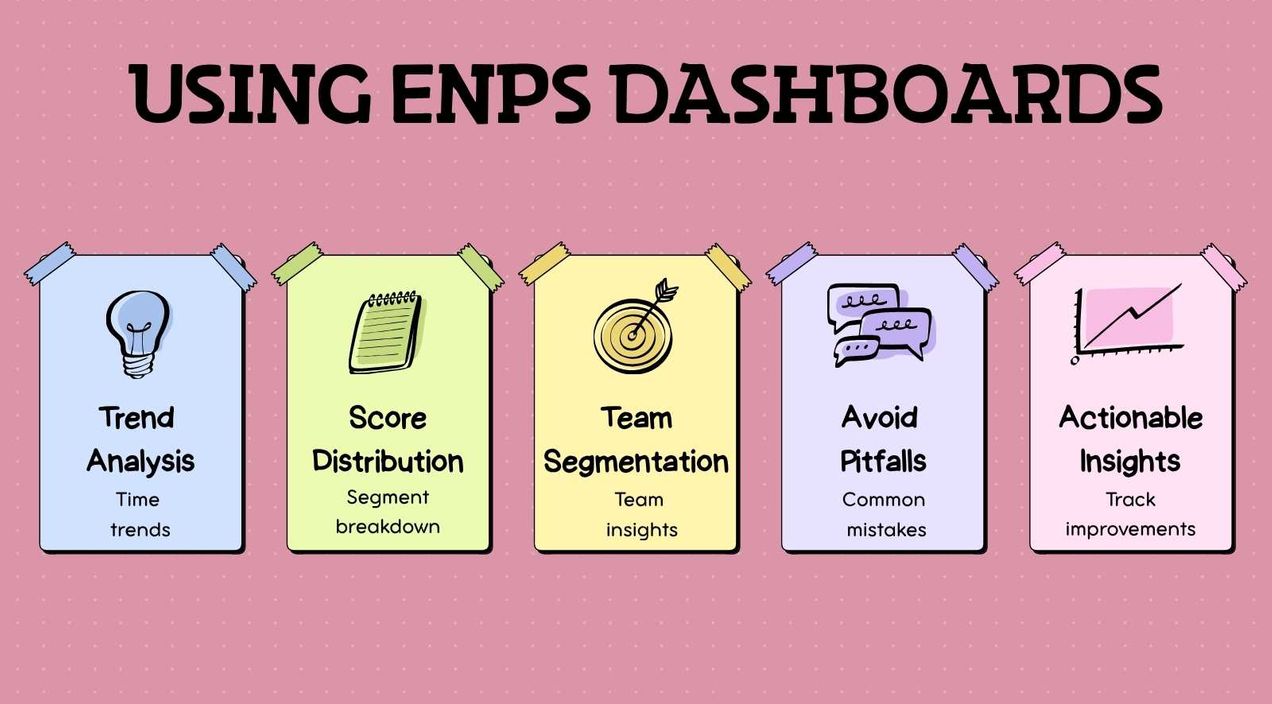
How to read and use an eNPS dashboard?
An eNPS dashboard is a visual interface that displays employee Net Promoter Score data in a structured format, helping organizations track engagement across the workforce and turn employee feedback from surveys into clear, actionable insights.
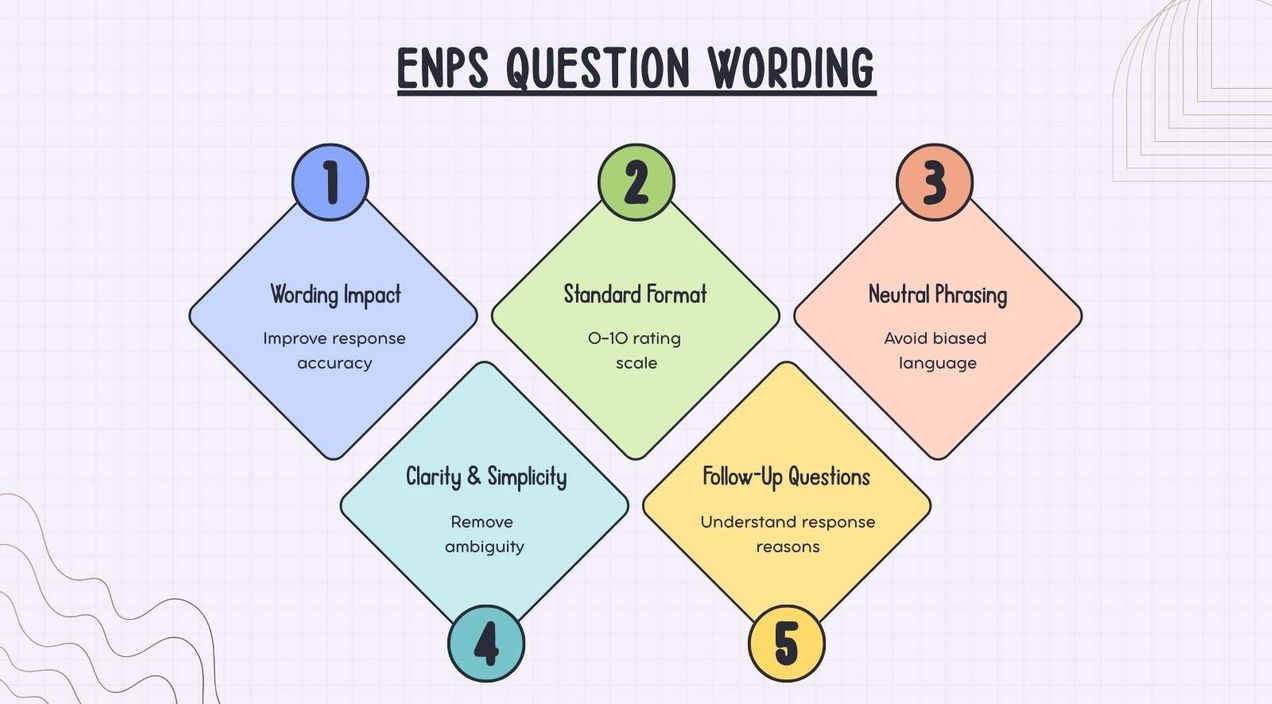
eNPS question wording guide (How to phrase it right)
Learn the best eNPS question wording with clear phrasing, real examples, and practical survey design tips. This guide explains how to ask the eNPS question correctly, improve response quality, and collect honest employee feedback that helps organizations understand workplace sentiment.
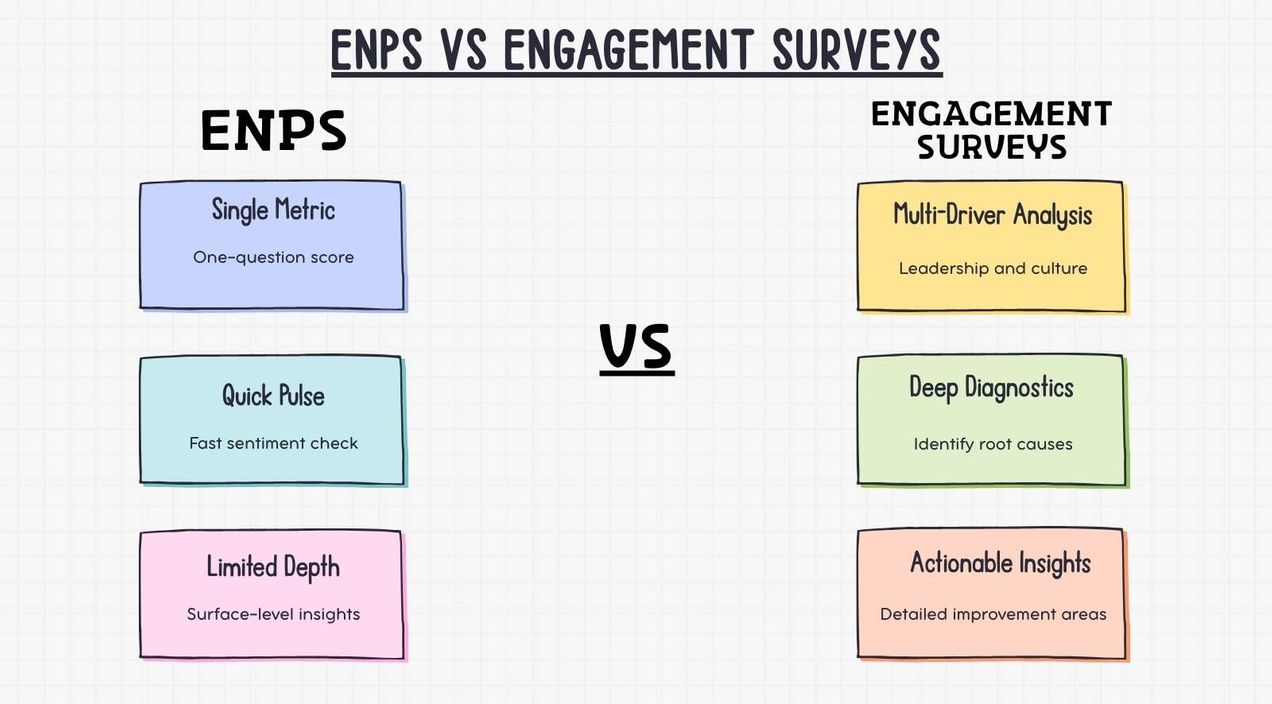
eNPS vs employee engagement surveys: Key differences
eNPS vs employee engagement surveys compared. Understand the key differences between these employee feedback methods, what each metric measures, their practical use cases, and when organizations should use eNPS or engagement surveys to track workplace engagement.
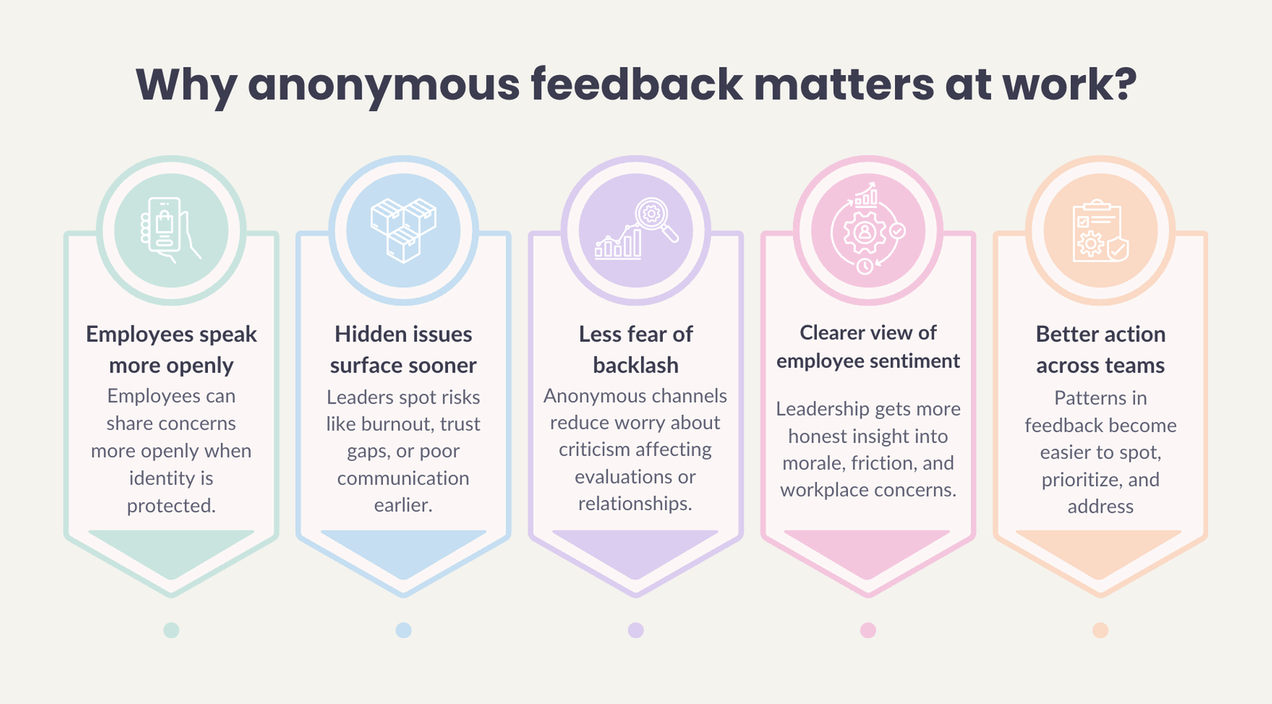
Anonymous feedback at work: Encouraging honest input
Anonymous feedback at work helps organizations surface concerns that employees may hesitate to raise through identifiable channels. Many workplace dynamics discourage candid conversations and often lead to poor feedback and a lack of actionable insights.
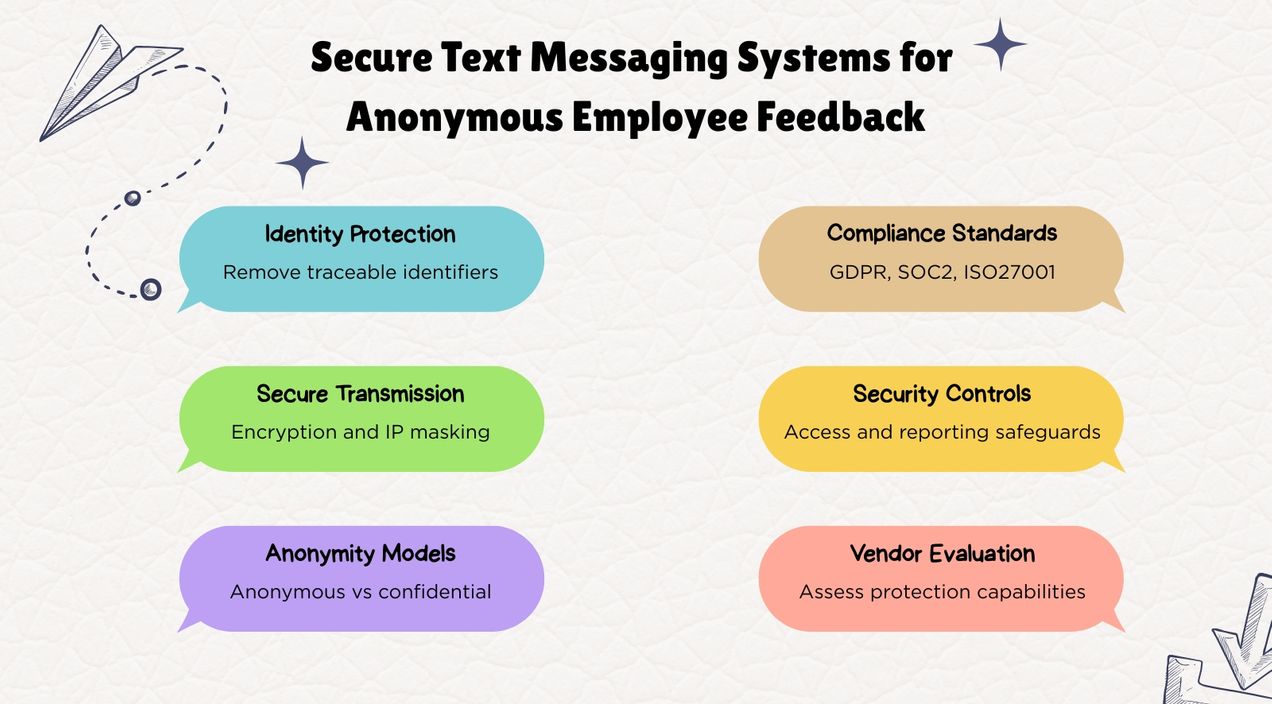
Secure text messaging systems for anonymous employee feedback (2026)
Anonymous feedback is secure when employee responses cannot be traced back to individuals through technical identifiers, system logs, or reporting patterns. A secure, anonymous employee feedback tool removes identity signals and ensures responses cannot be linked to employees at any stage.
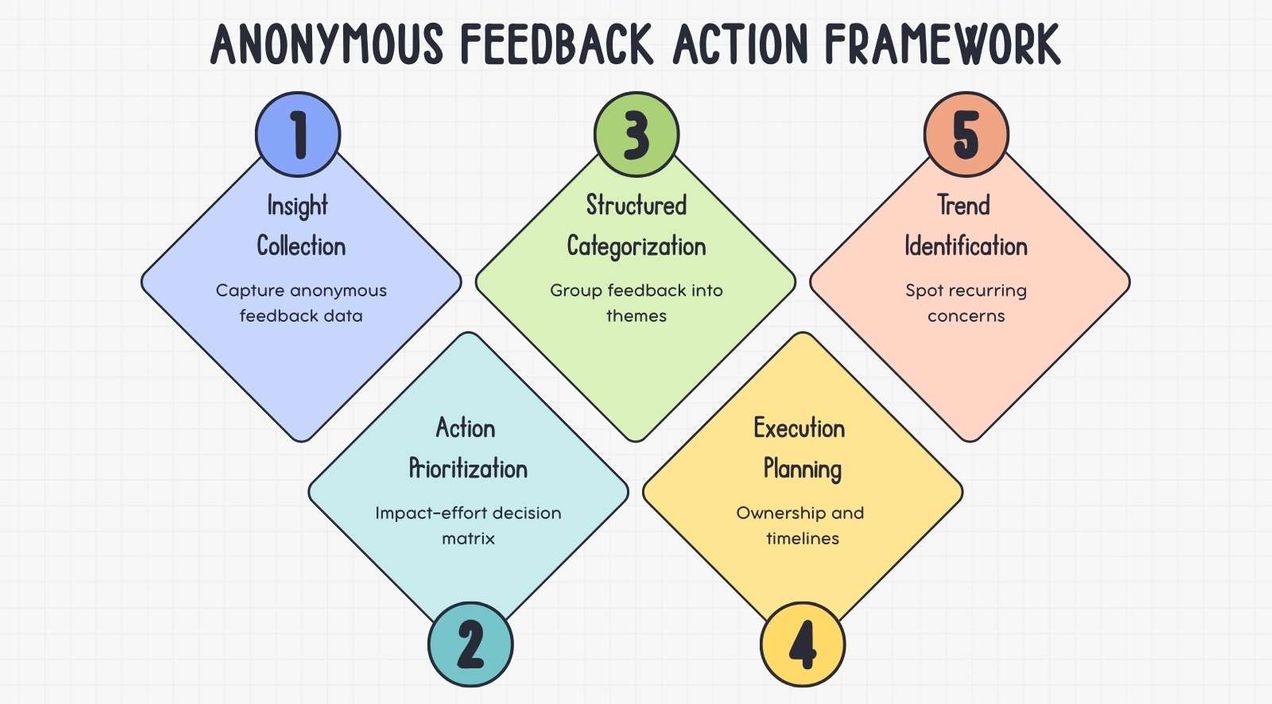
What to do with anonymous feedback: Data to action plan framework
After collecting anonymous feedback results, review responses for recurring themes, prioritize the most impactful issues, and build clear action plans. Share updates with employees and track progress over time so feedback consistently leads to visible improvements.
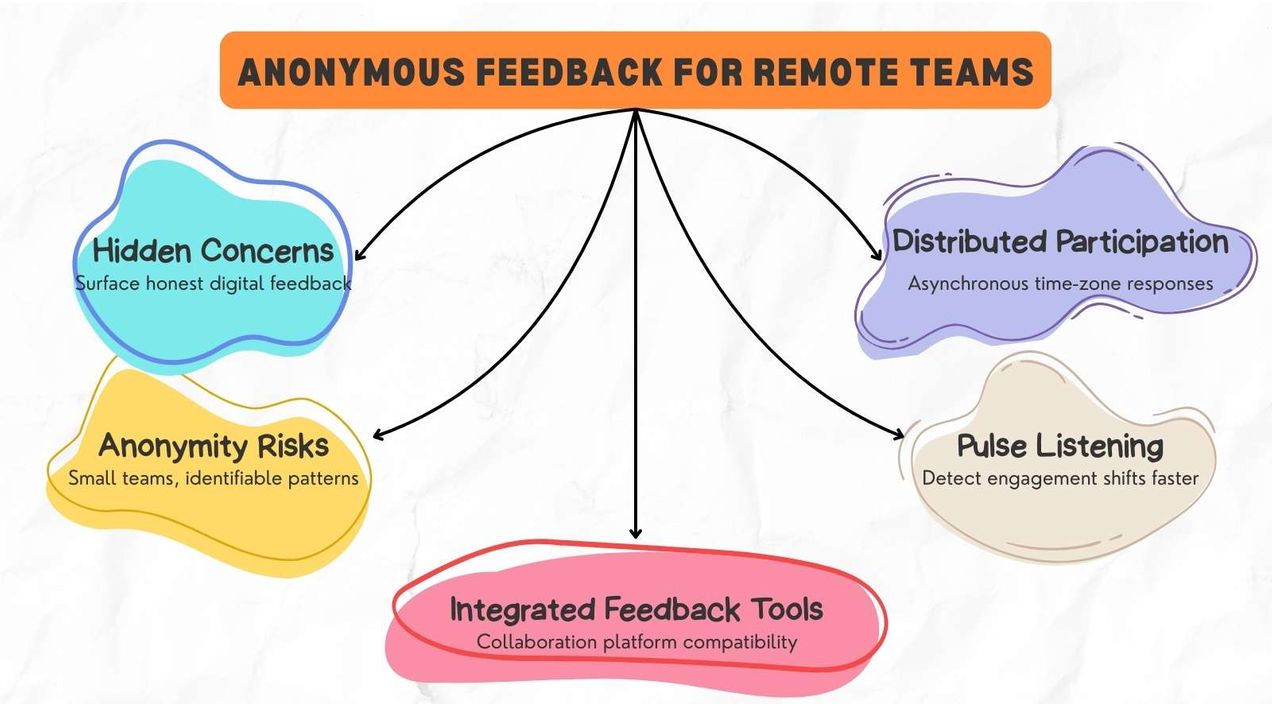
Anonymous feedback for remote teams: A complete guide
Anonymous feedback remote teams rely on lets employees share honest opinions without revealing identity. It helps leaders detect engagement issues, communication gaps, and concerns early while improving trust and transparency in distributed workplaces.
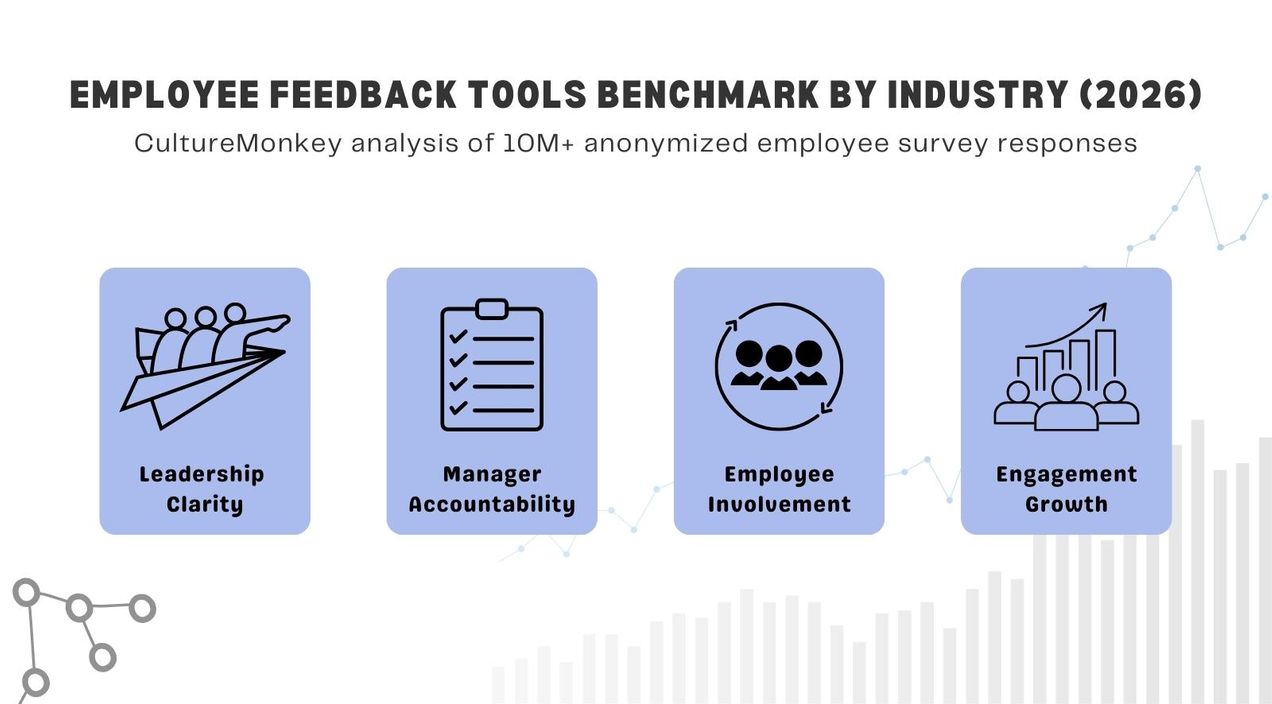
Employee feedback tools benchmark by industry (2026): Analysis of 10M+ employee responses
This benchmark report analyzes more than 10 million anonymized employee survey responses to understand how engagement evolves across industries. Explore which sectors are improving, where engagement is declining, and how employee feedback tools influence leadership decisions and workplace outcomes.