



CultureMonkey Blog
Employee Engagement Articles

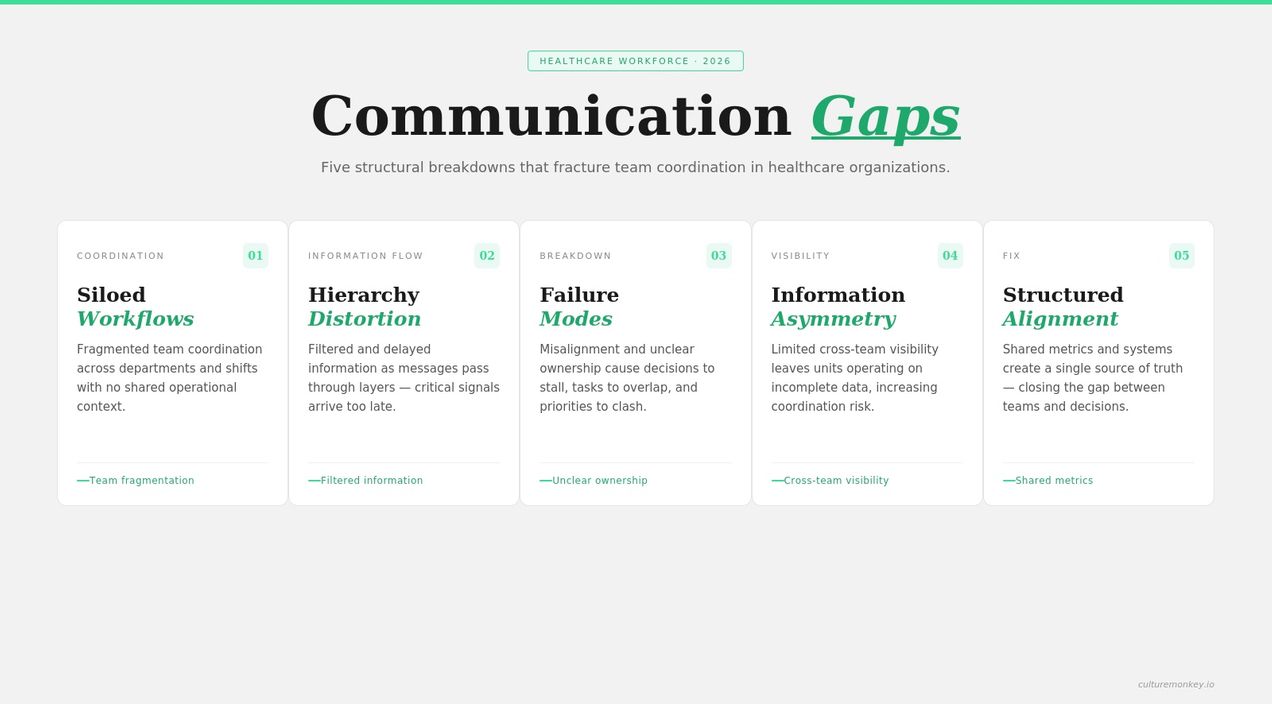
Communication gaps between clinical and non-clinical staff
Communication gaps between clinical and non-clinical staff occur when teams operate with different priorities, language, and workflows. These gaps delay decisions, reduce coordination, and increase risk, impacting patient care, staff engagement, and overall hospital efficiency.
8 Best employee survey tools for construction companies: 2026 guide
Employee survey tools for construction companies are platforms that capture frontline feedback across sites, crews, and roles to improve engagement and safety.
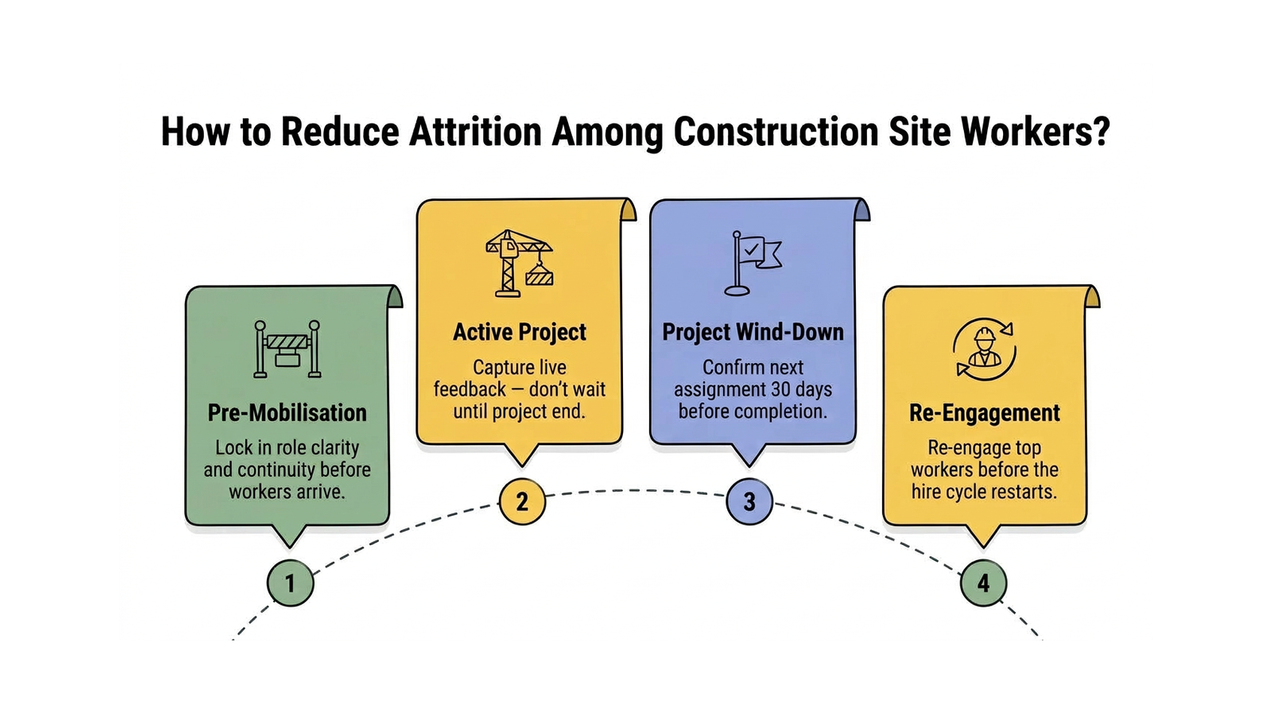
Reducing attrition among construction site workers: A guide
Reducing attrition among construction site workers means identifying and fixing project, labour-hire, and site-level conditions that drive exits. It focuses on improving continuity, visibility, and on-site experience to keep workers engaged across projects.
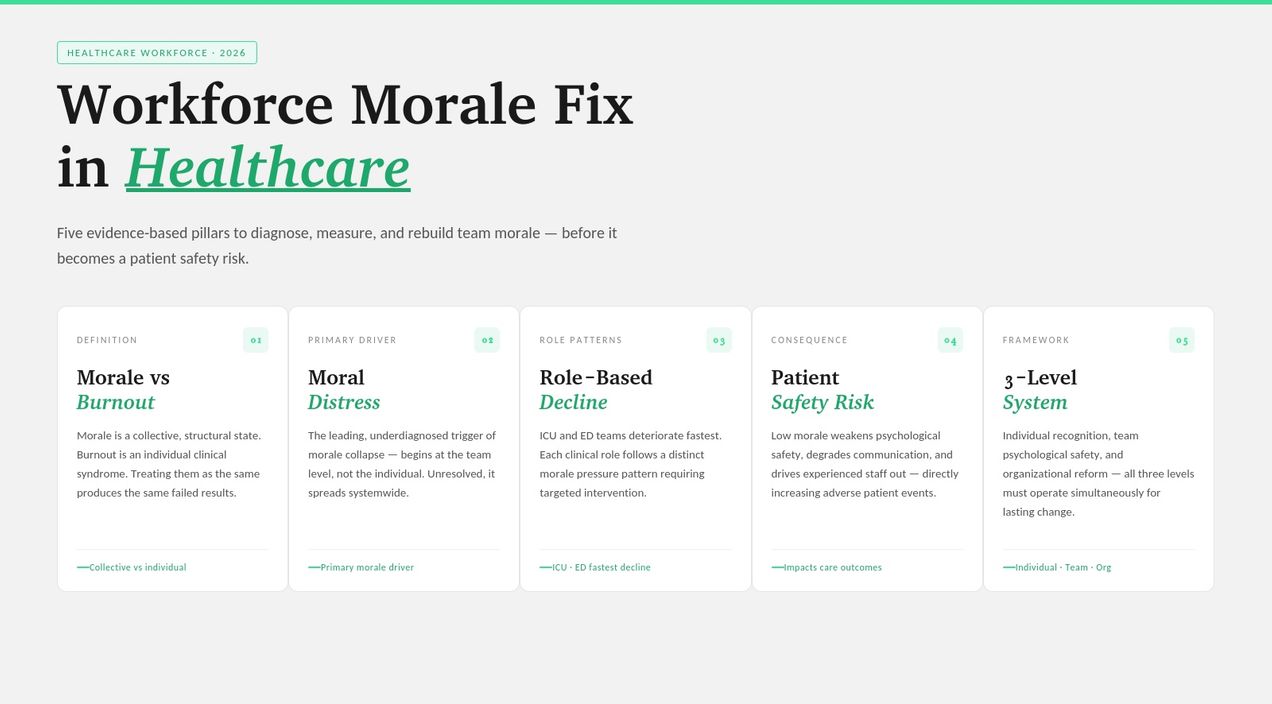
Improving Workforce Morale in Healthcare Organizations
Improving workforce morale in healthcare organizations: exploring structural causes, impact on patient care, and a 3-level system to fix morale decline. Learn how to measure morale, reduce risks, improve retention, and build high-performing healthcare teams.
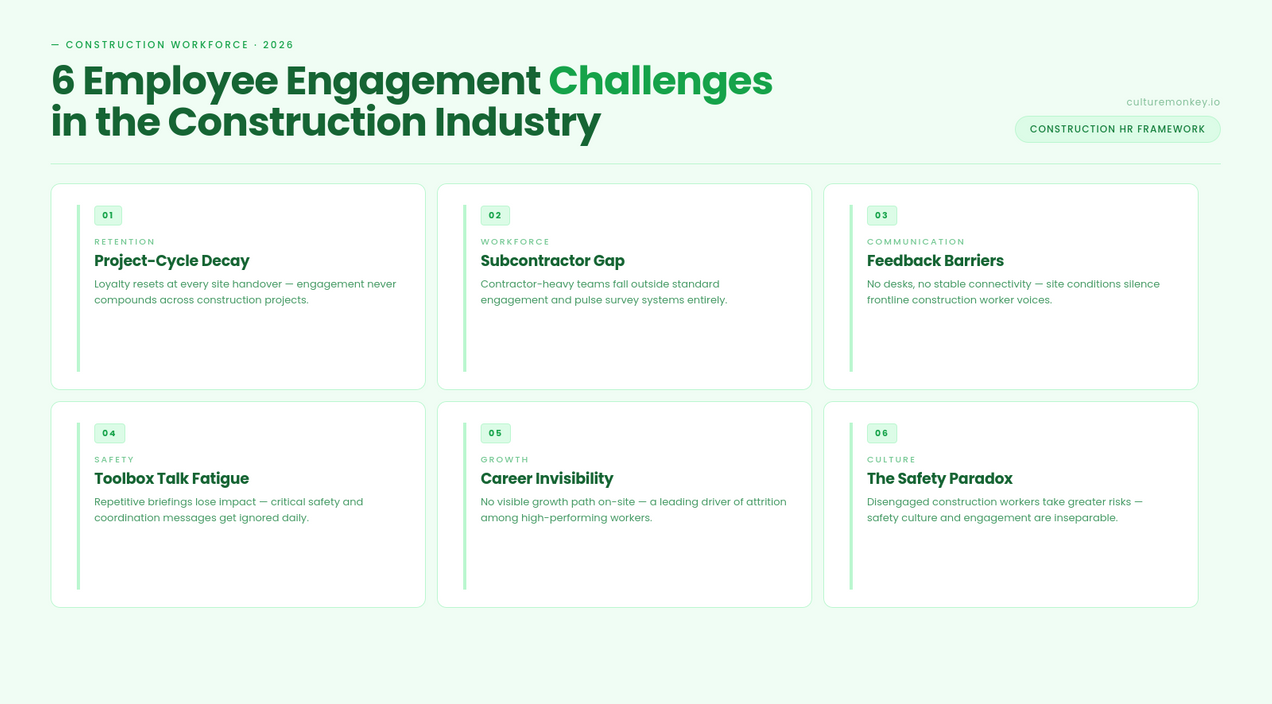
6 Workforce engagement challenges in construction industry explained
Workforce engagement challenges in construction industry are explained with key causes, safety risks, and practical fixes. Learn how to improve retention, reduce disengagement, and build stronger, safer, high-performing construction teams across projects.
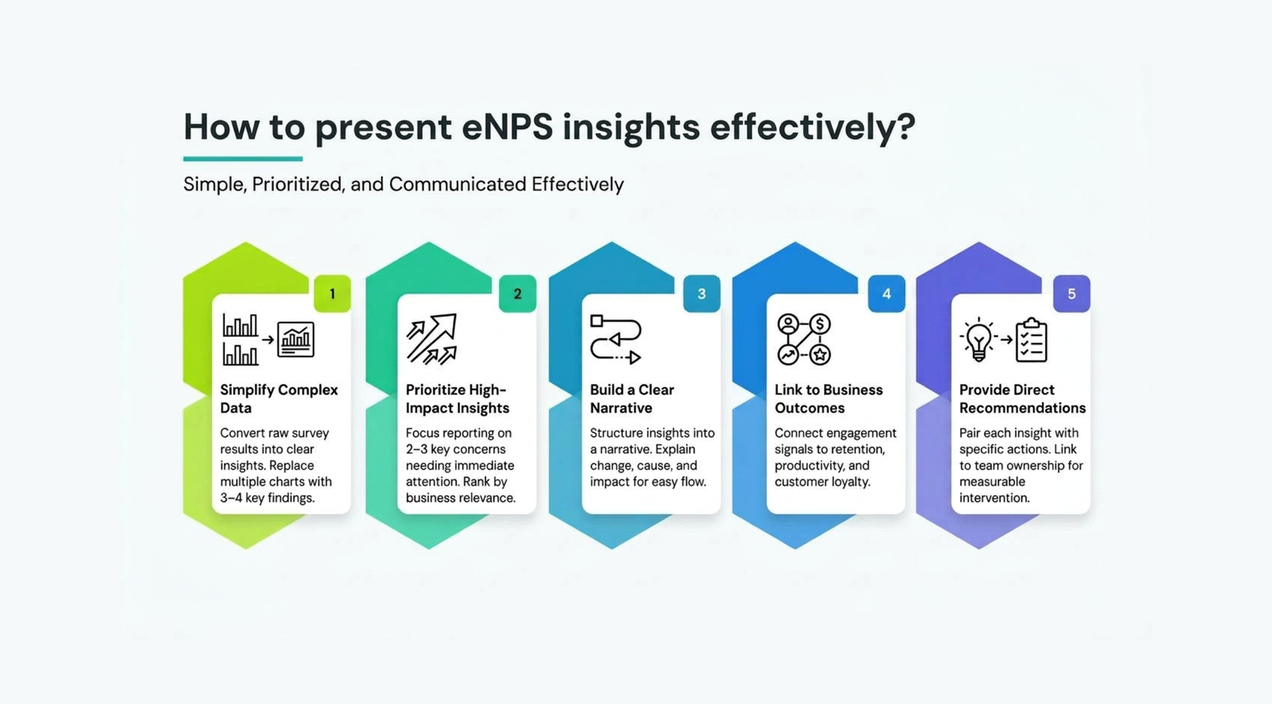
How to present eNPS reporting to leadership?
eNPS reporting matters because leadership needs structured, decision-ready insights. Net promoter scores, including eNPS, are used to benchmark engagement levels and track trends, providing valuable context for interpreting employee sentiment.
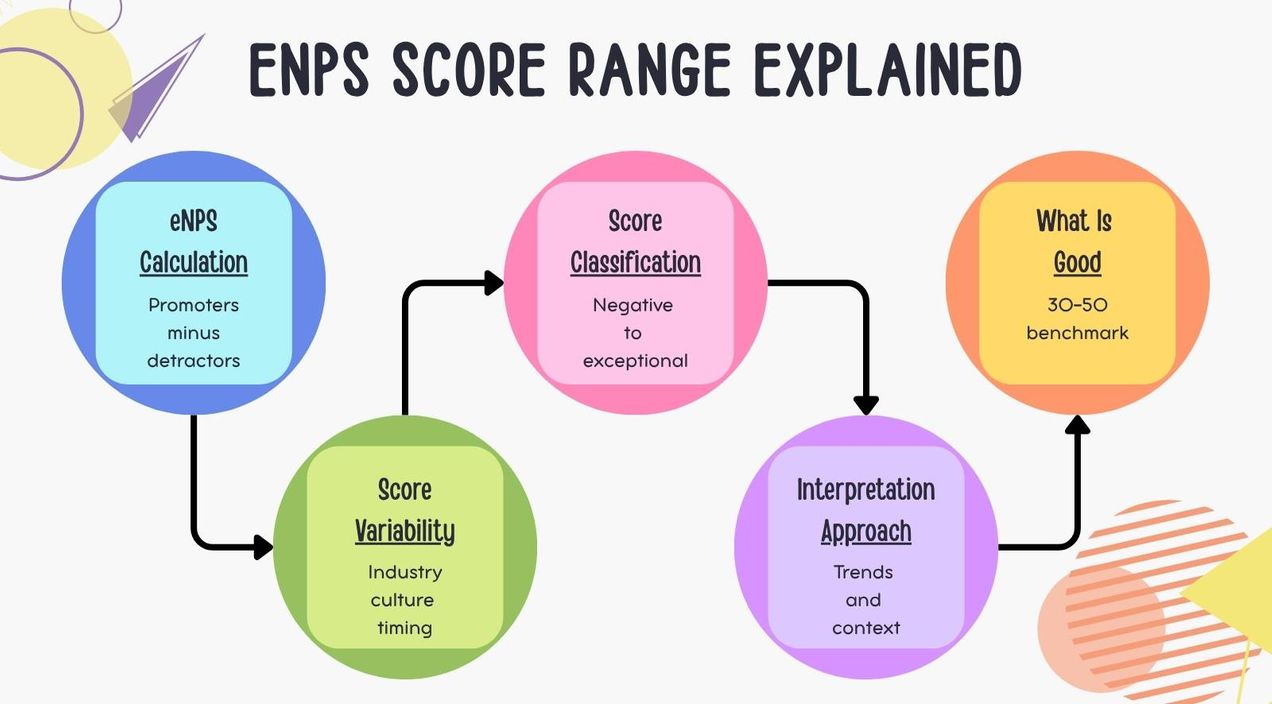
eNPS score range Explained (What’s a Good Score?)
Learn what eNPS scores really mean with clear benchmarks, ranges, and practical interpretation tips. This guide explains how to evaluate employee sentiment accurately, and when comparing scores across organizations makes sense for better decision-making.
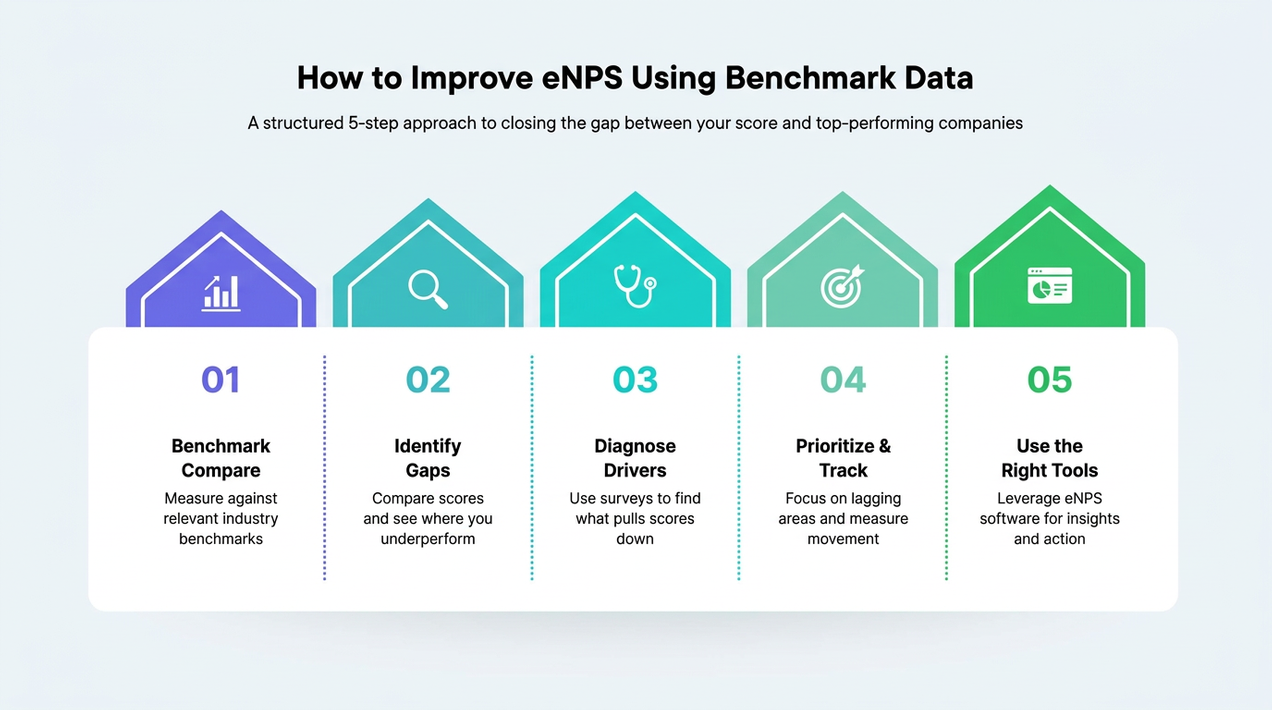
eNPS benchmark: What your score really means
An eNPS benchmark compares your employee net promoter score against industry, regional, and peer benchmarks to determine if your score is strong, average, or weak. It adds context to eNPS scores and helps identify gaps and improvement areas.
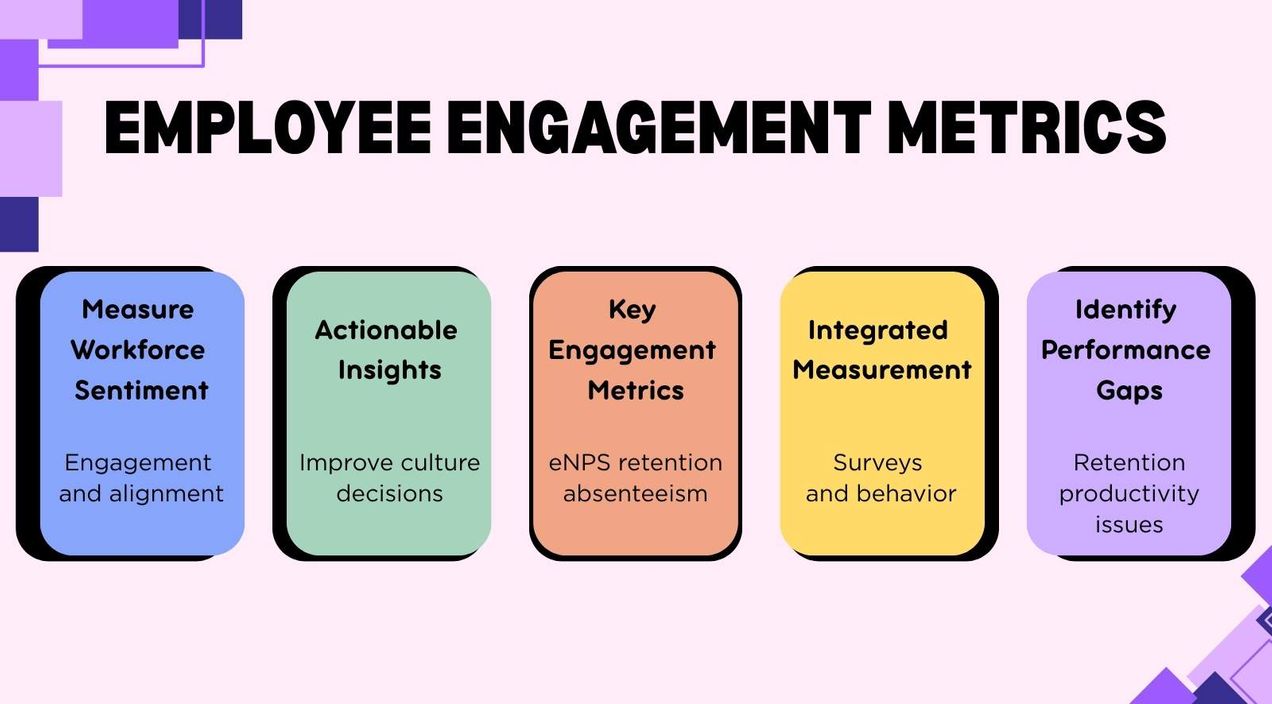
Measuring employee engagement metrics in 2026
CultureMonkey's method of measuring employee engagement metrics would help you determine your employees' engagement at the workplace by breaking down their emotions towards their organization, job satisfaction, workplace wellness, employee recognition, and several other themes.
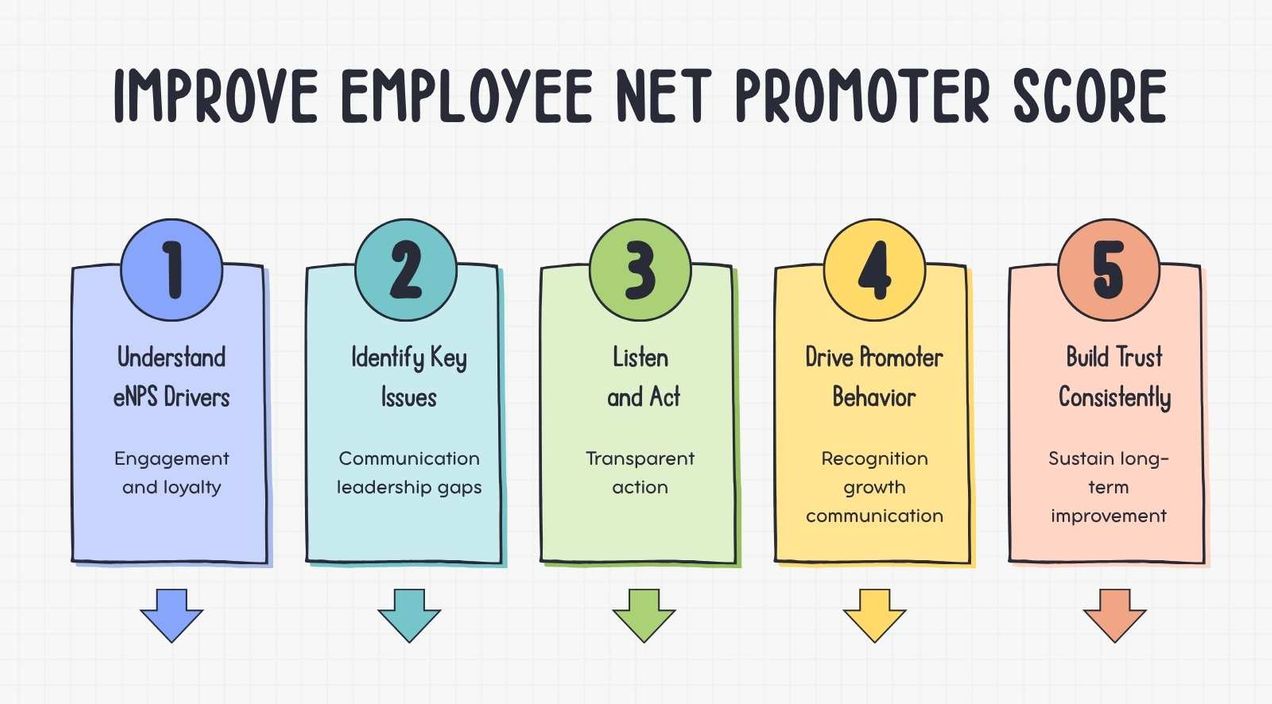
How to Improve Employee Net Promoter Score & Loyalty
A low employee net promoter score doesn’t just happen overnight, it’s usually a reflection of ongoing issues that slowly chip away at trust, motivation, and connection. Poor work-life balance is a common underlying cause, often leading to burnout and disengagement.
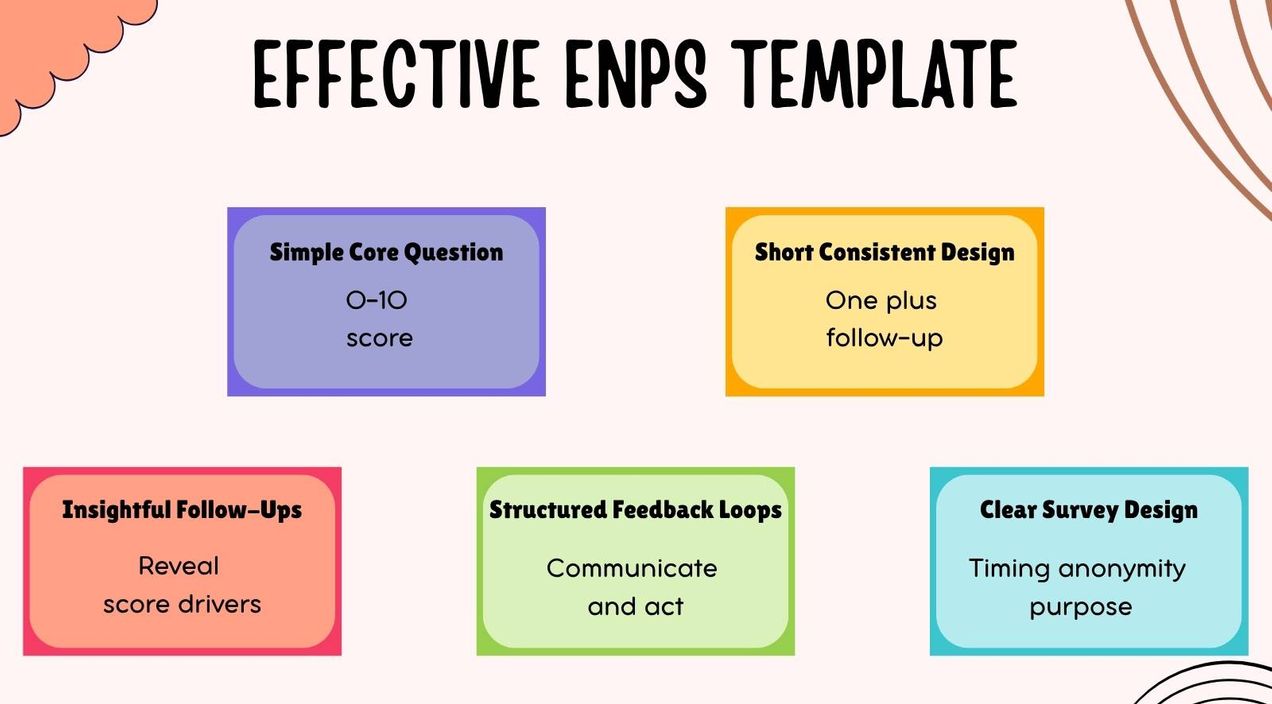
Effective eNPS Survey Template for 2026 (Best Format)
A practical guide to eNPS templates: what eNPS measures, core and follow up questions, template types, and how to turn scores into real culture engagement and retention improvements across all teams!
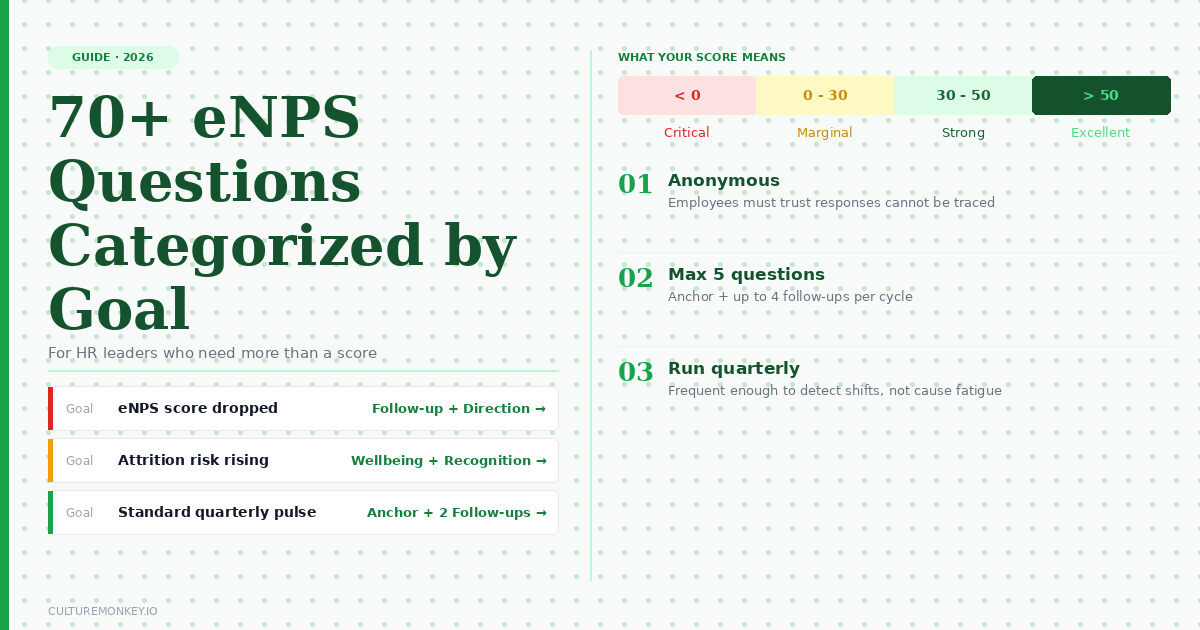
70+ employee Net Promoter Score questions, categorized by theme (2026)
CultureMonkey's employee net promoter score questions help you measure and gauge your employees' workplace satisfaction by breaking down the challenges they face in the company and also help your people leaders to improve employee engagement and company culture.
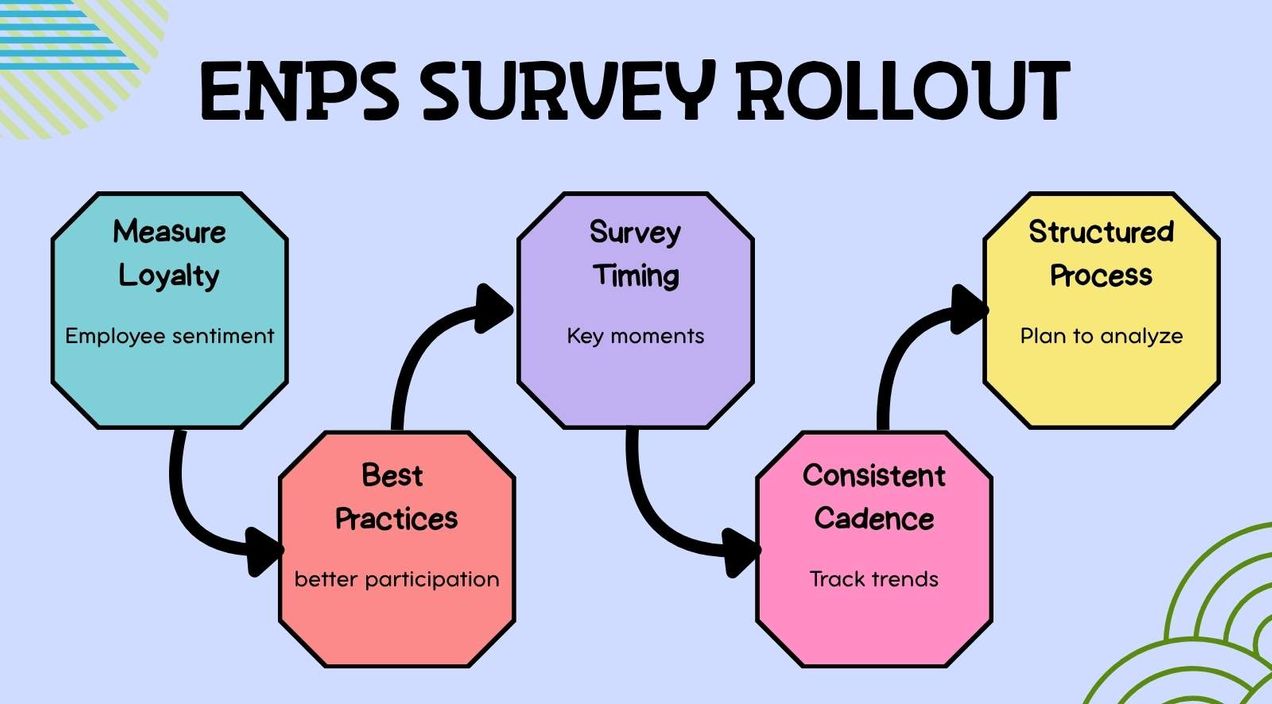
eNPS survey rollout (Step-by-step guide to get it right)
Plan your eNPS survey rollout with clear steps, a structured process, and proven implementation strategies. Learn best practices for launching surveys, boosting participation, analyzing feedback, and turning insights into meaningful improvements in employee engagement.
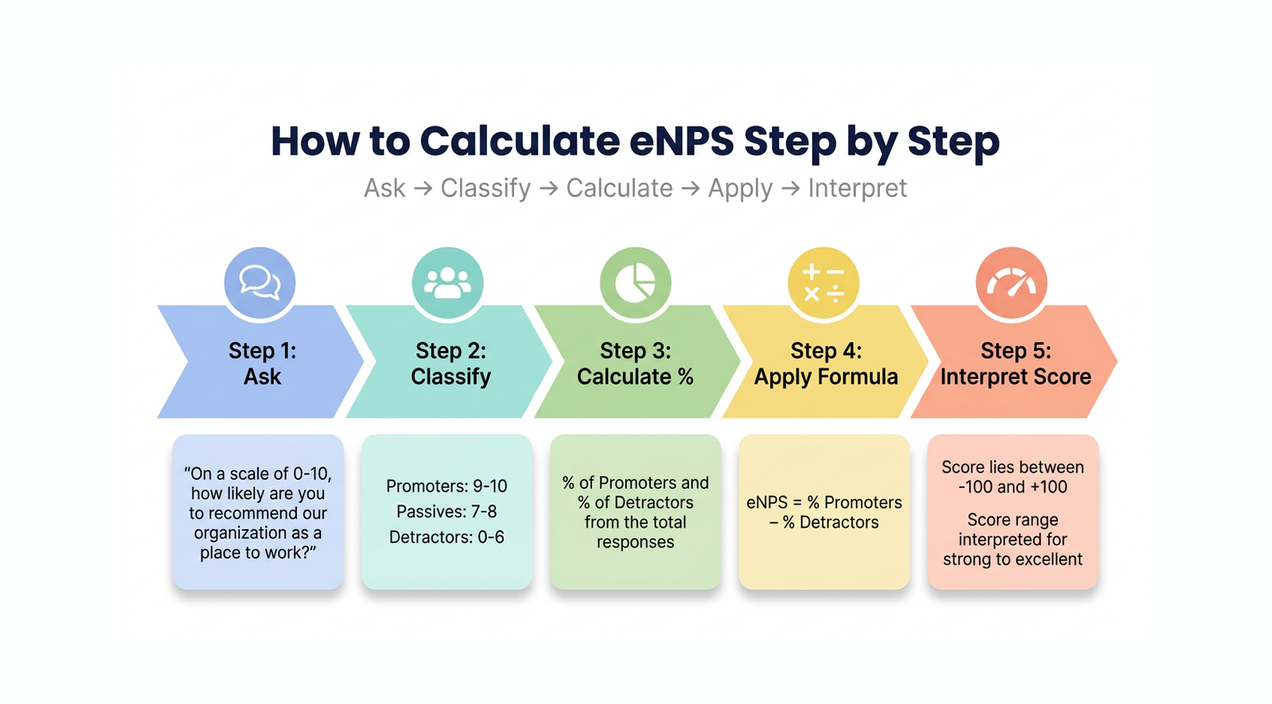
eNPS calculation: Formula, steps, and how to do it right
eNPS calculation measures employee sentiment by asking how likely employees are to recommend their workplace, then subtracting the percentage of detractors from promoters to get a score reflecting overall loyalty and engagement.
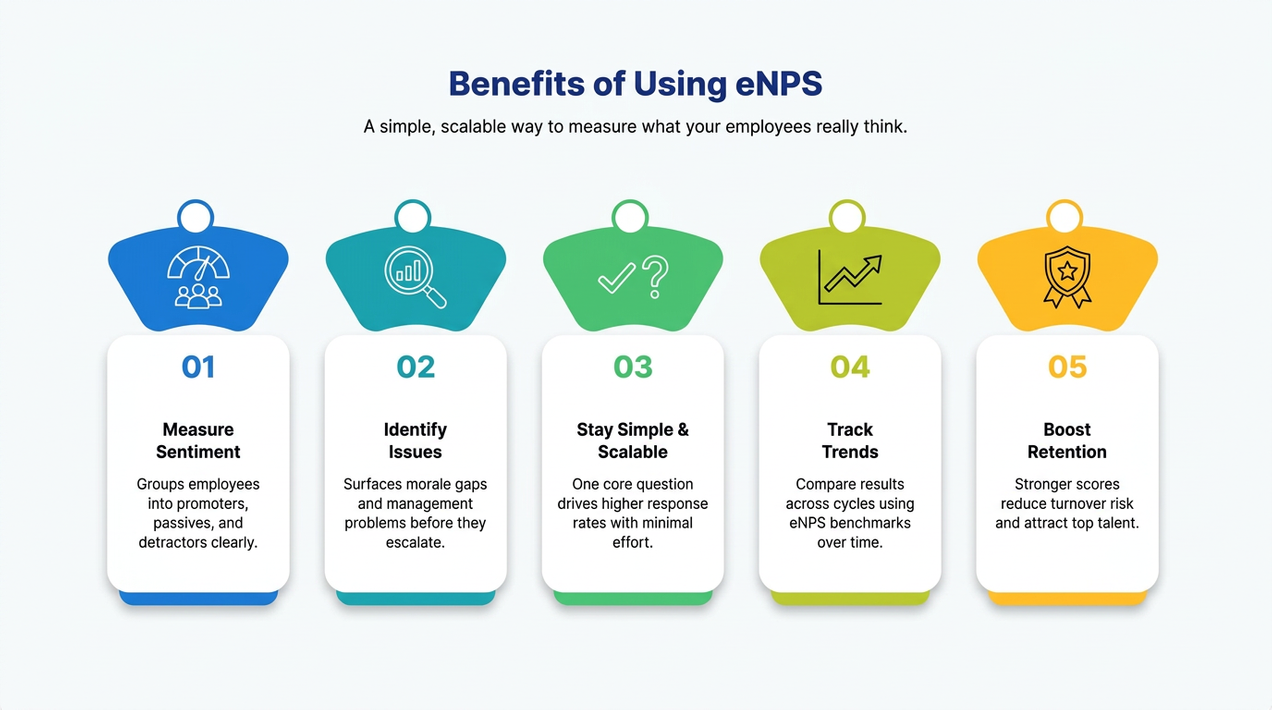
What is eNPS (employee Net Promoter Score)?
eNPS is a scoring method used to evaluate employee experience by asking how likely employees are to recommend their company. It groups responses into promoters, passives, and detractors to indicate overall workplace satisfaction.
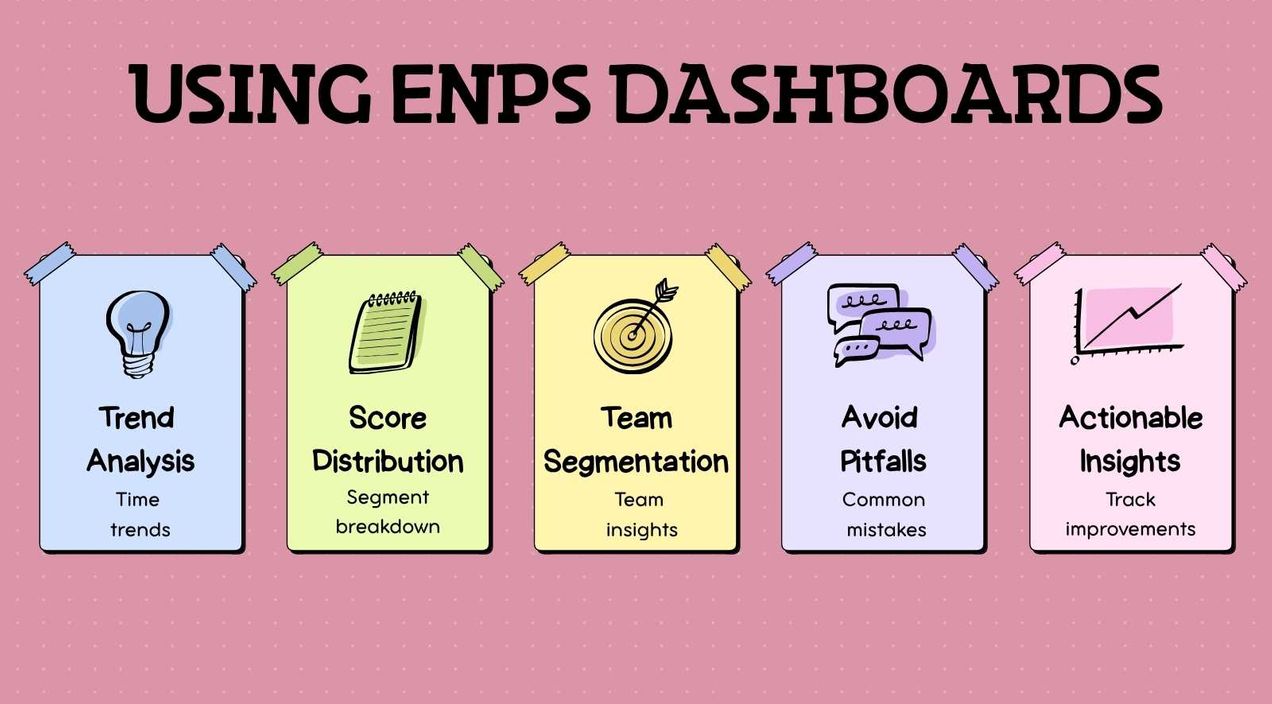
How to read and use an eNPS dashboard?
An eNPS dashboard is a visual interface that displays employee Net Promoter Score data in a structured format, helping organizations track engagement across the workforce and turn employee feedback from surveys into clear, actionable insights.
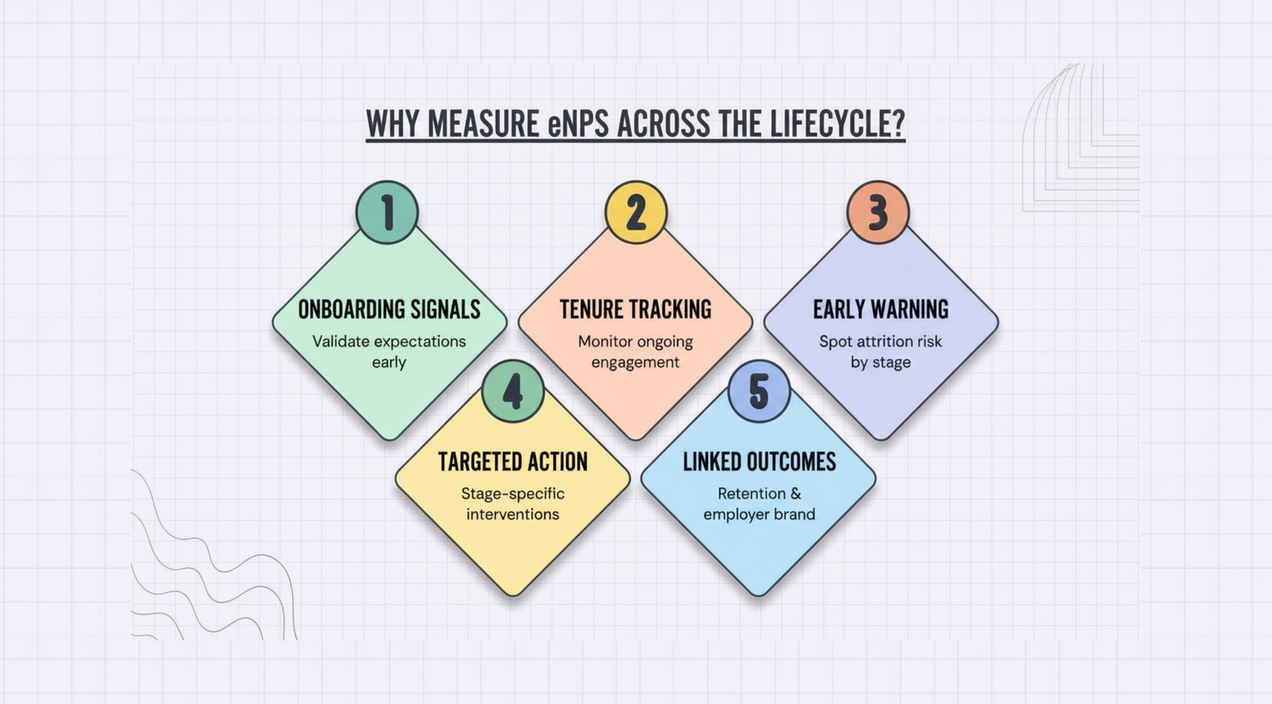
eNPS across employee lifecycle: A practical guide
eNPS across employee lifecycle tracks feedback at key employee stages instead of a single survey. It reveals how sentiment shifts across onboarding, tenure, and exit, enabling more targeted and timely actions.
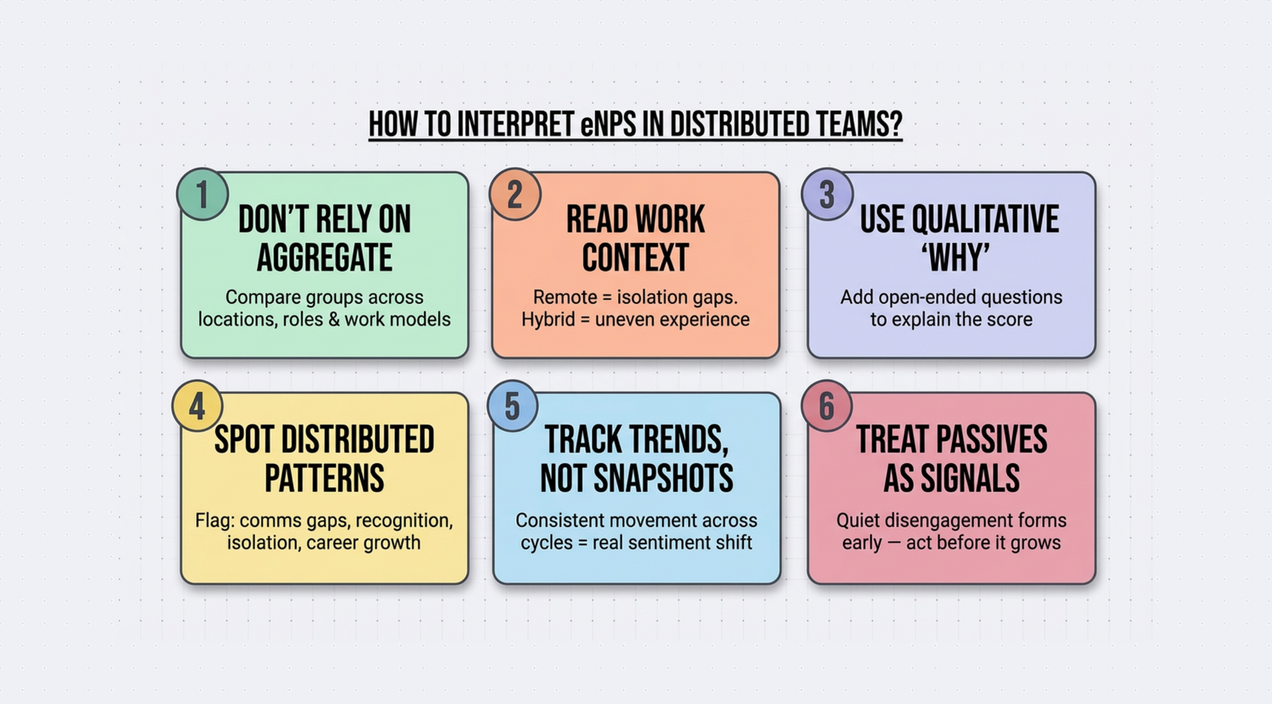
eNPS for remote and hybrid teams: How to interpret
eNPS for remote and hybrid teams measures engagement using survey insights to capture employee sentiment across distributed work setups. It helps organizations understand differences in experience, communication, and connection in remote and hybrid environments.
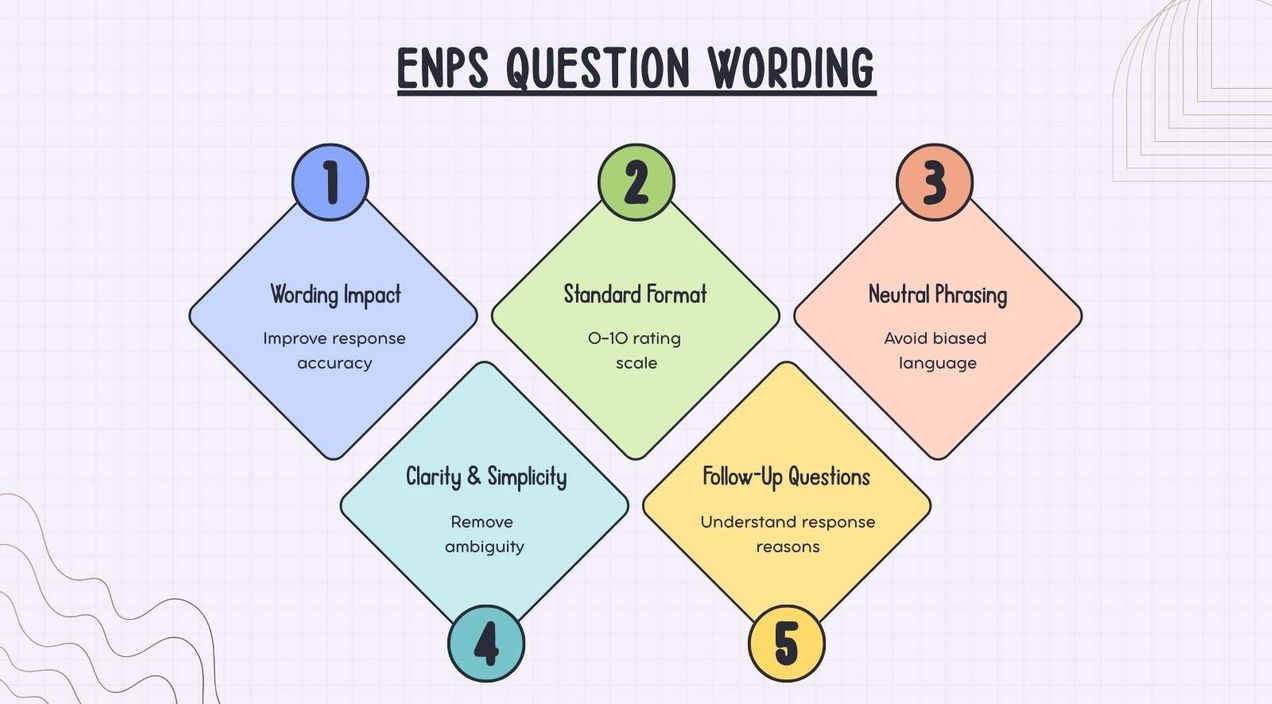
eNPS question wording guide (How to phrase it right)
Learn the best eNPS question wording with clear phrasing, real examples, and practical survey design tips. This guide explains how to ask the eNPS question correctly, improve response quality, and collect honest employee feedback that helps organizations understand workplace sentiment.
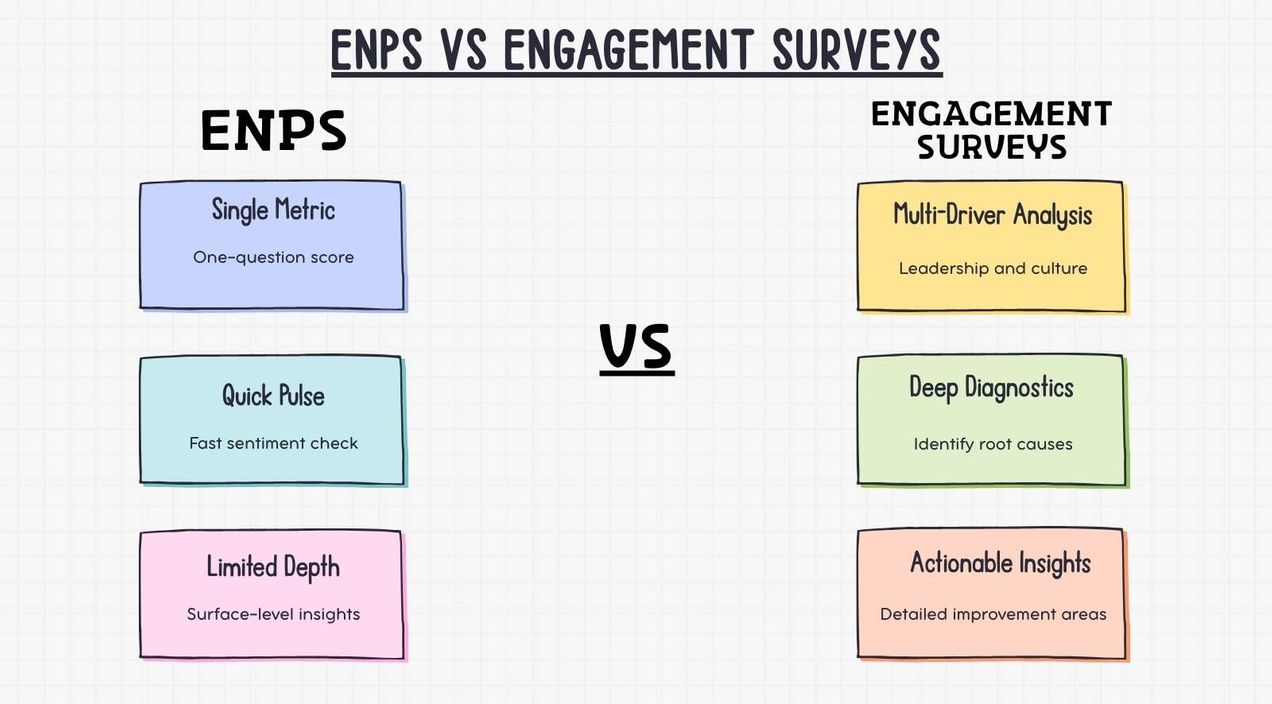
eNPS vs employee engagement surveys: Key differences
eNPS vs employee engagement surveys compared. Understand the key differences between these employee feedback methods, what each metric measures, their practical use cases, and when organizations should use eNPS or engagement surveys to track workplace engagement.
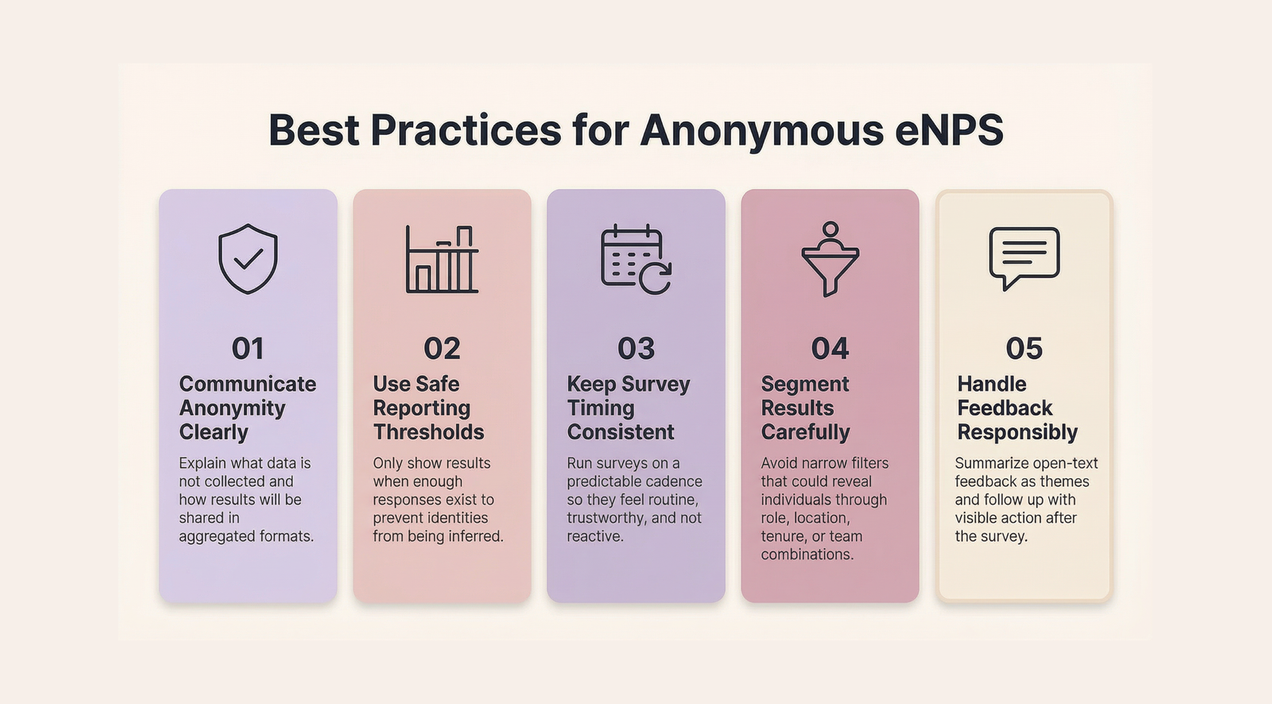
Anonymous eNPS surveys: How they work
An anonymous eNPS survey collects employee net promoter score feedback without linking responses to identities. It uses aggregation and data protection to ensure honest input and reduce response bias.
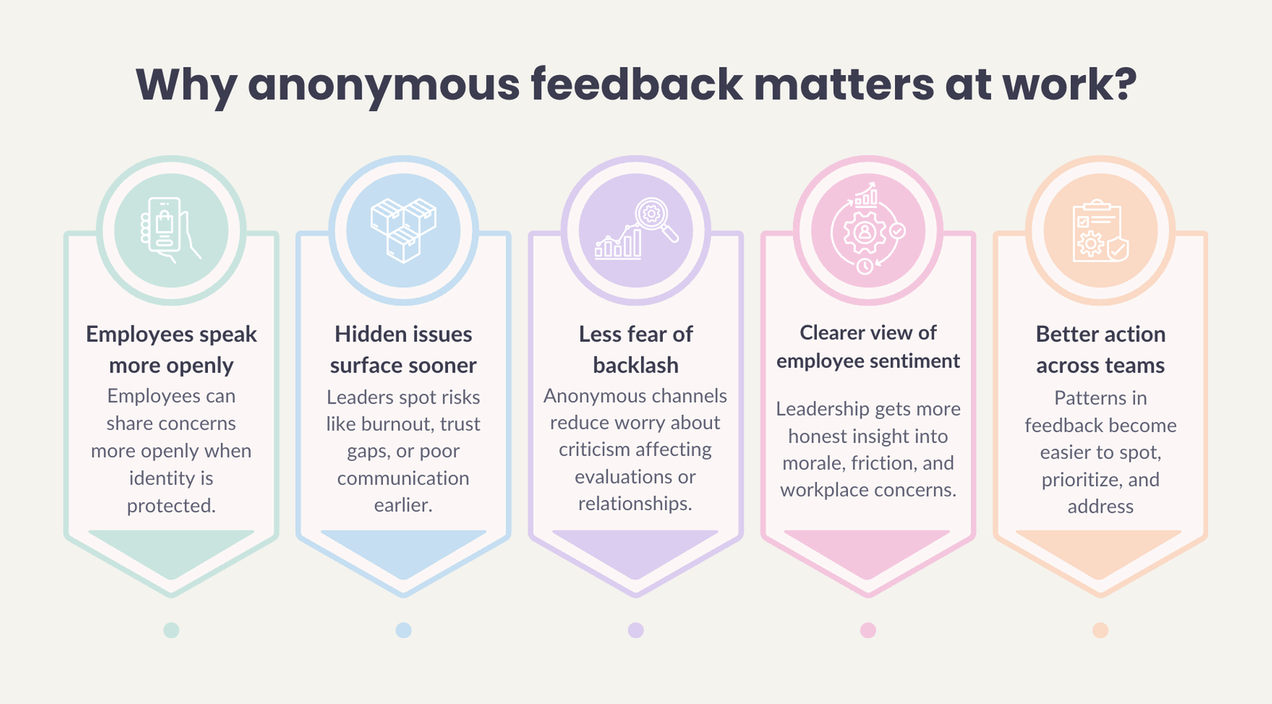
Anonymous feedback at work: Encouraging honest input
Anonymous feedback at work helps organizations surface concerns that employees may hesitate to raise through identifiable channels. Many workplace dynamics discourage candid conversations and often lead to poor feedback and a lack of actionable insights.
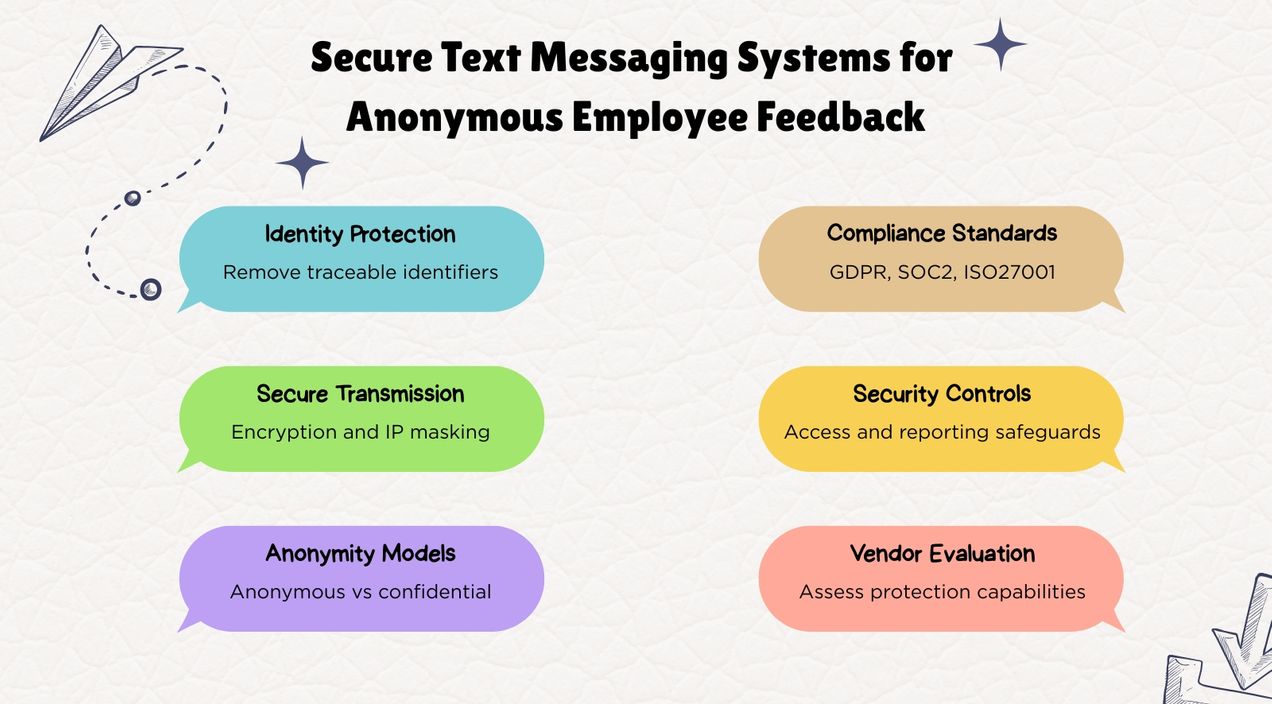
Secure text messaging systems for anonymous employee feedback (2026)
Anonymous feedback is secure when employee responses cannot be traced back to individuals through technical identifiers, system logs, or reporting patterns. A secure, anonymous employee feedback tool removes identity signals and ensures responses cannot be linked to employees at any stage.
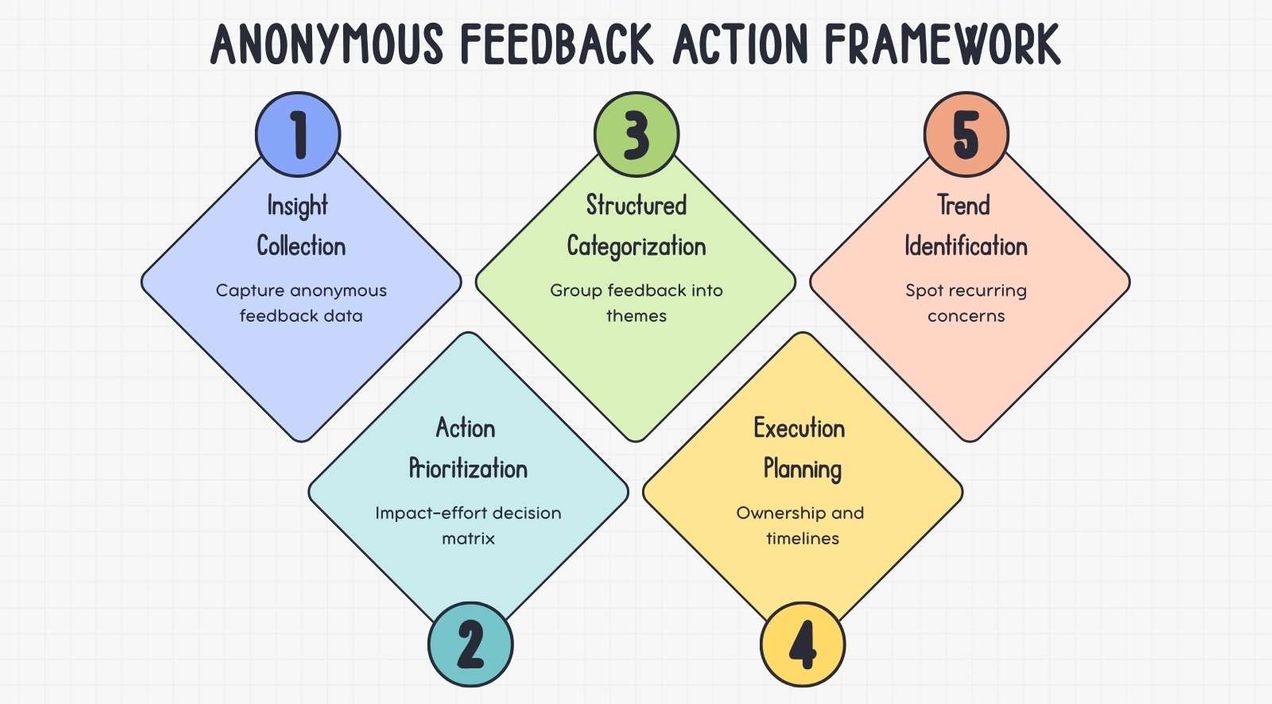
What to do with anonymous feedback: Data to action plan framework
After collecting anonymous feedback results, review responses for recurring themes, prioritize the most impactful issues, and build clear action plans. Share updates with employees and track progress over time so feedback consistently leads to visible improvements.