


10 Manufacturing workforce engagement strategies that reduce turnover in 2026


A manufacturing workforce engagement strategy is how leaders keep frontline employees informed, motivated, and aligned with daily work realities. It is about designing a strategy aligning with manufacturing workforce motivation techniques along with how communication flows, how feedback is captured, and how manufacturing managers respond across shifts and roles.
In manufacturing, employee engagement often rises or falls based on supervisor behavior, workload clarity, and how well teams navigate everyday manufacturing workforce communication challenges before problems escalate.
When it is designed well, performance in manufacturing employee engagement becomes steadier, and issues surface earlier. The sections ahead break down how manufacturing leaders can build employee engagement that holds up under real operational pressure.


- A manufacturing workforce engagement strategy defines how leaders communicate, listen, and act across shifts to retain and align frontline teams.
- Engagement challenges stem from shift work, supervisor overload, weak floor communication, and delayed feedback.
- Strong strategies link engagement directly to safety, quality, attendance, and manager actions.
- Measurement succeeds when engagement is tracked by shift, line, and supervisor, then acted on quickly.
- CultureMonkey supports manufacturing engagement with secure, anonymous, multilingual, shift-aware surveys and line-level insights built for factory floors.
Why is workforce engagement challenging in manufacturing environments?

Manufacturing environments add structural friction to employee engagement that leaders cannot remove, only design around. These challenges show up daily on the shop floor, often before they appear in dashboards.
Manufacturing workforce engagement is challenging due to shift work, stretched supervisors, communication barriers, limited tech access, fast automation, aging teams, temp staffing, and slow feedback.
- Shift-based work creates uneven experiences: When teams rarely overlap, some engaged employees get regular leadership access while others feel invisible, especially on nights and weekends.
- Frontline supervisors are stretched thin: Many supervisors juggle safety, output, quality, and people issues at once, leaving little time for coaching or meaningful employee engagement.
- Communication breaks down on the floor: Noise, PPE, and time pressure mean updates are missed, misunderstood, or delivered too late to matter and improve employee engagement.
- An aging workforce carries hidden risk: Long-tenured operators and senior leaders with long employee experience hold critical process knowledge, but physical strain and retirement timelines reduce consistency and mentoring capacity, impacting business success.
- New hires are asked to ramp too fast: Production targets in the manufacturing industry often outpace real learning curves, causing stress, errors, and early disengagement, further affecting employee engagement.
- Automation changes arrive faster than adoption: Frequent system upgrades and process changes in manufacturing companies exhaust teams before benefits are fully realised.
- Frontline workers lack tech access: Employee engagement tools built for email or desks fail when operators rely on shared terminals or supervisors for information in manufacturing industries.
- Temp staffing weakens team cohesion: Heavy reliance on contractors can dilute ownership, safety culture, and trust in receiving feedback of frontline workers from manufacturing companies.
- Local labour markets drive turnover: Plants competing for the same regional talent face constant retention pressure, even when internal conditions improve.
- Feedback feels slow or ineffective: When employee input does not lead to visible action in manufacturing companies, workers stop sharing issues early.
To understand these challenges, we first need to examine how frontline workers, manufacturing workers, and structural constraints shape engagement realities.
(Source: UNIDO)
10 Key manufacturing workforce engagement strategies to strengthen frontline retention

Retention improves when employee engagement efforts are designed for factory realities, not office assumptions. In manufacturing operations, effective employee engagement strategies focus on the everyday friction points that cause many manufacturing workers to disengage or leave.
When engagement is grounded in how work actually happens, engaged manufacturing employees are more likely to stay, contribute, and support organizational objectives.
1. Improve communication on the shop floor
To increase employee engagement, communication must work during active production, not just in inboxes used by corporate employees.
- Use shift-start huddles, line-side boards, and visual cues instead of long written updates that frontline workers feel they cannot access mid-task.
- Repeat critical messages across shifts so night crews receive the same context as day teams, supporting employee participation across schedules.
- Communicate changes of employee engagement in manufacturing before production ramps, not mid-shift when production targets and quality are harder to protect.
2. Recognize and reward visible effort
Employee recognition drives employee satisfaction when it reflects real work.
- Recognize frontline workers behaviors tied to safety checks, quality catches, and machine care, not only output volume, reinforcing safety compliance.
- Acknowledge effort immediately on the line, helping engaged workers feel seen in the moment.
- Ensure recognition reaches contract and temp workers to avoid creating disengaged employees.
3. Invest in growth and development
Retention improves when career growth and skill building are visible for manufacturing employees.
- Cross training programs of frontline workers help reduce downtime and stabilize output during absenteeism or employee turnover.
- Schedule learning during planned downtime, not only after hours, supporting employee health.
- Capture experienced operators’ knowledge and senior leaders employee experience before retirements disrupt the productive workforce and business success.
4. Prioritize safety and well-being
A safe and supportive environment is foundational to frontline worker engagement.
- Treat near-miss reporting as engagement, not fault-finding so that engaged employees raise employee concerns early.
- Rotate physically demanding tasks to reduce fatigue and injury risk.
- Address overtime patterns that quietly signal burnout long before exits occur.
5. Foster belonging and inclusion
Belonging strengthens an engaged workforce for manufacturing employees.
- Stabilize team assignments so trust can form instead of constant rotation among frontline workers.
- Include night and weekend crews in updates and recognition to support employee engagement ideas plant-wide.
- Use multilingual signage to reduce rework and safety risk to increase employee engagement in manufacturing.
6. Empower employees and listen
Listening is central to measuring employee engagement in manufacturing in real time.
- Act quickly on recurring floor issues like tool shortages or machine downtime.
- Encourage operators to flag problems early without fear of slowing the line.
- Treat silence as a signal of disengagement, not agreement.
(Source: UNIDO)
7. Start engagement during onboarding
Prioritising engagement of manufacturing employees as soon as they are hired impacts business outcomes and fosters trust in manufacturing leaders.
- Set realistic ramp timelines that reflect production complexity and how many engaged employees are needed per line.
- Pair new hires with experienced buddies during live shifts.
- Explain how quality and safety steps connect to the company’s mission and downstream teams.
8. Empower frontline managers
Supervisors play a direct role in employee success, further impacting the boost of employee engagement in manufacturing.
- Train manufacturing managers to lead people, not just schedules.
- Reduce manual reporting of engaged manufacturing employees so that leaders stay present on the floor.
- Hold managers accountable for turnover and engagement, not only output of manufacturing organizations.
9. Use technology that fits manufacturing
Technology should support frontline worker engagement, not disrupt it.
- In manufacturing organizations, choose tools that work on kiosks or shared devices, not personal email.
- Deliver short feedback loops instead of long surveys that interrupt shifts.
- Surface line-level insights so issues are visible before they escalate.
10. Implement gamification with intent
Well-designed engagement efforts support productive and engaged employees without risking safety.
- Focus challenges on safety streaks, quality gains, or mastery milestones.
- Avoid competition that encourages rushing or shortcuts for manufacturing employees.
- Rotate themes so engagement stays relevant and supports highly engaged employees over time.
When engagement strategies reflect factory realities, they reduce employee turnover, improve safety and quality, and help build a stable, productive workforce aligned with manufacturing organizations goals. Before fixing engagement, it helps to see where manufacturing organizations undermine frontline employee engagement, employee recognition, and employee voice.
.webp)
Spot Your Factory’s Engagement Drift Early Using Surveys
- Multilingual Surveys
- White Label Distribution
- Multi-channel Deployment
- Enterprise Grade Security
The common mistakes manufacturing companies make with engagement strategies

Most employee engagement plans fail on the shop floor for predictable reasons: shift reality, supervisor load, and weak follow-through. Use this list as a quick audit before your manufacturing workforce engagement strategy turns into another “initiative” nobody trusts.
Effective approaches define ownership and act.
Manufacturing engagement strategies fail when they ignore shift realities, overload supervisors, rely on averages, and separate engagement from daily safety, quality, and operational decisions.
- HR-owned strategies: Strategies live in slides and calendars instead of daily routines like shift handovers, toolbox talks, and supervisor check-ins.
- Plant-wide averages: Employee engagement strategies that rely on overall scores miss line-level and shift-specific signals where problems actually begin.
- Office-first playbooks: Tactics built for email, meetings, and long surveys break down in high-noise, time-bound shop-floor settings.
- Measurement without action: Strategies define what to measure but not who acts, by when, and with what authority.
- Manager overload: Employee engagement plans often add tasks without removing production, safety, or reporting load from frontline managers.
- Campaign-based thinking: Annual launches and campaigns fail in environments when wondering how to improve morale in factory workers, where shifts happen weekly with overtime, breakdowns, and staffing gaps.
- One-size workforce view: Strategies rarely account for aging operators, fast-ramping new hires, and temporary workers needing different engagement approaches.
- Detached from operations: When employee engagement is positioned separately from safety, quality, and throughput, it loses relevance on the floor of manufacturing organizations.
- Centralized ownership: Strategies owned only by corporate teams struggle to adapt to local labor markets and plant-specific constraints.
- Vague success signals: Without defined manufacturing workforce engagement metrics, strategies drift until disengagement shows up as employee absenteeism or exits, impacting business success.
After strategy design, measuring engagement through pulse surveys reveals key drivers, employee voice, and employee engagement in manufacturing outcomes.
How do you measure whether a manufacturing workforce engagement strategy is working?

Employee engagement is only “real” in manufacturing when it moves shop-floor outcomes, not just survey scores. Track signals by shift schedules, line, and supervisor so you can see what’s improving and what’s masking issues.
- Shift-level sentiment: When measuring employee engagement in manufacturing, compare results across shift schedules, lines, and roles. This helps manufacturing companies spot gaps in manufacturing employee engagement, especially where frontline employees on night or weekend shifts disengage first within the manufacturing sector.
- Attendance stability: Track employee retention patterns tied to overtime, staffing gaps, and production surges. Stable attendance signals an engaged workforce, while volatility often shows disengagement among manufacturing workers before exits appear, especially in the manufacturing sector.
- Safety participation: Monitor near-miss reporting, safety walks, and stop-work usage, not just incident rates. Strong safety participation reflects trust and frontline employee engagement, while silence often indicates disengaged workers or weakened engagement efforts.
- Quality discipline: Review first-pass yield, scrap, and rework trends to see how focus and morale hold up. Quality drift is often the earliest signal that manufacturing employees are losing engagement as pressure rises to meet business outcomes.
- Manager impact: Analyze engagement data by supervisor to assess how leadership behaviors affect frontline employees. Differences by manager reveal where leaders boost employee engagement and where gaps limit efforts to improve employee engagement.
- Retention health: Track 90-day quits, internal movement, and skill certification progress as manufacturing workforce engagement metrics. These indicators show whether engagement supports learning, mobility, and long-term commitment among engaged workers.
- Pulse survey validation: Use employee surveys alongside operational metrics to confirm trends, not replace them. Repeating employee surveys by shift and role helps validate whether engagement signals reflect reality for frontline teams.
- Operational alignment: Compare engagement data against safety protocols, quality, and throughput to see whether manufacturing employee engagement is improving results or masking pressure points across manufacturing companies.
After strategy design, measuring engagement through pulse surveys reveals key drivers, employee voice, and employee engagement in manufacturing outcomes.
How employee engagement software helps connect frontline teams in manufacturing

Connection breaks first in manufacturing because teams are dispersed, time-bound, and rarely online together. Employee engagement software helps close those gaps by fitting into how work actually happens on the floor.
Employee engagement software connects frontline manufacturing teams by reaching deskless workers, supporting shift communication, and enabling fast feedback without disrupting production.
It gives managers real-time visibility, links engagement to safety and quality, and surfaces risks early across lines, shifts, and sites.
- Reaches workers without desks: Tools designed for kiosks, shared tablets, and mobile access reach operators who never open email.
- Supports shift-based communication: Updates can be scheduled and repeated by shift, improving measuring engagement across manufacturing schedules.
- Creates faster feedback loops: Short, frequent pulses strengthen employee feedback processes in manufacturing plants without disrupting production.
- Makes manufacturing managers more effective: Line-level dashboards help supervisors act quickly, improving manufacturing manager effectiveness and engagement.
- Connects engagement to daily work: Safety protocols, quality feedback, and recognition live alongside employee engagement, not in separate systems.
- Improves visibility across sites: Leaders can spot where engagement drops by line, role, or location instead of relying on plant-wide averages.
- Builds inclusion across roles: Multilingual, visual-first tools reduce manufacturing workforce communication challenges.
- Turns signals into action: Real-time insights help address employee morale dips before they end up reducing absenteeism in manufacturing workforce or exits.
To scale engagement, manufacturing managers need tools that show how many employees feel heard across shifts and sites. See how CultureMonkey helps manufacturing companies improve employee engagement and build productive employees across the manufacturing industry.
“Manufacturing workforce engagement strategy feels secondary amid cost pressure”
Many leaders question prioritizing a manufacturing workforce engagement strategy when trade uncertainty, inflation, and margins dominate attention. With volatile demand, rising input costs, and supply disruptions, engagement initiatives may appear discretionary.
However, according to Deloitte, 78% of manufacturers reported trade uncertainty as their top concern and expect input costs to rise 5.4%, reinforcing pressure on efficiency. Under such conditions, disengagement quietly amplifies scrap, rework, absenteeism, and turnover costs.
Engagement strategies focused on frontline feedback, manager action, and rapid issue resolution help organizations absorb volatility, reduce hidden costs, and stabilize output during uncertainty.
How CultureMonkey supports a manufacturing workforce engagement strategy
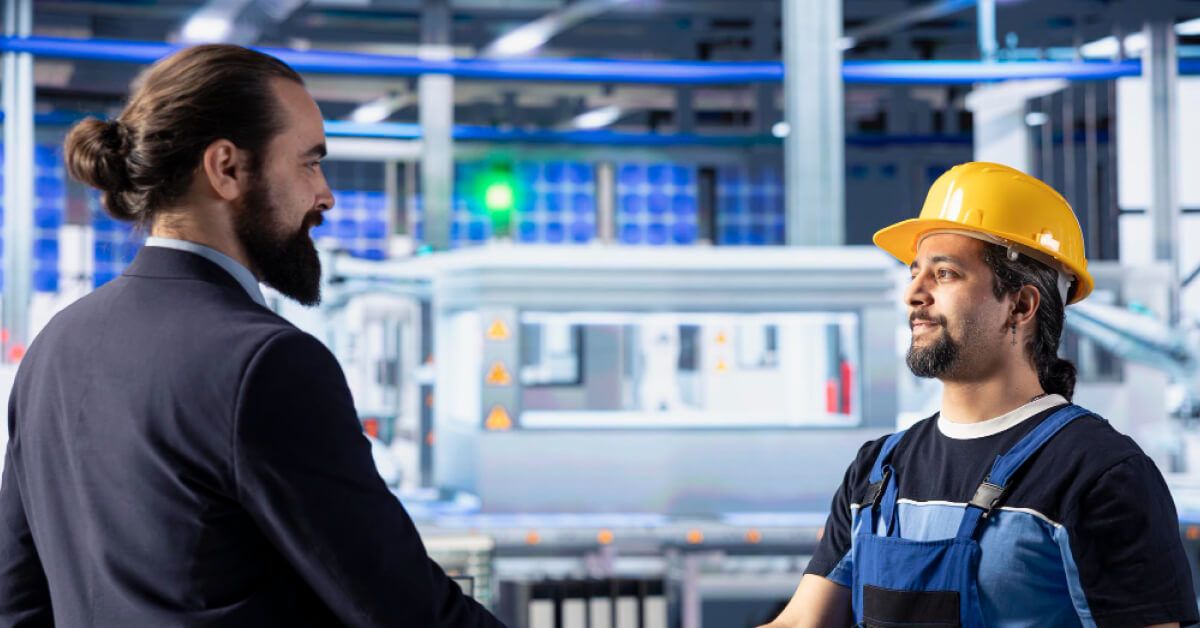
CultureMonkey is designed for manufacturing environments where security audits, shared devices, multilingual teams, and shift-based work are everyday realities, not edge cases.
- True multichannel delivery: CultureMonkey reaches frontline workers via QR codes, text messages, WhatsApp, kiosks, and manager-led distribution across all shifts.
- Multilingual frontline surveys: CultureMonkey supports over 120+ multilingual surveys so operators understand questions clearly, improving response quality and employee engagement across diverse factory floor teams.
- Enterprise-grade security: CultureMonkey meets manufacturing IT and compliance requirements with GDPR, SOC, and ISO 27001, enabling deployment across regulated plants and global operations.
- White-labeled deployment: CultureMonkey aligns with internal branding, increasing trust and adoption among frontline workers to improve employee engagement.
- Anonymous employee feedback: CultureMonkey’s anonymity removes fear of retaliation in hierarchical plant settings, improving honesty in employee feedback processes in manufacturing plants.
- Shift and line-level engagement heatmaps: CultureMonkey visualizes employee engagement gaps by shift, line, and site, replacing misleading plant-wide averages.
Conclusion
A manufacturing workforce engagement strategy succeeds when it becomes part of how plants run. Strong outcomes come from pairing a clear manufacturing leadership engagement framework with manufacturing frontline engagement best practices that respect shifts, safety protocols, and production flow.
When leaders act consistently, close feedback loops, and track manufacturing workforce engagement metrics like shift-level sentiment, absenteeism patterns, and manager follow-through, engagement becomes predictable instead of fragile.
For teams evaluating top survey tools for manufacturing companies, CultureMonkey is built for manufacturing realities, with secure, anonymous, multilingual, and multichannel surveys, kiosk access, shift-level heatmaps, and action tracking. This helps leaders move from listening to fixing the issues that affect morale, safety incidents, and employee retention on the factory floor.
Book a demo with CultureMonkey.
FAQs
1. What is a manufacturing workforce engagement strategy?
A manufacturing workforce engagement strategy defines how leaders communicate, motivate, and listen to frontline employees across shifts and roles. It connects daily work realities with business goals through feedback loops, manager behavior, and recognition. In manufacturing, the employee engagement strategy focuses on consistency, trust, and execution under production pressure, rather than one-time programs or slogans posted on walls today globally.
2. What are the key components of a manufacturing workforce engagement strategy?
Key components of a manufacturing workforce engagement strategy include shift-ready communication, anonymous feedback, capable frontline managers, and meaningful recognition. The strategy also defines employee engagement metrics, segments results by shift or line, and assigns clear ownership for action. In manufacturing environments, components must work without desks, email access, or long meetings, while fitting production schedules, rules, and labor realities.
3. What is a manufacturing leadership engagement framework?
A manufacturing leadership engagement framework defines the specific behaviors leaders must demonstrate on the shop floor every day. It sets expectations for communication, feedback response, safety reinforcement, and decision-making during change. In manufacturing, the framework connects leadership actions directly to production routines, ensuring employee engagement is built through visibility, consistency, and follow-through across shifts, lines, sites, and teams globally.
4. How do you measure workforce engagement in manufacturing?
Workforce engagement in manufacturing is measured by combining perception and behavior signals. Leaders track shift-level sentiment, absenteeism patterns, safety participation, quality stability, and turnover risk. Results are reviewed by line, shift, and manager to identify trends early. Effective measurement focuses on movement over time, not single scores, helping reveal fatigue, morale changes, and operational strain before performance declines, further affecting employee engagement.
5. How often should manufacturing companies review their engagement strategy?
Manufacturing companies should review their employee engagement strategy on a regular operational cadence. Quarterly reviews help adjust for overtime spikes, staffing changes, automation updates, or safety incidents. Strategies should also be revisited after demand shifts, leadership changes, or plant expansions. Regular reviews ensure employee engagement remains aligned with current shop-floor realities, preventing issues from escalating across shifts, lines, and sites.