

Top 15 Glint alternatives for smarter engagement.
Among 15 Microsoft Viva Glint alternatives, Culture Amp, Lattice, and CultureMonkey lead for employee listening, analytics, integrations, pricing, and buyer fit.

Tool details verified using publicly available product pages, documentation, and user reviews.
Find your best Glint alternative
Answer 5 quick questions and we'll match you to the right tool.
How engaged is your industry, really?
Before switching from Glint, benchmark where your workforce stands. These scores come from CultureMonkey's anonymized dataset of 10.2M+ survey responses across 500+ companies.
Industry engagement spread narrowed from 1.05 pts to 0.51 pts in 12 months. Lagging industries are catching up - former leaders are declining. The gap is closing.
Source: CultureMonkey Industry Benchmark, Q1 2026 · 10.2M+ responses
What is Glint?
Glint is an employee engagement survey platform now part of Microsoft's Viva suite. Originally built by Glint Inc. and later acquired by LinkedIn, it's designed for large organizations running engagement surveys within the Microsoft 365 ecosystem.
That suite is shrinking. Microsoft retired Viva Goals on December 31, 2025 and has retired Viva Topics, which has many Glint customers asking what gets cut next. To be clear: Viva Glint itself is not retired, and Microsoft's product documentation on Microsoft Learn shows feature updates continuing into 2026. But if the retirements have you re-evaluating before your next renewal, that anxiety is exactly what this guide is built to answer.
Where Glint works well
- Microsoft-native integration - seamless fit for organizations already running M365, Teams, and Azure AD.
- AI-driven trend analysis - surfaces patterns in manager effectiveness, employee satisfaction, and company culture.
- Enterprise scale - built for large, multi-department organizations with complex org hierarchies.
- Continuous listening - supports ongoing feedback collection beyond annual survey cycles.
Where teams hit limits
- Anonymity in small teams - capturing truly anonymous 360° feedback becomes difficult in smaller groups.
- Limited customization - minimal flexibility in survey design, branding, and visual experience.
- Microsoft lock-in - less practical for organizations not fully embedded in the Microsoft ecosystem.
- Frontline reach - primarily email-based delivery; limited multi-channel options for deskless workers.
Source: G2
Why are companies looking for alternatives to Glint in 2026?
Anonymity breaks down in small teams
In smaller team settings, capturing truly anonymous 360° feedback becomes difficult. Employees hesitate to share honest input when they suspect responses can be traced back to them.
Customization feels restrictive
The platform offers minimal flexibility in customizing surveys, branding, or adapting the visual experience - making it harder to align with your organization's identity and feedback culture.
Steep learning curve
Effective use of the tool often requires deep familiarity or dedicated support intervention, making adoption less intuitive for HR teams and managers across departments.
Action loop is weak
Survey results surface insights, but the platform lacks built-in action planning tools that help managers turn feedback into measurable follow-through at the team level.
Frontline workers get left out
Surveys are primarily delivered via email and web - no WhatsApp, text messages, QR code, or kiosk delivery. Deskless and frontline employees are effectively invisible to the feedback system.
Top 15 Glint alternatives in 2026
Top 5 Glint alternatives at a glance
If you're short on time, here's a quick summary of the five strongest Glint alternatives by use-case fit:
| Tool | Best for | G2 | Why switch from Glint? |
|---|---|---|---|
| Culture Amp | Research-backed mid-market engagement | 4.5 | Science-validated frameworks, D&I analytics, benchmarks Culture Amp says draw on 1.5 billion+ data points from around 25 million employees across 6,800+ organizations |
| Lattice | Intuitive surveys + AI benchmarking | 4.7 | Clean interface, AI trend highlights, benchmark-rich analytics |
| CultureMonkey | Enterprise, multilingual, frontline-ready | 4.7 | 100+ languages, guaranteed anonymity, multi-channel delivery (WhatsApp, Slack, text messages, kiosk) |
| Leapsome | Impact-driver analysis + action planning | 4.8 | Stronger post-survey action loops with AI-driven driver correlation |
| Workvivo | Social-first high participation | 4.8 | Survey placement on social feed drives higher completion rates |
Not sure which fits? Take the 5-question quiz for a personalized shortlist.
How we evaluated these Glint alternatives
Every tool was assessed across five dimensions that predict whether a platform will change behavior - not just collect data.
View full methodology →Anonymity architecture
Aggregate, threshold, or true anonymity with comment masking
Action loop design
Do results reach managers with recommended actions attached?
Survey delivery channels
Email, WhatsApp, Slack, text messages, QR codes, kiosks - who gets reached?
AI & driver analysis
Basic scores vs. impact modeling vs. AI-powered sentiment extraction
Integration breadth
HRIS sync with Workday, SAP, Darwinbox, Oracle, BambooHR, Slack, Teams
How to switch from Glint
In CultureMonkey onboardings, most teams complete the switch in four to six weeks. Here's a practical five-step process for evaluating an alternative before your next renewal cycle.
Export your historical survey data
Before your Viva Glint contract ends, export all historical survey results, participation rates, and driver scores. Most replacement platforms can import this data to establish trend baselines and maintain continuity.
Document your current driver framework
Write down your existing engagement drivers, question sets, and cadence. This becomes the baseline specification for evaluating whether a replacement platform can match your current program or whether you want to change frameworks.
Run a parallel pilot
Choose one survey cycle to run both platforms simultaneously with different segments or teams. This provides a direct comparison of participation rates, data quality, and manager adoption before fully committing to the switch.
Migrate HRIS integrations
Most Glint alternatives support the same HRIS systems. Work with your new vendor's onboarding team to replicate employee data sync before launch. Do not manually maintain employee lists - HRIS sync is non-negotiable at scale.
Communicate the change to employees
Survey participation drops when employees see an unfamiliar tool. Send a communication from a senior leader explaining the change, confirming anonymity protections remain in place, and describing what will change and what will stay the same.
Top 15 Glint alternatives in 2026
As engagement needs evolve, many teams are exploring platforms that go deeper on insights, anonymity, and action planning. Here are 15 alternatives worth evaluating.
Culture Amp is an employee experience platform founded in 2009 in Melbourne, Australia, combining engagement surveys, performance management, and goal tracking in one product. It is best known for its science-backed templates and a benchmark dataset built on more than 1 billion survey responses, and it concentrates on mid-market companies roughly between 200 and 5,000 employees.
Culture Amp is the right Glint alternative for desk-based organizations of 200 to 5,000 employees that want research-backed survey templates, engagement trend visibility, and diversity and inclusion analytics measured against a large external benchmark dataset. It is not the right choice for frontline-heavy workforces that need WhatsApp, SMS, QR code, or kiosk delivery, or for teams that need survey results converted into manager-level action plans without external support.
Drawing deeper insights can require external support, and response timelines may not always align with urgent reporting needs. (Source: G2)
Lattice is the most widely adopted option for mid-market teams that want to stop running performance management and engagement listening in two separate tools. Survey scores connect directly to OKR progress, review cycles, and calibration workflows, which is the structural difference from Glint, where engagement data sits inside the Microsoft Viva suite rather than next to performance records.
Lattice is the right Glint alternative for desk-based mid-market organizations of 200 to 2,000 employees that want engagement scores connected to OKRs, reviews, and calibration inside one system, with customizable anonymity thresholds. It is not the right choice for organizations with significant frontline populations, or for teams that want engagement listening without also buying a performance suite.
Account ownership may change often, which can impact continuity and long-term relationship consistency. (Source: G2)
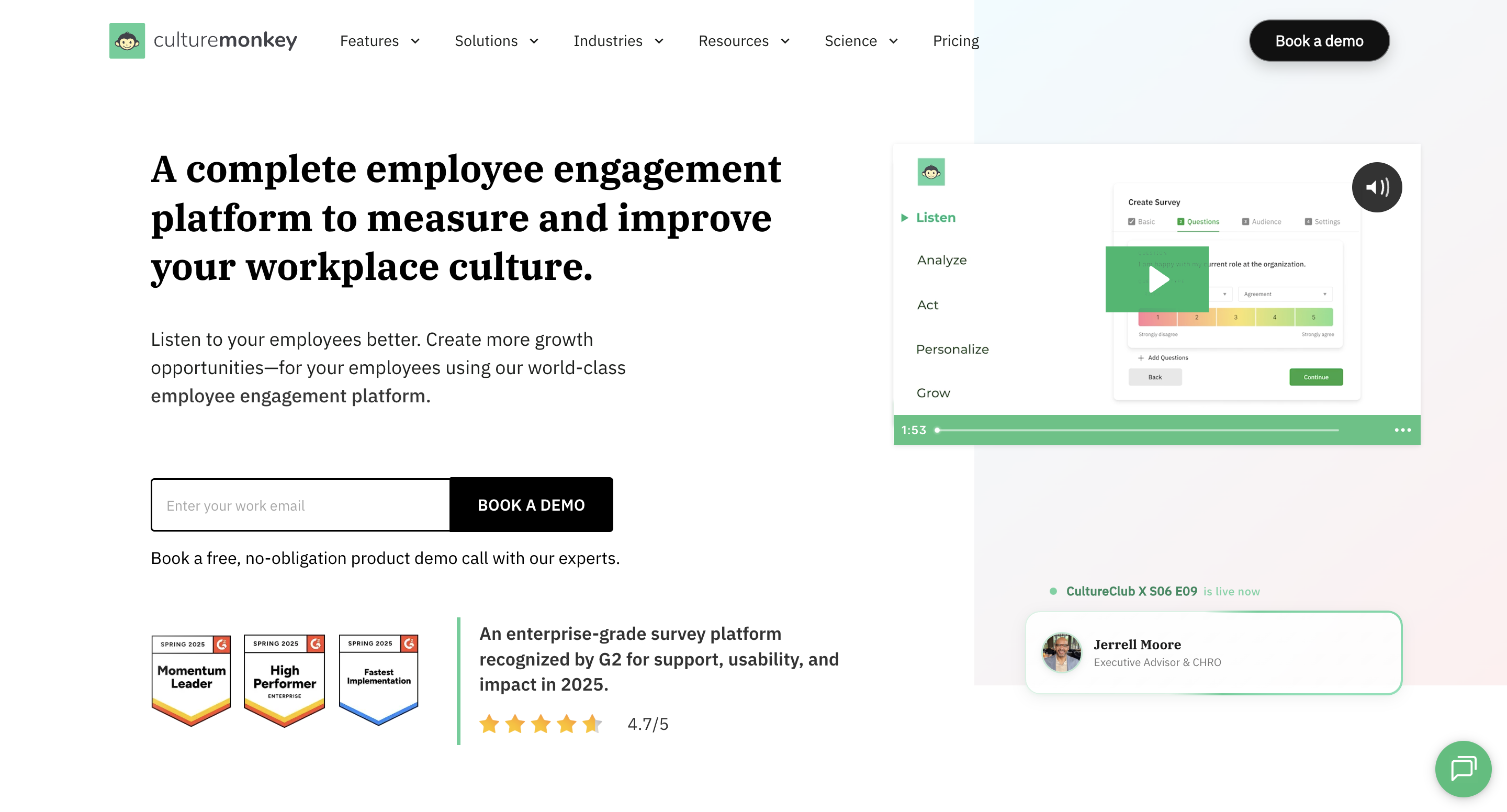
CultureMonkey is an enterprise listening platform built for workforces that email-only tools cannot reach. It delivers surveys in 100+ languages across email, Slack, Teams, WhatsApp, text messages, QR code, and kiosk, and syncs with 17+ HRIS platforms including Workday, SAP, Darwinbox, and Oracle. It holds ISO 27001, SOC 2 Type II, and GDPR compliance, and is used by organizations such as Robertshaw to survey a mostly frontline workforce across nine languages.
CultureMonkey is a modern enterprise employee survey tool designed to help organizations listen better, act faster, and build a culture of trust. With science-backed templates, real-time insights, and a focus on employee wellbeing, CultureMonkey empowers HR teams to turn feedback into meaningful action across every stage of the employee journey.
CultureMonkey is the right Glint alternative for enterprise organizations above 500 employees, particularly those running Workday, SAP, Darwinbox, or Oracle, where multilingual delivery and frontline reach beyond corporate email are the deciding requirements. It is not the right choice for teams under 100 employees, buyers who need a published per-user rate, or organizations that want a self-serve free trial before speaking to sales.
Sales-led pricing with no published per-user rate; buyers on short evaluation cycles will need to engage sales early. Best fit for organizations of 500+ employees; less suited to small teams under 100. No free trial available; customers must book a demo to explore the product. (Source: G2)
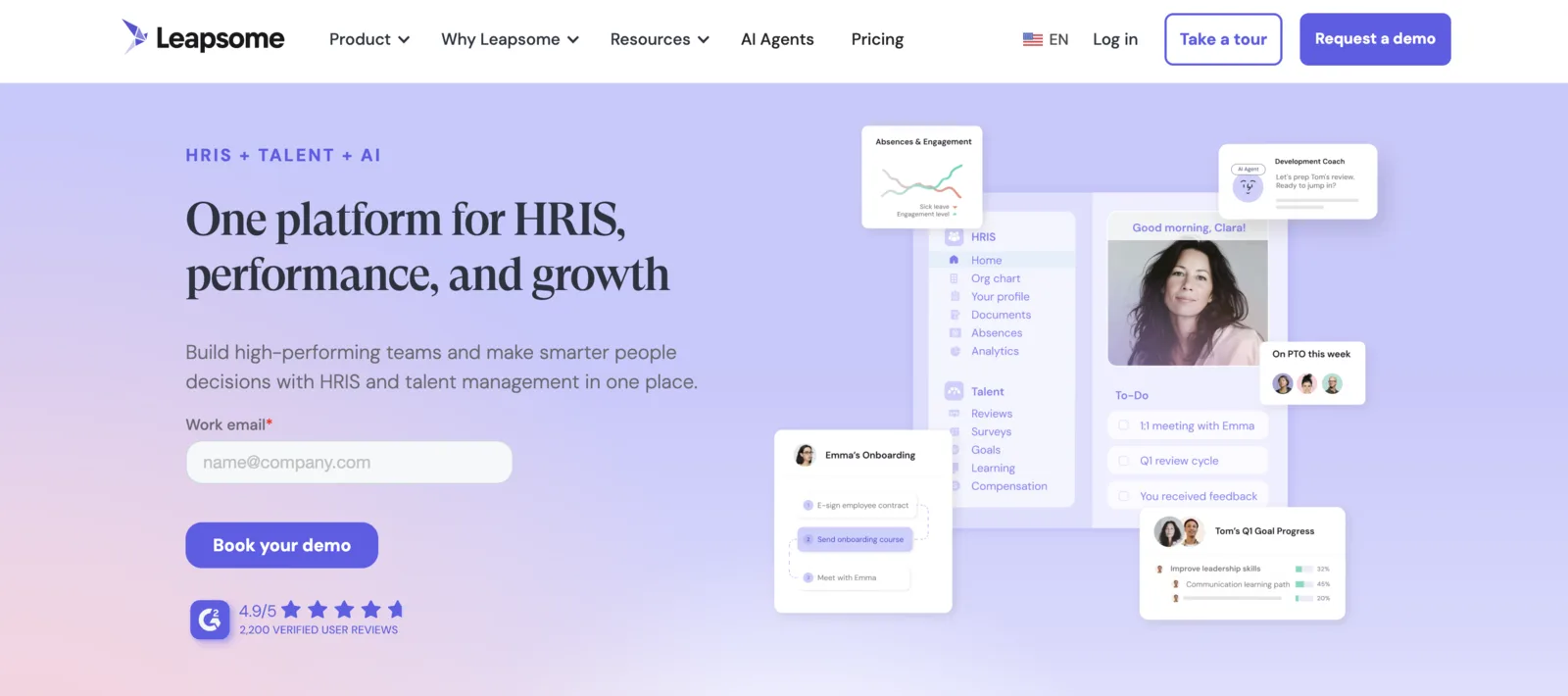
Leapsome is a European-headquartered people enablement suite that combines engagement surveys, learning, and performance reviews under one contract, which makes it a consolidation play rather than a like-for-like survey swap. Its impact-driver analysis correlates responses to identify which drivers actually move overall sentiment, then feeds those findings into suggested post-survey action plans. It carries one of the highest G2 scores on this list at 4.8.
Leapsome is the right Glint alternative for European-headquartered organizations of 200 to 2,000 employees that want to replace engagement surveys, the LMS, and the performance review tool in a single move, with impact-driver analysis feeding post-survey action plans. It is not the right choice for frontline-heavy workforces, or for teams that depend on advanced question logic and branching.
Advanced options like question logic and branching could benefit from more flexibility and control. (Source: G2)
Workvivo is an employee communication and experience platform owned by Zoom, operating as Workvivo by Zoom Limited. Its center of gravity is an intranet-style social feed rather than a survey engine, and surveys are placed directly in that feed, which is what drives its participation advantage over email-linked tools. The trade-off is that engagement listening is a feature of a communications platform rather than the product itself.
Workvivo is the right Glint alternative for communications-led organizations already standardized on Zoom, where participation depends on placing the survey in the same social feed employees already read daily. It is not the right choice for lean teams under 200 employees given its cost and setup complexity, or for listening-led programs that need deep engagement-driver analytics.
Higher cost and setup complexity may be challenging for smaller teams or leaner organizations. (Source: G2)
QuestionPro is a general-purpose survey platform spanning market research, customer experience, and workforce feedback, with employee engagement sitting in a separate product line called QuestionPro Workforce rather than at the platform's core. Listed at $99 per user per month, it is one of only two tools on this list with a published seat price, and that price buys research-grade skip logic, branching, and export flexibility rather than an opinionated engagement framework.
QuestionPro is the right Glint alternative for research and insights teams in organizations of 50 to 1,000 employees that already run market research or CX studies and want employee surveys, skip logic, and exportable reporting inside the same $99 per user per month account. It is not the right choice for HR teams that want a dedicated engagement program, because employee listening sits in a separate QuestionPro Workforce product line rather than at the platform's core.
Advanced logic features can be difficult to locate, requiring more time to set up complex survey flows. (Source: G2)
Qualtrics is an enterprise experience management platform where employee engagement is one program alongside customer, brand, and product experience. It is the depth option in this list: statistical driver modeling, predictive attrition risk, and BI integration into stacks built on SAP, Workday, Oracle, or Tableau. That depth is only realized by organizations with a dedicated people analytics function to use it.
Qualtrics is the right Glint alternative for large enterprises above 5,000 employees with a dedicated people analytics function and an SAP, Workday, or Oracle stack, where statistical driver modeling and BI integration are non-negotiable. It is not the right choice for HR teams running surveys without analyst support, or for organizations that need to launch a first survey in days rather than months.
Steep learning curve, limited support accessibility, and higher cost may make it harder to adopt across teams. (Source: G2)
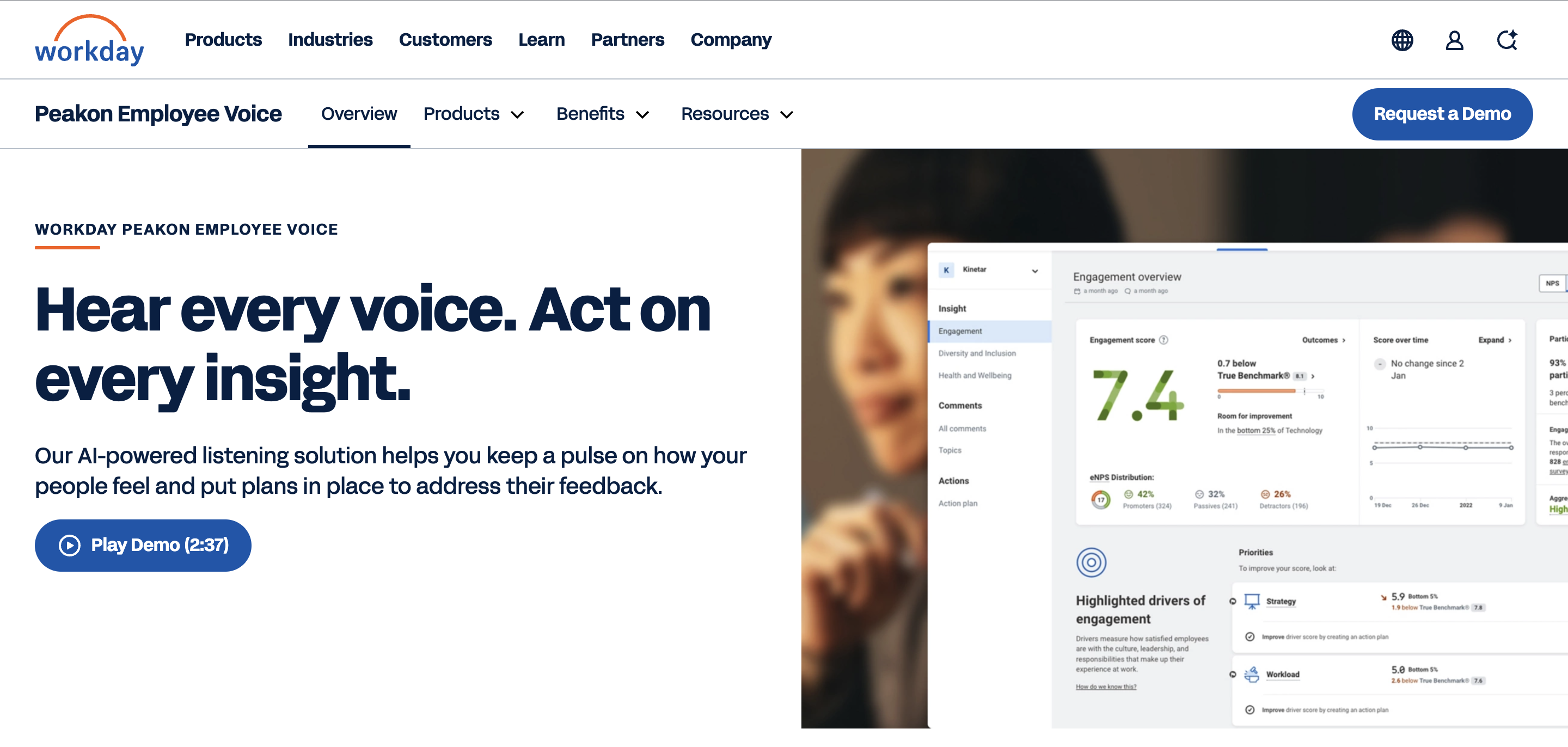
Workday Peakon is the native employee listening module inside Workday HCM, acquired by Workday in 2021. For organizations already on Workday, it removes HRIS integration work entirely: employee attributes, org structure, and survey responses live in the same Workday tenant with no connector or API required. Its benchmarking engine adjusts peer comparisons for demographics such as location and age rather than comparing raw scores.
Workday Peakon is the right Glint alternative exclusively for organizations already running Workday HCM, typically above 1,000 employees, where eliminating HRIS integration work and getting demographic-adjusted peer benchmarking matter more than vendor independence. It is not the right choice for organizations outside the Workday ecosystem, or for analytics teams that need extensive raw data export.
Higher pricing may not fit all budgets; deeper value depends on consistent follow-through. Limited raw data export options. (Source: G2)
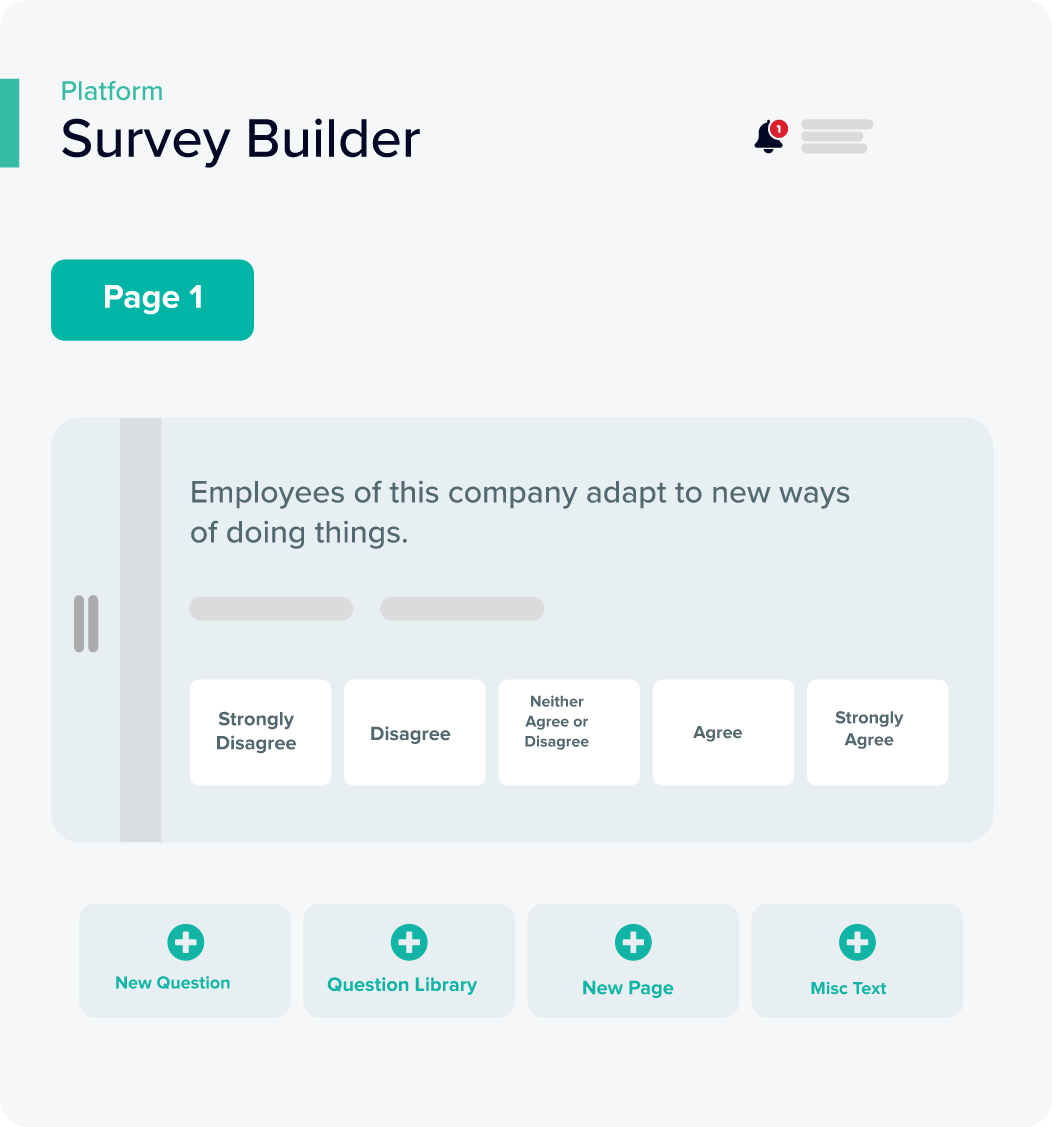
Perceptyx is an enterprise listening and people analytics platform that competes directly with Qualtrics at the top of the market. Its differentiator is AI-driven action planning, which turns survey results into prioritized, assigned plans without HR reconfiguring the program after every cycle, alongside full lifecycle surveys at onboarding, promotion, and exit. It is sold through a managed services model with professional implementation support rather than self-serve setup.
Perceptyx is the right Glint alternative for large enterprises above 3,000 employees running several listening programs at once, where AI-driven comment analytics, lifecycle surveys, and professional services support are the reason for switching. It is not the right choice for mid-market organizations, self-serve buyers, or teams that need delivery channels beyond email.
Not enough review data to understand common challenges based on current user feedback. (Source: G2)
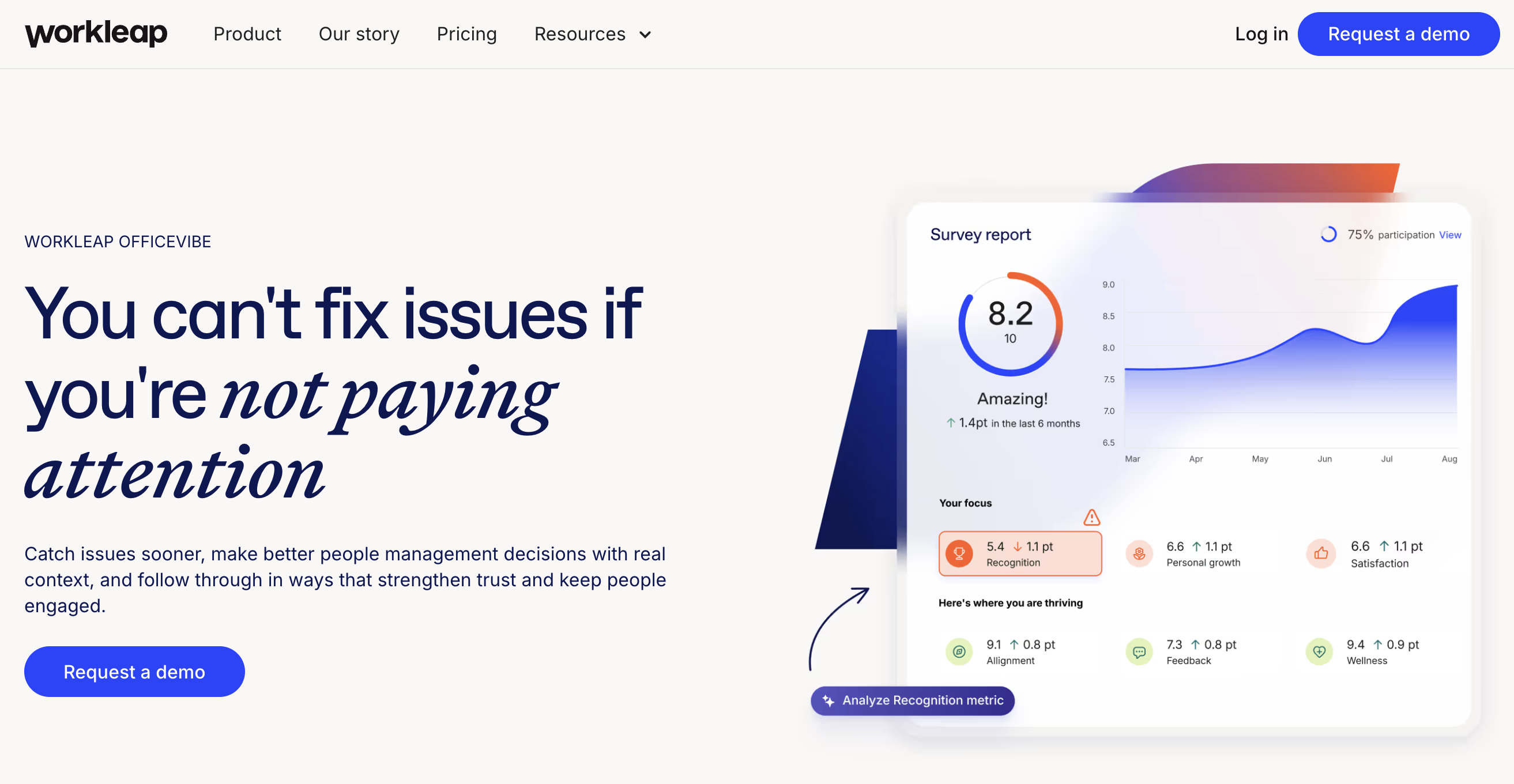
Workleap Officevibe is the most accessible tool on this list by price and setup speed, at $5 per user per month with a free tier for small teams and a setup timeline measured in hours rather than weeks. It scores engagement across 10 defined metrics including feedback, growth, wellness, and manager support, and personalizes which questions each employee receives to limit survey fatigue.
Workleap Officevibe is the right Glint alternative for desk-based teams of 50 to 500 employees that want continuous pulse surveys and manager-level team health scores at $5 per user per month, with setup measured in hours rather than weeks. It is not the right choice for enterprises that need lifecycle survey automation, deep HRIS integration, or advanced reporting filters.
Limited customization, basic integrations, and reporting could offer more advanced filtering and insights. (Source: G2)
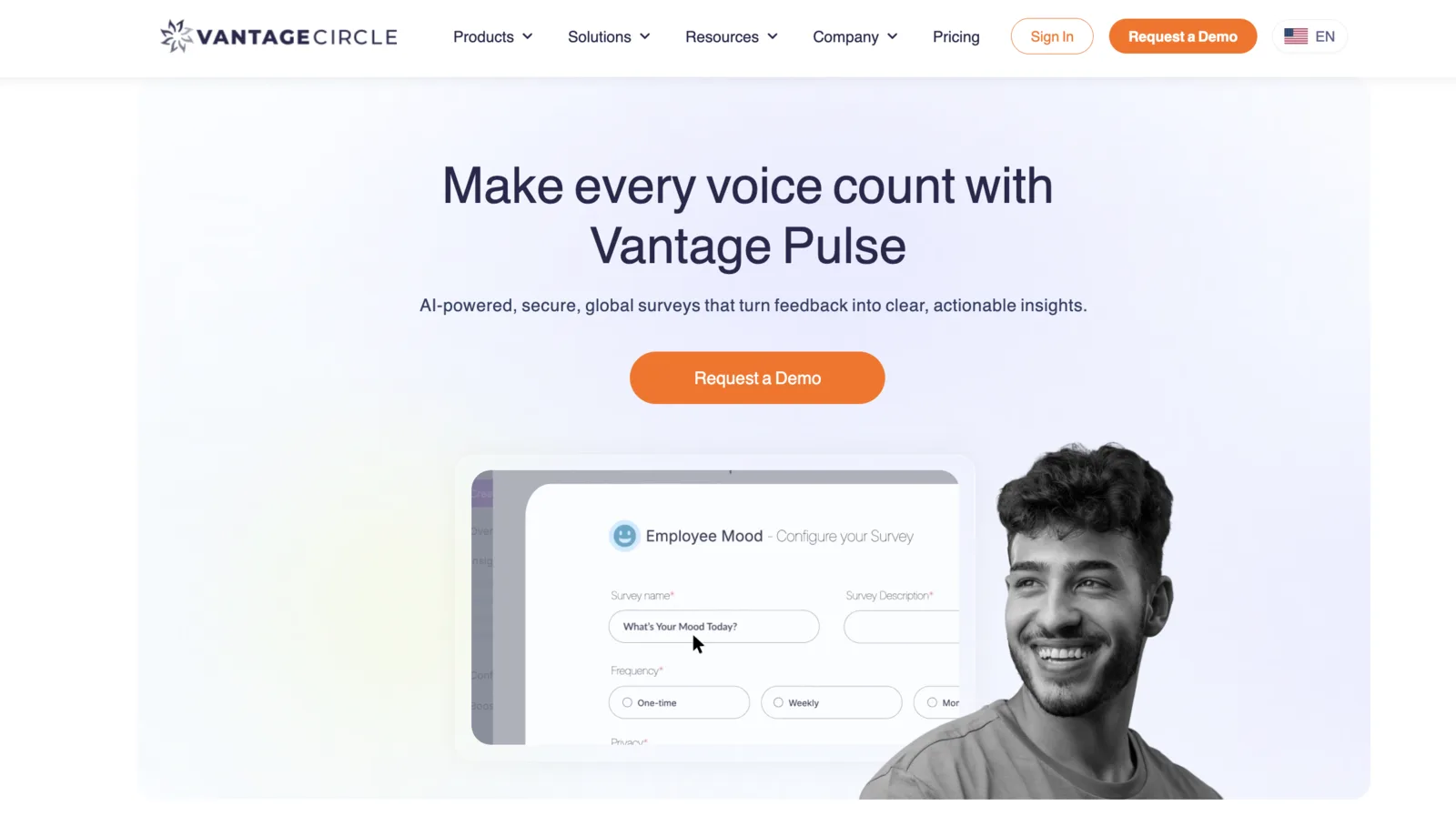
Vantage Circle bundles four modules, recognition, rewards, wellness, and pulse surveys, into a single platform, with HRIS connections to SAP, Workday, and BambooHR. Its eNPS and pulse tools provide structured engagement signals alongside recognition data, which suits organizations where appreciation rather than measurement is the lever being pulled. Listening is one module of four, not the product's core.
Vantage Circle is the right Glint alternative for mid-market and enterprise organizations of 500 to 5,000 employees that want recognition, rewards, wellness, and pulse surveys under a single contract, connected to SAP, Workday, or BambooHR. It is not the right choice for organizations whose core requirement is engagement-driver analysis, because listening is one module among four rather than the product's center of gravity.
Some features may offer limited flexibility, making deep customization harder for specific organizational needs. (Source: G2)
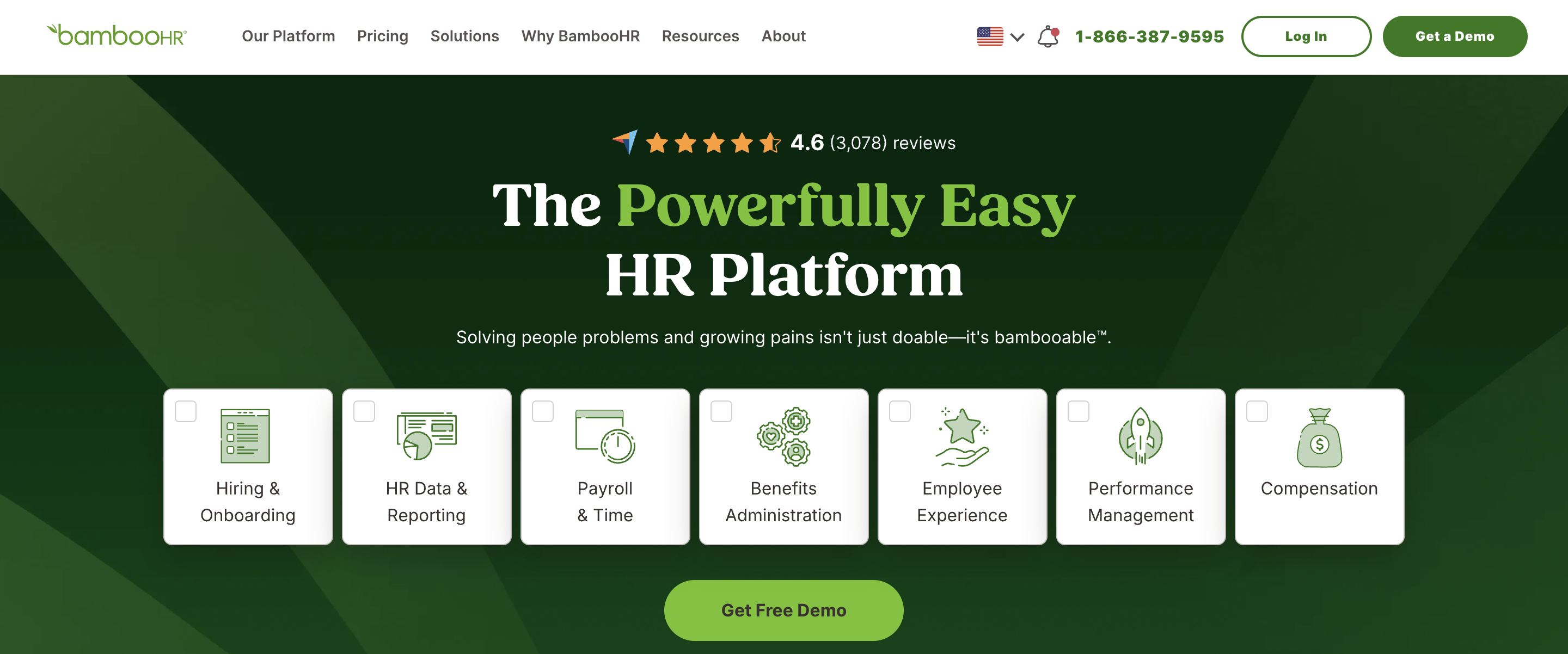
BambooHR is an HR information system for small and mid-sized organizations, with engagement measured through a quick eNPS survey and wellbeing pulse checks built on a research-based question bank. The advantage is structural rather than analytical: survey data sits inside the same system that already holds the org chart, time off, and benefits, so there is no second tool to buy and no HRIS sync to maintain.
BambooHR is the right Glint alternative for organizations of 50 to 1,000 employees that already run BambooHR as their HRIS and want eNPS and wellbeing pulse surveys inside the system of record rather than in a second tool. It is not the right choice for organizations standardized on Workday, SAP, or Oracle, or for teams that need custom driver frameworks and granular role-based access.
Survey features are limited in flexibility, and setting granular access controls can be unintuitive. (Source: G2)
15Five puts engagement inside the manager's weekly rhythm, pairing research-backed engagement and eNPS surveys with weekly check-ins, goals, and manager coaching. Its engagement survey is designed to be completed in under 10 minutes, and lifecycle surveys cover onboarding, role changes, and exit. The trade-off is that the program is manager-led by design rather than analyst-led.
15Five is the right Glint alternative for organizations of 50 to 1,500 employees that want engagement to live in the manager's weekly rhythm through check-ins, goals, and coaching rather than in an annual HR survey cycle. It is not the right choice for enterprises that need multilingual or frontline delivery channels, or for people analytics teams that need research-grade survey precision.
Survey data may occasionally lack accuracy, making it harder to rely on for confident decision-making. (Source: G2)
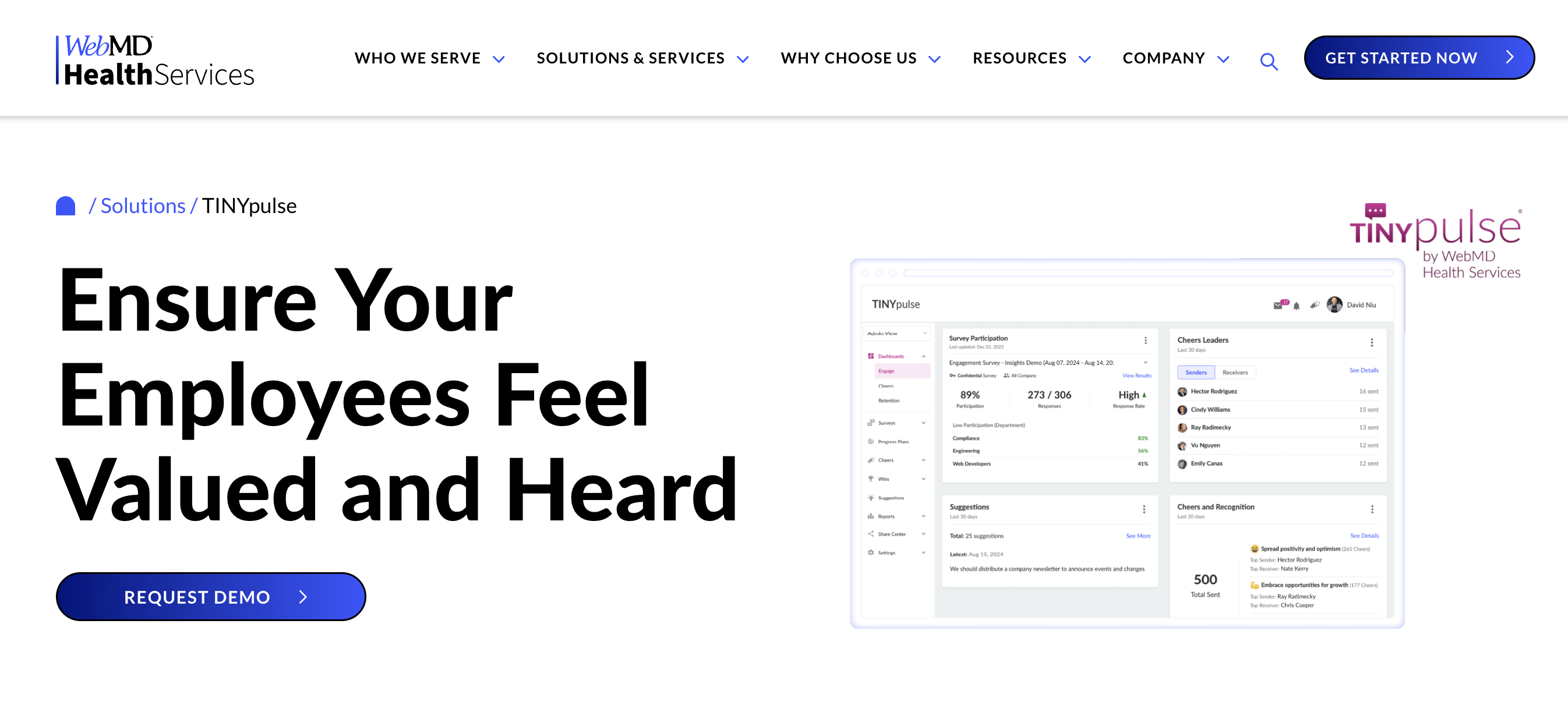
TINYpulse is built around a short pulse format delivered weekly or biweekly over Slack, Teams, or email, deliberately minimizing survey fatigue at the cost of analytical depth. Anonymity is its central promise: results are anonymized before sharing, and an always-open anonymous suggestion box lets employees raise concerns between cycles. Its Cheers for Peers feature adds peer recognition alongside the listening layer.
A note on ownership: TINYpulse spent a stretch as Limeade Listening before WebMD Health Services renamed it back to TINYpulse effective July 2024, per the company's PR Newswire announcement. The product now lives inside WebMD Health Services, which is worth factoring into any roadmap conversation.
TINYpulse is the right Glint alternative for organizations under 500 employees that want single-question anonymous pulse checks delivered over Slack, Teams, or email, plus an always-open suggestion box between cycles. It is not the right choice for enterprises that need driver modeling, lifecycle survey automation, or precise control over reminder scheduling.
Manual control over sending survey reminders is limited, which may affect participation timing. (Source: G2)
Motivosity is a recognition-first platform with listening layered on top, built around its ThanksMatters recognition system and a Lead module that gives managers coaching prompts. Its standard listening instrument is a six-question sentiment pulse sent quarterly, supplemented by custom pulses, and participation is driven by incentives and daily product visibility rather than by HR reminders.
Motivosity is the right Glint alternative for organizations of 100 to 2,000 employees where recognition rather than measurement is the primary engagement lever, and a quarterly six-question pulse with eNPS trending is enough listening. It is not the right choice for organizations that need configurable survey design, notification control, or a research-grade engagement instrument.
Limited customization of notifications and survey configuration may restrict flexibility and integration. (Source: G2)
All 15 Glint alternatives compared
| # | Tool | Best for | G2 | Pricing | Anonymity | Multi-channel | AI analytics |
|---|---|---|---|---|---|---|---|
| 1 | Culture Amp | Research-backed mid-market | 4.5 | Contact sales | Threshold-based | Email, Slack | Heatmaps, driver analysis |
| 2 | Lattice | Intuitive surveys + benchmarking | 4.7 | Contact sales | Customizable threshold | Email, Slack | AI trend highlights |
| 3 | CultureMonkey | Enterprise, multilingual, frontline | 4.7 | Contact sales | Threshold + masking | WhatsApp, Slack, text messages, email, QR, kiosk | Sentiment, themes, word cloud |
| 4 | Leapsome | Impact-driver analysis | 4.8 | Contact sales | Threshold-based | Email, Slack | Impact-driver correlation |
| 5 | Workvivo | Social-first engagement | 4.8 | Contact sales | Configurable | Social feed, mobile, email | Segment analytics |
| 6 | QuestionPro | Reporting + eNPS benchmarking | 4.5 | $99/user/mo | Configurable | Email, web | Driver analysis, sentiment |
| 7 | Qualtrics | Enterprise benchmarking | 4.4 | Contact sales | Threshold-based | Email, multi-language | Basic reporting |
| 8 | Workday Peakon | Workday-native benchmarking | 4.6 | Contact sales | Threshold-based | Email, Slack, text messages, Teams, kiosk | Real-time dashboards |
| 9 | Perceptyx | Lifecycle surveys + NLP | 4.5 | Contact sales | Threshold-based | NLP comment analytics | |
| 10 | Officevibe Workleap | Affordable pulse surveys | 4.7 | $5/user/mo | Anonymous option | Email, Slack | Trend analytics |
| 11 | Vantage Circle | Engagement + wellness + rewards | 4.7 | Contact sales | Anonymous option | Email, mobile | AI sentiment analysis |
| 12 | BambooHR | All-in-one HR + eNPS | 4.4 | Contact sales | Threshold-based | Heatmap trends | |
| 13 | 15Five | Quick research-backed surveys | 4.6 | Contact sales | Configurable | Email, web | Sentiment tracking |
| 14 | TINYpulse | Frequent pulse + strong anonymity | 4.4 | Contact sales | Strong anonymity | Visual dashboards | |
| 15 | Motivosity | Incentive-driven participation | 4.7 | Contact sales | Configurable | Email, mobile | AI coaching support |
Which Glint alternative fits your workforce?
How does CultureMonkey compare to Glint?
What should you look for in a Glint alternative?
The eight capabilities below separate platforms that collect data from those that actually change behavior. Prioritize anonymity, action loops, and multi-channel delivery above all else.
Continuous listening
Pulse, lifecycle, and event-based feedback beyond annual surveys.
Customizable templates
Flexibility to edit questions, scales, and categories for different teams.
Real-time dashboards
Segment data by team, location, or role for actionable insights.
Anonymity controls
Threshold-based suppression and comment masking to foster trust.
Action planning
Post-survey tools that help managers plan and track follow-ups.
Multi-channel delivery
WhatsApp, Slack, text messages, QR, kiosk for hybrid and frontline teams.
HRIS integrations
Sync with Workday, SAP, Darwinbox, Oracle, BambooHR, Slack, Teams.
Transparent pricing
Clear costs and responsive support during setup and rollout.

"Switching to CultureMonkey and connecting to our real HR data has just been a game changer for us. Now I can see engagement information down to the manager level, which is just a completely different world."
Conclusion
Choosing the right employee feedback platform is less about replacing Glint feature-for-feature and more about finding a tool that aligns with how your people work today. As organizations prioritize continuous listening, real-time insights, and anonymity-first frameworks, the need for flexible and actionable solutions has never been greater.
Whether you're exploring Glint competitor platforms to simplify your tech stack or looking for Glint feedback tool alternatives that offer deeper customization and support, CultureMonkey provides a future-ready option.
CultureMonkey brings together ISO 27001, SOC 2 Type II, and GDPR compliance, multilingual delivery, and built-in action planning, without the hidden costs or long setup times. The right tool should do more than collect feedback. It should close the loop, build trust, and drive lasting change. That's where CultureMonkey helps HR and people leaders lead with confidence, at scale.
Ready to move beyond Glint?
See how CultureMonkey helps enterprise HR teams turn feedback into action - with 100+ languages, guaranteed anonymity, and white-glove onboarding.
Frequently asked questions about Glint alternatives
Last reviewed July 2026. Vendor data, suite status, and benchmark figures updated.
You might also like.
14 best employee engagement survey tools, honestly reviewed
Evaluated across anonymity architecture, action loops, delivery channels, and driver analysis.
70+ employee Net Promoter Score questions, categorized by theme
Measure workplace satisfaction by breaking down challenges and helping people leaders improve engagement.
75 must-ask questions for your next workplace culture survey in 2026
Uncover insights, assess employee satisfaction, and drive positive change in your organization's culture.