Answers
Frequently asked questions
How do I evaluate the credibility of an employee engagement survey vendor?
Check the vendor's current G2 rating and review count, ask for references from organizations similar to yours in size and industry, and review its published security documentation. A credible vendor explains its anonymity model in plain language and shares a data processing agreement before you sign anything.
What does onboarding look like with a new engagement survey vendor?
Typical onboarding covers employee data import or HRIS mapping, survey configuration, admin and manager training, and a pilot survey. Lightweight platforms can go live within days or weeks, while analytics-heavy enterprise deployments usually need a phased rollout with dedicated project management on both sides.
Which vendors specialize in enterprise employee engagement surveys?
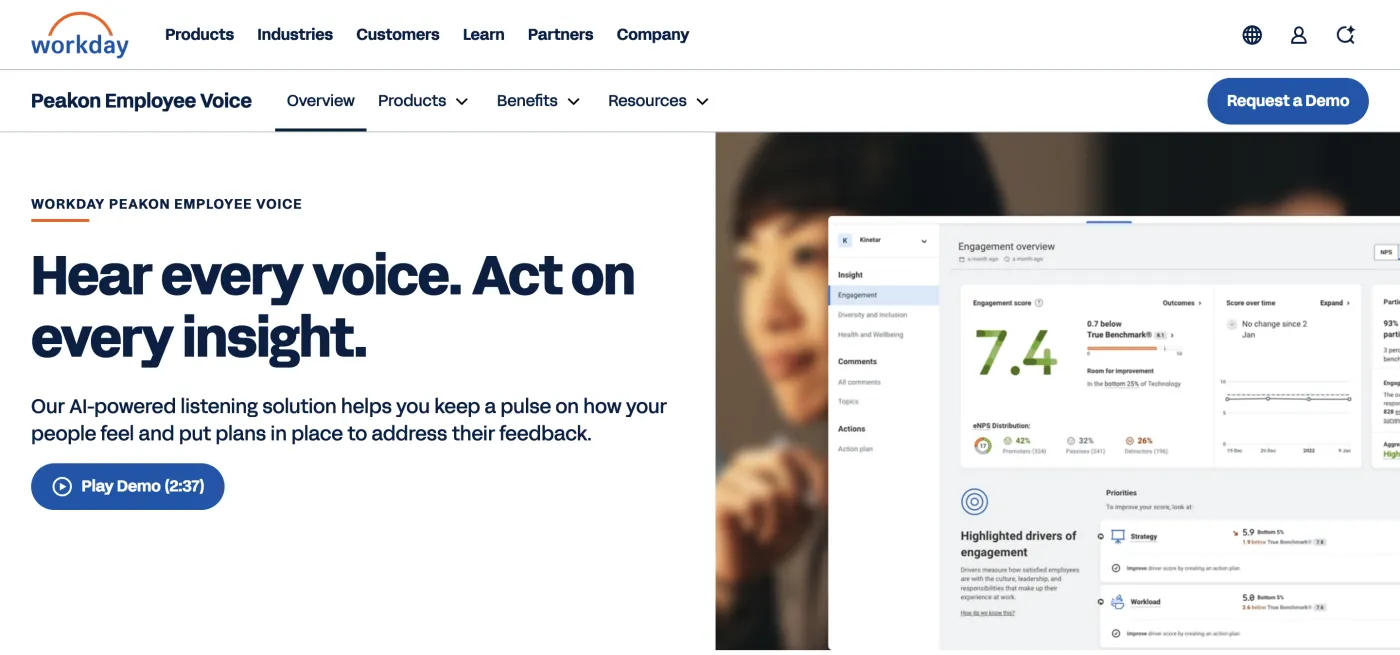
Qualtrics XM, Workday Peakon, Culture Amp, and Perceptyx are the strongest enterprise specialists, each built for complex org structures and deep analytics. CultureMonkey is the strongest enterprise option when the workforce is global, multilingual, or widely distributed, because its delivery channels reach employees who never open email.
What is the difference between a pulse survey platform and a full engagement suite?
A pulse survey platform focuses on short, frequent check-ins with lightweight reporting, which suits managers tracking team mood. A full engagement suite adds annual census surveys, driver analysis, benchmarking, and action planning in one system. Pulse tools deploy faster, while suites support organization-wide listening programs.
Which vendors support multilingual surveys for global workforces?
Most enterprise vendors, including Qualtrics XM, Culture Amp, and Workday Peakon, support multilingual survey content. CultureMonkey also delivers survey emails and reminders in each employee's preferred language, set per person during import, which helps global teams where one company-wide language would suppress participation.
What are the red flags to watch for during a vendor demo?
Watch for demos built entirely on slides instead of the live product, vague answers about how anonymity actually works, contracts that claim rights over your employee data, and support that routes through a generic ticket queue. A vendor that cannot show real workflows live is telling you something.
What are the key differentiators between employee engagement survey vendors?
The differentiators that matter are anonymity design, delivery channel coverage for employees without email, integration depth with your HR systems, analytics and benchmarking quality, and whether action planning is built in or bolted on. Pricing model and implementation support separate otherwise similar vendors at the shortlist stage.
What survey frequency strategy works best for employee engagement?
Most organizations run one full engagement survey each year, supported by shorter pulse surveys each quarter on specific themes. Frequency matters less than follow-through. Employees keep responding when they see visible action after each cycle, and participation drops when surveys arrive without evidence that the last one changed anything.
How do vendors ensure employee anonymity in engagement surveys?
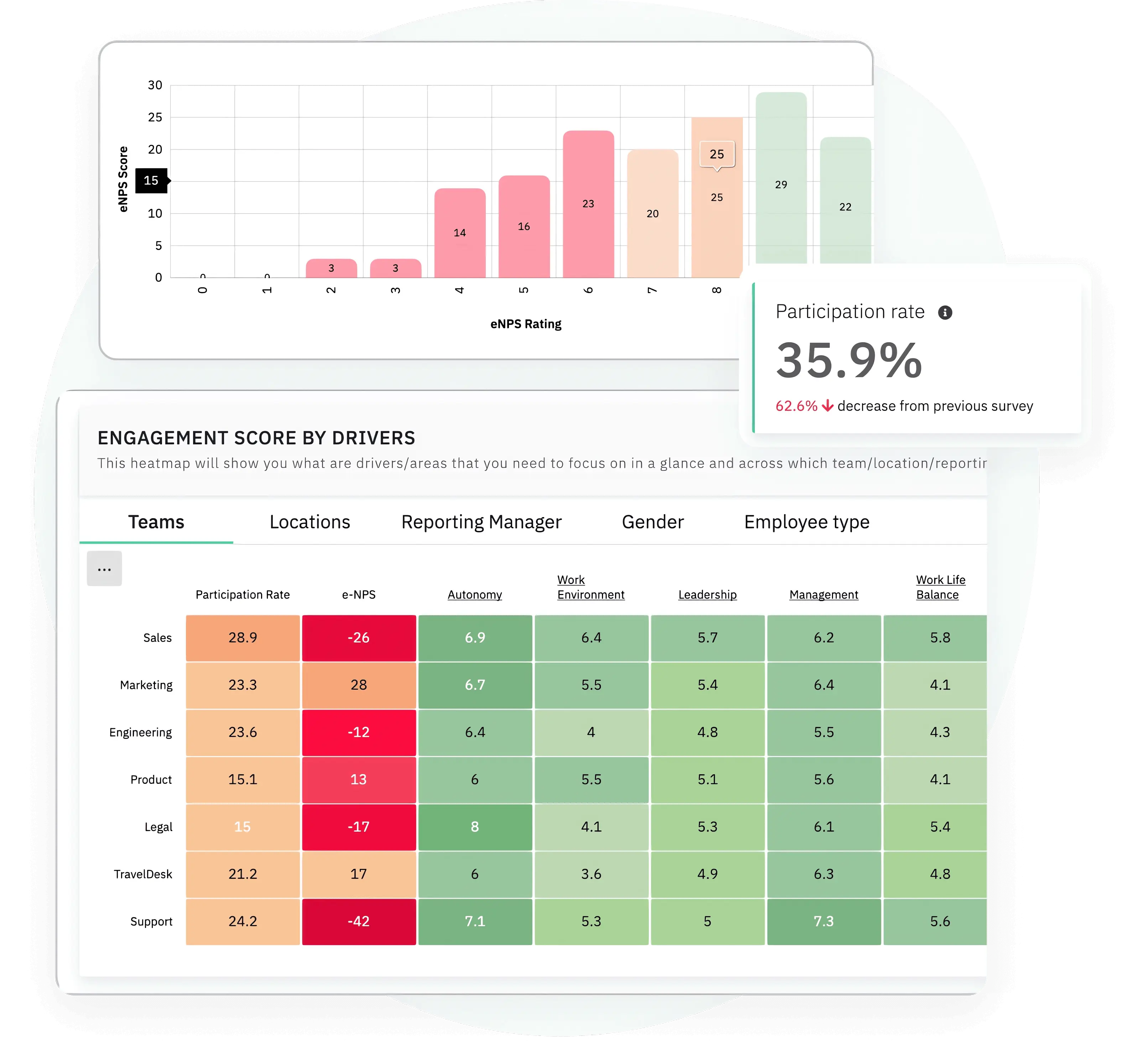
Purpose-built vendors suppress results for groups below a minimum respondent count and restrict who can see raw comments. CultureMonkey, for example, lets admins hide free-text responses from sub-admins, hide the heatmap from managers, and hide flag bearers. Ask every vendor to demonstrate its anonymity controls live during the demo.
Should I use a vendor or hire an engagement consultant?
A vendor provides the platform: delivery, analytics, and action tracking. A consultant provides program design and interpretation. Most teams start with a vendor alone, since modern platforms include templates and guidance. Bring in a consultant when the program is politically sensitive, spans a merger, or needs custom research design.
Which employee engagement survey vendor is best overall?
No single vendor is best overall, which is why this page ranks by fit. Leapsome leads for combined performance and engagement, Workday Peakon for Workday enterprises, and CultureMonkey for enterprises with global and distributed teams that need
anonymous feedback with action planning. Match the vendor to your workforce, not to a badge.
What integration capabilities matter most when evaluating a vendor?
HRIS connectivity matters most, since employee attributes drive segmentation, followed by delivery integrations with Slack and Microsoft Teams that lift response rates for desk workers. Check for single sign-on and an API for bulk data. A vendor that requires manual employee uploads before every survey will eventually ship stale data.
How do you measure the effectiveness of an engagement survey program?
Track participation rate trend,
score movement on the drivers you acted on, and the completion rate of action plans. Participation that rises cycle over cycle means employees trust the process. Scores that move only where managers actually followed through are the clearest evidence the program works as designed.
What is the difference between engagement consulting and engagement software?
Engagement software is infrastructure: it delivers surveys, collects responses, and reports results continuously. Engagement consulting is expertise: program design, instrument validation, and interpretation, usually delivered as a project. Software scales across cycles at a predictable cost, while consulting adds judgment. Many enterprises combine both in their first program year.
Which employee engagement survey vendor do you recommend?
Use the vendor finder near the top of this page. It matches your company size, workforce type, and primary need to a short pick list from the 13 vendors reviewed here. As a rule of thumb, enterprises with global and distributed teams should shortlist CultureMonkey, and analytics-first enterprises should shortlist Qualtrics XM.
How do employee engagement survey vendors handle data residency for global organizations?
Data residency practices vary widely. Large enterprise vendors typically offer regional hosting options, while smaller vendors host in one region. Ask where your data would live, whether that location is contractual, and who can access it during support incidents. Review each vendor's security page before shortlisting, not after selecting.
Can employee engagement survey platforms integrate with performance management systems?
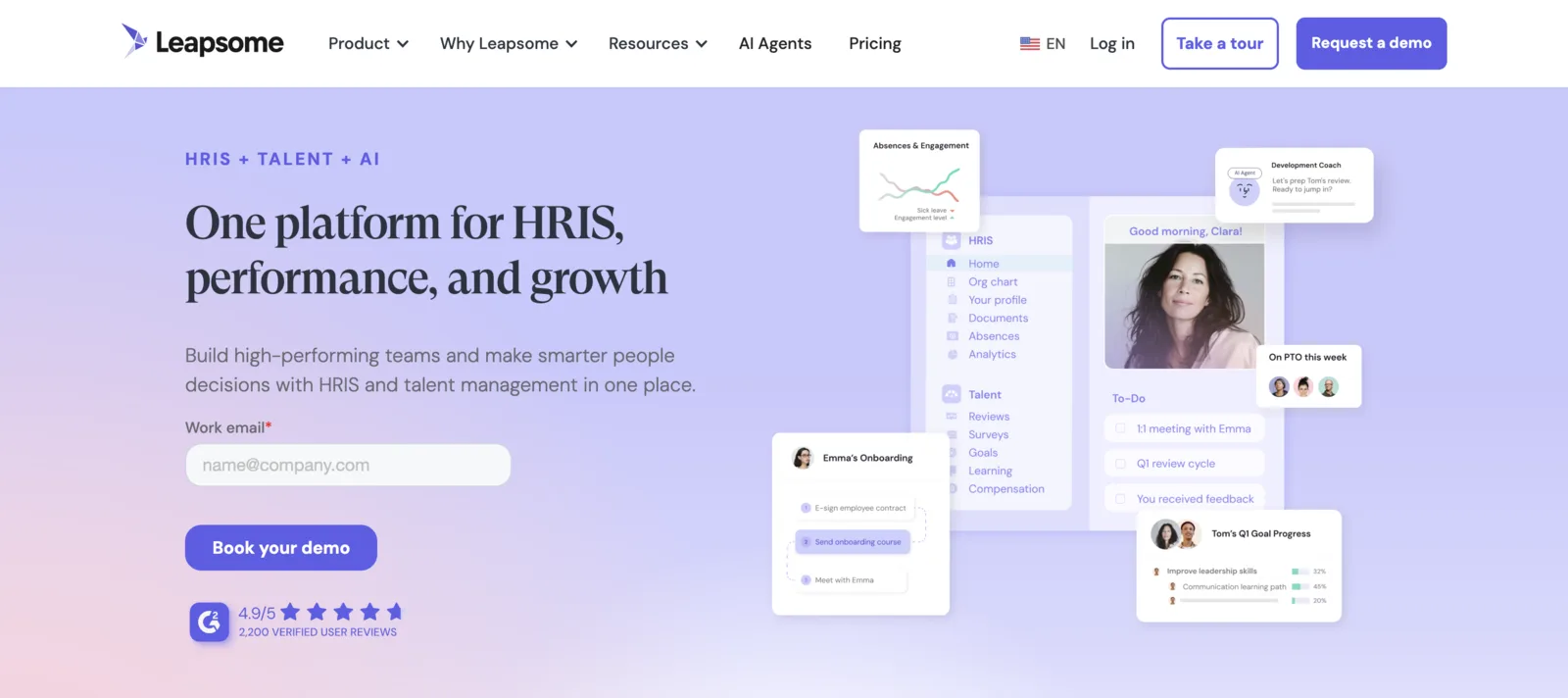
Yes, and some vendors build both into one platform. Lattice, Leapsome, and 15Five combine engagement surveys with reviews, goals, and one-on-ones. Standalone listening platforms usually connect to performance systems through integrations or exports instead, which works well when the two programs are owned by different teams.
What is the minimum employee count for running a meaningful engagement survey program?
Structured survey programs generally become meaningful at around 50 employees, when anonymity groups stay large enough to protect individual responses. Below that size, leaders get better signal from direct conversations and simple check-ins. Vendor anonymity models matter more, not less, as segments get smaller, so test them carefully.
How do employee engagement survey vendors calculate engagement scores?
Most vendors score agreement with a set of research-backed statements on a five-point scale, group those statements into drivers such as recognition or growth, and average them into an overall index. Methodologies differ in drivers and weighting, so ask each vendor to walk through its model before comparing scores.
What is the difference between employee engagement and employee experience platforms?
Employee engagement platforms measure how connected employees feel to their work, manager, and organization, mainly through surveys and driver analytics.
Employee experience platforms cover the broader journey, from onboarding through exit, and often fold in performance and productivity data. Many vendors now span both, with lifecycle surveys extending engagement programs.