


Best employee feedback tools for small businesses under 200 employees

Employee feedback tools for small businesses under 200 employees are platforms that help leaders collect, analyze, and act on employee feedback without heavy administrative overhead. The best employee feedback tools for small businesses combine simple employee engagement survey deployment, anonymity, clear analytics, and predictable pricing.
This guide explains how small organizations should evaluate these tools before purchasing. The recommendations are based on tested evaluation frameworks used by growing institutions to compare vendors, control costs, and ensure feedback systems produce actionable insights.


- Employee feedback tools for small businesses under 200 employees collect, analyze, and act on employee feedback without heavy administrative effort.
- Effective tools combine simple survey deployment, anonymity safeguards, and clear engagement analytics.
- Many SMBs choose tools based on price, ignoring analytics depth and operational fit.
- Budget tools collect survey responses; growth-ready platforms enable continuous employee listening.
- CultureMonkey enables employee feedback tools for small businesses through anonymous surveys, automated feedback cycles, and actionable engagement insights.
What makes an employee feedback tool suitable for small businesses?
An employee feedback tool suitable for small businesses needs to be practical, reliable, and easy to manage. The goal is to turn feedback into usable workplace insights without complex systems.
Unlike large enterprises, small organizations rarely have dedicated employee engagement survey specialists or analytics teams. The chosen tool must reduce operational friction while delivering meaningful engagement insight.
A suitable solution balances usability and cost control. The following factors explain what makes a real time employee feedback tool appropriate for small businesses.
- Simple employee engagement survey creation and dashboards usable without HR tools or specialists.
- Transparent pricing that scales predictably as employee headcount grows.
- Automated employee surveys to reduce manual administration and follow-up workload.
- Quick deployment without technical configuration or heavy IT involvement.
- Clear analytics to help leaders identify issues and prioritize improvements quickly.
Small businesses are increasingly adopting employee engagement tools that provide seamless integration with existing HR tools to streamline workflows, reduce administrative burdens and improve engagement. Employee feedback is a must-have for any internal communications professional to drive engagement and improve morale.
What mistakes do small businesses make when choosing employee feedback tools?

Small businesses often choose employee feedback tools based on price or popularity instead of evaluating operational fit. This leads to platforms that look attractive in demos but become difficult to maintain in daily use.
Many teams also underestimate the importance of anonymous feedback, analytics clarity, and implementation effort. When these factors are ignored, feedback programs generate employee data but fail to improve employee engagement or produce meaningful data or workplace improvements.
- Choosing tools based on budget: Cheap tools often lack automation, forcing HR teams to schedule employee engagement surveys and compile reports manually.
- Ignoring anonymity in small teams: Without strong anonymity safeguards, employees may hesitate to share honest, constructive feedback in small organizations.
- Overly complex platforms: Enterprise-focused employee engagement tools often introduce unnecessary configuration and reporting complexity for small HR teams.
- Tools with weak analytics: Basic dashboards show scores but fail to explain the engagement drivers leaders must address.
- Choosing tools that cannot scale: Entry-level employee engagement tools may struggle once headcount grows, forcing costly platform migrations later.
Real-time feedback tools replace traditional annual employee engagement surveys with pulse surveys, providing timely insights to gauge employee sentiment. Advanced analytics and benchmarking tools allow organizations to compare engagement results against industry standards.
How do the best employee feedback tools for small businesses compare?
The best employee feedback tools for small businesses differ in pricing models, anonymous feedback protections, analytics capabilities, and setup complexity. Comparing these factors helps SMB leaders identify whether a basic employee engagement survey tool or a structured employee listening platform better supports their feedback goals and operational capacity.
| Tool category | Pricing model | Anonymity | Analytics depth | Ease of setup | Best for |
|---|---|---|---|---|---|
| Free survey tools | Free or basic freemium plans | Limited anonymity controls | Very basic summaries and charts | Instant setup with minimal configuration | Very small teams testing occasional feedback surveys |
| Basic SMB feedback tools | Low per-employee monthly subscription | Standard anonymity with response thresholds | Moderate analytics with trend tracking | Simple setup with customizable survey templates | Small businesses starting structured feedback programs |
| Automated feedback platforms | Tiered SaaS pricing based on employee count | Strong anonymity protections and identity masking | Deeper analytics identifying engagement drivers | Fast deployment with automated survey workflows | Growing SMBs needing continuous employee listening |
| Growth-ready engagement platforms | Higher subscription pricing with expanded features | Advanced anonymity governance and reporting controls | Advanced analytics, benchmarking, and predictive insights | Moderate setup requiring configuration | Organizations scaling feedback programs and leadership reporting |
Should small businesses choose budget feedback tools or growth-ready platforms?

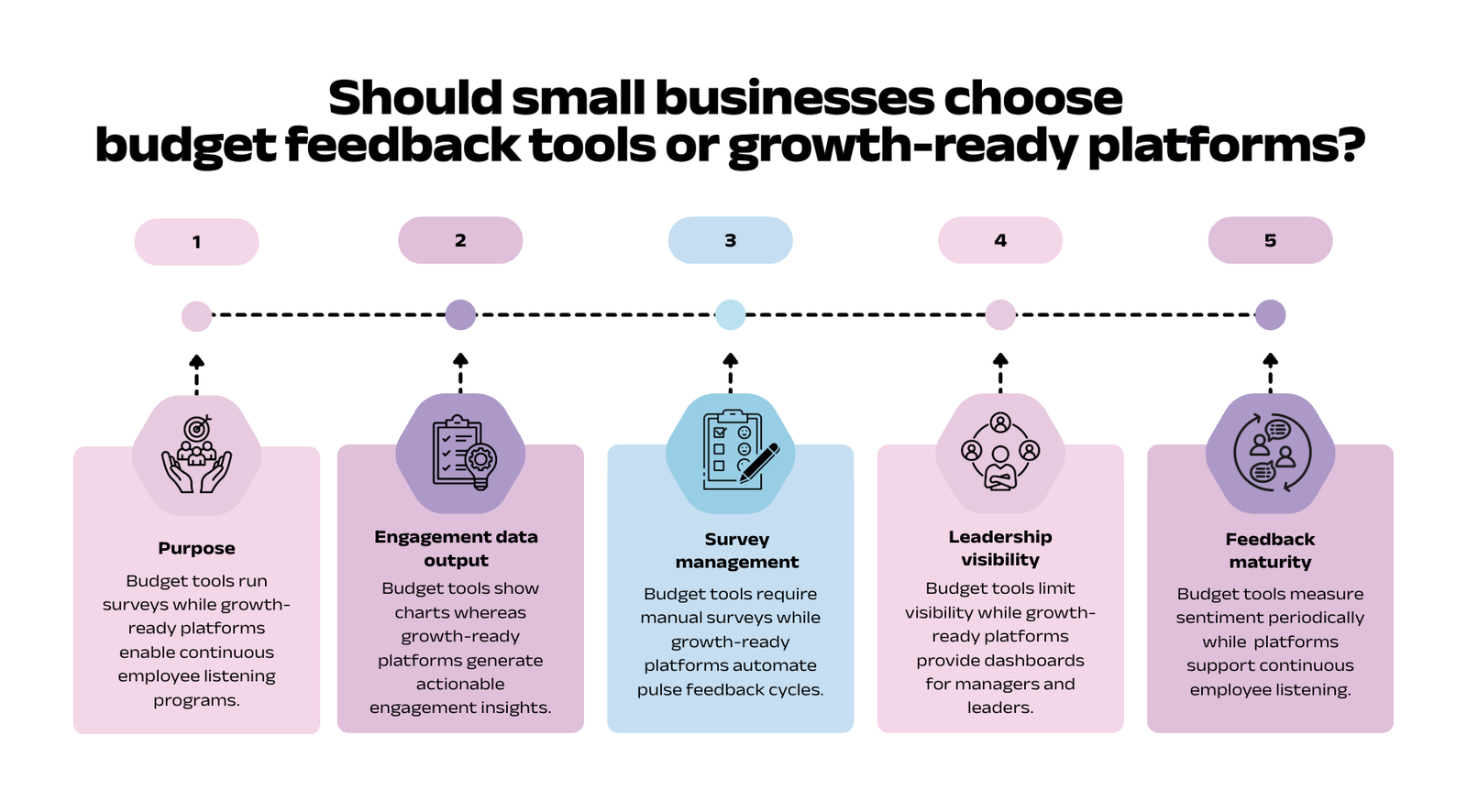
Employee feedback tools for small businesses typically fall into two categories: budget employee engagement survey tools and growth-ready feedback platforms. The difference lies in how the performance management shows feedback cycles, analyzes employee data, and supports ongoing employee listening.
Purpose: Occasional employee surveys vs structured employee listening
Budget tools are designed primarily for running employee engagement surveys. Growth-ready platforms are designed to manage an ongoing employee listening process by linking survey results directly to employee satisfaction by tracking progress.
Understand the distinction:
- Budget tools focus on survey collection.
- Growth-ready platforms support continuous employee listening.
- Platforms structure feedback into repeatable engagement programs.
A simple tool that employees actually use will outperform a sophisticated tool that sits idle, especially for companies with 50-500 employees. Seamless integrations allow employee feedback tools to connect with platforms like Slack and Microsoft Teams for streamlined employee data collection.
Engagement data output: Survey results vs decision-ready insights
Budget employee engagement tools typically provide raw survey results and basic charts. Growth-ready platforms translate employee engagement feedback into employee development insights leaders can interpret and act on.
Look for differences such as:
- Raw survey summaries versus engagement driver analysis.
- Basic charts versus insight dashboards for leadership.
- Individual survey results versus historical engagement trends.
Scalability is an important consideration for employee engagement software, allowing customization of workflows and reporting as businesses grow. Automated follow-ups help keep the employee feedback loop alive, ensuring consistent engagement efforts without extra manual work.
Survey and performance management: Manual surveys vs structured feedback cycles
Budget tools often require HR teams to manually create and run each survey. Growth-ready platforms organize employee engagement surveys into structured cycles such as pulse surveys and engagement reviews.
Key operational differences:
- Manual survey scheduling versus automated survey workflows.
- One-off engagement surveys versus structured feedback cycles.
- Limited survey templates versus guided survey frameworks.
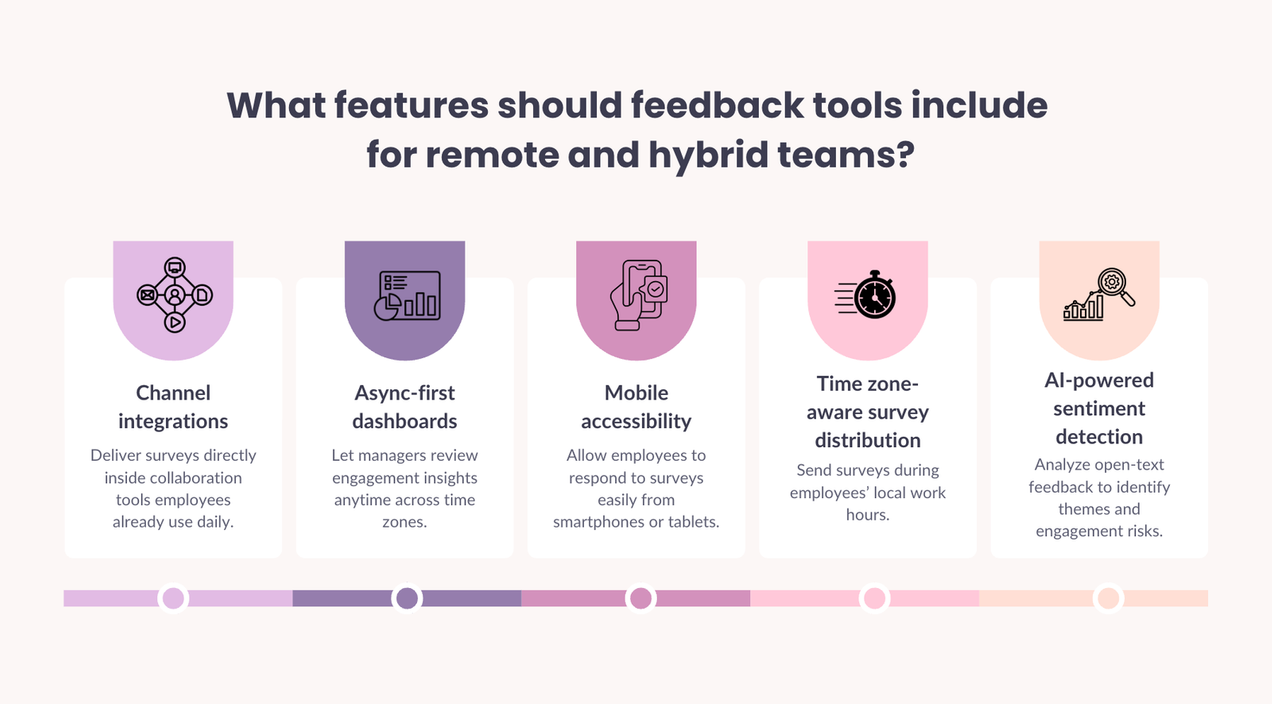
Employee engagement software should include core features like mobile accessibility, feedback tools, and recognition systems to boost morale and productivity. Integration capabilities with existing HR systems are critical to avoid workflow disruptions and save time.
(Source: Zoom)
Leadership visibility: HR reporting vs manager-level insights
In budget tools, survey results often remain within HR reports. Growth-ready platforms distribute employee engagement insights across leadership teams so managers can act on manager development feedback.
Compare leadership access:
- HR-only reporting versus manager dashboards.
- Static reports versus real-time engagement visibility.
- Limited segmentation versus team-level insights.
Customizable survey templates in pulse surveys allow users to tweak questions, add branding, and choose different question types. Actionable insights help managers act on data quickly in real time feedback systems and improve retention by increasing the pulse survey frequency.
Feedback maturity: Survey tools vs employee listening systems
Budget tools help organizations start collecting employee engagement feedback. Growth-ready platforms support a broader employee listening strategy that integrates engagement surveys, analytics, and action planning.
Understand the maturity gap:
- Survey tools measure employee sentiment and employee benefits periodically.
- Listening platforms track engagement continuously, boosting employee engagement.
- Platforms connect employee feedback to workplace improvement efforts.
Seamless integration capabilities are critical to avoid workflow disruptions when selecting employee engagement software. Feedback tools should offer mobile accessibility to increase participation rates. Regular employee engagement surveys can provide actionable insights for HR teams to improve workplace culture.
When should small businesses upgrade from basic employee feedback tools?
Many small businesses begin with simple pulse surveys tools to collect occasional employee feedback. These tools work well in early stages but often fall short once organizations need clearer insights, regular feedback cycles, and structured engagement tracking.
Upgrading becomes necessary when feedback programs move from basic pulse surveys toward continuous employee listening and engagement data-driven workplace improvements.
When survey data stops guiding decisions
Basic survey tools often generate employee engagement scores and performance data but provide little explanation behind them. Leaders may see results but still struggle to understand what actions are needed.
Look for signs such as:
- Leadership asking what specific issues surveys are revealing.
- Engagement scores change without clear explanation.
- Managers unable to translate survey results into improvement actions.
Engagement platforms are increasingly prioritizing features that enhance workplace culture, such as real-time feedback and recognition systems. Companies with more engaged workers report higher profitability than those with lower engagement levels.
When employee participation begins to decline
Low participation often indicates employees doubt whether surveys are meaningful or safe. Weak anonymity protections, limited focus on personal and professional growth or repetitive survey formats may discourage honest responses.
Watch for indicators like:
- Survey participation rates falling across cycles.
- Employees providing fewer written comments.
- Teams expressing hesitation about anonymous feedback.
The employee engagement software market for small businesses is expected to grow steadily as cloud-based and cost-effective solutions become more common. Collecting meaningful employee feedback can drive improvements in productivity, boost retention, and fuel revenue growth.
When managers need team-level engagement visibility
As organizations grow, leaders often need insight into employee engagement patterns across teams or departments. Basic engagement tools usually provide only overall results without deeper segmentation.
Consider upgrading if:
- Managers request team-specific feedback insights.
- Leadership wants to compare engagement across departments.
- HR processes need structured reporting for leadership reviews.
Peer recognition features and gamification combine employee engagement as a part of a performance management platform, which are emerging trends in employee engagement technology hoping to boost morale and reinforce communication.
When HR workload increases after every survey
Manual survey administration becomes difficult for small HR teams. Exporting responses, compiling direct reports, and summarizing insights can consume significant time.
Look for operational signals such as:
- HR processes spending hours preparing survey reports manually.
- Survey distribution and reminders handled manually.
- Leadership requesting faster reporting after surveys.
Mobile-first designs in employee engagement platforms are becoming essential as remote and hybrid workforces become more common. Many vendors offer customizable, scalable pricing enabling small businesses to pay only for needed features and expand as they grow.
When feedback becomes part of leadership strategy
Employee feedback becomes most valuable when leaders use it to guide workplace decisions. At this stage, organizations require tools that translate survey responses into clear engagement insights.
Strong indicators include:
- Leadership conducting traditional performance reviews with engagement trends regularly.
- Managers responsible for improving team engagement scores.
- Employee feedback influences workplace culture or policy decisions.
AI and machine learning capabilities in employee engagement technology are helping managers identify turnover risks early and implement evidence-based interventions for boosting employee engagement.
Conclusion
Choosing the best employee feedback tools for small businesses under 200 employees requires evaluation of how well a tool supports honest feedback, clear analytics, and consistent listening without creating operational complexity. The right employee feedback platform should help organizations move from collecting employee opinions to understanding engagement patterns and workplace priorities.
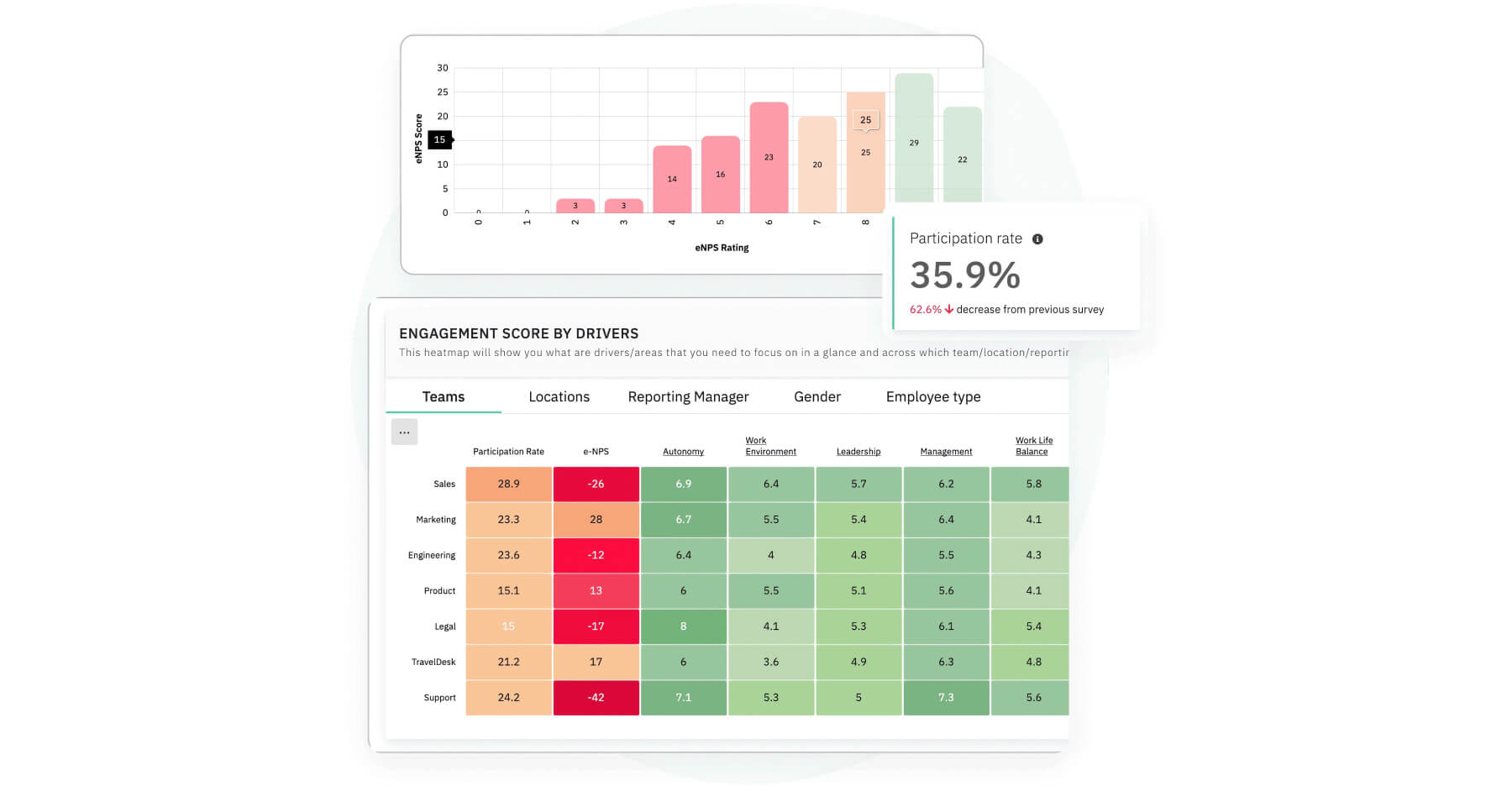
CultureMonkey supports this transition by combining anonymous surveys, automated feedback cycles, and clear analytics dashboards. These capabilities help small businesses gather actionable insights and translate feedback into structured engagement improvements.
Book a demo with CultureMonkey.
FAQs
1. What is the cheapest employee feedback tool?
The cheapest employee feedback tools are usually free survey platforms such as Google Forms or basic survey tools. They allow small businesses to collect employee feedback at minimal cost but typically offer limited anonymity, non robust analytics, and actionable insights of employees compared to dedicated employee feedback platforms.
2. Do small companies need pulse surveys?
Yes. Pulse surveys help small companies track employee sentiment shifts more frequently than annual engagement surveys. Short, regular pulse surveys allow leaders to detect employee concerns early, monitor engagement trends, and respond to issues before they affect employee morale, productivity, or employee retention.
3. How often should small businesses collect employee feedback?
Small businesses typically collect employee feedback through quarterly pulse surveys and one annual engagement survey. This approach helps leaders monitor engagement trends regularly without creating survey fatigue while still capturing deeper insights about workplace culture and employee satisfaction.
4. What features should small businesses look for in employee feedback tools?
Small businesses should look for simple survey creation, anonymity protection, clear analytics dashboards, automated pulse surveys, and affordable pricing. These features help small HR teams collect meaningful feedback, interpret engagement insights quickly, and run surveys without heavy administrative effort.
5. Are anonymous employee surveys important for small teams?
Yes. Anonymous employee surveys are especially important in small teams because employees may hesitate to share honest feedback if responses could be traced back to them. Strong anonymity safeguards encourage participation and help leaders collect more reliable insights about engagement and workplace culture.