



CultureMonkey Blog
Employee Engagement Articles

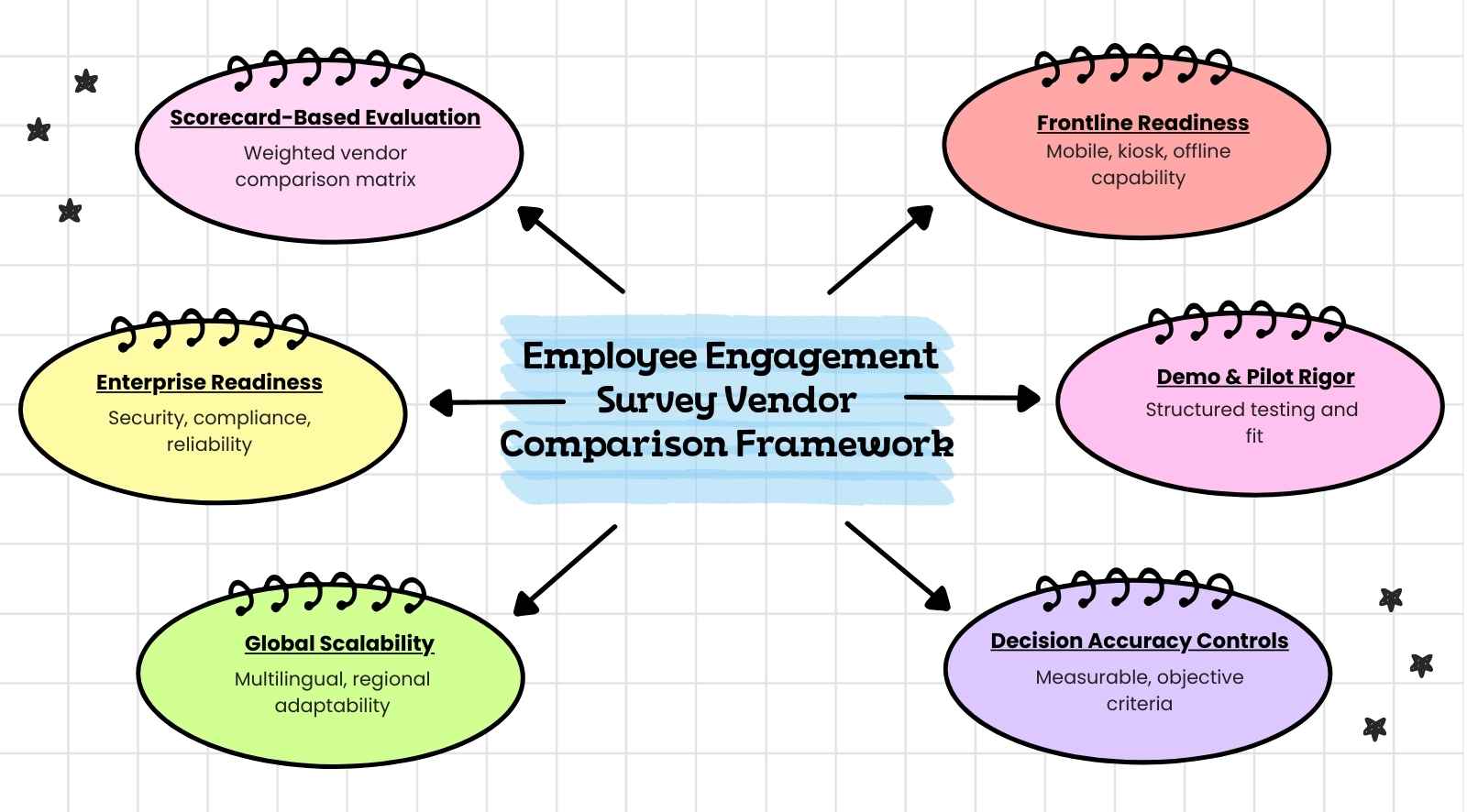
Employee engagement survey vendor comparison: The only scorecard you need
Employee engagement survey vendor comparison is the structured evaluation of survey platforms using weighted criteria such as analytics depth, anonymity controls, action workflows, integrations, and scalability to ensure feedback drives measurable business outcomes.
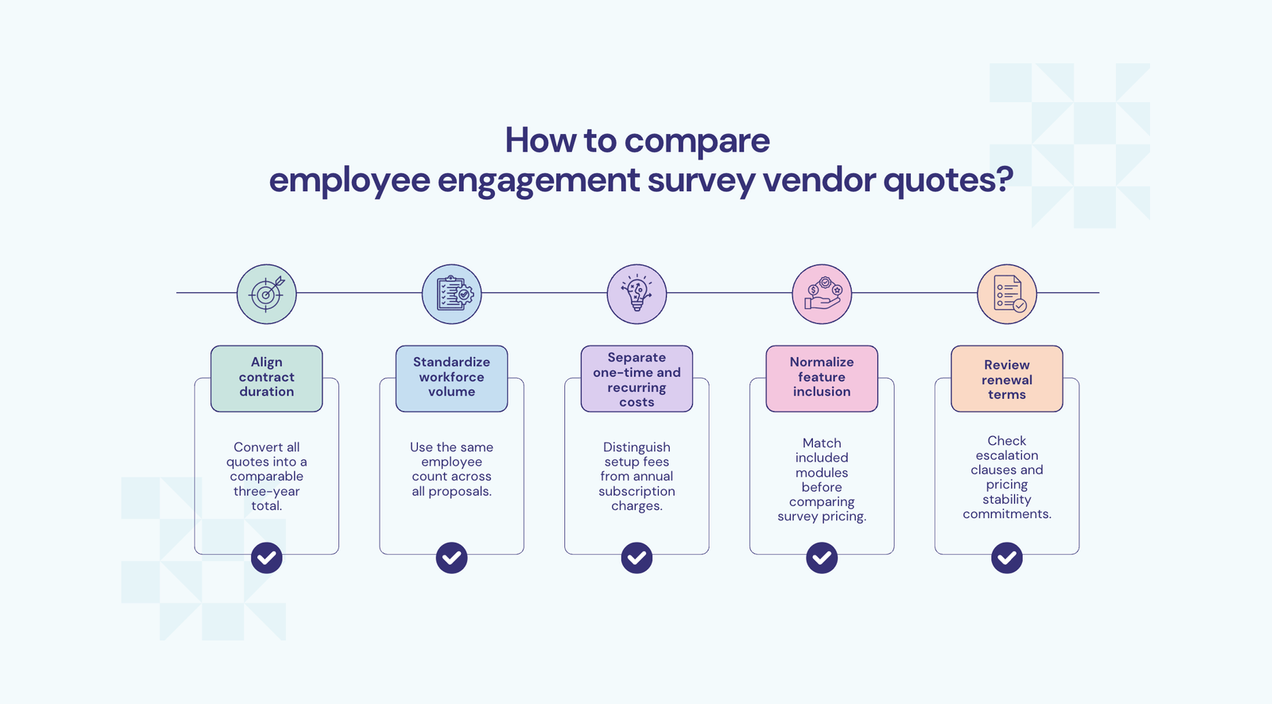
Employee engagement survey vendors pricing: A complete guide in 2026
Employee engagement survey vendors pricing refers to the structured cost vendors use to charge organizations for survey platforms, analytics, integrations, implementation, and support. It varies based on workforce size, feature depth, contract terms, and operational complexity.
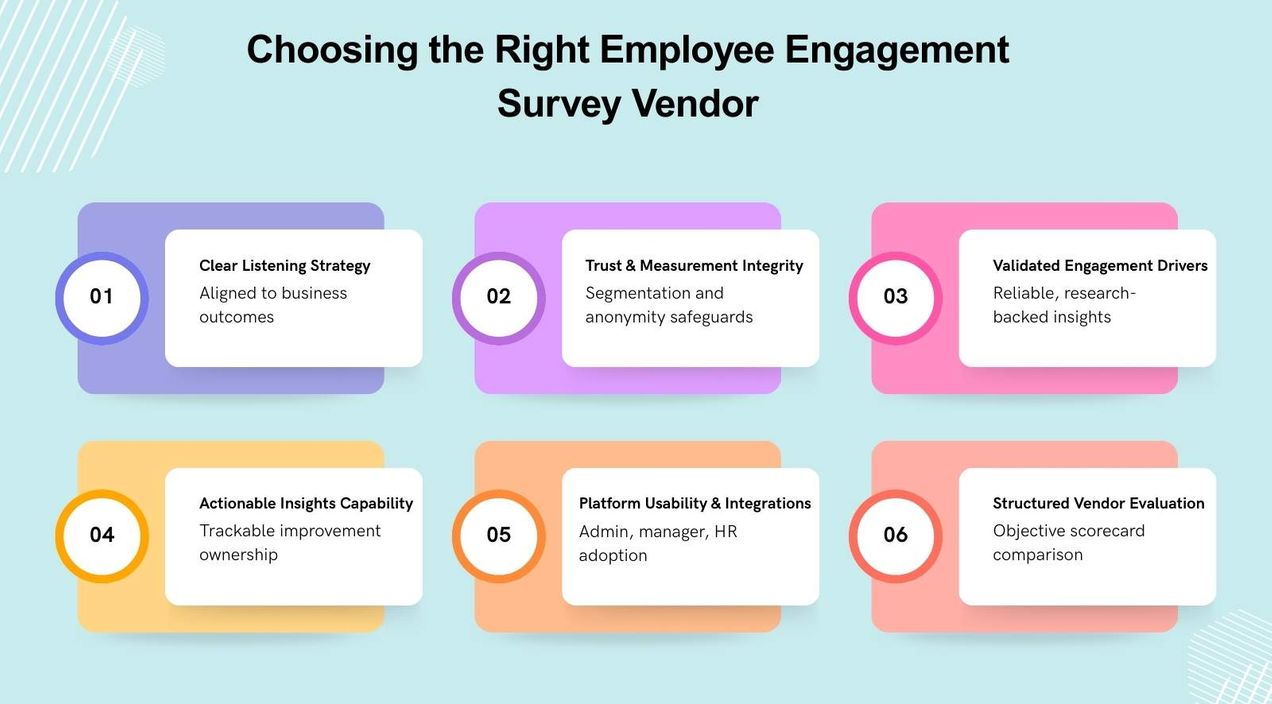
How to choose an employee engagement survey vendor: A practical 10-step framework
Choosing the Employee Engagement Survey Vendor is the process of selecting a survey platform that aligns with business goals, protects anonymity, supports segmentation, enables action planning, integrates with systems, and delivers reliable insights for sustained impact.
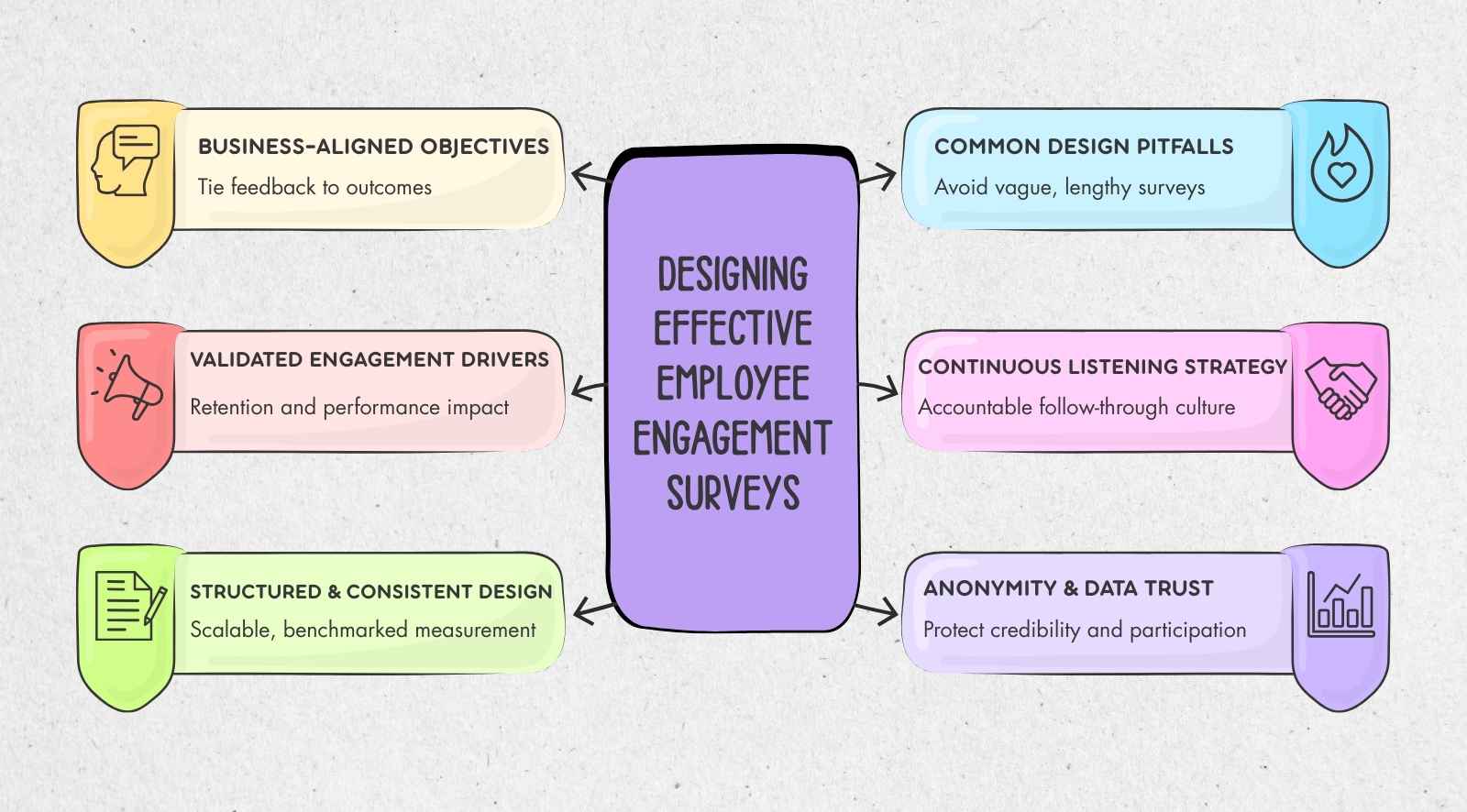
How to design an effective employee engagement survey: A practical guide for HR and business leaders (2026)
Designing an effective employee engagement survey is the structured process of defining clear objectives, selecting relevant drivers, crafting precise questions, and aligning insights with organizational goals to generate meaningful employee feedback and measurable improvement outcomes.
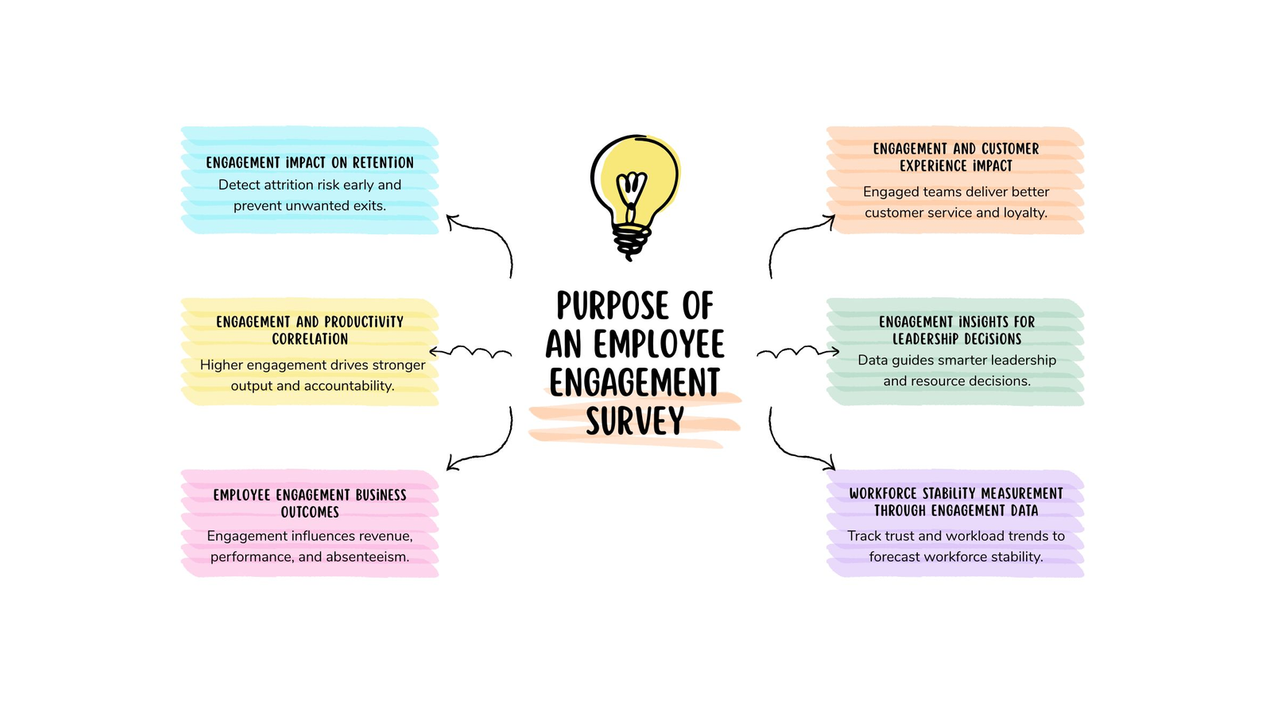
What is an employee engagement survey? A complete guide for HR and business leaders (2026)
Employee engagement surveys turn employee sentiment into measurable business intelligence. For leaders asking what is an employee engagement survey, it’s a structured workforce engagement measurement that highlights retention risk, productivity gaps, and performance trends.
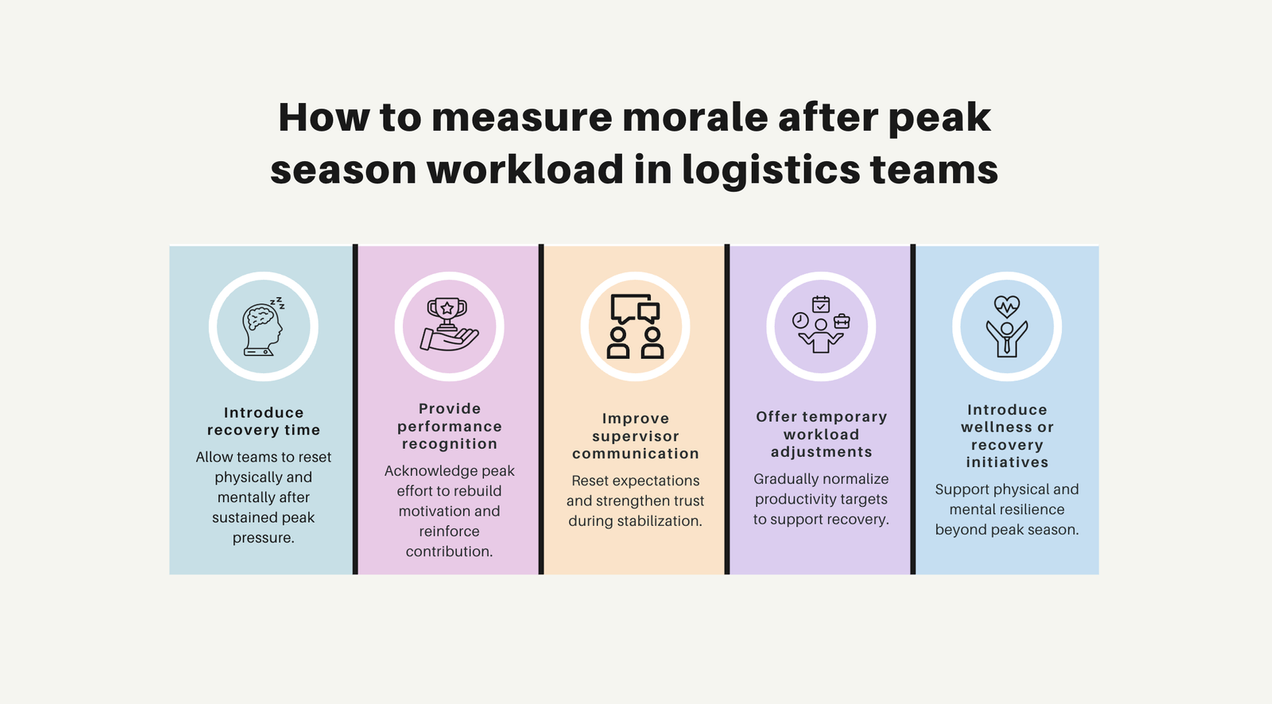
Measuring morale after peak season workload in logistics teams to detect early burnout signals in 2026
Measure morale after peak season workload in logistics teams by assessing physical and mental recovery, monitoring participation and productivity trends, comparing warehouse performance across regions, and addressing early signs of burnout before attrition rises.
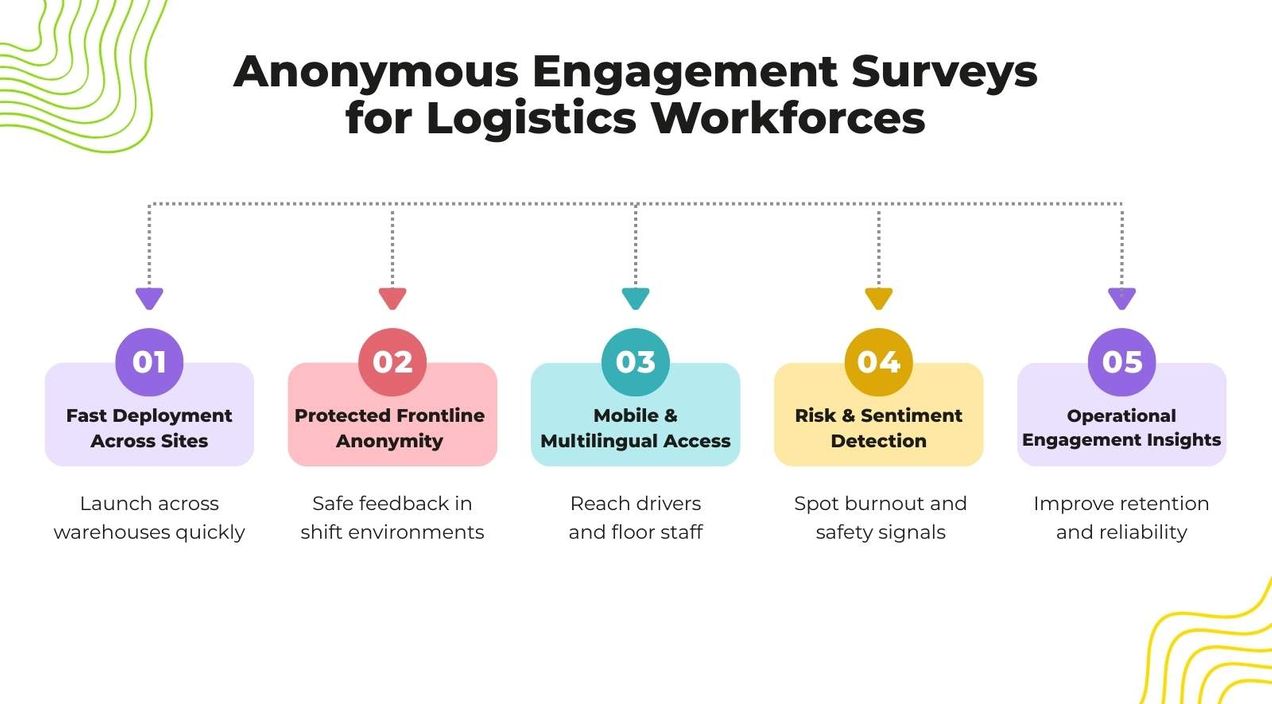
Anonymous engagement surveys for logistics workforces: A practical guide for warehouse and supply chain leaders (2026)
Anonymous engagement surveys for logistics workforces are structured, identity-protected feedback tools that help warehouse and delivery teams share concerns about scheduling, safety, workload, and supervision without fear, enabling leaders to detect operational risks early.
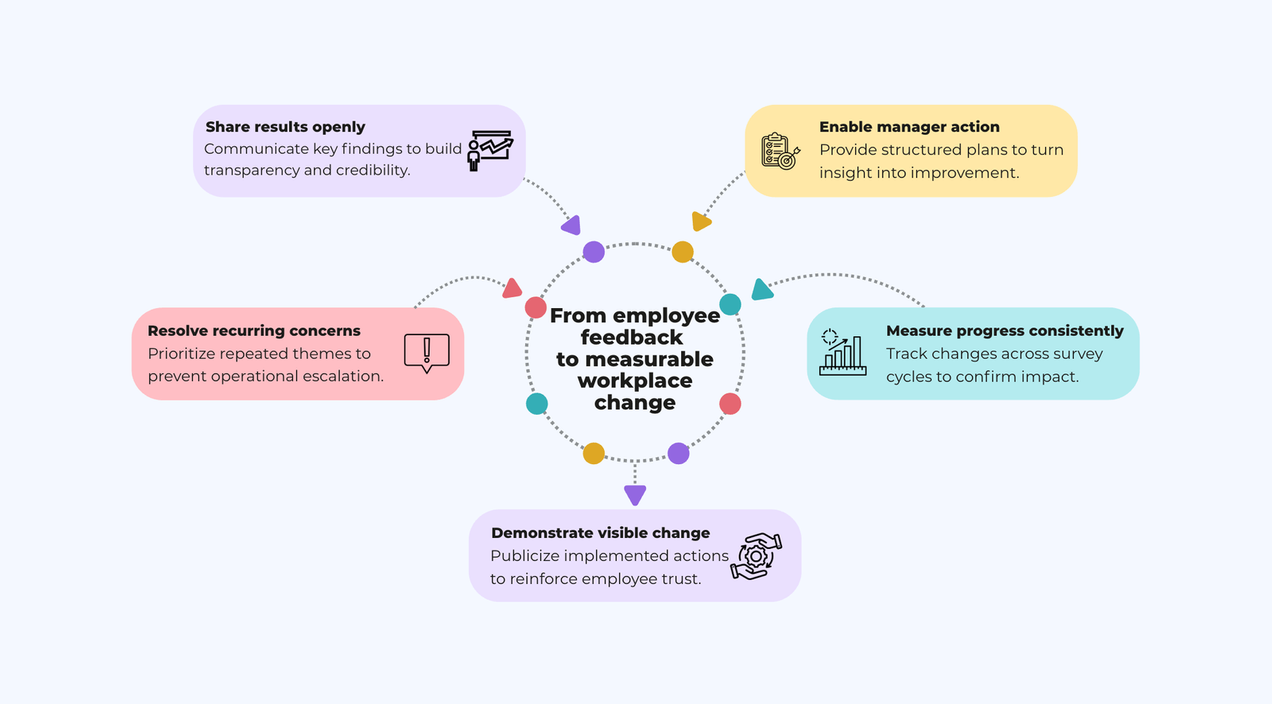
Anonymous employee survey in financial services: A practical guide for banks and financial institutions in 2026
Anonymous employee surveys in finance services are structured feedback systems that allow bank employees to share honest insights on ethics, workload, leadership, and compliance risks without revealing their identity in tightly regulated, high-performance environments.
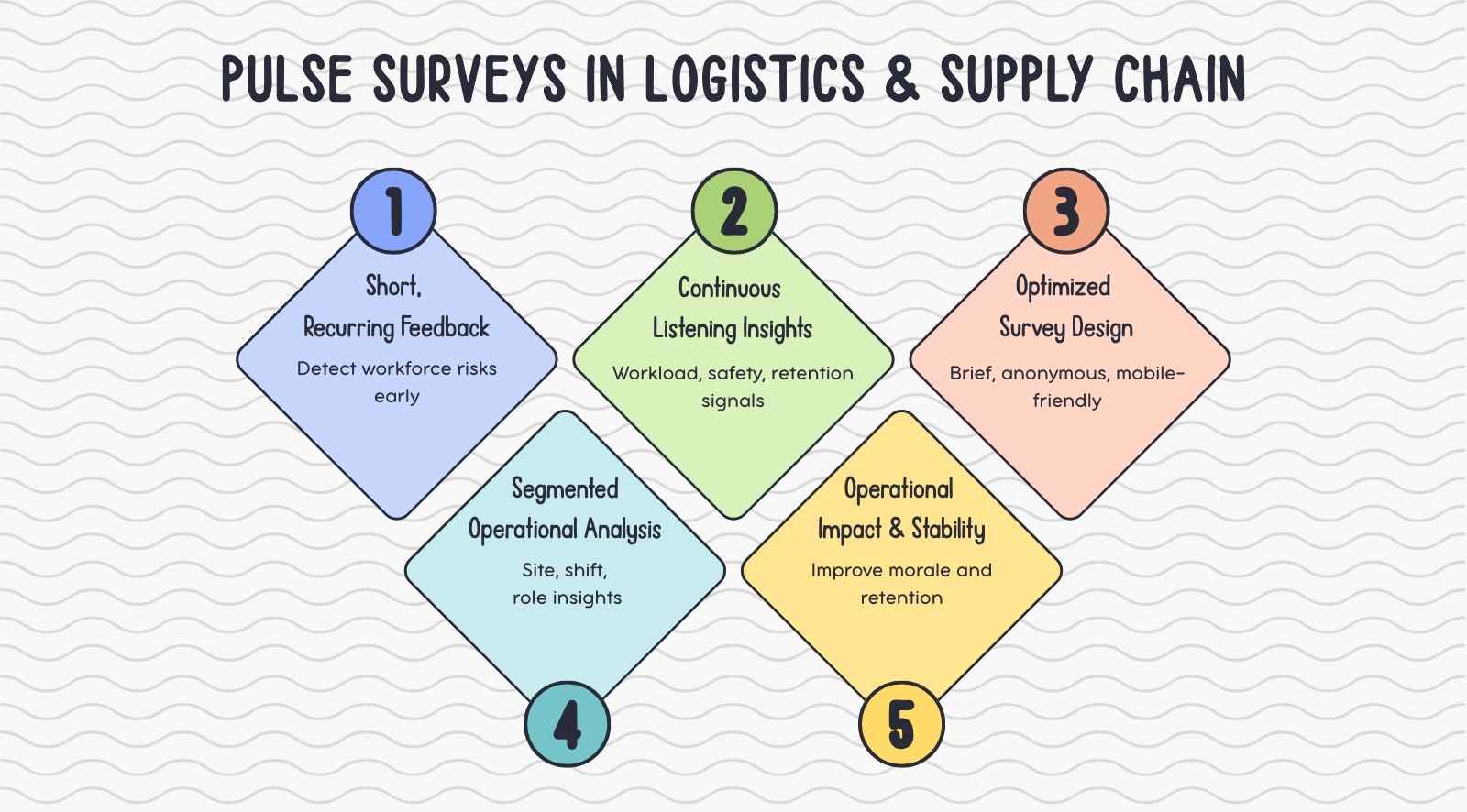
Pulse surveys in logistics and supply chain operations: A practical guide for HR and operations leaders (2026)
Pulse surveys in logistics & supply chain are short, recurring employee feedback check-ins used to monitor real-time workforce sentiment across warehouses, fleets, and distribution networks, helping leaders detect workload strain, safety risks, and retention issues early.
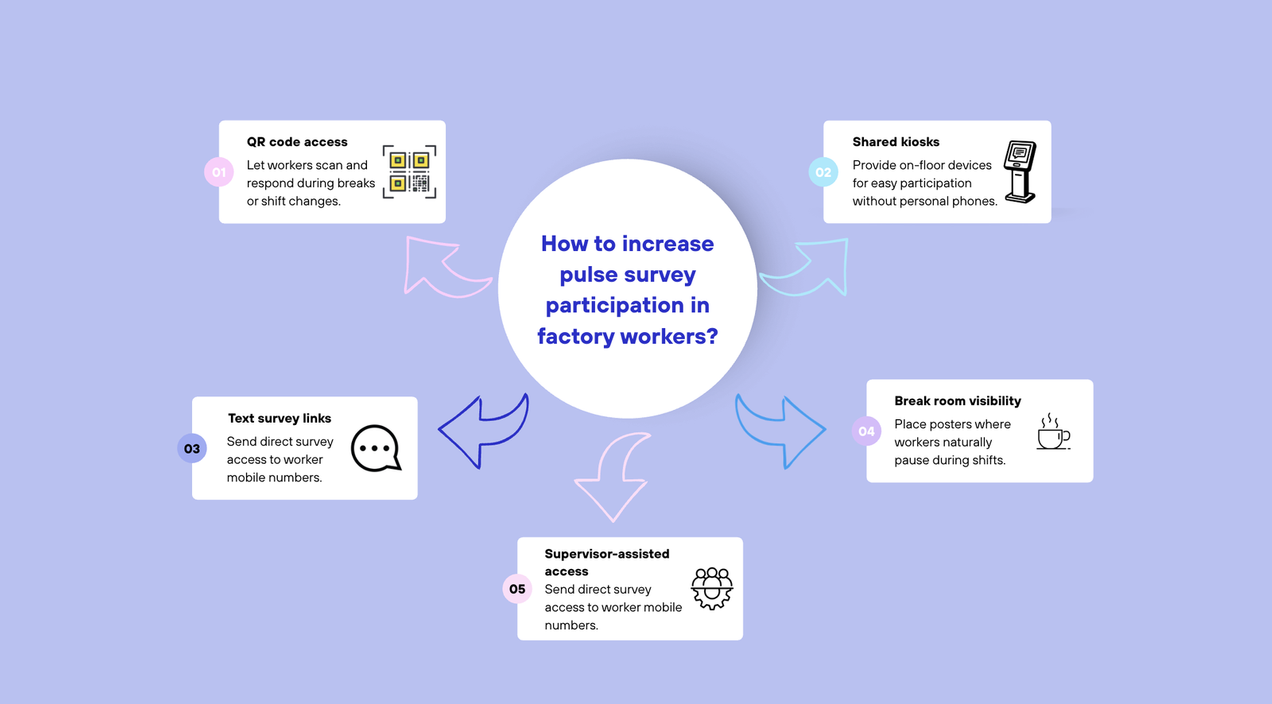
Pulse survey participation in factory workers: Practical ways to increase response rates in 2026
Increase pulse survey participation among factory workers, keep surveys short, anonymous, shift-friendly, and ensure visible follow-up actions that build trust and lift response rate
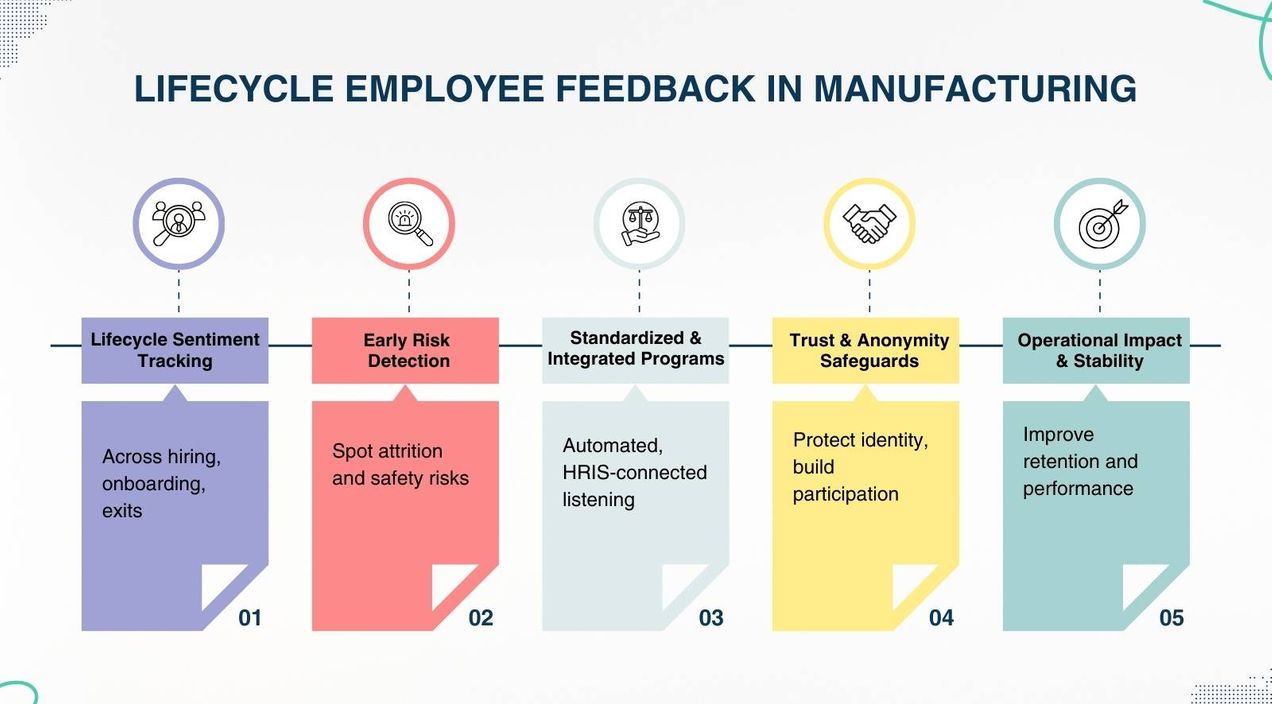
Lifecycle employee feedback in manufacturing: A practical guide to listening across the factory employee journey (2026)
Lifecycle employee feedback in manufacturing is a structured approach to collecting employee input at key stages of the factory journey, from hiring and onboarding to development and exit, helping leaders reduce attrition, improve safety, and strengthen operational stability.
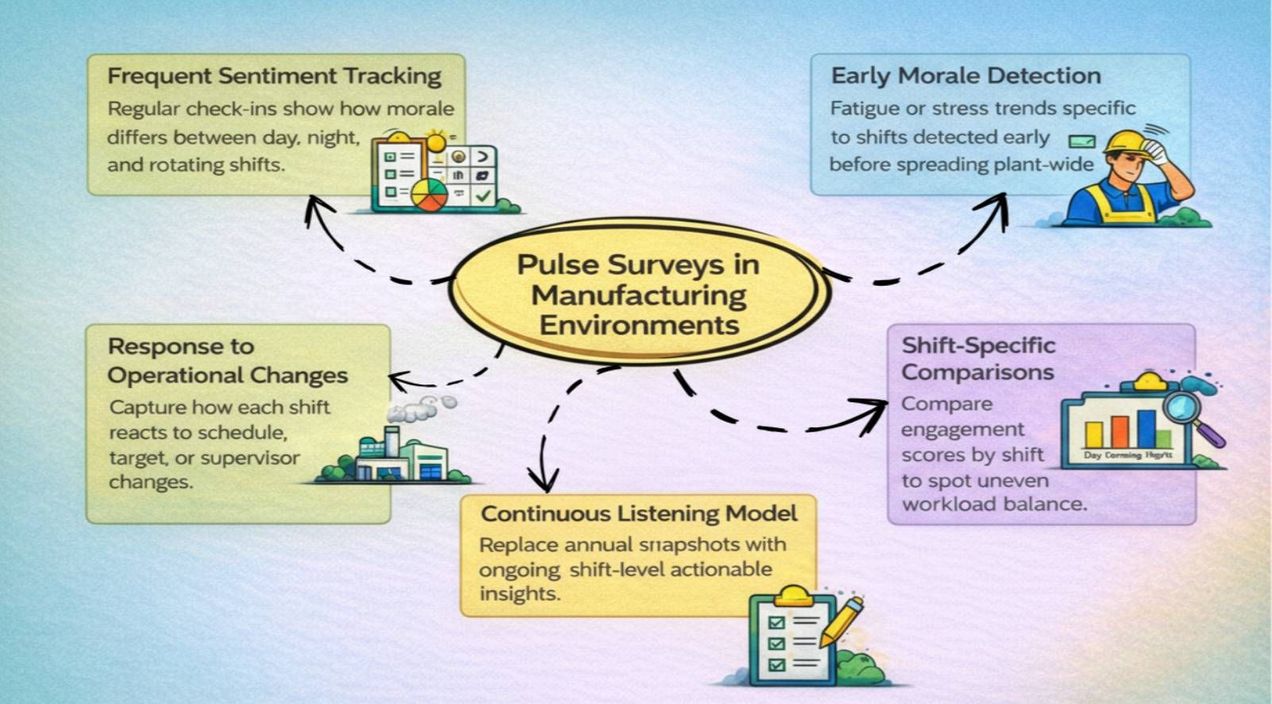
Pulse surveys in manufacturing environments to improve retention across plants and shifts in 2026
Pulse surveys in manufacturing environments require a clear strategy, strong employee engagement focus, and practical implementation across shifts and plants. A clear strategy and implementation help improve safety, reduce attrition, and strengthen workforce stability in industrial operations.
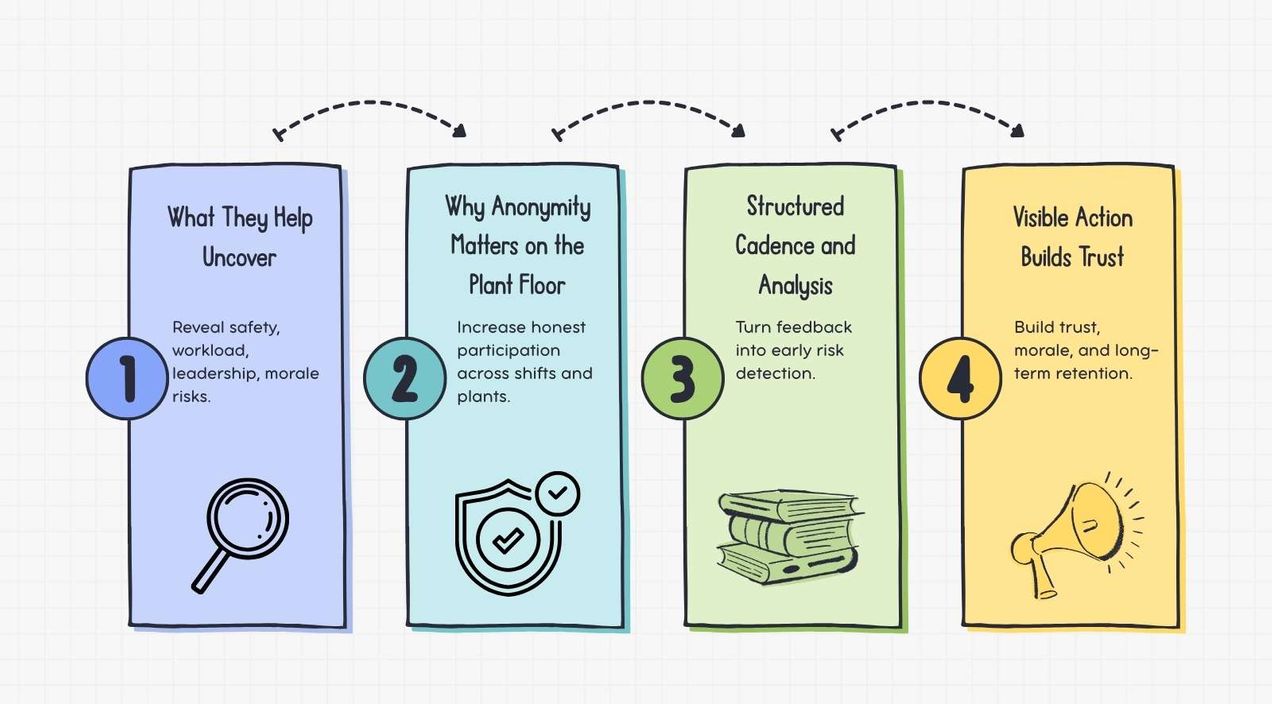
Anonymous employee surveys for manufacturing workforces: A practical guide for HR and plant leaders (2026)
Anonymous employee surveys for manufacturing workforces are safe and secure feedback tools that let frontline workers share concerns about safety, workload, supervision, and morale without revealing their identity, helping plant leaders detect risks early and improve operations.
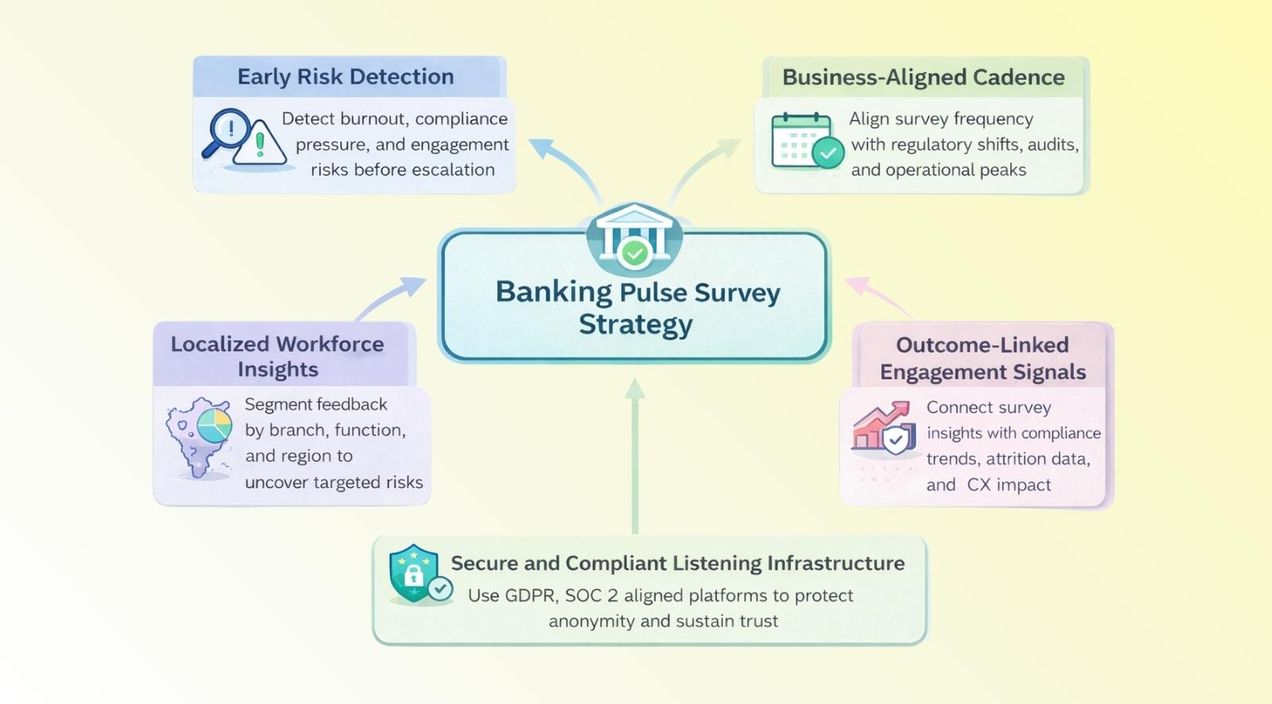
Pulse surveys in Banking & Financial Services: A 2026 guide for HR and risk leaders
A practical guide for banks and financial institutions to design pulse surveys that track employee engagement, detect burnout and conduct risks early, and strengthen compliance culture through secure, continuous employee listening programs across branches and corporate teams.

Pulse surveys to track banker burnout and prevent attrition in 2026
Pulse surveys to track banker burnout help banks monitor fatigue, performance pressure, and team sentiment in real time, turning early warning signs into proactive action that safeguards workforce stability and regulatory discipline.
Top 15 employee engagement platforms for IT companies in 2026
An employee engagement platform for IT companies is software that collects feedback, runs pulse surveys, analyzes engagement data, and helps managers act on insights. It supports remote teams, improves retention, and connects employee sentiment with performance outcomes.
15+ Top employee engagement platforms for enterprises in 2026
Enterprise employee engagement platforms help large organizations collect structured feedback, analyze trends by team and region, and translate insights into accountable action. This guide reviews the top platforms built to support enterprise-scale engagement management.
10+ Best employee engagement survey tools 2026
Check out the top 20 employee engagement survey tools that help you effectively implement, promote, analyze, and succeed in fostering a positive workplace culture and increasing employee engagement, which leads to a greater employee experience, satisfaction, and retention rates.

9 Key roles of managers in banking employee engagement: Trust, performance, retention
Managers drive banking employee engagement by translating leadership intent into daily clarity, fairness, feedback, and support, shaping trust and consistency so teams perform steadily under regulatory pressure and customer demands enterprise banks!!

10 Manufacturing workforce engagement strategies that reduce turnover in 2026
Manufacturing workforce engagement strategies outline how leaders communicate, listen, and act across shifts to improve retention, safety, and performance on factory floors.

15 Leadership goals behind manager effectiveness in warehouse operations
Manager effectiveness in warehouse operations is how managers translate plans into clear priorities, remove daily friction, support safety and morale, and guide teams through shifting demand with consistent, well-timed decisions.
15+ Lattice engagement platform alternatives in 2026
Looking for alternatives to the Lattice engagement platform? We've got you covered. Explore top-rated options that suit your team's unique needs and enhance employee engagement. With our comprehensive list of Lattice alternatives, you can elevate engagement initiatives and drive positive outcomes.

10 Best practices for measuring engagement across manufacturing schedules
Measuring engagement across manufacturing schedules means tracking employee sentiment by shift to reflect real working conditions and realities.

Measuring employee sentiment in financial services: a practical guide for banks and institutions
Measuring employee sentiment in financial services is the practice of understanding how employees feel about their work, leadership, and environment to detect risks early, strengthen trust, improve performance, and support retention in regulated, high-pressure organizations.