


Employee feedback tools for remote and hybrid teams: Your 2026 guide

Employee feedback tools for remote and hybrid teams are platforms that help organizations collect, analyze, and act on workforce feedback when employees work across locations, with timely adjustments, and work arrangements. These tools must support mobile access, anonymity protections, multi-channel participation, and continuous listening.
HR leaders evaluating these platforms often struggle to determine which capabilities justify the price. This guide explains the essential features, methodologies, and evaluation criteria using tested frameworks that help organizations choose employee feedback tools suited for distributed and hybrid workforces.


- Remote and hybrid feedback tools help organizations capture employee sentiment across distributed teams and time zones.
- Remote environments often lack informal feedback loops, leading to visibility gaps, digital fatigue, and lower psychological safety.
- Hybrid teams face risks like proximity bias, unequal recognition, communication silos, and hidden burnout signals.
- Effective employee engagement softwares include chat integrations, mobile access, anonymous feedback, AI sentiment analysis, and time-zone-aware surveys.
- CultureMonkey has mobile-first participation, multilingual surveys, strong anonymity controls, and analytics dashboards built for remote and hybrid teams.
What are employee feedback tools for remote and hybrid teams?
Employee feedback tools for remote and hybrid teams are platforms that collect and analyze workforce feedback when employees work across locations, time zones, and work arrangements. They help leaders understand employee engagement, communication gaps, and employee experience beyond the physical office.
Traditional survey systems were designed for office-based employees using email and desktop access. Remote and hybrid teams require mobile participation, stronger anonymity protection, and feedback channels that reach employees wherever they work.
Teams operate across time zones, roles, and locations. Effective employee engagement softwares must capture actionable insights, segment responses accurately, and help leaders act on issues affecting remote collaboration and employee engagement efforts.
- Collect distributed workforce insights across locations, time zones, and work arrangements.
- Enable mobile-first, multi-channel survey participation beyond office email systems.
- Capture complexities of remote collaboration, asynchronous work, and location differences.
- Protect anonymity through response thresholds and identity masking safeguards.
- Support continuous listening with pulse surveys tracking evolving employee sentiment.
Continuous feedback fosters a culture of improvement and keeps employees aligned with company objectives. Anonymity in feedback tools ensures honest feedback, providing a raw and unfiltered perspective.
Why does feedback fail in remote and hybrid work environments?

Feedback often fails in distributed work models because communication visibility declines when employees work across locations and time zones. When rcontinuous feedback and robust internal communications are lacking, these challenges are further exacerbated, making it harder to maintain alignment and engagement in remote and hybrid teams.
Microsoft’s Work Trend Index reports that 48% of employees say they’re burned out at work, highlighting the need for structured listening systems that capture distributed workforce sentiment.
1. Lack of informal feedback loops
Office environments allow quick feedback through hallway conversations, team check-ins, and informal interactions. In remote settings, 'feedback requests,' customizable prompts sent to employees or peers, can help replace the informal feedback lost in these environments.
Without gathering employee feedback tools for remote and hybrid teams, leaders lose visibility into concerns that employees might otherwise share during everyday workplace interactions.
2. Time zone misalignment
Distributed teams often operate across multiple time zones, which delays conversations and slows continuous feedback exchange. Employees may wait hours or days for responses, reducing the effectiveness of traditional feedback channels and limiting opportunities for real-time clarification or problem escalation.
3. Digital fatigue
Remote employees interact through multiple digital platforms such as email, chat, and other employee engagement tools. Excessive notifications and virtual meetings can lead to communication fatigue. When employees feel overloaded by digital channels, participation in employee feedback surveys or engagement initiatives often declines.
4. Low psychological safety in distributed teams
Employees working remotely may hesitate to share concerns if they believe continuous feedback can be traced to them. Limited personal interaction with leaders can reduce trust. Anonymous feedback systems become essential to collect feedback and improve engagement strategies and response rates across distributed teams, especially when organizations rely on online employee feedback software to collect anonymous feedbacks.
5. Manager visibility gaps
Managers supervising remote employees often lack direct observation of workload stress, collaboration issues, or disengagement signals. Without structured employee feedback data, leaders may overlook early warning signs of burnout or dissatisfaction until they appear through declining performance or turnover.
Manager effectiveness insights derived from employee engagement software can equip supervisors with actionable and behavioral data to proactively address employee engagement and performance issues in remote and hybrid teams.
Effective employee feedback tools promote a culture of open communication and respectful reciprocity. Employee feedback tools provide a roadmap for targeted development that benefits everyone by pinpointing areas where employees need extra support.
What are the unique engagement risks in hybrid teams?
Hybrid work models introduce engagement risks that managers may not easily detect through traditional supervision. When employees operate across offices, homes, and time zones, enhancing communication visibility declines and employee engagement signals become fragmented. Research from Gallup shows that only about 21% of employees globally report being actively engaged at work.
- Proximity bias: Employees working closer to managers often receive more visibility, continuous feedback, and advancement opportunities. Hybrid environments can unintentionally favor office-based staff, creating inequity among remote employees.
- Unequal recognition: Recognition often occurs through informal interactions in physical workplaces. Remote employees may miss these moments, affecting morale, motivation, and perceptions of fairness within distributed teams without any recognition tools.
- Communication silos: Hybrid teams frequently rely on multiple collaboration platforms, limiting awareness of decisions, project updates, and leadership priorities. Employee engagement softwares can break down silos, promoting transparency, and enabling real-time communication.
- Disconnected frontline or remote staff: Remote or field employees may feel excluded from discussions that occur in office environments. Limited participation in informal conversations can weaken alignment with organizational goals.
- Burnout signals hidden in async work: Asynchronous collaboration allows teams to work across time zones, but can hide early burnout signals. Employees may continue completing tasks while experiencing workload stress, making it difficult for managers to detect fatigue until productivity or employee engagement declines.
Leveraging employee feedback tools with engagement solutions can help managers identify and address the root causes of disengagement before they escalate, reducing the risk of employee isolation and disconnection in hybrid teams and the broader effects of lack of support at work.
What features should feedback tools include for remote and hybrid teams?

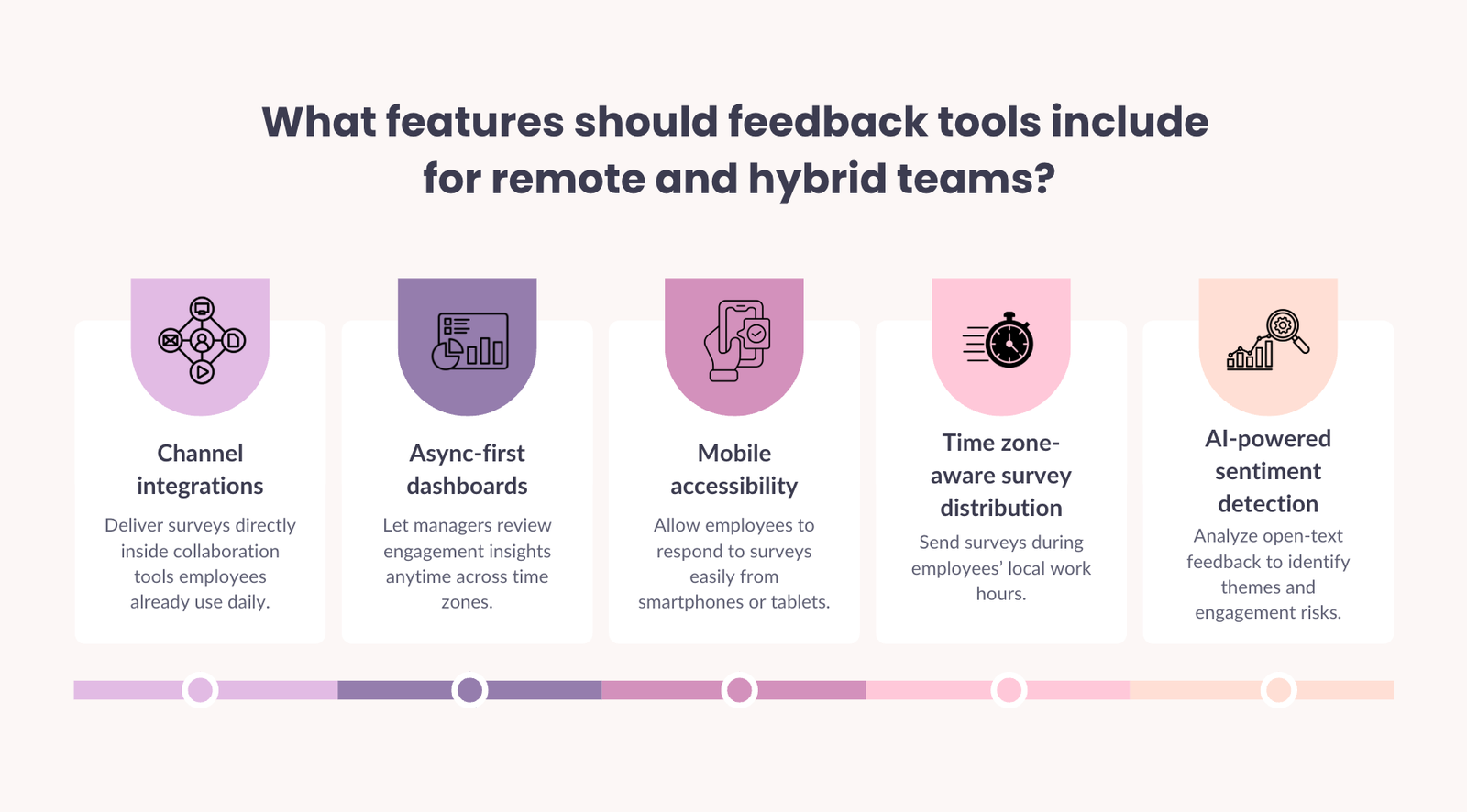
Employee feedback tools for remote and hybrid teams must support distributed communication and collaboration. Features should enable employees across locations to provide feedback easily while allowing HR and managers with predictive analytics of engagement signals across departments, time zones, and remote work environments.
Slack and Microsoft Teams integrations
- Seamless integration with collaboration platforms allows surveys and feedback prompts to appear directly inside daily communication tools.
- Employees can respond without leaving Slack or Microsoft Teams, reducing friction and improving participation rates.
Open communication fosters trust and transparency between employees and managers, which is crucial for a positive work environment.
Async-first dashboards
- Async dashboards allow leaders to review employee engagement insights without requiring synchronous meetings.
- These dashboards display survey trends, participation rates, and sentiment signals across departments and locations.
- Managers working across time zones can monitor team engagement data without waiting for centralized reporting cycles.
Acting on feedback is crucial for driving positive change and growth within the organization.
Mobile accessibility
- Mobile access allows employees to respond to surveys from smartphones or tablets during or between tasks, supporting engagement activities tailored for remote, hybrid, and onsite teams that can be showcased through employee engagement activities presentations.
- This feature is critical for frontline staff, field employees, and distributed teams who may not regularly use desktop systems.
- Mobile participation also increases survey reach among shift-based or location-independent employees.
Regularly gathering feedback can help reduce employee turnover by addressing concerns before they lead to resignations.
Time zone-aware distribution
- Time zone-aware distribution schedules surveys according to local working hours.
- This prevents employees from receiving notifications outside their workday and reduces survey fatigue.
- Organizations with global teams rely on this capability to maintain consistent participation across regions.
Employee feedback tools can help identify areas for targeted training and development, ensuring employees have the resources they need to excel.
Anonymous feedback thresholds
- Anonymous thresholds ensure survey results appear only after a minimum number of responses, especially when using anonymous employee survey questions across key topics.
- This prevents managers from identifying individual responses in small teams.
- Maintaining anonymity increases psychological safety and encourages employees to share honest feedback.
Understanding the company's culture is vital when selecting an employee feedback tool to ensure it aligns with organizational values.
AI-powered sentiment detection
- AI-driven sentiment analysis evaluates open-text comments using natural language processing and works best when paired with well-crafted employee survey questions that surface deep insights and structured culture index survey questions that map attitudes and motivations.
- The system identifies emotional tone, recurring themes, and potential engagement risks across teams.
- Automated employee engagement analytics helps organizations process large volumes of feedback without manual review delays.
Striving for continuous improvement allows organizations to adapt quickly to employee needs and enhance overall performance. Investing in training and onboarding is essential for effective use of employee feedback tools.
(Source: Gallup)
How does AI support remote feedback analysis?
AI helps organizations interpret large volumes of employee feedback collected from distributed teams. In employee engagement softwares for remote and hybrid teams, AI analyzes comments, survey responses, and engagement signals to detect patterns, highlight concerns, and surface insights that managers might miss during manual review.
- NLP for open-text comments: Natural language processing evaluates written feedback submitted through surveys or feedback channels. The system detects keywords, recurring topics, and context in employee responses, helping HR teams understand concerns without manually reviewing hundreds of comments.
- Theme clustering across distributed teams: AI groups similar feedback topics across departments, locations, and roles. Theme clustering highlights patterns such as workload pressure, leadership communication gaps, or collaboration issues identified through team survey questions appearing repeatedly across remote teams.
- Sentiment scoring: Sentiment models assess the emotional tone of employee responses and classify them as positive, neutral, or negative. Tracking sentiment scores across survey cycles helps organizations detect engagement shifts within remote and hybrid teams.
- Early risk detection: AI systems track feedback patterns over time and flag unusual changes. Repeated mentions of workload stress, declining sentiment, or communication concerns may signal disengagement risks or rising burnout within distributed teams.
- Automated insight summarization: AI can summarize large volumes of survey responses and comment threads into concise insight reports. This allows HR and managers to quickly understand key themes across teams, reducing manual analysis time and improving decision speed.
What feedback cadence works best for distributed workforces?

Distributed teams require a structured feedback rhythm that balances continuous listening without survey fatigue, supported by targeted employee engagement initiatives that sustain motivation. Establishing regular feedback cycles through pulse surveys are essential for maintaining engagement and team morale in remote and hybrid environments.
1. Monthly pulse surveys
Monthly pulse surveys track short-term engagement signals such as workload pressure, communication gaps, and manager support. Frequent pulses help HR teams identify sentiment shifts early across remote teams and respond before disengagement or burnout escalates.
2. Quarterly engagement assessments
Quarterly engagement surveys provide a broader view of employee experience across departments and regions and can also be used to evaluate business outcomes from employee engagement workshops that shape company culture. These assessments measure leadership trust, collaboration quality, and career growth while offering actionable data of trends that organizations can track over multiple survey cycles.
3. Always-on feedback channels
Always-on feedback systems allow employees to share concerns or suggestions at any time instead of waiting for scheduled surveys, creating more opportunities to share constructive feedback for managers. Anonymous forms, chat integrations, or internal employee feedback platforms capture spontaneous feedback signals across distributed teams and unite employees.
4. Project-based retrospectives
Retrospective feedback is collected after major projects or product launches and can include targeted manager feedback survey questions from employees. Teams review collaboration challenges, decision processes, and communication gaps, helping organizations improve coordination across remote or hybrid teams and model effective feedback between coworkers informed by negative feedback examples that drive learning and growth.
5. Manager one-on-one feedback check-ins
Regular manager check-ins create a direct feedback channel between employees and supervisors. Short monthly or bi-monthly pulse survey conversations help managers understand workload concerns, clarify expectations, and capture qualitative insights that surveys may not fully reveal.
6. Lifecycle feedback checkpoints
Lifecycle surveys capture employee sentiment at key stages such as onboarding, role transitions, or exit periods, giving employees structured spaces to respond constructively to negative feedback at work. These checkpoints help organizations identify structural issues affecting remote employees and improve long-term engagement and retention.
How should hybrid organizations evaluate employee feedback tools?
Hybrid organizations should evaluate employee feedback tools for remote and hybrid teams based on operational fit, deployment capability, and governance controls.
Decision-makers should assess whether the platform supports distributed communication, protects anonymity, and provides actionable insights managers can act on performance evaluations without increasing administrative complexity.
Collaboration integrations
- The employee engagement software should integrate with platforms such as Slack, Microsoft Teams, and workplace communication systems.
- Embedded survey delivery improves participation and allows employees to respond without leaving their daily workflow tools, making it easier to trigger timely employee engagement activities across remote and hybrid teams supported by strong management communication best practices.
Global deployment capability
- Feedback platforms must support multi-region deployment across offices and remote teams.
- Features such as multilingual surveys and regional employee data hosting help organizations collect feedback consistently across global workforces.
Segmentation controls
- Strong segmentation allows organizations to analyze feedback by department, region, role, or work model, especially when they use structured workplace culture survey questions.
- Segmented but actionable feedback help leaders identify engagement gaps that may affect remote employees differently from office-based staff, especially when they analyze responses to anonymous employee survey question sets.
Action-planning workflows
- Effective feedback tools include built-in workflows that convert actionable insights into manager actions.
- These systems help leaders assign follow-ups, track improvement initiatives, and monitor progress after survey cycles, ensuring that employee engagement initiatives translate into real change and can be reinforced through culture committee ideas that boost company culture.
Reporting depth for managers
- Managers need access to dashboards that show engagement trends, sentiment changes, and team participation rates.
- Clear reporting helps leaders understand team feedback quickly and respond to issues before they affect employee net promoter score, productivity or retention, especially when tracking team collaboration survey outcomes.
Security and compliance readiness
- Feedback systems should meet enterprise security requirements such as encrypted data handling and compliance with privacy regulations.
- Strong governance controls protect employee anonymity and ensure survey programs operate safely across regulated environments.
Scalability for growing organizations
- Tools should scale from SME teams to enterprise deployments without requiring major system changes, regardless of the types of work environments your team operates in.
- Scalable architecture allows organizations to expand surveys across departments, regions, and business units as the workforce grows, supporting recurring team theme initiatives that build collaboration and stronger team dynamics in the workplace.
Conclusion
Employee feedback tools for remote and hybrid teams must do more than run occasional surveys. Distributed work requires listening systems that capture feedback across locations, time zones, and communication channels. HR leaders should evaluate platforms based on anonymity safeguards, multi-channel access, segmentation depth, and continuous listening capabilities before comparing prices.
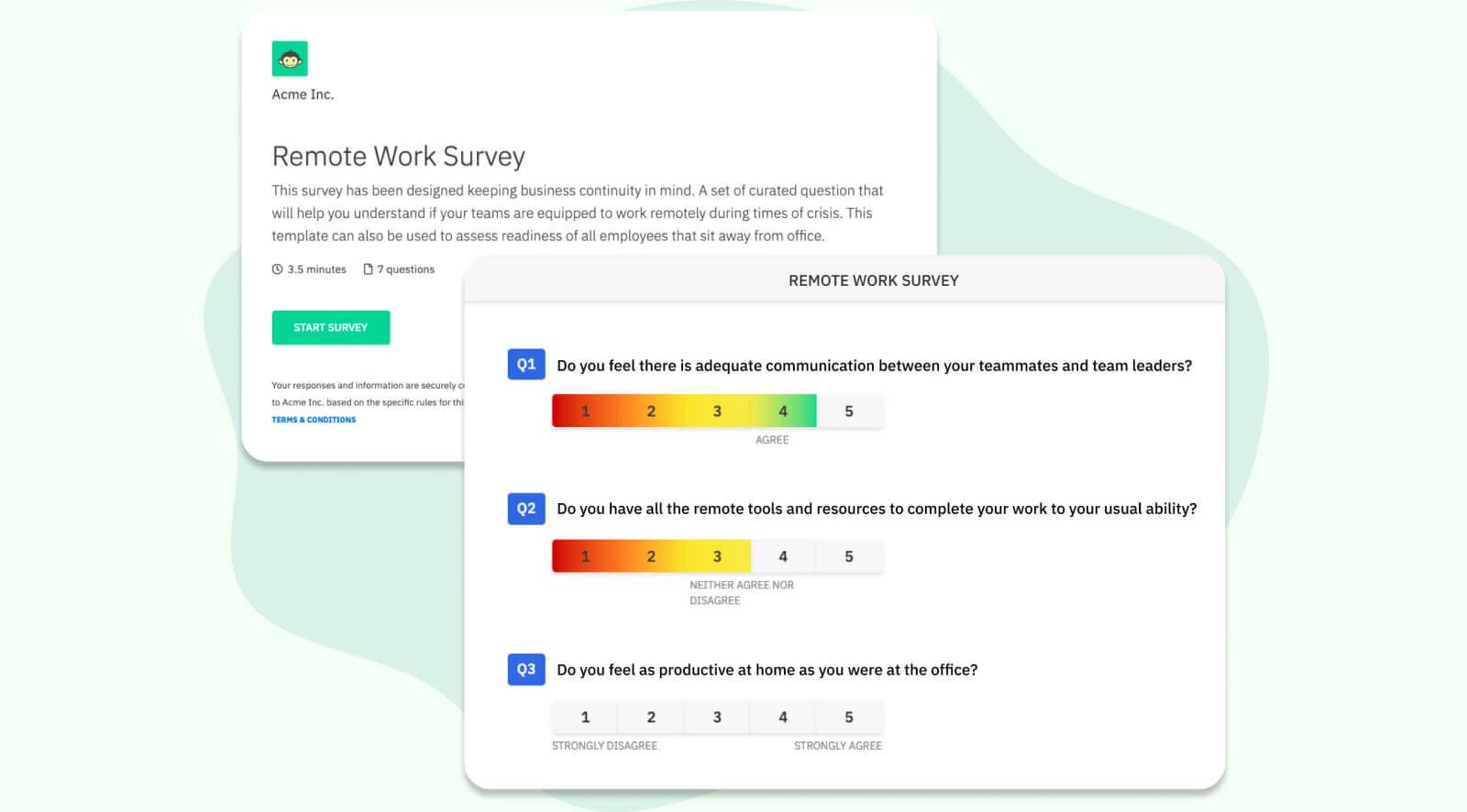
CultureMonkey addresses these needs by enabling mobile-first surveys, multilingual participation, anonymous pulse surveys designed for distributed teams. Its analytics dashboards and action workflows help leaders interpret feedback across remote and hybrid work environments.
Book a demo with CultureMonkey.
FAQS
1. What are the best employee feedback tools for remote teams?
Top employee feedback tools offer pulse surveys, anonymous channels, chat hooks, mobile access, sentiment scoring, and action workflows, often packaged in a unified employee engagement platform like CultureMonkey. Leading platforms for employee feedback include CultureMonkey, Workleap, Officevibe, Culture Amp, and Quantum Workplace.
2. How do hybrid teams collect employee feedback effectively?
Hybrid teams gather feedback through short pulses, always-on forms, manager one-to-ones, and using project management tools. Use chat and mobile prompts to cut friction, set anonymity thresholds, segment results by role and site, and occasionally tie pulses to engaging work party ideas that strengthen culture.
3. Why do remote employee surveys have low response rates?
Low response rates come from digital fatigue, poor timing across time zones, long forms, and low trust in privacy. Improve uptake with short pulses, local timing, anonymous thresholds, and visible manager follow-up. Use one-question checks, employee shout-outs, and reports on actions taken to build trust.
4. How often should remote teams run pulse surveys?
Run monthly pulses for short-term signals and quarterly engagement checks for wider themes, backed by must-ask workplace culture survey questions. Use always-on channels for ad hoc issues and project retros after major work and follow-up. This mixed cadence detects problems early while limiting survey load across distributed teams.
5. Can anonymous feedback work in small distributed teams?
Anonymous feedback works in small teams when tools enforce minimum response counts, group open-text replies, and publish only group summaries. Use delayed reporting, external hosting, and tight access controls to cut ID risk. Clear privacy notices and action reports build trust, so team members share input.
6. How do Slack and Microsoft Teams integrations improve participation?
Slack and Teams integrations post surveys inside staff chat, where people already work. In-app prompts, short mini messages, and nudges cut friction and lift response rates quickly. Central capture lets teams run contextual follow-up, send manager alerts, and keep feedback flowing timely across shifts and zones.
7. Can AI detect disengagement in remote employees?
AI flags disengagement by tracking sentiment shifts, repeated topics, and drops in responses. Rising negative tone or repeated workload complaints mark teams for manager review and early alerts. AI outputs need human validation and clear follow-up steps so leaders avoid false positives and apply fixes.
8. What risks are unique to hybrid work environments?
Hybrid models create proximity bias, uneven recognition, communication silos, and hidden burnout in async work. These patterns erode fairness, lower morale, and raise attrition. Use segmented pulses by role, site, and schedule to spot differences soon, target interventions, and then track effects before issues grow.
9. How do you prevent proximity bias in feedback data?
Prevent proximity bias by segmenting survey results by location and role, rotating recognition and frontline visibility, and asking managers to review remote and in-office work equally. Use cross-site mentoring, and a structured employee engagement calendar to close gaps and aid fair career paths.
10. What features should hybrid organizations prioritize in feedback software?
Prioritize tools with features of chat hooks, mobile access, fine segmentation, anonymous thresholds, and manager flows. Pick platforms with analytics, task tracking, and follow-up tools so managers turn feedback mechanisms into change, supported by periodic culture index survey questions that reveal employee perceptions.