


eNPS survey rollout (Step-by-step guide to get it right)

You want to run an eNPS survey, but the real question is where to start and what to do next. Not the theory, not the definition, but the exact steps to execute it properly.
A successful eNPS survey rollout depends on how well you plan, communicate, launch, and follow through. Skip any of these, and the data quickly loses value.
This guide is built as a clear execution playbook. It walks you through each stage of the eNPS survey rollout, so you can run it confidently, avoid common missteps, and ensure the feedback you collect actually leads to meaningful action.


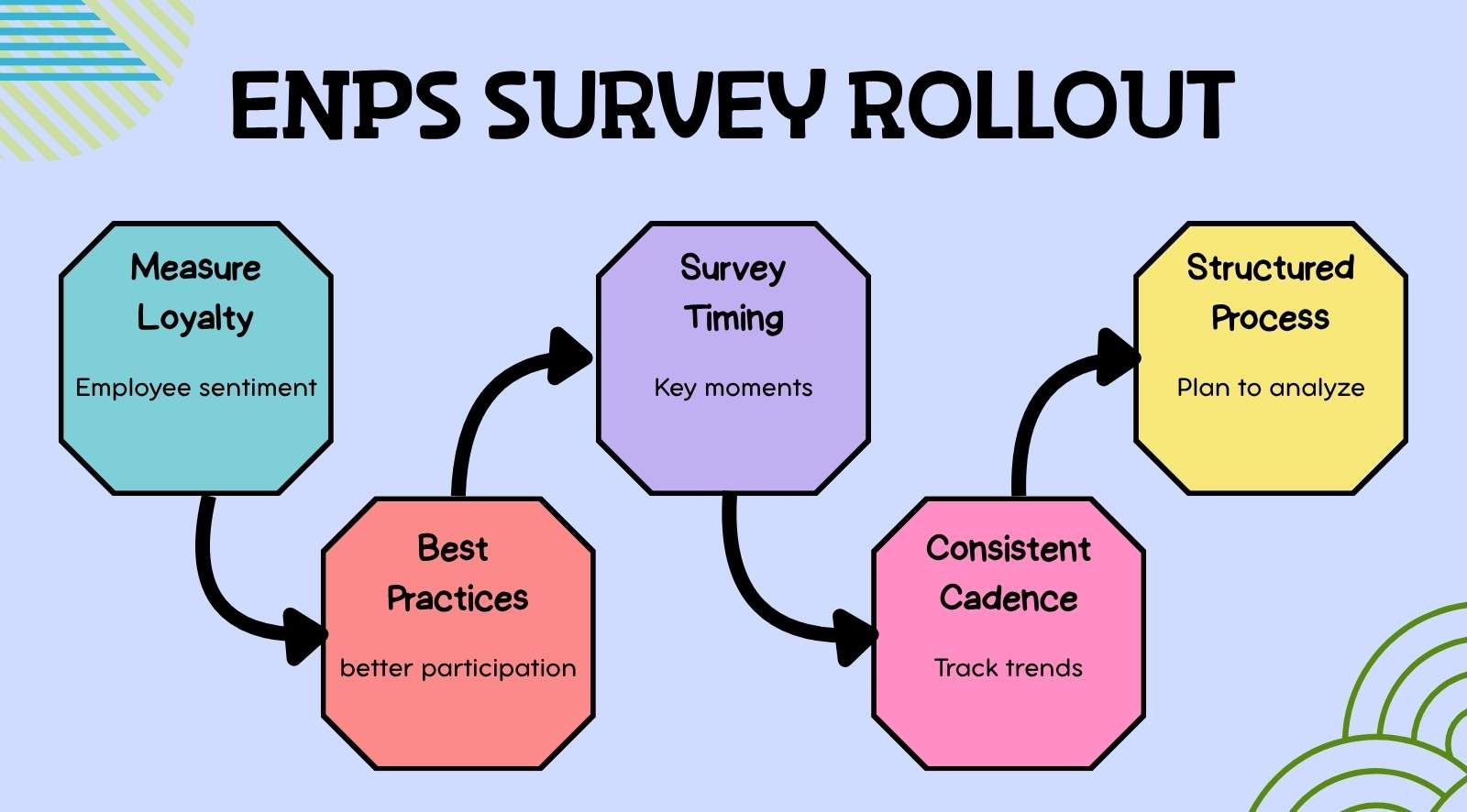
- eNPS survey measures employee loyalty using a simple question to capture overall employee sentiment
- Run eNPS surveys at key moments like onboarding, transitions, and regular engagement checkpoints
- Follow a structured eNPS survey rollout process covering planning, communication, launch, and feedback analysis
- Apply best practices to improve participation, ensure anonymity, and generate accurate employee feedback insights
- Maintain consistent frequency while avoiding common mistakes to track trends and improve engagement over time
What is an eNPS survey (quick recap)

An eNPS survey is a simple way to measure employee satisfaction and the overall employee experience using a single core eNPS question. It asks how likely someone is to recommend the organization as a place to work, giving a quick, consistent view of sentiment across teams.
Responses are grouped into promoters, passives, and detractors to calculate the eNPS score. This helps teams track trends, compare eNPS benchmarks, use eNPS data to understand employee needs, and spot risks related to employee turnover and team dynamics.
When should you run an eNPS survey?
Knowing when to run an eNPS survey directly impacts the quality of employee feedback and the reliability of insights. The right survey timing captures real employee sentiment while it is actionable, while poor timing can lead to survey fatigue, lower response quality, and a company's eNPS that is harder to trust.
- Run it quarterly: Quarterly surveys give you a steady rhythm to track employee engagement without overwhelming people. This cadence helps calculate eNPS consistently, monitor employee sentiment over time, and spot changes early enough to improve employee satisfaction and protect business outcomes.
- Run it after key events: Major changes like leadership shifts, restructures, policy updates, or benefit rollouts can quickly affect employee loyalty and employee feedback. Running an eNPS survey after these moments helps teams understand the impact fast and respond before issues spill into customer satisfaction or customer loyalty.
- Use lifecycle triggers: Beyond fixed schedules, run surveys at meaningful moments across the employee journey. For example, after onboarding, role changes, manager transitions, or internal moves, you can capture employee sentiment closer to the experience and uncover what shapes employee advocacy and employee loyalty.
- Avoid over-surveying: More surveys do not always mean better insight. Poor survey timing or excessive frequency can create survey fatigue, lower response quality, and distort the signals you need to improve employee satisfaction or understand the true drivers behind business outcomes.
- Pair timing with context: The best results come when you pair eNPS data with what is happening across the organization. When you pair eNPS data with employee feedback, participation trends, and key people moments, it becomes easier to read shifts in the company's eNPS with confidence.
Step-by-step eNPS survey rollout process
An eNPS survey rollout requires a clear, structured process to ensure reliable survey responses and meaningful insights. Each step, from planning to action, directly impacts employee morale, employee retention, and company culture, making consistency critical for measuring employee satisfaction effectively.
Step 1 – Define your objective
Start by clarifying why you are running an employee net promoter score initiative. Decide if it is for quick pulse tracking or deeper diagnosis, as this shapes eNPS score calculation, follow-up questions, and how you interpret positive employee sentiment.
Step 2 – Choose the right audience
Decide whether to survey most employees or specific groups. Segmenting helps identify disengaged employees, understand passive employees better, and connect employee morale trends to company culture and employee development needs.
Step 3 – Set up the survey
Keep the net promoter score eNPS structure simple with one core question and optional follow-up questions. This ensures higher survey responses, clearer employee responses, and better signals around positive workplace culture and employee achievements.
Step 4 – Ensure anonymity and trust
Build confidence by clearly communicating anonymity thresholds and intent. When employees trust the process, they share honest feedback, helping you detect risks like negative score patterns and improve employee retention.
Step 5 – Launch the survey
Use the right channels, timing, and messaging to reach most employees. A well-executed launch increases participation, captures real employee sentiment, and strengthens the link between employee net promoter score and employee referrals.
Step 6 – Collect and monitor responses
Track participation levels in real time to ensure balanced survey responses. Monitoring helps you identify gaps early, maintain data quality, and ensure that measuring employee satisfaction reflects actual employee morale.
Step 7 – Analyze results
Review patterns in eNPS score calculation to understand drivers of positive employee sentiment and negative score trends. Focus on what impacts employee development, employee achievements, and long-term company culture improvements.
Step 8 – Share insights and act
Close the loop by sharing outcomes and actions taken. Acting on feedback builds trust, improves employee retention, strengthens positive workplace culture, and turns satisfied employees into advocates through employee referrals.
Once the rollout process is clear, the next step is refining how you execute it consistently, applying best practices that improve response quality, reduce bias, and ensure your eNPS survey rollout delivers reliable, repeatable outcomes over time.
Best practices for running eNPS surveys
Running an eNPS survey is like maintaining a system where consistency and follow-through determine long-term outcomes. Without clear practices, even well-designed surveys fail to measure eNPS effectively. Strong execution helps identify trends early, build a highly engaged workforce, and create a positive work environment that supports higher eNPS scores.
- Stay consistent with cadence: Running surveys at predictable intervals helps measure eNPS accurately and identify trends over time. Consistency ensures eNPS measures reflect real changes in employee sentiment and supports building a highly engaged workforce.
- Communicate purpose clearly: Explain why you are collecting feedback and how it connects to career growth opportunities, flexible work arrangements, and daily work experience. Clear intent improves participation and builds trust in the net promoter score process.
- Keep it simple and focused: A clear net promoter question with minimal friction improves response rates. Simplicity helps categorize employees effectively and ensures the net promoter score reflects honest sentiment without confusion or survey fatigue.
- Act on feedback quickly: Employees expect visible change after sharing input. Acting on insights strengthens a positive work environment, improves engagement, and directly contributes to higher eNPS scores over time.
- Close the feedback loop: Share results and actions taken with teams. Transparency builds trust, reinforces a culture of listening, and supports a highly engaged workforce aligned with long-term business goals.
- Link insights to action areas: Use eNPS measures to identify trends in areas like career growth opportunities or flexible work arrangements. This helps teams move beyond scores and focus on changes that improve overall employee experience.
Common mistakes in eNPS rollout

Common mistakes in eNPS rollout can reduce response quality, distort survey results, and limit actionable insights. Issues like poor communication, over-surveying, and lack of follow-up prevent organizations from using eNPS effectively and capturing a complete picture of employee sentiment and overall health.
How often should you run eNPS surveys
Choosing eNPS survey frequency is like setting a reporting rhythm that gives you timely signals without creating noise. Run it too rarely, and you miss shifts in employee sentiment. Run it too often, and employees may disengage, limiting actionable insights and making it harder to boost morale.
- Run it quarterly: Quarterly surveys work well for most employees because they balance consistency with breathing room. This cadence helps capture actionable insights, track changes alongside other metrics, and spot early signs of widespread dissatisfaction without creating unnecessary fatigue.
- Use event-based check-ins: Run additional surveys after major changes like reorganizations, leadership shifts, or policy updates. These moments often affect work-life balance, morale, and sentiment faster than routine cycles, especially in fast-moving environments like tech companies.
- Match frequency to action capacity: Survey only as often as your team can review results and respond. If you cannot act between cycles, more surveys will not improve outcomes and may reduce trust among employees.
- Benchmark your cadence: Compare your approach against industry benchmarks and typical benchmarks, but adjust for your context. A suitable frequency for tech companies may not fit teams with different operating rhythms or workforce structures.
- Watch for signs of fatigue: Low participation, rushed comments, or repeated neutral answers can signal over-surveying. When employees start disengaging or strongly disagree, patterns stop changing, frequency may be reduced, and response quality no longer improves visibility.
- Use eNPS with other metrics: eNPS survey frequency works best when paired with other metrics like retention, participation, and feedback themes. This gives a fuller view of employee experience instead of relying on one signal alone.
Conclusion
An effective eNPS survey rollout is critical for collecting reliable employee feedback and turning it into meaningful action. It helps organizations understand sentiment, track engagement trends, and identify areas that need improvement. With the right rollout, feedback becomes a continuous input for better decisions.
CultureMonkey simplifies eNPS survey rollout using proven strategies, structured workflows, and smart distribution. It helps organizations run an employee nps survey that captures honest feedback, analyzes trends in real time, and connects insights to employee benefits and business outcomes.
With strong anonymity, segmentation, and AI-driven dashboards, CultureMonkey ensures feedback supports better decisions around the company’s products, engagement, and retention.
Book a demo with CultureMonkey.
FAQs
1. How do you run an eNPS survey
Run an eNPS survey by defining your objective, selecting the right audience, setting up the core question with follow-ups, ensuring anonymity, launching with clear communication, tracking responses, analyzing results, and acting on feedback to close the loop effectively.
2. How often should eNPS surveys be conducted
eNPS surveys should typically be conducted quarterly, with additional surveys after major changes or events, helping maintain consistent insights while avoiding survey fatigue and ensuring feedback remains reliable and actionable across different teams and time periods.
3. What questions are included in an eNPS survey
An eNPS survey includes one core question on recommendation likelihood and optional follow-up questions that help explain the score, uncover concerns, and provide deeper insights into employee sentiment and experience without making the survey long or complex.
4. How long should an eNPS survey take
An eNPS survey should take under two minutes to complete, ensuring it remains quick and easy for employees, which improves participation rates, response quality, and the likelihood of receiving honest and thoughtful feedback across the organization.
5. Should eNPS surveys be anonymous
Yes, eNPS surveys should be anonymous to encourage honest and unbiased responses, build trust among employees, and ensure people feel safe sharing feedback without fear of consequences, improving both participation and the accuracy of insights collected.
6. Who should participate in eNPS surveys
eNPS surveys can include all employees for a complete view or specific groups for targeted insights, depending on your objective, ensuring the feedback collected aligns with what you want to measure and improve across the organization.
7. What is a good response rate for eNPS
A good eNPS response rate typically falls between 60% and 80%, indicating strong participation and reliable data, which helps organizations confidently analyze trends, understand employee sentiment, and make informed decisions based on feedback.
8. What happens after an eNPS survey
After an eNPS survey, organizations analyze results, identify trends, share insights with teams, and take action on feedback, ensuring employees see real changes and trust the process, which improves engagement and strengthens the feedback culture over time.
9. Can eNPS surveys be run without software
Yes, eNPS surveys can be run without software, but using dedicated tools makes distribution, tracking, analysis, and scaling much easier, helping organizations manage feedback more efficiently and turn insights into meaningful actions faster.
)