20+ Best employee experience platforms in 2026

Santhosh
99 min read
20+ Best employee experience platforms in 2026

When you walk into a library and you’ll notice it right away. The calm atmosphere, the quiet focus, and the feeling that everything is set up to help you find what you’re looking for. Every shelf, label, and space works together to make learning easy and enjoyable.

It’s not just about books; it’s about how the whole experience makes you feel comfortable and supported as you explore.

That’s what employee experience platforms do for workplaces. They create that same smooth and supportive environment, where communication, feedback, and growth connect naturally—helping every employee feel valued, guided, and part of something that works well together.

Table of contents:-

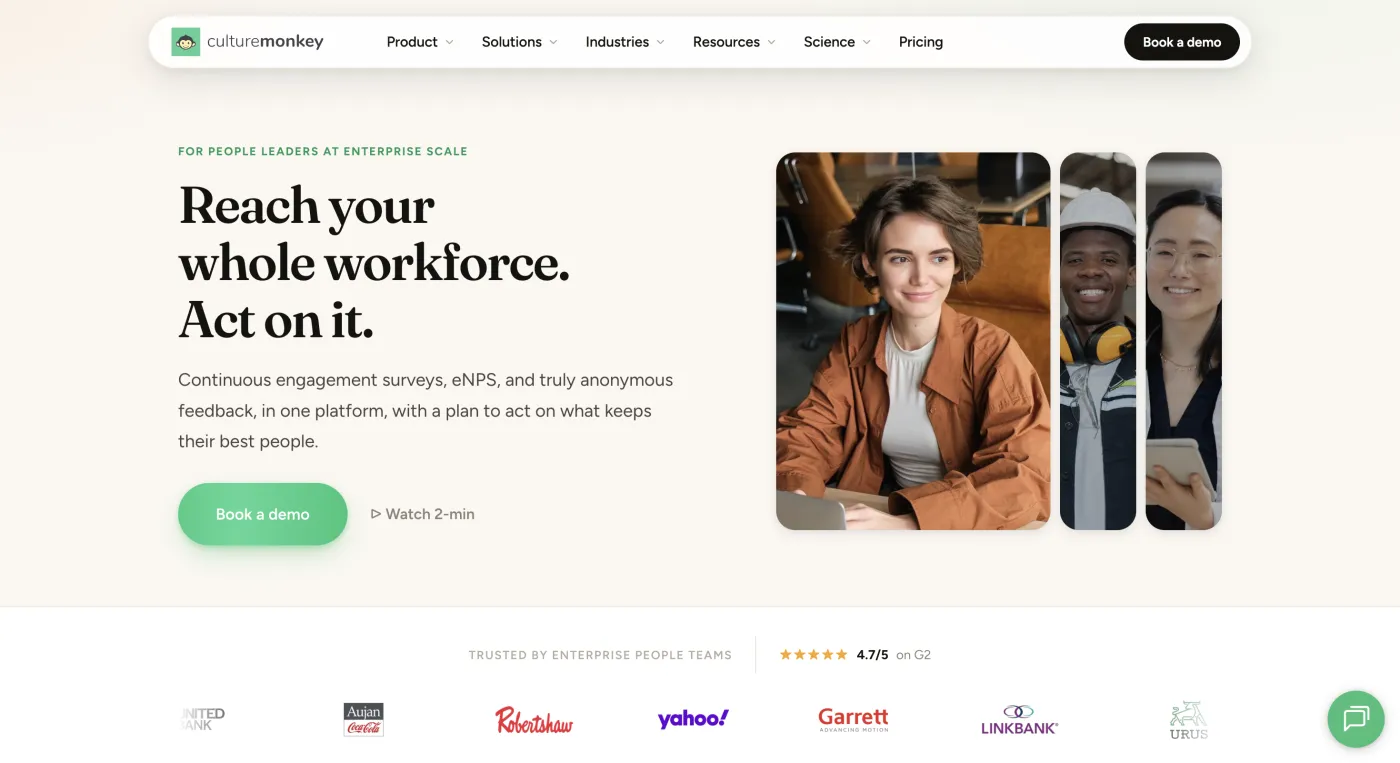
  1. CultureMonkey: AI-powered employee experience platform built on People Science, helping enterprises listen, analyze, and act on feedback.
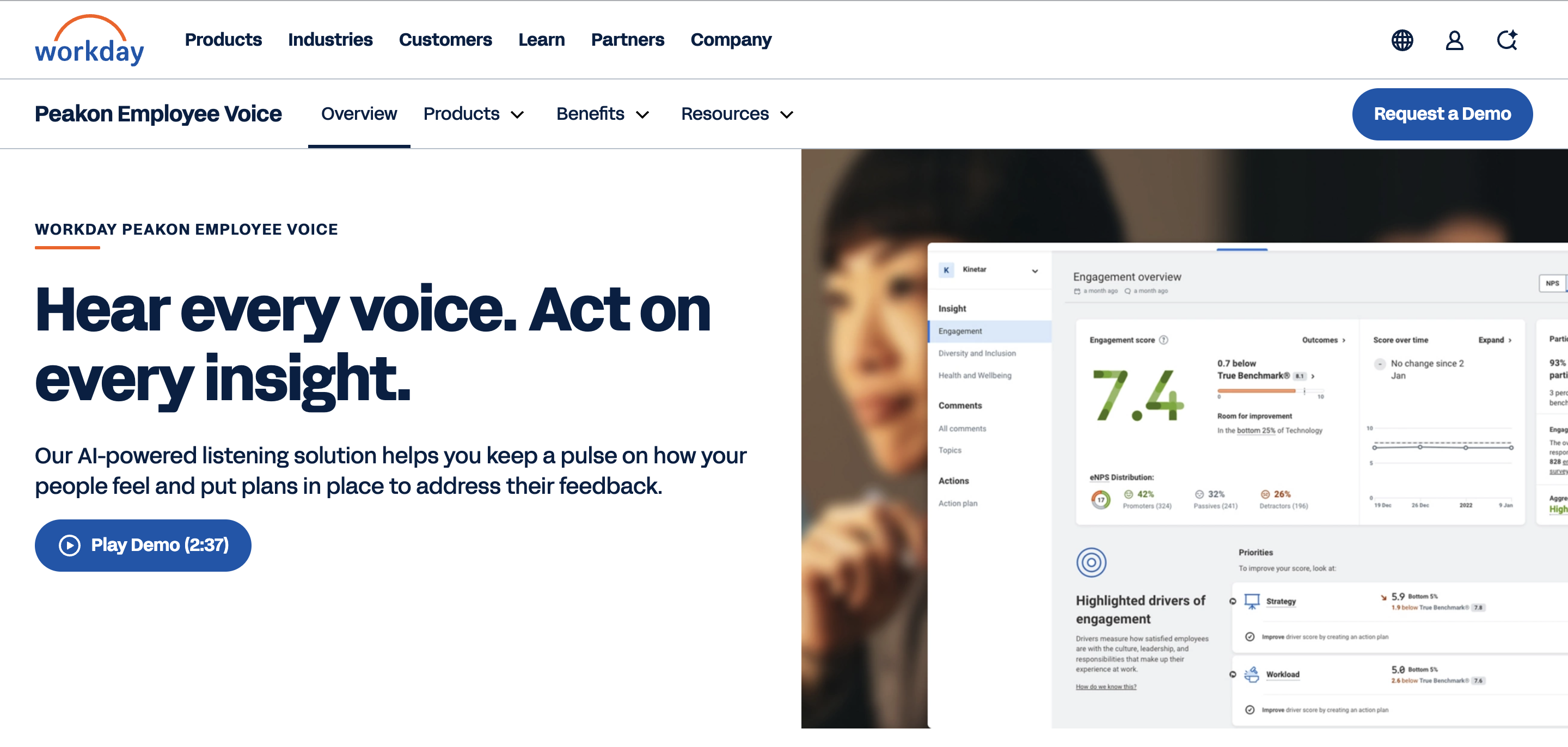
  2. Peakon (Workday): Continuous listening tool that transforms real-time feedback into measurable business outcomes.
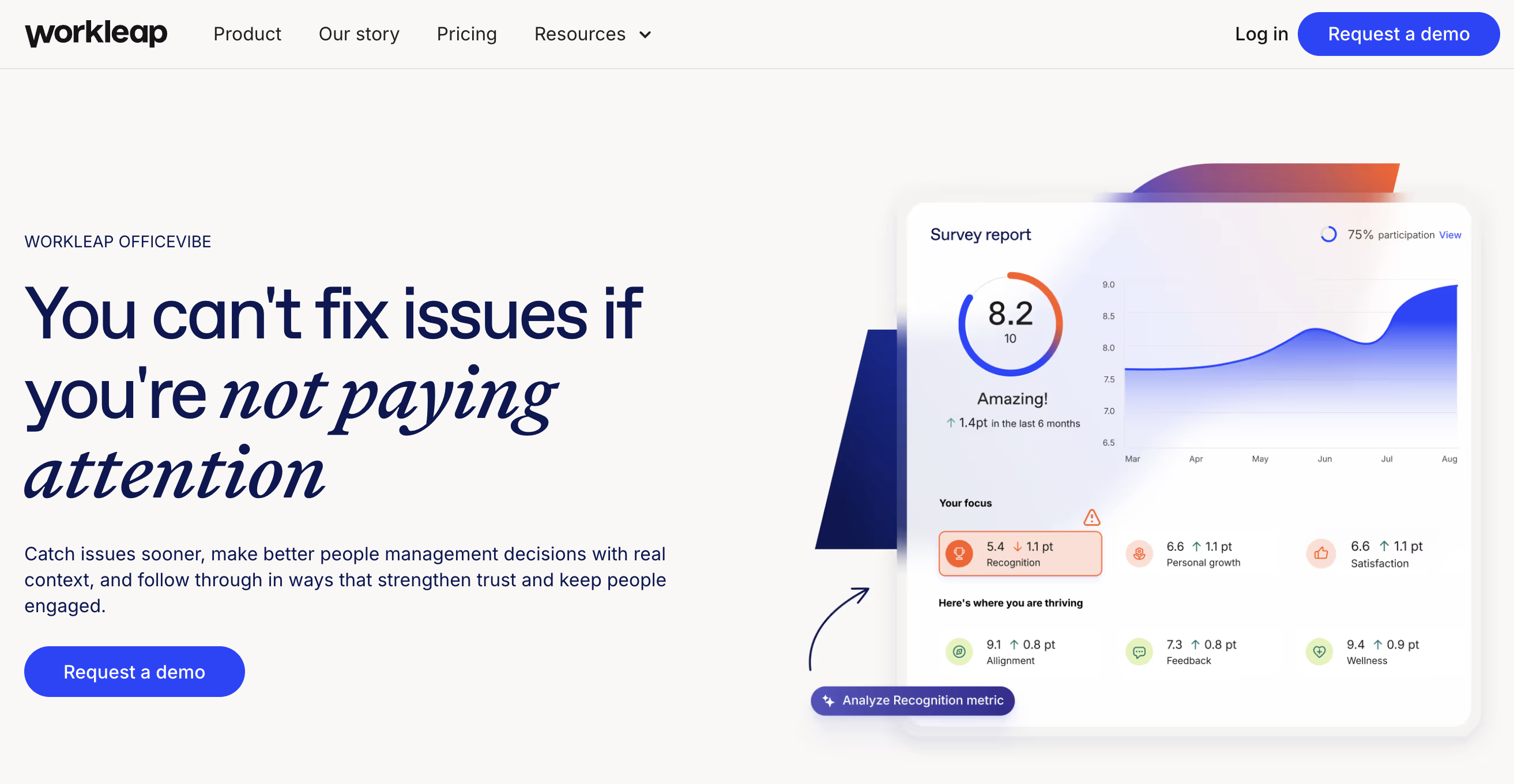
  3. Workleap: Simple, flexible solution to align engagement, performance, and growth across teams.
  4. Motivosity: Gratitude-led recognition platform strengthening team connection and morale.
  5. Connecteam: Mobile-first engagement software tailored for frontline and deskless employees.
  6. Confetti: Virtual and in-person team experience hub for fun, interactive employee engagement.
  7. PerformYard: Streamlined platform connecting performance reviews, goals, and continuous feedback.
  8. Nectar: Peer recognition and rewards software designed for simplicity and accessibility.
  9. ThriveSparrow: Lightweight engagement suite that turns employee feedback into meaningful action.
  10. Workvivo: Digital workplace app that centralizes communication, recognition, and connection.
  11. Reward Gateway: Recognition and rewards platform designed to strengthen company culture.
  12. WorkTango: End-to-end engagement and recognition solution that amplifies employee voice.
  13. Bonusly: Social recognition app that empowers peer-to-peer appreciation and team spirit.
  14. Empuls (Xoxoday): Unified experience platform combining surveys, rewards, and recognition.
  15. Mo: Recognition-driven engagement tool encouraging inclusion and belonging at work.
  16. Microsoft Viva Glint: Scalable enterprise listening tool within the Microsoft Viva ecosystem.
  17. Culture Amp: People analytics platform that connects employee feedback with performance improvement.
  18. Blink: Mobile-first internal communication platform for frontline employee engagement.
  19. Unily: Global intranet and communications platform designed for connected employee experiences.
  20. Hibob: Modern HR system enabling transparency, engagement, and people-first culture.
  21. Vantage Circle: Reward and recognition platform that builds motivation through gamified experiences.
  22. Qualtrics Employee Experience: Enterprise-grade EX software that captures and analyzes employee sentiment at scale.
  23. TINYpulse: Quick pulse feedback tool that tracks team sentiment and well-being in real time.

What is an employee experience platform?

An employee experience platform is a digital system that helps organizations manage, measure, and improve how employees feel and perform throughout their journey at work. It brings existing tools together for surveys, feedback, recognition, communication, and development into one unified space.

These platforms give HR and leaders real-time insights into engagement levels, satisfaction trends, and cultural strengths or gaps. They make it easier to listen to employees continuously, act on feedback quickly, and build a workplace where people feel heard and supported.

Beyond collecting data, an employee experience platform connects every stage of the employee lifecycle—from onboarding to exit—so organizations can improve retention, motivation, and productivity. It replaces scattered human resources tools with a single source of truth that aligns people, performance, and culture.

In short, it’s the backbone for creating a consistent, transparent, and data-driven employee experience that helps both employees and organizations thrive together.

20+ Best employee experience platforms in 2026

The right employee experience platform helps you understand your people better. These tools bring surveys, analytics, and action planning together to improve engagement and retention.

1. CultureMonkey

CultureMonkey, an employee experience platform
CultureMonkey
Trusted by global teams

Built for modern enterprise HR teams that want adoption, insight, and action in one place, CultureMonkey elevates listening from survey to strategy. As an employee analytics platform, it helps leaders pinpoint drivers, segment sentiment, and close loops fast.

Its clean UX, anonymity controls, and manager coaching translate feedback into measurable change, subtle by design, powerful in impact.

Feature Description
White-Glove Onboarding High-touch onboarding ensures a smooth start, with guided implementation and minimal lift from HR or IT teams.
Seamless HRMS Integrations Connect instantly with tools like Workday, Darwinbox, and Zoho People to automate feedback workflows.
Branded Survey Experience Personalize every survey with your company’s logo, colors, and tone for a consistent brand identity.
Template Library & Customization Access 50+ science-backed templates or design surveys tailored to your organization’s needs.
Automated Lifecycle Feedback Collect feedback at key moments—onboarding, exits, anniversaries, and beyond—to map the full employee journey.
Smart Survey Fatigue Prevention Uses short, engaging pulse surveys and no-login access to ensure high participation without burnout.
Confidential Response Settings Protect employee anonymity with built-in privacy controls that encourage open, honest feedback.
Multi-Channel Distribution Send surveys via Slack, WhatsApp, email, SMS, or kiosks—ensuring multiple communication channels so every employee can share their voice.
Live Response Monitoring Track participation in real time and intervene early to improve response rates.
AI-Driven Sentiment Analysis Detect emotional tone and patterns in employee comments through advanced AI models.
Text Intelligence Identify recurring themes and keywords in open-ended responses to uncover actionable insights.
Behavioral Science-Based Design Built on People Science principles to measure engagement with psychological accuracy.
Interactive Heatmaps Visualize engagement levels, eNPS, and sentiment across departments and regions for faster diagnosis.
Tiered Access Control Define visibility by role—HR, manager, or leadership—to protect data and streamline decision-making.
Manager Insight Dashboards Provide managers with focused team insights and action summaries for quick follow-through.
Follow-Up Action Planning Assign, track, and measure post-survey actions to ensure accountability and real change.
Flexible Reporting Formats Export reports in XLS, PPT, or PDF for executive presentations and deep-dive reviews.
Internal & External Benchmarks Compare engagement performance with internal history and industry benchmarks.
Scale-Ready Infrastructure Built to grow with global teams, maintaining reliability across changing headcounts and geographies.
Enterprise-Grade Security SOC 2 and GDPR compliance ensure the highest standards of data protection and privacy.
Single Sign-On (SSO) Simplifies access through secure authentication using existing organizational credentials.
Personalized Support Dedicated customer success specialists offer ongoing guidance to maintain survey adoption and momentum.


Brands using CultureMonkey

See why leading organizations trust CultureMonkey for their employee experience needs


Key Takeaways

TakeawayDetails
PricingContact sales
G2 Rating4.7 / 5
Capterra RatingN/A
ProsOutstanding customer service and user-friendly interface; the anonymous conversation feature builds deep trust and high participation.
ConsHard to identify notable drawbacks; overall experience is consistently positive.


2. Peakon (Workday)

Peakon turns continuous listening into decisions by capturing rich signals at every level. Its strength lies in translating employee experience data into timely, targeted actions.

Features Advantages
Confidential Surveys Enable employees to share honest feedback with management through secure, anonymous surveys.
Attrition Prediction Uses data segmentation and benchmarking to identify turnover risks and support proactive retention.
Advanced Analytics Offers powerful reporting and segmentation across demographics, tenure, and other factors to uncover insights.
Multi-Channel Distribution Distributes surveys via email, SMS, Microsoft Teams, Slack, or kiosks to increase response rates.
Global Language Support Translates surveys into 65 languages and provides dashboards in 15 languages to reach a worldwide workforce.

Key Takeaways

TakeawayDetails
PricingContact sales
G2 Rating4.6 / 5
Capterra Rating4.8 / 5
ProsEnables honest, real-time feedback while maintaining complete anonymity, promoting open employee communication.
ConsWithout careful timing, the frequency of reminder notifications can feel intrusive to employees.


3. Workleap (Officevibe)

Workleap (Officevibe)

Workleap keeps engagement visible and manageable with simple cadences and clear insights. It’s approachable employee experience software designed for fast feedback and action.

Features Advantages
AI-Summarized Insights Condenses survey feedback into clear summaries for quick decisions.
Pulse Surveys & Recognition Combines pulse checks with recognition to sustain engagement.
Flexible Reviews Offers customizable review templates and AI summaries.
Compensation Management Enables transparent pay structures with data-driven analytics.
Onboarding Tools Guides new hires through interactive org charts and development plans.

Key Takeaways

TakeawayDetails
PricingContact sales
G2 Rating4.3 / 5
Capterra Rating4.8 / 5
ProsAdds flexibility to HR management and aligns performance with engagement.
ConsLacks standardized performance metrics, affecting review consistency.


Did you know?
💡
Only 21% of employees worldwide reported being fully engaged at work — a sharp drop from previous years that’s estimated to cost the global economy around US $438 billion in lost productivity.

Source: Gallup


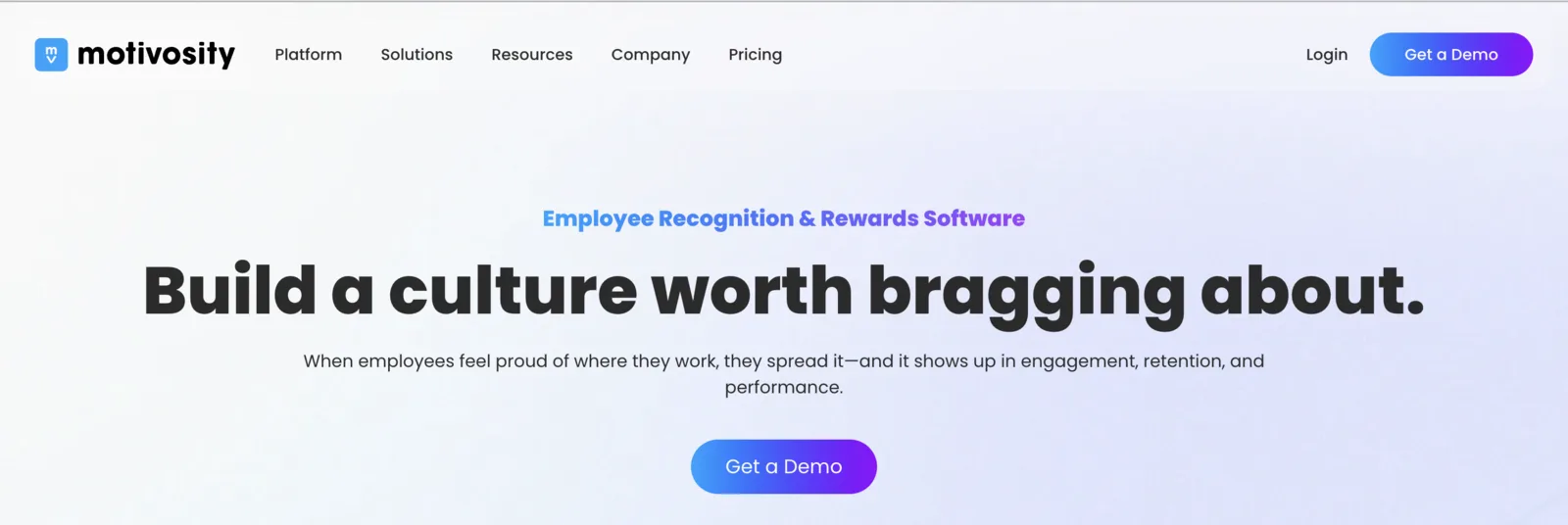
4. Motivosity

Motivosity makes recognition frequent, specific, and social to reinforce everyday wins. As one of the most practical employee experience tools, it focuses on momentum over complexity.

Feature Description
Automated Recognition Sends recognition prompts automatically to sustain appreciation.
Milestone Celebrations Automates birthdays and anniversaries with personalized messages.
Custom Awards Lets organizations tailor awards to cultural values.
Global Support Operates in 238 countries with 70+ language options.
Rewards Marketplace Offers real-money or points-based redemption via Amazon integration.

Key Takeaways

Takeaway Details
Pricing Contact sales
G2 Rating 4.7 / 5
Capterra Rating 4.8 / 5
Pros Provides dedicated support from setup to ongoing management.
Cons Occasional login glitches and limited inventory tracking options.


⚠️ Common Mistake
Focusing only on engagement scores:Many organizations treat engagement metrics as the end goal instead of understanding the deeper experiences driving them.
Right Approach
Focus on holistic experience:Look beyond scores to connect feedback, sentiment, and behavior—turning insights into actions that improve belonging, trust, and retention.


5. Connecteam

Connecteam
Connecteam

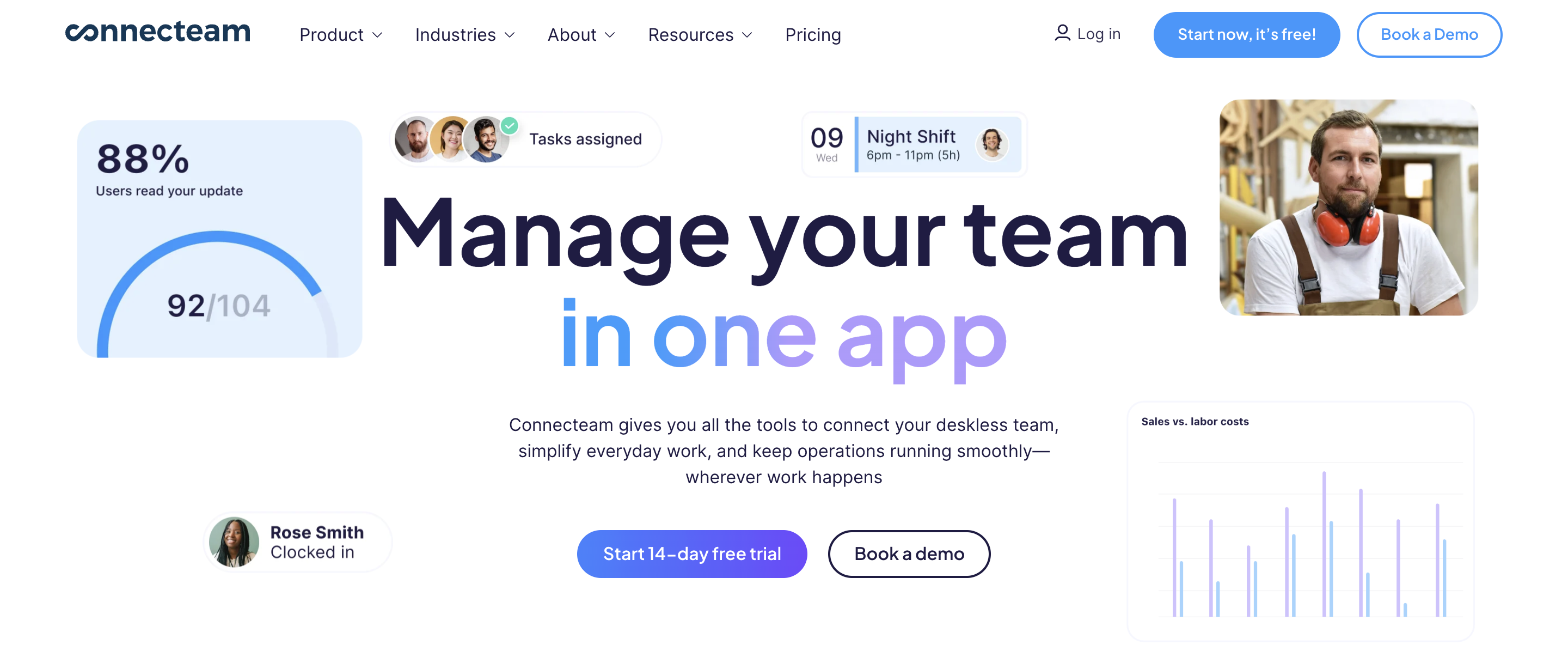
Connecteam unifies communication, scheduling, and task management for frontline teams. It’s designed as workplace experience software that values speed and simplicity.

Feature Description
Personalized Rewards Offers digital tokens and badges for real-time recognition.
Integrated Training Combines onboarding, learning, and quizzes in one app.
Targeted Feed Provides team-specific updates with engagement metrics.
Instant Messaging Enables secure 1-1 or group chats with scheduling tools.
Surveys & Events Runs surveys, live polls, and events with participation tracking.

Key Takeaways

Takeaway Details
Pricing $29/month (Basic plan for 30 users)
G2 Rating 4.6 / 5
Capterra Rating 4.6 / 5
Pros Customizable interface easy for non-technical teams.
Cons Basic plan is limited; advanced tiers needed for full functionality.


6. Confetti

Confetti
Confetti

Confetti simplifies event planning with curated experiences and hosts. It adds light structure to employee experience services without overwhelming internal teams.

Feature Description
Experience Marketplace Hosts team-building and DEI events curated by experts.
Fresh Ideas Constantly updates catalog with new formats and activities.
Simple Planning Streamlines browsing, booking, and payments.
Happiness Guarantee Provides dedicated support for every event.
Event Support Offers invitations and briefings to ensure smooth delivery.

Key Takeaways

TakeawayDetails
PricingContact sales
G2 RatingN/A
Capterra Rating4.8 / 5
ProsEffortless event scheduling and exceptional support.
ConsLimited hybrid event options for distributed teams.


7. PerformYard

PerformYard
PerformYard

PerformYard aligns feedback, goals, and reviews for better people experience system consistency.

Feature Description
Flexible Reviews Supports multiple formats: 360s, check-ins, and appraisals.
AI Review Assist Helps rephrase and summarize written feedback.
Goal Management Enables goal alignment and development tracking.
Continuous Feedback Keeps conversations active between reviews.
Analytics Provides trend dashboards and exportable data.

Key Takeaways

Takeaway Details
Pricing Contact sales
G2 Rating 4.7 / 5
Capterra Rating 4.7 / 5
Pros Clear goal-tracking interface and progress visibility.
Cons Certain core functions feel basic and need refinement.


8. Nectar

Nectar
Nectar

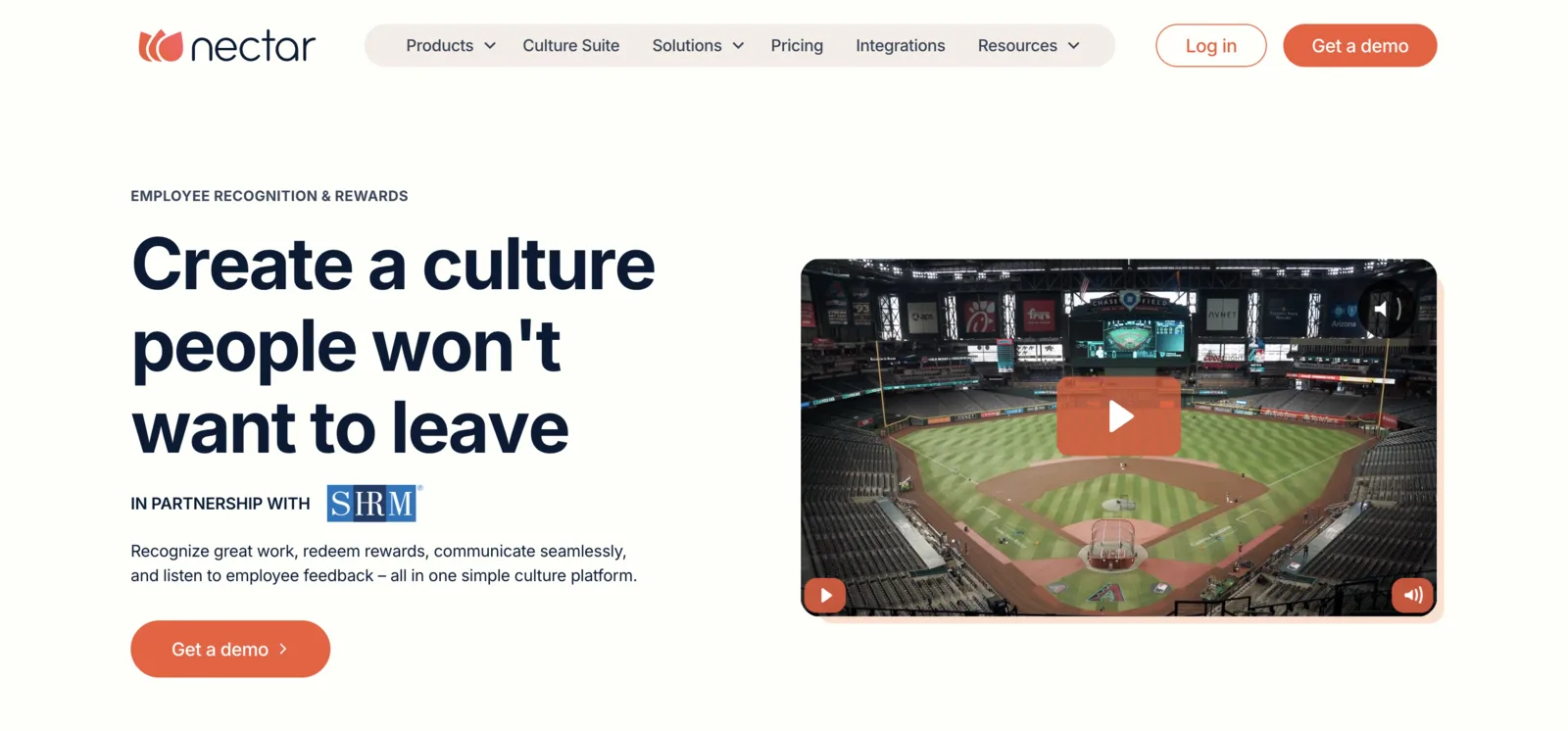
Nectar simplifies recognition with rewards and custom company swag. It offers scalable employee experience software solutions for distributed teams.

Feature Description
Rewards Catalog 200+ gift cards including Amazon and global vendors.
Custom Swag Supports branded apparel and items for company identity.
Points Economy Converts recognition into redeemable points.
Automated Celebrations Triggers birthday and milestone posts automatically.
Recognition Feed Provides a social stream for public appreciation.

Key Takeaways

Takeaway Details
Pricing Contact sales
G2 Rating 4.7 / 5
Capterra Rating 4.8 / 5
Pros Creates an atmosphere of positivity and teamwork.
Cons No option to search shoutouts by name.


9. ThriveSparrow

ThriveSparrow
ThriveSparrow

ThriveSparrow is a modern employee experience management platform that helps HR teams visualize engagement trends, track goals, and act on feedback in real time.

Feature Description
Goals & OKRs Aligns team goals and progress with visual dashboards.
Vault Rewards Offers 900+ global gift cards with auto-redemption options.
AI Insights Analyzes survey data to surface improvement areas.
eNPS & Pulse Surveys Measures loyalty and sentiment using recurring surveys.
Multilingual Surveys Supports 100+ languages and generates action plans.

Key Takeaways

Takeaway Details
Pricing Contact sales
G2 Rating 4.4 / 5
Capterra Rating N/A
Pros Clean and intuitive interface; easy to access without training.
Cons Limited customization on advanced surveys.


MYTH

Employee feedback doesn’t lead to meaningful change in company culture.

FACT

With the right tools, feedback drives real change by highlighting actionable insights and improving engagement.


10. Workvivo

Workvivo
Workvivo

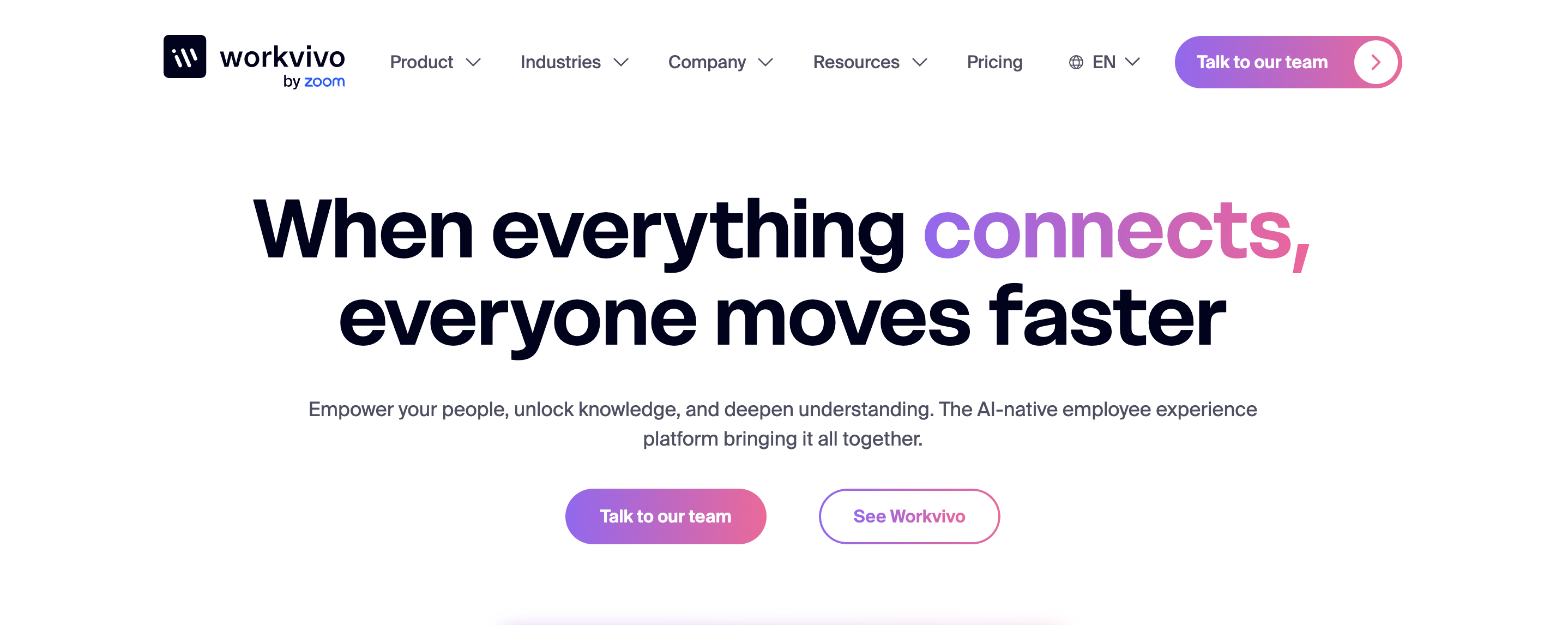
Workvivo combines community, communication, and culture into a single digital employee experience platform, designed for connection-first organizations.

Feature Description
All-in-One App Merges intranet, communication, and engagement tools.
Mobile-First Design Optimized for mobile and desktop use.
Rich Communications Enables live streams, news feeds, and push notifications.
Community & Recognition Supports badges, polls, and value-based posts.
Events & Measurement Tracks participation and engagement metrics.

Key Takeaways

Takeaway Details
Pricing Contact sales
G2 Rating 4.8 / 5
Capterra Rating 4.7 / 5
Pros Excellent peer-to-peer communication and collaboration tools.
Cons Limited integration with external social platforms.


11. Reward Gateway

Reward Gateway
Reward Gateway

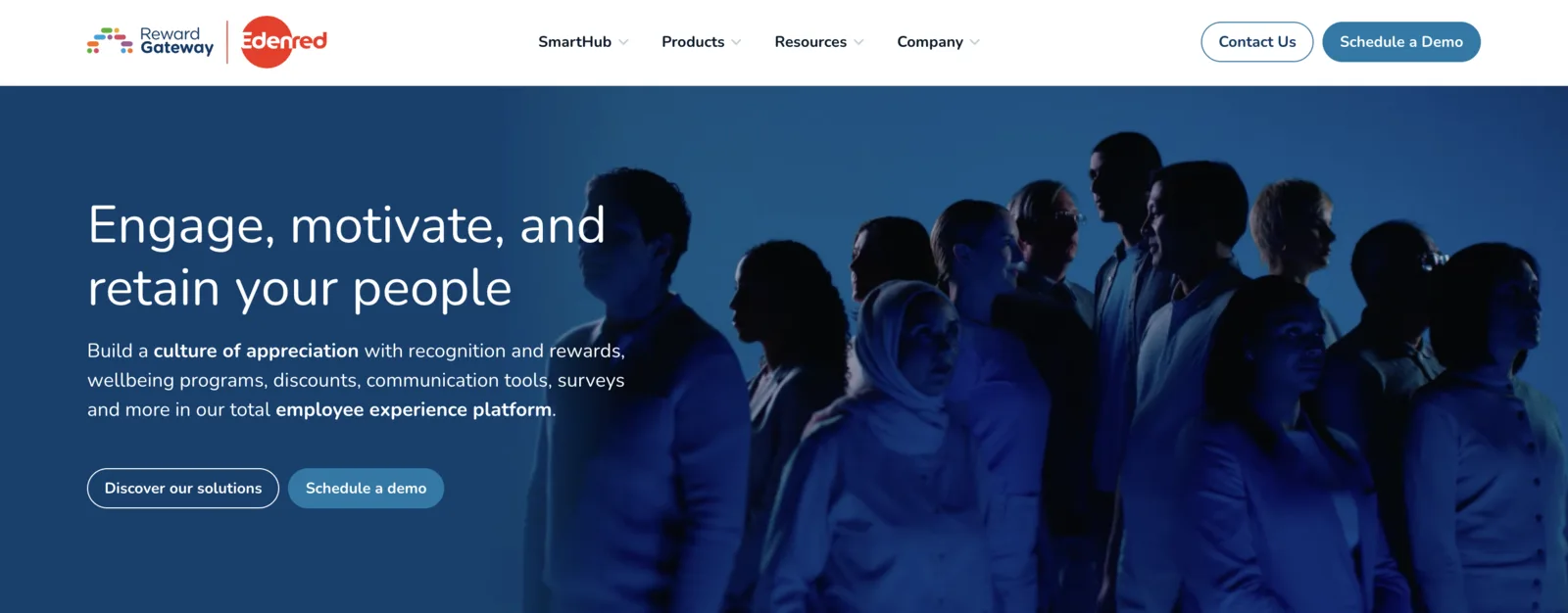
Reward Gateway enhances recognition and rewards programs through branded employee experience systems that unify culture and communication.

Feature Description
Fully Branded Experience Customizes the platform to match company branding.
Daily Celebration Encourages recognition moments every day.
Real-Time Recognition Allows instant public or private recognition.
Customized Awards Enables automated, personalized manager rewards.
Seamless Redemption Offers instant e-gift cards with no hidden fees.

Key Takeaways

Takeaway Details
Pricing Contact sales
G2 Rating 4.6 / 5
Capterra Rating 4.5 / 5
Pros Intuitive design that’s easy to navigate and adopt.
Cons Recent layout changes make navigation slightly confusing.


12. WorkTango

WorkTango
WorkTango

WorkTango gives organizations a structured way to collect, analyze, and act on feedback. It’s a comprehensive employee experience management software with analytics at its core.

Feature Description
Unlimited Surveys Launches unlimited engagement or lifecycle surveys.
Role-Based Dashboards Provides filtered insights by role or department.
Anonymous Conversations Enables two-way, confidential employee dialogue.
Rewards Marketplace Features millions of reward options.
Integrations & Security Integrates with 40+ HRIS tools and ensures enterprise-grade security.

Key Takeaways

Takeaway Details
Pricing Contact sales
G2 Rating 4.7 / 5
Capterra Rating 4.9 / 5
Pros Promotes mindfulness and well-being through recognition.
Cons Could add more environmental or impact-based reward options.


13. Bonusly

Bonusly
Bonusly

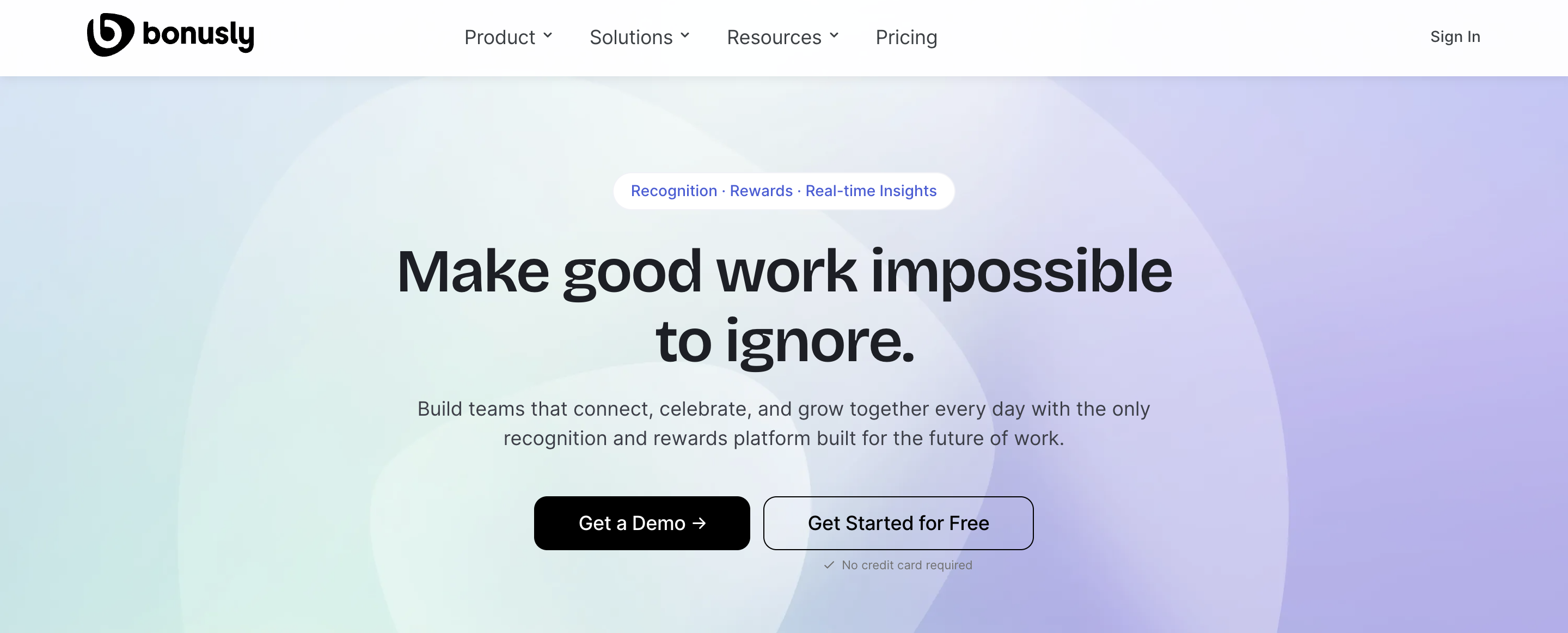
Bonusly blends fun and purpose into recognition, making it one of the most relatable employee experience solutions for growing teams.

Feature Description
Peer Recognition Allows anyone to recognize colleagues directly.
Reward Catalog Offers gift cards, donations, and company swag.
Automated Milestones Celebrates birthdays and service anniversaries automatically.
Incentive Programs Custom programs to encourage specific behaviors.
Analytics & Integrations Tracks participation and integrates with HRIS systems.

Key Takeaways

Takeaway Details
Pricing Contact sales
G2 Rating 4.7 / 5
Capterra Rating 4.8 / 5
Pros Encourages creativity and personalization in recognition.
Cons Private messages visible to managers reduce privacy slightly.


See how United Bank boosted participation by 80% with CultureMonkey
Download case study


14. Empuls (Xoxoday)

Empuls (Xoxoday)
Empuls (Xoxoday)

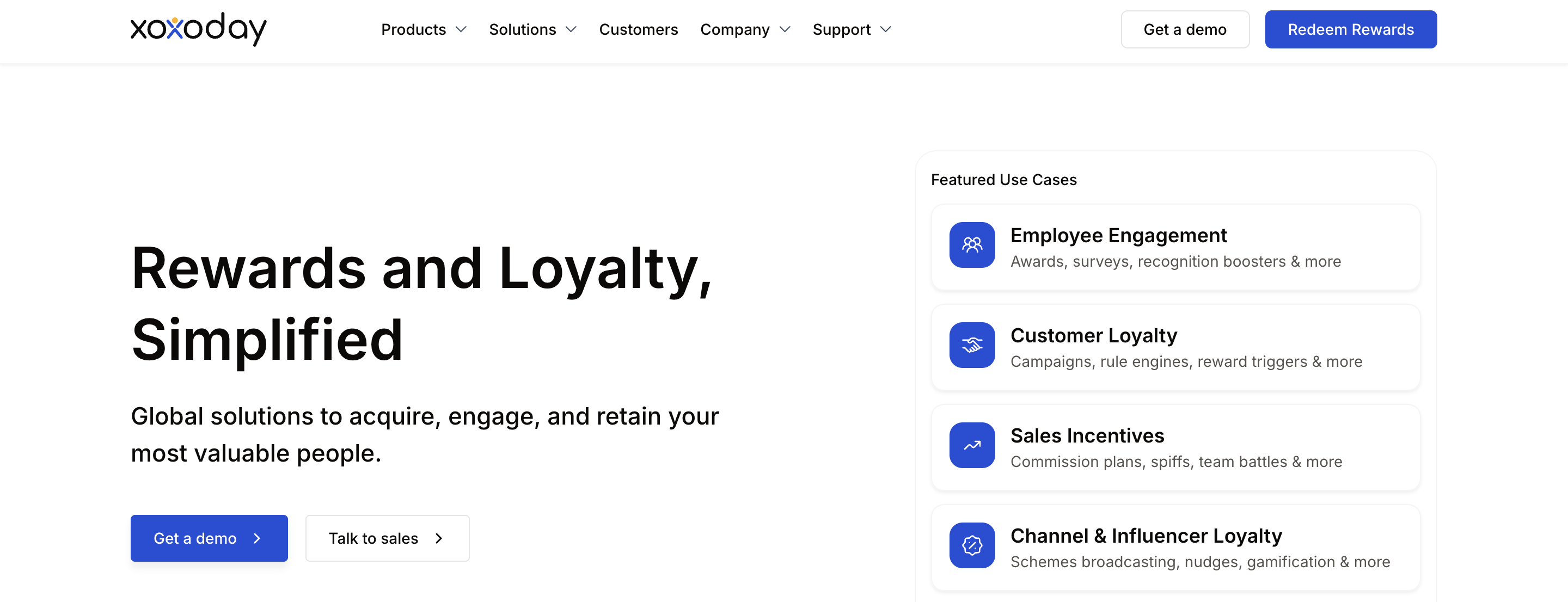
Empuls is a holistic employee experience company platform that connects people, rewards, and culture under one ecosystem.

Feature Description
Social Intranet Builds community through team updates and posts.
Surveys & Analytics Tracks engagement and uncovers culture drivers.
Recognition & Rewards Simplifies peer appreciation and points sharing.
Perks & Benefits Offers discounts and well-being perks.
AI Copilot Predicts attrition risks and skill gaps through AI.

Key Takeaways

Takeaway Details
Pricing Contact sales
G2 Rating 4.6 / 5
Capterra Rating 4.5 / 5
Pros Comprehensive reward system with diverse gift card options and responsive customer support.
Cons Frequent reminder emails to redeem unused reward points can feel excessive.


15. Mo

Mo
Mo

Mo focuses on fostering belonging through recognition and community. It’s an approachable employee experience program centered on inclusivity and encouragement.

Feature Description
Moments Newsfeed Displays celebrations and recognition posts.
Global Rewards Store Curates gift cards and perks globally.
Boosts Prompts Sends behavior-based recognition nudges.
Assistant Hub Manages celebrations and engagement insights.
Awards & Insights Automates awards and culture reporting.

Key Takeaways

Takeaway Details
Pricing Contact sales
G2 Rating 4.6 / 5
Capterra Rating 4.7 / 5
Pros Builds team inclusion and a friendly, engaging culture effortlessly.
Cons Slightly less optimized for mobile usage and navigation.


16. Microsoft Viva Glint

Microsoft Viva Glint

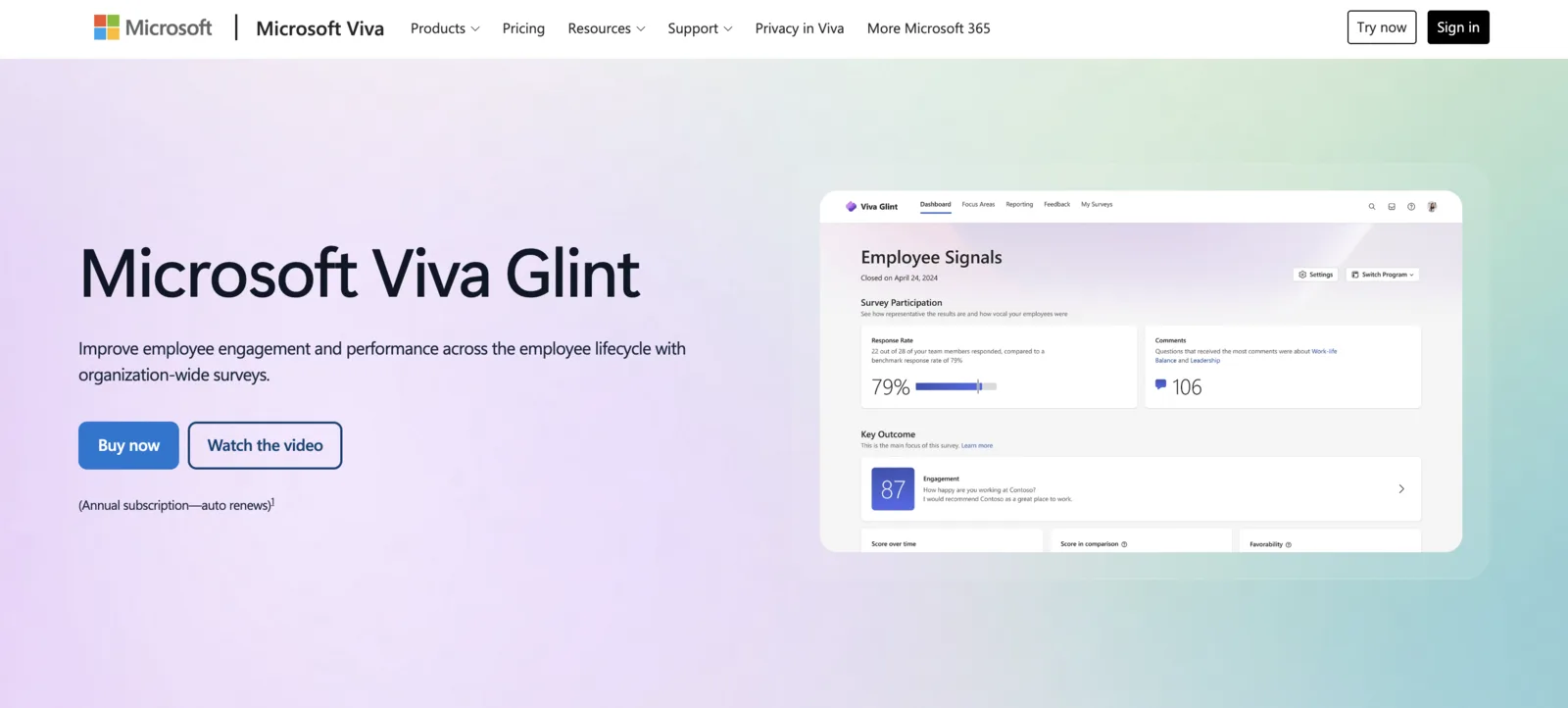
Part of Microsoft Viva, Glint is a workplace experience solution that turns organizational listening into insight for enterprise leaders.

Feature Description
Engagement Framework Uses science-backed templates and benchmarks to measure engagement effectively.
Four Survey Types Includes lifecycle, ad hoc, recurring, and always-on survey options for flexibility.
Admin Controls Allows flexible scheduling, segmentation, and custom configuration for survey management.
Template Library Covers DEI, onboarding, and productivity-related survey topics.
Automation Automates feedback collection and analytics to streamline engagement processes.

Key Takeaways

Takeaway Details
Pricing Contact sales
G2 Rating
Capterra Rating 4.6 / 5
Pros Highlights employee strengths and uncovers hidden potential through detailed engagement insights.
Cons Interface can feel clunky and lacks personalization in user experience.


Closing quote

An employee’s job is to give their best work every day. A manager’s job is to give the employee a good reason to come back tomorrow.

Liz Ryan LinkedIn profile

Founder and CEO at Human Workplace


17. Culture Amp

Culture Amp
Culture Amp

Culture Amp bridges insight and improvement with research-backed templates and analytics, positioning itself as a trusted employee experience technology partner for enterprises.

Feature Description
Research-Backed Surveys Provides 40+ validated survey templates designed by behavioral scientists to ensure reliability and depth.
AI Comment Summaries Uses artificial intelligence to summarize open-ended feedback and highlight emerging sentiment trends.
Pulse Surveys Captures live engagement data across teams to monitor morale and measure real-time changes in sentiment.
Inspiration Engine Suggests proven action plans and initiatives based on results from similar organizations worldwide.
Performance Platform Offers 360° feedback tools, AI-driven review assistance, and integrated performance tracking for managers.

Key Takeaways

Takeaway Details
Pricing Contact sales
G2 Rating 4.5 / 5
Capterra Rating 4.6 / 5
Pros Simple reporting tools and a beginner-friendly interface make adoption smooth for new users.
Cons Customization options for 1:1 and engagement survey reports are somewhat limited.


Blink
Blink

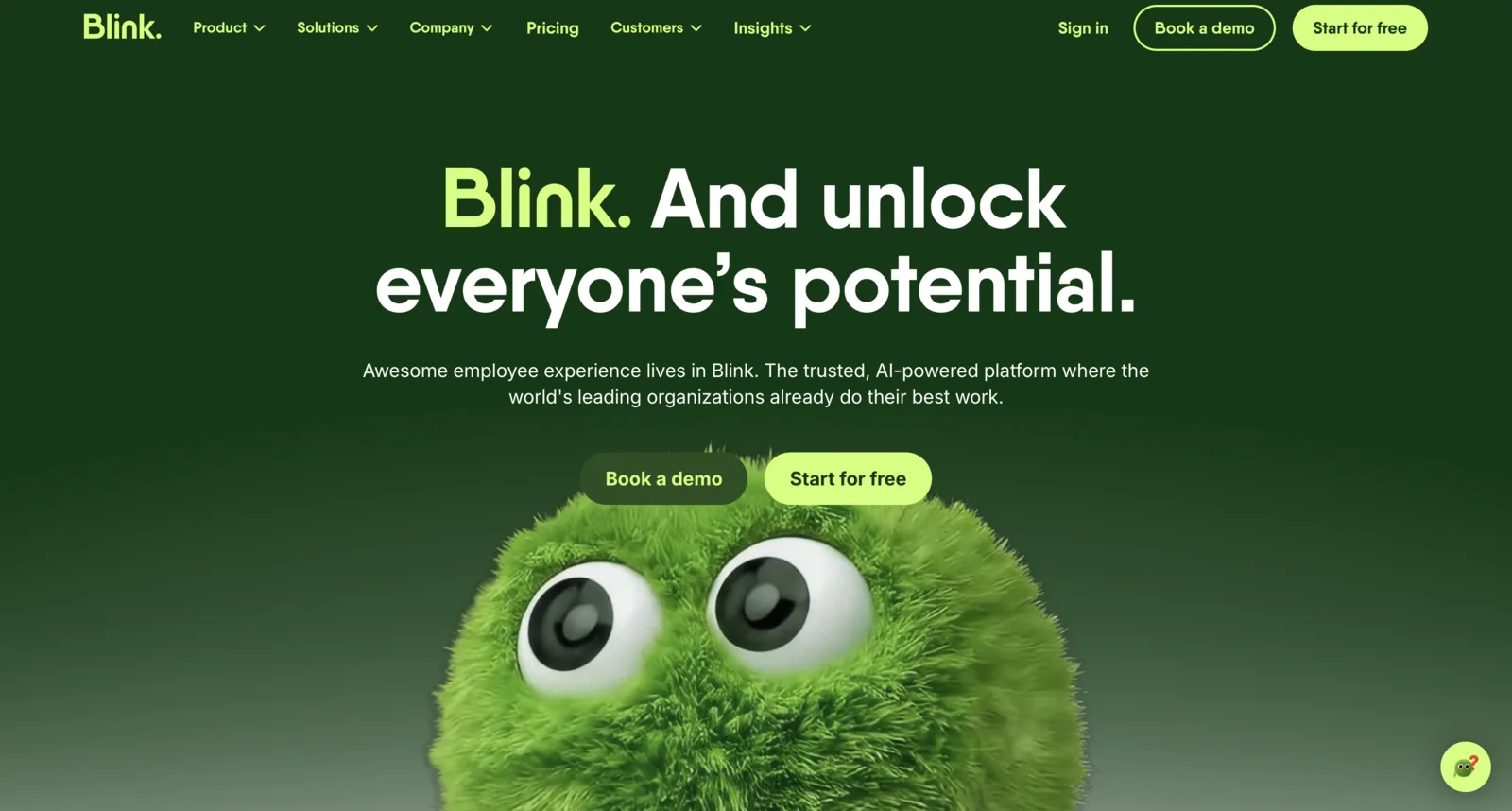
Blink streamlines communication with mobile-first intranet features, making it an adaptable workplace experience software for connected teams.

Feature Description
Social Stories Enables employees to share updates, wins, and announcements through story-style posts with likes, reactions, and comments.
AI Post Improvement Automatically refines the tone and clarity of posts to improve engagement and maintain a professional voice.
AI Content Generation Creates well-written posts and announcements from short prompts, saving time and effort for internal communicators.
Summarization Condenses lengthy posts or updates into digestible summaries for employees who need quick insights.
Cross-Device Assistant Integrates with Azure AI to ensure consistent and synchronized experiences across desktop, web, and mobile devices.

Key Takeaways

Takeaway Details
Pricing $4.5/month (Basic plan, per user)
G2 Rating 4.7 / 5
Capterra Rating 4.7 / 5
Pros Improves visibility into tasks and company updates.
Cons More suitable as an intranet than a full comms replacement.


19. Unily

Unily
Unily

Unily delivers a modern employee experience management program through its multilingual social intranet, empowering global organizations to share and collaborate seamlessly.

Feature Description
Targeted Communications Delivers personalized updates and announcements based on each employee’s location, department, and role.
Multilingual Intranet Supports multilingual content creation and localization to engage global teams effectively.
Opt-In Personalization Allows employees to customize their newsfeed and choose content categories relevant to them.
Publishing Tools Streamlines content approval, notifications, and scheduling with built-in publishing workflows.
Mobile Access Provides full-featured mobile intranet applications, ensuring accessibility for hybrid and remote employees.

Key Takeaways

Takeaway Details
Pricing Contact sales
G2 Rating 4.5 / 5
Capterra Rating 4.6 / 5
Pros Simple CMS with flexible content creation tools and clean user experience.
Cons Focuses more on large-scale company updates than micro-level communications or improvements.


20. Hibob

Hibob
Hibob

Hibob modernizes HR operations with automation and analytics, offering a unified employee experience management platform for growing organizations.

Feature Description
Core HR Automation Streamlines essential HR workflows like employee records, documentation, and reporting to improve operational efficiency.
Onboarding Workflows Automates introductions, training schedules, and initial setup tasks for new hires to ensure smooth onboarding experiences.
Time Off Management Simplifies leave requests, tracking, and approvals with customizable policies for global and remote teams.
Performance Management Supports 360° feedback, OKR tracking, and performance reviews to drive alignment and continuous growth.
People Analytics Delivers real-time insights on retention, growth, and employee demographics with intuitive dashboards and reports.

Key Takeaways

Takeaway Details
Pricing Contact sales
G2 Rating 4.5 / 5
Capterra Rating 4.6 / 5
Pros Simple setup process and strong onboarding support make implementation fast and effective.
Cons The platform’s abundance of data and options can feel overwhelming for first-time users.


21. Vantage Circle

Vantage Circle
Vantage Circle

Vantage Circle connects recognition, rewards, and analytics to create measurable cultural impact. It’s a high-value employee experience software for enterprises seeking global reach.

Feature Description
Social Recognition Enables peer-to-peer appreciation through awards, badges, and shout-outs, fostering a positive workplace culture.
Automated Celebrations Automatically delivers personalized birthday and anniversary messages, making every milestone memorable.
Dashboards & Analytics Provides HR teams with real-time insights into engagement, participation, and reward trends for data-driven decisions.
Global Rewards Catalog Offers employees worldwide redemption options through a diverse catalog integrated with Amazon and local partners.
AI-Powered Surveys Leverages AI to analyze survey results, identify engagement gaps, and benchmark performance against industry data.

Key Takeaways

Takeaway Details
Pricing Contact sales
G2 Rating 4.7 / 5
Capterra Rating 4.7 / 5
Pros Combines recognition, surveys, and analytics seamlessly to create a well-rounded engagement experience.
Cons Customer support response times could be improved for faster resolutions.


Closing quote

Focus on holistic experience: Look beyond scores to connect feedback, sentiment, and behavior—turning insights into actions that improve belonging, trust, and retention.

Josh Bersin LinkedIn profile

Founder and CEO at The Josh Bersin Company


22. Qualtrics Employee Experience

Qualtrics leads in enterprise-grade employee experience systems, connecting AI-powered feedback loops with data-driven insights.

Feature Description
AI-Powered EX Software Leverages advanced AI models to analyze engagement patterns and deliver predictive insights into workforce behavior.
Engagement Insights Combines active listening (surveys) with passive data collection to capture a holistic view of employee sentiment.
Employee Pulse Automates recurring feedback cycles with customizable frequencies to ensure timely engagement tracking.
Employee Research Aggregates feedback data to identify emerging trends and guide leadership strategies for improved workplace culture.
Generative AI Recommendations Provides AI-driven action recommendations based on employee data, helping leaders prioritize and address key focus areas.

Key Takeaways

Takeaway Details
Pricing Contact sales
G2 Rating 4.4 / 5
Capterra Rating 4.6 / 5
Pros Outstanding support paired with scalable implementation options for complex enterprise rollouts.
Cons Steep learning curve driven by the product’s depth and complexity.


23. TINYpulse (WebMD Health Services)

TINYpulse (WebMD Health Services)

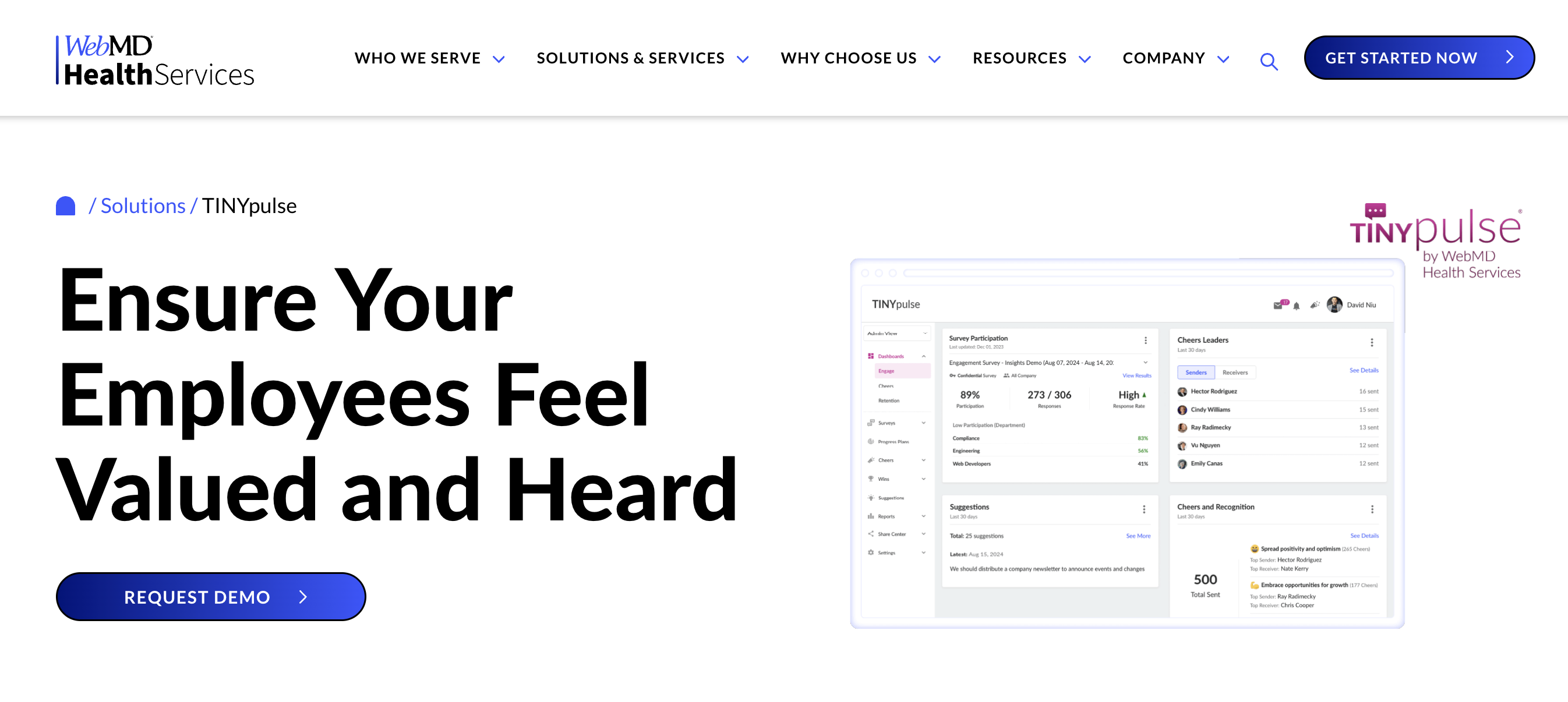
TINYpulse is a feedback-driven employee experience service that gives leaders a clear, ongoing view of workforce sentiment and well-being.

Feature Description
Advanced Feedback Surveys Delivers actionable, data-backed insights through pulse feedback, enabling quick measurement of employee sentiment.
Integrated Tools Combines onboarding, coaching, and peer recognition features into a unified engagement experience.
Anonymous Two-Way Communication Facilitates confidential feedback exchanges, helping employees share honest input safely and effectively.
Customer Success Includes a dedicated success manager and continuous guidance resources to maximize impact and adoption.
Research-Driven Insights Leverages WebMD’s well-being research data to provide deeper understanding of workforce health and engagement trends.

Key Takeaways

Takeaway Details
Pricing Contact sales
G2 Rating 4.4 / 5
Capterra Rating 4.6 / 5
Pros Helps track team morale and evolving sentiments effectively over time.
Cons Some survey questions can feel generic and less relevant across all teams.


What’s the difference between employee experience and employee engagement?

While employee experience and employee engagement may appear synonymous at first glance, these concepts represent distinct facets of the broader employee journey.

Understanding the nuances between employee experience and engagement is pivotal for organizations aiming to create a workplace culture that attracts, retains, and nurtures top talent.

Comparison Aspect Employee Engagement Employee Experience
1. Definition and Scope Emotional commitment, enthusiasm, and dedication to work and the organization. Encompasses the entire employee journey, from recruitment to offboarding, including infrastructure, technology, and culture.
2. Timeframe and Focus Measures immediate, in-the-moment commitment and motivation. Takes a long-term view, evaluating the entire employee lifecycle and all interactions across that journey.
3. Emotional Connection vs. Holistic Perspective Focuses on the emotional connection to tasks, colleagues, and the workplace. A more holistic view that includes physical work environment, technology, and HR processes, addressing the "how" and "when."
4. Measuring Tools and Metrics Measured through surveys, feedback mechanisms, and indicators like job satisfaction and motivation. Includes a diverse set of data: HR process efficiency, platform usability, communication clarity, and overall employee journey.
5. The Role of Leadership and HR Leadership sets the tone, creates vision, fosters culture, and recognizes achievements. HR designs the environment for engagement by optimizing onboarding, learning, and aligning policies with the employee journey.

The future of employee experience platforms

The future of employee experience platforms will be shaped by three major trends: AI and automation, an increased focus on mental health and wellness, and the continued rise of remote and hybrid work models.

How good employee experience impacts retention - Venesa Cotlar, VP People & Culture

AI and automation

AI will play a pivotal role in making employee experience platforms more intuitive and proactive. Future platforms will leverage AI to predict disengagement, suggest personalized learning paths, and offer real-time feedback analysis.

Automation will further streamline tasks like onboarding, performance reviews, and routine surveys, allowing HR teams to focus on strategic decisions while ensuring employees receive personalized support at scale.

Increased focus on mental health and wellness

As organizations continue to prioritize employee well-being, future platforms will integrate more mental health and wellness features.

Tools that monitor stress, provide mental health resources, and facilitate well-being surveys will become standard. These platforms will also offer insights into employee mental health trends, allowing companies to address issues before they impact performance and engagement.

Remote work and hybrid models

With the rise of remote and hybrid work, employee experience platforms will evolve to cater to dispersed teams. Seamless integration with communication tools like Zoom, Slack, and Microsoft Teams will be essential for maintaining engagement.

Key things to consider when choosing an employee experience platform


Guide to evaluate employee experience platforms
How to evaluate employee experience platforms

Selecting the right employee experience platform is essential for fostering a productive, engaged, and satisfied workforce. Here are the key factors that management should prioritize to ensure they invest in the best solution for their organization:

  1. Retention & engagement insights: The platform should offer tools that help identify employee sentiment and engagement levels, enabling proactive measures to reduce turnover and boost morale.
  2. Streamlined onboarding & integration: A seamless employee onboarding process is vital. The platform should simplify new hires' transitions, offering easy access to necessary resources and support.
  3. Scalable customization & flexibility: Choose a platform that can grow with your organization, offering flexible options for customization as your business needs evolve over time.
  4. Actionable analytics & reporting: Look for robust analytics tools that turn feedback and data into clear, actionable insights. These should include customizable reports and real-time dashboards for decision-making.
  5. Real-time feedback mechanisms: Continuous feedback loops are essential for a dynamic work environment. The platform should support real-time feedback to drive swift action and improvements.
  6. User-friendly interface: A simple, intuitive interface ensures high adoption rates and engagement across all levels of the organization. It should be easy to navigate for both employees and administrators.
  7. Recognition & reward systems: Incorporating employee recognition and rewards can improve motivation and retention. Choose a platform that enables peer-to-peer recognition and offers customizable reward systems.
  8. Comprehensive data security & compliance: Protecting employee data should be a top priority. The platform should meet stringent data security standards and comply with regulations like GDPR.
  9. Integration with HR systems: Ensure the platform can seamlessly integrate with your existing HRMS and communication tools, streamlining workflows and enhancing efficiency.
  10. Ongoing support & training: A platform is only as good as the support it offers. Choose one with comprehensive training, responsive customer service, and ongoing resources to ensure long-term success.

Employee experience trends are becoming increasingly focused on personalization, well-being, and sustainable growth within organizations. These evolving trends underscore the need for businesses to adapt to the changing expectations of employees while fostering a supportive, growth-oriented environment.

  1. AI-powered personalization: Beyond automation: In 2025, organizations are leveraging generative AI to create highly personalized employee experiences. Tools like Microsoft Copilot and Google Workspace integrations are not just automating tasks but also tailoring workflows, learning paths, and communication to individual preferences and needs. This shift allows employees to work more efficiently and feel more connected to their roles.
  2. Holistic well-being: Integrating physical, mental, and social health: Companies are adopting a more comprehensive approach to employee well-being in 2025. This includes offering mental health resources, flexible work arrangements, and wellness programs that address emotional and physical health. Employee experience managers are being trained to recognize signs of distress and provide appropriate support, fostering a healthier and more engaged workforce.
  3. Skills-based volunteering: Enhancing engagement and development: Organizations are increasingly implementing skills-based volunteer programs that allow employees to apply their professional skills in nonprofit settings. These initiatives lead to personal growth, improved leadership capabilities, knowledge management, and stronger workplace commitment, while also supporting community organizations.
  4. Quiet cracking: Addressing silent disengagement: A new phenomenon called "quiet cracking" is emerging, where employees feel persistently disengaged but remain in their jobs due to economic insecurity or limited alternatives. This silent form of burnout is challenging for employers to detect but can significantly impact productivity and morale.
  5. Gen Z's desire for long-term employer relationships: Contrary to the traditional "job for life" mentality, many Gen Z employees are seeking long-term employment with a single employer, desiring opportunities for internal communications, mobility, upskilling, and personal development. This shift reflects a preference for stability and growth within a single organization.

Employee experience success examples

The success stories underscore the diversity of approaches organizations can take to create a positive and impactful employee experience.

Whether it's through innovative learning platforms, global connection initiatives, data-driven strategies, or fostering a unique company culture, the following examples demonstrate that investing in the well-being and growth of employees is a strategic imperative for organizational success.

1. Salesforce

Salesforce stands out not just for its innovative cloud solutions but also for its groundbreaking employee experience initiatives. The company's success story lies in its commitment to putting employees at the forefront of its strategy. Salesforce introduced the concept of "Ohana," a Hawaiian term for family, symbolizing a culture of inclusivity and support.

One standout initiative is their focus on continuous learning. Salesforce launched the Trailhead platform, an interactive and gamified learning experience that allows employees to develop new skills at their own pace. This not only enhances professional growth but also fosters a culture of curiosity and exploration.

Additionally, Salesforce prioritizes employee well-being through initiatives like wellness reimbursement programs, mental health resources, and flexible work arrangements. By embracing a holistic approach to employee experience, Salesforce has not only attracted top talent but has also seen increased productivity and a thriving workplace culture.

2. Airbnb

Airbnb, the global hospitality disruptor, has redefined employee experience through a unique blend of connection and empowerment. At the heart of their success is a commitment to diversity and inclusion, evident in initiatives like "Employee Resource Groups" that foster a sense of community and belonging.

Airbnb's global approach extends to its unique travel stipend program. Employees receive an annual stipend to travel and stay in any Airbnb listing worldwide. This not only promotes the company's values of exploration and connection but also ensures that employees experience firsthand the offerings of their own platform.

Moreover, Airbnb empowers employees through a sense of ownership. The company offers equity options to all employees, aligning individual success with the company's overall growth. This has not only attracted top talent but has also created a culture where every employee feels invested in the success of the company.

3. Google

Google has long been revered for its employee-centric culture. What sets Google apart is its data-driven approach to understanding and improving employee experience. Through extensive surveys and analytics, Google identifies trends and areas for improvement, allowing them to tailor initiatives to address specific needs.

One notable success is Google's emphasis on work-life balance. The company introduced policies like "20% time," encouraging employees to spend a fifth of their work hours on projects of personal interest. This not only fuels innovation but also demonstrates a profound trust in employees' ability to manage their time effectively.

Additionally, Google's focus on health and well-being includes on-site medical services, fitness centers, and healthy food options. By prioritizing the physical and mental well-being of employees, Google has created an environment where individuals can thrive personally and professionally.

📌 If you only remember one thing

A great employee experience isn’t built just on surveys; it’s built on how you act on them. Listen deeply, respond fast, and close the feedback loop with purpose.

4. Zappos

Zappos, the online shoe and clothing retailer, is renowned for its unconventional approach to employee experience. At the core of their success is a commitment to a vibrant and unique company culture. Zappos focuses on hiring for culture fit, ensuring that employees align with the company's values and customer-centric philosophy.

One standout initiative is their approach to onboarding. New hires go through an immersive four-week training program that not only covers job responsibilities but also immerses them in the company culture. This investment in the onboarding process ensures that employees are not only skilled but also deeply connected to the organization's ethos.

Moreover, Zappos encourages employees to express their creativity and individuality at work. This is exemplified in their "Create Your Space" program, which allows employees to personalize their workstations. This freedom of expression fosters a sense of ownership and pride, contributing to Zappos' reputation for exceptional customer service.

Significance of employee experience analytics

Employee experience analytics offers a profound means to decode the intricate dynamics within an organization, ultimately fostering a thriving workplace. Here are some points highlighting the significance of employee experience analytics:

  • Enhanced decision-making: Employee experience analytics equips leaders with data-driven insights, facilitating informed decision-making. By analyzing patterns and trends, organizations can identify areas needing improvement and implement strategic changes, ensuring a more efficient and harmonious work environment.
  • Improved employee engagement: By delving into the factors that genuinely engage employees, analytics helps tailor experiences to meet their needs. Understanding what drives enthusiasm and creativity allows organizations to design initiatives and projects that resonate with their workforce, boosting overall engagement and productivity.
  • Increased retention rates: Retention is critical for maintaining organizational stability. Employee experience analytics uncovers the elements contributing to job satisfaction and potential dissatisfaction. By addressing these issues proactively, companies can reduce turnover and retain top talent, ensuring sustained performance and growth.
  • Operational efficiency: Analytics identifies workflow bottlenecks and inefficiencies, paving the way for smoother operations. By pinpointing specific areas where processes falter, organizations can streamline operations, reducing downtime and enhancing employee retention.
  • Personalized employee development: Understanding individual strengths and areas for improvement enables tailored development plans. Analytics provides insights into employees' skills and career aspirations, allowing organizations to offer personalized training and growth opportunities, fostering a culture of continuous improvement.
  • Enhanced employee well-being: By monitoring factors influencing employee well-being, analytics helps create a supportive work environment. Organizations can implement initiatives that promote work-life balance, mental health, and overall well-being, contributing to a healthier and more motivated workforce.
  • Strategic workforce planning: Employee experience analytics aids in strategic workforce planning by predicting future trends and needs. This foresight enables organizations to proactively address potential challenges, ensuring they are well-prepared to meet evolving demands and maintain competitive advantage.

How can you measure the ROI of employee experience software?

  1. Employee engagement scores: Most employee experience engagement tools provide engagement surveys that measure various aspects like job satisfaction, alignment with company values, and sense of belonging. Compare engagement scores before and after implementing the workplace experience software to assess improvements.
  2. Turnover and retention rates: High employee turnover is costly. By analyzing retention rates pre- and post-implementation, you can evaluate the software’s impact on reducing attrition. A lower turnover rate indicates improved employee satisfaction and loyalty, directly tied to the platform's effectiveness.
  3. Productivity levels: Track productivity metrics, such as task completion rates and project timelines, before and after adoption. Employee experience platforms that streamline workflows and improve engagement should show a positive correlation with higher productivity levels.
  4. Employee feedback: Collect qualitative feedback from employees on their experience with the platform. Are they finding it easier to engage, provide feedback, or access resources? Positive feedback here indicates increased satisfaction and platform usability.
  5. Absenteeism rates: Monitor changes in absenteeism. A reduction in unplanned absences may indicate improved employee well-being and engagement, both of which contribute to better productivity.
  6. Cost savings from reduced turnover: Calculate the financial impact of improved retention by estimating the cost saved from lower turnover rates. This includes savings from reduced recruitment, onboarding, and training efforts. The longer employees stay, the more cost-effective your workforce becomes.
  7. Time saved on administrative tasks: Measure the reduction in HR administrative time spent on manual tasks like feedback collection, performance reviews, or onboarding. Employee experience software solutions automate many of these processes, freeing up HR teams to focus on more strategic tasks.
  8. Impact on customer satisfaction: Employee satisfaction is often linked to better customer service. Measure changes in customer satisfaction and loyalty metrics—happy, engaged employees are more likely to deliver exceptional customer experiences, which can drive revenue growth.
  9. Benchmark against industry standards: Use the data from your platform to compare your company’s engagement, retention, and productivity metrics against industry benchmarks. This helps you evaluate how well your employee experience efforts are performing relative to competitors.

Net benefits include all cost savings from improved retention, reduced absenteeism, and increased productivity. If these benefits exceed the cost of the software, the ROI is positive.

Why CultureMonkey is the better employee experience platform

CultureMonkey stands out as the ultimate choice for improving employee experience with its unique combination of features designed to engage, empower, and support employees at every stage of their journey. Here are five key features that directly enhance the employee experience:

eNPS Dashboard Illustration

Turn employee experience insights into actionable change

  • Seamless HRMS Integrations
  • Automated Lifecycle Feedback
  • AI-Driven Sentiment Analysis
Talk to Sales
  1. White-glove onboarding: A seamless, high-touch onboarding experience ensures that employees have a smooth and welcoming start, with minimal lift from HR or IT teams, enhancing the overall experience from the beginning.
  2. Smart survey fatigue prevention: CultureMonkey reduces the risk of survey burnout by using short, engaging pulse surveys with no-login access, ensuring employees can easily provide feedback without feeling overwhelmed, encouraging consistent participation.
  3. AI-driven sentiment analysis: By leveraging AI to detect emotional tone and patterns in employee feedback, CultureMonkey enables organizations to better understand their employees' feelings and concerns, leading to more personalized and effective engagement strategies.
  4. Branded survey experience: Personalizing surveys with your company’s logo, colors, and tone ensures that employees feel a strong connection to the brand, which promotes greater engagement and a sense of belonging.
  5. Automated lifecycle feedback: By collecting feedback at key moments—onboarding, exits, anniversaries, and more—CultureMonkey maps the entire employee journey, helping organizations identify and address pain points that affect retention and satisfaction.

Conclusion

When it comes to improving employee experience, CultureMonkey truly stands out. It makes launching surveys easy, integrates smoothly with HR systems, and offers 50+ survey templates. What sets it apart is how it turns feedback into real, open conversations.

With tools like lifecycle surveys and manager insights, it helps organizations really understand their employees and take action.

But beyond the features, what really makes CultureMonkey special is its genuine commitment to creating a workplace where employees feel heard, valued, and engaged. It’s not just a platform—it’s a partner in building a culture that supports growth and connection.

If you’re looking to create a better employee experience, CultureMonkey is the solution that truly makes a difference.

Book a demo with CultureMonkey.

FAQs

1. Which employee experience platform would you recommend and why?

CultureMonkey because of its comprehensive approach to employee engagement. With 50+ research-backed templates, seamless integration with HRMS tools, and advanced AI-powered insights, CultureMonkey simplifies the survey process while delivering deep, actionable insights. Its mobile-friendly, multilingual interface ensures accessibility, while anonymous feedback and data visualization foster transparency and growth. These features make CultureMonkey a powerful tool for enhancing employee engagement and driving meaningful change in organizations.

CultureMonkey facilitates employee reporting of workplace concerns related to overall experience, including engagement and training. With its anonymous feedback tools, real-time surveys, and sentiment analysis features, CultureMonkey empowers employees to voice their concerns safely and ensures management can address issues effectively. Its customizable surveys capture insights on training, well-being, and engagement, helping organizations improve workplace culture and enhance the employee experience at every stage.

3. Who owns employee experience?

Employee experience is owned by leaders, managers, HR professionals, and employees themselves. Leaders set the vision, aligning employee well-being with business goals. Managers, with their direct influence, shape daily interactions and motivation. HR designs and implements the systems that create a positive work environment. Employees also contribute by engaging with these programs and taking ownership of their growth.

4. Is employee experience part of HR?

Employee experience is an integral part of HR, but it extends beyond the department. While HR leads initiatives such as onboarding, performance management, and employee relations, the responsibility is shared with leadership and managers. HR provides the structure and policies that shape the experience, while leaders and managers influence culture and engagement. Employee experience is a collaborative effort aimed at improving workplace satisfaction, productivity, and retention across the organization.

5. What is employee experience analytics?

Employee experience analytics involves collecting and analyzing data on how employees interact and perceive their workplace. This data, sourced from surveys, feedback forms, and performance metrics, provides insights into areas like engagement, satisfaction, and retention. By using advanced analytics, organizations can identify trends, predict challenges like turnover, and make informed decisions. These insights help improve employee well-being, productivity, and organizational performance by proactively addressing workplace concerns.

6. How do employee experience platforms impact retention and business performance?

Employee experience platforms transform engagement data into actionable insights that reduce attrition and boost performance. By analyzing sentiment, recognition trends, and feedback loops, these tools help HR leaders identify burnout risks, improve manager-employee relationships, and align culture with company goals. The result: higher retention, stronger productivity, and measurable ROI on culture-driven initiatives.


Note: This article was originally published in October, 2024. The most recent update was in October, 2025.


Related reads:


Santhosh

Santhosh

Senior Content Marketer with 4+ years of experience, having written 200+ articles on workplace culture and engagement, bringing research-backed perspectives to every story.