


Anonymous feedback for remote teams: A complete guide

Anonymous feedback remote teams use allows employees to share honest opinions without revealing identity. In distributed workplaces, anonymous feedback from remote teams helps surface concerns that may remain hidden in public communication channels, giving leaders clearer insight into team sentiment and emerging challenges.
Remote and hybrid teams rely heavily on written communication and asynchronous collaboration. This often makes employees cautious about raising sensitive concerns openly. Anonymous feedback that remote teams collect helps leaders understand real issues across locations and time zones.
When organizations create safe channels for distributed teams to share input, they gain clearer signals about engagement gaps, communication challenges, and concerns that might otherwise remain unnoticed.


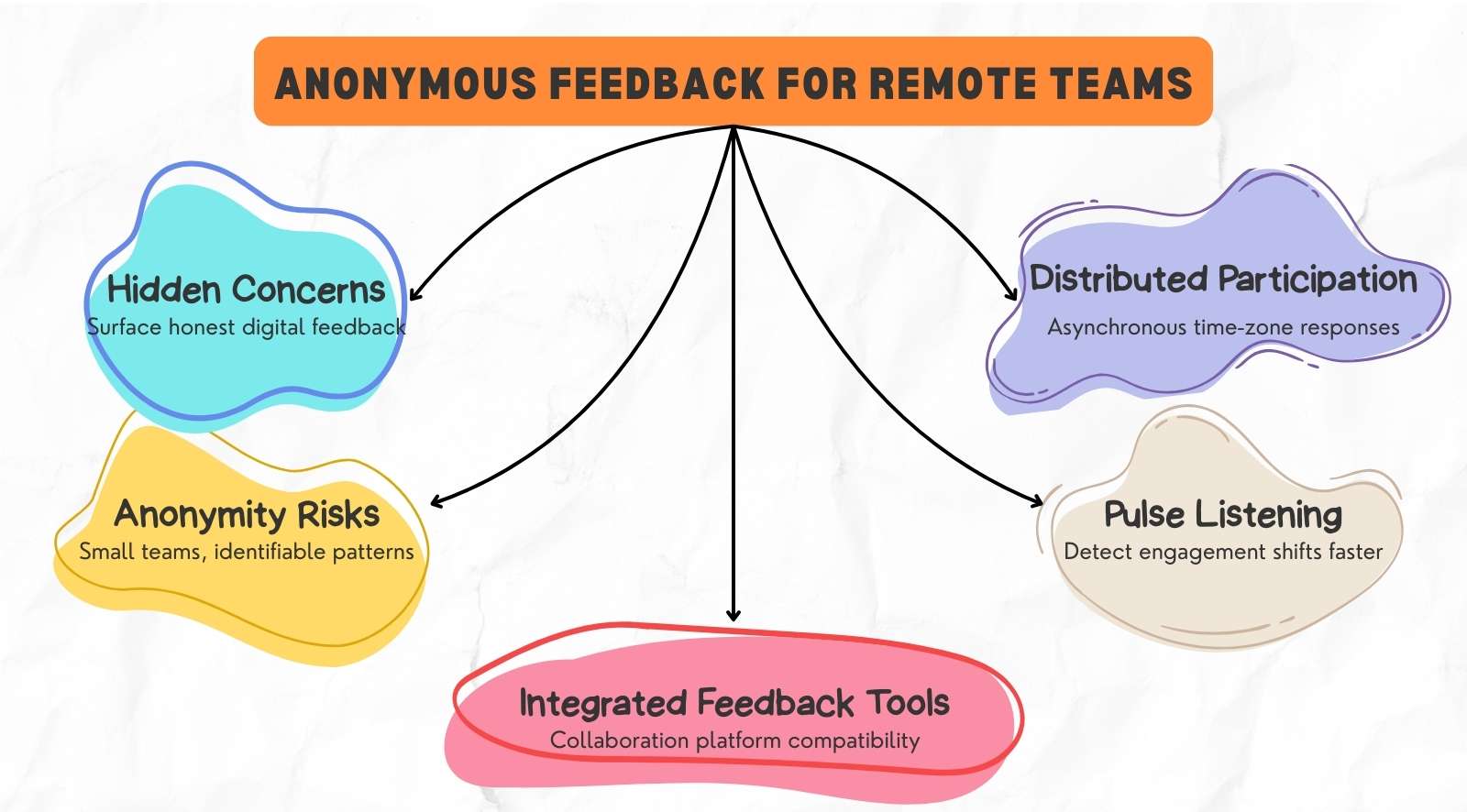
- Anonymous feedback remote teams rely on surfaces honest concerns hidden in digital communication channels across distributed and hybrid workplaces.
- Distributed workplaces face anonymity risks like small teams, cultural differences, and identifiable writing patterns in feedback responses.
- Remote teams need feedback tools integrated with collaboration platforms supporting asynchronous participation across time zones.
- Pulse surveys help remote leaders detect engagement shifts faster than annual surveys in distributed environments.
- Remote-first companies improve participation and trust by protecting anonymity and visibly acting on anonymous feedback insights.
Why anonymous feedback is even more critical for remote teams

Anonymous feedback helps remote teams surface concerns that employees may hesitate to share in public channels. In distributed workplaces, where conversations happen mostly through written communication, anonymous feedback gives leaders clearer insight into employee sentiment, engagement risks, and hidden workplace challenges.
- Missing informal signals: Remote work removes spontaneous conversations where concerns surface naturally. Anonymous employee surveys help leaders collect feedback that would normally appear during quick in-person discussions.
- Visible communication channels create hesitation: Employees hesitate to criticize leaders in public tools like Slack or Teams. Anonymous feedback tools provide safer alternatives where honest feedback can appear without social pressure.
- Anonymity increases honesty: anonymous feedback for remote teams allows people to speak freely without worrying about reputation. This improves survey response quality and strengthens employee feedback analysis.
- Hidden disengagement surfaces earlier: Remote employees may silently disconnect when issues go unnoticed. Employee feedback surveys and pulse surveys reveal early signs affecting employee engagement.
- Safer reporting across distributed hierarchies: Remote teams often operate across layered reporting structures. Anonymous employee surveys reduce fear and help anonymous employee voices reach leadership safely.
- Data improves leadership visibility: Regular employee surveys give leaders structured insight into remote sentiment. Employee feedback tools convert survey responses into trends that leaders can act on.
Unique challenges of collecting anonymous feedback in distributed workplaces
Collecting anonymous feedback in distributed workplaces is more complex than in office environments. Remote teams face risks like small team anonymity gaps, written feedback misinterpretation, cultural differences, and concerns about digital tracking. These factors affect participation, trust, and the reliability of feedback insights.
- Identification risks in small remote teams: Smaller groups make anonymity fragile. When leaders collect anonymous feedback through an anonymous feedback survey that remote teams use, response patterns or role context may unintentionally reveal identities within remote teams.
- Written feedback lacks emotional context: Remote employee feedback systems rely heavily on text responses. Without voice tone or body language, employee feedback can appear harsher or less clear, complicating feedback data interpretation.
- Cultural differences influence feedback openness: Global remote employees often approach criticism differently. Anonymous employee feedback on remote work systems must consider cultural comfort levels when collecting feedback through employee engagement tools.
- Digital activity tracking raises identity concerns: Remote employees sometimes assume collaboration tools track activity. This perception can discourage participation in anonymous survey responses shared through Microsoft Teams or other employee engagement tools.
- Department filters expose response patterns: Detailed segmentation can weaken anonymity. When feedback data is filtered by department or location, remote employees may fear that leaders could infer who submitted specific responses.
- Constant communication creates feedback fatigue: Distributed teams spend much of their day in digital communication. Adding surveys or other employee engagement tools too frequently can reduce participation in continuous feedback programs.
- Trust gaps slow continuous improvement: When employees doubt anonymity, they participate less in anonymous feedback work initiatives. That hesitation limits feedback data quality and weakens continuous improvement efforts across remote teams.
Choosing the right anonymous feedback tool for remote teams

Remote teams need feedback tools designed for distributed work environments. The right anonymous feedback platform should integrate with existing communication tools, protect employee identity, support asynchronous participation, and turn responses into actionable insights leaders can use to improve communication and engagement.
- Integrate with daily workflows: The best anonymous feedback platforms for remote teams fit where people already work. When feedback software connects with Slack, email, or collaboration tools, it becomes easier to capture feedback regularly without adding another system that employees ignore.
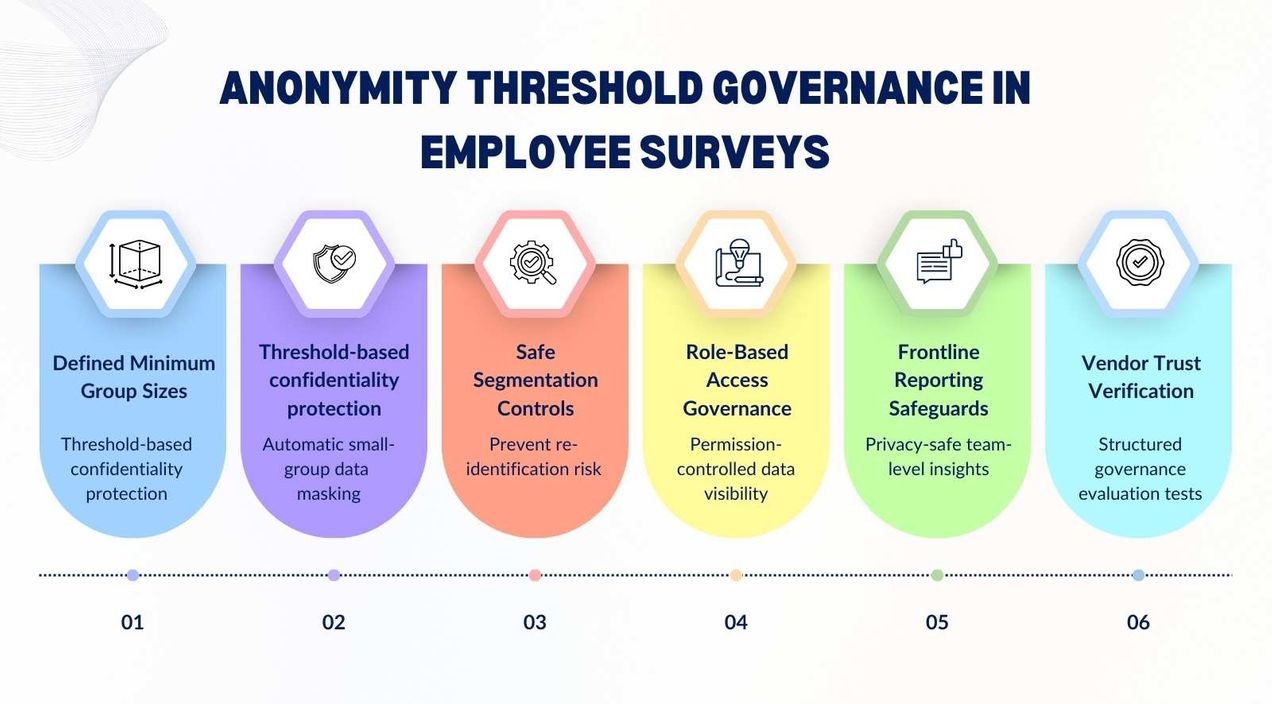
- Protect identity with thresholds: A minimum response threshold is essential for remote workers in smaller teams. Without it, managers may connect answers to individuals. Strong feedback tools protect anonymity before leaders survey employees, review patterns, or act on sensitive comments.
- Support asynchronous participation: Global teams rarely share the same working hours, so timing matters. Tools with always-on feedback channels and anonymous pulse surveys let people respond when convenient, increasing response quality and helping leaders spot issues without forcing conversations.
- Turn input into action: Good anonymous communication that remote teams need does not stop at collection alone. The right feedback process helps leaders gather feedback, identify themes, and convert comments into actionable feedback that strengthens company culture instead of creating a layer that only reports.
- Make feedback easy to access: Remote workers join from home offices, shared spaces, and travel schedules. Feedback tools with simple mobile access remove friction, making it easier to share honest feedback in the moment rather than waiting for surveys to forget.
- Prioritize insight quality: The best platforms do more than store comments. They help teams capture feedback cleanly, organize responses, and surface valuable insights leaders can trust when deciding what needs attention across distributed teams and which changes deserve faster follow-through.
Asynchronous feedback: How to accommodate time zones and schedules
Asynchronous feedback systems allow remote teams to participate regardless of time zones or working hours. Instead of relying on meetings or real-time discussions, organizations can collect feedback through flexible channels that give employees time to respond thoughtfully while still maintaining consistent engagement signals.
- Flexible timing improves participation: anonymous feedback for distributed teams works better when people respond on their own schedule. Remote workplace anonymous surveys with wider response windows reduce pressure, increase completion, and help teams collect employee sentiment across varied working hours.
- Thoughtful responses beat rushed answers: Synchronous meetings often reward whoever speaks first. Asynchronous formats give people time to reflect, share clearer input, and surface early warning signs that might stay hidden in faster live discussions.
- Always-open channels support regular feedback: In remote work environments, concerns do not appear on a fixed calendar. Continuous channels encourage open communication, support employee experience, and reveal engagement trends before issues begin affecting business outcomes.
- Reminders reduce gaps across regions: Well-timed nudges help teams participate without creating survey fatigue. They also help leaders gather feedback evenly, instead of hearing mostly from one region while other time zones stay underrepresented.
- Anonymity needs stronger remote safeguards: Asynchronous systems should protect anonymity by removing personally identifiable information and limiting identifying details. That matters more when written responses travel across tools in the existing tech stack.
- Completely anonymous design builds trust: Employees participate more when the process feels completely anonymous, not partially protected. Clear privacy rules make remote workplace anonymous surveys feel safer, which improves response quality and strengthens long-term open communication.
Building trust when you can’t read the room

Trust is harder to build in remote environments where leaders cannot observe body language or informal signals. Employees may hesitate to share concerns unless they believe anonymity is real.
Clear communication about feedback safeguards and visible leadership response helps strengthen confidence in anonymous feedback systems.
- Missing human cues: Remote leaders lose body language, tone shifts, and side conversations that normally signal concern. That makes manager visibility weaker in distributed teams and increases the need for anonymous employee surveys for remote workforce contexts that capture what people may not say directly.
- Anonymity needs clear proof: Employees feel cautious when survey promises sound vague or overly technical. Leaders must reassure employees by explaining how anonymous team feedback tools protect identity, remove traceable details, and support psychological safety before asking people to share feedback on sensitive issues.
- Thresholds protect confidence: Minimum response thresholds matter because they reduce the chance of identifying individuals in smaller groups. When employees feel their responses will stay hidden, anonymous employee surveys for remote workforce settings produce more actionable data and stronger participation.
- Leadership response builds belief: Trust grows when leaders acknowledge criticism without defensiveness and explain what happens next. That response helps reassure employees, strengthens workplace culture, and shows that anonymous team feedback tools exist to create actionable insights, not simply collect complaints.
- Visible action reinforces trust: Remote employees watch what leaders do after collecting feedback, not what they promise before. When organizations act on recurring concerns, they boost engagement, improve workplace culture, and show that anonymous channels can turn honest input into actionable data.
- Safety encourages better input: Psychological safety improves when people know feedback will not damage relationships or reputation. In distributed teams, that confidence helps employees feel safer to share feedback openly, giving leaders clearer patterns, more actionable insights, and fewer blind spots.
Pulse surveys vs annual surveys for remote teams

Remote teams experience faster changes in workload, communication patterns, and engagement levels. Pulse surveys help leaders track these shifts through frequent, lightweight feedback cycles, while annual surveys provide broader reflection on long-term culture trends and organizational priorities.
How to close the feedback loop when your team is distributed
Closing the feedback loop is critical for maintaining trust in remote feedback systems. When employees see how their feedback leads to visible action, participation increases. Distributed teams need clear communication, ownership, and transparent follow-up to ensure feedback results translate into improvements.
Step 1: Make feedback results visible
Remote employees disengage when feedback disappears after collection. Leaders should share key takeaways through anonymous feedback channels that remote work teams already use, so employees see their input moving into a real discussion.
Step 2: Communicate outcomes asynchronously
Distributed teams need updates that work across time zones. Async notes, recorded updates, and written summaries help leaders explain actions clearly without relying only on live meetings.
Step 3: Protect identity when sharing insights
Summaries should highlight themes without exposing individuals. Confidential feedback systems for remote teams allow leaders to discuss repeated concerns while protecting employee anonymity.
Step 4: Show what actions were taken
Trust grows when leaders connect feedback directly to visible decisions. This may include policy updates, communication changes, or workload adjustments based on remote employee sentiment feedback.
Step 5: Assign ownership for follow-up actions
Feedback stalls when no one owns the response. Managers across regions should track improvements and ensure issues raised through anonymous feedback channels in remote work environments receive clear follow-up.
Step 6: Start the next feedback cycle
Closing the loop once is not enough. Consistent responses strengthen confidence in confidential feedback systems for remote teams and encourage more honest participation in future feedback rounds.
Case study: how remote-first companies run anonymous feedback programs
Remote-first organizations design structured feedback systems to maintain visibility across distributed teams. These programs combine regular pulse surveys, open feedback channels, and leadership review routines to capture employee sentiment and translate feedback insights into communication and culture improvements.
- Frequent pulse cycles: Remote-first companies use short, recurring surveys instead of waiting for one large annual review. This gives leaders faster signals, creates a steady feedback habit, and shows why many teams prefer the best tools for anonymous feedback in remote teams.
- Always-on feedback channels: Many distributed teams keep anonymous channels open between formal surveys. These channels capture issues as they happen, giving practical examples of anonymous feedback systems for distributed teams that work beyond one-time survey windows.
- Leadership review routines: Strong programs work because leaders review insights on a fixed cadence. Instead of treating feedback as background data, remote-first teams discuss patterns regularly and decide what needs attention, ownership, or follow-up across distributed teams.
- Identity protection rules: Remote-first companies protect trust through clear anonymity rules, response thresholds, and limited segmentation. That structure helps people participate safely and shows how the best tools for anonymous feedback in remote teams support honest input at scale.
- Global participation design: Companies with distributed workforces plan around time zones, language needs, and varied schedules. These participation choices are useful examples of anonymous feedback systems for distributed teams because they remove friction before people even begin responding.
- Action tied to feedback: The strongest programs do not stop at collection. Remote-first companies use recurring feedback insights to improve communication, manager habits, and team processes, which keeps participation strong and makes the system feel useful rather than performative.
Conclusion
Anonymous feedback remote teams rely on helps leaders understand real concerns that often stay hidden in distributed workplaces. When employees can share honest input safely, organizations gain clearer insight into communication gaps, engagement risks, and workplace challenges that affect remote team performance.
For organizations managing distributed teams, structured anonymous feedback systems are essential. CultureMonkey helps companies run anonymous employee surveys, pulse surveys, and continuous listening programs designed for remote environments.
With sentiment analysis, anonymity safeguards, and actionable dashboards, CultureMonkey helps leaders capture honest feedback, identify patterns early, and turn employee insights into improvements that strengthen engagement, trust, and workplace culture across remote teams.
Book a demo with CultureMonkey.
FAQs
1. How do you collect anonymous feedback from remote employees?
Organizations collect anonymous feedback from remote employees through anonymous employee surveys, pulse surveys, and digital suggestion boxes. Tools that guarantee anonymity encourage honest responses. Platforms with sentiment analysis help leaders understand employee engagement efforts, work-life balance concerns, and patterns affecting employee experience.
2. What is the best anonymous feedback tool for remote teams?
The best anonymous feedback tool for remote teams protects identity and guarantees anonymity. While tools like Google Forms collect basic feedback, advanced platforms provide sentiment analysis and track employee net promoter score trends, helping leaders improve employee engagement efforts and drive positive change across distributed teams.
3. How often should remote teams run anonymous feedback surveys?
Remote teams usually run anonymous feedback surveys through monthly pulse surveys and one deeper annual review. This balance helps leaders track employee net promoter score shifts, monitor sentiment analysis patterns, reduce survey fatigue, and support employee engagement efforts, career growth discussions, and better work-life balance.
4. How do you build trust in anonymous feedback when working remotely?
Trust grows when organizations clearly guarantee anonymity and explain how responses stay protected. Leaders should avoid exposing identifying details and communicate survey results openly. When employees see feedback leading to positive change, they feel safer participating in employee engagement efforts and sharing honest input.
5. What are pulse surveys, and are they better for remote teams?
Pulse surveys are short, frequent employee surveys that track employee sentiment regularly. They help leaders monitor employee net promoter score trends and identify issues earlier than annual surveys. Pulse surveys support continuous feedback, deeper analysis when needed, and improvements in work-life balance and career growth.