



eNPS question wording guide (How to phrase it right)

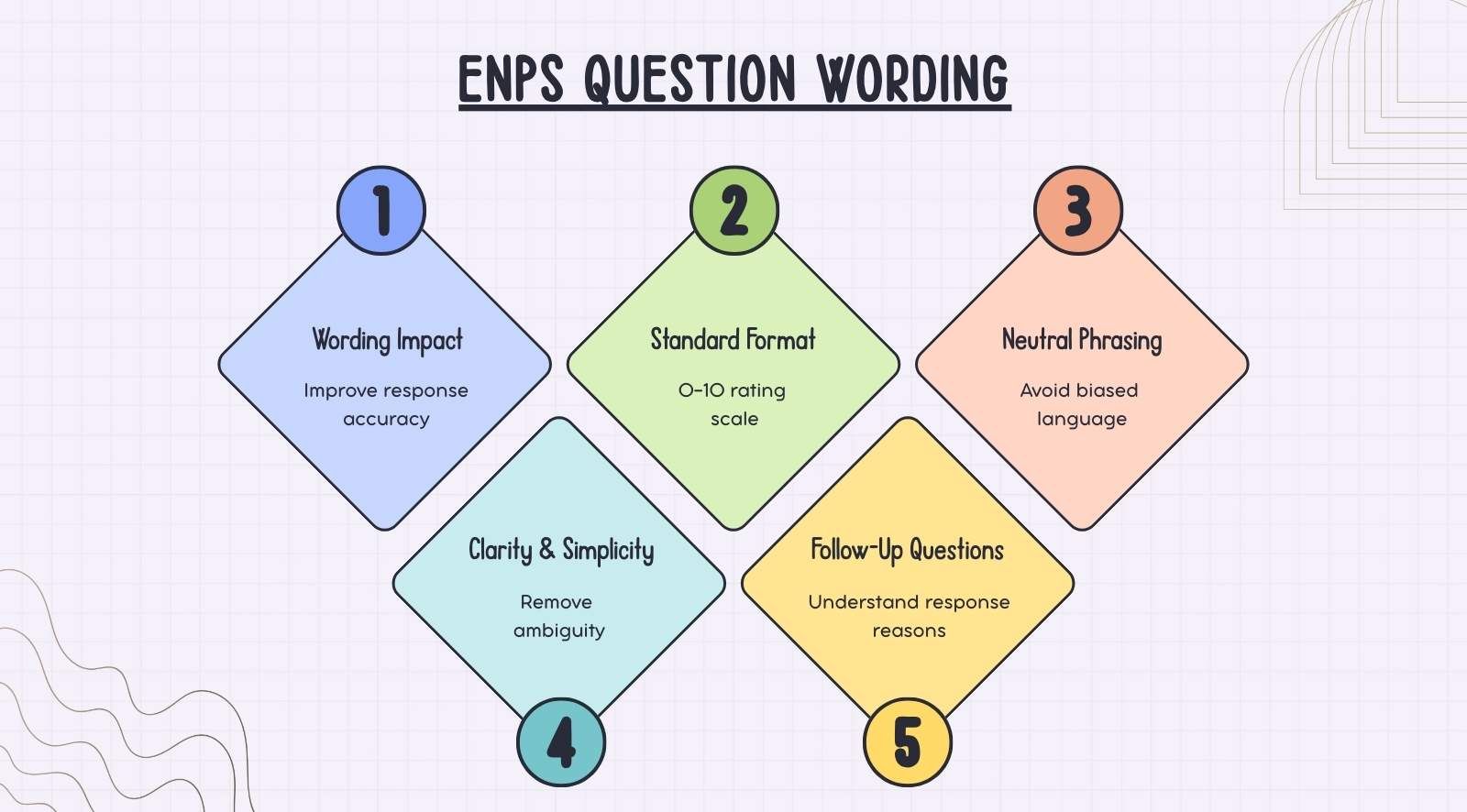
The way the eNPS question is worded directly affects the quality of responses you receive. Even small phrasing differences can change how respondents interpret the question and how honestly they answer it.
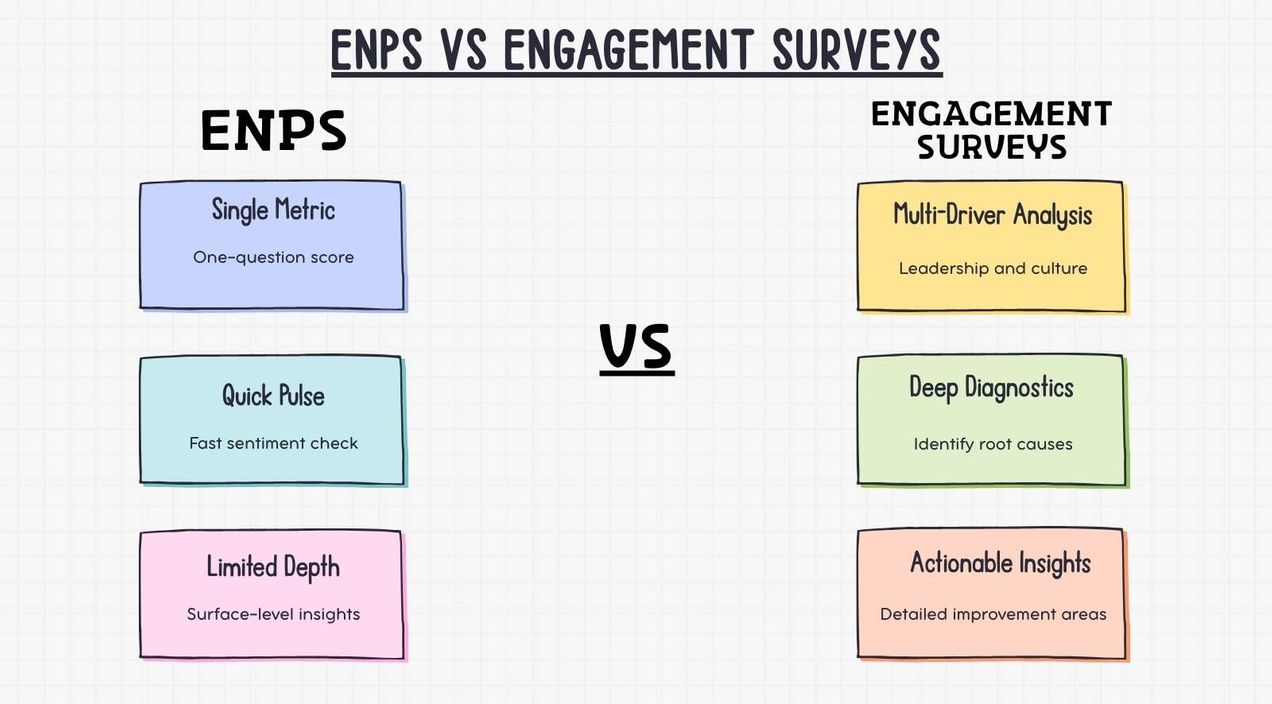
Many organizations treat eNPS as a simple one-question survey and focus mostly on the score. However, eNPS question wording plays a critical role in how accurate and useful that score becomes. If the phrasing is unclear, biased, or inconsistent, responses may not reflect genuine sentiment.
This article is not a list of random eNPS questions. Instead, it explains how the wording and phrasing of the eNPS question influence response quality, what strong survey design looks like, and how organizations can structure the question properly to collect clearer, more reliable employee feedback.


- eNPS question wording affects response clarity, reduces bias, and improves the accuracy of employee net promoter score insights.
- The standard eNPS question format uses one core question and a 0–10 scale for consistency.
- Clear, neutral phrasing is essential when learning how to write eNPS question wording effectively.
- Avoid leading language, ambiguity, and complexity to prevent distorted employee feedback and inaccurate eNPS scores.
- Thoughtful follow-up questions reveal why employees respond the way they do, improving insight and engagement decisions.
Why eNPS question wording matters

Clear eNPS question wording directly affects how respondents interpret and answer the question. Small phrasing differences can influence clarity, introduce bias, or change how employees respond. If the wording is unclear or leading, feedback from an eNPS survey may not accurately represent real employee sentiment.
1. Clarity improves response quality
Clear eNPS question wording helps employees feel confident about what the survey is asking. When eNPS survey questions are simple and direct, responses better reflect employee sentiment and improve the reliability of the eNPS score.
2. Poor phrasing can introduce bias
Leading or emotionally loaded wording can influence how employees answer. Instead of capturing genuine employee experience, responses may lean positive or negative, affecting the accuracy of the net promoter score eNPS.
3. Neutral wording builds trust in surveys
Balanced phrasing allows employees to respond honestly across the full scale, from strongly disagree to strong advocacy. This neutrality helps eNPS survey responses reflect authentic opinions rather than pressure from question design.
4. Interpretation affects the final score
When respondents interpret the question differently, the eNPS score may shift even if employee satisfaction has not changed. Consistent wording ensures the survey measures real employee engagement survey sentiment.
5. Clear questions produce actionable insights
Well-structured eNPS survey questions help reveal the primary reason behind responses. When employees feel the question is fair and understandable, feedback becomes more useful for improving employee experience.
6. Employee feedback connects to broader outcomes
Strong employee sentiment often influences customer satisfaction and customer loyalty. Accurate eNPS question wording helps organizations link employee experience insights with wider business outcomes.
The standard eNPS question format
The eNPS question format follows a simple structure: one core question paired with a 0–10 scale. This design makes responses easy to compare across teams and surveys. When the primary eNPS question is clear, employees can provide honest feedback that reflects their employee experience and overall employee sentiment.
The primary eNPS question:
The standard primary eNPS question asks: “On a scale of 0–10, how likely are you to recommend this organization as a place to work?” This format follows the Net Promoter Score model that measures customer satisfaction for a product or service.
The rating scale used in the eNPS question format:
The question uses a 0–10 rating scale where employees select a number that best reflects their positive or negative experience. This structure helps employees remain consistent and easy to analyze across engagement initiatives.
How responses are interpreted:
Scores typically categorize employees into promoters, passives, and disengaged employees. These groups help organizations identify employee sentiment patterns and understand what factors influence employee feedback and work-life balance.
Why the format stays consistent:
Keeping the eNPS question format unchanged across every eNPS survey ensures results remain comparable. This consistency produces valuable insight and helps organizations identify trends in employee experience over time.
How to phrase the eNPS question correctly?
When learning how to write eNPS question wording, using balanced language helps employees share honest opinions about workplace culture and overall employee experience.
- Use neutral tone in the question: The tone of eNPS questions should remain neutral so respondents do not feel guided toward positive or negative answers. Neutral wording helps employees report real experiences about workplace culture, team morale, and company culture without pressure.
- Keep the wording clear and direct: Clear phrasing helps employees understand the employee survey question immediately. When wording is simple, answers reflect genuine opinions about employee experience rather than confusion caused by complicated language or unclear intent.
- Avoid emotionally loaded language: When learning how to write eNPS question wording, avoid phrases that suggest a preferred response. Balanced language encourages honest feedback from both engaged employees and those describing negative experiences, affecting team morale.
- Ensure the question feels safe to answer: Employees are more likely to respond honestly when the question feels fair and respectful. A well-phrased employee survey question helps affected employees describe workplace culture challenges without hesitation.
- Allow responses across a broad perspective: Good eNPS questions allow employees to think about their broader personal network when responding. This perspective mirrors the net promoter system created to measure advocacy and helps reveal authentic sentiment about company culture.
- Use a follow-up to add context: Adding a follow-up question after the main rating helps explain why employees answered the way they did. This additional context reveals patterns affecting team morale and overall workplace culture.
Common wording mistakes in eNPS questions

Small wording mistakes in eNPS questions can change how respondents interpret and answer them. Leading language, ambiguity, or complex phrasing may influence an employee's answer and reduce honesty. Clear, neutral wording helps organizations run a more effective eNPS survey and collect reliable feedback.
- Using leading language: Questions that subtly suggest positive responses can influence how employees answer. When wording encourages agreement, responses may lean toward strongly agree even if employees' happiness levels are mixed, reducing the reliability of feedback.
- Adding unnecessary complexity: Overly long or complicated phrasing makes the question harder to interpret. Instead of focusing on their experience, employees may struggle to understand the question, which weakens the accuracy of employee's answer and reduces survey clarity.
- Mixing multiple ideas in one question: Combining topics like workplace culture, employees' health, and growth opportunities in a single question confuses respondents. Employees may not know which issue to consider while answering, resulting in inconsistent feedback.
(Source: Gallup)
- Creating ambiguous wording: Vague phrases such as “overall satisfaction” without context can produce unclear responses. Employees interpret the question differently, which makes it harder to identify patterns among loyal employees and the most loyal employees.
- Overloading surveys with open-ended questions: While open-ended questions can add depth, too many can reduce response rates. A balanced approach allows employees to share employee testimonials and explain feedback without making the survey exhausting.
- Framing questions that pressure positivity: If wording suggests the organization expects praise, employees may hesitate to provide honest feedback. This prevents employees from feeling valued while also limiting honest insights needed for an effective eNPS survey.
Should you customize the eNPS question?
Organizations often ask whether they should customize the eNPS question or keep the standard format. The decision affects how comparable results remain over time. While small wording adjustments may reflect the workplace environment or employee journey, the core question and scale should usually stay consistent.
- Keep the core question standard: The standard eNPS question asks how likely someone is to recommend the company to a friend or colleague using a scale of 0–10. This structure helps companies determine trends using consistent quantitative data across teams and time periods.
- Adapt wording only for clarity: Small adjustments may help reflect the workplace environment without changing the core meaning. For example, clarifying whether employees should think about recommending the company to a friend or colleague ensures answers remain comparable.
- Avoid altering the rating structure: The scale of 0–10 must remain unchanged to maintain consistency in all the responses. Changing the scale disrupts how organizations interpret results and weakens the reliability of quantitative data.
- Use follow-up questions for deeper context: Instead of rewriting the core question, organizations should add a follow-up prompt requesting a more detailed explanation. This approach helps leaders understand the critical factors influencing employee experience.
- Consider organizational context carefully: Customization may be useful when companies want feedback about specific workplace environment issues, such as employees’ physical safety or growth opportunities. These adjustments should still support comparable results for all your leaders.
- Keep the main question focused on advocacy: The purpose of eNPS is to measure whether employees would recommend the company to a friend. Additional themes, like new and exciting opportunities, should appear in separate questions rather than replacing the core format.
Follow-up question wording best practices

A follow-up question in an eNPS survey helps explain the reason behind the score employees give. While the rating shows sentiment, the explanation reveals what influenced that response. Well-written eNPS follow-up question wording helps organizations understand employee feedback and identify areas for improvement.
- Ask for the reason behind the score: A well-written enps follow-up question should focus on understanding why employees gave a particular rating. Open-text prompts help capture negative opinions, highlight positive drivers, and provide a comprehensive understanding of employee sentiment.
- Keep the wording simple and open: The best follow-up phrasing encourages employees to explain their perspective in their own words. Clear wording allows them to describe experiences related to job descriptions, workplace expectations, and daily work conditions.
- Encourage honest context, not long essays: A good enps follow-up question invites short explanations that reveal the primary drivers of sentiment. Employees often mention factors such as workload, recognition, or leadership behavior that influence how they recommend the organization to their personal network.
- Focus on actionable insights: Responses should help leaders move the organization's business forward. Well-framed follow-up prompts surface practical feedback that supports constantly making improvements across the workplace environment.
- Avoid overly structured follow-up questions: Highly restrictive prompts can limit the quality of insights. Open responses allow employees to discuss topics ranging from team dynamics to how the company website or internal tools affect their day-to-day work.
- Use insights to boost engagement initiatives: When organizations review follow-up responses carefully, they identify patterns affecting team morale and motivation. These insights help leaders boost engagement and strengthen employee experience over time.
How wording impacts response quality
The wording used in a survey question directly affects how respondents interpret and answer it. In an eNPS survey, unclear or biased phrasing can influence participation, honesty, and response patterns. Clear wording in the rating question helps organizations collect reliable feedback that reflects genuine employee sentiment.
- Clarity encourages honest responses: Clear wording helps employees understand the rating question quickly and respond without hesitation. When questions feel straightforward, employees are more willing to share honest opinions about emotional health, personal growth, and everyday experiences affecting their work.
- Neutral phrasing reduces bias: Balanced language prevents questions from guiding respondents toward positive or negative answers. Neutral wording allows employees to respond freely, helping organizations capture authentic feedback that reflects real employee sentiment rather than influenced responses.
- Participation improves when questions feel simple: Employees are more likely to complete surveys when questions are easy to understand. Simple wording reduces confusion, improves participation rates, and increases the reliability of insights collected through the net promoter system.
- Follow-up questions add deeper insight: Adding follow-up questions after the rating question helps employees provide a detailed explanation for their response. These insights reveal patterns affecting workplace culture, emotional health, and overall employee sentiment.
- Clear wording supports continuous improvement: When feedback reflects genuine experiences, organizations gain insights that influence business performance. Accurate responses help leaders identify trends and focus on continuous improvement across employee experience initiatives.
Conclusion
Clear eNPS question wording is essential for collecting reliable employee feedback. When the question is phrased with clarity and neutrality, employees understand what is being asked and respond more honestly. This improves response quality and helps organizations interpret eNPS results more accurately.
Well-structured wording ensures the eNPS score reflects genuine employee sentiment instead of confusion or bias. Clear phrasing also improves participation and makes feedback easier to analyze across surveys.
CultureMonkey helps organizations design better eNPS surveys, collect employee feedback at scale, and turn responses into actionable insights. With real-time dashboards, anonymity controls, and analytics, CultureMonkey enables leaders to understand employee experience clearly and take meaningful actions that strengthen workplace culture, engagement, and continuous improvement.
Book a demo with CultureMonkey.
FAQs
1. What is the standard eNPS question?
The standard employee net promoter score question asks how likely employees are to recommend the organization as a place to work on a 0 to 10 scale. It gives a quick view of whether employees' happiness levels are strong and whether employees feel valued in the workplace.
2. Can you change the wording of eNPS questions?
Yes, you can slightly adjust eNPS wording for clarity, but the core employee net promoter score structure should stay intact. Small changes may fit your workplace context or service offering better, while still keeping survey results consistent and comparable over time.
3. How should eNPS questions be phrased?
eNPS questions should be clear, neutral, and easy to understand. Good wording helps employees answer honestly, including when they want to express negative opinions. This improves the quality of employee net promoter score data and makes the feedback more useful for leaders.
4. What are common mistakes in eNPS wording?
Common mistakes include leading language, vague wording, and combining multiple ideas in one question. These issues can confuse respondents and reduce the accuracy of employee net promoter score feedback, especially when employees feel valued differently across teams or situations.
5. Should eNPS questions be anonymous?
Yes, anonymous eNPS questions usually lead to more honest feedback. Employees are more likely to express negative opinions when they trust the process. This helps organizations understand whether employees' happiness levels are changing and whether employees feel valued across the workplace.
6. What follow-up question should be asked after eNPS?
After the employee's net promoter score question, ask why the employee gave that rating. A simple follow-up helps uncover what shaped the score, whether that relates to leadership, growth, culture, or even how employees see the overall service offering of the organization.
7. Does wording affect eNPS scores?
Yes, wording can directly affect eNPS scores. If the question feels unclear, biased, or overly complex, employees may respond differently than intended. Clear phrasing helps employee net promoter score results reflect real sentiment instead of confusion or hesitation.
8. How many questions should an eNPS survey have?
An eNPS survey usually works best with one rating question and one follow-up. This keeps the survey short while still giving context. It also makes it easier for employees to respond honestly, express negative opinions, and explain whether their happiness levels are improving.






)