


Top 10 Enterprise employee engagement tools for logistics in 2026

You know that moment when Netflix asks, “Are you still watching?”, you were there the whole time, but somewhere along the way, the signal assumed you weren’t.
That quiet disconnect feels familiar to leaders running large logistics organizations. Things seem to be moving, reports look stable, and updates continue to flow as though engaged employees feel valued. Yet between locations, shifts, and regions, clarity slowly slips. Not dramatically, but just enough to matter later.
These are classic employee engagement challenges in logistics industry, and they rarely show up when it is convenient.
To cut through that noise, we put together a list of 10 enterprise employee engagement tools for logistics. This list is grounded in publicly available product details, real-world adoption patterns, and hands-on evaluation of what actually works at scale.
Why does employee engagement matter in logistics?
Logistics runs on movement, timing, and trust between people who rarely work in the same place or at the same time. And when signals break down amongst logistics employees, small issues travel faster than solutions:
- Fewer silent breakdowns: Strong engagement reduces communication gaps in supply chain teams, so issues surface early instead of turning into missed handoffs or safety risks.
- Lower churn on the floor: Engagement plays a direct role in reducing frontline attrition in logistics workforce environments where roles are demanding and turnover is costly.
- More consistent execution: An engaged workforce follows processes more reliably across shifts, locations, and peak seasons without constant supervision.
- Safer day-to-day operations: When people feel heard, they speak up sooner about risks, near-misses, and unclear instructions as an engaged workforce.
- Stronger manager influence: Engagement highlights where frontline managers are enabling teams as engaged employees versus where support is breaking down.
- Faster recovery during change: Engaged employees of logistics teams adapt more smoothly during route changes, volume spikes, or system rollouts.
Below is a quick comparison table for easy side-by-side evaluation:
Top 10 enterprise employee engagement tools for logistics
1. CultureMonkey
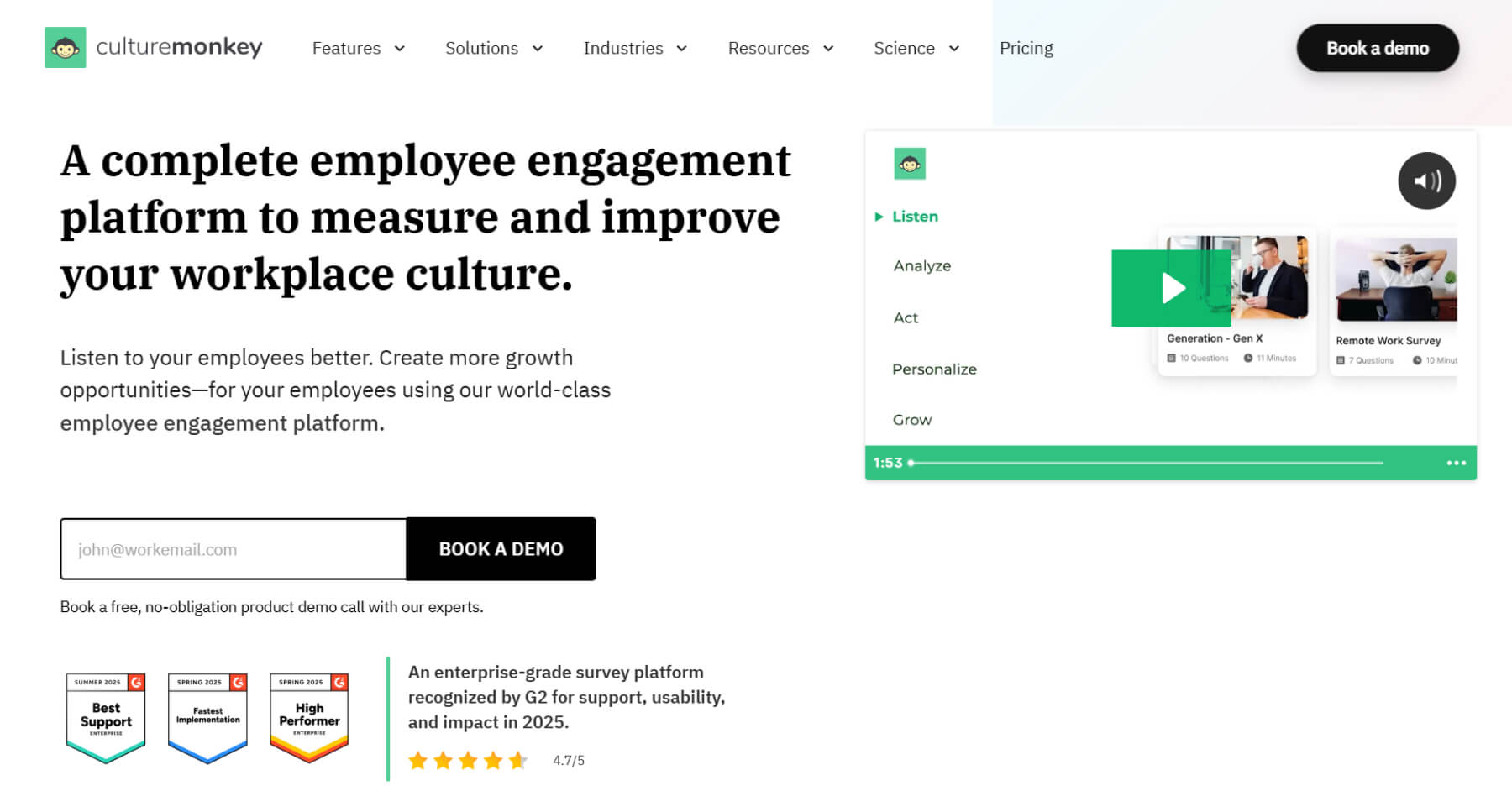





CultureMonkey is an enterprise employee engagement platform that is well-suited for logistics environments where leaders need real-time visibility across shifts, locations, and manager layers, while still maintaining trust, anonymity, and clear action ownership.

Key Takeaways
- Pricing: Contact sales
- G2 Rating: 4.5/5
- Capterra Rating: N/A
- Pros: Intuitive survey experience for frontline and HR teams, strong reporting depth, and responsive customer support. (Source: G2)
- Cons: No major limitations may have been highlighted by reviewers, with overall feedback remaining consistently positive. (Source: G2)
Take a quick interactive tour inside CultureMonkey:
2. Xoxoday Empuls
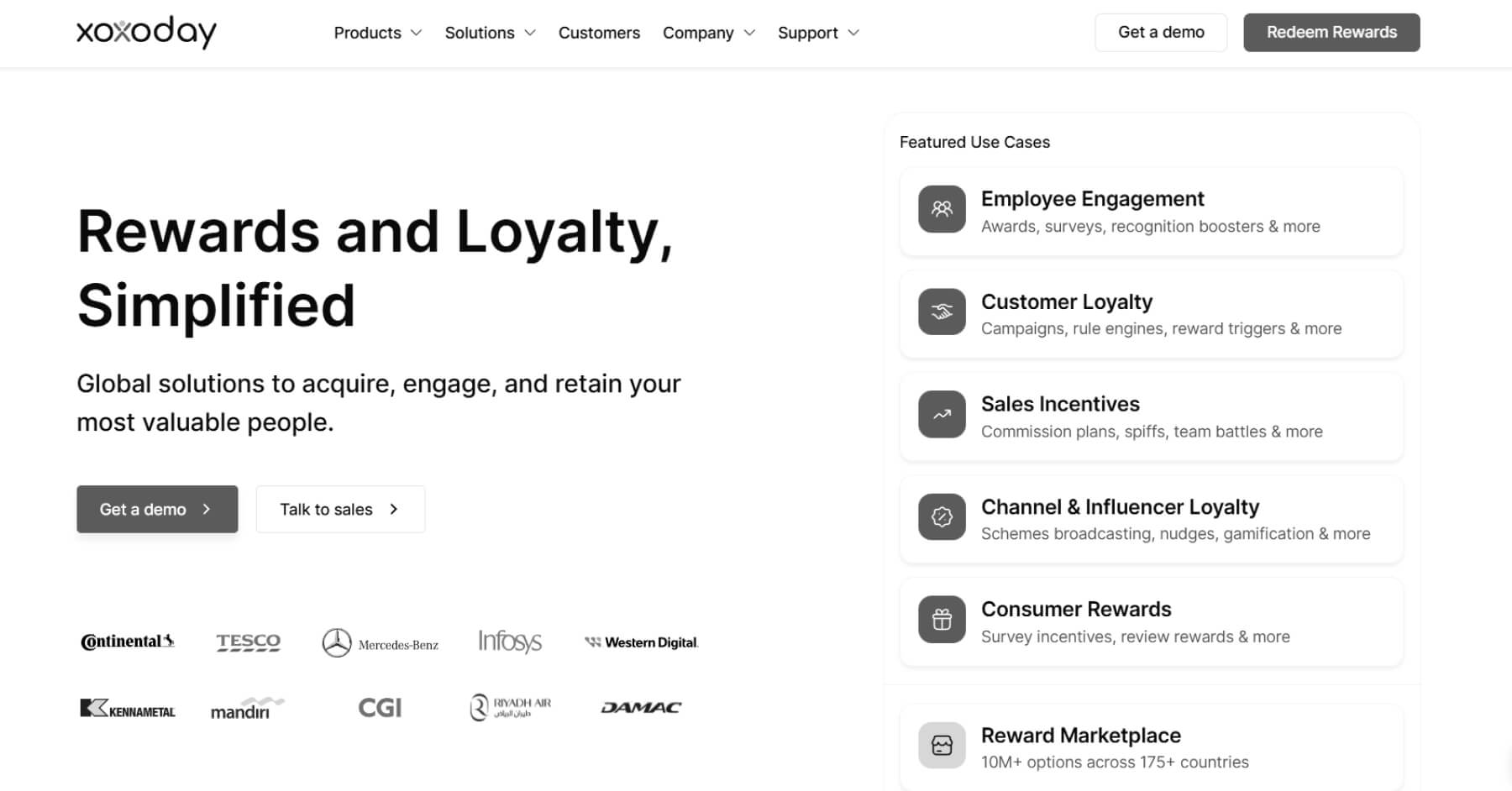
Xoxoday Empuls is an engagement and rewards platform used by logistics organizations to provide incentives and lightweight feedback across distributed teams.
Key Takeaways
- Pricing: Contact sales
- G2 Rating: 4.6/5
- Capterra Rating: 4.4/5
- Pros: Offers a wide range of accessible multi-brand gift cards that support incentive-based employee motivation programs. (Source: G2)
- Cons: The platform may have bugs at times, and customer support response might feel slower during critical periods. (Source: G2)

3. Workday Peakon
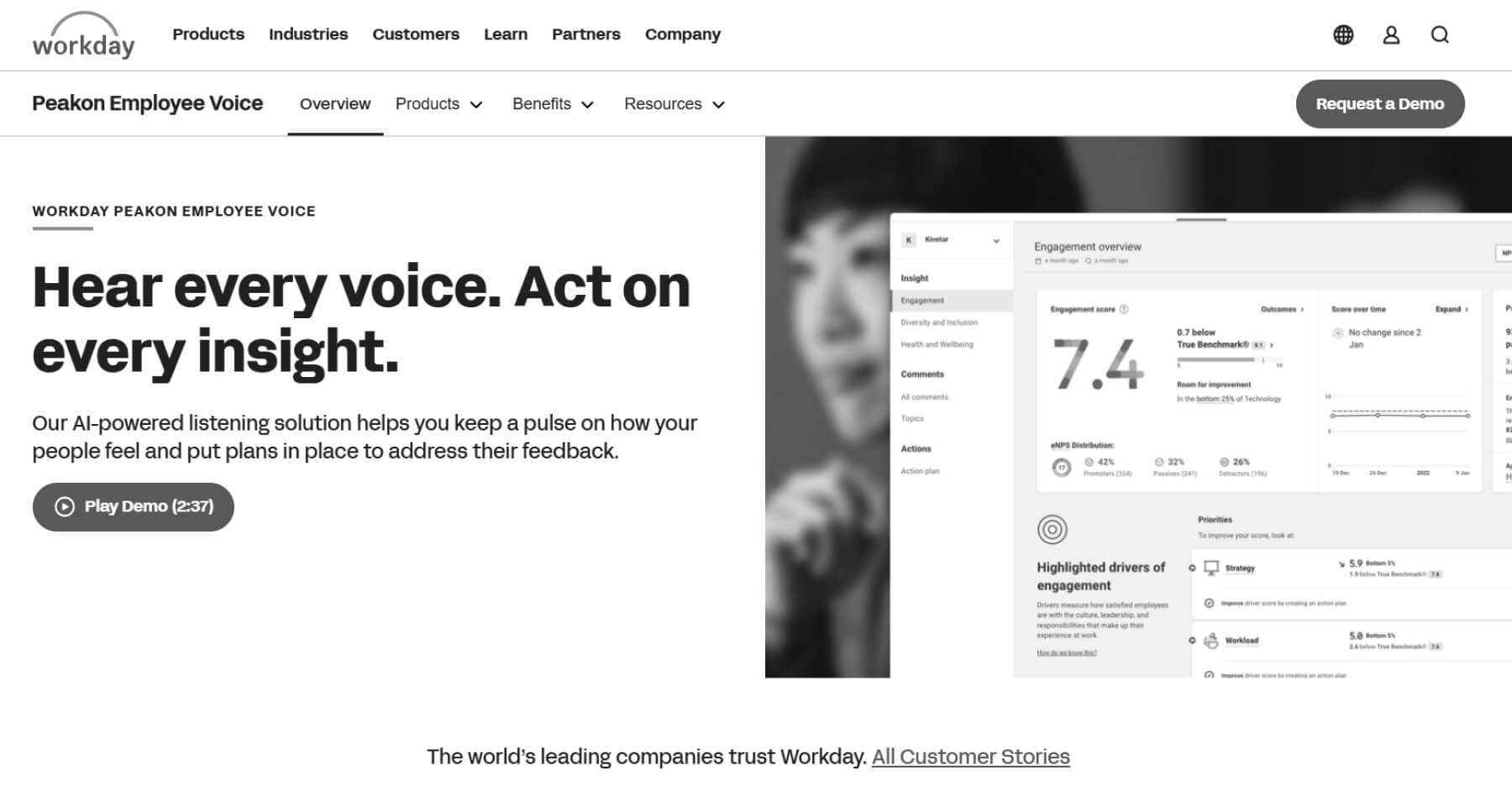
Workday Peakon is an employee voice platform that helps to capture continuous feedback, analyze engaged employees and trends, and support engagement programs across distributed, shift-based workforces.
Key Takeaways
- Pricing: Contact sales
- G2 Rating: 4.6/5
- Capterra Rating: 4.7/5
- Pros: Enables anonymous, real-time feedback with analytics and enterprise-scale listening capabilities. (Source: G2)
- Cons: Survey reminders may feel intrusive if not carefully timed, particularly in high-frequency listening programs. (Source: G2)
4. Connecteam
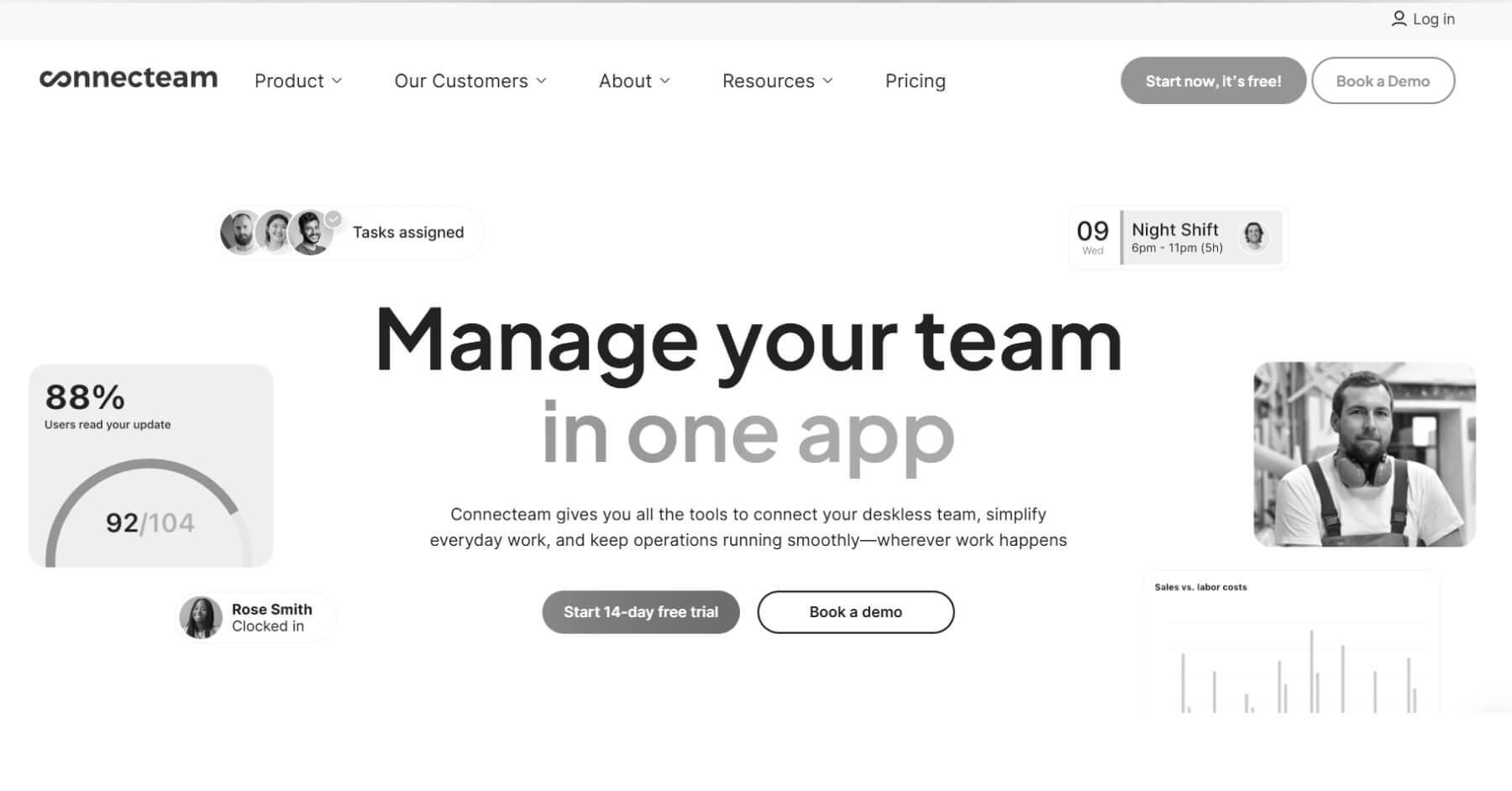
Connecteam is a mobile workforce management platform used in capturing employee engagement in logistics to coordinate frontline communication, basic engagement, and operational tasks through a single app.
Key Takeaways
- Pricing: $29/month
- G2 Rating: 4.6/5
- Capterra Rating: 4.6/5
- Pros: Flexible and efficient for smaller teams, with broad functionality supporting daily frontline coordination needs. (Source: G2)
- Cons: The wide range of features may feel overwhelming, and some teams might prefer preset configurations for logistics use cases. (Source: G2)
5. Terryberry
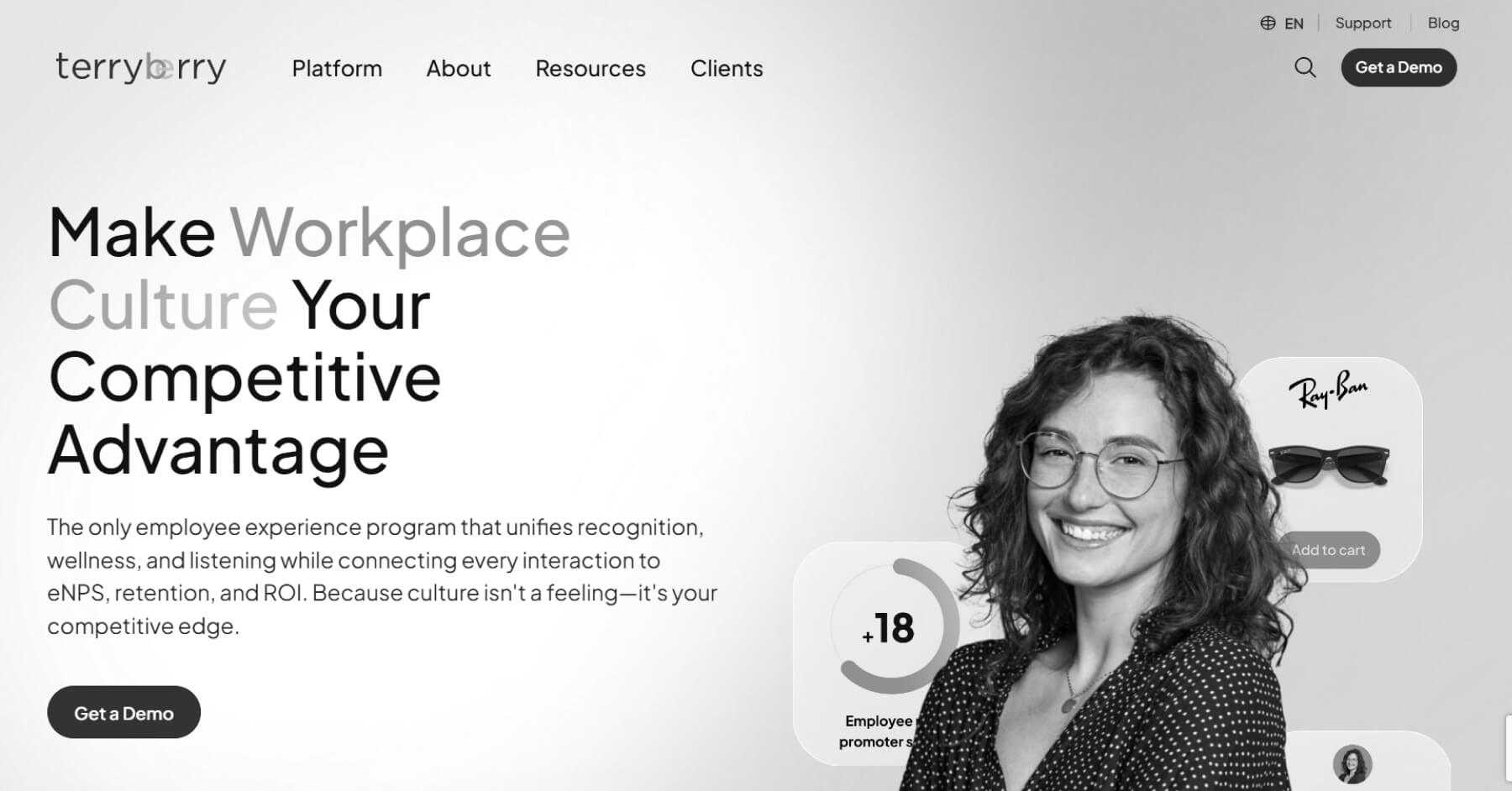
Terryberry is an employee recognition platform used to understand employee engagement in logistics to gather frontline feedback, and maintain employee morale across distributed teams.
Key Takeaways
- Pricing: Contact sales
- G2 Rating: 4.6/5
- Capterra Rating: 4.3/5
- Pros: Low administrative effort with a simple setup, making recognition programs easier to manage at scale. (Source: G2)
- Cons: Platform stability issues and limited flexibility around reward point top-ups may affect user experience. (Source: G2)
(Source: Cleo)
6. Leapsome
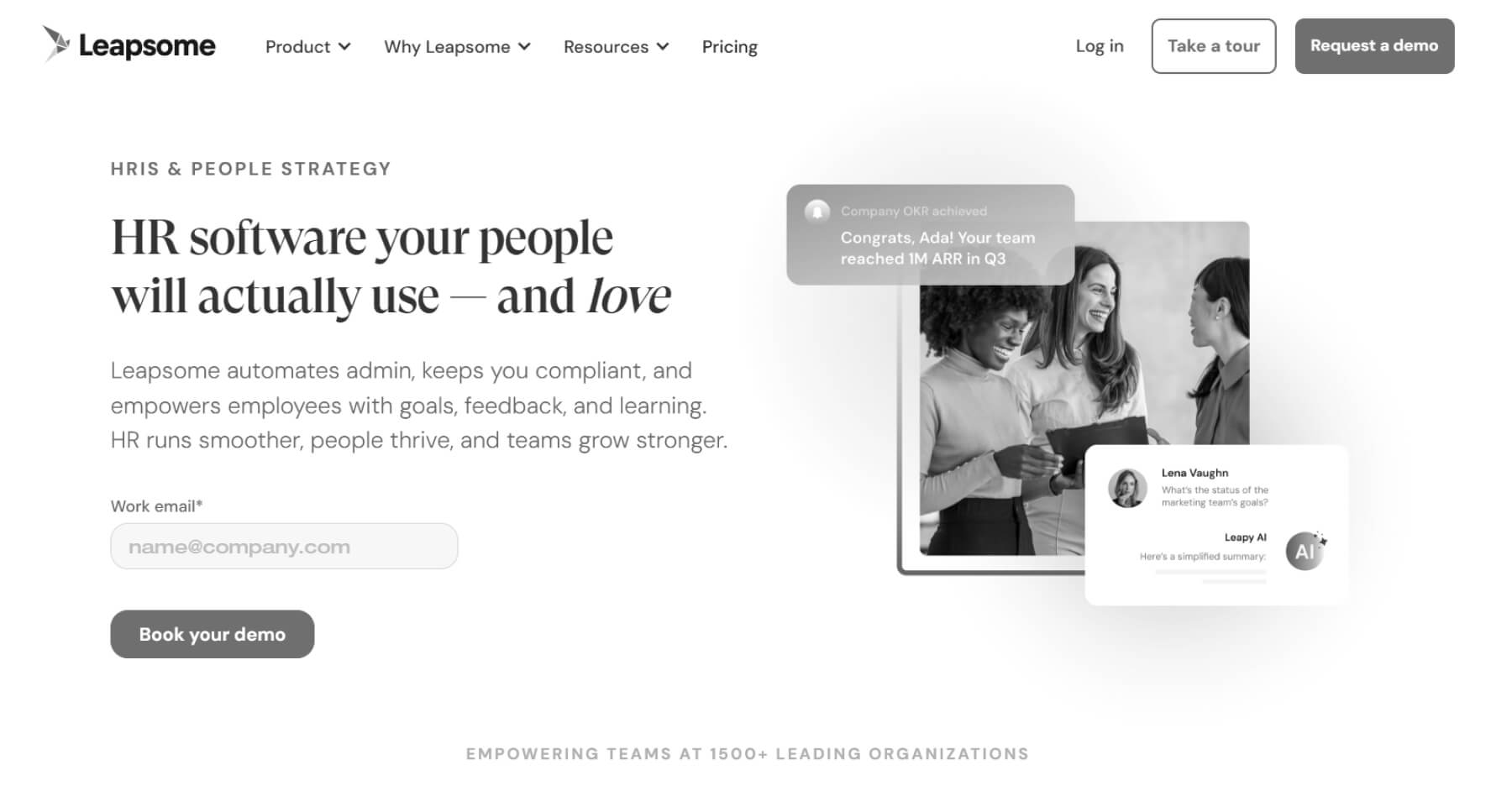
Leapsome is an employee engagement and performance platform used to monitor sentiment, suggest guided actions, and connect engagement insights to operational outcomes.
Key Takeaways
- Pricing: Contact sales
- G2 Rating: 4.8/5
- Capterra Rating: 4.6/5
- Pros: Clean interface and fast survey experience, making it easy for teams to collect engagement feedback regularly. (Source: G2)
- Cons: The platform’s visual design and form experience may feel basic, and some definitions might require extra navigation. (Source: G2)
.webp)
Engage the Frontline Faster, with Shift-Ready Surveys
- Multi-lingual Surveys
- White Glove Onboarding
- People Science Backed Reports
- Enterprise Grade Security
7. Perceptyx
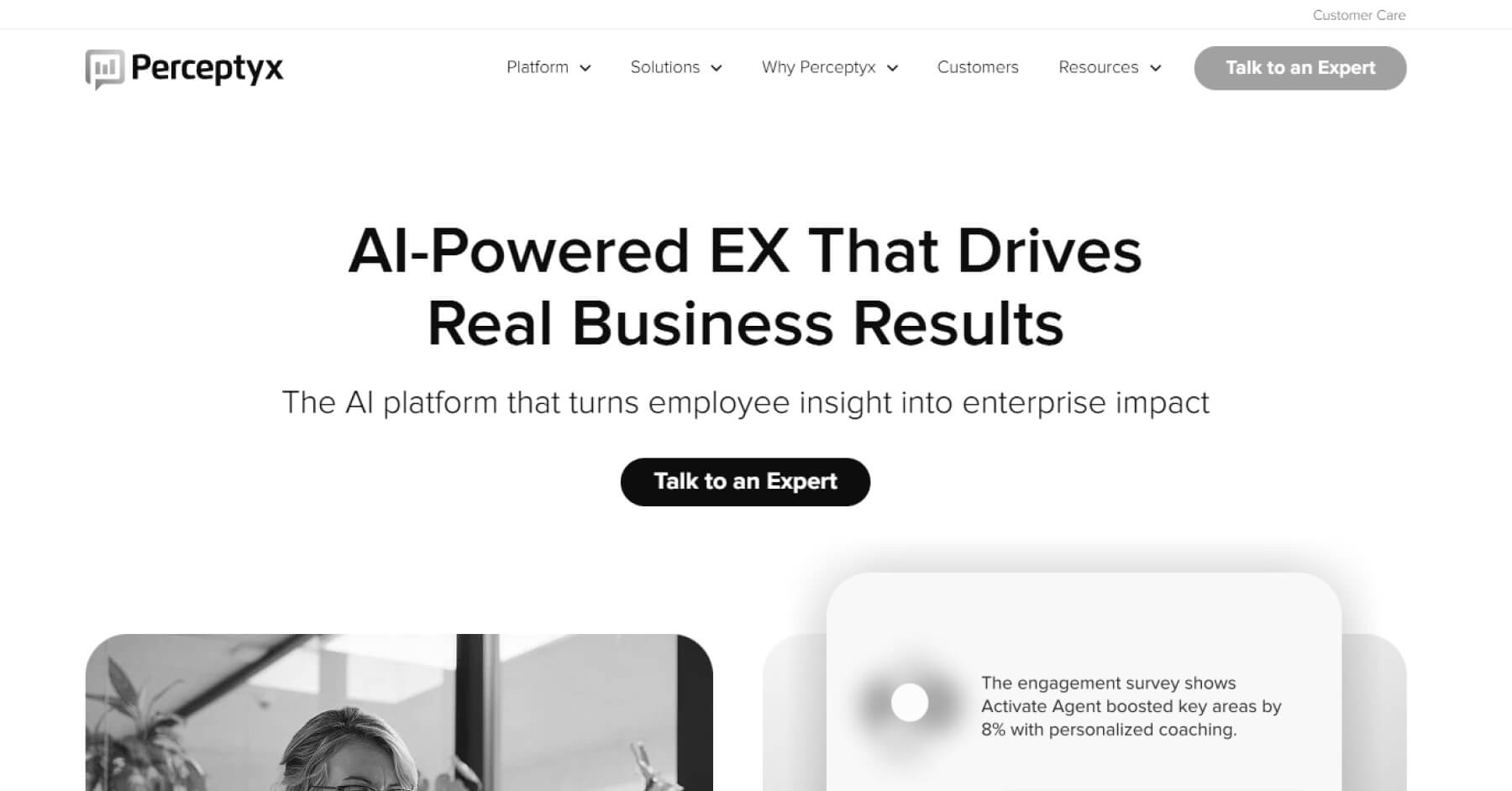
Perceptyx is an employee listening platform used to capture large-scale feedback, analyze workforce signals, and guide employee engagement actions across distributed operations.
Key Takeaways
- Pricing: Contact sales
- G2 Rating: 4.5/5
- Capterra Rating: 3.0/5
- Pros: Enables access to real-time employee feedback that helps organizations evaluate workforce sentiment. (Source: G2)
- Cons: Feedback quality may vary, and some responses might feel limited or skewed depending on participation patterns. (Source: G2)
8. Beekeeper
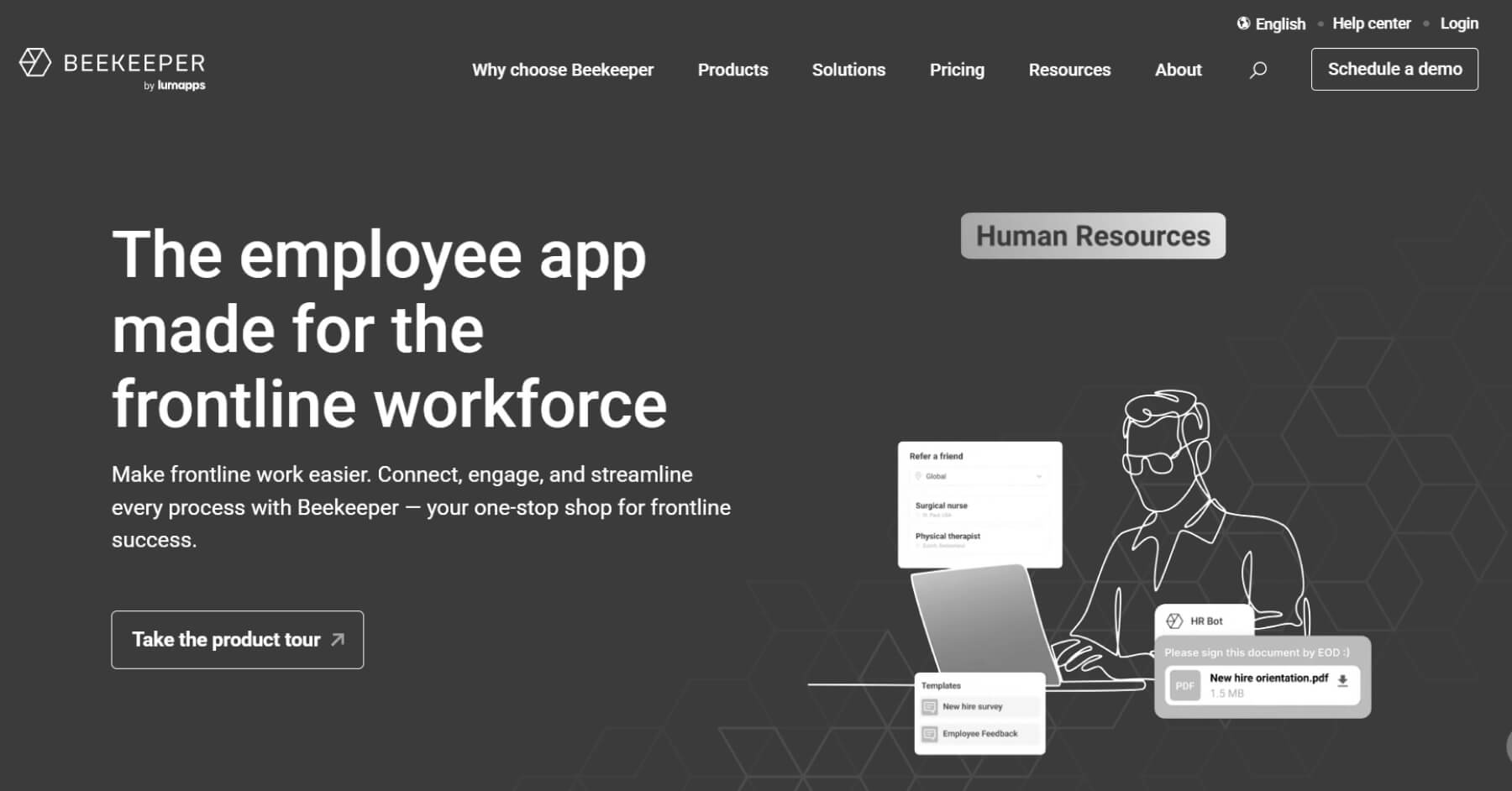
Beekeeper is a frontline communication platform used to connect distributed workers, share operational updates, and maintain alignment across shifts and locations by logistics companies.
Key Takeaways
- Pricing: $4.00/month
- G2 Rating: 4.7/5
- Capterra Rating: 4.6/5
- Pros: Clean, intuitive interface that supports fast adoption and effective frontline communication. (Source: G2)
- Cons: Pricing may feel high for large deployments, and feature updates might take longer to roll out. (Source: G2)
9. Staffbase
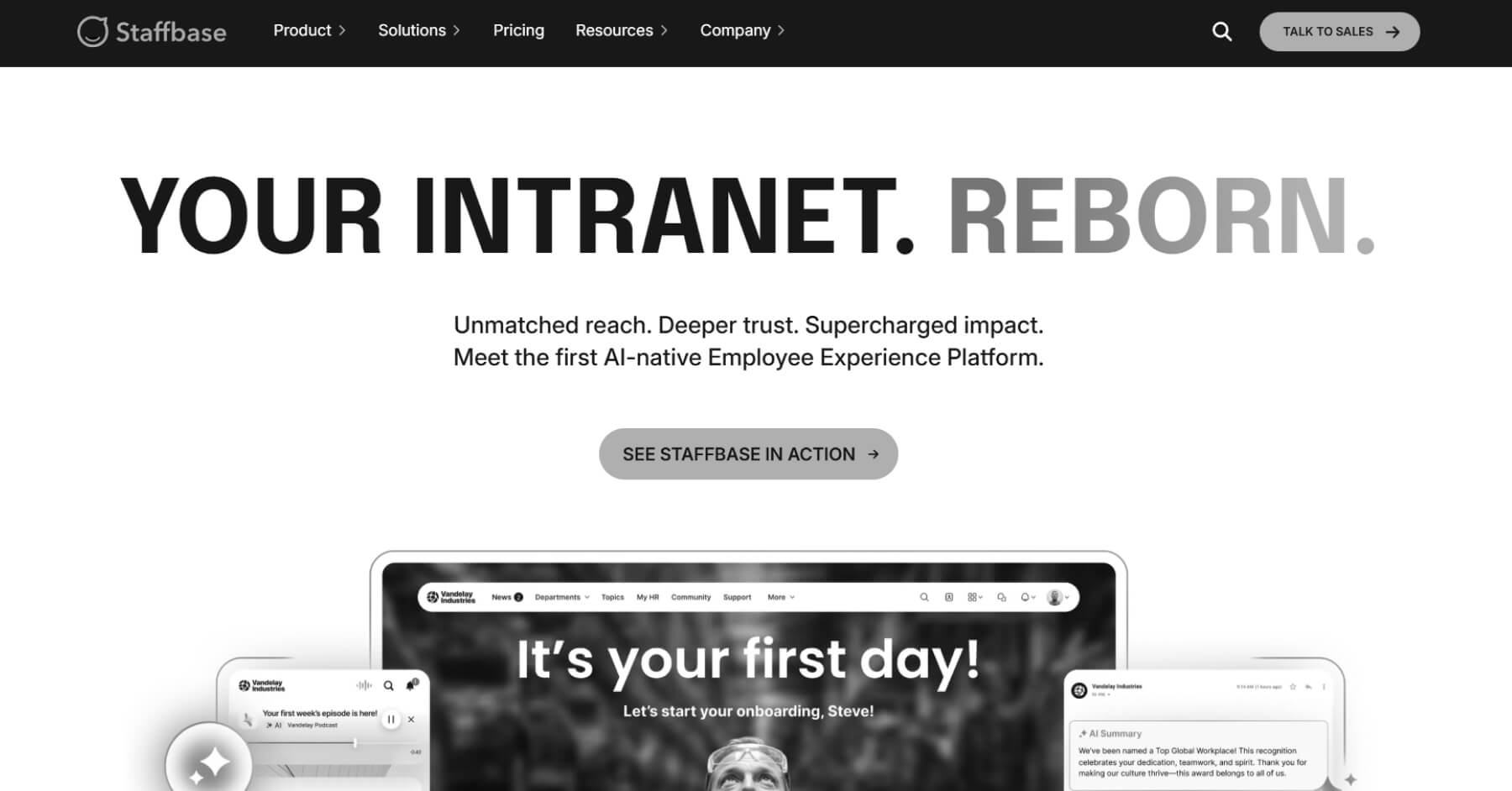
Staffbase is an internal communications platform that delivers consistent updates, safety information, and employee engagement messages across frontline, desk-based, and distributed teams.
Key Takeaways
- Pricing: Contact sales
- G2 Rating: 4.6/5
- Capterra Rating: 4.7/5
- Pros: Easy to use and adaptable to change, supporting communication across distributed logistics teams. (Source: G2)
- Cons: Admin setup may feel complex at scale, with limited customization and occasional slow performance when handling heavy content. (Source: G2)
10. Workvivo
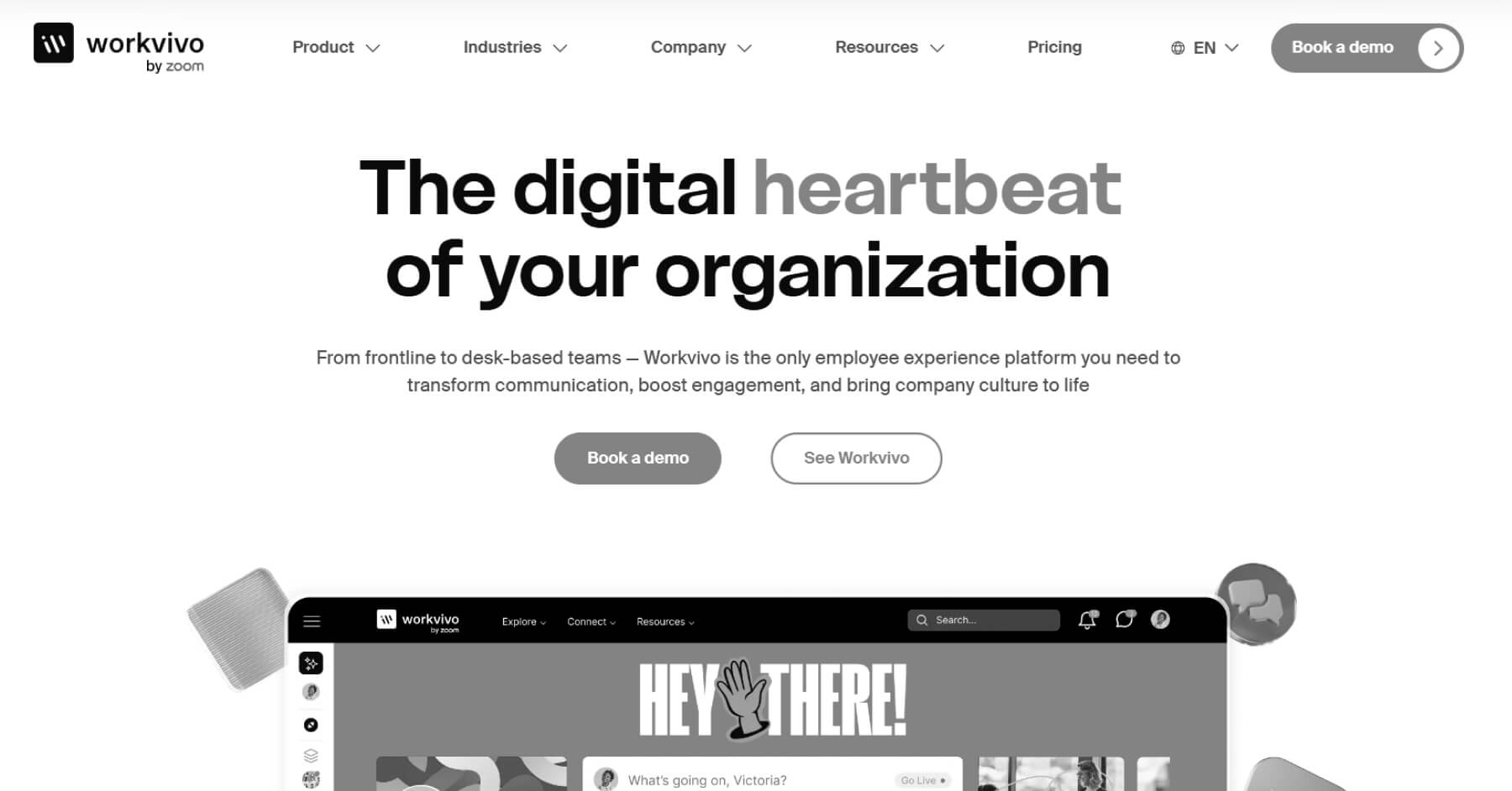
Workvivo is an employee experience platform used to connect frontline and office teams through social communication, recognition, and real-time information sharing.
Key requirements enterprise logistics teams look for in engagement tools today
Logistics leaders are looking for employee engagement softwares that hold up under scale, shift complexity, and constant operational change. The right tool supports a long-term workforce engagement strategy for logistics companies, not just one-off surveys.
- Multi-channel, deskless access: The employee engagement softwares must reach frontline teams through mobile, SMS, QR codes, kiosks, and shared devices to support improving morale among warehouse workers across all shifts.
- Clear, two-way communication: Employee engagement platforms should help in building a feedback culture in logistics organizations helping reduce communication gaps in supply chain teams before issues snowball.
- Visible recognition tied to real work: Recognition should highlight safety, reliability, and employee efforts, reinforcing logistics workforce motivation techniques that resonate on the floor.
- Support for manager effectiveness: Employee engagement tools need to help frontline leaders listen better, act faster, and improve manager effectiveness in warehouse operations by implementing employee engagement strategies.
- Employee well-being and fatigue awareness: Employee engagement software should surface employee well being and early signs of burnout in physically demanding roles and support sustainable work patterns.
- Location- and shift-level insights: Leaders need tools for measuring engagement in shift-based logistics operations to track engagement differences and across sites and time slots to manage uneven experiences at scale.
- Action tracking and follow-through: Feedback loses credibility when it disappears, so tools must show what actions were taken by the logistics companies and what changed.
- Consistency during change: Platforms should help teams stay aligned during volume spikes, labor shortages, and process shifts.
How to evaluate employee engagement tools for large logistics workforces?
Evaluating employee engagement tools in logistics is about how well they perform under pressure. Large, dispersed teams need employee experience strategy for logistics companies and tools that help leaders build a feedback culture in logistics organizations.
- Ability to measure what actually matters: The tools should track engagement KPIs for logistics and supply chain teams, such as safety sentiment, workload balance, employee retention risk, and communication clarity.
- Coverage across deskless and mobile roles: Evaluation should confirm the tool works for drivers, warehouse staff, and shift-based teams without relying on email or desktops.
- Frequency without fatigue: Strong platforms support short, regular listening that track employee sentiment sentiment changes during peak seasons or operational disruption.
- Clear linkage between feedback and action: Tools must show how insights translate into decisions, reinforcing trust and long-term participation.
- Support for manager follow-through: Look for features that guide managers on next steps, not just dashboards, to strengthen day-to-day leadership impact and to make employees feel valued.
- Comparability across locations and time: Tools should make it easy to benchmark engagement and suggest employee engagement strategies across sites, shifts, and periods without manual effort.
- Motivation beyond surveys: Platforms that connect listening with recognition and logistics workforce motivation techniques help improve employee engagement and not just measure it.
- Enterprise readiness: Security, role-based access, and scalability are non-negotiable for large networks in the logistics industry.
What are the common challenges logistics companies face when implementing engagement tools?
Rolling out engagement tools in logistics can be pretty complex considering the employee engagement challenges faced by the warehouse and delivery staff. Dispersed teams, legacy habits, and operational pressure can quickly dilute adoption in the logistics sector if the rollout is not grounded in frontline reality.
- Low frontline adoption: Tools struggle when they rely on email or long surveys, excluding drivers, warehouse workers, and shift-based roles from day one.
- Signal overload without clarity: Too much data without prioritization leads to dashboards that look busy but do not drive decisions on the ground.
- Trust gaps around anonymity: Employees hesitate to share honest feedback if privacy controls are unclear or inconsistently applied.
- Weak manager enablement: Engagement platforms fail when frontline leaders are not trained or supported, directly impacting manager effectiveness in warehouse operations.
- Disconnected feedback loops: When employees do not see visible action after sharing input, participation and operational efficiency drops fast.
- Change fatigue: Frequent system changes, peak-season pressure, and labor shortages make it harder to sustain engagement initiatives in places where logistics teams work and improve employee well being.
- Inconsistent rollout across sites: Different warehouses or regions adopt tools unevenly, creating fragmented experiences and unreliable insights.
- Digital readiness gaps: Outdated systems, limited device access, and low tech familiarity slow adoption and communication gaps in high-pressure environments.
How does CultureMonkey fit enterprise employee engagement needs in logistics?
Logistics organizations need engagement systems that work across shifts, locations, and frontline roles. CultureMonkey is designed to surface real signals, guide action, and sustain trust at enterprise scale.
- Frontline-friendly pulse surveys: Captures quick, mobile feedback from warehouse, depot, and transport teams without email dependency, improving participation across shift-based operations in the logistics industry.
- Visual engagement segmentation by warehouse and shift: Allows leaders to visually compare engagement across locations, roles, and shifts to identify uneven experiences early and improving operational efficiency.
- Anonymous feedback at enterprise scale: Enables secure, anonymous reporting of safety, workload, and leadership concerns across frontline-heavy logistics environments.
- AI-powered theme detection for logistics signals: Applies AI analysis to surface recurring issues like overtime fatigue, unsafe conditions, and communication gaps across sites.
- Manager-level engagement insights with action guidance: Translates survey results into AI-guided next steps, supporting improvements in manager effectiveness in warehouse operations.
- Action tracking boards for engagement follow-through: Uses visual boards to track ownership and progress of actions, ensuring frontline feedback leads to visible, sustained change.
Conclusion
Choosing the right enterprise employee engagement tools for logistics is less about chasing features and more about solving real, on-the-ground problems. Teams of the logistics industry operate across shifts, locations, and roles where small disconnects can quickly turn into bigger risks.
What matters is how well a tool fits your operating reality, your workforce mix, and your ability to follow through on employee engagement feedback. Engagement only delivers value when it leads to better decisions and everyday improvements.
CultureMonkey helps logistics organizations capture honest frontline feedback through mobile-first, anonymous surveys, analyze sentiment in real time, and break insights down by shift, location, and manager. With AI-powered themes, manager-level dashboards, and structured action planning, CultureMonkey ensures engagement data turns into visible improvements on the floor.
Book a demo with CultureMonkey.
FAQs
1. Are frontline engagement tools enough for enterprise logistics organizations?
Frontline employee engagement tools help reach warehouse and driver teams, but they rarely provide actionable insights on their own for enterprise logistics organizations. Large operations need analytics, manager-level visibility, and structured action planning to ensure consistency, accountability, and measurable outcomes. Without these layers, enhancing engagement efforts stay tactical and fail to scale across regions, shifts, and leadership levels.
2. How do logistics organizations ensure high adoption of engagement tools?
High adoption comes from meeting workers where they are. Organizations see better participation and employee engagement in logistics when tools work on mobile devices, shared kiosks, QR codes, and simple links. Employees recognize and prefer short surveys, clear communication on anonymity, and visible follow-through on feedback, while also building employee engagement, and encouraging continued use across shifts and locations.
3. What features matter most for engaging warehouse and driver workforces?
Frontline workers in warehouse teams benefit from shift-based surveys, safety feedback, and recognizing employees tied to daily work. Driver workforces need mobile-first access, minimal time commitment, and offline-friendly options. For both roles, anonymity, multi-language support, and clear communication channels matter more than complex dashboards or long survey formats in order to improve employee engagement in logistics.
4. How long does it take to see results after implementing engagement tools in logistics?
Most logistics organizations start seeing early signals of employee engagement in logistics and in company culture within the first 30 to 60 days, such as higher participation being a critical factor. Measurable outcomes like improved morale, lower attrition, or better manager effectiveness usually follow within one to two engagement cycles, provided feedback is acted on consistently to enhance engagement.
5. How do enterprise logistics teams measure ROI from engagement tools?
ROI of employee engagement in logistics is measured by linking employee engagement data to operational outcomes. Logistics teams track changes in attrition, absenteeism, safety incidents, and productivity consistency across sites. Improvements in manager effectiveness, faster issue resolution, and higher survey participation also indicate value, especially when engagement insights lead to targeted actions at the warehouse or route level.