



What is continuous anonymous employee feedback?

Organizations today cannot rely on occasional reviews to understand what their workforce truly thinks. Leaders need a steady stream of insights to identify concerns, improve experiences, and make informed decisions. This is why many organizations are adopting continuous anonymous employee feedback as a modern listening approach.
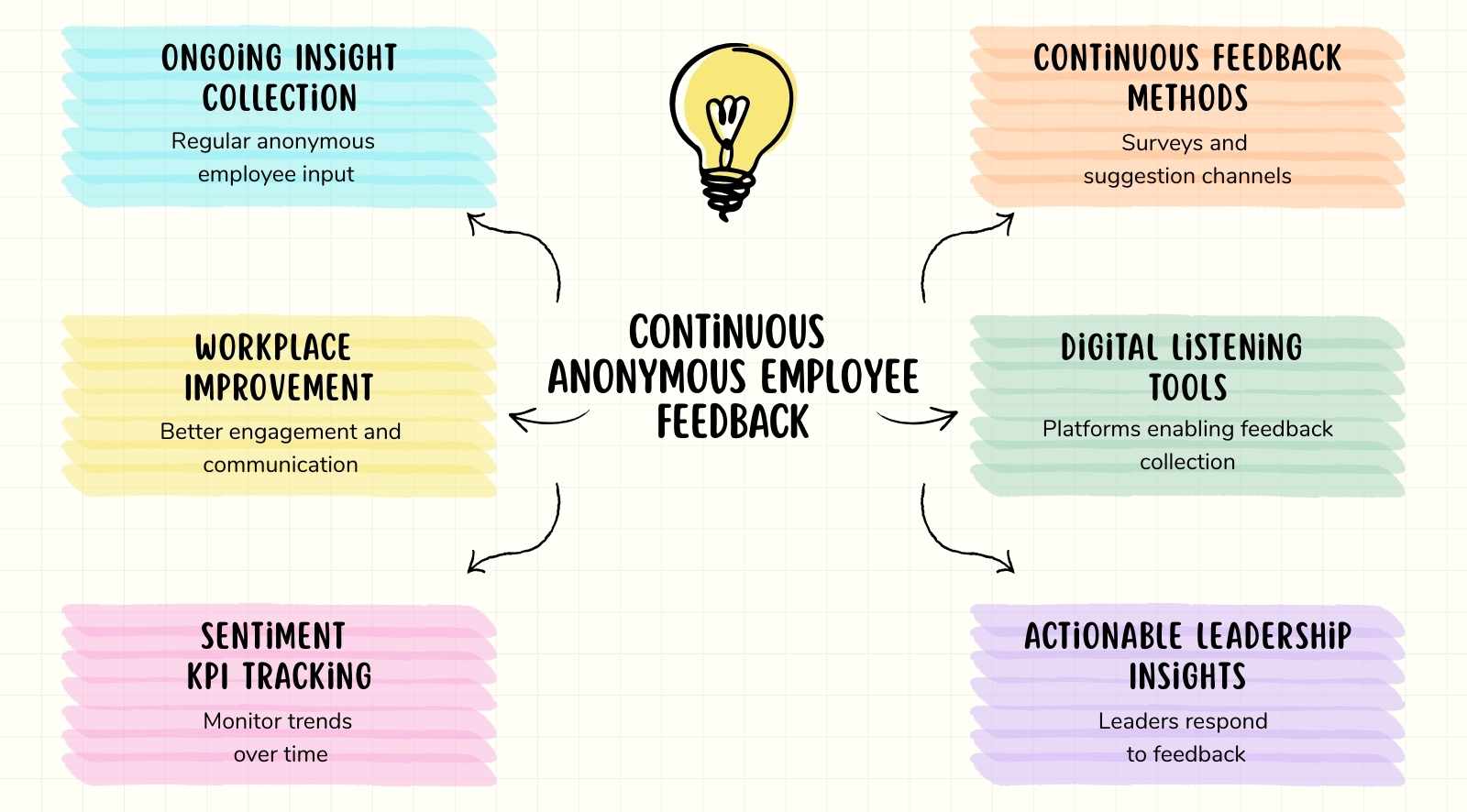
Continuous anonymous employee feedback allows organizations to collect honest insights regularly without exposing employee identities. Instead of waiting for yearly evaluations, employees can share suggestions, concerns, and ideas at any time. This ongoing feedback flow helps leadership understand sentiment, respond quickly to emerging issues, and strengthen workplace culture through data-driven decisions.


- Continuous anonymous employee feedback is an ongoing system that gathers honest employee insights without revealing identities.
- Organizations use continuous feedback mechanisms to improve engagement, performance, communication, and overall workplace decision-making.
- Tracking KPIs from anonymous feedback helps measure sentiment trends, engagement levels, and organizational improvement over time.
- Continuous feedback methods include anonymous surveys, suggestion channels, feedback platforms, exit surveys, and digital listening tools.
- Anonymous employee feedback tools enable continuous listening by collecting real-time insights and helping leaders act on feedback.
What is the continuous anonymous employee feedback model?
The continuous anonymous employee feedback model is a structured approach for collecting honest feedback from employees regularly while protecting their identities. Instead of relying on occasional reviews, organizations survey employees frequently to understand sentiment, concerns, and ideas. This approach helps leaders monitor company culture and respond to issues faster.
Organizations gather feedback using pulse surveys and digital channels designed for anonymous responses. An anonymous feedback system removes personally identifiable information and allows employees to submit feedback in an anonymous mode. Using the right anonymous feedback tool ensures survey responses remain confidential while increasing participation.
Once feedback is collected, organizations conduct employee feedback analysis to identify trends and recurring concerns. Many systems apply a minimum response threshold before displaying results to protect anonymity. This process turns continuous employee feedback into a reliable insight source that helps leaders strengthen company culture and make informed decisions.
Benefits of having a continuous employee feedback mechanism

Having a continuous employee feedback mechanism offers numerous benefits to organizations, employees, and overall performance. This strategic approach ensures that feedback is an ongoing process rather than a one-time event, facilitating improved communication, engagement, and growth within the workplace.
Let's delve into the research-backed advantages of implementing a continuous employee feedback mechanism:
Enhanced employee engagement
Continuous feedback fosters a culture of open communication and employee involvement. Research indicates that organizations with a culture of feedback have 14.9% higher engagement levels compared to those without such practices.
Regular feedback empowers employees by giving them a voice and making them feel valued, leading to increased motivation and commitment.
Improved performance and productivity
Timely and constructive feedback helps employees understand their strengths, and areas for improvement, and align their goals with organizational objectives. According to a study, 78% of employees stated that regular feedback improved their performance.
By addressing issues promptly and providing guidance, continuous feedback enables employees to enhance their skills, resulting in improved productivity.
Targeted development opportunities
Continuous feedback allows managers to provide specific and actionable guidance for employee development. Rather than relying on generalized feedback during annual reviews, continuous feedback allows for personalized and targeted development plans. This approach supports employees in acquiring new skills, closing performance gaps, and advancing their careers effectively.
Increased retention and satisfaction
When employees feel heard and supported through regular feedback, they are more likely to be satisfied and committed to their organization. Organizations with effective feedback processes tend to have a lower turnover rate.
By addressing concerns, recognizing achievements, and providing growth opportunities, continuous feedback contributes to higher employee retention rates and overall job satisfaction.
Agile decision-making and adaptability
Continuous feedback provides organizations with real-time insights into employee sentiments, challenges, and ideas. By collecting feedback on an ongoing basis, organizations can swiftly identify emerging trends, address issues promptly, and make data-driven decisions.
This agility enables organizations to adapt to changing circumstances, improve processes, and stay ahead in a competitive market.
Stronger manager-employee relationships
Regular feedback promotes stronger relationships between managers and employees. When managers consistently provide feedback, it establishes trust, encourages open dialogue, and creates a supportive working environment that encourages employees. This positive relationship fosters better collaboration, communication, and teamwork.
Continuous learning and improvement
The continuous feedback mechanism promotes a learning culture within organizations. It encourages a growth mindset, where employees and managers alike are committed to continuous improvement. By facilitating ongoing learning and development, organizations can enhance their overall performance and adapt to evolving business demands.
A continuous employee feedback mechanism brings numerous benefits to organizations. From increased employee engagement and performance to improved retention rates and agile decision-making, the advantages are well-documented.
By implementing a continuous feedback culture, organizations can foster a supportive work environment, nurture talent, and drive continuous improvement throughout the organization.
Continuous anonymous employee feedback KPI\

Continuous anonymous employee feedback is a valuable Key Performance Indicator (KPI) that can provide organizations with valuable insights into employee satisfaction, engagement, and overall organizational performance.
This KPI involves the systematic collection of feedback from employees on an ongoing basis, ensuring anonymity to encourage honest and open responses.
Here are some key points to consider when implementing continuous anonymous employee feedback as a KPI.
Anonymity for honest responses
Anonymity is a critical aspect of continuous employee feedback. It enables employees to express their opinions without fear of reprisal or judgment, thus encouraging honest and constructive feedback.
Anonymity can be ensured by using digital platforms, third-party survey tools, or even physical suggestion boxes. By guaranteeing anonymity, organizations can overcome the barriers that hinder employees from sharing their genuine thoughts and concerns.
Diverse feedback channels
To obtain a holistic understanding of employee experiences, organizations should establish diverse feedback channels. This can include anonymous surveys, suggestion boxes, focus groups, or even dedicated communication platforms.
By offering multiple avenues for feedback, organizations can cater to different preferences and ensure that employees feel comfortable sharing their thoughts through their preferred medium.
Timely data analysis
Collecting feedback is just the first step; organizations must also ensure efficient data analysis to derive meaningful insights. Advanced analytics tools and techniques can help process large volumes of data, identify trends, and extract actionable recommendations.
It is essential to establish a regular cadence for analyzing and reviewing the feedback to ensure that issues are promptly addressed and improvements are made in a timely manner.
Integration with performance management
To maximize the impact of continuous anonymous employee feedback, organizations should integrate it with their performance management systems.
By linking anonymous employee feedback to performance reviews, organizations can align individual goals with organizational objectives, identify skill gaps, and provide targeted development opportunities. This integration fosters a culture of continuous learning and growth while reinforcing the value of employee feedback.
Actionable insights and accountability
The purpose of continuous feedback is to drive positive change within the organization. It is crucial to communicate the findings of the feedback process to employees and stakeholders, outlining the actions taken in response to the feedback received.
This transparency demonstrates the organization's commitment to improvement and holds leaders accountable for addressing concerns and implementing necessary changes.
Monitoring employee engagement and satisfaction
Continuous anonymous employee feedback provides valuable data for measuring employee engagement and satisfaction. By using negative feedback and tracking key metrics such as satisfaction scores, sentiment analysis, and engagement levels over time, organizations can identify trends, benchmark performance, and make informed decisions to enhance the overall employee experience.
By implementing this KPI effectively, organizations can foster a culture of open communication, address issues proactively, and drive continuous improvement in employee satisfaction, engagement, and overall organizational performance.
Continuous anonymous employee feedback examples
Continuous anonymous employee feedback is an important aspect of fostering a culture of open communication and continuous improvement within organizations. It provides employees with a platform to express their opinions, concerns, and suggestions anonymously, enabling organizations to gather valuable insights.
Here are some examples of continuous anonymous employee feedback methods that organizations can implement:
Anonymous online surveys
Online surveys are a common method for collecting anonymous employee feedback. Organizations can use various survey tools to create questionnaires that cover different aspects of the employee experience, such as job satisfaction, work environment, communication, and professional development.
Anonymity can be ensured by not requiring employees to provide identifying information or by using third-party survey platforms that prioritize data confidentiality.
Suggestion boxes or digital feedback channels
Implementing physical suggestion boxes or digital feedback channels provides employees with an anonymous avenue to share their ideas, concerns, or suggestions. Suggestion boxes can be placed in common areas, while digital channels can be set up through intranet portals or dedicated feedback software.
These channels allow employees to provide feedback on various topics, such as process improvements, workplace policies, or cultural initiatives.
Focus groups with confidentiality
Conducting focus groups with a guarantee of anonymity can encourage employees to share their thoughts openly. Organizations can create small groups of employees from different departments or teams and facilitate discussions on specific topics or challenges.
Ensuring confidentiality in focus groups creates a safe environment for employees to express their views, provide insights, and generate meaningful discussions.
Anonymous feedback apps or platforms
Utilizing dedicated anonymous feedback apps or platforms can enable employees to share their feedback and suggestions without disclosing their identities. These platforms provide a secure space for employees to submit anonymous comments, questions, or ideas.
By utilizing these apps, organizations can create a continuous feedback loop and encourage ongoing dialogue between employees and management.
Continuous performance feedback tools
Integrating continuous feedback mechanisms into performance management systems can be an effective way to gather anonymous employee feedback. These tools allow managers and peers to provide real-time feedback on specific projects, tasks, or behaviors.
By ensuring anonymity, employees are more likely to provide honest and constructive feedback, which can contribute to individual growth and overall performance improvement.
Exit surveys
Conducting anonymous exit surveys when employees leave the organization can provide valuable feedback on their experiences and reasons for departure. These anonymous feedback surveys can cover various aspects, including work environment, leadership, career development, and job satisfaction.
Analyzing anonymous exit survey data can help organizations identify areas for improvement and make necessary changes to enhance employee retention and satisfaction.
It is important for organizations to communicate the purpose, confidentiality, and procedures related to anonymous feedback mechanisms to ensure employee trust and participation. Regularly analyzing and acting upon the feedback received is crucial for demonstrating the organization's commitment to continuous improvement and employee engagement.
By implementing these continuous anonymous employee surveys and feedback examples, organizations can gain insights into employee perspectives, address concerns, and drive positive changes within the workplace.
Difference between annual feedback and continuous employee feedback

Annual feedback and continuous employee feedback both aim to understand employee sentiment, but they operate very differently. Annual feedback captures opinions once during the employee lifecycle, while continuous feedback gathers insights regularly. Understanding this difference helps organizations design a stronger employee feedback mechanism and support a continuous feedback culture that improves workplace culture.
- Feedback frequency and timing: Annual feedback collects insights once a year through large anonymous employee surveys. Continuous employee feedback uses survey software with automated reminders to collect smaller inputs regularly, helping leaders track progress and identify engagement trends earlier.
- Employee comfort and response honesty: In annual reviews, employees may hesitate to share honest opinions. Continuous systems reassure employees that responses remain completely anonymous, encouraging them to share honest opinions about work-life balance, leadership, and improving workplace culture.
- Tools and feedback channels: Annual surveys often rely on simple tools such as Google Forms. Continuous feedback programs use specialized survey software with a user-friendly interface that supports a stronger employee feedback mechanism.
- Data depth and insight quality: Annual surveys provide limited insight at one moment in the employee lifecycle. Continuous feedback produces ongoing data that supports statistical analysis, allowing organizations to tie feedback to engagement trends and track progress more accurately.
How can an anonymous employee feedback tool help you with continuous listening?
Continuous listening is like running a live dashboard instead of checking reports occasionally. An anonymous feedback platform allows organizations to capture insights as they happen. By combining employee feedback tools with structured channels, leaders stay closer to day-to-day realities and build a stronger employee listening strategy.
- Creates safe channels for honest input: An anonymous feedback platform helps guarantee anonymity so employees can share anonymous workplace feedback freely. By removing identifiers such as IP addresses, the system helps protect anonymity and encourages employees to speak honestly about day-to-day realities.
- Enables real-time employee feedback collection: Modern employee feedback tools gather real-time employee feedback through surveys, open-ended responses, and quick check-ins. Features like real-time word clouds help HR teams quickly identify employee sentiment feedback patterns across teams.
- Supports feedback across multiple touchpoints: Continuous listening works best when feedback flows from multiple touchpoints, such as MS Teams, digital forms, or suggestion boxes. These channels allow HR teams to collect insights regularly without interrupting work.
- Integrates with existing HR systems: Many employee feedback tools connect with hr systems, so organizations can analyze employee sentiment feedback alongside engagement and lifecycle data. These integrations make it easier to track progress and plan meaningful follow-up actions.
- Encourages action and leadership accountability: Continuous listening only works when feedback leads to improvement. Organizations train managers to review feedback insights and take follow-up steps, helping HR teams address concerns quickly and improve workplace trust.
- Scales with organizational needs: Many platforms offer paid plans as organizations grow. While some paid plans start with basic features, advanced versions expand mobile accessibility and feedback capabilities, helping companies strengthen their employee listening strategy over time.
Conclusion
Continuous anonymous employee feedback helps organizations understand employee sentiment regularly instead of relying on occasional reviews. When employees can share feedback safely and consistently, leaders gain clearer insights into concerns, engagement levels, and workplace experiences, helping them respond faster and make better decisions.
This is where CultureMonkey helps organizations build a stronger listening culture. CultureMonkey enables companies to collect continuous anonymous employee feedback through pulse surveys, anonymous feedback channels, and real-time analytics.
By protecting identity and analyzing feedback trends, CultureMonkey helps HR teams act on insights quickly. This allows organizations to improve workplace culture, strengthen engagement, and ensure employees feel heard through a structured and reliable feedback system.
Book a demo with CultureMonkey.
FAQs
1. What is continuous anonymous employee feedback in the workplace?
Continuous anonymous employee feedback in the workplace is a system where organizations collect employee engagement feedback regularly while protecting identity. A continuous anonymous employee feedback system uses anonymous feedback software and employee feedback channels to ensure anonymity, allowing workers to share honest thoughts safely.
2. How does continuous anonymous employee feedback improve employee engagement?
Continuous anonymous employee feedback improves engagement by giving employees a safe space to share honest thoughts regularly. Through employee voice programs and confidential employee feedback channels, organizations identify concerns early, strengthen workplace feedback culture, and improve employee engagement feedback across teams.
3. What tools are used to collect continuous anonymous employee feedback?
Organizations collect continuous anonymous employee feedback using anonymous feedback software with customizable templates, employee feedback channels, and real-time analytics. These tools support anonymous staff feedback and employee voice programs while helping organizations track response rates and manage a continuous feedback system effectively.
4. Why do organizations use continuous anonymous employee feedback instead of annual reviews?
Organizations prefer a continuous anonymous employee feedback system because it captures employee engagement feedback regularly instead of once a year. This approach improves response rates, ensures anonymity, and allows leaders to understand honest thoughts sooner through confidential employee feedback channels.
5. How can companies implement continuous anonymous employee feedback successfully?
Companies implement a continuous anonymous employee feedback system by using anonymous feedback software, creating employee feedback channels, and encouraging employee voice programs. Clear communication helps ensure anonymity, improves response rates, and allows workers to share honest thoughts that strengthen workplace feedback culture.
6. How continuous anonymous feedback work?
Continuous anonymous feedback works through a continuous feedback system that collects anonymous staff feedback through employee feedback channels. Anonymous feedback software ensures anonymity, gathers honest thoughts, and provides real-time analytics so organizations can analyze employee engagement feedback and strengthen workplace feedback culture.
7. What are the types of continuous anonymous employee feedback?
Types of continuous anonymous employee feedback include pulse surveys, always-on feedback channels, anonymous suggestion boxes, project or event feedback, and lifecycle surveys. These methods allow organizations to gather insights regularly while protecting identity and encouraging employees to share honest feedback.
8. Why does continuous feedback fail?
Continuous feedback may fail when organizations collect input but fail to act on it. Common reasons include poor response rates, lack of follow-up, unclear feedback channels, and weak communication. Without trust, anonymity safeguards, and visible action on insights, employees may stop sharing feedback over time.