


What to do with anonymous feedback: Data to action plan framework

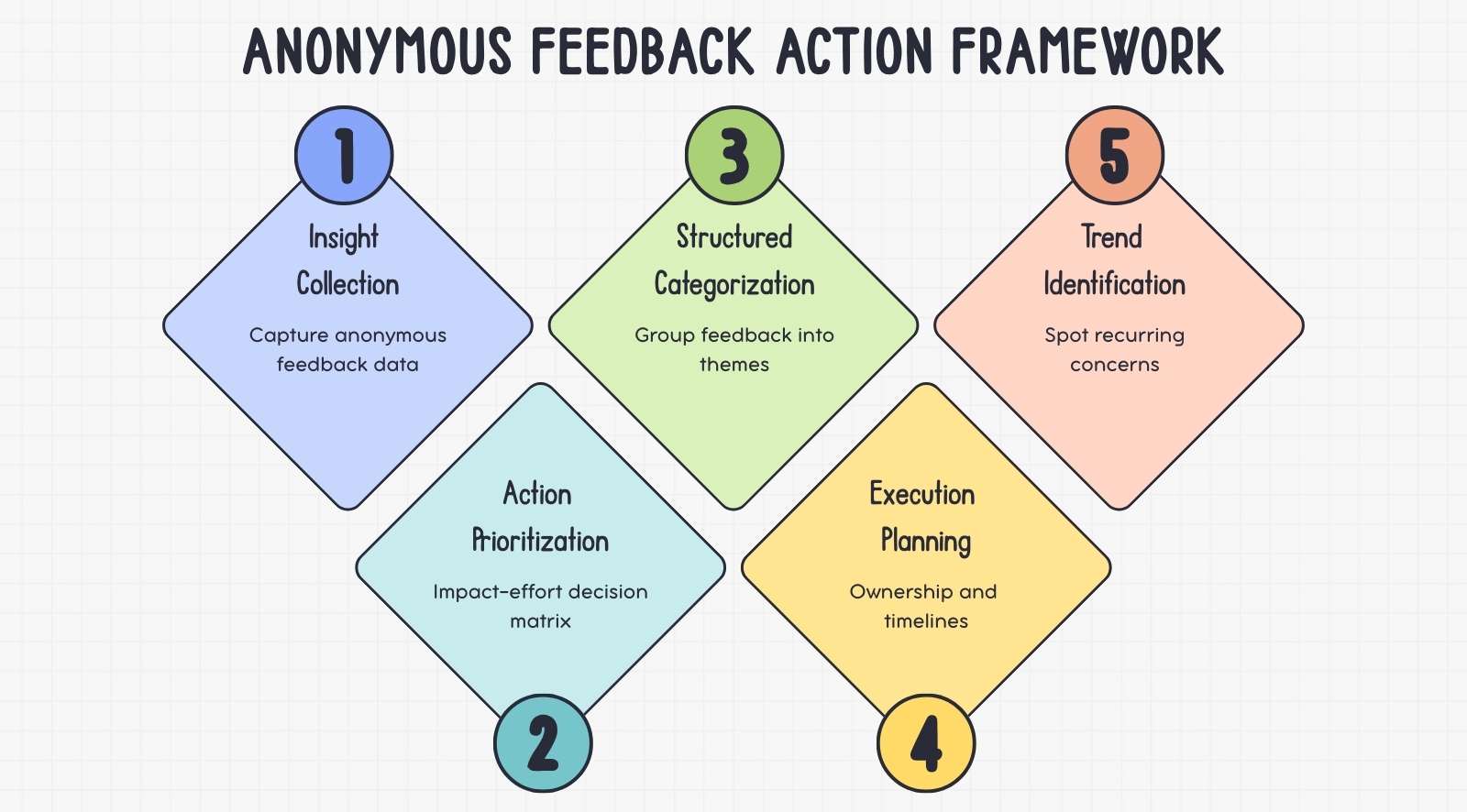
Collect anonymous responses, review them systematically, identify recurring themes, prioritize the most important issues, and translate insights into clear action plans. Anonymous feedback only becomes valuable when organizations analyze the input carefully and use it to guide decisions that improve policies, communication, and day-to-day experiences.
This is where many leaders start asking what to do with anonymous feedback results. Gathering feedback is relatively simple, but turning responses into meaningful improvements requires a structured approach. Organizations need a clear process to interpret insights, assign ownership for changes, and communicate actions so people know their input actually leads to progress.


- Anonymous feedback programs fail when insights are collected but never translated into visible action.
- Organize anonymous feedback data into categories to structure responses for easier analysis and decision-making.
- Identify recurring themes and sentiment trends to understand the most common concerns and opportunities.
- Prioritize issues using an impact-effort matrix and create clear action plans with ownership and timelines.
- Measure outcomes, communicate actions, and use feedback tools to continuously turn anonymous feedback into improvements.
Why most anonymous feedback programs fail after collection

Organizations should review anonymous feedback carefully, identify recurring themes, prioritize the most important issues, and take visible action. Anonymous surveys only create value when employee feedback analysis leads to clear improvements that strengthen employee engagement and company culture.
Many organizations collect employee feedback through anonymous surveys and employee surveys, but stop at reporting results. Without a clear plan for anonymous feedback results analysis, valuable insights stay buried, and anonymous employee feedback insights rarely influence real decisions.
Anonymous employee feedback only builds trust when employees see action. When leaders respond with updates, improvements, or policy changes, employees feel their honest feedback matters. Without follow-through, participation drops, and future anonymous surveys produce fewer useful insights.
Step 1: organizing and categorizing anonymous feedback data

Organizing and categorizing anonymous feedback data helps teams review responses systematically after collecting survey results. By grouping comments, separating quantitative scores from qualitative feedback, and structuring survey data into themes, organizations can interpret anonymous survey results more accurately and build a clear anonymous feedback action plan.
- Bring all feedback into one place: Teams collect feedback from pulse surveys, employee engagement surveys, confidential surveys, and focus groups. Consolidating survey responses into one dataset simplifies employee feedback analysis methods and helps leaders review employee survey results without missing patterns.
- Separate numbers from narrative: Anonymous responses usually include ratings and written comments. Splitting these formats improves interpreting anonymous survey results because scores highlight trends quickly, while written responses reveal employee experience concerns behind the numbers.
- Group feedback into clear themes: When teams collect anonymous feedback, comments often repeat around leadership communication, workload, or company policies. Categorizing survey responses into themes helps leaders process negative feedback and constructive feedback without being overwhelmed by hundreds of scattered statements.
- Tag responses for faster analysis later: Applying consistent tags to anonymous responses helps teams revisit employee survey results across future pulse surveys. This structure supports long-term employee feedback analysis methods and simplifies identifying whether employee experience issues improve or persist.
- Clean and validate the dataset: Before deeper analysis begins, remove duplicate entries and irrelevant comments. Cleaning survey responses improves accuracy and helps leaders understand what to do after an employee survey without misinterpreting trends caused by repeated feedback.
- Prepare the data for decision-making: Once responses are categorized and structured, teams can move toward interpreting anonymous survey results more confidently. This preparation stage makes it easier to translate raw survey responses into a practical, anonymous feedback action plan.
Step 2: identifying themes, patterns, and sentiment trends
Identifying themes, patterns, and sentiment trends in survey data helps organizations understand what employees are consistently saying across engagement surveys. By reviewing recurring topics, emotional tone, and changes in employee data over time, leaders can improve employee feedback results management and begin turning employee feedback into action.
Step 3: prioritizing issues with an impact effort matrix

Prioritizing issues with an impact effort matrix helps organizations decide which feedback actions should happen first. By evaluating employee impact and implementation effort, human resources teams and the organization's leaders can focus on actionable insights, deliver meaningful improvements faster, and reassure employees that their feedback influences real decisions.
- List priority issues clearly: Start by gathering concerns surfaced during employee feedback analysis. Reviewing comments together helps an organization's leaders identify recurring problems and convert scattered responses into accurate insights that human resources teams can realistically address within existing resources and timelines.
- Assess employee impact: Evaluate how strongly each issue affects psychological safety, work conditions, or whether employees feel adequately supported. Issues that affect employee confidence, trust, or support should rank higher because resolving them quickly helps reassure employees that leadership takes feedback seriously.
- Estimate effort realistically: Before committing to changes, determine the resources required to implement solutions. Human resources teams should consider time, cost, and coordination across departments so leadership prioritizes actions that produce meaningful improvements without overextending teams or delaying other operational goals.
- Identify quick wins: Some concerns can be resolved quickly through clearer communication, updated policies, or leadership visibility. Addressing these issues first shows employees their suggestions are valued and encourages them to continue to provide feedback without fear of social desirability bias influencing responses.
- Balance long-term initiatives: Larger issues, such as career growth or leadership transparency, may require phased planning. By mapping effort against impact, the organization's leaders can still pursue these changes gradually while ensuring immediate improvements are not delayed.
- Document decisions transparently: Recording why certain issues were prioritized builds trust and strengthens psychological safety. When leaders explain their reasoning clearly, employees better understand how feedback influences decisions and feel reassured that their input contributes to actionable insights.
Step 4: building an action plan with clear ownership and timelines
Turning survey findings into action is like converting meeting notes into assigned tasks. Feedback becomes valuable only when clear owners, timelines, and next steps exist. This stage transforms anonymous survey insights for HR into structured employee feedback follow-up actions that strengthen employee trust and show employees their feedback leads to visible improvements.
- Translate insights into clear initiatives: Use findings from employee engagement survey results analysis to define specific behaviors or improvement projects. Converting patterns from open-ended responses, multiple choice answers, and other feedback into defined initiatives ensures survey results become useful data instead of remaining static reports.
- Assign accountable owners: Each action item should have a clear owner responsible for progress. When human resources teams or department leaders take responsibility for employee feedback follow-up actions, employees see that survey insights are treated as a powerful tool for improvement.
- Set realistic timelines: Establish achievable milestones, so improvements move forward steadily. Clear timelines help teams track follow-up progress and maintain momentum while continuing to gather feedback through surveys short enough to encourage participation and honest responses.
- Allocate resources and support: Some initiatives require leadership backing, training, or technology changes. Ensuring the right resources exist allows anonymous survey insights for HR to translate into meaningful workplace improvements rather than remaining ideas that never reach implementation.
- Focus on root causes: Action plans should address the underlying issue rather than temporary fixes. Reviewing open-ended responses alongside multiple-choice survey data helps teams identify specific behaviors or process gaps affecting employee trust.
- Track and document progress: Maintain a shared record of actions and milestones so teams can review progress regularly. Transparent tracking strengthens employee trust and reassures employees that their feedback continues to influence future decisions.
Step 5: communicating back to employees (closing the loop)
Communicating back to employees means sharing survey findings, explaining planned actions, and outlining next steps after organizations collect anonymous responses. Transparent updates help create a safe space, protect anonymity, and show the company takes feedback from surveys seriously, especially when responses involve sensitive topics.
- Share the main findings clearly: Summarize responses in simple language and focus on patterns, not people. This helps the company discuss sensitive topics openly while protecting anonymity and allowing workers to see how surveys produced useful data.
- Explain what will happen first: Teams should connect findings to clear objectives and an action plan. When leaders explain why certain issues come first, responses feel respected, and employees better understand how the company will create change.
- Be honest about what cannot change yet: Some issues need more time, budget, or leadership support. Stating that clearly helps create trust, especially when surveys surface sensitive topics that cannot be resolved immediately but still deserve acknowledgement.
- Use more than one channel: Share updates through team meetings, manager check-ins, internal notes, or onboarding sessions for new hires. Using multiple channels helps the company reinforce messages and makes follow-up easier after teams collect anonymous feedback.
- Show one visible example: Give one example of a change made from survey responses, such as a policy update or manager training. Concrete proof helps create confidence that feedback is not collected only for record-keeping.
- Protect anonymity in every update: When discussing results, avoid language that could expose identities or connect comments to individuals. This is especially important when surveys cover sensitive topics, because anonymity is what makes honest responses possible in the first place.
How to measure whether your feedback actions are working

Measuring whether feedback actions are working requires tracking engagement scores, participation rates, and recurring issues across surveys. By comparing trends over time and reviewing qualitative responses, organizations can evaluate how to act on employee feedback and continue improving workplace culture using feedback insights.
1. Track score movement
Compare employee engagement, satisfaction, or trust scores before and after changes. This is one of the clearest ways to understand how to act on employee feedback and whether those actions are improving workplace culture using feedback in measurable ways.
2. Watch participation trends
Review response rates in follow-up surveys to see whether people are still willing to contribute. Rising participation usually signals trust, while falling rates may suggest employees do not yet believe feedback actions are producing visible or lasting change.
3. Measure issue decline
Check whether previously reported concerns appear less often in later survey rounds. If the same problems keep returning, leaders may need to rethink how to act on employee feedback and strengthen follow-through across managers, teams, or business units.
4. Run follow-up pulse checks
Use short pulse surveys to test whether employees notice improvement after actions are introduced. These smaller checks help teams validate progress faster and support improving workplace culture using feedback without waiting for the next large annual survey cycle.
5. Connect feedback to business metrics
Review trends in retention, absenteeism, internal mobility, or manager effectiveness alongside survey results. Linking feedback actions to operational outcomes helps leaders see whether improvements are influencing everyday experience, not just changing survey scores on paper.
6. Look for perception shifts
Gather open comments to understand whether employees believe recent changes are useful. Qualitative responses add context to scores and reveal whether efforts are genuinely improving workplace culture using feedback or simply creating surface-level changes that feel temporary.
Tools that help you go from anonymous feedback to action
Choosing the right tools matters because manual spreadsheets rarely support a reliable feedback process at scale. Platforms built for anonymous employee surveys help teams gather employee feedback, organize findings, and move faster on action planning. They also encourage employees to share feedback more consistently by making analysis easier and follow-through clearer.
1. Survey analytics tools
The best platforms for anonymous employee surveys help teams gather employee feedback, review trends, and surface recurring concerns quickly. This makes the feedback process easier to manage and supports the best ways to analyze anonymous employee survey feedback without relying on manual sorting.
2. Sentiment and theme detection
Tools with built-in text analysis can scan comments from an anonymous employee feedback survey and group similar responses automatically. That helps teams save time, spot patterns faster, and turn raw comments into a more structured anonymous feedback system.
3. Action planning workflows
Some platforms connect survey findings directly to ownership, timelines, and next steps. This is useful when teams need clear steps to act on anonymous employee engagement survey results instead of leaving insights buried in reports after the survey closes.
4. Continuous listening features
A strong anonymous feedback system supports regular check-ins, not just one annual survey. Ongoing listening helps encourage employees to share feedback more often and gives leaders a steadier view of what is changing across teams.
5. Dashboards for leadership visibility
Reporting dashboards help managers and HR teams review what matters most without digging through raw files. They make it easier to track the feedback process, monitor follow-through, and connect employee feedback trends with business priorities.
6. Secure anonymous survey platforms
Tools designed for anonymous employee surveys also help protect confidentiality while simplifying response analysis. That balance matters because people are more likely to share feedback honestly when the system feels both safe and easy to use.
The right platform does more than collect responses. It helps teams analyze, prioritize, and act with more consistency, which is exactly what separates a basic anonymous employee feedback survey from a feedback process that drives visible change.
Conclusion
Knowing what to do with anonymous feedback results is what turns surveys into meaningful workplace improvements. When organizations analyze responses, prioritize issues, and communicate actions clearly, anonymous feedback becomes a powerful way to strengthen trust and improve decision-making. Acting on feedback consistently also helps teams identify patterns, address concerns earlier, and build a healthier workplace culture over time.
CultureMonkey, an anonymous employee feedback tool, supports this process by helping organizations collect anonymous feedback securely, analyze insights quickly, and translate survey results into structured action plans. With the right tools and follow-through, anonymous feedback can move beyond reports and become a reliable driver of continuous employee engagement and organizational improvement.
Book a demo with CultureMonkey.
FAQs
1. What should you do after collecting anonymous employee feedback?
After collecting anonymous employee feedback, reviewing survey responses, grouping similar themes, and identifying recurring concerns. Leaders should create an action plan, assign ownership, and communicate next steps. Using survey software also helps protect data security and maintain anonymity.
2. How do you analyze anonymous feedback survey results?
Start by organizing survey responses into themes and sentiment categories. Good survey software helps review comments, detect patterns, and avoid bias from leading questions. Structured analysis helps leaders identify real issues and decide what improvements should be prioritized first.
3. What is the feedback action planning process?
The feedback action planning process converts survey insights into improvement steps. Teams prioritize issues, define timelines, and assign owners responsible for changes. Leaders, including the chief operating officer or HR teams, review progress regularly and ensure actions address concerns raised in feedback.
4. How do you communicate anonymous feedback results to employees?
Organizations should share key insights, explain planned actions, and outline timelines after surveys. Leaders should summarize patterns instead of individual responses to protect anonymity. Transparent communication builds trust and shows employees their feedback is used for real workplace improvements.
5. How do you measure the impact of acting on anonymous feedback?
Measure impact by tracking engagement scores, participation rates, and issue frequency across surveys. Comparing results over time shows whether actions improve workplace conditions. Follow-up questions in later surveys help confirm whether employees notice meaningful improvements.
6. What is an impact effort matrix for feedback prioritization?
An impact effort matrix helps teams decide which feedback issues to address first. Leaders evaluate how strongly an issue affects employees and how difficult it is to fix. This approach ensures resources focus on improvements that create the most meaningful impact quickly.