

S06 E11
Is the skills gap really a trust gap? | Cezary Mączka, Wielton Group
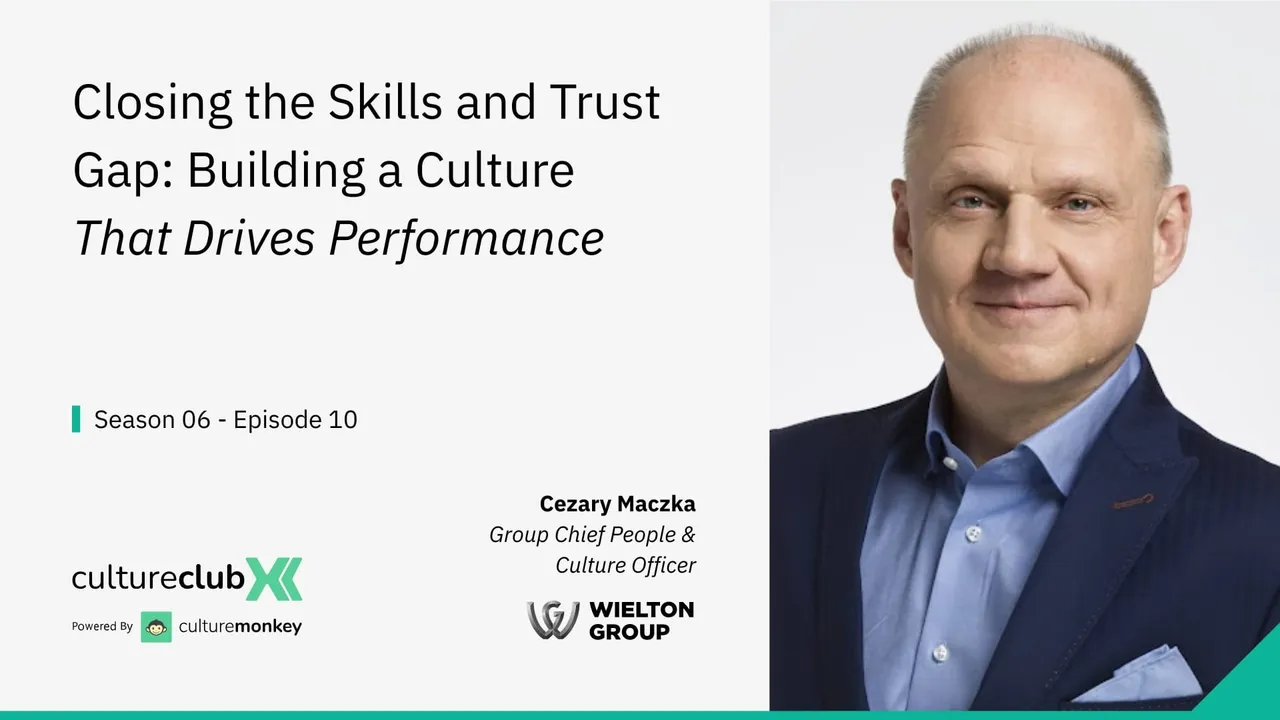
Often, yes, says Cezary Mączka, Group Chief People & Culture Officer at Wielton Group. A skills gap is missing capability; a trust gap is doubt that the company will be honest with people as roles change, and most firms mistake one for the other. Pair reskilling with transparency, and give each unit no more than three clear quarterly priorities.

TL;DR
What you need to know from this episode
- The skills gap is really a system gap, and no HR model can fix a system that is misaligned. When roughly 70% of engagement rides on the manager, 95% of managers cannot articulate the company’s mission and strategy, and 56% of employees do not know what is expected of them, the people responsible for engagement do not understand the direction and the people they manage do not understand their goals. That is a structural failure, not a training problem.
- People do not resist change, they resist chaos. Clarity of goals matters more than change management itself. Breaking a multi-year transformation into no more than three quarterly priorities per unit, each with a clear “why,” lets people focus and take ownership, and it costs nothing extra.
- Most organizations do not have a skills gap. They have a trust gap disguised as a skills gap. When companies announce reskilling, employees hear “Am I still needed, or am I about to be replaced?” Training alone widens that gap. Capability only grows when paired with radical transparency, credible future pathways, and visible consequences.
- Leadership trust usually breaks because of leaders, not social partners. It collapses at three specific moments: when leaders stop telling the truth, when decisions are made without context, and when leaders themselves do not understand the business they manage. Rebuilding it requires honesty, context, and business literacy, not better messaging.
- Real-time listening platforms show the gaps; they do not close them. Tools like CultureMonkey reduce the distance between what people feel and what the company decides. But a survey changes nothing on its own. Without visible follow-up in decisions, KPIs, and leadership behavior, listening tools breed cynicism and the illusion of dialogue.
Is the skills gap really a system gap?
Cezary Mączka has spent more than twenty-five years building people functions across global businesses, from General Electric, to EDF in France, to the Ferrovial construction group, and now as Group Chief People & Culture Officer at Wielton Group, a Polish manufacturer that ranks among Europe’s top three producers of trailers and semi-trailers, with operations across Poland, France, Germany, Spain, and Italy.
His diagnosis of the skills-and-trust gap is grounded in that range, and it is blunt: most organizations are solving the wrong problem.
He starts with three numbers. Around 70% of team engagement depends on the manager’s attitude. As many as 95% of managers cannot clearly articulate their organization’s mission, vision, and strategy. And more than half of employees, 56%, per Gallup, do not know exactly what is expected of them.
Connect those dots and the picture is simple: the people responsible for engagement do not understand the direction, and the people they manage do not understand their goals. That is not a skills gap. It is a system gap.
We have a system in which the people responsible for engagement do not understand the direction, and the people they manage do not understand their goals. This is not a skills gap. It is a system gap.
The root cause, in his view, is that HR still too often operates alongside the business rather than within it. Teams design competency models and development programs without first answering the most basic question: how does the company make money, where does it lose it, and what builds competitive advantage?
Skip that question and even the most sophisticated high-performance culture initiative will float free of the business it is meant to serve.
The pattern shows up clearly in how organizations develop people. The familiar 70-20-10 model says 70% of learning comes from the job, 20% from others, and 10% from formal training, yet most companies invest almost entirely in that final 10%, buying off-the-shelf programs from brand-name providers and then wondering why nothing changes.
Training alone does not build competence; competence is built only when knowledge is applied in real decisions, real outcomes, and real accountability in the workplace. In large multinationals, a second dimension compounds the problem: the operating model.
A centralized model delivers consistency and control but turns local managers into executors, breeding frustration; a federated model grants autonomy but lets values, accountability, and leadership maturity drift apart until one company starts to feel like several. In the United States, Cezary notes, the phrase for the fix is simple, walk the talk.
Why does clarity of goals beat change management?
Asked whether clarity of goals really matters more than change management, Cezary answers with an old proverb: if you don’t know where you are going, any road will take you there, which does not work in business. He illustrates it with a transformation he led in a European market under regulatory pressure and an aging workforce, where roughly half the workforce would be restructured.
On paper everything looked right: roadmap, communication plan, leadership workshops, union sessions. People were still frustrated and disengaged, because they did not know what the future held for them.
The turnaround came not from a new strategy or a bigger budget, but from clarity. The team broke a multi-year transformation into no more than three quarterly priorities per business unit, each with an explicit reason. They replaced emails and slide decks with a simple weekly rhythm built on three questions: what matters most, what is blocking us, and what has changed.
And they answered the question every employee was actually asking, what is my place in the future organization, by defining three honest groups: those qualified to take on expanded roles, those willing to reskill with support, and those who would take voluntary exit. Everyone knew the path.
Engagement rose even as the workforce shrank, and the company was recognized among top employers for investing in human capital.
People do not resist change. They resist chaos. The role of leaders is to provide a clear, realistic, time-bound goal, one grounded in partnership between employees and managers.
A second example from his time in the Ferrovial group, including Budimex in Poland, makes the same point from the opposite direction. There, performance follows from a simple principle: goals are set by those accountable for delivery, not by headquarters. Project leaders define targets, break them into execution phases, and assign ownership, so every person knows what they own and how it maps to outcomes.
The result he cites is striking, Budimex’s market capitalization has exceeded that of all other construction companies listed on the Warsaw Stock Exchange combined. Communication, he argues, is not the same as clarity: telling people what must be done is communication; explaining why, and where the organization is heading, is clarity.
Without clear team goals, there is no engagement, only activity, and activity is not the same as effectiveness.
What trust gap hides inside every skills gap?
When organizations talk about reskilling and upskilling, Cezary points out, employees rarely hear opportunity. They hear a question about their own security: am I still needed, or am I about to be replaced? That is the moment the trust gap opens.
Skills are not only about capability, they are about identity, status, and future security, so closing a skills gap with training alone almost always widens the trust gap instead. The mistake is treating capability building as a learning problem when it is really a problem of clarity and consequence.
His remedy has four parts. First, radical transparency: name where the gap exists in concrete roles and specific implications, not abstractions, in one case, honestly showing how sixty jobs would be consolidated into sixteen. Second, clear future pathways: define who can grow into the new model, who can reskill with the organization’s support, and where there is no long-term role.
Third, ownership: capability building must be owned by the business and its managers, not delegated to HR, with employees seeing a direct link between new skills and real opportunities. Fourth, visible consequences: if learning never changes a KPI, a promotion, or a manager’s behavior, it means nothing.
These are the same mechanics that underpin durable employee retention strategies.
Ambiguity destroys faster than difficult truth. It is better to tell a harsh truth than a half-truth.
The proof, he says, is counterintuitive. At General Electric, a restructuring was announced a full twenty-four months in advance. Productivity did not collapse, it held, because people understood what was coming, felt respected enough to be told early, and had time to prepare, look at the market, and use outplacement support. Honesty bought commitment that a polished but vague message never could.
That is the difference between transparency at work and the kind of careful, content-free communication that erodes confidence.
Where does leadership trust break down?
Decades of complex negotiations with unions and works councils across EMEA have taught Cezary a provocative lesson: trust in leadership rarely breaks because of social partners. It breaks because of leaders, often leaders advised by expensive consultants, and it tends to fail at three specific moments.
The first is when leaders stop telling the truth, substituting carefully worded messages for a plain statement like “we have a problem, we are not competitive.” The second is when decisions are made without context, announcing salary cuts, benefit changes, or restructurings as “a decision from headquarters” without showing the data and reasoning behind them.
The third is when leaders themselves cannot explain the business they run.
That last failure is more common than it sounds. If 90% of managers cannot articulate the mission, vision, and strategy in a sentence or two, social partners sense the hollowness immediately. Rebuilding trust, then, is not a communications exercise, it is a return to honesty, shared context, and genuine business literacy.
It is the same foundation that trust in leadership rests on in any organization, unionized or not.
The Skills, Trust Alignment Framework: Five Moves to Close Both Gaps at Once
Cezary Mączka’s operating framework for closing the skills gap and the trust gap together in multinational, unionized organizations, by aligning what a company declares with how it actually operates.
Embed HR Inside the Business, Not Alongside It
Start with how the company makes money, where it loses it, and what builds advantage. HR that cannot answer those questions will keep designing sophisticated models that never touch the real source of the gap.
Replace Communication with Clarity of Goals
Break transformation into no more than three quarterly priorities per unit, each with an explicit “why,” and run a weekly rhythm. People do not resist change, they resist chaos.
Lead with Radical Transparency
Name the gap in concrete roles and real implications, and define honest future pathways. Ambiguity destroys faster than difficult truth, so choose harsh truth over half-truth, even years in advance.
Make Accountability Shared and Visible
Managers must own both development and results, and social partners must share real accountability for real decisions, as in the “social academy” that taught union leaders P&L, cash flow, and cost structure until the conversation stopped being us-versus-them.
Treat Listening Tools as the Start, Not the Solution
Real-time platforms reduce the distance between what people feel and what the company decides, but a survey changes nothing without follow-up in decisions, KPIs, and leadership behavior. Otherwise it breeds cynicism.
Is psychological safety about permission or comfort?
Building a culture where people speak up, listen, and do not fear mistakes is, Cezary insists, not primarily a cultural or even an HR problem, it is a leadership-quality problem, since roughly 70% of engagement depends on the manager.
He stacks the evidence: globally, around 60% of the workforce is not engaged and 15% actively disengaged; Europe, despite the world’s strongest protections and most developed social frameworks, has the lowest engagement of all at about 12%.
On top of that, 80% of processes are never measured and 90% of managers improvise their people management, answering “I manage normally” when asked how, a word that means everything and nothing.
His practical framework rests on three elements. Clarity comes first: people do not speak up if they cannot understand what the conversation is really about, and in highly regulated organizations communication often becomes so politically safe it explains nothing, producing a culture of assumptions instead of dialogue.
Psychological safety at work comes second, but not as the absence of tension. No organization operates without tension; safety means being able to say difficult, uncomfortable things without political punishment, and leaders being willing to hear truths they do not agree with.
Third, and most often overlooked, is accountability: if people have the right to speak but no shared responsibility for decisions, you build a culture of commentary and criticism rather than engagement. In Europe especially, strong employee representation is an asset, but without business understanding and shared accountability it collapses into negotiation, and negotiation is about winning, not solving.
What does Western HR get right, and where is it blind?
Western HR, Cezary readily acknowledges, does several things exceptionally well. It connects HR with the business, understands the P&L, holds a seat at the decision-making table, works fluently with data and analytics, and invests in leadership because managers are the primary carriers of culture and performance. The problem begins when that model is assumed to be universal.
He names three blind spots. The first is the comfort zone: stable employment, strong protection, and mandatory consultation create real value but limit the sense of impact that actually drives engagement, in Germany, seniority can mean up to seven months’ notice and significant severance, conditions that look astonishing from a US vantage point and that quietly reduce individual agency.
The second is faith in tools: diagnostic systems and engagement surveys are excellent at showing what does not work, but they fix nothing on their own, and if nothing changes after a survey you build frustration rather than engagement.
The third is exporting models without context, copying the same values, tools, and processes into new markets without adapting to local, cultural, and business reality, which reliably depresses engagement.
The lesson: the model matters far less than its alignment with reality, and that holds for any genuine culture of performance.
Close the trust gap before it shows up as attrition
See how CultureMonkey’s pulse survey tools and real-time sentiment analysis help multi-country people teams hear what employees actually feel, in their own language, and turn it into decisions managers act on.
How do you turn real-time sentiment into decisions that close the gap?
Cezary is an enthusiastic user of listening platforms like CultureMonkey, for one core reason: they reduce the distance between what people feel and the decisions the company makes.
He contrasts this with the old world of engagement surveys run every two years, analyzed for months, and delivered by global vendors with little flexibility to adapt questions, sometimes even imposing a language that excluded many employees. Today the picture is different: at the push of a button he can run a survey authored in Polish and translated into nineteen languages, collecting and analyzing data in real time.
But he is equally clear about the limits. These are not tools for measuring mood; they are tools for managing culture, and the questions must have a clearly defined purpose. Across ten or fifteen countries with different legal frameworks and cultural norms, the only true common denominator is not process but shared values and leadership culture flowing from the mission and vision.
That is where the platforms create real value, revealing whether a speak-up culture exists in practice or only on paper, and where reality diverges from intention. Yet the tools only show the gaps; they never close them. The survey itself changes nothing.
These platforms do not build engagement or trust. They only show the gaps. The survey itself changes nothing, what matters is the follow-up and how the organization addresses the issues that arise.
Without follow-up in change-management practice, leadership KPIs, and decision-making, a survey does not build transparency, it builds cynicism and what Cezary calls the illusion of dialogue, a risk that is especially acute in Europe’s strong-representation context, where unaddressed feedback turns quickly into frustration or conflict.
The ultimate purpose of measuring engagement, he reminds us, is to increase productivity and strengthen business performance by having genuinely happy people on board.
The mechanism that makes that real is a closed employee feedback loop, listening, deciding, acting, and showing people the change, owned by leaders who understand the business, not by HR alone.
About the guest
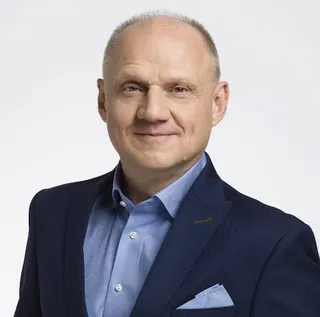
Cezary Mączka
Group Chief People & Culture Officer, Wielton Group
Cezary Mączka is the Group Chief People & Culture Officer at Wielton Group, a Polish-owned manufacturer that ranks among Europe’s top three and the world’s top ten producers of trailers and semi-trailers, employing more than 3,000 people across Poland, France, Germany, Spain, and Italy. He is a senior HR executive with significant international experience across EMEA and North America, built on a foundation of work with global multinational and European businesses. Across a career spanning more than twenty-five years, he has delivered results at process, tactical, and strategic levels, beginning at General Electric, then leading people functions at EDF (Électricité de France) and the Ferrovial construction group, including Budimex.
He has driven large-scale business transformation and reorganization involving complex negotiations with unions and works councils, and has extensive experience integrating acquired companies and aligning them with new ownership. A versatile, board-level people leader, Cezary is known for designing fair and equitable HR policies, driving digital transformation including AI and Big Data solutions, championing high-performance cultures, and maintaining compliance with European labor law and international regulations. His expertise spans strategic and tactical planning, talent management, change management, shared services, employee relations, and organizational design.
Full episode transcript
Season 06, Episode 11 · Cezary Mączka with Darcy Mehta · 55 min
Welcome to season six of CultureClub X, powered by CultureMonkey. I’m your host, Darcy Mehta. CultureMonkey is an AI-powered employee engagement platform that helps organizations listen to their employees and build stronger workplace cultures.
CultureClub X is our global thought leadership forum where CHROs and people leaders share insights, explore trends, and exchange practical strategies for building future-ready organizations.
Today we’re delighted to welcome Cezary Mączka, Group Chief People & Culture Officer at Wielton Group, a senior HR executive with deep international experience across EMEA and North America and a proven track record of driving cultural and strategic transformation at scale. Cezary, welcome. It’s such a pleasure to have you with us today.
Thank you very much. It’s a pleasure to be with you.
To give a little background: Cezary is a seasoned HR executive with a career built on delivering results across global multinational and European businesses at process, tactical, and strategic levels. He has led large-scale transformations and reorganizations involving complex negotiations with unions and works councils, and he has extensive experience integrating acquired companies. He brings deep knowledge of European labor law and international compliance, and has consistently operated at the executive and board level. Cezary, your experience navigating multinational organizations across cultures, labor traditions, and union structures makes you uniquely placed for today’s topic: closing the skills and trust gap to build a culture that drives engagement, retention, and performance. Before our questions, could you share a little about your own leadership journey and what shaped your thinking on culture and trust?
Thank you for the introduction. It’s nice to hear twenty-five-plus years of history in sixty seconds. I started my HR career with General Electric, under the transition from Jack Welch to Jeff Immelt. After about eleven years in global businesses, I moved to the French organization EDF, Électricité de France, the world’s largest provider of nuclear energy. I then spent time with Ferrovial, one of the biggest construction groups in Europe, including Budimex in Poland.
Currently I’m with Wielton Group, a Polish-owned company that is the third-largest European and ninth-largest global producer of trailers and semi-trailers. We have operations across France, Germany, Spain, Italy, and of course Poland, employing more than 3,000 people with revenues exceeding one billion euros. So change has been, and still is, my bread and butter.
That’s quite a breadth of experience. We’d need a lot more than sixty seconds to cover it all. Let’s dive into our first question.
What does the skills-and-trust gap actually look like inside large industrial and multinational organizations, and why do most HR frameworks fail to address it?
Let me start with three numbers. First, about 70% of team engagement depends on the manager’s attitude. Second, and this might be shocking, as many as 95% of managers do not have a clear understanding of the organization’s mission, vision, and strategy. Third, from Gallup, more than half of employees, 56%, do not know exactly what is expected of them.
Connect those dots and the picture is simple: the people responsible for engagement do not understand the direction, and the people they manage do not understand their goals. This is not a skills gap. It is a system gap. And that’s where the problem begins for most organizations and most HR models, because HR still too often operates alongside the business, not within it. We talk about HR strategies and competency models, but we don’t start with the most basic question: how does the company make money, where does it lose it, and what builds competitive advantage?
Look at the 70-20-10 model, 70% of learning from the job, 20% from others, 10% from formal training. Most organizations do the opposite: they focus on the 10%, buy off-the-shelf training, and are then surprised nothing changes. Training alone does not build competence. Competence is built only when knowledge is applied in real decisions, in outcomes, and above all in accountability.
In large international organizations there’s an additional dimension: the operating model. A centralized, US-style model gives consistency and control, but managers become executors rather than leaders, and a lack of influence breeds frustration and distrust. A federated model gives autonomy and speed, but values and accountability get interpreted differently, and the organization can drift culturally, it looks like one company, but in one country employees experience it as a partner and in another as a control structure. That’s exactly where the trust gap emerges. If I had to summarize: the skills gap and the trust gap appear when an organization loses alignment between what it declares and how it actually operates. In the US you say, walk the talk.
You brought up so many interesting points. HR being outside the organization rather than part of it, that’s a huge difference. And if managers are tasked with execution but don’t know the direction, how can employees know where they’re going? It seems simple, but it makes perfect sense.
How do you build a culture where people speak up, listen, and don’t fear mistakes, when you’re operating across multiple countries, union structures, and deeply rooted European labor traditions?
Let me start with a light analogy. It’s like a doctor and patient talking about how to lose weight and live healthily. There are plenty of prescriptions, but are people actually healthy and fit? No. The issue isn’t a lack of recipes, it’s a lack of consistency and discipline in execution.
Look at the data. Around 60% of the global workforce is not engaged and 15% is actively disengaged. About 34% are doing well, 58% are struggling, and 8% are in very difficult situations. Europe, the region with the strongest protections and the most developed social frameworks, ironically has the lowest engagement globally, at about 12%. That’s a fundamental paradox: a complex system designed to protect people often limits their sense of impact on the business.
So this isn’t primarily a cultural or HR problem. It’s a leadership-quality problem, again, 70% of engagement depends on the manager. On top of that, around 80% of processes are never measured, and 90% of managers improvise. Ask them how they manage people and they say, ‘I manage normally.’ What does normal mean? It’s subjective.
My practical framework has three elements. First, clarity, people don’t speak up if they don’t understand what the conversation is about, and in regulated organizations communication often becomes so politically safe it explains nothing, creating a culture of assumptions. Second, psychological safety, not comfort or the absence of tension, but being able to say difficult things without political punishment, and leaders being willing to hear uncomfortable truths. Third, and most overlooked, accountability and leadership, if people have the right to speak but no shared responsibility for decisions, you build a culture of commentary and criticism, not engagement. In Europe, strong employee representation is an asset, but without business understanding and shared accountability it turns into negotiation, and negotiation is about winning, not solving.
It creates momentum. It’s simple, not easy, but once employees realize they’re being heard and having an impact, it builds positive momentum, and the next step gets easier.
What have complex union negotiations and works councils across EMEA taught you about where leadership trust breaks down, and what does rebuilding it actually require?
I’ll start with a provocative statement: trust with social partners most often does not break because of them. It breaks because of leaders, often leaders supported by highly paid advisors. And it usually happens at three specific moments.
First, when leaders stop telling the truth. Instead of clearly saying ‘we have a problem, we are not competitive,’ they communicate carefully worded messages without substance, and social partners sense it immediately. Second, when decisions are made without context. Salary reductions, benefit changes, restructurings are difficult, but they can be defended. What cannot be defended is ‘this is the decision, dictated by headquarters,’ with no data, no reality, and no perspective from the social partners. Third, when leaders themselves don’t understand the business they manage.
As we said, around 90% of managers can’t clearly articulate the mission, vision, and strategy. Try the test, ask colleagues to summarize their company’s mission in one or two sentences and see how few can. It sounds harsh, but it’s true.
That’s why we’re having these discussions. It is shocking that people struggle to explain the mission. You’ve got a really interesting way of looking at it, and it makes perfect sense.
You believe clarity of goals matters more than change management itself. How do you put that into practice when organizations are mid-transformation and people are overwhelmed and disengaged?
There’s an old Chinese proverb: if you don’t know where you’re going, any road will take you there. That doesn’t work in business. A few years ago I worked for a multinational undergoing a major transformation in one European market, driven by EU regulatory change, cost pressure, and an aging workforce. On paper everything looked right, roadmap, communication plan, leadership workshops, union sessions. But people were frustrated and uncertain about their future.
After a deep-dive workshop following an engagement survey, the conclusion was clear: we had to explicitly explain where the change came from, how it would affect people, how long it would take, and what support we needed from them. Trade union penetration was around 90%, with 22 unions and works councils, so the complexity was real. We broke a multi-year transformation into quarterly priorities for each business unit, no more than three at a time, each with a clear ‘why.’ We replaced emails and presentations with a simple weekly rhythm: what matters most, what is blocking us, what has changed. And we answered the fundamental question, what is each person’s place in the future, with three groups: those qualified for expanded roles, those willing to reskill with support, and those who chose voluntary exit.
Everyone knew the path. It didn’t cost extra money; we didn’t change the strategy or the budget, we simply added tools that let people build competences linked to the business goals. Engagement started to rise, and even while we were restructuring nearly half the workforce, employee satisfaction placed us among the top employers recognized as investors in human capital.
One more example, from construction. At Budimex, within the Ferrovial group, performance comes from a simple principle: goals are set by those accountable for delivery, not by headquarters. Project leaders define targets, break them into phases, and assign ownership. The outcome? Budimex’s market value is higher than all the construction companies listed on the Warsaw Stock Exchange combined. That’s why I believe clarity of goals matters more than change-management processes themselves.
You’ve convinced me. A change manager is essentially trying to convince people to accept change, but clarity of goals gives them direction to act. That’s the difference.
Exactly. In everyday work, and especially in transformation, people don’t need communication, they need clarity. If you know what you should deliver, you’ll deliver; you won’t be guessing, you’ll be thinking about how to do it and what support you need. Without clear goals there is no engagement, only activity, and activity is not the same as effectiveness. People don’t resist change; they resist chaos. The role of leaders is to provide a clear, realistic, time-bound goal grounded in partnership between employees and managers.
One more example, related to unions. At EDF, when we restructured about half the workforce, the unions initially said, ‘we’re social, we don’t want to hear about numbers.’ So I introduced what we called a social academy, hard business education on how P&L works, what cash flow is, how the cost structure looks, and the operational constraints. We forced them to make the decisions on how to effectively run the company. Very quickly they realized that to protect jobs and salaries, they had to make exactly the same difficult decisions they had been challenging. That was the turning point, it stopped being us-versus-them, and we started looking at the same ultimate goal.
That’s a powerful shift. I love the distinction between communication and clarity. We always say communication is key, but telling people what must be done is communication, why it must be done and where we’re going is clarity.
How do you close a skills gap without widening a trust gap? What does a people strategy look like that builds capability and psychological safety simultaneously?
I’ll be direct: most organizations don’t have a skills-gap problem. They have a trust-gap problem disguised as a skills gap. When companies talk about reskilling and upskilling, what do employees hear? Probably something different from what we intend, ‘am I still needed, or am I about to be replaced?’ That’s when the trust gap begins. Skills aren’t just about capability; they’re about identity, status, and future security. So if you try to close a skills gap with training alone, you almost always widen the trust gap.
It starts with radical transparency: people need to understand where the gap is and what it means for the business and for them, in concrete roles, not abstract terms. In one case we showed honestly how sixty jobs would become sixteen while restructuring half the workforce, and we showed people the path and the support available. Then clear future pathways: in every transformation, define who can grow into the future model, who can reskill with support, and where there is no long-term role. That last one is harsh, but ambiguity destroys faster than difficult truth.
When I was at GE, we announced a restructuring 24 months in advance. Did it hurt productivity? No. People appreciated the openness, it gave them psychological safety and time to take care of themselves and look at the market. Better a harsh truth than a half-truth. Third, ownership: capability building must be owned by the business, not HR, managers must be capable of developing their teams, and employees must see a direct link between new skills and real opportunities. Fourth, visible consequences: if learning changes no KPI and no manager behavior, it means nothing. So the people strategy isn’t a training problem, it’s transparency, clear pathways, ownership, and consequence.
‘Radical transparency’ really sums it up. It’s not reinventing the wheel, it’s understanding these key concepts and actually implementing them.
What do HR leaders in the Western region consistently get right about building high-performance cultures, and where do they remain dangerously blind?
Coming back to the European paradox: we have one of the most advanced people-management systems in the world, and at the same time the lowest engagement. What Western HR does exceptionally well is connect HR with the business, understanding the P&L, having a seat at the table, working with advanced analytics, and investing in leadership because managers carry culture and performance.
But there are blind spots. The first is the comfort zone, stable employment, strong protection, mandatory consultation, predictable conditions. In Germany, based on seniority, notice can be up to seven months, plus severance. That stability has value, but engagement doesn’t come from comfort; it comes from a sense of impact and influence. In many European organizations that sense is limited, and managers, responsible for 70% of engagement, have limited agency, unlike in the US or Latin America. The second blind spot is faith in tools. Western HR is excellent at building diagnostics and engagement surveys like CultureMonkey, but those tools show what doesn’t work; they don’t fix it. If nothing changes after a survey, you don’t build engagement, you build frustration. The third is transferring models without context: copying the same values, tools, and processes into new markets without reflecting local and cultural conditions, which makes engagement decline. The truth is the opposite of what we assume, the model matters far less than its alignment with business, social, and cultural reality.
That makes complete sense. The model matters less than aligning it with reality.
How can real-time engagement platforms like CultureMonkey help complex, multi-country organizations turn employee sentiment into decisions that meaningfully close the trust and skills gap?
I’m a big fan of platforms like CultureMonkey, call them listening tools. They address a key managerial challenge: they reduce the distance between what people feel and the decisions the company makes. Remember when engagement surveys were run every two years, analyzed for months, and actions prepared so late we’d forgotten the biggest issue? They were corporate initiatives from global vendors with little flexibility to adapt questions to local context, sometimes even imposing a language that created a barrier for employees.
Today, technology enables real-time collection and analysis. At the push of a button you can change the language version, I author a survey in Polish that gets translated into nineteen languages. That’s a big advantage for employees, HR, and leaders. But the questions must have a clearly defined purpose. These are not tools for measuring mood; they are tools for managing culture, especially in multi-country organizations. Across ten or fifteen countries with different legal frameworks and cultural norms, the only true common denominator is not process, it’s the company’s values and leadership culture, flowing from the mission and vision.
That’s where these platforms create real value: they let you see whether values are understood consistently across Poland, France, Germany, the US, Canada, whether a speak-up culture works in practice or only on paper, and where the gaps are. But to underline one critical point: these tools do not build engagement or trust. They only show the gaps. The survey itself changes nothing, what matters is the follow-up. If after a survey we don’t see changes in change-management practice, leadership KPIs, or decision-making, we don’t build transparency; we build cynicism and the illusion of dialogue. That’s especially dangerous in Europe’s strong-representation context, where it quickly turns into frustration or conflict. The ultimate purpose of measuring engagement is to increase productivity and strengthen business performance by having genuinely happy people on board.
That’s better for everyone. Cezary, thank you so much for sharing your insights and experience. Your perspective on closing the skills and trust gap, shaped by years navigating complex multi-country organizations, union negotiations, and large-scale transformation, is exactly the kind of grounded, practical thinking today’s people leaders need. Building a culture that drives engagement, retention, and performance isn’t a one-time program; it’s a continuous commitment to clarity, trust, and listening at every level. That’s precisely where CultureMonkey plays a role, through real-time pulse surveys and AI-powered listening that help organizations surface sentiment early, act with confidence, and build cultures where both skills and trust can grow together. Before we close, how can our listeners connect with you and continue this conversation?
The ideal way is to connect with me on LinkedIn. You can send an invite, with one small request: please add a sentence on why you’d like to connect.
That makes perfect sense. And to all our listeners, thank you so much for tuning in. Don’t forget to follow, share, and subscribe. That’s a wrap for this episode of CultureClub X, powered by CultureMonkey. Until next time, I’m your host, Darcy, signing off.
Frequently asked questions
What is the difference between a skills gap and a trust gap in large organizations?
A skills gap is a lack of capability; a trust gap is a lack of belief that the organization will deal honestly with people as that capability changes. Most companies misdiagnose the second as the first. When roughly 70% of engagement depends on the manager, 95% of managers cannot articulate the strategy, and 56% of employees do not know what is expected of them, the issue is structural alignment, a system gap, not training. Closing it requires embedding HR in the business, not buying more programs.
Why does clarity of goals matter more than change management during a transformation?
Because people do not resist change, they resist chaos. Change management tries to convince people to accept change; clarity of goals gives them direction to act. In practice that means breaking a multi-year transformation into no more than three quarterly priorities per unit, each with an explicit reason, and running a weekly rhythm around what matters, what is blocking progress, and what has changed. When everyone knows their place in the future organization, engagement can rise even during restructuring, and it costs nothing extra.
How do you close a skills gap without widening the trust gap?
Pair capability building with transparency, not training alone. Employees hear “reskilling” as “am I about to be replaced?”, so skills work without honesty widens the trust gap. The four-part approach: name the gap in concrete roles and real implications; define honest future pathways (grow, reskill with support, or exit); make managers and the business own development rather than HR; and attach visible consequences so new skills change KPIs, promotions, and decisions. Ambiguity destroys faster than difficult truth, so a harsh truth beats a half-truth.
Where does leadership trust break down in union and works council negotiations?
Trust usually breaks because of leaders, not social partners, and it fails at three moments: when leaders stop telling the truth and replace it with content-free messaging; when decisions are made without context, presented as “a decision from headquarters” with no data or reasoning; and when leaders cannot explain the business they manage. Rebuilding trust means honesty, shared context, and real business literacy, sometimes by giving social partners genuine business education and shared accountability so the conversation stops being us-versus-them.
How should real-time engagement platforms like CultureMonkey be used in multi-country organizations?
Use them to manage culture, not to measure mood. Their value is reducing the distance between what people feel and what the company decides, collecting and analyzing sentiment in real time, in employees’ own languages, instead of a survey every two years. Across many countries, the common denominator is shared values and leadership culture, and the tool reveals whether a speak-up culture exists in practice or only on paper. But the platform only shows gaps; it never closes them. Without visible follow-up in decisions, KPIs, and leadership behavior, it breeds cynicism.
Read the cross-episode roundups
More from CultureClub X
 S07 E03employee engagementWhy do grievance procedures damage workplace culture? | David Liddle, The TCM Group
 David Liddle
 S07 E02change leadershipHR as Chief Disruption Officer: Why Supporting the Business Is a Ceiling, with Jennifer McClure
 Jennifer McClure
 S06 E20change leadershipWhy does culture change stall? | Jamie Notter, culture scientist
 Jamie Notter
Never miss an episode
Every new episode, plus the takeaways that matter, posted on the CultureMonkey LinkedIn page as soon as they drop.
Free on LinkedIn. Unfollow anytime.