

CultureClub X · S03 E04
Why Collaboration Retains Talent Better Than Pay
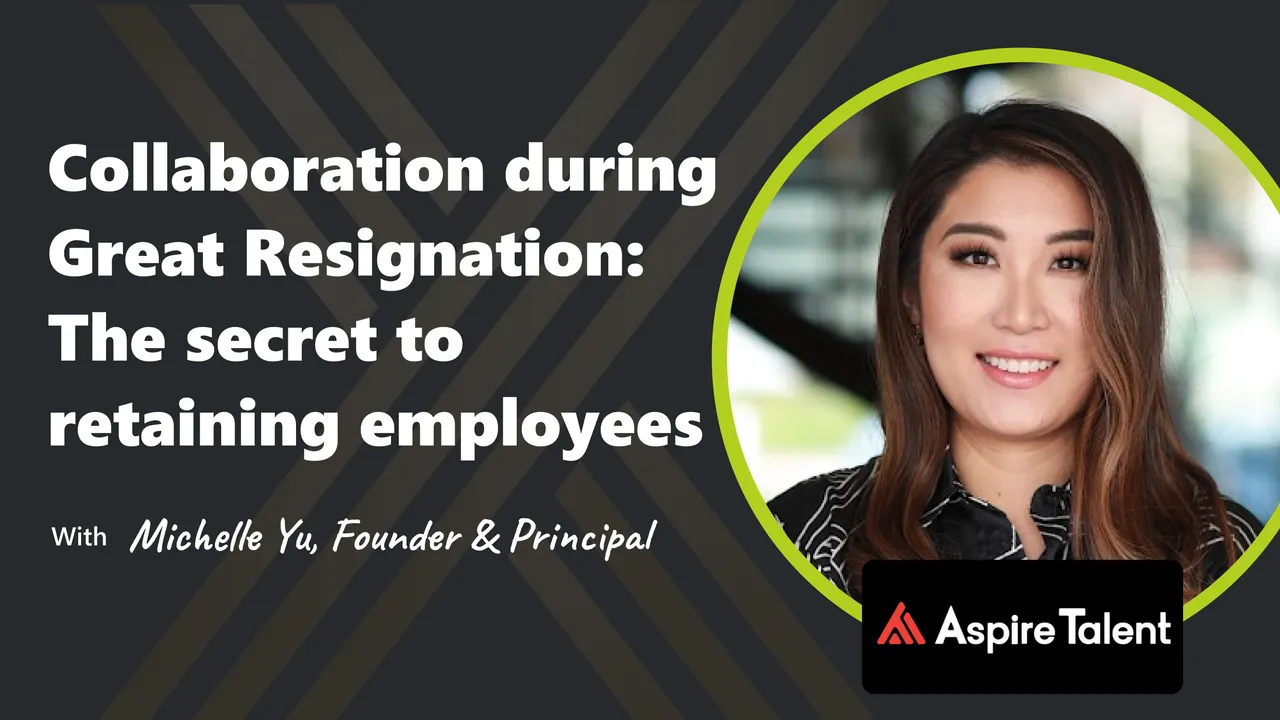
In this episode, Michelle Yu reveals why collaboration and culture, not just pay, are the real keys to retaining talent during the Great Resignation, urging leaders to embrace employee needs, invest in growth, and foster genuine connection.
TL;DR
What you need to know from this episode
- The Great Resignation surfaced problems that were already there. Michelle Yu frames the pandemic as a catalyst, not a cause, that exposed long-standing strains around employee healthcare, mental health, and fair pay.
- Retention is won across the whole employee life cycle, not just at hiring. Companies over-invest in recruiting and onboarding, then neglect the development, leadership growth, and career pathing where people actually decide to stay.
- Culture change fails when it is performative. Blanket DEI or wellbeing statements do not stick without genuine appetite from senior leaders and the small day-to-day actions that show the shift.
- Technology works best as an early-warning system. Pulse surveys and quick check-ins let leaders spot discontent and respond proactively instead of reacting after someone has already resigned.
- Coaching and one-to-one support retain people that pay alone cannot. Customized support in a space separate from the employer builds individual skills while benefiting the company.
The Great Resignation left a lot of leaders scrambling, but Michelle Yu had watched the pressure build for years. As founder and principal at Aspire Talent, a boutique agency that pairs HR consulting with one-to-one coaching, she is brought in when organizations hit a moment of transition, whether their people team is stretched thin or a gap has opened between the values they preach and the way they actually operate. She is a career and leadership coach and HR consultant with more than a decade of experience across people operations roles in tech, including a stint as head of HR Operations at SoftBank.
In this episode of Culture Club, hosted by Nicole Patrick, Yu digs into the question every people leader was asking at the time: what really drove employees to leave in such numbers, and what does it take to make them stay? Her answer keeps returning to two things money alone cannot buy, collaboration and culture.
Rather than treat the exodus as a single event, Yu frames it as the surfacing of problems that had been swept under the rug for a long time. The pandemic, in her telling, was less a cause than a catalyst that gave workers both the reasons and the options to rethink where they wanted to be. That reframing runs through everything she says: the fixes are less about firefighting departures and more about the everyday practices that make people want to stay.
What actually triggered the great resignation
Yu is careful not to pin everything on the pandemic. The underlying core issues, she says, had been brewing for a while, especially in the US, and the crisis simply brought them to light. Employee healthcare, mental health, and fair pay were long-standing strains that suddenly became impossible to ignore once a worker shortage set in.
She reads the moment as a melting pot of elements: the mental health toll on workers, the need for flexible environments for parents, and a wave of social reckoning around DEI. Together these pushed employees to question whether they were in the right place and how their employer was responding when it mattered most.
Crucially, Yu sees a catalyst as an opportunity rather than a threat. Once problems are visible at the surface, she argues, organizations can finally take proactive steps to resolve them instead of letting them fester. The leaders who treat the moment that way are the ones who come out of it with stronger, more resilient cultures.
Why retaining people matters as much as hiring them
For Yu, the fix starts with seeing the whole employee life cycle rather than obsessing over the front door. Companies pour energy into recruiting and onboarding, then lose interest once someone is in the seat, even though leadership growth, support, and career trajectory are where retention is won or lost.
it's so expensive to hire and it's painful when you lose people.
The economics reinforce the point. When a recruiter takes 10 to 25 percent of a hire's compensation as a placement fee, a revolving door gets expensive fast. Yu argues it is smarter to find the pillars of why people leave than to keep reacting with a fresh candidate pipeline, so the later stages of the life cycle get the same care as the first day.
Her warning is against a common trap: treating new hires beautifully while forgetting everyone already in the building. Sustainability, she says, comes from looking at the experience entirely, from the first interview through every promotion and role change, rather than churning people in and out.
How remote and hybrid work strained collaboration
The shift to remote and hybrid work is where communication fell apart, or at least had the potential to. Yu recalls coaching people who started new roles entirely online, unable to meet teammates or read the culture of a company from a distance. She points to deliberate design, Slack channels, networking events, anything that ropes new joiners into the fold, as the antidote.
She also flags a generational split. Some employees are so accustomed to in-person work that letting go of it is hard, while early-career clients are starting their first jobs having never known an office. Bridging that spectrum, she says, comes down to identifying the best way to communicate for each person.
Why lasting culture change beats performative gestures
Yu is blunt about change theater. Saying DEI or wellbeing matters as a blanket statement, because everyone else is doing it, does not stick. Real change needs genuine appetite at the top, because culture trickles down from the most senior leaders who either embody the values or quietly let them fall apart.
the small day-to-day actions that show the shifts versus the big push and the big initiative.
What makes culture durable, she argues, is the accumulation of small details: a manager offering acknowledgement, opening space for uncomfortable conversations, or checking in on someone's sense of belonging. She pairs that with measurement, urging companies to embed KPIs and keep pulse checking against the objectives they set at the outset rather than declaring victory in month one.
Can technology help leaders retain and scale
The past decade's boom in HR tech gives leaders more tools than ever, though Yu admits the sheer volume can be numbing. Beyond performance management and pulse surveys, she points to modern learning and development, new perk vendors, and platforms like Oyster, Deel, and Remote that handle the administration of international workers when mobility becomes a retention lever.
Her practical advice is to start where the signal is clearest. Quick check-ins and a pulse survey tool let organizations see where people are at, surface why someone is disgruntled, and respond proactively instead of reacting after a resignation lands. Normalizing that technology, she notes, has also transformed coaching and training, letting practitioners work across cities and time zones without the old boundaries of location.
Why coaching and one-to-one support build resilience
Yu is open about her bias as a coach, but her case is straightforward. Organizations can take a better stance by giving struggling employees customized, one-to-one support in a space that sits outside the reporting line.
organizations can take a better stance with providing customized or one-to-one support for their employees who might be struggling.
That kind of support, she argues, builds skills the individual keeps while also benefiting the company, and it belongs alongside mental health services rather than in place of them. It is a reminder that retention is ultimately personal, earned one relationship at a time.
Yu is upfront that this is her bias as a coach, but the underlying logic holds beyond coaching itself. Whether the vehicle is coaching, training, or learning and development, the aim is the same: give people a safe space to grow so they build commitment to the organization instead of quietly planning their exit.
Listening as the foundation of retention
The thread running through Yu's answers is that people stay when they feel heard and see their value reflected back. Pay alone will not hold them, but a culture that notices discontent early, acts on it, and keeps the conversation going through the whole life cycle will.
That is where an employee listening platform earns its keep. Continuously capturing employee sentiment and closing the loop on it turns Yu's advice into a repeatable practice, so leaders can give people enough reasons to stay long before they start looking for the door.

About the guest
Michelle Yu
Founder & Principal, Aspire Talent
Michelle is a Career & Leadership Coach and HR Consultant and a keynote speaker with more than a decade of experience working in various people operations roles within the Tech industry. In the past, Michelle has spoken at companies like Google and NBC Universal, and has been featured in outlets like CNBC. Prior to her current stint as the founder and principal of Aspire talent, she was the former Head of HR Operations at SoftBank, and has worked at companies like Google and Groupon.
Her work majorly focuses on helping both individuals and organizations bring further alignment to their values. She specializes in coaching leaders in bridging the gap for underrepresented populations, in particular women and people of colour. She received her MBA from Duke, and is also an ICF certified coach.
Full episode transcript
Season 03, Episode 04 · Michelle Yu with Nicole Patrick · 26 min
Frequently asked questions
Was the Great Resignation caused by the pandemic?
Not directly, according to Michelle Yu. She describes the pandemic as a catalyst rather than the cause, arguing that underlying issues around employee healthcare, mental health, and fair pay had been building for years, especially in the US. The crisis brought those strains to the surface and gave employees both the options and the reasons to rethink where they worked.
Why is retaining employees cheaper than hiring new ones?
Yu points to placement economics: a recruiter often takes 10 to 25 percent of a new hire's compensation as a fee, so a revolving door of departures gets costly quickly. She recommends finding the underlying reasons people leave rather than constantly reacting with a new candidate pipeline.
How can companies build connection in remote and hybrid teams?
She suggests deliberately designing ways to embed new joiners, such as Slack channels and networking events, so they can meet teammates and absorb the culture from a distance. Yu also notes a generational split between employees accustomed to in-person work and early-career hires who have never worked in an office, so leaders should identify the best way to communicate for each person.
What makes culture change actually stick?
Genuine appetite at the top, says Yu, because culture trickles down from the senior most leaders who embody the values. She emphasizes small, repeated day-to-day actions over one-off initiatives, and urges companies to embed KPIs and keep pulse checking against the objectives they set at the outset.
Which HR technologies help with employee retention?
Yu highlights pulse surveys, quick check-ins, and performance management tools, along with modern learning and development and new perk platforms. For distributed teams she mentions services like Oyster, Deel, and Remote that handle the administration of international workers.



Never miss an episode
New conversations with people leaders, plus the takeaways that matter, on your LinkedIn feed as soon as they drop.
Free on LinkedIn. Unsubscribe anytime.