


20+ Employee retention tools and software to keep your best talent in 2026

Think about that January gym membership where the first week’s full of motivation, new routines, and early progress selfies. But by March, the playlists fade, the reminders stop, and that energy quietly slips away. Not because the goal mattered any less, but because consistency is hard without a system that keeps you accountable.
Employee engagement works the same way. Excitement peaks after a big initiative or survey, but without the right tools to track, nudge, and act, momentum fades, and so do your people’s connection and trust.
That’s where engagement tools step in: they keep the rhythm alive, turning short bursts of enthusiasm into long-term loyalty. Let’s explore how they help you sustain energy that doesn’t burn out by spring.
Table of contents:-
- CultureMonkey: AI-powered employee engagement and retention platform built for enterprises with deep analytics and action-focused insights.
- Lattice: Performance and engagement platform helping organizations gain feedback and manager development.
- 15Five: People and performance solutions focused on check-ins, feedback and coaching-driven growth conversations.
- Culture Amp: Engagement platform offering surveys, benchmarks and insights for organizational development.
- Qualtrics: Enterprise experience management tool providing surveys and sentiment analytics.
- TINYpulse: Lightweight feedback platform capturing quick insights into employee sentiment.
- Workday Peakon: Continuous listening tool using surveys and trends to measure engagement across teams.
- Quantum Workplace: Data-driven engagement suite delivering insights to help organizations improve performance and culture.
- Leapsome: Performance and engagement platform unifying goals, feedback, reviews and learning.
- BambooHR: HR software that includes basic employee surveys and feedback tools.
- Vantage Circle: Rewards and recognition platform designed to motivate and retain employees.
- WorkTango: Employee experience platform combining surveys, recognition and performance support.
- Motivosity: Recognition and rewards solution focused on strengthening connection and appreciation at work.
- Deel: Global HR and payroll platform that also provides simple employee engagement capabilities.
- Achievers: Employee recognition platform offering rewards and appreciation tools to boost morale.
- PerformYard: Performance management tool centered on goal tracking, reviews and alignment.
- Workleap: Easy-to-use engagement and performance tool offering surveys, feedback and team insights.
- Microsoft Teams: Workplace communication platform providing chat, meetings and team collaboration.
- Slack: Messaging and collaboration tool enabling quick communication and organized team channels.
- Atlassian Trello: Visual project management tool helping teams organize workflows and tasks.
- Staffbase: Employee communication and intranet platform centralizing updates and company-wide messaging.
- ContactMonkey: Internal email communication tool supporting newsletter creation, sending and engagement tracking.
What are retention tools and how do they help in employee engagement?
Retention tools are systems that help you spot why people may leave before it turns into real turnover. They centralize feedback, sentiment trends, and risk signals so managers know exactly where engagement is slipping and what actions to take. Instead of scattered surveys or guesswork, these tools give you a clear, decision-ready view of what strengthens trust, motivation, and leadership effectiveness.
This makes it easier to prioritize fixes, close the loop faster, and prevent small issues from growing into resignations. For teams evaluating platforms, strong retention tools offer accurate insights, actionable guidance, and a system that keeps engagement steady over time.
Top employee engagement and feedback tools
1. CultureMonkey
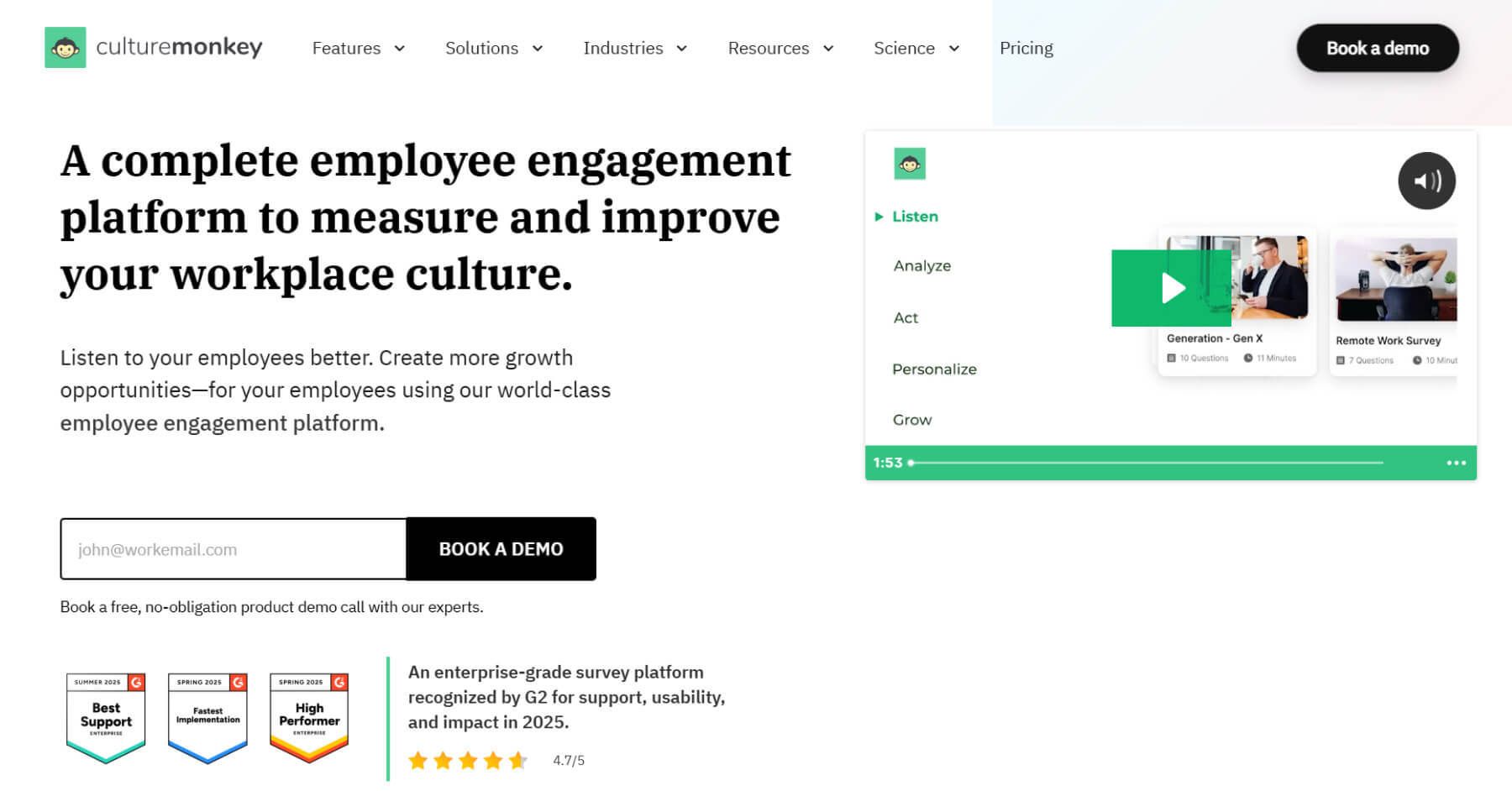


CultureMonkey is built for enterprises as a complete feedback ecosystem with AI-powered insights, anonymous multi-channel surveys, lifecycle automation, and role-specific dashboards.
With AI-driven sentiment models, dedicated DEI and wellbeing modules, multilingual survey delivery, and secure role-based dashboards, CultureMonkey operationalizes feedback into guided retention actions that teams can execute and improve engagement and stability across teams.

Key Takeaways
- Pricing: Contact sales
- G2 Rating: 4.7/5
- Capterra Rating: N/A
- Pros: Efficient automated survey platform; intuitive for employees and HR teams; strong reporting insights; reliable customer support. (Source: G2)
- Cons: No significant drawbacks reported — overall platform experience is consistently positive and easy to use. (Source: G2)
Take a quick interactive tour inside CultureMonkey:
2. Lattice
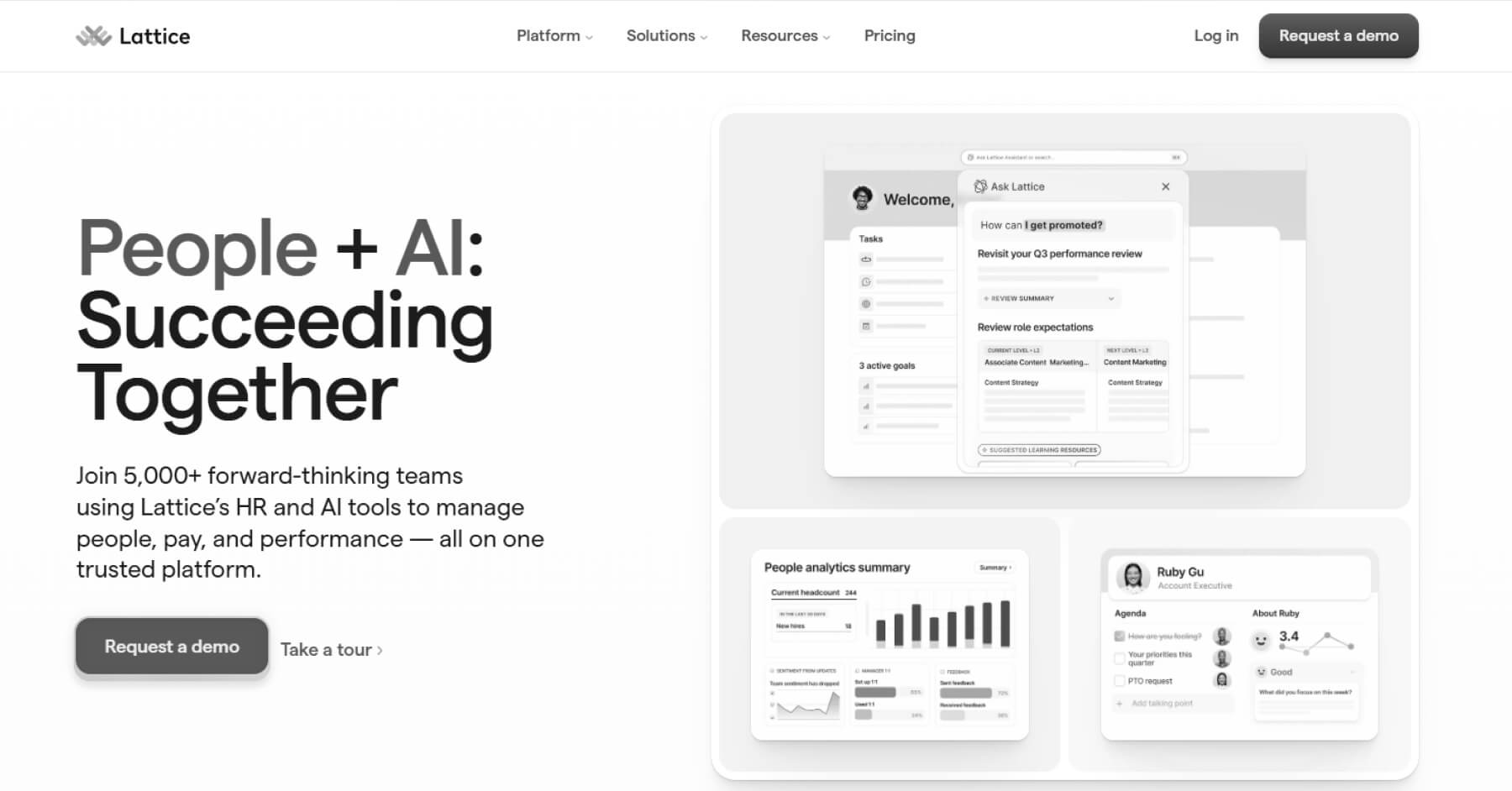
Lattice provides performance management, goals, and feedback tools designed for structured reviews and development conversations. It helps teams track progress, share input, and maintain alignment across ongoing performance cycles.
Key Takeaways
- Pricing: $11 per user/month
- G2 Rating: 4.7/5
- Capterra Rating: 4.5/5
- Pros: Supports structured 1:1s and meeting continuity, helps track career growth, and enables effective peer feedback and development conversations. (Source: G2)
- Cons: Limited text formatting flexibility, making editing less intuitive compared to tools like Google Docs or Microsoft Word. (Source: G2)
3. 15Five
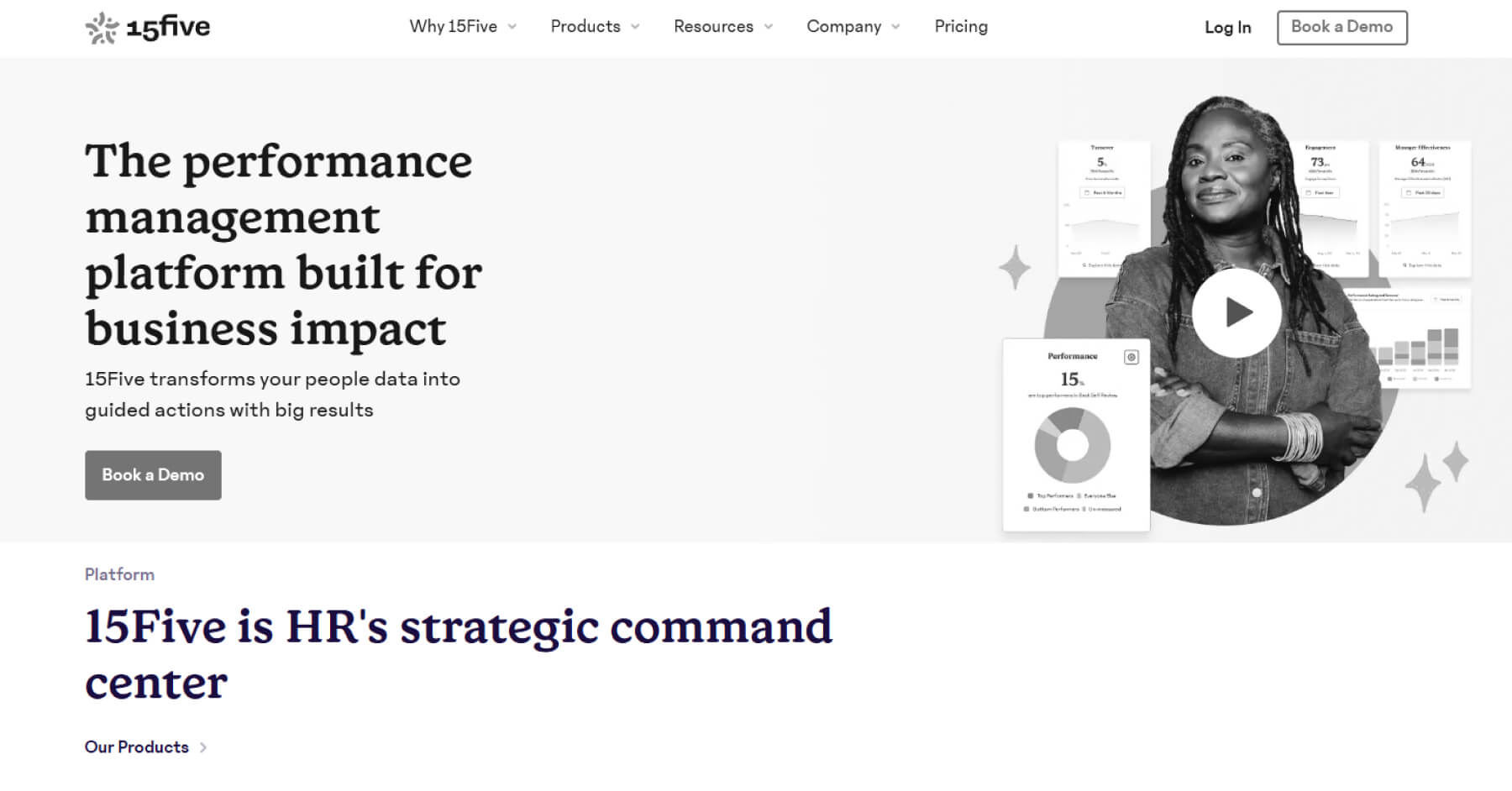
15Five offers check-ins, performance tools, and manager coaching features that help teams share weekly updates, track development needs, and stay connected through regular input and structured growth conversations.
Key Takeaways
- Pricing: $4 per employee/month
- G2 Rating: 4.6/5
- Capterra Rating: 4.5/5
- Pros: Supports alignment and growth through weekly check-ins, goal tracking and feedback tools, helping teams stay engaged and connected. (Source: G2)
- Cons: Can feel overwhelming due to feature breadth; interface may appear cluttered and pricing may not suit smaller teams. (Source: G2)
4. CultureAmp
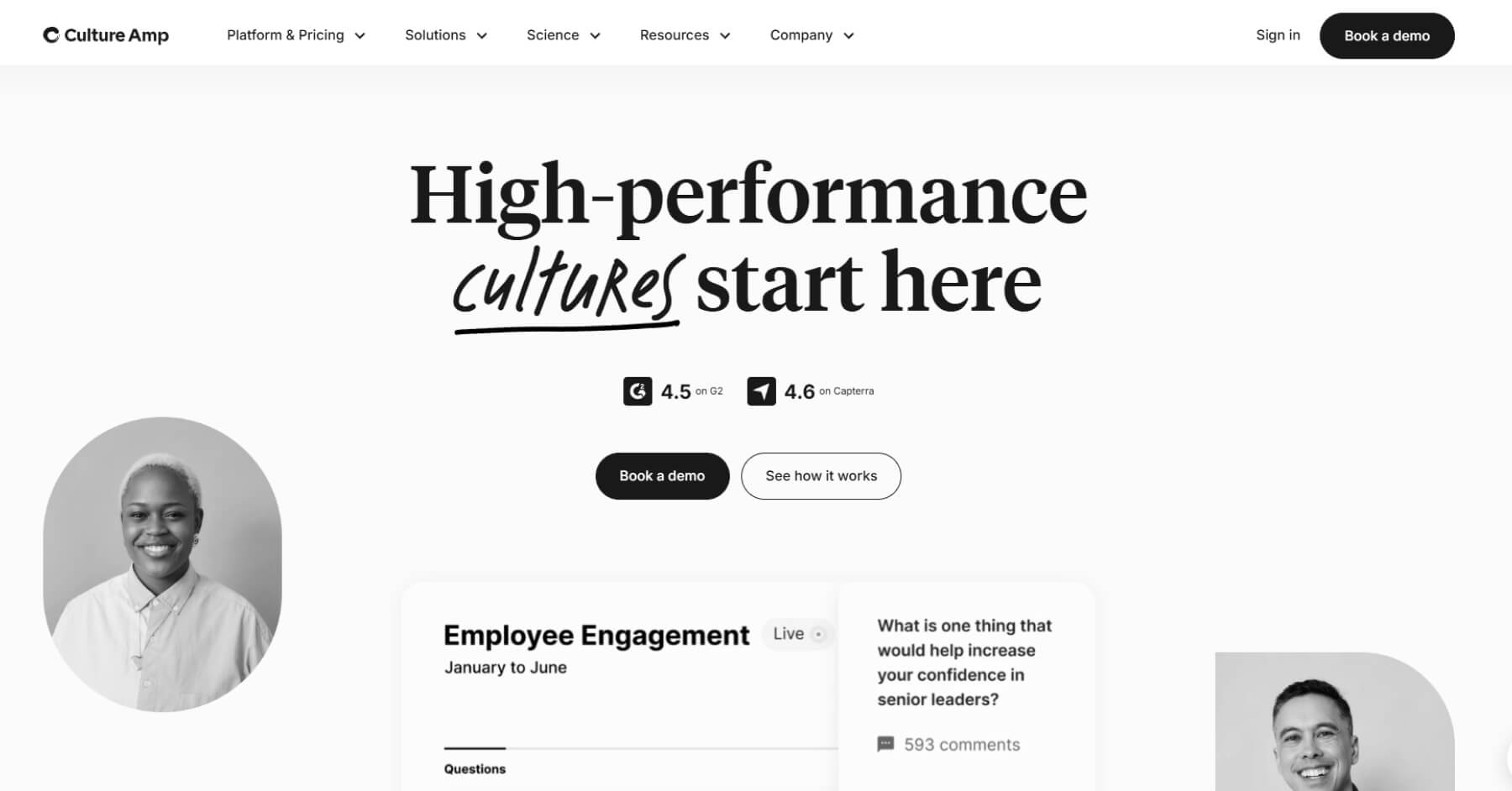
Culture Amp provides surveys, performance reviews, and benchmark comparisons that help organizations measure sentiment, track development areas, and understand engagement patterns across teams and roles.
Key Takeaways
- Pricing: Contact sales
- G2 Rating: 4.5/5
- Capterra Rating: 4.6/5
- Pros: Helps track goal progress and collect peer feedback, with some learning resources available. (Source: G2)
- Cons: Can be time-consuming to document inputs, which may affect usage consistency across teams. (Source: G2)
5. Qualtrics
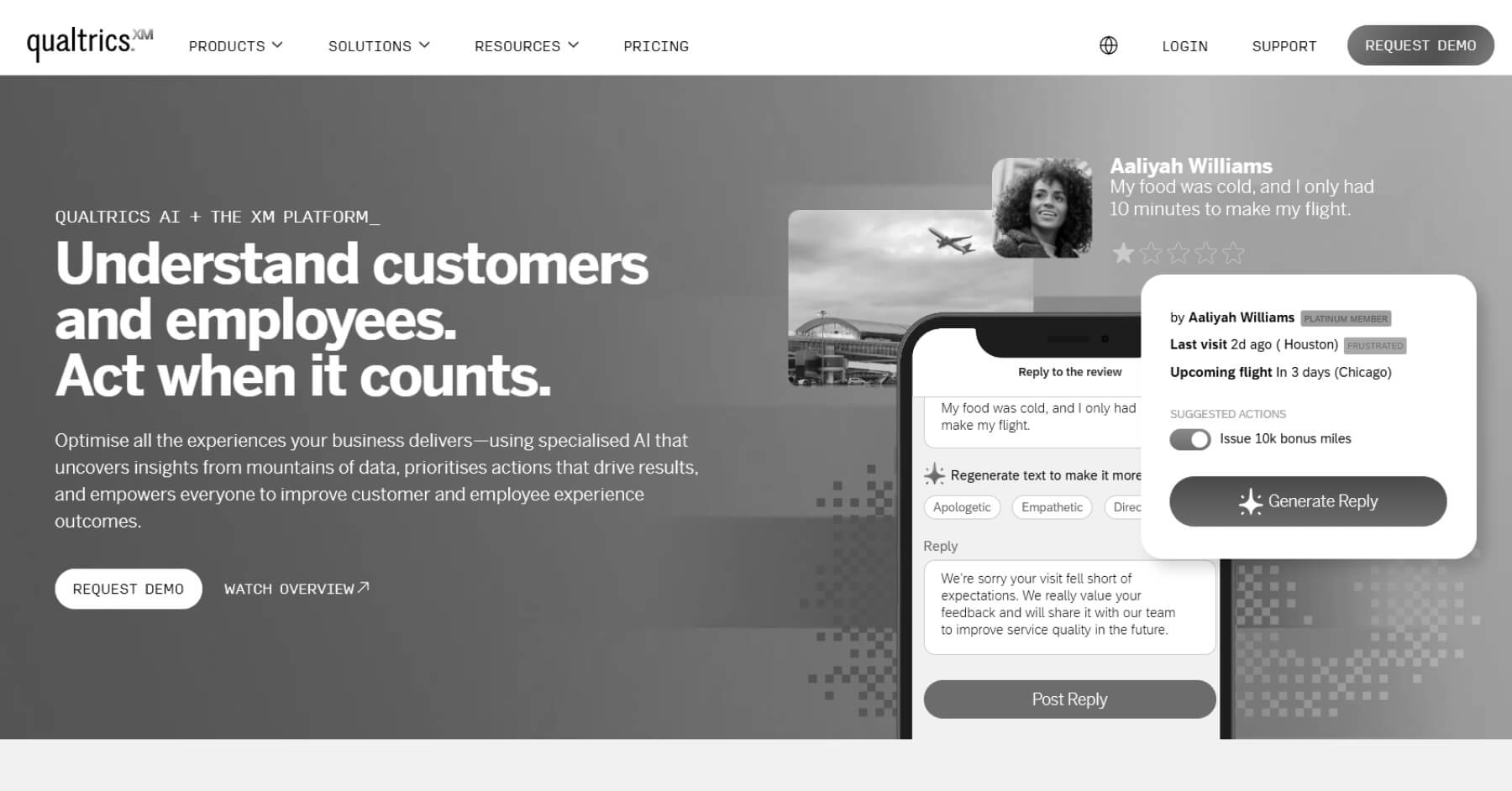
Qualtrics delivers surveys, dashboards, and sentiment analytics that help organizations capture employee input, identify general experience trends, and review engagement across the workforce.
Key Takeaways
- Pricing: Contact sales
- G2 Rating: 4.4/5
- Capterra Rating: 4.6/5
- Pros: Easy to use once adopted, offers broad feature availability and integrates smoothly with internal tools, supported by strong customer service. (Source: G2)
- Cons: Can be complex to learn and explain due to the platform’s size and depth. (Source: G2)
6. TINYpulse
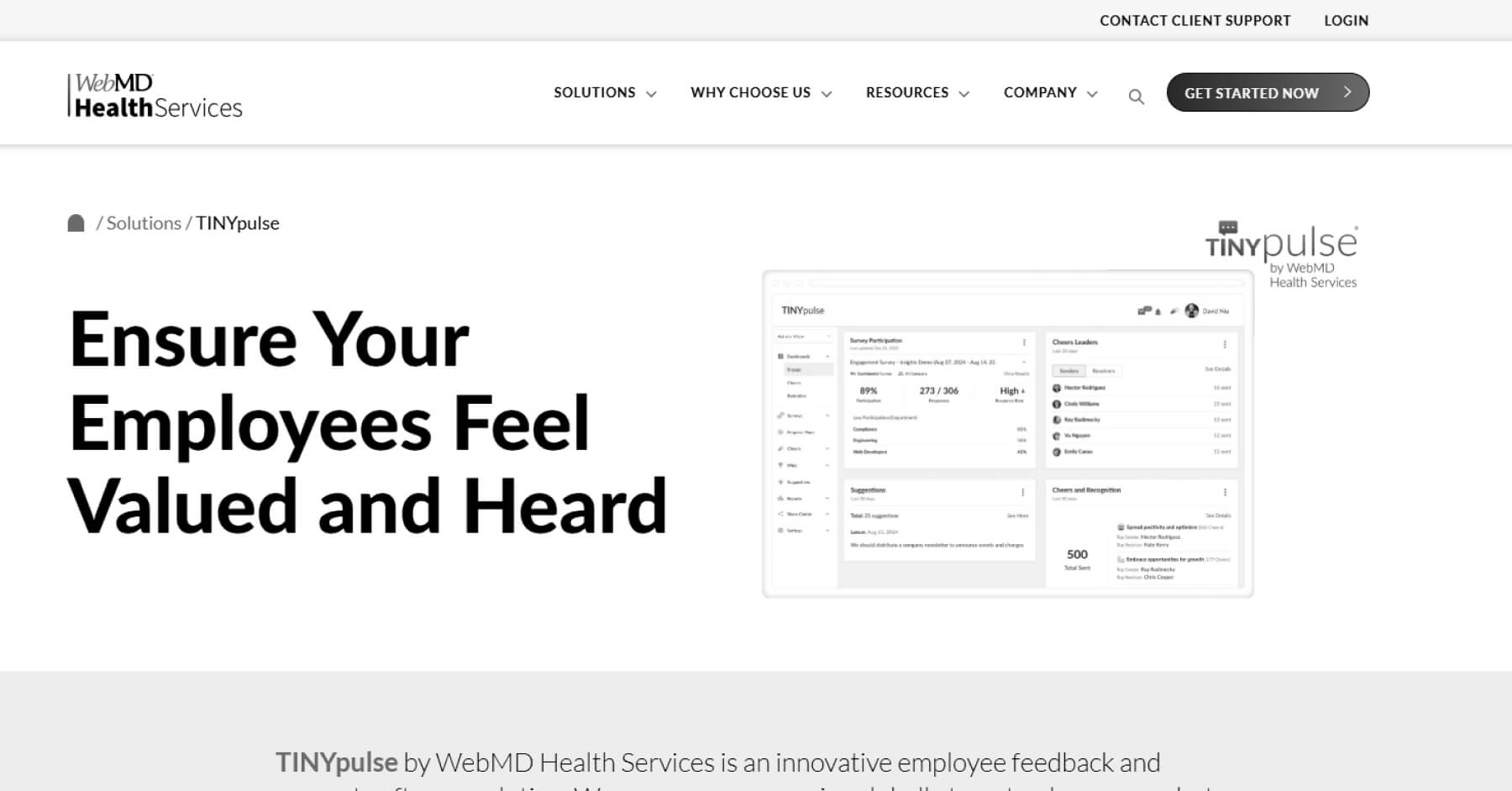
TINYpulse offers pulse surveys, lightweight recognition, and regular feedback collection aimed at helping teams capture quick sentiment updates and track morale changes over time.
Key Takeaways
- Pricing: Contact sales
- G2 Rating: 4.4/5
- Capterra Rating: N/A
- Pros: Gives employees a way to share feedback openly, often perceived as honest and helpful for general team sentiment. (Source: G2)
- Cons: Open-ended questions tend to receive lower participation, and some users miss older visualization formats like long-term happiness graphs. (Source: G2)
7. Workday Peakon
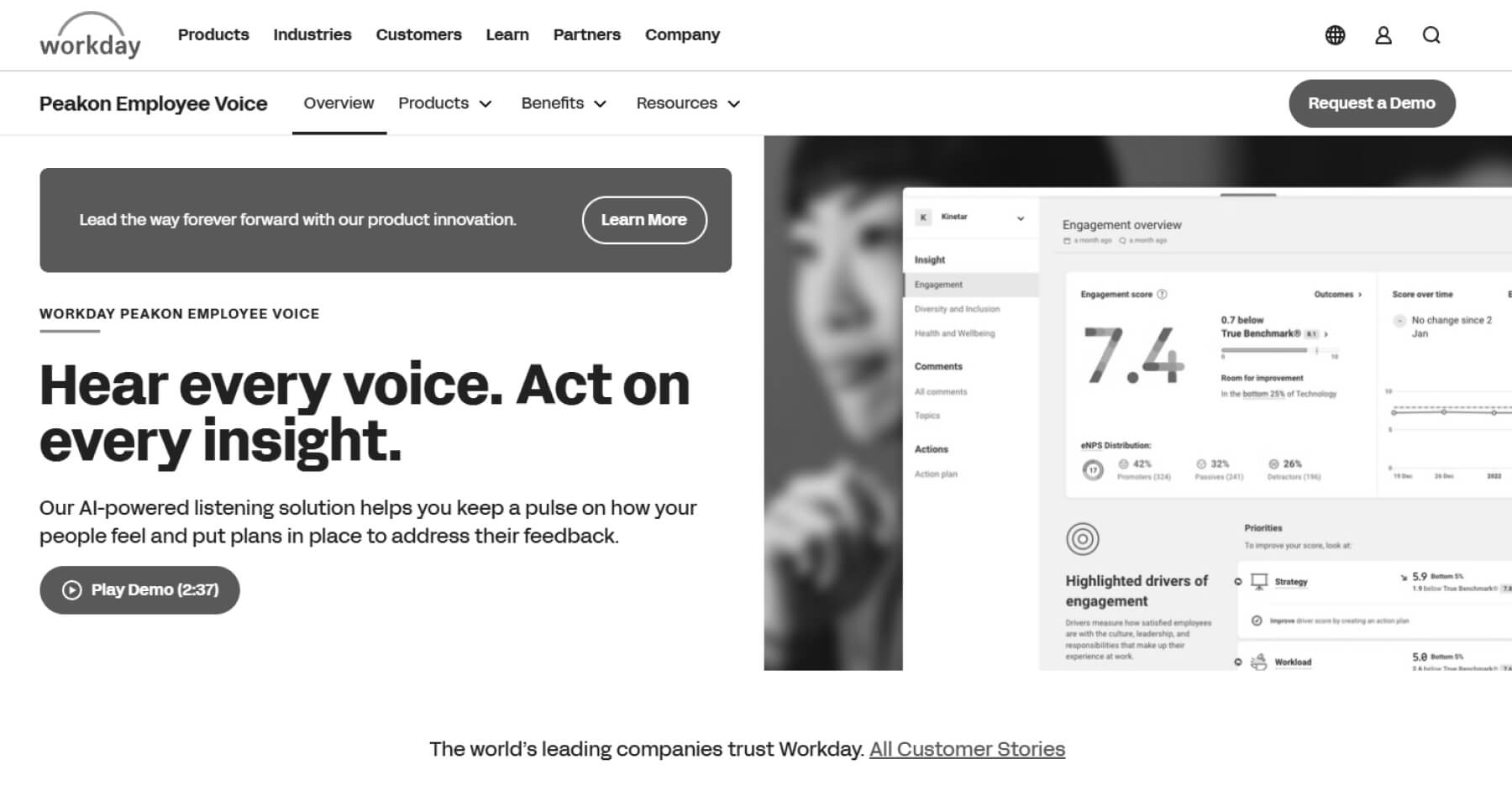
Workday Peakon provides continuous feedback, sentiment trends, and benchmark data that help leaders monitor engagement levels, identify broad experience gaps, and review workforce signals.
Key Takeaways
- Pricing: Contact sales
- G2 Rating: 4.6/5
- Capterra Rating: 4.7/5
- Pros: Enables real-time anonymous feedback collection, helping employees share input openly. (Source: G2)
- Cons: Can feel intrusive due to frequent reminders, though integration with communication tools is straightforward. (Source: G2)
8. Quantum Workplace
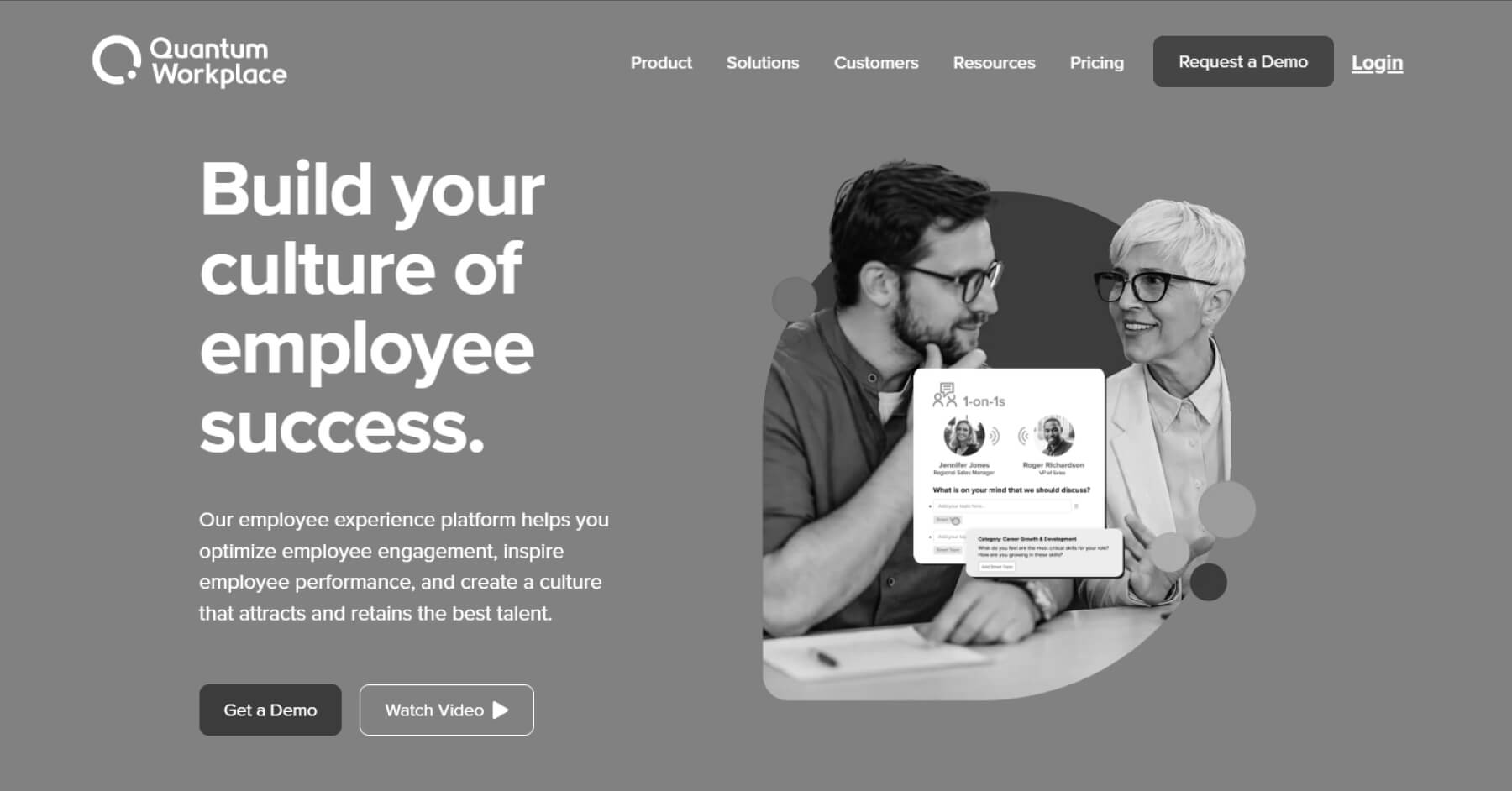
Quantum Workplace offers surveys, basic analytics, and performance tools that help HR teams track sentiment, review engagement patterns, and run structured feedback processes across teams.
Key Takeaways
- Pricing: $4 per employee/month
- G2 Rating: 4.3/5
- Capterra Rating: 4.6/5
- Pros: Makes it easy for employees to share feedback with managers and leadership. (Source: G2)
- Cons: Notifications may get missed as they can land in spam or appear unfamiliar to employees. (Source: G2)
9. Leapsome
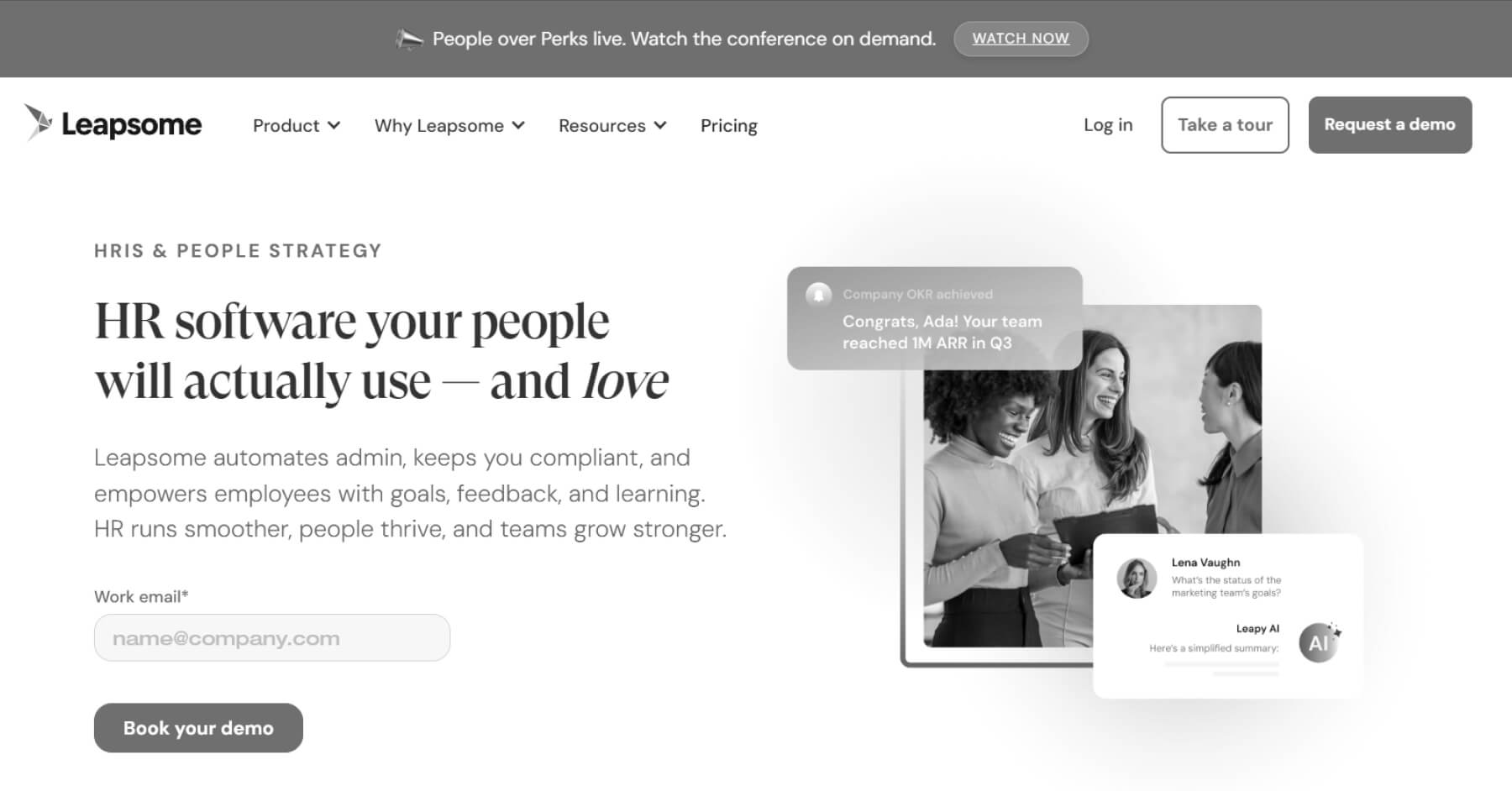
Leapsome combines surveys, performance reviews, OKR tracking, and learning tools to support structured development processes and help teams maintain visibility into engagement and progress.
Key Takeaways
- Pricing: Contact sales
- G2 Rating: 4.8/5
- Capterra Rating: 4.6/5
- Pros: Centralizes people management tasks such as feedback, learning modules and coaching into one portal. (Source: G2)
- Cons: Not designed for managing individual tasks or meetings, which may add an extra platform for teams to administer. (Source: G2)
10. BambooHR
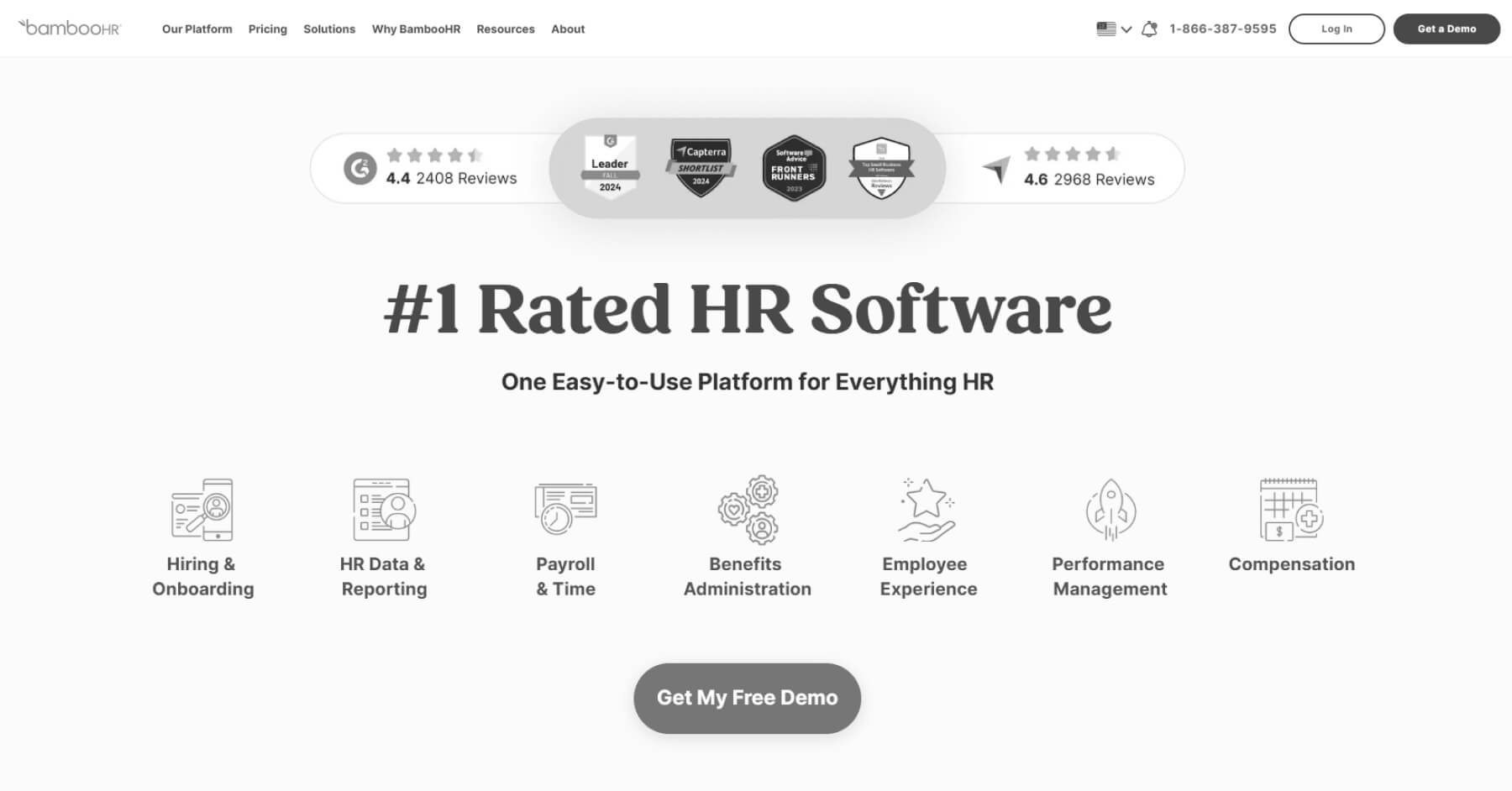
BambooHR is an HRIS platform with onboarding, time-off management, and performance review tools that help teams organize employee data and support standard HR operations.
Key Takeaways
- Pricing: Contact sales
- G2 Rating: 4.4/5
- Capterra Rating: 4.6/5
- Pros: User-friendly and intuitive platform with strong customer service and ongoing improvements. (Source: G2)
- Cons: Signature template setup could be difficult to configure smoothly. (Source: G2)
11. Vantage Circle
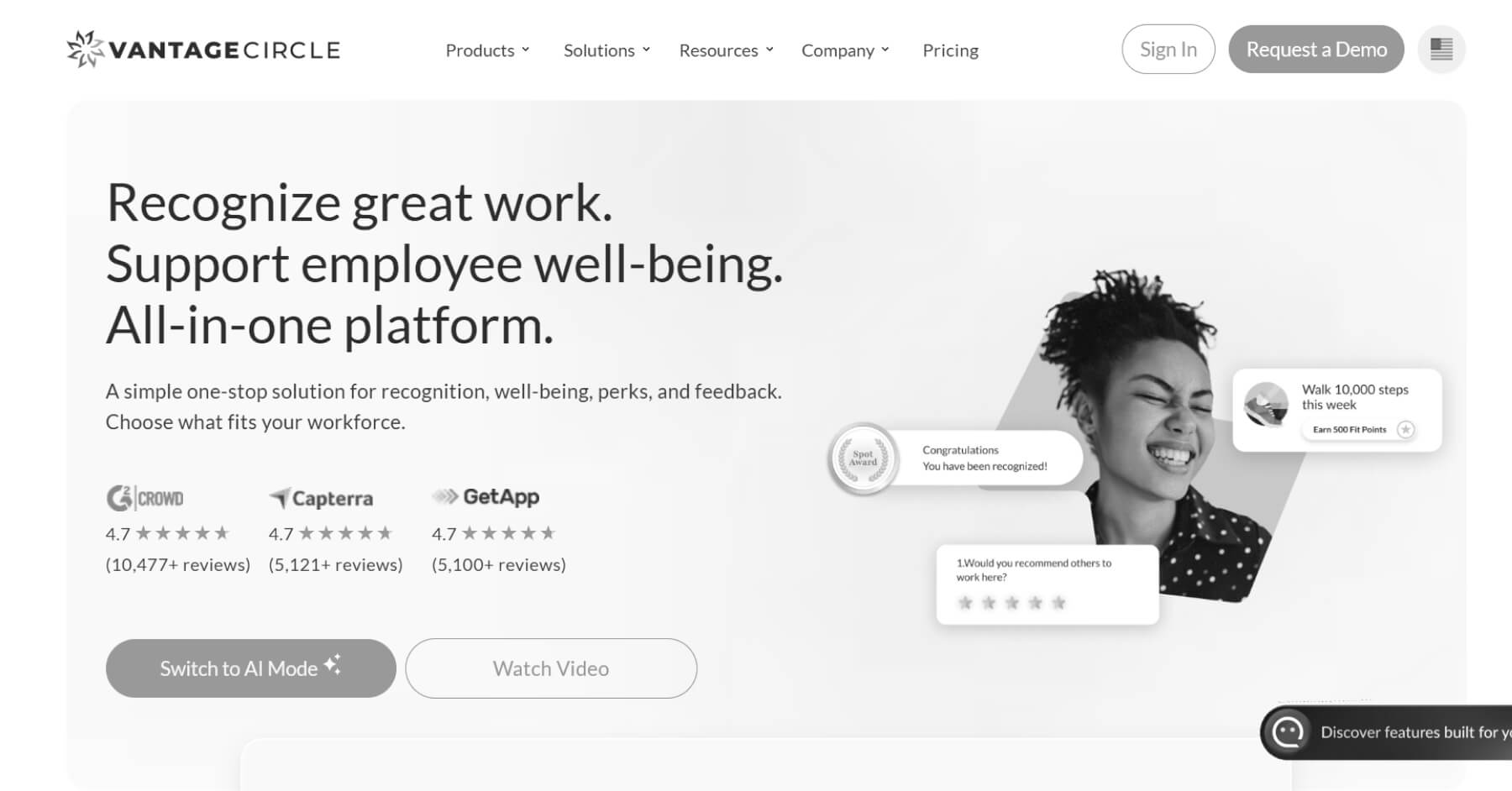
Vantage Circle provides recognition, rewards, and survey modules designed to help teams encourage appreciation and collect engagement insights across the organization.
Key Takeaways
- Pricing: Contact sales
- G2 Rating: 4.7/5
- Capterra Rating: 4.7/5
- Pros: Wide range of digital voucher options across multiple categories with quick delivery after redemption. (Source: G2)
- Cons: Some vouchers may not be consistently available, leading to occasional swap between similar options. (Source: G2)
12. WorkTango
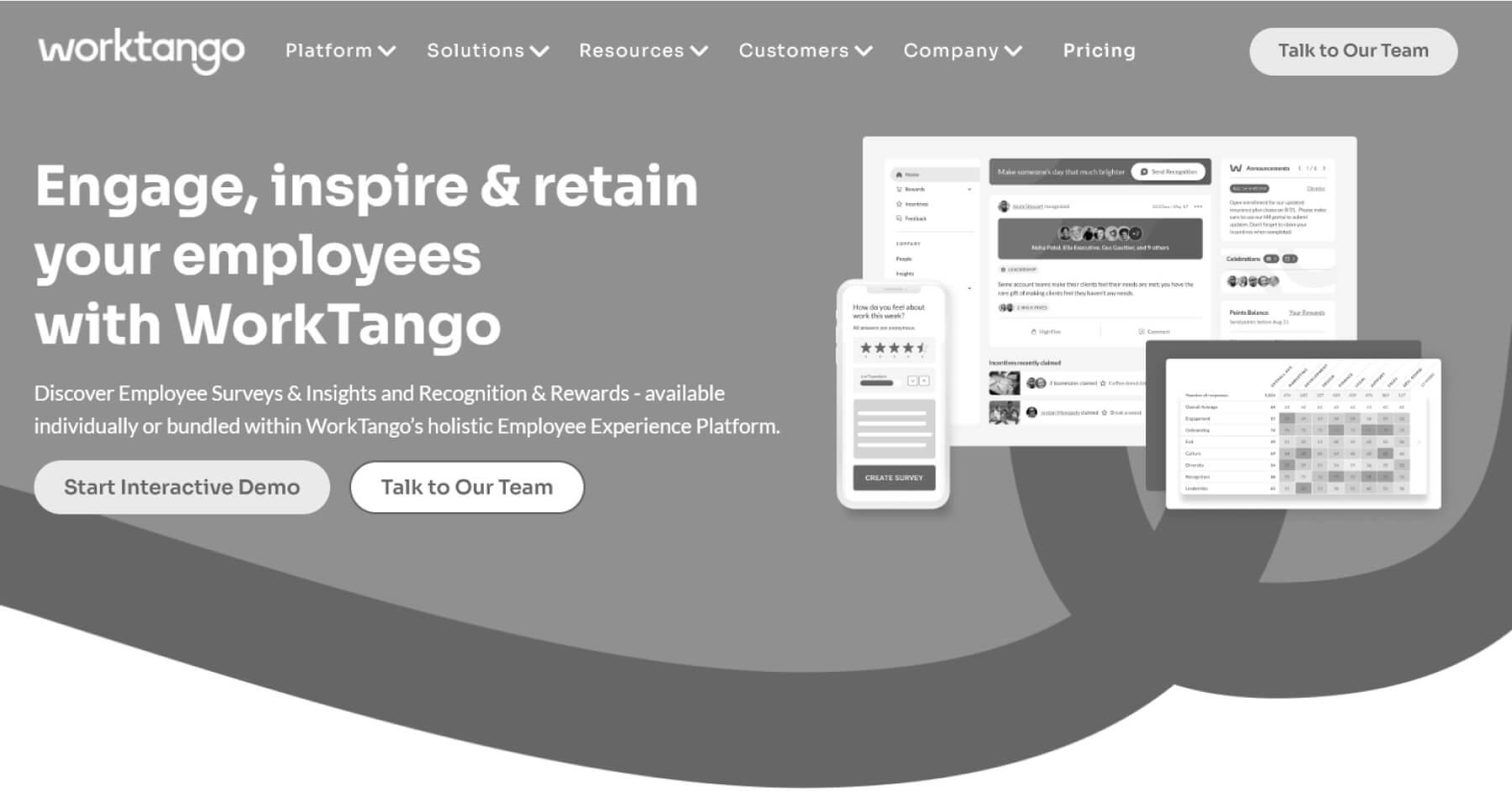
WorkTango offers surveys, recognition tools, and sentiment summaries that help organizations gather employee input and support appreciation routines across teams.
Key Takeaways
- Pricing: Contact sales
- G2 Rating: 4.7/5
- Capterra Rating: 4.9/5
- Pros: Helps employees share feedback through surveys and supports a culture of recognition where people feel acknowledged. (Source: G2)
- Cons: Reward point system could feel restrictive, and users have reported slow platform response and delays in reward credit processing. (Source: G2)
13. Motivosity
Motivosity focuses on peer recognition, rewards, and lightweight feedback tools that help teams encourage acknowledgment, track morale, and support everyday appreciation moments.
Key Takeaways
- Pricing: Contact sales
- G2 Rating: 4.7/5
- Capterra Rating: 4.8/5
- Pros: Easy to use with multiple engagement options available for employees. (Source: G2)
- Cons: Admin setup could feel confusing without a guided workflow, particularly around configuring gifts and inventory. (Source: G2)
Top Performance & Development Platforms
14. Deel
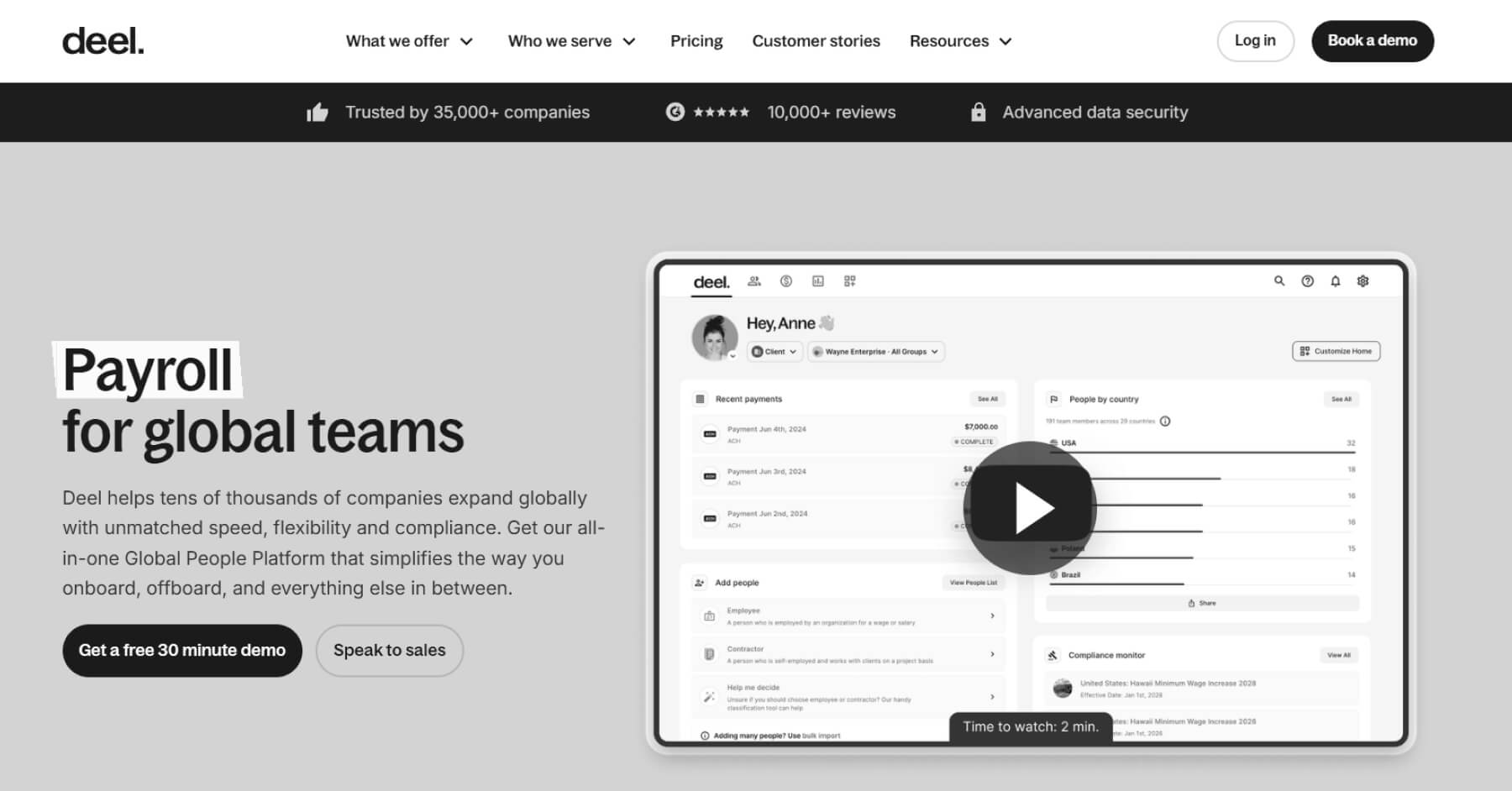
Deel’s engagement platform helps HR teams gather employee feedback and streamline experience management by offering structured input tools and simple dashboards that support global workforce listening.
Key Takeaways
- Pricing: Starting at $5.00/person
- G2 Rating: 4.8/5
- Capterra Rating: 4.8/5
- Pros: Reliable for collecting structured feedback and provides accessible dashboards for distributed teams. (Source: G2)
- Cons: Users report inconsistencies in review-request practices and communication, suggesting the need for more transparent and reliable follow-through. (Source: G2)

Turn feedback into powerful retention wins
- AI driven sentiment insights
- Heatmaps for churn risk groups
- Guided manager action steps
15. Achievers
Achievers is a recognition and rewards platform designed to help organizations reinforce positive behaviors, improve morale and strengthen employee engagement.
Key Takeaways
- Pricing: Contact sales
- G2 Rating: 4.7/5
- Capterra Rating: 4.8/5
- Pros: Simple setup, easy navigation and digital rewards selection that boosts program adoption and employee satisfaction. (Source: G2)
- Cons: Physical reward options may require improvement, and users would benefit from a broader selection of gift cards. (Source: G2)
16. PerformYard
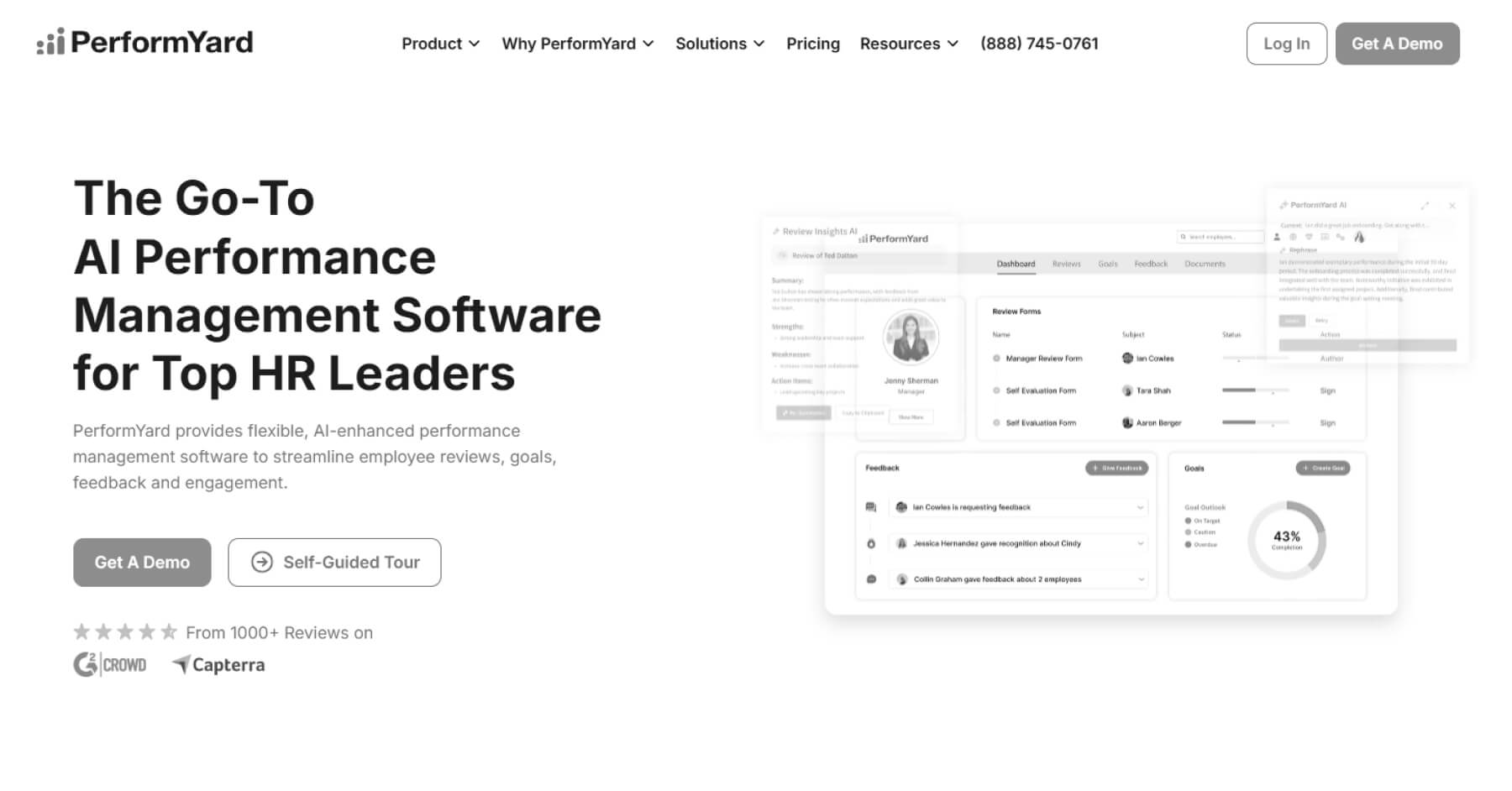
PerformYard helps organizations centralize performance conversations, employee goals and engagement inputs in a single workflow by making progress tracking and manager–employee alignment easier to maintain throughout the year.
Key Takeaways
- Pricing: Contact sales
- G2 Rating: 4.7/5
- Capterra Rating: 4.7/5
- Pros: User-friendly for tracking goals, monitoring progress and supporting meaningful manager–employee discussions. (Source: G2)
- Cons: Some functions may feel basic and could benefit from more advanced capabilities. (Source: G2)
17. Workleap
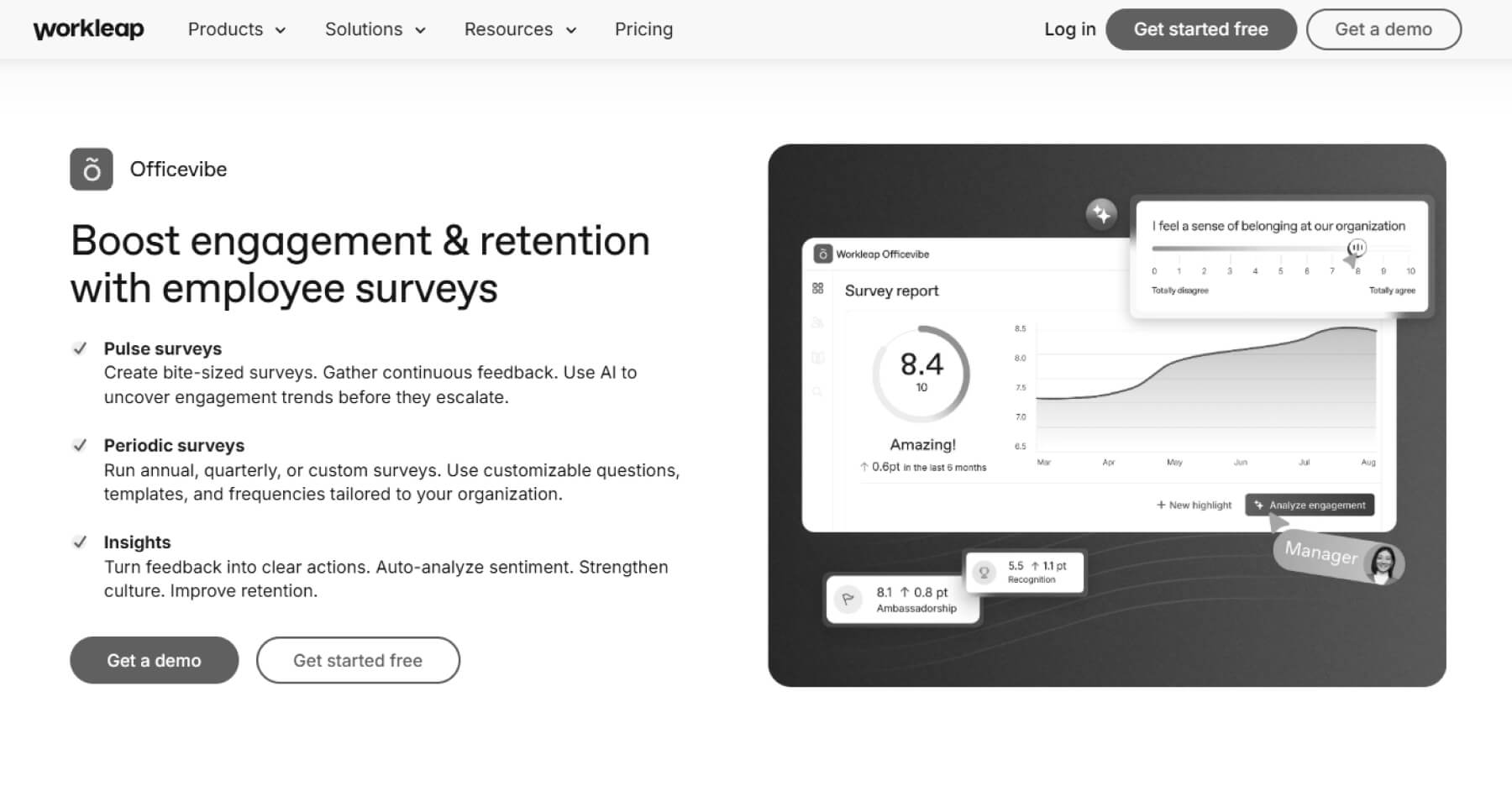
Workleap (Officevibe + Performance) combines employee feedback, team insights and performance tools. It helps teams gather input and streamline check-ins.
Key Takeaways
- Pricing: Officevibe + Performance Bundle — $9.00 per user per month
- G2 Rating: 4.3/5
- Capterra Rating: 4.8/5
- Pros: Easy signup, smooth navigation, strong feedback tools and helpful integrations that simplify day-to-day workflows. (Source: G2)
- Cons: May face minor UI issues during integrations and a wide feature set that may create setup overhead for new users. (Source: G2)
Best Collaboration & Communication Suites
18. Microsoft Teams
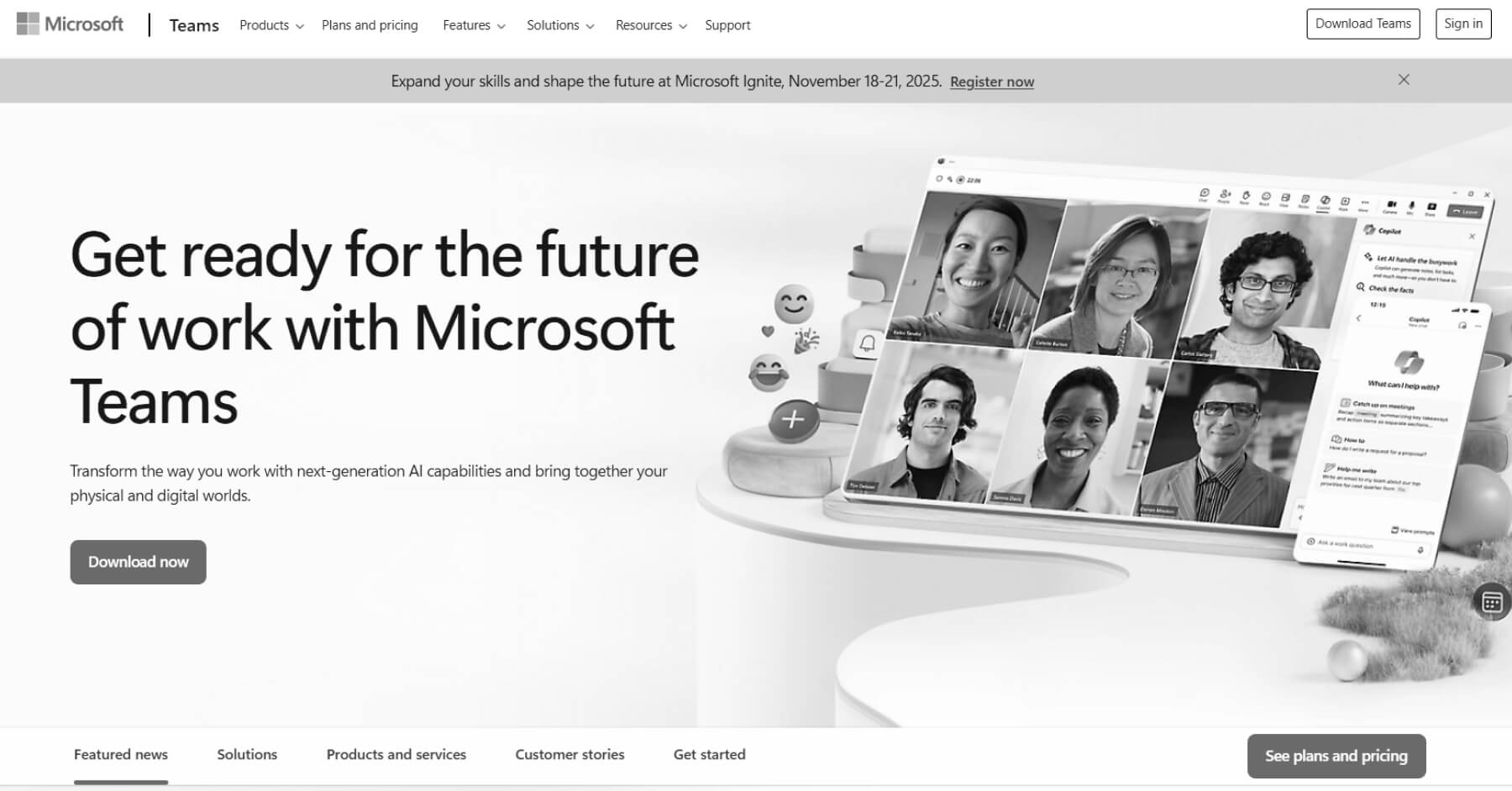
Microsoft Teams helps organizations communicate through chat, meetings and collaboration tools in one workspace with its cross-device access and integrated workflows.
Key Takeaways
- Pricing: $4.80 per user per month
- G2 Rating: 4.4/5
- Capterra Rating: 4.5/5
- Pros: Strong for meetings and video calls, easy mobile access and smooth collaboration with clients and internal teams. (Source: G2)
- Cons: New users may find features difficult to navigate, and weak network conditions can cause noticeable lag. (Source: G2)
19. Slack
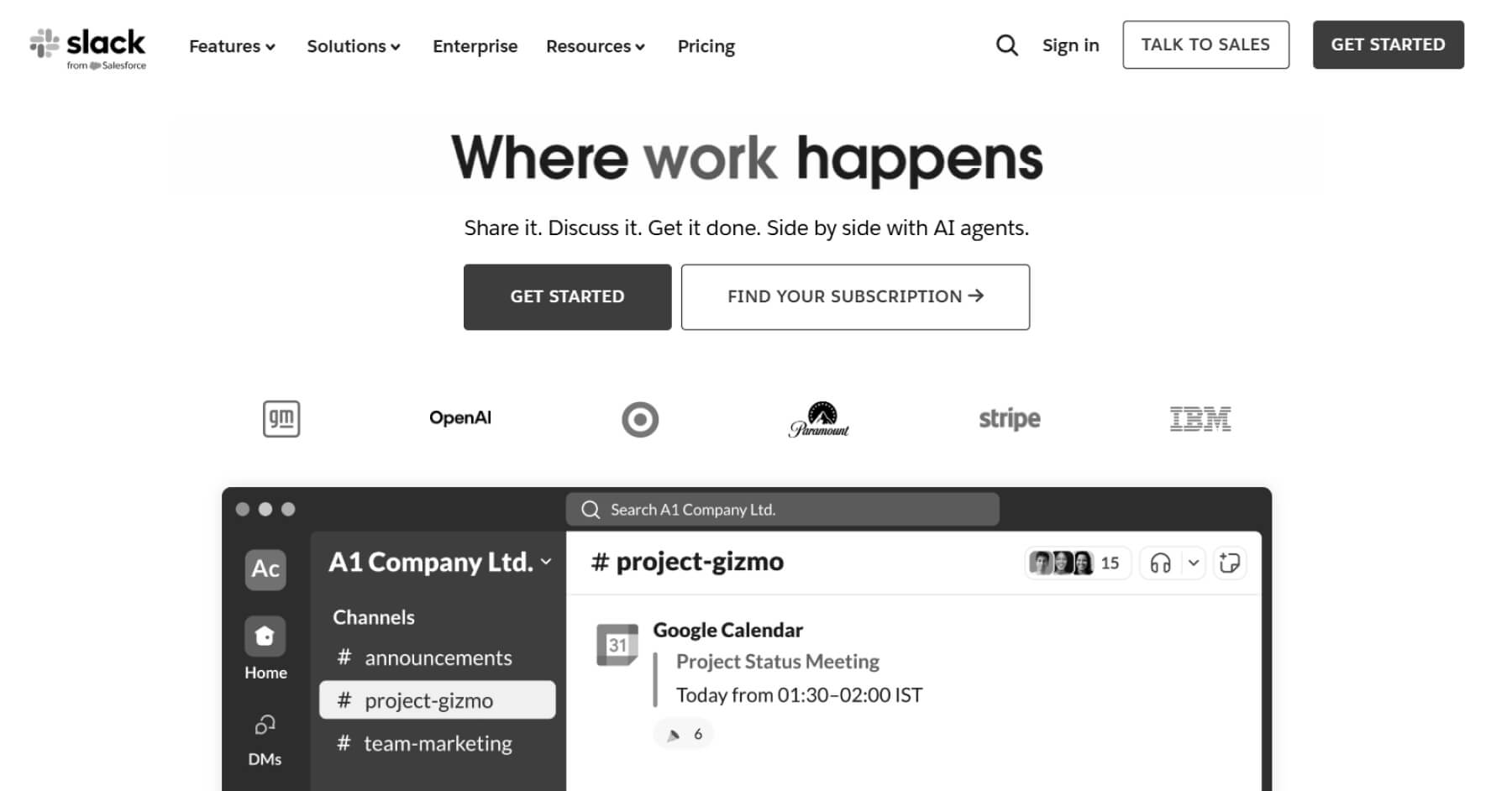
Slack centralizes team communication through organized channels, fast messaging and app integrations by helping teams share updates instantly, collaborate in real time and reduce reliance on scattered workflows or long email threads.
Key Takeaways
- Pricing: Contact sales
- G2 Rating: 4.5/5
- Capterra Rating: 4.7/5
- Pros: Enables seamless communication, fast collaboration and quick decision-making across teams. (Source: G2)
- Cons: High notification volume and message clutter may overwhelm users without proper channel discipline. (Source: G2)
20. Atlassian Trello
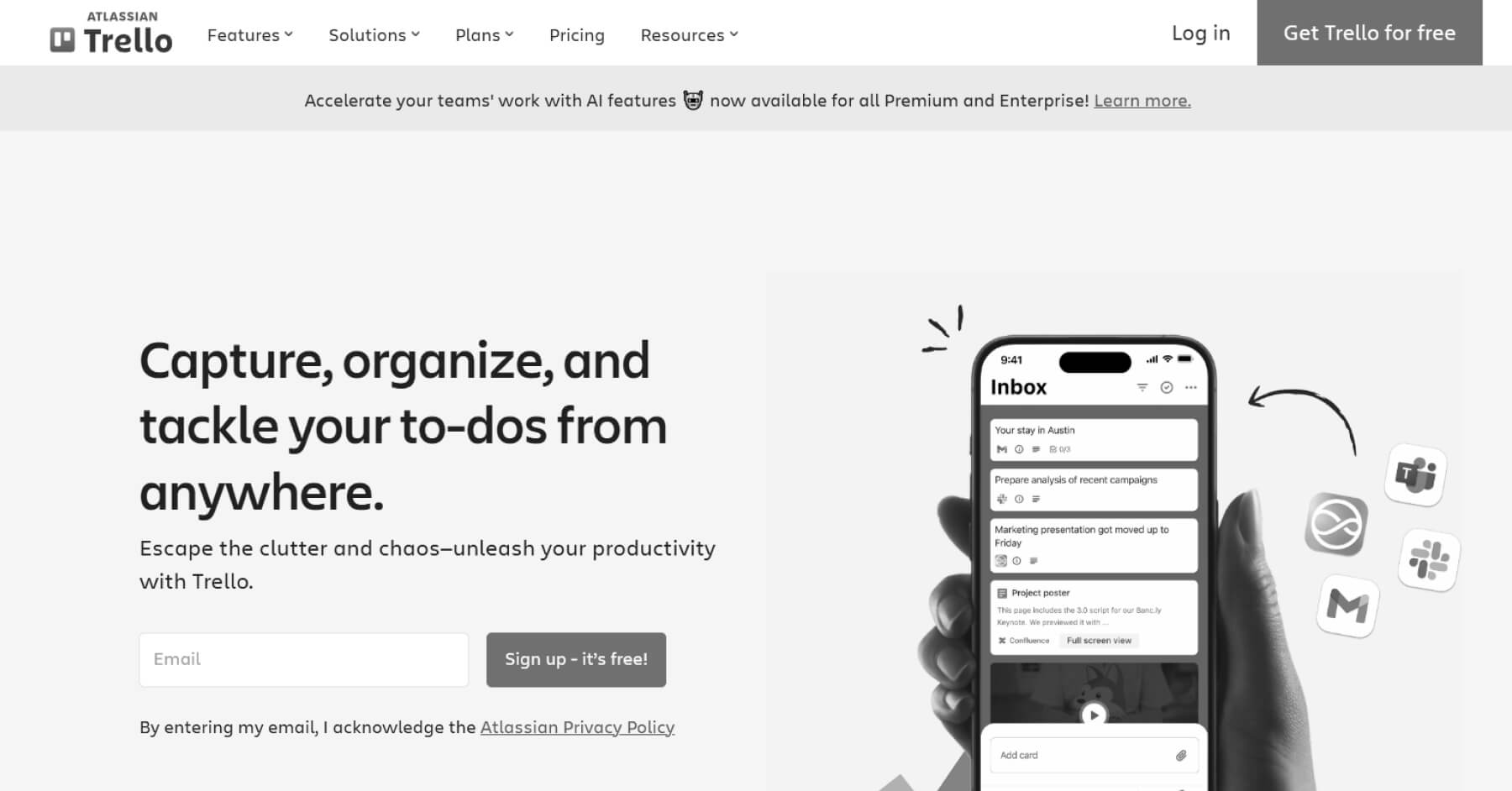
Atlassian Trello is a visual collaboration tool that helps teams map projects, organize workflows and link related work items. Its board-based system makes it easy to track tasks from planning to delivery.
Key Takeaways
- Pricing: Contact sales
- G2 Rating: N/A
- Capterra Rating: N/A
- Pros: Strong linking and traceability across tasks, making it easy to follow work from planning to completion. (Source: G2)
- Cons: Administration and configuration can feel complex for new users and may require more setup effort. (Source: G2)
21. Staffbase
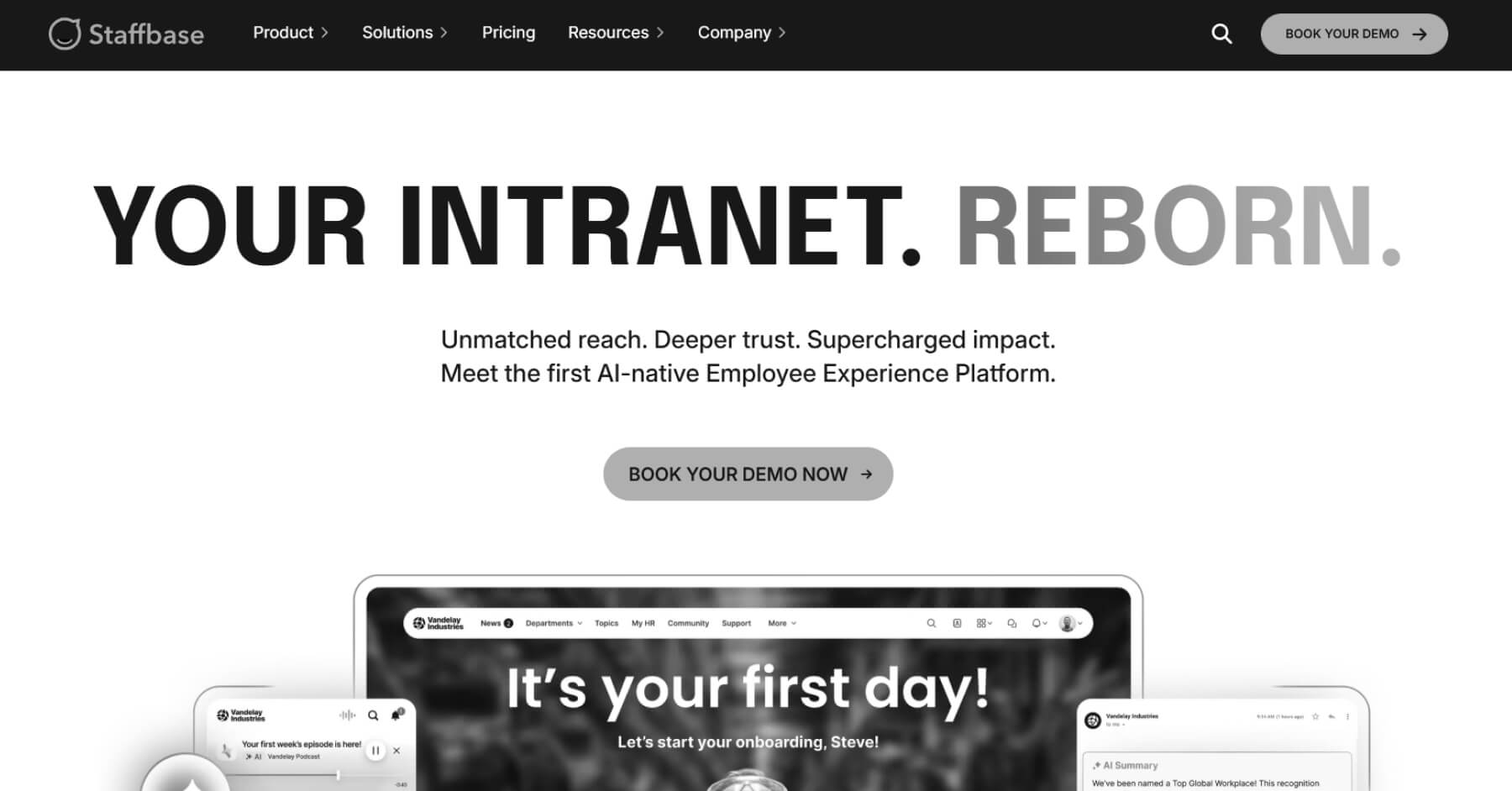
Staffbase is an employee communication and intranet platform that helps organizations centralize updates, reach frontline teams and streamline company-wide messaging with its mobile app and engagement tools.
Key Takeaways
- Pricing: Contact sales
- G2 Rating: 4.6/5
- Capterra Rating: 4.7/5
- Pros: Easy communication and content sharing, strong mobile experience and useful engagement tools for boosting connection across the organization. (Source: G2)
- Cons: Admin panel can feel complex, customization options are limited and heavy content loads may slow performance at times. (Source: G2)
22. ContactMonkey
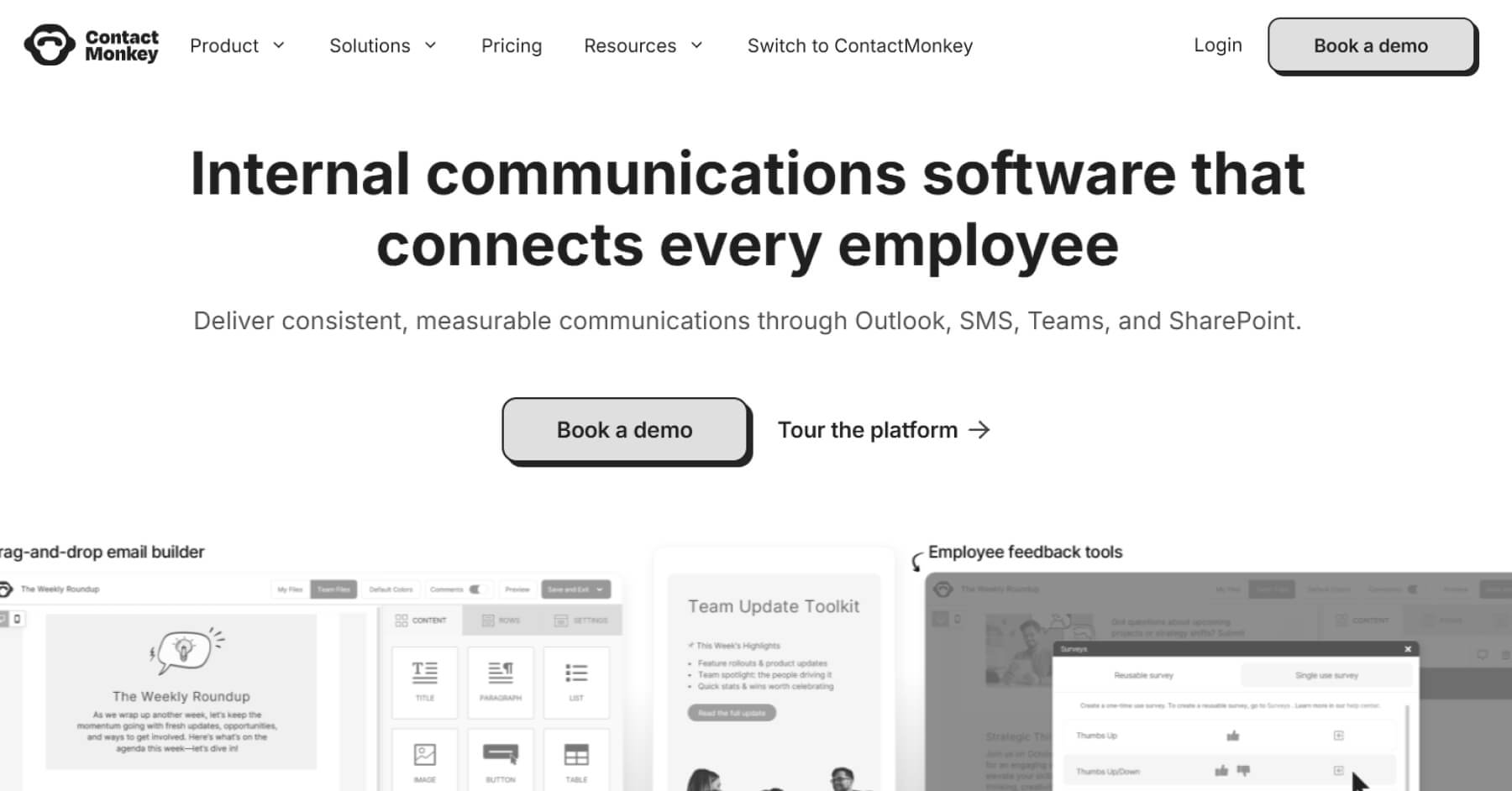
ContactMonkey helps internal communications teams design, send and measure employee emails directly from Outlook or Gmail by streamlining newsletter creation.
Key Takeaways
- Pricing: Contact sales
- G2 Rating: 4.4/5
- Capterra Rating: 4.0/5
- Pros: Easy-to-use email builder with scheduling options, reporting features and templates for content creation. (Source: G2)
- Cons: May lack bounce-rate reporting and may need improvements in analytics completeness. (Source: G2)
Why does employee engagement and retention really matter?
Employee engagement and retention matter because they determine how reliably teams perform and how often turnover disrupts operations. When employees feel supported and informed, commitment rises. This is why improving these areas creates stronger outcomes across the organization:
- Creates dependable teams: When people feel supported in their daily work, they stay longer and contribute to steady, improving staff engagement.
- Improves work quality: Engaged employees bring more focus and steady output, which helps increase workplace engagement across teams and directly supports better customer outcomes that contribute to higher company revenue.
- Reduces avoidable hiring costs: Strong workplace retention strategies keep experienced employees from leaving, lowering the time and expense spent on constant backfilling.
- Strengthens relationships: Consistent recognition and feedback help enhance employee engagement and build trust that supports long term collaboration.
- Supports business stability: Higher retention levels protect performance, reduce disruptions, and create conditions that make it easier to improve employee retention and motivation.
- Builds a reliable culture: When leaders use tools for employee engagement to understand what people need, culture becomes more predictable and supportive.
What affects employee engagement and retention in the workplace?
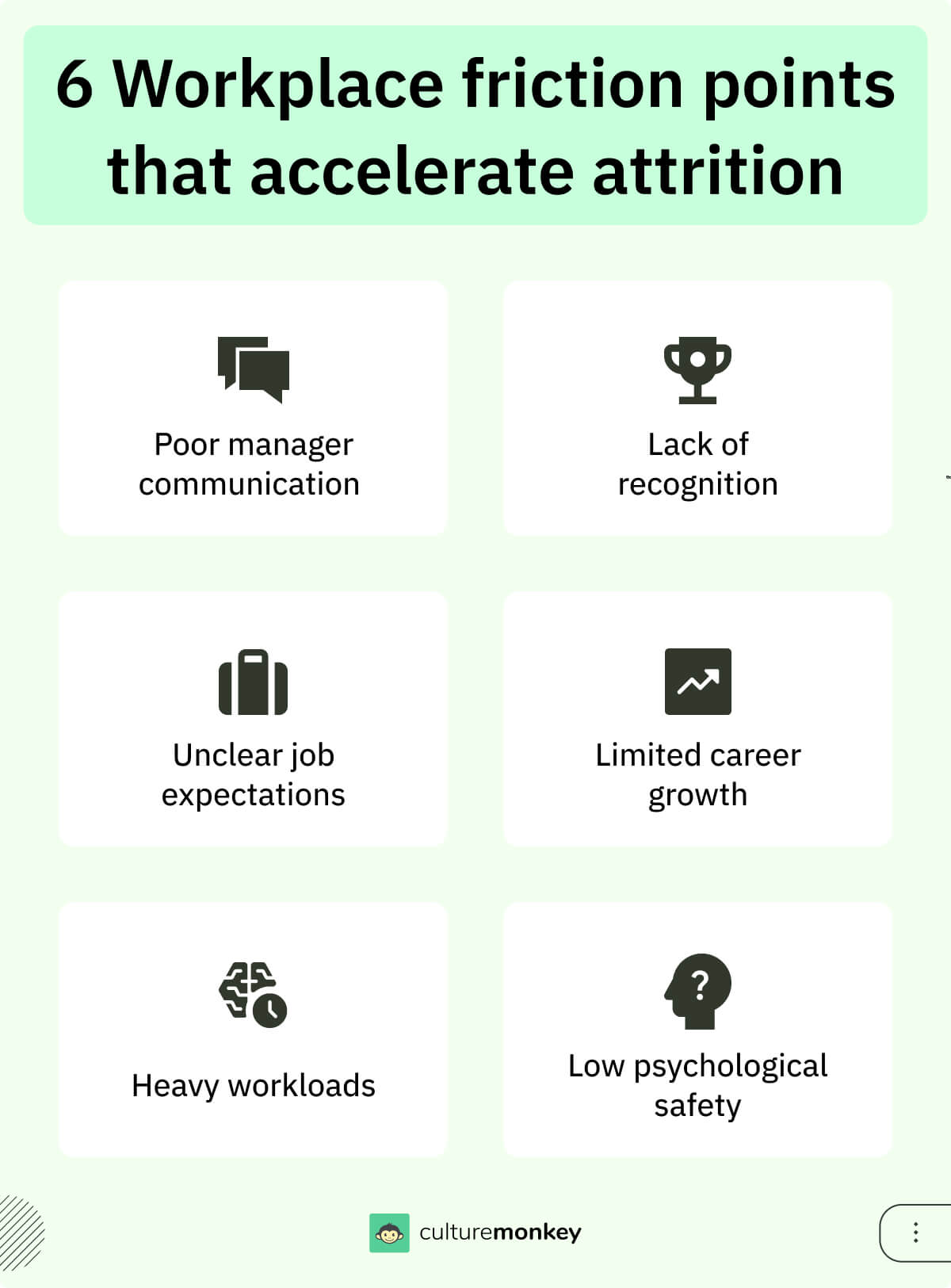
Employee engagement and retention drop when everyday experiences create confusion, stress, or lack of support. This explains the common workplace issues that weaken motivation and make it harder to improve staff engagement and long term retention.
- Unclear leadership: When managers offer inconsistent direction or limited guidance, employees lose confidence, weakening workplace retention strategies and daily engagement.
- Lack of recognition: Minimal appreciation reduces motivation and makes improving staff engagement harder because employees feel overlooked.
- Limited career growth: When development options are unclear, people question their future and are less likely to stay despite attempts to increase employee retention.
- Overwhelming workload: Constant pressure and unrealistic expectations reduce energy, harm performance, and block efforts to enhance employee engagement.
- Irregular feedback: Infrequent check-ins make it difficult to understand how to improve employee engagement because concerns stay hidden until they escalate.
- Misaligned values: When stated values differ from everyday reality, trust erodes and improving retention in the workplace becomes a challenge.
- Weak manager relationships: Poor communication or lack of support from managers disrupts engagement and negatively affects overall retention strategies.
What are the benefits of using engagement tools to help boost employee retention?
Engagement tools help leaders understand what employees need and where commitment begins to fade. By giving clear insight into team experiences, these benefits make it easier to apply strategies for employee engagement that strengthen stability and reduce avoidable turnover:
- Faster problem detection: These platforms reveal early behavioural signals that guide how to improve employee retention before issues disrupt team performance.
- Smarter communication: Clear visibility into team sentiment helps leaders choose the right employee engagement strategies that address concerns quickly.
- Better decision support: Data from these tools highlights patterns that shape how to boost employee engagement without guesswork.
- Focused interventions: Insights help teams understand how to increase employee retention by prioritising what matters most to employees.
- Targeted development: Engagement data guides talent engagement strategies that support growth and confidence across roles.
- Operational clarity: Leaders can track how to improve employee retention using structured views powered by employee retention tools and workforce retention strategies.
- Systemised processes: Engagement platforms simplify action planning through employee engagement tools and techniques that support consistent follow through.
- Comprehensive insight: By combining feedback and people data, organizations gain better direction using employee retention software and staff engagement tools.
8 Strategies to improve employee retention and engagement
Strong retention comes from daily habits that shape how people experience work. This section outlines practical steps that help teams strengthen engagement and retention together, using clear actions that leaders can apply across different roles and work settings:
- Set shared expectations: Clear communication helps employees understand priorities, which supports engagement and retention strategies that keep teams aligned.
- Increase clarity at work: Simple processes and consistent guidance help increase workplace engagement because people feel less stressed and more focused.
- Use accessible tools for employee engagement: Easy to use feedback channels help employees share concerns early, giving managers time to respond before issues escalate.
- Support motivation: Regular check ins and growth conversations show employees how to improve employee retention and motivation while giving them direction.
- Reduce friction points: Removing blockers and simplifying workflows improves energy and strengthens engagement and retention efforts across teams.
- Connect work to outcomes: When employees see how their contribution helps the company succeed, motivation rises and retention becomes easier to maintain.
- Promote flexibility: Allowing people to manage time and workload in healthier ways supports long term commitment and improves overall engagement patterns.
10 Engagement tools every people team should know and how they fight turnover
People teams need clear visibility into what employees think and where problems begin. These tools help leaders catch early warning signs, understand behaviour patterns, and act before performance or morale drops:
- Pulse surveys: Short, recurring check-ins that reveal how employees feel in real time, helping HR teams spot patterns and address issues before they grow.
- Stay interviews: One-on-one conversations that uncover what keeps employees motivated and what might tempt them to leave, making retention proactive instead of reactive.
- Exit-feedback analysis: Studying why employees leave helps identify patterns that drive turnover, creating learning opportunities for future improvements.
- Engagement heatmaps: Visual dashboards that highlight which departments feel connected and which need support, making engagement trends easy to interpret.
- Sentiment analysis: Reading open-ended feedback uncovers emotion behind responses, helping leaders understand tone, trust, and morale shifts over time.
- Recognition frameworks: Structured appreciation systems ensure employees feel valued and acknowledged, directly improving morale and loyalty.
- Manager feedback loops: Consistent feedback and coaching for managers help close gaps between leadership perception and employee reality.
- Learning and development pathways: Career growth programs strengthen purpose and confidence, reducing the urge to seek external opportunities.
- Work-life balance tracking: Monitoring workload, burnout indicators, and leave patterns keeps wellbeing at the forefront and engagement steady.
- Retention metrics dashboards: Combining turnover, engagement, and performance data connects the dots, helping HR teams predict and prevent attrition.
How to pick the right engagement tools for your culture and team size?
Selecting the right engagement tool depends on how your teams work, how quickly you need insights, and how deeply you want to understand the employee journey. This is what you evaluate so the platform you choose actually moves retention metrics.
- Look for automated touchpoints: Tools with lifecycle triggers for onboarding, transitions, and exits give you continuous visibility without manual effort.
- Check multichannel reach: Platforms that support chat apps, mobile delivery, and have flexible access ensure every role can participate easily.
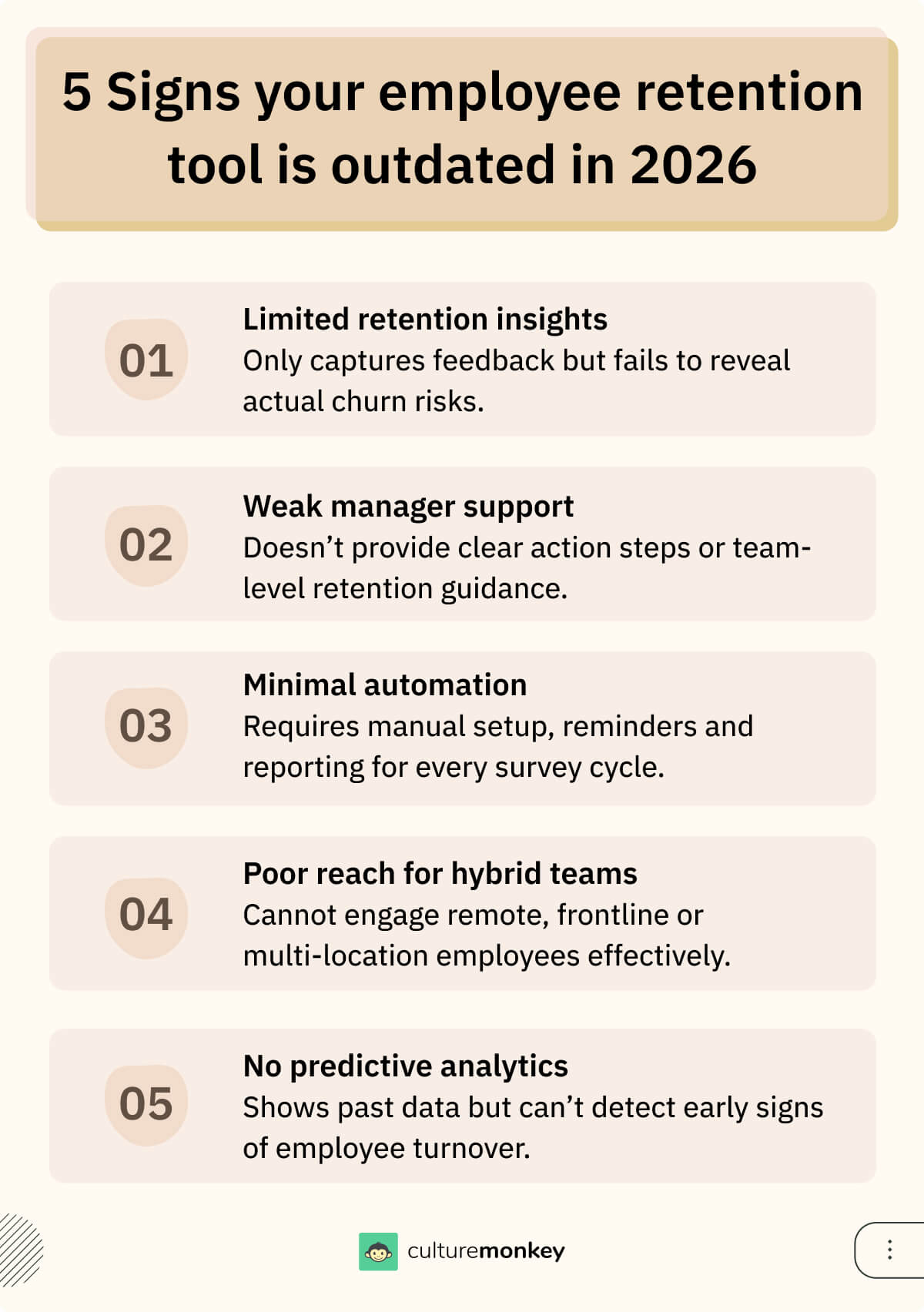
- Assess analytics strength: Choose systems that interpret sentiment, highlight patterns, and surface early risk signals instead of offering only basic scores.
- Prioritize manager usability: Tools that provide clear next steps and role-specific dashboards help managers act faster and stay accountable.
- Evaluate integration depth: Strong platforms connect feedback with your existing HR systems so insights flow naturally into everyday decisions.
- Confirm scalability: Make sure the tool supports growing teams, multiple locations, and diverse work environments without slowing down.
- Test reporting clarity: Look for clean heatmaps, summaries, and trend views that help leaders decide what to fix and where to focus.
How to implement engagement tools so they actually boost retention?
Implementation works best when engagement tools become part of your operating system, not a standalone task. This is how teams can integrate feedback workflows, automation, and insight-driven actions so retention improvements show up consistently across the organization.
- Map every employee stage: Set up automated touchpoints for onboarding, growth, transitions, and departures so feedback flows throughout the employee journey.
- Use multichannel listening: Offer mobile, chat-based, and survey options so input is effortless and participation remains steady across all roles.
- Leverage sentiment intelligence: Review comment patterns and tone shifts to identify hidden risks before they influence performance or morale.
- Centralize dashboards: Use one place to monitor patterns, compare teams, and track emerging concerns so response planning becomes straightforward.
- Sync with current systems: Integrate data with HR platforms to ensure insights connect to performance, attendance, and workflow information.
What are the common mistakes HR teams make when using engagement tools and how to avoid them?
Engagement tools fall short when teams use them passively or without structure. These show the practical mistakes that weaken results and explains how HR teams can turn these tools into reliable, repeatable systems that support long term improvement.
- Using tools without a workflow: Many teams launch surveys without defining clear steps for review, routing, and action, causing insights to stall.
- Relying on manual processes: When reminders and tracking depend on people instead of automation, consistency drops and important signals get missed.
- Delaying follow through: Waiting too long to address patterns reduces trust and weakens the impact of any insights collected.
- Ignoring context behind data: Focusing only on numerical scores limits understanding. Written feedback, trends, and team history add essential depth.
- Lack of manager support: Tools work best when managers know how to interpret insights and take specific next steps.
- Fragmented systems: Storing feedback in multiple tools creates confusion. Centralized dashboards make trends easier to spot and respond to.
- No accountability structure: Without clear ownership, tasks linger. Assigning responsibility ensures insights translate into meaningful action.
How to measure the success and impact of the engagement tools?
Measuring impact requires more than checking participation numbers. Effective evaluation looks at how insights shape behaviours, decisions, and long term outcomes. This section shows practical ways to assess whether your engagement tool is creating real, measurable change across teams.
- Review changes in behaviour: Track whether teams respond faster, communicate more clearly, and follow through on actions after insights are shared.
- Compare sentiment patterns over time: Look for shifts in themes, tone, and concerns to understand how employee perspectives evolve.
- Evaluate manager adoption: Strong tools show their value when managers regularly use insights, address risks, and complete recommended actions.
- Analyze lifecycle improvements: Check whether onboarding, transition, and exit experiences show more consistency after structured feedback becomes routine.
- Monitor stability metrics: Review workload balance, attendance trends, and team movement to understand whether overall conditions are improving.
- Assess action effectiveness: Map each action to its result so you can see which interventions create the strongest outcomes.
- Validate user experience: Confirm if employees find the tool easy to use and feel comfortable sharing honest input.
What makes CultureMonkey the most powerful platform for employee retention?
If you need an engagement system that scales, adapts and tells you exactly what’s happening in your workforce, you’ll find that here. CultureMonkey brings together automation, analytics and multi-channel listening to deliver insights you can actually act on. Here’s how it delivers more:
- Automated, intelligent reminders: Smart scheduling delivers nudges through preferred channels and boosts participation without manual follow-up, keeping every feedback cycle active.
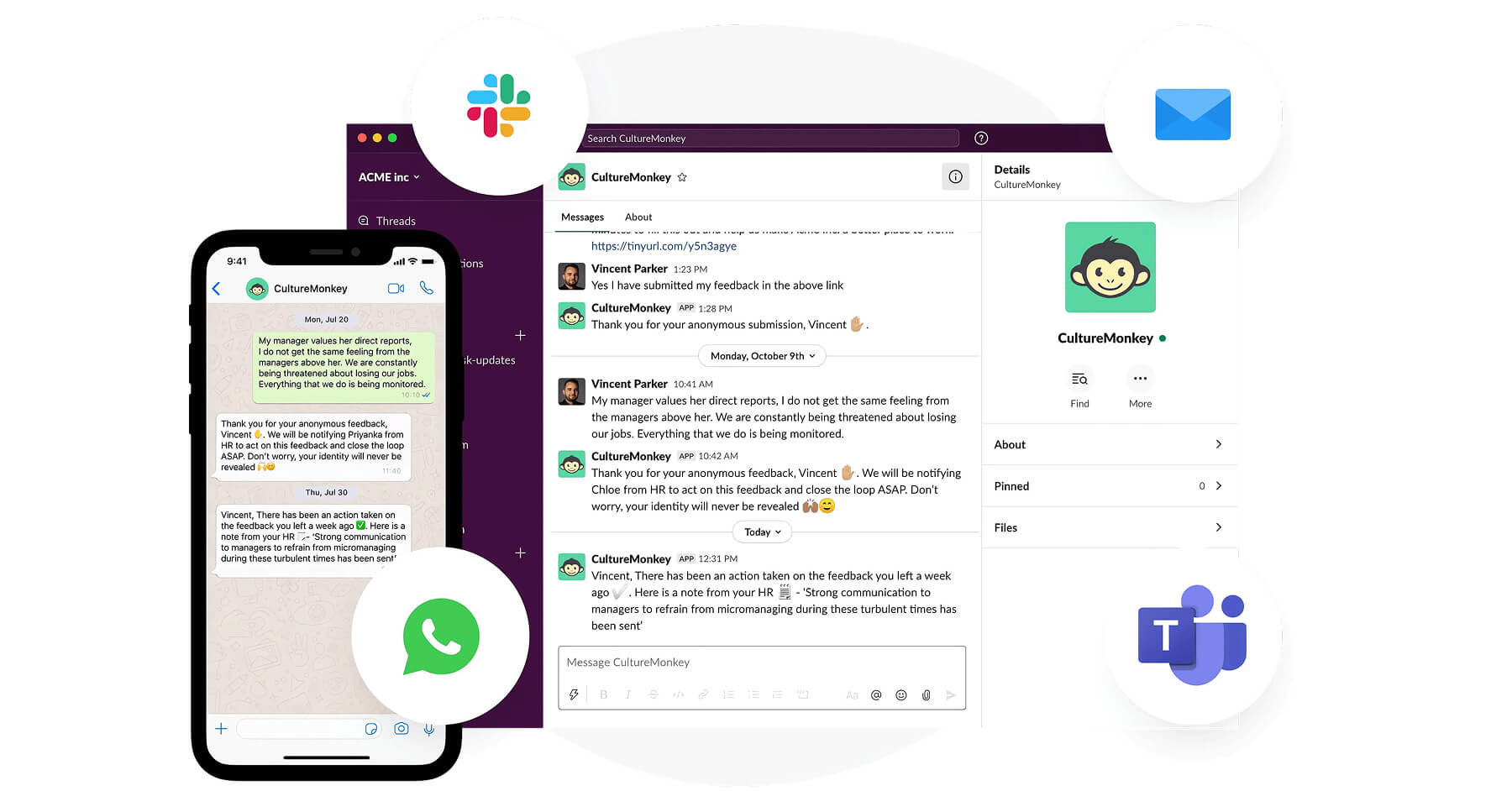
- Multi-channel feedback collection: Feedback flows seamlessly through various channels, with every message converted into an anonymous, trackable ticket.
- Mobile-first, multilingual surveys: Surveys open instantly without logins, auto-save progress, and support AI translation in 100+ languages for a seamless global experience.
- Frontline and field-employee support: QR codes, kiosk mode and text message links make participation easy for non-desk teams, with real-time dashboards spotting response gaps instantly.
- AI-driven summarization and action recommendations: Open-ended feedback is transformed into real-time, crisp summaries with targeted action recommendations, powered by automated workflows and lifecycle triggers.
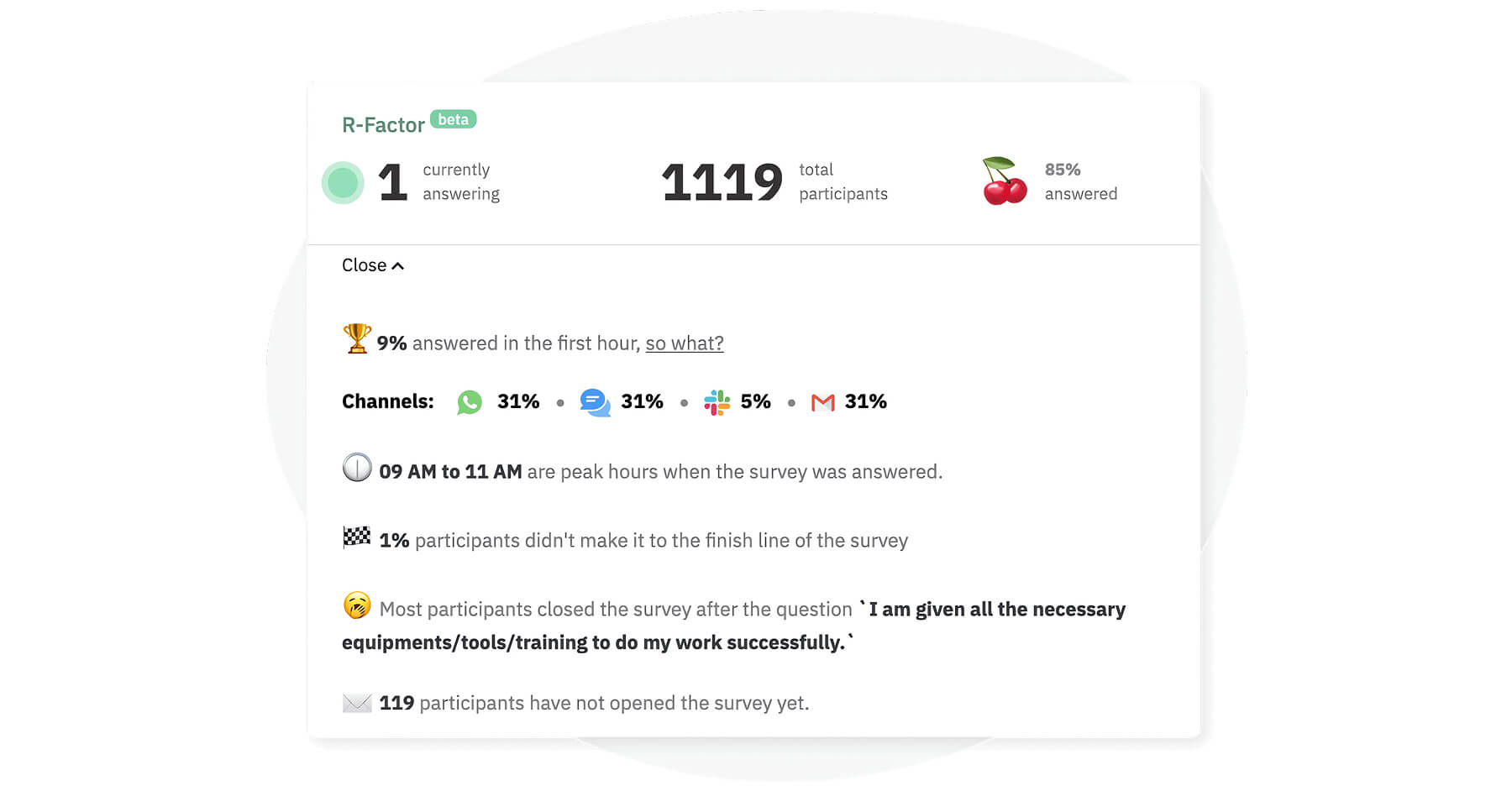
- Advanced people-science analytics: Retention analytics, thematic exploration, overtime sentiment trends and predictive models uncover disengagement drivers, supported by dedicated People Science analytics with tailored insight heatmaps.
- Comprehensive survey design and customization: A fully branded survey editor, culture-aligned tones and 60+ research-backed templates let teams build modern, high-impact feedback programs.
- AI translation at enterprise scale: Surveys can be automatically translated into 130+ languages, ensuring every employee can respond comfortably, regardless of location.
Conclusion
Retention is shaped by everyday experiences, small moments of support, and the trust employees build with their workplace over time. When people feel understood, recognized, and guided, they naturally choose to stay.
That’s where engagement tools play their part. They turn scattered signals into clear insights, helping leaders understand what strengthens connections and what weakens them. With the right tools, HR teams can identify early friction, measure motivation, and act on feedback before disengagement ever becomes turnover. Engagement tools don’t replace human relationships; they amplify them by giving leaders the clarity to support employees with intention.
And this is exactly where CultureMonkey shines. With real-time feedback, AI-powered insights, manager-ready action plans, and a seamless experience end to end, CultureMonkey helps organizations turn everyday listening into long-term loyalty, thus making retention not just achievable, but predictable.
Book a demo with CultureMonkey.
FAQs
1. How often should we review the data from our engagement tools to influence retention?
Review engagement data monthly to spot early patterns, track motivation shifts, and act before issues grow. Weekly pulse-survey check-ins keep teams informed about changes. Quarterly deep dives help you understand long-term trends and cultural shifts. This rhythm of regular reviews allows leaders to react faster, build trust, and strengthen retention outcomes across the organization throughout the year.
2. Can small teams or mid-sized companies benefit from engagement tools for retention?
Absolutely. Small and mid-sized teams often see faster improvements because insights are easier to act on and communication moves quicker. Engagement tools give leaders visibility into motivation, workload, and burnout risks without requiring a large HR team. They also add structure and strengthen retention by helping teams stay aligned, even when resources are limited or rapidly growing.
3. What features should HR leaders look for in engagement tools that impact retention?
Look for pulse surveys, lifecycle feedback, sentiment analysis, and dashboards that connect insights to turnover trends. The best tools guide action, so features like manager recommendations, heatmaps, and follow-up tracking matter. Integrations, anonymity controls, and automated reminders also help leaders create consistent engagement routines that strengthen retention across teams in a sustainable and measurable way overall.
4. How can engagement tools identify early signs of disengagement or turnover risk?
Engagement tools track sudden drops in sentiment, participation, recognition, and manager relationships. They highlight teams showing early stress signals or inconsistent motivation, helping leaders step in quickly. Heatmaps and open-text insights reveal underlying concerns, while pulse surveys surface patterns that might otherwise stay hidden. Together, these signals predict turnover risk before it becomes visible.
5. How can HR teams measure the ROI of engagement tools on retention?
Measure ROI by comparing turnover rates, absenteeism, performance trends, and engagement scores before and after implementation. Track how quickly managers respond to feedback, how often action items are completed, and sentiment improvement. When retention rises, hiring costs decline, and team stability increases, it’s clear the engagement tools have delivered meaningful improvements and measurable business impact for your organization overall.