


How to choose employee survey software for banks in 2026?

Banks operate in environments where communication gaps, compliance pressure, and distributed teams make employee feedback difficult to manage. When employee feedback survey tools are slow, unclear, or poorly adopted, they often deepen communication gaps across branches and functions, and measuring employee sentiment in financial services becomes harder than it should be.
Choosing employee survey software for banks is about measuring employee engagement by setting the right rhythm early, so signals arrive on time and patterns are clear before pressure builds.
This list of best employee survey tools is curated using a combination of industry expertise, banking use-case analysis and publicly available product information.
Why do employee feedback surveys matter in finance and banking?
Employee feedback surveys help banks stay ahead of issues that rarely surface in formal reviews. They create a steady listening rhythm that supports a positive employee experience, clarity, trust, and better decisions in complex financial environments.
- Surface early warning signs: Regular surveys help identify employee engagement challenges in the banking sector before they turn into attrition or service issues and improve employee satisfaction.
- Improve communication clarity: Feedback highlights where messages get lost across branches, functions, or hybrid setups, addressing banking workforce communication challenges.
- Build trust through consistency: Anonymous, well-timed surveys play a key role in building trust and engagement in BFSI organizations where discretion matters.
- Support manager effectiveness: Clear and actionable insights strengthen the role of managers in banking employee engagement by showing where teams need guidance or support.
- Lift morale during change: Feedback helps leaders focus efforts on improving employee morale in financial institutions, especially during audits, restructuring, or growth phases.
- Make engagement measurable: Survey data enables measuring employee sentiment in financial services and tying actionable insights to employee engagement KPIs for financial services.
- Inform long-term strategy: When acted on consistently, feedback becomes a foundation for a practical workforce engagement strategy for banks.
Comparing employee survey software for banks
Use this comparison to quickly evaluate which employee survey tools best fit banking requirements:
10 Best employee survey software for banks
1. CultureMonkey
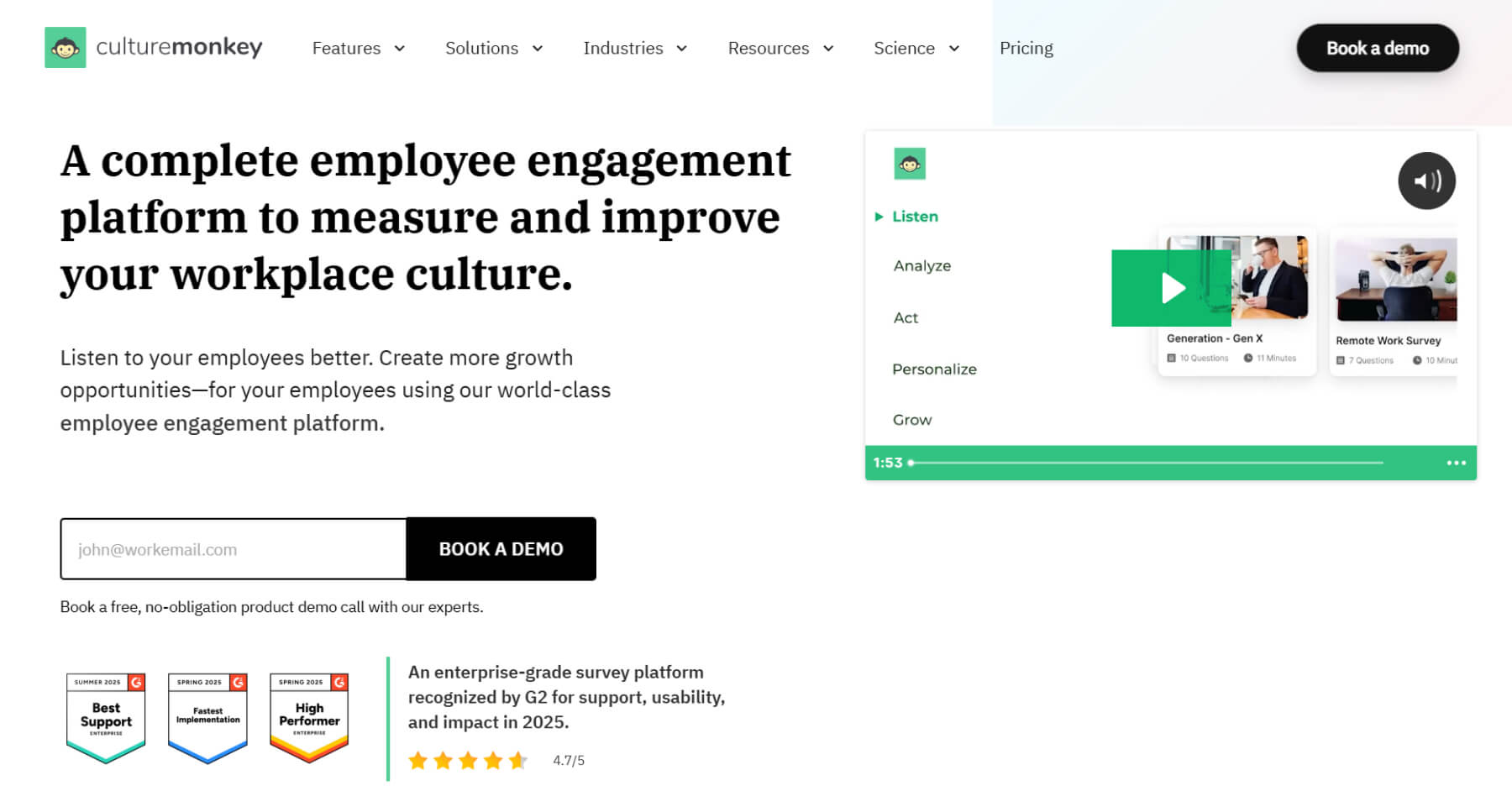





CultureMonkey is an enterprise-grade employee engagement survey platform that supports secure and anonymous listening through structured surveys, manager-action guidance, and follow-up pulses making it easier for financial services teams to act on feedback without breaking governance or credibility.

Key takeaways
- Pricing: Contact sales
- G2 Rating: 4.7/5
- Capterra Rating: N/A
- Pros: The platform offers an intuitive survey experience, highly responsive customer support, and knowledgeable assistance throughout implementation and ongoing usage. (Source: G2)
- Cons: No major limitations have been highlighted so far, with the platform consistently fulfilling stated requirements across use cases. (Source: G2)
Take a quick interactive tour inside CultureMonkey:
2. Eletive
Eletive is an employee engagement platform that collects structured feedback, benchmark engagement levels, and supports listening programs across teams.
Key takeaways
- Pricing: Contact sales
- G2 Rating: 4.6/5
- Capterra Rating: 4.5/5
- Pros: Automated reporting simplifies insight sharing, customer success support is responsive, and initial setup is generally straightforward. (Source: G2)
- Cons: The interface for historical comparisons may feel limited, and question ordering flexibility might not support all survey design preferences. (Source: G2)

3. Culture Amp
Culture Amp is an employee experience platform that combines engagement surveys, feedback tools, and analytics to structure listening programs and track workforce sentiment at scale.
Key takeaways
- Pricing: Contact sales
- G2 Rating: 4.5/5
- Capterra Rating: 4.6/5
- Pros: The platform supports structured feedback conversations, offers an easy-to-navigate interface, and allows anonymous question submission in team settings. (Source: G2)
- Cons: Rating scales may feel open to interpretation, which could make feedback comparisons less consistent across teams. (Source: G2)
Read more on Culture Amp alternatives here.
4. Workleap
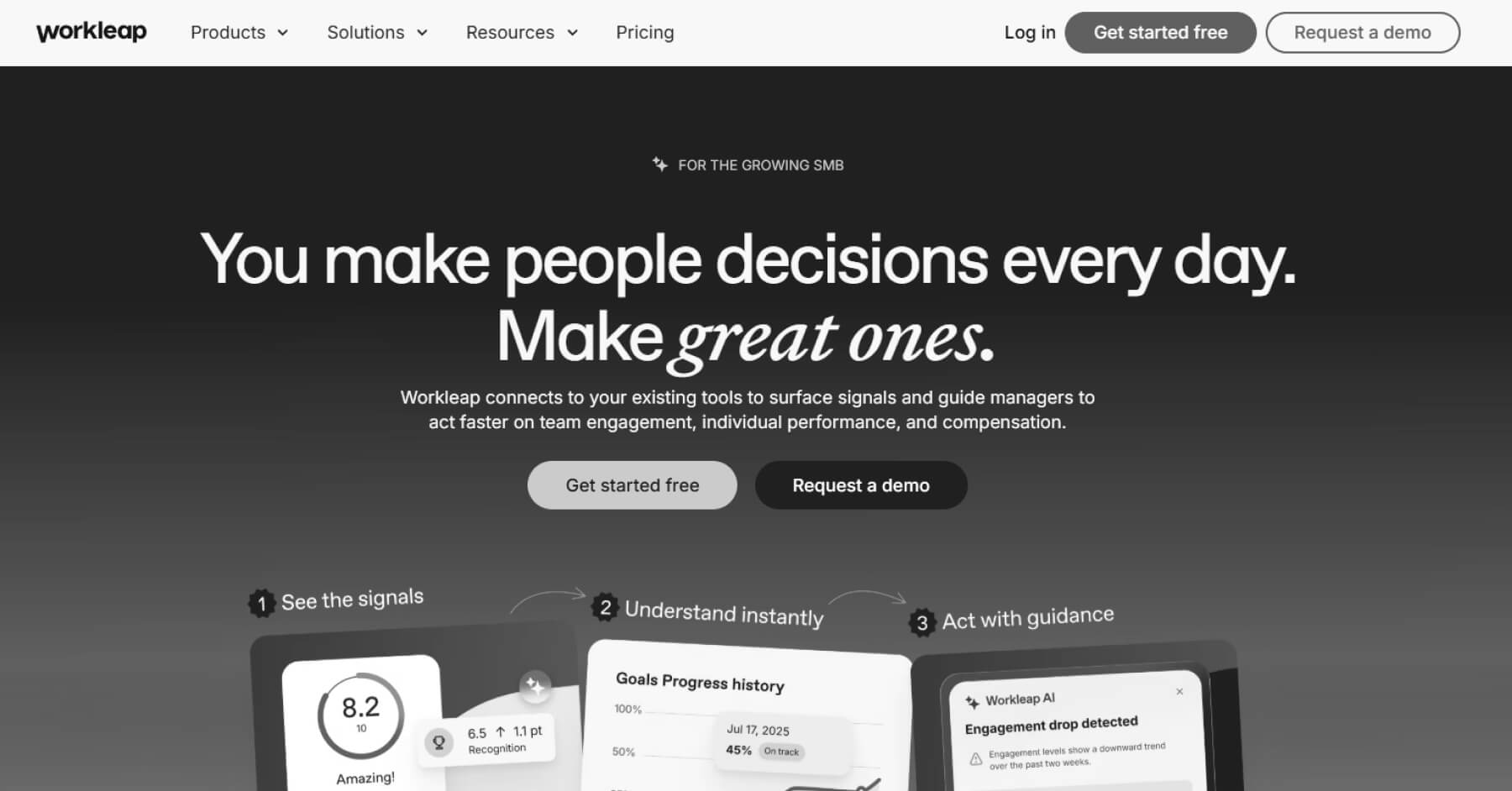
Workleap is an employee experience platform used by financial services teams to run pulse surveys, track employee satisfaction, and support manager workflows across distributed banking, trading, and back-office environments.
Key takeaways
- Pricing: $9.00 per user per month
- G2 Rating: 4.3/5
- Capterra Rating: 4.8/5
- Pros: The platform offers an intuitive interface, a well-structured employee directory, and tools that support day-to-day team visibility. (Source: G2)
- Cons: Platform performance may occasionally feel slow, which could impact usability during time-sensitive workflows. (Source: G2)
Read more about Workleap alternatives here.
.webp)
Employee Engagement For Banking, Beyond Surveys and Scores
- Multi-lingual Surveys
- White Glove Onboarding
- People Science Backed Reports
- Enterprise Grade Security
5. Connecteam
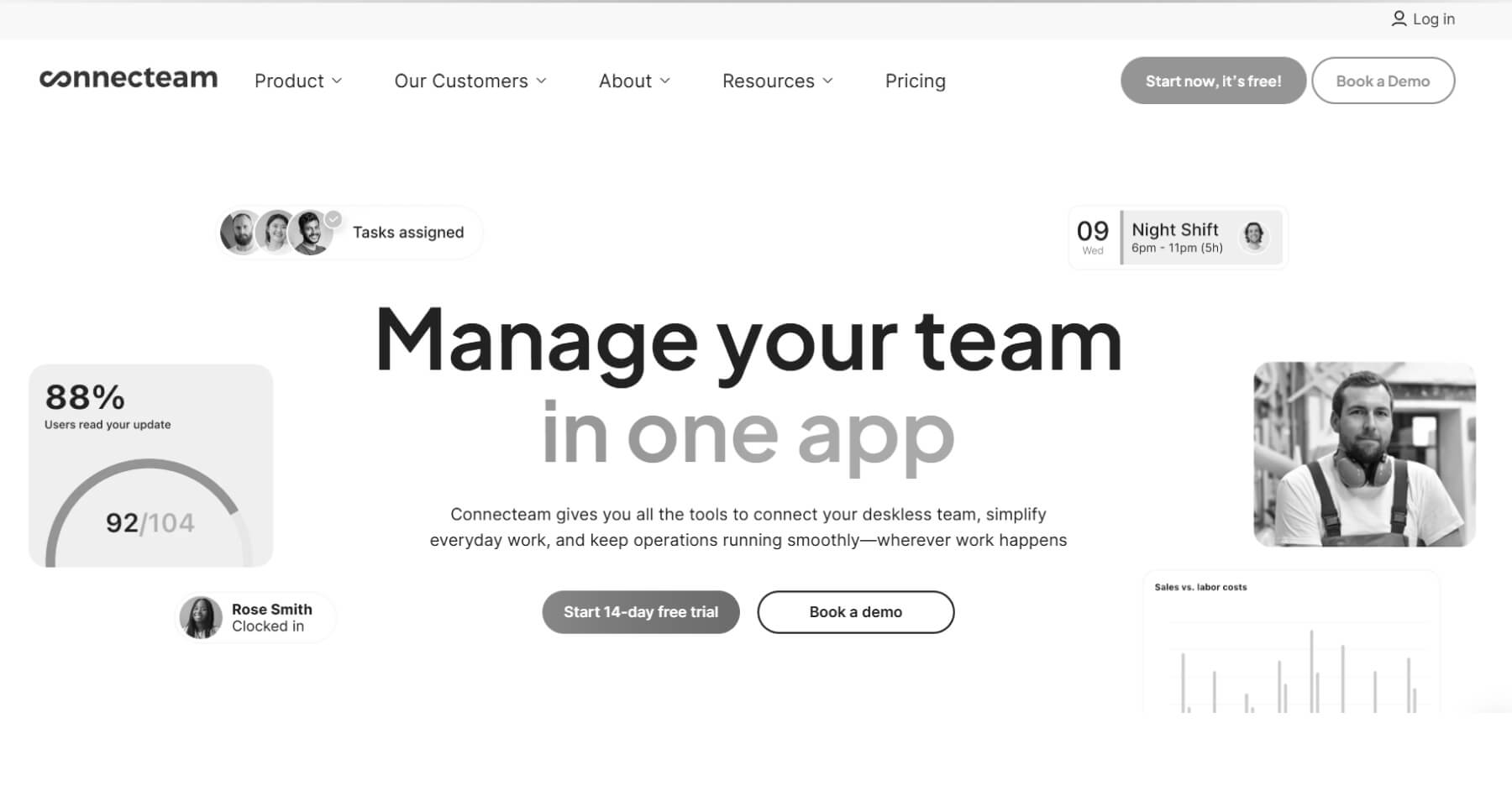
Connecteam is a mobile-first workforce platform that includes basic employee surveys, communication tools, and engagement features for frontline-heavy teams.
Key takeaways
- Pricing: Contact sales
- G2 Rating: 4.6/5
- Capterra Rating: 4.6/5
- Pros: The platform brings multiple workforce tools together in one place, making it easier for teams to stay connected and informed. (Source: G2)
- Cons: Initial setup may take time for some teams, and integrations with certain payroll systems or global reward programs might be limited. (Source: G2)
6. 15Five
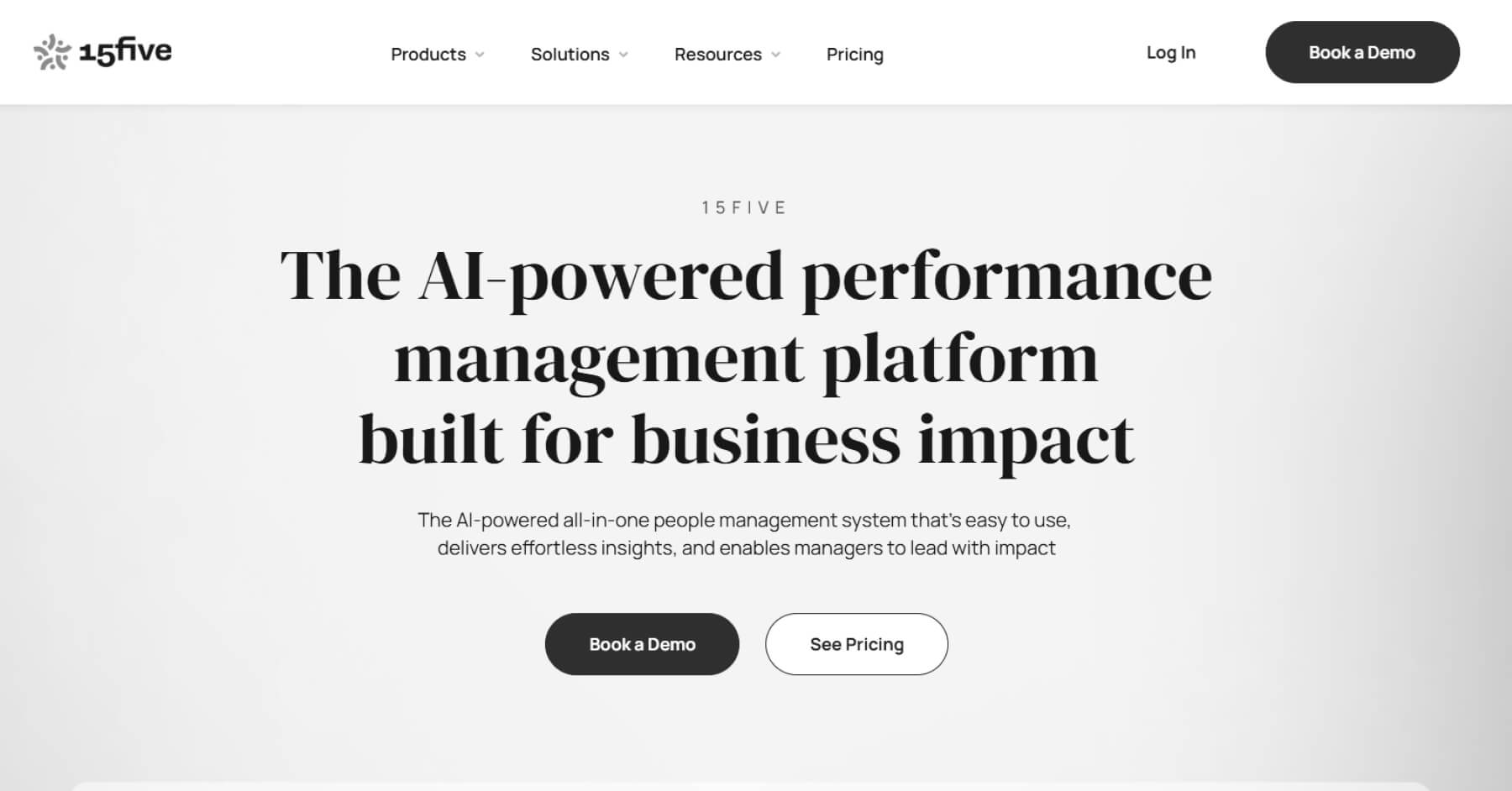
15Five is an employee engagement and performance management platform that combines pulse surveys, reviews, and coaching tools to analyze surveys' sentiment and support ongoing feedback conversations.
Key takeaways
- Pricing: $4.00 per employee per month
- G2 Rating: 4.6/5
- Capterra Rating: 4.7/5
- Pros: The platform supports frequent pulse surveys, structured performance reviews, and early visibility into team sentiment. (Source: G2)
- Cons: The interface may feel more complex over time as additional HR features are introduced, which could affect ease of use. (Source: G2)
Read more about 15Five alternatives here.
7. Lattice
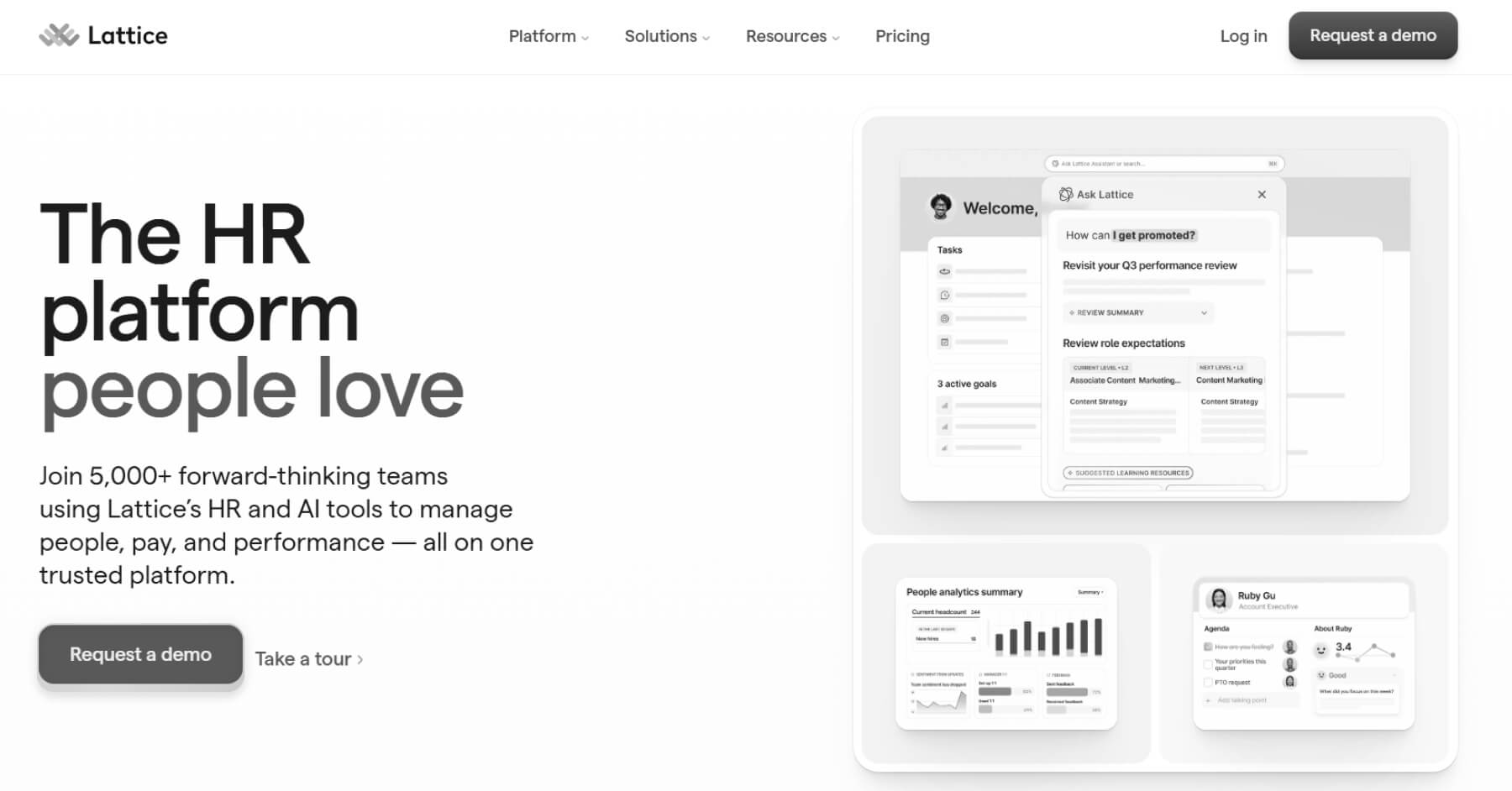
Lattice is a people performance management platform that brings performance reviews, employee satisfaction and engagement surveys, and career development tools to centralize employee feedback and performance workflows.
Key takeaways
- Pricing: $11.00 per person per month
- G2 Rating: 4.7/5
- Capterra Rating: 4.7/5
- Pros: The platform consolidates reviews, surveys, and career tools into one system, helping streamline people management tasks. (Source: G2)
- Cons: Navigation may feel less intuitive at times, with certain sections requiring additional clicks to locate. (Source: G2)
Read more about Lattice alternatives here.
8. SurveyMonkey
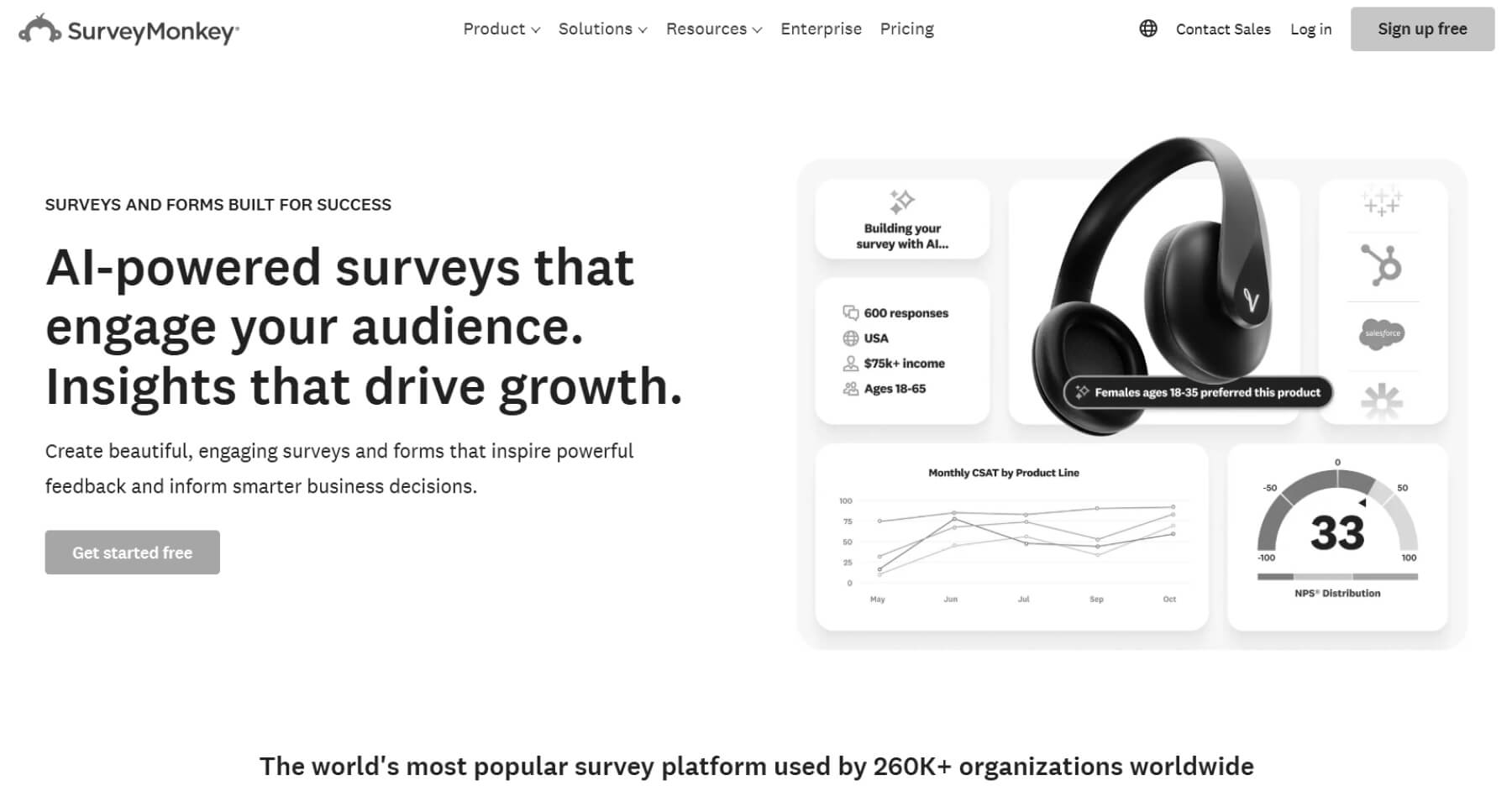
SurveyMonkey is a survey platform offering questionnaire design for standardized feedback collection and basic reporting across departments.
Key takeaways
- Pricing: Contact sales
- G2 Rating: 4.4/5
- Capterra Rating: 4.6/5
- Pros: The platform is easy to navigate, quick for employees to respond to surveys, and accessible for large distributed teams. (Source: G2)
- Cons: Incentive and reward mechanisms may feel limited, with redemption timelines that could reduce engagement motivation. (Source: G2)
(Source: Zebra Banking Survey)
9. Zoho Survey
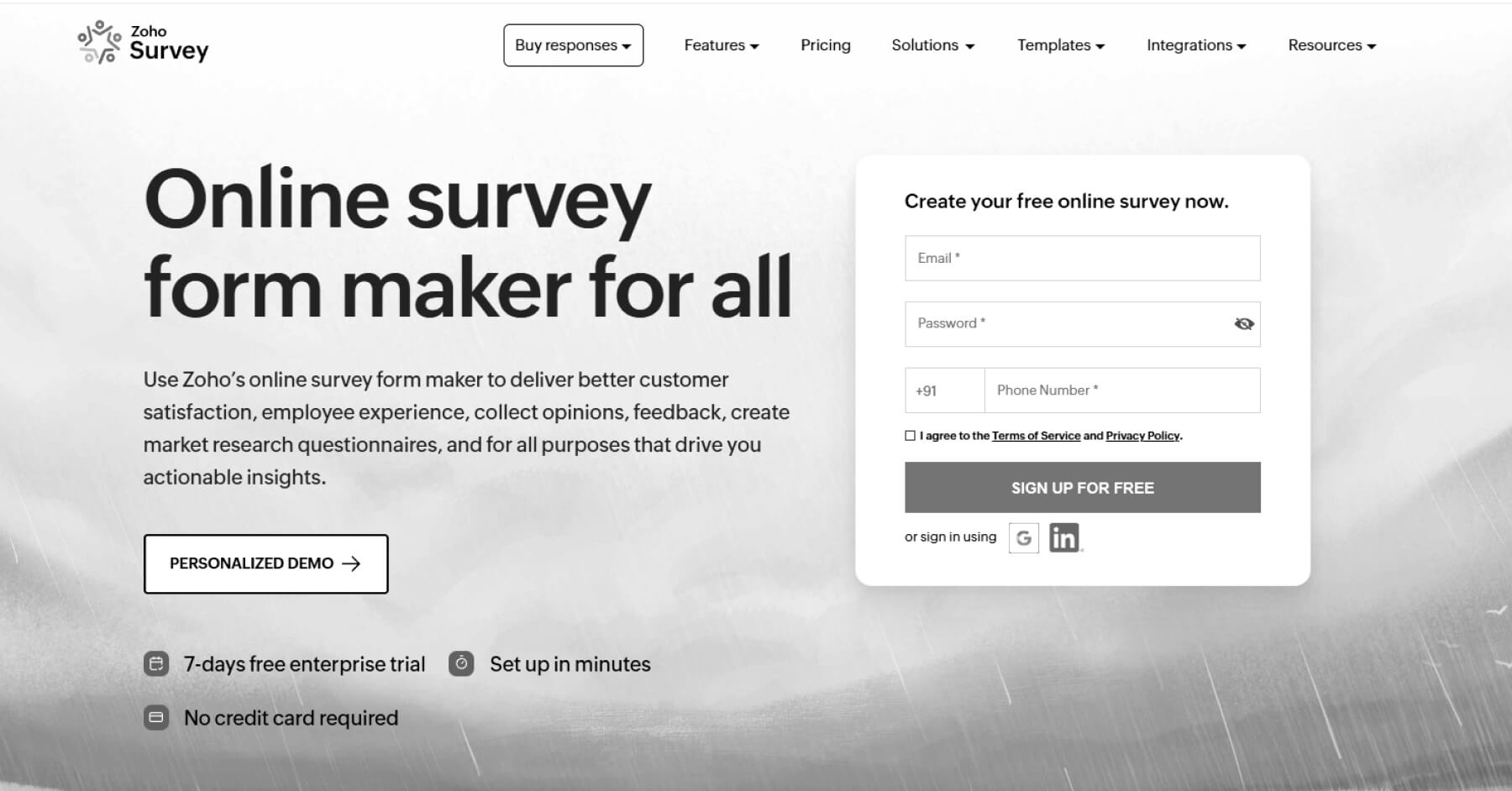
Zoho Survey is a survey tool used for basic feedback collection, offering customizable templates, multilingual support, and standard security controls for routine workforce surveys.
Key takeaways
- Pricing: Contact sales
- G2 Rating: 4.4/5
- Capterra Rating: 4.6/5
- Pros: The platform is easy to use, supports multilingual surveys, and offers straightforward setup with real-time analytics and integrations. (Source: G2)
- Cons: Design customization and advanced logic options may feel limited, and reporting depth or support responsiveness could vary for complex use cases. (Source: G2)
10. QualtricsXM
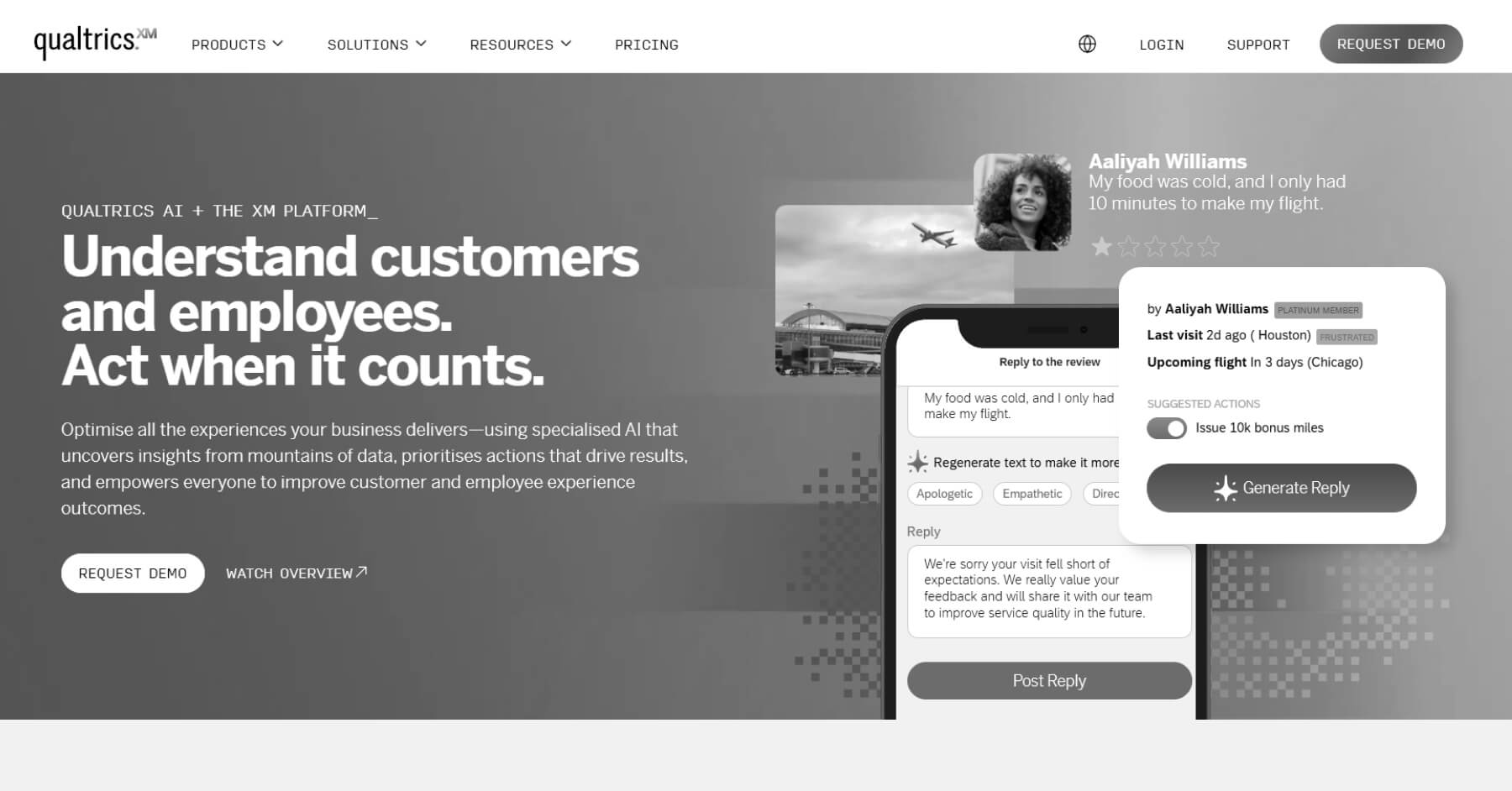
QualtricsXM is an enterprise experience performance management platform used to run employee surveys, apply analytics, and support compliance-heavy workforce research programs.
Key takeaways
- Pricing: Contact sales
- G2 Rating: 4.4/5
- Capterra Rating: 4.6/5
- Pros: The platform enables efficient data collection at scale and offers advanced analytics capabilities for complex organizational needs. (Source: G2)
- Cons: Pricing may feel high for some teams, particularly when running large or frequent surveys that increase overall data collection costs. (Source: G2)
Read more about QualtricsXM alternatives here.
What are the key considerations for banks when choosing an employee survey software?
Choosing employee survey software in banking goes beyond feature checklists. Banks must evaluate how employee engagement survey platforms improve employee experience and support compliance, trust, and execution across branches, corporate teams, and regulated workflows.
Data security & compliance
Banks should shortlist employee survey companies with SOC 2, ISO 27001, role-based access, and clear data residency controls to meet audit and regulatory expectations.
Usability & accessibility
Employee engagement survey tools must be easy for frontline, branch, and corporate teams to use, with mobile access and multilingual support driving higher response rates.
Manager enablement
Best employee survey tools convert feedback into clear, role-specific actions, supporting the role of managers in banking employee engagement without adding operational complexity.
Survey types
Banks benefit from pulse, lifecycle, and targeted surveys that support a long-term workforce engagement strategy for banks, not just annual snapshots.
Deep analytics & benchmarking
Advanced analytics help with measuring employee sentiment in financial services, while benchmarks provide context for employee engagement KPIs for financial services.
Integration
Employee engagement survey platforms should integrate with HRIS, collaboration, and reporting tools to reduce manual effort and data silos.
Customization & flexibility
Banks need configurable surveys and question libraries that adapt to roles, regions, and compliance needs without heavy technical work.
Actionable insights
Effective employee engagement survey tools prioritize issues clearly, helping banks act within governance and approval constraints while improving employee satisfaction and contributing to the organization's success.
Survey distribution
Multi-channel delivery via email, mobile, messaging tools, and links ensures broad participation without disrupting regulated workflows.
Survey anonymity
Strong anonymity safeguards protect trust in small branch teams, which is critical when measuring sensitive engagement and morale signals.
What are the benefits of employee surveys in finance and banking?
Employee surveys help banks address employee engagement challenges in the banking sector by giving leaders actionable insights into staff sentiment, enabling better decisions around engagement, retention, and workplace culture in a high-pressure, regulated industry.
- Know what really matters: Surveys gather honest feedback that shows where engagement and morale are strong or weak, far better than intuition alone.
- Identify focus areas: By analyzing survey data, banks can pinpoint communication gaps, training needs, and engagement drivers that affect employee satisfaction and performance.
- Boost trust through listening: When employees see that leadership acts on survey results, trust and open dialogue increase, strengthening engagement over time.
- Support retention strategies: Regular feedback highlights turnover risks and helps leaders understand why people stay or leave, allowing proactive action to retain top performers.
- Link to financial wellness needs: Surveys can uncover rising interest in financial wellness resources, enabling banks to tailor benefits that improve overall well-being and employee satisfaction.
- Track progress over time: Using employee engagement tools to conduct repeated surveys allows banks to measure changes in sentiment, engagement levels, and the impact of interventions.
- Support strategic decision-making: Actionable insights from the survey provide evidence that can shape engagement initiatives and help justify investments in workplace culture, tools, and leadership development.
How can banks successfully implement an employee survey tool?
Banks often face employee engagement challenges in the banking sector, not because surveys fail, but because execution breaks trust. A clear rollout of an employee engagement software helps employee engagement survey tools support real outcomes, not just data collection.
- Start small with a pilot: Testing pulse survey software in a few branches helps refine rollout before scaling bank-wide.
- Explain anonymity and data use clearly: Transparency builds trust and supports building trust and engagement in BFSI organizations.
- Use short pulse surveys: Frequent, lightweight surveys reduce fatigue while measuring employee satisfaction and sentiment in financial services effectively.
- Give managers clear next steps: Action guidance helps managers respond confidently, strengthening the role of managers in banking employee engagement.
- Focus on two or three priorities: Narrow action prevents overload and supports a sustainable workforce engagement strategy for banks.
- Share results and actions openly: Closing the loop reduces banking workforce communication challenges and improves credibility.
- Link feedback to daily service: Connecting insights to service quality helps in improving employee morale in financial institutions.
- Run follow-up pulses: Tracking outcomes supports consistent measurement of employee engagement KPIs for financial services.
How should banks analyze and act on employee survey data?
In banking, employee engagement software survey data works only when it respects governance limits, protects trust, and leads to focused action. Analysis should reflect how decisions actually get made in regulated financial institutions.
- Start with participation and trust signals: Low response rates often point to fear of identification or survey fatigue from audits and controls, which must be addressed before reading results.
- Segment by how banks operate: Breaking data by branch, role, tenure, and function prevents frontline, compliance, or operations risks from being hidden in averages.
- Track trends across change cycles: Banks change policies, targets, and systems often. Trend comparison is essential to separate “normal fluctuation” from real deterioration.
- Use comments to surface real pressure points: Employees are cautious in ratings but expressive in comments. Themes like compliance pressure or unclear priorities surface here first.
- Assign ownership with accountability: Each priority needs a named leader. Without named owners, survey actions stall in matrixed bank structures where accountability is diffuse.
- Combine data carefully under governance: Banks increasingly combine survey data with communication or behavior signals, but they must do so carefully due to privacy and audit scrutiny.
- Close the loop visibly: Long cycles delay course correction. Short pulses help banks confirm impact without running full surveys again.
How is CultureMonkey the best employee survey software for banks?
Banks need employee engagement software that works within regulated environments, protects trust in small teams, and still enables action. CultureMonkey is built to accommodate how banks actually operate across branches, roles, and governance layers.
- Built for banking-grade data security: SOC 2 and ISO 27001 compliance with role-based access helps banks collect feedback without audit or regulatory risk.
- High participation across branches and roles: Multichannel, multi-lingual and omnichannel surveys via email, text messages, WhatsApp, Slack, and Teams improve user-friendliness and response rates.
- Strong anonymity for small banking teams: Response thresholds and controlled visibility prevent identity exposure, encouraging honest feedback in branch-level teams.
- Pulse survey software and visual heatmaps for real-time signals: Short, frequent pulse surveys track engagement during audits, target cycles, and operational changes without survey fatigue and survey results visualised as engagement heatmaps for easier pain point identification.
- Deep analytics powered by People Science: Trend analysis, sentiment patterns, and role segmentation surface early attrition and morale risks.
- Manager action guidance built into surveys: Survey analysis delivers clear insights and recommended actions, helping managers respond confidently within compliance boundaries.
Conclusion
Employee engagement in banking cannot be treated as another generic HR initiative. The industry’s structure, regulatory pressure, and trust-sensitive environment demand a more deliberate approach to listening. The real challenge is not collecting feedback, but choosing the right employee engagement software, avoiding common mistakes, analyzing data with context, and acting within governance constraints.
Banks that build engagement effectively focus on participation quality, protect anonymity, prioritize a few meaningful actions, and close the loop consistently. When employee feedback is linked to customer satisfaction and service reliability, it becomes a strategic signal rather than a standalone metric.
CultureMonkey supports banking organizations by enabling secure, anonymous feedback, clear analysis, and structured follow-through, helping leaders turn employee voice into sustained trust and engagement.
Book a demo with CultureMonkey.
FAQs
1. Why is employee engagement more challenging in banks?
Employee engagement is more challenging in banks because work happens under constant regulatory pressure, tight controls, and high accountability. Small teams increase fear of identification, while frequent policy and system changes cause fatigue. These factors intensify employee engagement challenges in the banking sector and make building trust and engagement in BFSI organizations harder than in less-regulated industries.
2. How often should banks run employee engagement surveys?
Banks should run employee engagement surveys quarterly, supported by shorter pulse surveys during changes to improve employee engagement. Annual surveys alone miss shifts caused by targets, audits, or restructuring. A balanced cadence helps measure employee sentiment in financial services without creating survey fatigue, while giving leaders timely signals they can act on across branches and functions consistently.
3. What features should banks look for in employee survey software?
Banks should look for anonymity controls, role-based access, secure data handling, and clear action workflows. The employee engagement software must support segmentation by branch and role, trend tracking, and open-text analysis. These features are essential when deciding how to choose employee survey software for banks operating under strict compliance and trust expectations in highly regulated, risk-sensitive banking environments.
4. How often should banks run employee engagement surveys?
Most banks benefit from one comprehensive engagement survey per year, supplemented by quarterly pulses. This approach balances governance limits with the need for timely insights. Using employee engagement software to conduct regular pulses improve employee engagement, track employee engagement KPIs for financial services and catch issues early, without overwhelming employees with repetitive surveys across branches, roles, and regions.
5. What role do employee surveys play in banking engagement strategies?
Employee surveys form the backbone of a workforce engagement strategy for banks. They help leaders identify communication gaps, morale risks, and manager effectiveness. When employee engagement software survey insights are acted on, they strengthen the role of managers in banking employee engagement and connect employee experience directly to customer trust and service reliability across teams and customer journeys.