

S04 E06
Practical Ways Managers Influence Culture
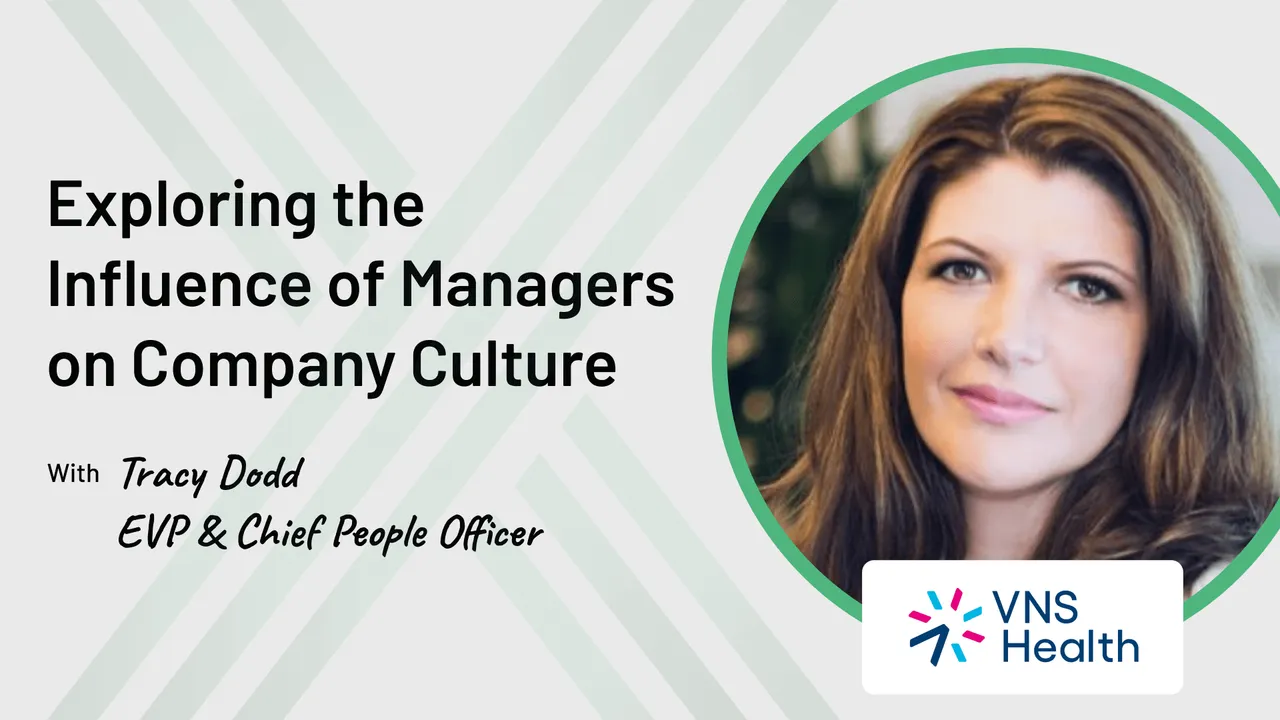
Tracy Dodd of VNS Health shares practical strategies for managers to influence culture, from reading emotional cues to fostering psychological safety, and turning employee feedback into meaningful action that boosts engagement and trust.
TL;DR
What you need to know from this episode
- Psychological safety is the bedrock of trust. Employees need to know they can share thoughts, opinions, and feedback without penalty or retaliation. When that safety exists trust follows, and without trust everything else erodes.
- Safety is not a license for reckless communication. Venting without a filter is not psychological safety. Feedback still has to be respectful, civil, and delivered in a productive, healthy way, even in difficult conversations.
- Middle managers are the most burned out group in the organization. They absorb emotional support, retention, and culture-building duties on top of their day jobs. Span of control reviews, delegation to the field, and peer learning communities lighten the load.
- Transparency beats incentives for survey participation. VNS Health offered no rewards, but explained exactly how the survey mechanics work and pushed action planning down to teams. People respond when they believe something will happen with their input.
- Survey fatigue is really action fatigue. Research cited by Tracy shows employees tire of answering the same questions and seeing no change. Pulse checks that share results and close the loop with visible follow-up are the antidote.
How much of a company's culture actually lives with its managers? In this episode of CultureClubX, powered by CultureMonkey, host Diana Blass explores that question with Tracy Dodd, Chief People Officer at VNS Health, one of the largest home-based and community-based care organizations in the country. Its nurses, speech pathologists, psychologists and social workers serve hundreds of thousands of New Yorkers every day, in their homes and in the community.
Tracy brings 30 years of experience leading data-driven people and culture strategies across multiple industries. Before VNS Health she served as Head of Global Talent at Tiffany & Company, Senior Vice President of Global Talent Management at MasterCard, and VP of Talent Development at CA Technologies, and she spent 14 years at JPMorgan Chase across HR, organizational development, and talent management.
The conversation moves from psychological safety and the limits of candor to middle manager burnout, survey transparency, microcultures, and where technology genuinely helps. The thread running through all of it is simple: managers shape culture every single day, and organizations have to deliberately equip them to do it well.
Why psychological safety is the bedrock of trust
Asked what managers can do to make employees feel more valued, Tracy goes straight to psychological safety. It is a hot topic for a reason, she says. People need an environment where they feel really comfortable sharing their thoughts, expressing their opinions, and offering feedback, including feedback to their peers and their managers, without fearing penalties or retaliation.
Create psychological safety, and when you have psychological safety, you have trust. You have the trust that I can bring my thoughts, my ideas, my feedback to the workplace, and I'll be heard.
For Tracy, trust has to sit at the core and the heart of culture. Without it, in her words, everything else just erodes. The manager's first job is to build the conditions in which honesty feels safe rather than risky, and that starts with how they respond the very first time someone speaks up.
Where does psychological safety end and reckless communication begin
Safety does not mean anything goes. Tracy points to a LinkedIn post she reshared that draws the line between a psychologically safe environment and reckless communication, where people vent, complain, and skip the filter because they assume openness excuses everything. No, it's not okay, she says plainly.
Her reference here is the book Crucial Conversations and its idea of creating a shared pool of meaning. You can bring your thoughts, ideas, feedback, and opinions to work, but you have to express yourself in a productive, healthy way. Difficult conversations still require respect and civility, and yelling, screaming, or abusive behavior is never what psychological safety means.
What signs tell a manager an employee is struggling
The cues are usually behavioral. Employees who are stressed out, burned out, having emotional outbursts, or struggling to self-regulate their emotions at work are showing what Tracy calls a pretty clear sign that a manager needs to dig in and find out what is going on. Burnout, she notes, has become a bit of another pandemic as a result of the pandemic.
She also flags a subtler pattern from the virtual work era. The screen between people has dehumanized and desensitized interactions, making conversations less diplomatic than they would be face-to-face across a table. It has created an excuse, a barrier to human-to-human connection, that lets people be a little more disrespectful than they would ever be in person.
Context matters at VNS Health, where corporate staff work hybrid but the majority of employees are field facing, out in communities and patients' homes with no work from home flexibility. Managers there have to read emotional cues across two very different working realities at once, which makes deliberate employee sentiment tracking all the more important.
How VNS Health listens to a workforce that is mostly in the field
Tracy describes a stack of listening channels rather than a single survey. Team time breakfasts were launched by CEO Dan Savitt, whom she calls the most present and visible CEO of her 30-year career, and employees bring him everything from strategic suggestions to tactical field issues. Leaders across the organization also host employee roundtables at times that suit field schedules.
Then there is her own podcast, Courageous Conversations, which invites field employees to raise the provocative questions that are on people's minds but rarely get asked out loud. Layered on top are the annual employee survey and mobile enabled pulse surveys that are easy to complete from the field, so listening reaches the people who never sit at a desk.
Middle managers are carrying the heaviest burnout load
Tracy agrees emphatically that managers are overburdened. Beyond the traditional work of managing teams and assignments, they now carry employee emotional health, pandemic related change, retention challenges, inspiring great work, and building workplace culture. The result is that middle managers show significantly higher burnout and stress than other populations, even field employees.
VNS Health is attacking the problem structurally: reviewing org design and span of control, using process improvement to pull unnecessary lower value work off managers' plates, and delegating decisions to field employees who are closest to patients and probably have the best solutions. The organization is also building collaboration communities where managers coach each other.
Peer-to-peer learning is one of the least utilized resources that companies have. You have such a wealth of knowledge and experience when you bring managers together.
Bring managers together, Tracy says, and you can gather hundreds of years of experience in one cohort. Peer coaching gives managers solutions to everyday problems, and just as importantly it gives them a sense of community and belonging, so they do not feel like they are alone.
How do you convince employees that surveys are safe and worth their time
Asked whether workplace monitoring software has eroded trust, Tracy reframes the issue as an old problem, not a new tech problem: employees not believing surveys are truly confidential. She has led survey work for more than 20 years and hears the same question in every organization, often phrased as, how do you know the completion rate if you don't know what I said?
Her answer is transparency. When VNS Health moved to a new survey vendor with a manager action planning dashboard, the team explained exactly how the process works, how completion rates are known by department, and how a manager with 15 employees gets a score for a question. Explaining the mechanics matters because human nature fills information gaps with worst-case scenarios.
Notably, VNS Health offered no incentives for participation. What moved people was a new approach to action planning that was not top-down: employees worked with their managers to design the solutions themselves, instead of the executive team deciding at the leadership table. People respond when they can see somebody is actually going to do something with their input.
Survey fatigue is a myth, action fatigue is real
Tracy calls survey fatigue a myth, citing research from Perceptyx. What exhausts employees is being asked the same questions over and over while nothing visibly changes. That distinction flips the usual objection to frequent listening on its head: the cure for fatigue is not fewer surveys, it is more meaningful follow-through on what employees say.
Done well, a pulse survey cadence closes that loop: ask employees specifically about their experience, share the results back, involve them in action planning, then check in again to ask, did we get it right, are we making progress. Each cycle proves that speaking up leads somewhere, which is exactly what builds trust.
Microcultures are not a threat to company culture
Organizations tend to describe their culture as one thing, but Tracy argues that a company operating across many teams, functions, or countries cannot have just one culture. Microcultures will absolutely exist within different teams, and there is nothing wrong with that. Ideally they all align with the overall culture the organization aspires to have, while flexing to local needs.
At VNS Health, alignment comes from data and dialogue. Employee resource groups have grown from two to seven, with three more planned, and survey results are analyzed by tenure, gender, ethnicity, department, function, and level. Where the numbers show different groups experiencing the company differently, focus groups and ERGs give those differences a voice.
The glue is a set of shared values, integrity, empathy, and agility, plus a culture of continuous learning that pushes employees to own their careers. On hiring, Tracy favors the expression hiring for culture add, not culture fit, because a fast-changing talent landscape demands diversity of thought rather than more of the same.
You have to be very careful that you're not hiring people that you are going to force fit into a culture or you're hiring the same type of leaders, because then you're not going to have the diversity of thought and the diversity of experience and skill that really creates the innovation that you need in order to remain competitive.
What this episode says about employee listening
Tracy is enthusiastic but disciplined about technology: never implement it for technology's sake, and always know whether you are trying to create community, collaboration, or shared knowledge. At VNS Health that means LinkedIn talent insights for clinical recruiting and a pilot of Caribou, a social recognition tool designed specifically for home care workers, because recognition rose to the top of what employees at all levels are craving.
Strip the episode down and one discipline underpins everything: listen, act, and show your work. Ask for feedback, follow through or explain why not, be transparent about how the data works, and close every loop. That is the practice CultureMonkey exists to support, giving managers the sentiment insights and follow-through tools to turn listening into the culture their teams actually experience.
About the guest
Tracy Dodd
Chief People Officer - VNS Health
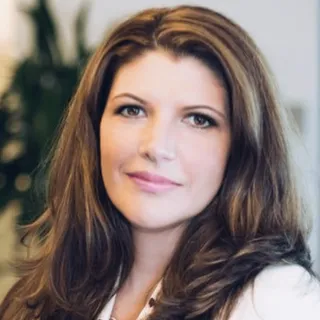
Tracy Dodd is Chief People Officer at VNS Health, one of the largest home-based and community-based care organizations in the country. She has 30 years of diverse experience leading data-driven people and culture strategies across multiple industries.
She previously served as Head of Global Talent at Tiffany & Company, Senior Vice President of Global Talent Management at MasterCard, and VP of Talent Development at CA Technologies, and spent 14 years at JPMorgan Chase in numerous roles across HR, organizational development, and talent management. Tracy holds a Master's in Social Organizational Psychology from Columbia Teachers College with a specialization in change leadership and is a certified executive coach.
Full episode transcript
Season 04, Episode 06 · Tracy Dodd with Diana Blass · 34 min
Hello, everyone, and welcome to the latest episode of CultureClubX, powered by CultureMonkey. I'm your host, Diana Blass. CultureMonkey is a complete employee engagement platform that helps people leaders listen to their employees and enhance workplace cultures. In the sixth episode of our latest season, we have with us Tracy Dodd, Chief People Officer at VNS Health. Tracy, thanks for your time today.
Thank you. I'm excited to have this conversation with you.
Great. Well, before we get started, I'm just going to share a little bit more about your background with our viewers. Tracy has 30 years of diverse experience leading data-driven people and culture strategies across multiple industries. She previously served as Head of Global Talent at Tiffany & Company, Senior Vice President of Global Talent Management at MasterCard, VP of Talent Development at CA Technologies, and spent 14 years at JPMorgan Chase in numerous roles across HR, organizational development, and talent management.
Tracy holds a Master's in Social Organizational Psychology from Columbia Teachers College with a specialization in change leadership and is a certified executive coach. With a passion for leading change and positively disrupting the way organizations implement people strategies, she creates solutions that enable business results through a focus on culture, employee experience, and leadership capability.
Tracy, it's our privilege to have you with us today. Welcome again to the CultureClubX videocast on exploring the influence of managers on company culture. Before we begin, just tell us more about yourself and your organization.
Sure. So VNS Health, formerly known as Visiting Nurse Service of New York, we rebranded earlier in 2021, and we are one of the largest home-based and community-based care organizations in the country. We serve hundreds of thousands of New Yorkers each and every day, and we have a very diverse set of organizations or functions within VNS Health, from nurses to speech pathologists to psychologists and social workers. We go into people's homes as well as into the community to serve the most vulnerable and the most underprivileged. It is a humbling and a rewarding experience to work at VNS Health, and the work that we do is so critically important.
I think your background and this specialization that really focus on health and people wellness will really bring an interesting perspective to this conversation today. So without further ado, let's get started.
The first idea is set around building trust and being valued as the bedrock of a good culture. So what steps can managers take to make employees feel more valued and improve trust within their teams?
Such a great question. I'm sure that the phrase psychological safety is something that people will resonate with, because it is a hot topic and we're hearing more and more about it, and it's so important to create an environment where people can feel really comfortable sharing their thoughts, expressing their opinions, offering feedback. Creating a feedback culture where employees can give feedback to their peers and to their managers and not feel like they will be penalized for it, right? Or there will be some retaliation for it.
Create psychological safety, and when you have psychological safety, you have trust. You have the trust that I can bring my thoughts, my ideas, my feedback to the workplace, and I'll be heard. I'll be listened to. And I think it's really important to cultures today to really have trust at the core and the heart. Without that, everything else just erodes.
Well, we are digging further into psychological safety later in this conversation, but while we're touching on this topic now, I saw in your LinkedIn, your post, there was reference to the idea of reckless communication versus psychological safety. Saying what's on your mind, creating that safe space, but also not going too far with it. So what is that right balance there?
Yeah, that's a great point. I love to think of the book Courageous Conversations, and it really talks about how you create a shared pool of meaning. And so it's the way that you give feedback. It's the way that you share your thoughts and your opinions. You have to be respectful. It doesn't mean that you can yell and scream and be abusive. That's not what we're talking about. That's not what psychological safety is. Psychological safety is the feeling and the environment and the culture that you can be yourself and you can bring your thoughts, your ideas, your feedback, your opinions, express yourself, but you have to express yourself in a productive, healthy way.
And so reckless communication, and that post on LinkedIn that I was drawn to, that I reposted, really helped to clarify what's the difference between having a psychologically safe environment and having reckless communication, where people think that it's okay to just vent and complain and maybe not filter their thoughts in a productive way and think, well, we want to have psychological safety, we want everyone to feel comfortable sharing their thoughts, so it's okay if I do that. No, it's not. We have to be respectful and civil, and we have to have difficult conversations in a productive way.
I'm sorry, the book is Crucial Conversations. Courageous Conversations is the name of my podcast series at VNS Health, so I'm sorry for confusing the two.
Well, both sound interesting for sure. And it's interesting, that point there, because there's also the idea that what you put out into the universe, your positive energy, comes back to you. It's an interesting exercise. You can even reframe what perhaps could be negative in a positive way, and it's just really how you present it. So all good things to think about there.
What signs can managers look for to gauge the emotional and mental health of their team members? How can they become first responders to employees dealing with these issues?
Yeah, I think part of what I was just talking about is certainly our clues. If employees are stressed out, if they're burned out, if they're having emotional outbursts, if they are having difficulty self-regulating and self-managing their emotions in the workplace, I think that's a pretty big sign, a pretty clear sign that you need to dig in there a bit and find out what's going on. So many employees are feeling burned out right now. It's a bit of another pandemic as a result of the pandemic.
And another thing that I have found fascinating as I've been keeping up with what's going on in the pandemic and in the industry is there's this belief that because there's so much virtual work now, the fact that there's a screen between you and the other person has dehumanized the experience and the relationships between people. It's also desensitized people, and so they're not being as diplomatic and not having as productive conversations as maybe if they were sitting face-to-face across from a table or a desk with someone. It sort of created this excuse or this barrier for human-to-human connection and allowed people to be a little bit more disrespectful in their communication.
Hmm, that's true. I think when you type things out, you don't always realize how it comes off. I know I personally had that issue with the rise of Teams and Slack, especially if you're dealing with people who are just from different cultures entirely. So I guess I would love to learn more actually, first, before I ask my question about how to handle this. Describe the work culture at VNS Health. Are you mostly remote? Are you hybrid?
Yeah, so we are hybrid for the employees that work in our corporate staff groups. Corporate staff groups are typically IT, human resources, finance, operations type roles, marketing. We are hybrid. We have different types of work arrangements based on team needs and individual needs, and trying to be as flexible as we can be to support the needs of our employees. But then the majority of our employee base is field facing. They can't work remote. They can't work virtually. They are out in the field. They're in the communities. They're in our patients' homes, and they don't have that flexibility to work from home. So we have a very diverse employee demographic population with different experiences.
Okay, so in that regard then, it really must be difficult to get a sense for the emotional well-being of all of your employees, given that they're in such different areas. But especially those who are remote. How do you create that connection, as we were just saying, with that screen up between us?
Yes, we've been doing a number of different things to try to really understand the experience of our employees and to provide them with an opportunity to share with us what's going on in their day-to-day lives. We do team time breakfasts that actually were launched by our CEO, Dan Savitt, who, in my 30-year career, is probably the most present and visible CEO, who's really out in the field very often talking with employees, hearing their concerns. And employees will share lots of things with him, from the most strategic idea and suggestion to the most tactical issue that they're dealing with in the field.
We also have employee roundtables, where I host them, other leaders host them, where employees are invited at different times of the day that's convenient for them to share what's going on in the field and share their experiences, their thoughts and ideas. I also host a podcast series that I mentioned earlier, where I invite employees from the field to sit down with me to talk about a burning issue, a question, something they're experiencing in the field. And we call that Courageous Conversations, because we want them to be more provocative in nature. We want the questions to be things that are probably on people's minds, but they might not be comfortable asking those questions. So we're trying to create that psychological safety through those experiences and really make sure that we're getting the pulse of our employees. We also of course have our annual employee survey, and we're rolling out pulse surveys. Those are all mobile enabled, so it's really easy for the field to complete those.
Great. It's fascinating from my perspective to hear in our interviews and this webcast about all the different ways that companies and HR managers and people officers are connecting with their employees today. And while many people say maintaining a good company culture is difficult with remote and hybrid work, I would argue there's a lot more innovation in this space that perhaps wasn't really given the same amount of attention in the past. So really interesting stuff there, and I'm sure we'll dig further as we go into the interview here.
Do you agree that managers are overburdened with expectations beyond scope of work? What can organizations do to reduce manager burnout and its potential fallouts, like attrition?
Yes, yes. Leaders are carrying very heavy workloads, and the pandemic added burdens and stress to their role. In addition to just the traditional tasks of being a manager and managing teams and assignments, managers now are managing employee emotional health and well-being, which we talked about earlier. They're managing, navigating and leading through pandemic related changes, employee retention challenges, inspiring great work, building workplace culture. All of these things are falling on the shoulders of the managers, and we're seeing the result of that being that middle managers have a significantly higher amount of burnout and stress right now. And so there has been a tremendous amount of talk about employees who are burned out, employees are stressed, field employees, and yes they are, but the middle manager level is actually feeling it more so than other populations.
You asked, in the second part of your question, what can we do to help address that. Things that we're doing at VNS Health is we're looking at org design and org structure. We're looking at span of control. We're looking to see, are there ways of better organizing and better structuring. Process improvement of work is another example, operational effectiveness and efficiency, to try to maybe take some of the unnecessary lower value work off the plates of managers, help them to redistribute that work. We're also looking at how can we better delegate and empower our employees, especially those in the field who are closest to our patients, consumers and families. They know what the challenges are and probably have the best solutions for how to address those challenges, right? Not the middle managers, who might be a couple levels away from the customer, the consumer, patients and families.
We're also looking at creating these collaboration communities, where we're bringing managers together to have conversations about their experiences, to help them with identifying what's working well in one group, where they can leverage a best practice and apply it within another. Peer-to-peer learning is one of the least utilized resources that companies have. You have such a wealth of knowledge and experience when you bring managers together. You can have hundreds and hundreds and hundreds of years of experience in one cohort by bringing managers together, and they can provide peer coaching and help each other come up with solutions to everyday problems. We're creating that sense of community and belonging, so they feel like they have people to talk to. They don't feel like they're alone. And so those are some of the things that we're doing to try to address this. Of course we need to be doing more, and there's a lot more to be done, but those are some of the initial steps that we're taking now.
I love that. Especially the communication. I would think that managers probably don't have enough time talking to one another because they're too busy leading their own team, so just having that time to speak to people on the same level as you, I'm sure, is tremendously helpful. What can managers do to develop two-way trust with teams, and how important is psychological safety in this?
I think managers have to role model the type of culture that creates psychological safety by asking for feedback. That is a very simple thing that managers can do. They can ask for feedback. They can ask open-ended questions, things that can help them really fully understand and appreciate what their employees' experiences are. And then they need to act on that feedback, right? And that's harder to do and easier to say, but they need to follow up and follow through on the feedback, or at least explain why they're not following up on that feedback, so that employees feel like they're being listened to. They feel like they're being heard and that action is being taken on their feedback. That builds trust. When you share with someone you're having a challenge, maybe you have a solution, when you feel like you've been listened to and that solution is being brought forward, then that builds trust between you and your manager.
And now, is that hard to do? Clearly it is hard to do in this remote world, as we just talked about, and I would think it makes it even harder when there are so many conspiracies out there, and actually I guess with some reality, that these software programs are recording what you're saying and used to better analyze your workplace productivity. Has that been a challenge for you to overcome, to ensure that trust is there with teams in this remote environment with all the new software that's available?
No, I'm not really. I think the one thing that comes to mind is an old problem, not a new innovative tech problem, and that's employees sometimes not believing that the surveys are truly confidential or anonymous. That's a problem that we've had in this industry for decades, and I've been actually leading survey work for probably more than 20 years, and that's a consistent question that comes up in every organization. I don't think it's unique to this environment at this time. I think employees are sometimes curious, well, how do you know what the completion rate was if you don't know what I said? And so I think that transparency is really important, regardless of whether you're implementing new software or you're using some new survey tool. Transparency is really important.
And so when we moved to a different survey vendor last year and launched a completely different employee survey experience, with a new manager dashboard that allows managers to do action planning, we were very transparent and explained to the employees exactly how the process works, and how we know which departments have certain completion rates and which departments have lower completion rates, how do we know that this manager with 15 employees has this score for this question. We were very, very transparent, and that's how you build trust. I think you have to explain it to employees. I find that when anyone, it's human nature, when you don't know something and you're coming up with your own conclusions and maybe you're making assumptions, usually the idea that you are coming up with is probably worse than the actual reality. I think it's human nature to come up with worst-case scenario, right?
Do you have to offer any kind of incentive to also encourage people to fill out the surveys?
No, we did not offer any incentive. I think that what we did was we were very transparent. We explained what we were trying to do, why we were trying to do it, how we were trying to do it, and we launched a new way of action planning that was not top-down. We changed the way in which we actioned the survey feedback, and we had employees working with their managers and with each other to come up with the solutions that they thought would address the feedback in the survey. We did not sit around at the executive leadership table and say, okay, this is what we think we should do. We really delegated that down and empowered teams at the local level to come up with their own action plans, and I think that type of an approach built trust and inspired people to want to respond to the survey, because they could see that, oh, somebody's gonna actually do something about this. I'm actually gonna have some input into the action.
How important are frequent pulse checks and manager micro cultures with teams? Do you think they add to a larger company culture, or vice versa?
Pulse checks are very important. I think that there is a myth out there that employees have survey fatigue, and actually that's not true. There's been some research done by Perceptyx that it's not survey fatigue, it's the fatigue around being asked the same questions over and over again and not seeing any change or any meaningful action being taken. That is what employees have fatigue around. So doing pulse checks is really important to help address that type of fatigue. Asking employees specifically about their experience, sharing the results back, allowing them the opportunity to share in the action planning of what we can do to make that situation better, and then following up to say, here's what we're doing, how's it going, and having a pulse check to check in to say, did we get it right, are we making progress. It's very, very important.
And the second part of your question, about microcultures, is so interesting. I think that organizations tend to say our culture is X, right? They describe it as one thing. But if you're a global company, for example, and you are operating in multiple countries with many, many different cultures, you can't have one culture. There are going to be multiple cultures across the organization. Hopefully they all align and are consistent with the overall culture that the organization aspires to have, and that can happen. You can have those cultures aligned to that overall culture, but there will absolutely be microcultures within different teams. I don't think that there's anything wrong with that. I don't think that you can avoid that. I think it can be helpful. I think it allows leaders across organizations to learn from one another, to learn what works well, to be flexible, and to respond to the unique needs of the employee demographic that they're working with.
Definitely. I was reading about trends for 2023 and the idea of microcultures, and it really helps, I think, for people to feel more attached to their organization as well, because obviously I think people who are drawn to a certain career path have similar personalities, like engineers versus marketing. You're going to maybe get along more with those people in your team, but there's an overarching culture that unites you together. So how do you build that and develop that within your organization? You allow for those microcultures to flourish, but then how do you bring it all together to make sure that you're all aligned on common values?
Yeah, that alone, we could probably spend hours talking. Very complex. I think some of the things that we're doing is we've launched employee resource groups. So there were one or two employee resource groups here before I joined. We have now launched another five, so we currently have seven, and we're planning to launch three more, probably this quarter. And I think that has allowed the space and the opportunity for employees to share what their experience is like at VNS Health, to really talk about what their day to day is.
So we're using that feedback and that information coupled with our survey feedback, which we work very closely to be able to analyze by different employee demographics. We can look at it by tenure, by gender, by ethnicity and race. We can look at it by department, by function, by level, individual contributor, supervisor, manager, director, VP. And so we can get a sense of how different employee demographics or populations are experiencing VNS Health, and we can look and see if there are significant differences in employee experience, and then we can dive deeper and dig into that through having focus groups and having dialogue. And the employee resource groups are really helping us with that, because as we're identifying the different experiences that some groups might be having, we can leverage the employee resource groups as the voice of that specific demographic to help us to better understand what that experience is.
That helps us then to ensure that the culture that's being created across the organization, in different departments or in different levels, different demographics, that it's all aligned to the overarching company culture that we're trying to create and our shared values, which are integrity, empathy and agility. And we are trying to create a culture of continuous learning that empowers employees to own their own careers and to work with leaders at all levels to ensure that we're creating the best possible employee experience. So we're very focused on growth mindset, psychological safety, creating a culture of feedback, peer-to-peer learning and sharing and collaboration. So I hope I answered the question.
No, you absolutely did. And it brings into the idea of the value of the surveys that you're continuously offering as a way to do those pulse checks and make sure that employees are aligned, whether it's a micro culture or a larger culture. And it's interesting to think about how you encourage that growth too, because as you're discussing this, I'm sitting here thinking, well, when does this begin? Like, based off your hiring, are you finding candidates who automatically match your culture? Because as you're describing it, it grows and evolves, and I think it has to, based off even our society, the way every generation is so different. Again, it just brings into focus the value of those surveys to really see how you can grow as a company.
Yeah, it's complicated, yes. And I like the expression, I don't know who coined it, hiring for culture add, not culture fit. Because I think to your point, the world is changing very quickly, the market talent landscape is changing very quickly, and you have to be agile and you have to ensure that your culture continues to evolve and thrive. And you have to be very careful that you're not hiring people that you are going to force fit into a culture or you're hiring the same type of leaders, because then you're not going to have the diversity of thought and the diversity of experience and skill that really creates the innovation that you need in order to remain competitive and continue to evolve and thrive.
How do you think technology can enable managers and people leaders to deliver on culture initiatives and improve retention?
Yes, I think there is a place for technology. I think it has to be thoughtful. I think that companies have to be careful that they're not implementing technology for technology's sake, and just be really thoughtful about what are you trying to accomplish. Are you trying to create community? Are you trying to create collaboration? Are you trying to create shared knowledge and learning? And I think there's absolutely a place for it. We've been leveraging technology in HR in a few different ways, to evolve and elevate HR as a function. So we are looking at different ways of implementing technology to improve employee experience, which of course is part of our culture, and our people and culture strategy is ensuring that we are providing the best possible employee experience that will attract and retain our talent.
I think that there are opportunities, and we are seeing opportunities, to leverage technology in the area of recognition, recognition and rewards. I was at a CHRO event recently, and there was an industry leader presenting some findings of a recent survey about culture, and recognition rose to the top as one of the things that employees at all levels are craving right now. And it's not just monetary recognition. It's peer recognition, it's social recognition. People want to have a sense of purpose and a connection to an organization, and they want to be part of a community, feel a sense of community. And recognition goes a long way in having people feel like they're appreciated and that they belong and they're part of that community. So we're currently exploring and thinking through ways that we can leverage technology to encourage employee recognition.
Yeah, I love that. As you were saying, it brings people closer together over their common goals, what they're working towards, and people want to feel like they're also growing within an organization. And that's something that I think many organizations can do when trying to think about how to unite a remote work culture. That seems to be a common challenge, like we need people back in office because otherwise we just don't feel like we have any sort of united team. But that's a great tool that companies can use to kind of enhance that culture. Were there any solutions that provide that service that you can mention, or just any technology in general that you're investing in right now that you're really getting a lot out of?
Sure. We have had a really strong partnership with LinkedIn, leveraging their talent insights and the Talent Neuron product that they have, which has been really helpful to our talent acquisition team in finding clinical health care workers in this very, very challenging market. We're also looking at implementing a tool called Caribou, which is a social recognition and gamification recognition software that is specifically designed for home care workers, which is actually quite unique. Someone in our organization came across them and recommended them, and we're looking to do a pilot. So we'll see how that pilot goes, we'll see what learnings we gain from that, and we're hopefully going to be able to implement something broadly across the organization.
Interesting. Yeah, it's fascinating to see how targeted these solutions are to fit specific needs, and also how they can work with your existing services that you already are carrying out. So really interesting stuff there.
Well, that was such an exciting conversation, Tracy. I love how you correlated managers' influence with company culture. Organizations today must enable managers to lead culture transformation within teams. With CultureMonkey, leaders can gauge employee sentiment and provide managers with personalized, action oriented insights effectively. So visit CultureMonkey.io to see how you can improve your workplace culture today. And with that, we conclude this episode of CultureClubX powered by CultureMonkey. Thank you for being with us today, Tracy. And before we close out, let our viewers know how they can connect with you to share their thoughts or have a quick chat.
Well, thank you so much again for having me. It was a pleasure, and I enjoyed chatting with you. I always walk away with some new insights when I participate in these types of discussions. People can connect with me on LinkedIn. Very easy to find me, Tracy Dodd, D O D D, and I love connecting with people on LinkedIn and really encourage folks to reach out.
Well, that's all we have for you in this episode of CultureClubX powered by CultureMonkey. Till next time, this is your host, Diana Blass, signing off.
Frequently asked questions
What can managers do to make employees feel valued and build trust?
Tracy Dodd's answer starts with psychological safety: create an environment where people can share thoughts, express opinions, and offer feedback to peers and managers without fear of penalty or retaliation. Managers should role model this by asking for feedback and asking open-ended questions.
The second half is follow-through. Managers need to act on the feedback they receive, or at least explain why they are not acting on it, so employees feel heard. Being listened to and seeing a solution move forward is what builds two-way trust.
What is the difference between psychological safety and reckless communication?
Psychological safety means you can be yourself and bring your thoughts, ideas, feedback, and opinions to work, but you must express them in a productive, healthy way. Reckless communication is venting, complaining, and skipping the filter under the excuse of openness. Difficult conversations still require respect and civility; yelling or abusive behavior is never psychological safety.
How do you get employees to believe surveys are truly confidential?
Tracy calls this an old problem, not a new tech problem, and one she has heard in every organization across more than 20 years of survey work. Her fix is transparency: explain exactly how the process works, how completion rates are known by department, and how manager-level scores are produced. When people do not understand the mechanics, human nature fills the gap with worst-case scenarios.
Do frequent pulse surveys cause survey fatigue?
According to Tracy, survey fatigue is a myth. Research by Perceptyx found the real fatigue comes from being asked the same questions repeatedly and seeing no change or meaningful action. Pulse checks actually help when they close the loop: ask about the experience, share results back, involve employees in action planning, then follow up to ask whether things are improving.
What does hiring for culture add instead of culture fit mean?
Culture fit risks force fitting people into the existing culture and hiring the same type of leaders again and again. Culture add recognizes that the world and the talent landscape are changing quickly, so organizations need diversity of thought, experience, and skill to stay innovative and competitive. The culture should keep evolving rather than cloning itself.
Read the cross-episode roundups
More from CultureClub X
 S07 E03employee engagementWhy do grievance procedures damage workplace culture? | David Liddle, The TCM Group
 David Liddle
 S07 E01employee engagementWhy is employee wellbeing spending not paying off? | Gethin Nadin, Benifex
 Gethin Nadin
 S06 E20change leadershipWhy does culture change stall? | Jamie Notter, culture scientist
 Jamie Notter
Never miss an episode
Every new episode, plus the takeaways that matter, posted on the CultureMonkey LinkedIn page as soon as they drop.
Free on LinkedIn. Unfollow anytime.