

Your Engagement Score Is Not the Point
Nine people leaders on why the number matters less than who answered it, and what you did next.
Every quote below is verbatim from a CultureClub X episode we recorded with the named leader. 9 people leaders, recorded 2023 to 2026. Each take links to the full episode it came from and to the speaker’s LinkedIn profile.
What does an employee engagement score actually tell you?
Less than who answered it. Nine people leaders on CultureClub X treat the headline number as the least interesting output, pointing instead to participation, which groups went quiet, and which manager the variance traces back to. Our benchmark shows engagement does predict advocacy more strongly than any single driver, but comparable companies still sit 59 eNPS points apart.
Every guest on CultureClub X measures engagement. Almost none of them trust the headline number on its own. What surfaced again and again is that the score is the least interesting output: who stayed silent, which manager the variance traces back to, and whether anything visibly changed afterwards all carry more signal. The uncomfortable version, which several of them said outright, is that a survey nobody acts on does more damage than no survey at all. Here is what nine of them said, in their own words.
1Engagement data is a signal, not the change. Around 70% of the variance traces back to one manager.
When you have high engagement and you give them a tool, you almost don’t need an instruction manual. The most engaged say, tell me what I can’t do, and cut me loose.
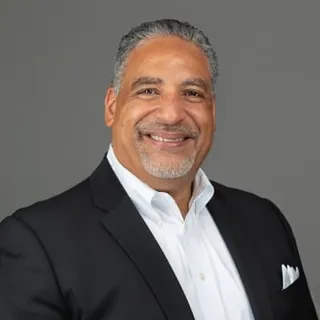
 Dr. Adam HickmanVP of Employee Development, Talent Management and HRIS, Partners Federal Credit UnionS06 E14
2Participation comes before sentiment. If nobody answers there is no energy to redirect, and a quiet survey is the harder problem.
You can do crockpot cooking, you can't do crockpot management.
3Engaged employees still quit. Engagement is how people feel today, retention is their confidence in the future.
People can love their company, love their coworkers, and have real day-to-day experiences they enjoy, yet they still leave for stronger growth, greater flexibility, better rewards, or deeper alignment with personal values.
4Engagement is an outcome of culture, not culture itself. A good score signals health, it does not prove it.
If we can all hold each other accountable, then we’re all accountable for the culture. But organizations need to give people the tools and the permission to hold each other accountable.
5Survey fatigue is really action fatigue. People tire of answering the same questions and seeing nothing move.
It's not survey fatigue, it's the fatigue around being asked the same questions over and over again and not seeing any change or any meaningful action being taken. That is what employees have fatigue around.
6The revealing signal is who is answering, and which groups have gone quiet.
If DEI is everyone's responsibility, it is actually no one's responsibility. We want to make sure we have someone experienced in the area - collaborating directly with the C-suite and the board - because even today in 2026, many leaders do not really understand what this work is all about.
7The average employee does not exist, and programmes built for them miss everyone.
Even well-intentioned programs can miss because they're built for an imaginary average employee, not for the actual person sitting in the seat.
8Survey cadence is now a data-freshness problem. When the tools change by the hour, a monthly read is history, not sentiment.
You need to, if you're doing it weekly, monthly, you're getting old data. It might not be that anymore. It could be changing every day.
9Listening is the fastest lever on engagement, and the fastest way to destroy trust if nothing follows. The problem is never the asking.
There is nothing that will increase employee engagement faster than asking employees what they think, but equally nothing will destroy that trust more quickly than asking for that feedback and then doing nothing with it.







The pattern across all nine is that asking creates an obligation. The organizations getting value from engagement data are not the ones with the best scores, they are the ones where people can point at something that changed because they spoke up.
Questions people ask about employee engagement
- Is a high engagement score good news?
- Not on its own. Guests describe flattering scores that masked a homogeneous culture or a silent group. Engagement is an outcome of culture, not proof of it.
- What matters more than the engagement score?
- Participation and its distribution. If nobody answers there is no energy to redirect, and the revealing signal is usually which groups have stopped responding.
- What causes survey fatigue?
- Action fatigue, according to the guests below. People do not tire of being asked, they tire of answering the same questions and seeing nothing move.
- Are annual engagement surveys still worth running?
- Guests treat them as snapshots that feel dated by the time they are analysed, and pair them with more frequent listening rather than replacing one with the other.
- Does engagement predict whether people recommend the company?
- Yes, more than any single driver. Overall engagement tracks eNPS more closely than any single driver across 747 benchmark segments, but the tenth to ninetieth percentile spread is still 59 points.
The other roundups
Same panel, same benchmark data, different question.
Turn these conversations into action
See how CultureMonkey helps people leaders act on this, or explore the deep dive on pulse surveys and real-time listening.
Never miss an episode
Every new episode, plus the takeaways that matter, posted on the CultureMonkey LinkedIn page as soon as they drop.
Free on LinkedIn. Unfollow anytime.