

S03 E03
Managing Gen Z Expectations at Work
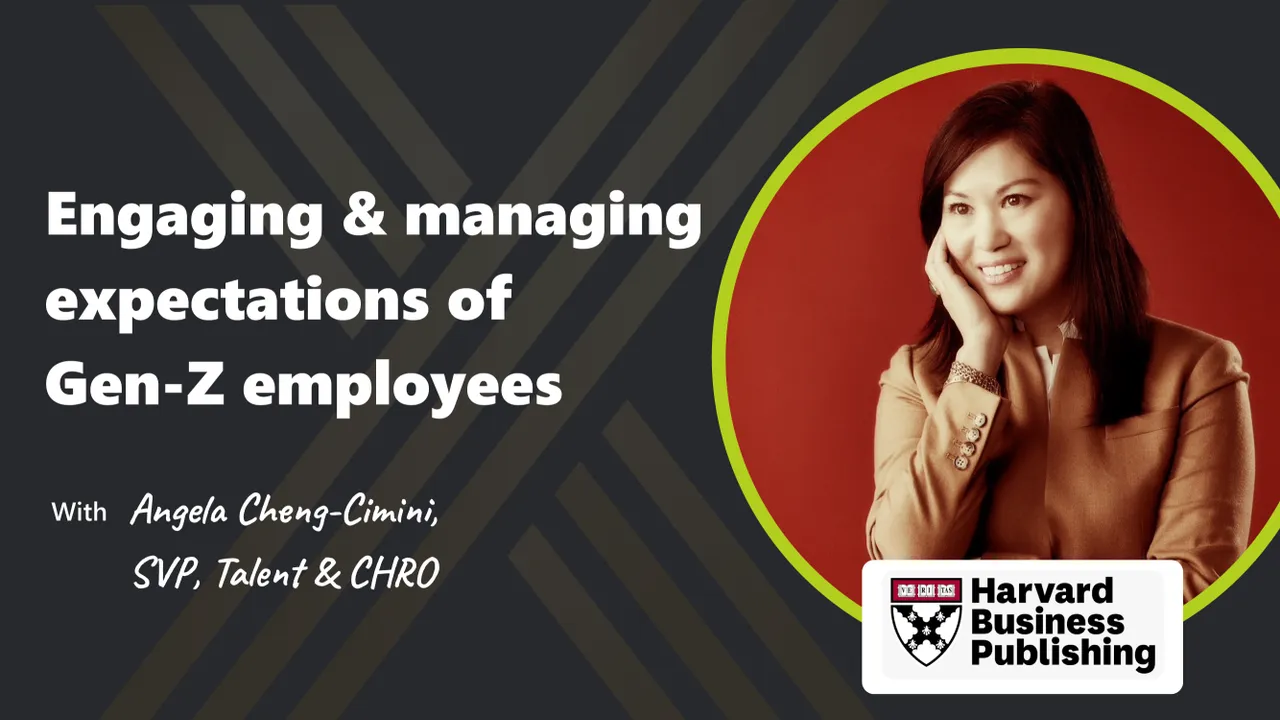
Angela Cheng-Cimini discusses how to bridge Gen-Z’s expectations with organizational culture, emphasizing professional growth, mental health, transparency, and the pivotal role of mid-level managers in building thriving workplaces.
TL;DR
What you need to know from this episode
- Gen Z evaluates your growth story before they accept the job. Candidates ask about their two to three year career path in second and third interviews, so employers need a concrete, forward looking answer about how they invest in talent, not just the role on offer today.
- Purpose and mental health are deciding factors, not perks. This generation will take a pay cut for meaningful impact and wants to know how an employer helps them bring their whole selves to work, especially after entering the workforce during real upheaval.
- Learning has to be snackable, asynchronous, and personalized. Two hour lectures do not hold attention. Cheng-Cimini's team converts training into short videos and apps so people can learn on their own time, because Gen Z is anything but one-size-fits-all.
- Take care of managers first so they can carry culture. When a program becomes an HR program it is destined to fail. Support mid-level managers, put their mask on first, and they become amplifiers of culture instead of overloaded messengers.
- Frequency of communication beats technology for engagement. The strongest lever is regular, accessible contact, at least weekly, through whatever channel fits, paired with instant feedback rather than a monthly review.
In the third episode of the season, host Nicole Patrick sits down with Angela Cheng-Cimini, SVP, Talent and CHRO at Harvard Business Publishing, to work through a question that has moved from theoretical to urgent for people leaders everywhere: how do you build a culture that Gen Z will actually stay for? With Generation Z already making up 24% of the global workforce, the answer shapes hiring, retention, and the day to day experience of work.
Cheng-Cimini brings more than 25 years of HR experience across consumer product goods, professional services, tech, and nonprofits, with earlier stops at large organizations like PepsiCo, Hasbro, and Nestle Waters. At Harvard Business Publishing, a mission driven nonprofit connected to Harvard Business School, she has a close view of how the newest generation evaluates employers, what motivates them to join, and what quietly pushes them out the door.
Her throughline across the conversation is refreshingly counterintuitive. Much of what Gen Z wants, she argues, is not unique to Gen Z at all. What has changed is that this generation is far more willing to ask for it out loud, and far quicker to leave when the answer is unsatisfying.
Why Gen Z interviews the employer before accepting a job
Cheng-Cimini says the shift starts before an offer is ever made. Candidates now arrive at second and third interviews asking what their career will look like in two or three years, and how the organization will help them get to the role they aspire to hold. The question is no longer only about the job on the table today.
That forces employers to articulate, concretely, how they invest in talent. At Harvard Business Publishing she describes a robust career model the team calls choose your own adventure, where skills can be applied on a different team or even in a different country. Organizations that cannot speak to that forward path, she suggests, will lose people who can.
Mental health and purpose are the new table stakes
Two forces sit alongside development, Cheng-Cimini argues. The first is mental health. This generation is entering the workforce during a period of real tumult, from the pandemic to war to hate crimes affecting marginalized communities, and they want to know what an employer is doing so they can bring their whole selves to work. Companies that ignore that, she says, miss out on what people can genuinely bring.
The second is purpose, or what she calls good with a capital G. Gen Z wants meaning, and many will accept less pay to work somewhere that has real impact rather than simply making widgets. She points to her own nonprofit, mission driven employer as an example of what motivates candidates in conversation, and as a signal of where loyalty now comes from. The final piece is transparency: the corner office can no longer hand down decisions without explanation, because this generation demands answers and expects to help iterate the thinking.
What modern learning and development looks like for Gen Z
On learning and development, Cheng-Cimini's guidance is to meet people where they are. Gen Z is digitally savvy but early in their careers and still building networks, so not everything can be remote or virtual. Isolation, she notes, hurt this cohort harder than older generations who already had support systems in place.
Practically, that means delivering training in many formats, much of it asynchronous and, in her word, snackable. A two hour lecture will not hold attention; a thirty minute session, a Slack message, an email, or a short video they can watch and even speed up will. The team is converting existing training content into smaller videos and apps so learning feels personalized rather than generic.
Gen Z is anything but one-size-fits-all. Highly personalized, high touch.
Are Gen Z's workplace needs actually universal?
Asked about her biggest learnings managing Gen Z in a hybrid setup, Cheng-Cimini pushes back on the premise. Scanning an organization that spans people fresh out of school to people near retirement, she concludes the needs are universal. People want agency over how, when, and how much they work, and they are not signing on for eighty hour weeks even when investment banks wave large sums at freshly minted MBAs.
They also want stability. Having seen what instability does to emotional health, this generation is less risk taking and wants to sign on somewhere that will be there for a while. And they want democratic access to information, because nobody wants the FOMO of sensing something is happening in the office while they work three hundred miles away. Meetings get recorded, decisions get posted, and information lives somewhere findable. Done well, Cheng-Cimini notes, this serves every audience an organization employs, which is why a strong employee feedback loop matters across generations, not just for the youngest.
How managers become amplifiers instead of HR custodians
On decentralizing culture from HR to managers, Cheng-Cimini feels the point deeply as an HR leader herself. Mid-level managers absorb the brunt of top down execution while acting as the buffer for the frontline teams they lead, and they are too often asked to deliver on culture without being supported themselves.
Whenever a program becomes an HR program, it's almost destined for failure.
Her fix is to take care of managers first. Once they feel heard and are equipped to juggle competing demands, they become multipliers and amplifiers of culture. She reaches for the airplane analogy: put your own mask on before helping others. Because Gen Z is more vocal, it will ask managers for more feedback, more access, and clearer reasons why, so managers need to be resourced to answer.
Does technology keep Gen Z engaged, or does frequency?
When the conversation turns to tech, Cheng-Cimini resists the easy answer. Technology is not the only solution, she says. The primary way managers keep Gen Z engaged is frequency of communication, then choosing the right method, whether that is Slack, an asynchronous email, or a live call.
You can't only touch base once a month.
She makes herself accessible by design: an open calendar, a Slack that is always on, a phone people can text. That accessibility doubles as a check on FOMO and a small, regular act of care for mental health. On video especially, she watches for cues, a quieter participant, a wrinkled eyebrow, and follows up. Gen Z craves instant feedback the way their social lives run on likes and reshares, and hearing it a month later in a performance review lands too late.
Why continuous listening is how you keep Gen Z
The common thread across every answer is listening: to career aspirations at the interview stage, to mental health signals on a video call, to managers who feel overloaded, and to a generation that expects to be heard rather than managed at. That is precisely the discipline an employee listening platform is built to support, turning frequent, low friction check-ins into signals leaders can act on.
For people leaders, the practical takeaway is that engaging Gen Z is less about buying new technology and more about closing the gap between what employees feel and what leaders hear. Continuous pulse surveys and steady two way communication let organizations catch disengagement early, support managers before they burn out, and prove to a vocal generation that their voice actually changes something. As Cheng-Cimini frames it, the organizations that do this well end up appealing to every audience they employ, not just the youngest one.
About the guest
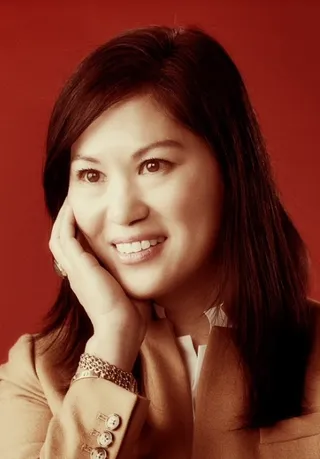
Angela Cheng-Cimini
SVP, Talent & CHRO, Harvard Business Publishing
Angela Cheng-Cimini is SVP, Talent and CHRO at Harvard Business Publishing, a mission driven nonprofit connected to Harvard Business School. She brings more than 25 years of HR experience as both a generalist and specialist, having worked across consumer product goods, professional services, tech, and nonprofit sectors. Earlier in her career she worked with large scale organizations including PepsiCo, Hasbro, and Nestle Waters.
She has guided businesses through startup, growth, and maturity phases. An alumna of Cornell University, she is also a certified Forbes HR Council member.
Full episode transcript
Season 03, Episode 03 · Angela Cheng-Cimini with Nicole Patrick · 18 min
Hello everyone and welcome to the latest episode of Culture Club. I'm your host, Nicole Patrick. And in the third episode of this season of Culture Club, we have with us Angela Cheng-Cimini, SVP, Talent and CHRO at Harvard Business Publishing. Prior to her current role, Angela has worked with many large scale organizations like PepsiCo, Hasbro, Nestle Waters, Clear Motion, Crabtree and Troop HR. She brings with her over 25 years of HR experience, both as a generalist and specialist, having worked across multiple sectors like consumer product goods, professional services, tech, as well as nonprofits. Her skills are truly unparalleled. Angela has shepherded businesses through all business phases like startup, growth and maturity. An alumna of Cornell University, Angela is also a certified Forbes HR council member. Welcome again to Culture Club's videocast on Gen Z and the evolving workplace culture.
Thank you so much for having me. I'm excited to have this conversation.
Yeah, of course. So before we start, why don't you tell us a little bit more about yourself and your organization?
So Harvard Business Publishing is actually part of Harvard Business School. And we were spun off because we originally wanted to really protect the editorial independence of Harvard Business Review. And since that time we've evolved to a three-pronged organization where in addition to the press and publishing, we also have a corporate learning unit. So we help the global 2000 solve their greatest organizational problems. And we have the higher ed group which helps universities and colleges promote their own case studies and develop them for distribution, as well as using the Harvard Business School case study method and applying that to universities all around the world.
Wow, that's amazing. And I'm sure working with Harvard, you really do have good intel on Gen Z. So this can be very exciting for us and exciting for our viewers especially. So why don't we get into it?
Let's do it.
All right.
Our first question and idea is that Generation Z already makes up 24% of the global workforce. What do you think are the necessary policy shifts that people leaders should make to their company culture to accommodate the Gen Z employees' style of working?
I think there are several prongs to this. The first one, and we're seeing it even in the interview stage, is a focus on professional development. So even before they've gotten the job offer, even before they've gotten through the second or third interview, they're asking questions about what job am I going to have in the next two, three years? What is my career path if I aspire to run the department someday? Angela, if I want your job, how is your organization going to help me get there? So organizations have to be really ready to articulate all the ways they're going to invest in their talent and help them to meet their career goals. It's not just about hiring someone for the job they hold today, but the job that they aspire to hold five or seven or 10 years from now. One of the great things about Harvard Business Publishing is that we have a really robust career path and model, and we sort of call it choose your own adventure. Where can your skills be applied? It's not just in the role that you're on today. It could be in a completely different team. It could be in a completely different country. And all organizations need to be thinking forward like that.
The other thing that organizations need to be thinking about is attention to mental health. This generation is growing up in a time of a lot of tumult. We have the pandemic as they're entering the workforce. We now have this war. We have all of the anti-hate crimes that are affecting all different parts of our marginalized communities. And they're really interested in knowing what we're doing to make sure that they can bring their whole selves to work. So companies that don't take care of their employees beyond the job that they're doing are missing out on really leveraging what people can bring to the park.
The other thing is an emphasis on good, with a capital G. They want to work at organizations that have purpose, that have meaning. They'll take a pay cut to work at a place that's really having impact in the world, not just making widgets. One of the things I love about working at Harvard Business Publishing is that we're a nonprofit and that's mission-driven. We are trying to bring leaders into the next generation of enlightened thinking. And it's something that really motivates candidates that we talk about.
The last piece I would say is transparency. There no longer is, well, that's above my pay grade. You're hearing about all the legislation around pay transparency. This generation demands answers and explanations. No longer can the corner office just come out with tablets from the mountain and say, this is how it will be done. They want to know why, they want to know how, they want to be able to iterate that thinking. So companies that aren't willing to engage in those conversations with their Gen Zers will see them leaving to go to an organization where they can be heard.
That's really interesting. And I think it's interesting how they're just so involved in their company workplaces and that they want, not only do they want to stay there for a long time and see where they can be in five years from now, but also making sure that these companies are doing good and are speaking to who they want to be. So it's very interesting to think about.
Boomers are retiring, millennials are becoming managers, and Gen Z is comprising the majority of the workforce. From your perspective, what is the modernization required in the area of learning and development that would help organizations to cater to the growing needs of the Gen Z workforce?
So my thinking around that is we have to be able to meet them where they are. They're digitally and technically very savvy. And they're also still early stage in their careers, but they're still cultivating networks. So not everything can be virtual, not everything can be remote. They crave social interaction and they crave a lot of it. Isolation is something particularly through the pandemic that hurt them harder than perhaps any other generation because they have not yet established the support systems that people have been working for 20 or 30 years at. And especially if you're new to an organization, you can't only just make friends with the one person who's on the screen with you. You have to be able to cultivate lots.
So in terms of learning and development, we have to be able to deliver training in lots of different media. It also has to be asynchronous. Not everything needs to be live in real time. They want it to be snackable. Think about tweets, 144 characters. They have to be in digestible amounts. You can't do a large lecture hall and talk at them for two hours. You probably can't even talk at them for 60 minutes. If you're going to do a lecture, do it in half an hour. Otherwise, do it in a Slack, do it in an email, do it in video so that they can watch it on their own time or they can speed you up because they're keeping up with you.
So in terms of learning and development, we really have to think much more about the learner, which is a huge shift. The audience is so important. And this group has a very particular way in which they receive information. Their attention span is a lot shorter. And there are so many more content choices that are competing for their attention that if you don't grab them with that hook, they'll go somewhere else and they'll wander. So there won't be the stickiness on learning and development. So we're taking a lot of the training content that we have and trying to convert that into the new technology platforms that they are much more comfortable with. So we are developing them into smaller videos. We're trying to put them into apps so that they're much more personalized, so that they're like, yep, I've got that one. I need focus here. It's not just a one-size-fits-all. Gen Z is anything but one-size-fits-all. Highly personalized, high touch.
Definitely, I agree with that completely.
As a people leader, what have been your major learnings in your experience in handling the Gen Z workforce in a hybrid workplace setup? And what, according to you, are the best ways to bring out maximum productivity from the Gen Z employees?
Actually, I'm not sure that they're unique in this. As I scan an organization, which clearly spans people fresh out of school to people who are on the cusp of retirement, I actually think that in terms of the future of work and the way the workplace supports them, the needs are universal. People want agency, so they want autonomy to say how they're going to work, when they're going to work, how much they're going to work. They're not signing on for the 80-hour work-week jobs. Investment banks are throwing ridiculous amounts of cash to freshly minted MBAs, because they know they're going to be making them work 100 hours a week, and they're not taking the bait, because work-life balance is important for them. They want to have stability in the organization, and yet they also want to be agile. So they're not as risk-taking as previous generations were, because they've seen what instability can do for their emotional health.
So again, I think organizations that have a solid foundation, which is not to say that there isn't a place for tech startups and risky environments, but as a generation, I'm finding that they really want to sign on for a place that's going to be there for a while for them. But again, I think all employees want a place that's stable, that gives them autonomy. They also want access to information, which again speaks to all generations, but in particular in the hybrid workforce, nobody wants FOMO. Nobody wants the sense that there's something going on in the office while I'm working 300 miles away. So we have to make sure that access to information is democratic. So you have to be able to find it posted somewhere, it has to be in an email, it has to be somewhere in a conference page, you have to record that meeting. You have to think about all the different ways in which people consume content, not unlike the way we talked about learning and development. So I think actually all employees are looking for those facets. And if an organization can do that well, that means they're appealing to all the different audiences that they employ.
That's really interesting. I never thought of it that way, that in a way we all really just want to belong somewhere and feel that we understand everything that's going on. So it would make sense that they would feel no different.
We've heard a lot about the decentralization of company culture practices from HR only to manager centric. In your opinion, how can managers become amplifiers of culture for Gen Z employees as opposed to the sole HR custodian?
So clearly, being in HR, I feel this one deeply. Whenever a program becomes an HR program, it's almost destined for failure. You really need uptake, you need people to buy in. And managers, especially mid-level managers, are taking so much of the brunt. They have to execute whatever's coming top down. And yet they're the barrier and the buffer for the frontline folks that they're trying to lead. So we've been starting to focus on them and really reaching out for them to make sure that they feel supported in their roles. And not even thinking about how many performance management reviews have you had? Have you talked to that person about that performance issue? How come your revenue isn't where it is? Let's just talk about you because we're asking so much of you. And so once that group feels supported, once they feel heard, once they've been given the skills to balance and juggle all of those complicating needs, then they become multipliers and amplifiers of your culture. You really have to have them bought in to what it is you're trying to accomplish. So if you don't meet their basic needs, then it does become an HR program. Then culture is owned by HR. And you can't find ways to exponentialize the work that you're trying to do around community, the work that you're trying to do about inclusion or any of those things that we know are really important.
Gen Z is more vocal than previous generations. So they're going to demand of their managers. I need more feedback. I need more access to you. I need you to explain why we're doing what we're doing so that I can understand how I can fit into that picture. So again, making sure that managers themselves are feeling supported, that their needs are met, so then they can take care of other people. It's not unlike when you're on the airplane and they say you got to put your mask on first before you help other people. So we have to take care of managers first so that they can then take care of their people.
That makes complete sense. Very good analogy.
It works. It works.
So Gen Z in particular is a vocal workforce who are open to tech adoption and are highly opinionated. How can people leaders pay attention to Gen Z's pulse and constantly keep them engaged? How can managers who are from a very different generation use tech to get actionable insights for the same?
So your question about tech is really interesting to me because I'm not sure that tech is the only solution. I think actually the primary way that managers can keep Gen Zers engaged is frequency of communication and then choose your method. Sometimes that's going to be through Slack. Sometimes it's going to be asynchronous through email. Sometimes it's going to be in a meeting or a conference call, but I think it's really about the frequency of the communication. You can't only touch base once a month. In fact, Gen Zers want once a week and they want to be able to access their manager today, now. My mobile phone is available in case people want to text me because I almost always have that available to me, but my Slack is constantly going off because I make myself available to people. My calendar, if there's a white space, people are free to take that up as well. So again, I think it's just about accessibility and frequency and it's not necessarily that technology is the answer.
So if you're continuing to make sure that you've got those lines of communication open, that's how you can make sure that they're feeling engaged. Again, we're addressing the sense of FOMO. We're taking care of their mental health because we're just taking a minute to say, how are you doing today? And I think particularly as we're spending so much more time on video, leaning in and saying, hey, you didn't participate as much as you used to, or I saw you wrinkle an eyebrow. Picking up those cues and then following up later are all those really personal touch points that Gen Zers appreciate. They don't want to hear the feedback a month later. They don't want it popping up in their performance review. I would say that was true for all employees, but they in particular are really, really craving that instant feedback. Again, that's their life. They want likes, they want follows, they want retweets, they want re-shares. And when it doesn't happen, there's a negative chemical release for like, how come no one's paying attention to me? So we have to be constantly feeding into that to make sure that they know that they're being thought of and taken care of. So not sure that tech is the answer, I do think it's frequency of communication that's more important.
Yeah, that makes complete sense. And probably a lot of the tech that, like you said, the tech that's in their everyday lives is what's fueling this.
Yeah.
Very, very interesting. Well, that's a beautiful take on this topic that is definitely still evolving, Angela. I was going through your profile earlier and I saw really amazing recommendations, and the constant in them was that you've never compromised on your values and that you've always been a strategic partner for your coworkers, and your answers today were truly reflective of both of those traits.
Thank you. I'm so glad to be here. I hope that there was a good take on value for your watchers today.
Oh yeah, definitely. And thank you for your time, Angela. This has been such an enriching experience for all of us. I'm sure our viewers will definitely agree. And before we finish up, will you please let our viewers know how they can connect or reach out to you in case they want to have a quick chat or share their thoughts with you?
Oh, absolutely. LinkedIn is probably the easiest way. I think I'm the only Angela Cheng-Cimini out there, and again, Harvard Business Publishing. So I'd be happy to hear from any of your viewers.
All right, great. Thank you, Angela, so much for helping us understand the needs of such a dynamically changing topic. It was such a pleasure to have spoken with you and to get to know you better.
Thank you so much, Nicole. I hope you enjoyed it again.
Yes, definitely. That's all we have for you in this episode of Culture Club. Until next time, this is your host, Nicole, signing off.
Frequently asked questions
What policy shifts help company culture accommodate Gen Z employees?
Angela Cheng-Cimini points to four priorities: a clear focus on professional development that is visible even at the interview stage, genuine attention to mental health, a sense of purpose or good with a capital G, and transparency in how decisions are made and explained.
The underlying shift is that Gen Z expects to understand the why behind decisions and to see a forward path for their careers, and they will leave organizations that cannot engage in those conversations.
How should learning and development be modernized for Gen Z?
Meet learners where they are. Deliver training in many formats, make it asynchronous where possible, and keep it snackable and digestible rather than delivering two hour lectures. Shorter videos, apps, Slack, and email let people learn on their own time and even speed content up.
The bigger change is thinking much more about the learner and the audience, since attention spans are shorter and content choices competing for that attention are endless.
How can managers become amplifiers of culture rather than the sole HR custodians?
Support managers first. Mid-level managers absorb top down pressure while buffering their frontline teams, so they need to feel heard and equipped before they can carry culture. Once their basic needs are met, they become multipliers and amplifiers of what the organization is trying to accomplish.
Cheng-Cimini warns that when culture is left to HR alone it becomes an HR program, which is almost destined for failure.
Is technology the best way to keep Gen Z engaged?
Not on its own. Cheng-Cimini argues the primary driver is frequency of communication, then choosing the right method, whether Slack, email, or a live call. Gen Z wants to touch base roughly weekly and to be able to reach their manager quickly.
Accessibility and regular check-ins also address FOMO and support mental health, while instant feedback matters far more than comments saved for a monthly performance review.
Are Gen Z's workplace needs really different from other generations?
Cheng-Cimini believes the needs are largely universal. Across an organization spanning new graduates to people near retirement, employees want agency over how and when they work, stability, and democratic access to information.
What sets Gen Z apart is how vocal they are in asking for these things, which is why organizations that meet them well end up appealing to every audience they employ.
More from CultureClub X
 S07 E02change leadershipHR as Chief Disruption Officer: Why Supporting the Business Is a Ceiling, with Jennifer McClure
 Jennifer McClure
 S07 E01employee engagementWhy is employee wellbeing spending not paying off? | Gethin Nadin, Benifex
 Gethin Nadin
 S06 E18ai in hrShould HR use AI to cut jobs or make people more valuable? | Steve Cadigan, LinkedIn's first CHRO
 Steve Cadigan
Never miss an episode
Every new episode, plus the takeaways that matter, posted on the CultureMonkey LinkedIn page as soon as they drop.
Free on LinkedIn. Unfollow anytime.