

Culture Litmus
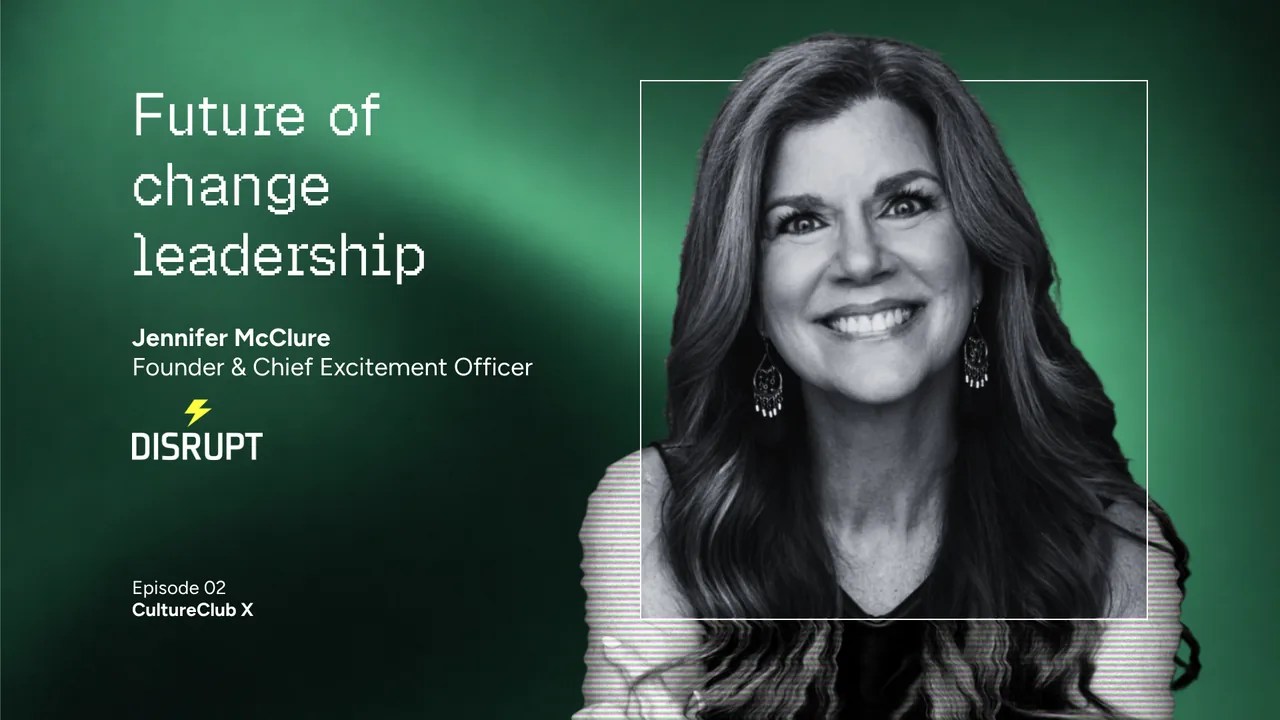
HR as Chief Disruption Officer: Why Supporting the Business Is a Ceiling, with Jennifer McClure
Culture Litmus continues with the gap inside HR itself. Jennifer McClure, who founded DisruptHR after years of running HR inside companies, argues that the influence is already in the job and most people are waiting to be handed it. Including the cost-cutting list she argued down from 43 jobs to thirteen, and the call two months later asking for those thirteen people back.

Five conversations on the gap between what organizations claim about their people and what they can actually evidence.
- 01Gethin Nadin, BenifexSeptember 8, 2026
- 02Jennifer McClure, DisruptHRThis episode
- 03David Liddle, TCM GroupComing October 6, 2026
- 04Jessica ZwaanComing October 20, 2026
- 05Helene V. Gagnon, CAEComing November 3, 2026
TL;DR
What you need to know from this episode
- "We support the business" is a ceiling, not a strategy. HR is the one function whose work reaches every employee, through policy, benefits and pay. Jennifer's claim on air is that this makes it the job with the most opportunity for influence and impact in the organization. The influence is already in the role; most people wait to be handed it.
- The seat at the table is a business case, not a request. Her answer to "leadership won't let me" is a question: have you ever made the case for why you should be there, in dollars and cents, including what it costs the company when you are not?
- Her own layoff story is the cost of not making it. A list of 43 jobs, argued down to thirteen, the thirteen let go, and a call two months later asking whether she could bring them back. Her read is not that leadership decided badly. It is that she did not build the case well enough to stop it.
- Three things to stop. Stop being reactive, which means waiting for decisions and then working out how to support them. Stop treating the role as secondary when talent is your own expertise. Stop waiting for influence to be granted.
- Hire for agility, not for a mould that no longer exists. You can teach the tactical parts of a job and you cannot teach somebody to expect change. Nobody has twenty years of AI experience, so a shortlist built on the old shape stays empty.
Jennifer McClure is the CEO of Unbridled Talent and the founder and Chief Excitement Officer of DisruptHR, the global event movement she started to give HR ideas a stage and a five-minute clock. She spent years running HR inside companies before that, which is where most of this conversation comes from. DisruptHR now runs in 170 licensed cities across 28 countries, and more than 11,000 talks have been given on its stages.
This is the second episode of Culture Litmus, the Season 07 series on the gap between what organizations claim about their people and what they can evidence. Jennifer's subject is the gap inside HR itself: the distance between the influence the job actually carries and the influence the people doing it believe they are allowed to use.
The ceiling is in the job description
Ask most HR leaders what they do and you get a version of supporting the business. Jennifer's argument is that the sentence is the problem. HR is the one function whose work lands on every employee in the organization, through the policies it writes and administers, the benefit plans it buys, and the compensation systems it designs. Her words: human resources is the job in every organization that has the opportunity for the most influence and impact in the organization. She is careful with that claim on air, because people push back on it, and her answer is that everyone has an opportunity to create influence and impact, but no other function touches all of it.
The gap she sees is not permission. It is that the influence sits in the job unclaimed while people wait to be handed it.
Have you made the business case?
The most common complaint in HR is that leadership will not give it a seat at the table. Jennifer's response is a question back: have you ever made the business case for why you should be? Have you showed them the value that you provide in dollars and cents, or where you not being involved is costing the company money or opportunities? If that case has never been made, she does not accept that leadership is the blocker.
She is describing something more specific than confidence. It is the difference between asking for a seat and presenting the cost of the empty one.
Forty-three jobs, thirteen layoffs, and the call two months later
The story she keeps returning to is her own. A cost-cutting directive arrived with a list of 43 jobs on it. She got it down to thirteen, arguing the whole way that the business did not need to lose those people either. The thirteen went. The announcement landed as a hit to morale and to the employer brand. Then, within two months, she was told to see if she could bring those thirteen people back.
Her verdict is not that leadership decided badly. It is that she did not make the business case well enough to stop it, and that a leader who knew the business could have found the savings somewhere other than a person who had been there twelve years. In an earlier role she had seen the alternative work: contracts cancelled, employees emptying their own bins and mowing the grounds, training taken without time off the job, and the company taking financial hits to keep people employed. As she puts it, they never forgot that.
What to stop doing
Asked what HR leaders have to stop doing to create the capacity to lead rather than administer, she gives three. Stop being reactive, which she defines as waiting for decisions to be made and then working out how to support them. Stop treating the role as secondary: talent is HR's own area of expertise and every transformation runs through it, so not being at the top of the org chart or not yet being in the room is not a reason to behave like a support function. And claim the influence rather than waiting for it to be granted.
On the influence point she quotes John Maxwell's line that leadership is influence, nothing more, nothing less, and her reading of it is practical: if you can genuinely influence people, you already have the trust and the relationships, and that is the asset.
Ask for three things
Her method for building that influence is unusually concrete. Do not ask a peer leader how you can help, because that is an open question and it gets an empty answer. Ask for three things that could stop their team hitting its objective. People will fill a list of three. Then help with one of them. It works, in her account, because people like the colleagues who help them hit their goals, which is not networking but influence being built in public.
The courage gap on AI
On AI she is describing a posture rather than a toolset. The version she hears is: this AI thing is over there, I am over here, I do not want to learn it, people will tell me what I need to do. Her response is that this is a mistake for everyone, and she brings her own family into it. Her mother retired as an office manager at eighty two. Years earlier, when the owner brought in Peachtree accounting software, her answer was immediate: I will not learn it, I will not do it, if I have to quit then I will. They helped her through it, she learned it, and she stayed because the work mattered to her. She ended up with an iPhone in her eighties, initially for Google Maps.
Jennifer's point is that the same sentence has been said about the internet, about email, about social media, and that there is a saying she quotes on this: your job may not get eliminated by AI, but it will get eliminated by someone who knows how to use it. She also reads out a comment left after one of her sessions, from someone whose boss came back and told them to lead AI in the organization: I hate that my boss went to this session. The gap is not that people cannot learn it. It is being told to lead something nobody has given you time or cover to learn.
Hiring for a person who no longer exists
The skills that travel, in her reading of the research she cites, are agility and adaptability. You can teach the tactical parts of a job. You cannot teach somebody to expect change. That has a hiring consequence she is blunt about: the candidate who exactly matches the old mould increasingly does not exist, and nobody has twenty years of AI experience, so a shortlist built on that shape stays empty.
Disruption is not only fixing what is broken
The part of disruption she thinks people miss is that it is not only invention and it is not only repair. Real disruption includes taking something that is working well and asking whether it could work better, which means staying curious about things that are not currently on fire. Her example for HR is the consumer experience gap: Amazon suggests what you will want, Netflix suggests what you will watch, and then you look at the same task in your own workplace.
Speaking in dollars and cents
The last movement of the conversation is about language. Leaders talk in dollars and cents, and HR's case has often been made on the grounds that something is the right thing to do. Jennifer's advice on employee listening platforms is to ask a vendor for more than a walkthrough of the software: ask to be taught how to use the data to build the business case. That is the same argument she started with, arriving at the tooling. The influence is available. It gets claimed in the language the rest of the executive team already speaks.

About the guest
Jennifer McClure
CEO, Unbridled Talent; Founder and Chief Excitement Officer, DisruptHR
Jennifer McClure is a keynote speaker, executive advisor and future of work strategist. She is the CEO of Unbridled Talent and the founder and Chief Excitement Officer of DisruptHR, the global event movement she started to give HR ideas a stage and a five-minute clock, and which now runs in 170 licensed cities across 28 countries with more than 11,000 talks given.
She spent years as an HR executive inside companies before that, and her keynote HR as Chief Disruption Officer is among her most requested at SHRM and other HR conferences. She works with HR and business leaders on building influence, leading through disruption and the AI shift, and shaping the future of work rather than reacting to it.
Full episode transcript
Season 07, Episode 02 · Jennifer McClure with Darcy Mehta · 50 min
Frequently asked questions
What does Jennifer McClure mean by HR as Chief Disruption Officer?
It is the keynote she is best known for, and on air she defines disruption more broadly than people expect. It is not only inventing something that has never existed, and it is not only fixing what is broken. Real disruption includes taking something that is working and asking whether it could work better, which means staying curious about the parts of the organization that are not currently on fire. Her example for HR is the gap between consumer experience and work: Amazon suggests what you will want and Netflix suggests what you will watch, and then you look at the equivalent task in your own workplace.
Why does Jennifer McClure say supporting the business is a ceiling?
Because it describes the job as downstream of decisions rather than part of them. Her case is that HR is the one function whose work lands on every employee in the organization, through the policies it writes and administers, the benefits it buys and the compensation systems it designs, and that this gives it the most opportunity for influence and impact of any job in the building. Describing the role as support, in her reading, sets a limit that nobody outside HR imposed.
How should HR make the business case for a seat at the table?
In money, and before the decision rather than after it. Her question to anyone who says leadership will not let them in is whether they have ever made the case for why they should be: the value they provide in dollars and cents, or what it costs the company in money and opportunities when they are not involved. She tells the story of a cost-cutting list of 43 jobs that she argued down to thirteen. The thirteen were let go, and within two months she was asked whether she could bring them back. Her verdict on it is that she did not make the case well enough to stop it.
What should HR leaders stop doing to lead transformation rather than manage it?
Three things, in her words. Stop being reactive, which she defines as waiting for decisions to be made and then working out how to support them. Stop viewing the role as secondary to other leaders, because talent is HR's own area of expertise and business transformation runs through it whether or not you are on the org chart at the top. And claim the influence rather than waiting for somebody to grant it.
What is the courage gap holding HR back on AI?
Jennifer describes the posture rather than the skills gap: this AI thing is over there, I am over here, I do not want to learn it, people will tell me what I need to do. She points out the same sentence was said about the internet, about email and about social media, and quotes the saying that your job may not get eliminated by AI but it will get eliminated by someone who knows how to use it. She is equally clear about the other side of it, reading out a comment from an employee whose manager returned from a session and told them to lead AI in the organization: being told to lead something you have been given no time or cover to learn is its own problem.
Read the cross-episode roundups
More from CultureClub X
 S07 E01employee engagementThe Wellbeing Illusion: Why Most Organizations Are Spending More on Wellbeing and Getting Less in Return, with Gethin Nadin
 Gethin Nadin
 S06 E20change leadershipThe Culture Paradox: Why Hidden Patterns Keep Organizations Stuck and Good Conflict Sets Them Free, with Jamie Notter
 Jamie Notter
 S06 E19change leadershipFrom Cost Center to Catalyst: How CPOs Turn People Strategy Into Business Advantage, with L. David Kingsley
 L. David Kingsley
Never miss an episode
Every new episode, plus the takeaways that matter, posted on the CultureMonkey LinkedIn page as soon as they drop.
Free on LinkedIn. Unfollow anytime.