

S03 E07
Balancing Productivity and Flexibility in Hybrid Work
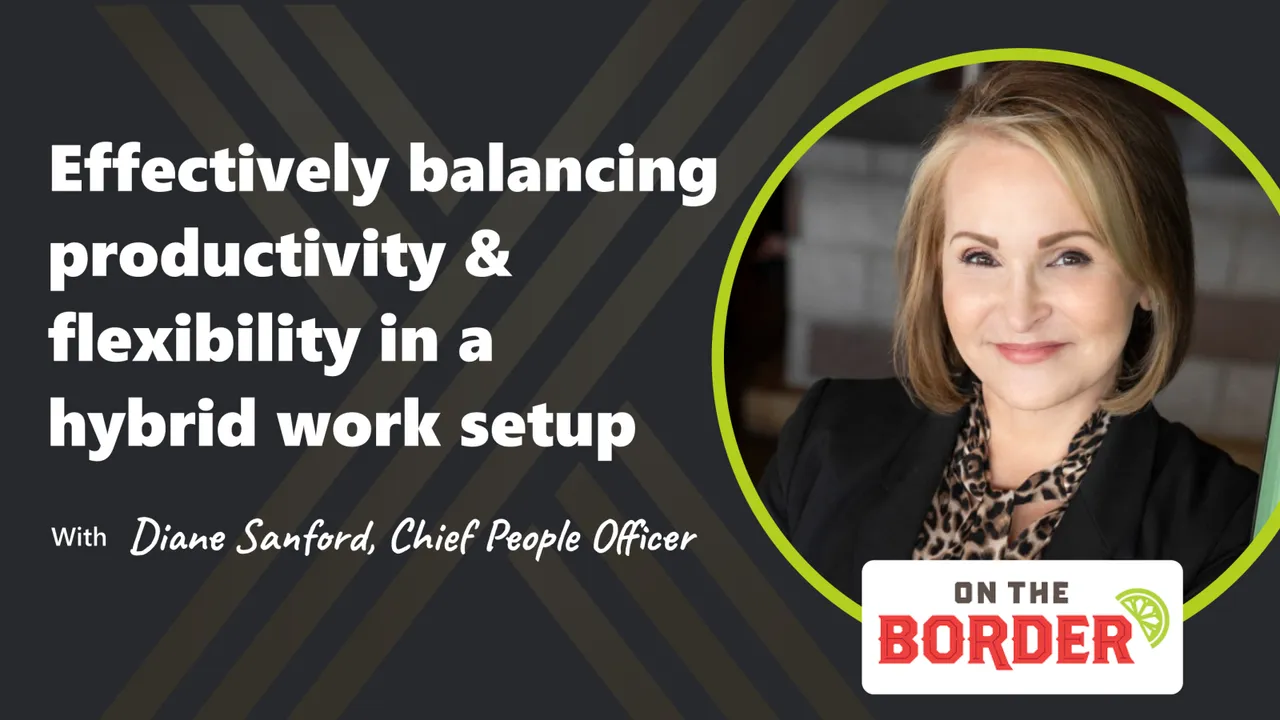
Diane Sanford shares how organizations can thrive in hybrid setups by empowering employees with flexibility, customizing development, fostering cross-team dialogue, and anchoring culture in clarity and genuine connection.
TL;DR
What you need to know from this episode
- Connection, not logistics, is the real hybrid challenge. Sanford argues the atmosphere and belonging offices used to provide now have to be rebuilt on purpose, because the need to belong has only grown since the pandemic.
- Culture is everyone's job, not the HR department's. The biggest mistake companies make is siloing culture inside HR and keeping it separate from how the business runs. It has to be integrated so it becomes part of how people actually work.
- Modern L&D means short, high-impact, on-demand content. People digest information very differently than they did five years ago, so learning should borrow from consumer platforms and respect the rhythm of the workday.
- You cannot policy your way to flexibility. Flexibility has to be a shared mindset embraced by every leader, not a document HR writes alone. HR's role is to bring data and advocate for employees with senior leadership.
- Frontline flexibility is possible with creativity. Even without remote work, service employers can use quality of life statements, capped hours, guaranteed days off, and smarter staffing to build a differentiated employee experience.
Diane Sanford has spent more than 25 years in the restaurant industry, and she has seen its people challenges from just about every angle. As Chief People Officer at On The Border Mexican Grill and Cantina, she looks after a diverse workforce of over 5,000 people spread across more than 150 locations in 26 states. Before On The Border she led people teams at chains including Texas Land and Cattle, Lone Star Steakhouse, Chili's Grill and Bar, and Brinker International, building deep expertise in employee relations, talent acquisition, retention, and learning and development.
She joined host Nicole Patrick on CultureClub X to dig into the impact of remote and hybrid work on the modern workforce, and the practical question underneath it: how do people leaders balance productivity and flexibility once the office is no longer the default place work happens? It is a question the service industry feels especially sharply, since so much of its work simply cannot be done from a laptop at home.
Across the conversation Sanford kept returning to one idea. Culture is not an HR side project, it is the operating system of the business, and staying genuinely connected to employees is the only reliable way to manage it. What follows is how she thinks about connection, learning, retention, burnout, and flexibility for frontline teams.
Why true connection is the hardest thing to rebuild in hybrid work
Sanford said the biggest challenge people leaders face is not tools or policy, it is connection itself. A key component of office culture is atmosphere, seeing each other and being connected, and in a remote or hybrid setting those things happen very differently, if they happen at all. Humans, she argued, have to relearn how they build relationships.
She also pushed back on the comfortable idea that the need to belong faded once offices reopened. Before the pandemic there was a whole body of work about people needing a sense of belonging, and today that need is even more prevalent and more important, even as many workplaces pretend the disruption is over. Finding a way for people to feel truly connected to each other and to their employer is, in her view, the defining challenge of this era.
How HR can close the gap between remote and in-office teams
Asked how to solve the misalignment between remote and in-office staff, Sanford warned against trying to fix it in a vacuum. HR leaders need to talk to employees, learn what is and is not working in their current environment, and then close the gap between how work happens today and what the workforce actually needs. Remote and hybrid mean different things at different companies, so the diagnosis has to be local.
Underneath all of it is culture, which she framed as something every organization has whether it manages it or not. Managed well, it becomes a friend to the business. The failure mode she warned about most is treating culture as an HR possession, kept separate from how the company actually runs.
The biggest mistake companies make with regard to culture is putting it all on the HR department and keeping it separate from how the business runs.
Her fix is iterative rather than heroic. HR cannot invent a magic solution alone; it needs feedback from the people affected and buy-in from every leader to act on it. Building that kind of employee feedback loop is what turns a diagnosis into change employees can actually feel.
What modern learning and development actually looks like
On learning and development, Sanford's advice was to take a page from society and lean into digital platforms. People spend hours a day on Snapchat, Twitter, Instagram, and TikTok, and there are equivalent platforms for employee communication that let people pull information on demand, exactly when they need it.
The bigger shift is in how people absorb information at all. Learning has to respect how people consume content now: short, high-impact, single-topic videos blended with other formats, delivered with an awareness of the rhythm of the workplace so training does not land when people have no headspace for it. It is not a one size fits all model, and, as she put it, there has to be some common sense recognition that the year is 2022, not 1995.
Why flexibility and collaboration decide who stays
Asked about the role that a lack of collaboration, flexibility, and freedom plays in attrition, Sanford said those attributes mattered long before anyone labeled the workplace hybrid. The work now is to be purposeful about recreating what used to happen organically: the hallway conversations, the coffee catch-ups, the five-minute exchanges that no longer occur on their own.
She encouraged leaders to build structure that creates connection rather than assuming people are happy alone at home, from virtual happy hours to teams that deliberately talk to other teams and get their buy-in. That effort is not optional, because the return on it is real and shows up in how people bring themselves to work.
You get more discretionary effort from people who are engaged in an environment that gives them momentum than if you don't have that.
She was candid that this takes more work than it used to. When you could stand up, get a coffee, and swing by a colleague's office, connection was basically free. Today you have to check whether someone is available, whether the internet is working, whether there is time. It is much more of a production now, she said, but it is critically important.
How leaders can protect people from burnout
Sanford named video fatigue directly and pointed to the loss of natural movement in a remote day. Back-to-back meetings scheduled every hour on the hour, simply because you can, leave people exhausted by Tuesday. Her personal pet peeve was the Friday afternoon meeting, and she made a plain case for respecting the natural rhythm of when people actually want to work.
She also argued that mental health and wellness benefits, from virtual counseling apps to normalized conversations about self-care, are no longer optional extras. Employees want to feel seen and cared about as whole people, not just for the work they provide, and any company that ignores that, she suggested, will not be around for long.
Can the service industry offer flexibility too
The hardest question, Sanford admitted, is what flexibility means for frontline workers who cannot work from home. Restaurant, retail, and healthcare staff watch corporate colleagues work remotely while facing the very same life pressures, from homeschooling to caregiving, and that gap is hard.
Her answer was to get creative within the constraints of the business. Many restaurant companies write quality of life statements that cap hours, guarantee two days off in a row, and trigger early intervention when a manager is stuck working open to close. She cannot offer a virtual dining experience, but she can hire four people for shorter shifts instead of two for longer ones, and she can show up in person, because seeing the team and being seen does a great deal for both morale and a leader's credibility.
What hybrid work means for employee listening
The thread running through the entire conversation was listening. Sanford believes the balance of power has genuinely shifted, that for the first time the way people work is changing from the bottom up, and that the organizations that respond well will be the ones that thrive.
I think the companies that understand that lean into listening and creating a great environment for those people, those are the companies that are going to win in the next 5 to 10 years.
That is where continuous employee listening earns its place. Whether through pulse surveys, regular roundtables, or a simple question of the day, the goal is the same: stay close enough to the workforce to understand what people need, then communicate transparently about what you can and cannot give them. For an employee listening platform like CultureMonkey, which powers CultureClub X, that is exactly the discipline Sanford keeps circling back to. Connection you build on purpose, backed by feedback you are willing to act on, is what keeps culture, and the business, moving.
About the guest
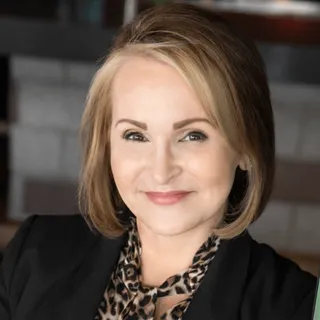
Diane Sanford
Former Chief People Officer, On The Border Mexican Grill
Diane is a seasoned HR leader with over 25 years of experience in the restaurant industry. She has a proven track record in providing strategic leadership for employee relations, talent acquisition, retention and L&D teams. Prior to “On The Border Mexican Grill & Cantina”, she had worked with some famous restaurant chains like, Texas Land & Cattle/Lone Star SteakHouse, Chili’s Grill & Bar and Brinker International.
She is a notable alumni of Dallas college and Mt. San Antonio College. She is also a PHR, SHRM-CP certified HR leader.
Full episode transcript
Season 03, Episode 07 · Diane Sanford with Nicole Patrick · 34 min
Hello everyone, and welcome to the latest episode of CultureClub X, powered by CultureMonkey. I'm your host, Nicole Patrick. CultureMonkey is a complete employee engagement platform that helps people leaders measure and improve their workplace culture.
In this seventh episode of CultureClub, we have with us Diane Sanford, Chief People Officer at On The Border Mexican Grill and Cantina. She's a seasoned HR leader with over 25 years of experience in the restaurant industry. Diane has a proven track record in providing strategic leadership for employee relations, talent acquisition, retention, and L&D teams.
Prior to On The Border Mexican Grill and Cantina, she worked with some famous restaurant chains like Texas Land and Cattle, Lone Star Steakhouse, Chili's Grill and Bar, and Brinker International. She is a notable alumni of Dallas College and Mount San Antonio College. She is also a PHR, SHRM-CP certified HR leader. Diane, welcome again to CultureClub's videocast on the impact of remote hybrid work culture on the modern workforce.
Thank you so much, Nicole. It is a pleasure to be with you today to talk about such an important, relevant topic for today.
Definitely. Before we begin, just tell us a little bit more about yourself and your organization.
Sure. Well, I've been in the hospitality industry for over 25 years. That's where the bulk of my HR experience comes from. On The Border restaurant is in 26 states. We have over 150 locations, so a diverse workforce, over 5,000 people, and we sell margaritas and tacos. We try to have fun with that.
Amazing. Well, that's very cool. We're very impressed with all the different places you've worked with, and it sounds also like a very fun place to work.
Restaurant industry can be very fun, yes.
Definitely. Well, with that, let's get started.
In view of the pandemic, what do you think are the challenges faced by people leaders when it comes to company culture, with organizations switching to hybrid work culture?
I think true connection is the biggest challenge. A key component of office culture is the atmosphere. It's seeing each other, it's being connected, and in a hybrid or remote environment, those things, if they happen, happen very differently. So humans have to relearn how they connect with each other, how they build relationships.
Before COVID, there was this body of work that talked about people needing a sense of belonging. Post pandemic, we're pretending it's over. Today, that need to belong and be a part of something is even more prevalent and more important. So I really think finding a way for people to truly feel connected to each other and to their employer, that's the biggest challenge today.
I totally agree. All that you want as a person is to feel that connection, and now that we're in a place where we just can't do that, and we haven't been able to do that for such a long time, to be able to find a way to include that when we're still on the computer and not always face to face, it is a challenge, and it's so important to figure out that hurdle and get over it.
The whole rhythm of work has changed.
Exactly.
How do you think HR leaders can solve the misalignment between in-office and remote employees in a hybrid work setup?
I think the important thing there is to not try to solve it in a vacuum. They need to talk to their employees and find out what is working and what isn't working for them in whatever their current environment is. Remote and hybrid mean different things depending on the company that you work for. But HR leaders need to understand what's important to their workforce, and then try to close the gap between what's currently happening, how they're approaching work today, and what they're hearing from their workforce.
The foundation of that is really culture, and that's something that has to be managed. You have one whether you manage it or not, and if you manage it, it's your friend, it helps you, it helps your business. So doing an analysis of what's working today, what isn't, and does the current environment reflect your culture in a positive way? If not, then you need to do some problem solving, but I think it's an iterative process. I don't think HR people can come up with a magic solution all by themselves. There needs to be that feedback from the people who are impacted, and then all leaders need to really embrace whatever the outcome is to make the environment better.
Definitely. In doing this videocast, I speak with a lot of people leaders, and one of the topics that always comes up is that it's not just the HR leaders who are going to be able to magically fix things. They're able to shepherd you and maybe make it something that's on people's minds more than it would be if they're just doing their everyday job, but it's so important that everybody is invested in the culture.
Everybody watches out for each other and makes sure that they're in this culture together, but leaders, whether it be a very high up CEO or just any sort of manager, make sure that within their own little micro environments they keep that going and pass the torch to everyone else.
It totally, and it can't be. I think the biggest mistake companies make with regard to culture is putting it all on the HR department and keeping it separate from how the business runs. Culture has to be integrated so it becomes part of who they are and how they work, and that is everybody's responsibility.
Exactly. I agree, and at the end of the day, if you have a better workplace culture, your employees are going to enjoy working more. They're going to work harder, and it's like a well oiled machine. Everything will work better. Culture is almost that oil that's keeping the motion, keeping the wheels moving.
Absolutely, absolutely. You get more discretionary effort from people who are engaged in an environment that gives them momentum than if you don't have that.
Totally.
From your perspective, what is the modernization required in the area of learning and development that would help organizations cater to the growing needs of their workforce in a hybrid work setup?
I think businesses need to take a page from society and really lean into digital platforms. How much time every day is spent on Snapchat, Twitter, Insta, TikTok? There are equivalent platforms out there for employee communication, whether it's a modified version of a learning management system where you can funnel videos and other face to face communication on demand so that people can go and pull the information when they need it. So I think really leveraging technology, if we're not already doing that, leaning into that more.
From a learning and development perspective, understanding how people digest information today is very different than it was five years ago. We need short videos, short, high-impact, one-topic videos blended with other ways to deliver content. So you really have to be respectful of the current environment, how people learn, and how they want to get information.
The last piece of that is you have to understand the rhythm of the work, the rhythm of your workplace, so that you're not trying to deliver content when people either can't be receptive to it or it's bumping up against another big initiative where they really don't have the headspace to absorb that data. So there has to be some common sense element, and some recognition that we're in 2022, not 1995.
Totally, and it's not a one size fits all model for all these businesses. That makes complete sense. That's also where, for example, CultureMonkey comes in, on the technology side of things for HR, not only HR people leaders, but also managers who just want to keep the pulse of their employees in a day-to-day setting and use that to improve culture. I think that philosophy and that approach that CultureMonkey employs, just the engagement piece, asking for feedback, getting perspective, is so important, and CultureMonkey plays a big role in that. So it's really an important place that you guys play.
Yeah.
What role do you think lack of collaboration, flexibility, and freedom plays in people leaving an organization in a hybrid workplace setup? And how do you think people leaders can solve this issue from your perspective?
I think that was an issue before we had a name for a hybrid workplace, and I think today it's even more important. If you're in a hybrid workplace, to me that sounds like you have a little bit of flexibility, but that's important in all environments. So, going back to what I said a few minutes ago, leaders need to understand their workforce, what's important to them, and make sure that they're addressing those things. Those attributes were important pre-pandemic and pre-hybrid workforce being labeled that way.
People want that sense of belonging, regardless. So being purposeful about, hey, how were we working before? Were we too inflexible before? Well, now is an even more important time to build in flexibility. If we had flexibility before, and we had meetings in person to collaborate, what's the new version of that? People are having happy hours virtually. They are having coffee and brown bag lunches virtually. So if that's where you're at today, don't assume that people like to be alone at home. Put some structure in place that creates those opportunities for connection.
As a leader, make sure that your teams are actually talking to other teams and getting their buy-in. The things that used to happen organically when people walked around the office, the hallway conversations, it takes a little bit more effort today. And it's the leader's responsibility to make sure that that happens. So I think the lack of those things played an important role before, and I think today it's equally as important, it's just harder to make it happen today.
Yeah, you kind of have to become a little bit more creative and make sure that you're really putting the effort in there that you didn't have to put in as much before.
Well, when I can stand up and walk down the hall and see you, I didn't really have to think about that. I could get a cup of coffee and swing by your office. Today, I have to make sure you're available. Is our internet working? Do we have time to connect? So it's much more of a production now to do all those things, but it's critically important.
I have a few friends who tell me what they're doing with their work and how it's different with hybrid work, just the new topics of conversation that we have today. And there are some really fun things that companies are doing. My one friend works at a company and each month they send her a different box with fun topics in it and little games and things. She gets together with her team and then with other teams once a month, and they play these games, and she actually looks forward to it. Something that's fun for her.
I love that. I've seen companies have their people take a picture in their work uniform, which is typically a nice shirt and pajama bottoms or something. You do have to make it fun. And I think that's a key component, leaning into how things are today and accepting, okay, we're going to do things a little differently.
Exactly. We're going to do that box idea.
Yeah.
How can people leaders balance the need of their employees to work on their own terms while maintaining great company culture? And how do you think HR policy making can play a role in solving this?
Wow, those are good questions. I think, again, this is going to be a running theme for me. I think it's so important to stay connected to your workforce. My organizations have all been multi-state, multi-unit, so figuring out how to connect to people who weren't in the same room as I am is sort of second nature. I'll reach out regularly through email or text or schedule a phone call just to stay connected, and I calendar those things so I'm consistent with it. So I can build relationships with people in Maine or Colorado or Florida.
So I think finding a system for staying connected, whether that's leveraging the CultureMonkey platform, or you do poll surveys, or you have a question of the day in our learning management system. It's silly, you know, do you like football or baseball? Do you like chocolate chip cookies or peanut butter? This is just a way to stay connected. I think doing regular roundtables or focus groups, whether that's in person or virtually or a combination.
And then HR leaders are in a unique position to advocate on behalf of their employees with other senior leaders. In terms of practices and policies, making sure that I'm staying current with what other companies in the local area are doing for their employees, or in the service industry, how are companies addressing that need for flexibility when you have essential workers or frontline workers that can't work remote. So I think HR leaders need to speak up and bring data to the senior leadership team about, hey, this is really important. This can differentiate us from a business and culture perspective. We can attract and retain our key talent.
A lot of times it's really hard to show a business ROI or show the benefit of a strong cultural or flexible environment. The data is there, and you have to go find it, and then present that to advocate for your employees. And we're not going to be able to policy our way towards flexibility, because it truly has to be a mindset that's embraced from other leaders in the organization. So I can't write a policy that says we're going to be flexible if my marketing leader or my IT leader doesn't embrace that. So it's really got to be a state of mind and a condition of how the work gets done. And I think HR people are in a unique position to advocate and champion for that. I think it's critical that they do that, actually.
Definitely. And having everyone take that responsibility on together, coming together, being together, communicating. It's interesting to hear also about essential workers and how that plays into things. Especially in restaurants, so many of those people are essential workers. It's an interesting topic that really every single day is just evolving, and we're navigating our way through it.
It absolutely is. And the hard thing about the current stage is there's no precedent really for us as a generation of what to do or how to do it. And that's why I keep going back to, you have to stay connected to the workforce. And if you can't give them everything they're asking for, then you need to communicate in a really transparent and authentic way, so they understand the why and the push and the pull, and that helps you get their buy-in. Once people understand the reality of the framework you're operating in, people are reasonable. They just like to know what's what. And I think we owe that to them, honestly.
Hopefully, in a way, all of this will be for something, and at the end of the pandemic we'll come out having a more transparent workplace, and a workplace where people are a lot happier and businesses do better because of that.
I think so. For the first time ever, the whole paradigm has shifted around how people work and what people want from work and what they're going to tolerate, what they're going to put up with. The way we work is shifting and it's coming from the workforce, not from the company. And I think that is blowing some people's minds. They just want everything to be the way that it was, but people don't want to do that anymore. So I think the companies that understand that lean into listening and creating a great environment for those people, those are the companies that are going to win in the next 5 to 10 years.
I completely agree. Totally.
How do you think leaders can address burnout and attrition issues in the hybrid work environment, and how can technology solve that problem from your perspective?
You know, Zoom burnout, not to call out that particular organization, but Zoom fatigue is a real thing. I just read an article this morning about how looking at yourself on Zoom creates self-esteem issues. So I think leaders can be cognizant of how many virtual meetings we're planning and how long we're asking people to sit down in front of their computers and be on. In the normal rhythm of a workday in an office, you get up, you walk around, you go get a refreshment, you go talk to some colleagues. There's some natural movement that happens and you're not stuck to your desk all day long.
The mistake that a lot of companies made, we made it too, was we would just schedule meetings every hour on the hour because we could, and everyone was exhausted by Tuesday. So paying attention and not doing that is a really important thing in a hybrid work environment. This is my personal pet peeve, but respecting Friday afternoon. Don't schedule a meeting at four o'clock on a Friday afternoon. Understand that people might want to wrap up their work and ease into their weekend with their family. Don't be that boss that schedules the meeting at four thirty on a Friday afternoon. That's rude.
Burnout in general is a real issue. A lot of companies have begun providing mental health and wellness benefits, whether it's yoga virtually, or it's providing an app. There are a lot of apps out there that allow people to connect virtually with counselors if they need it. So those types of mental health and wellness benefits need to be incorporated into what we offer people, because we've got to normalize self-care. I think understanding that you have people that work for you and they have all kinds of demands on them, acknowledging that and normalizing talking about those things and providing services to help them with their lives, that's critical going forward.
Yeah, we're in an interesting time where mental health is no longer something that's sort of taboo in the workplace, that you don't really want to talk about, that employees might not feel that comfortable talking about. Now, like everything in our lives, whether you're scrolling on Instagram and reading about it, it's something that finally is good to talk about and encouraged to talk about. So businesses need to hop on there and make it normalized in the workplace.
Absolutely. Absolutely. It's so important for people to feel seen and validated, and to know that I'm cared about in a broader way than just the work that I provide. I think any company that doesn't do that is going to be extinct really soon.
It's all about that community, fostering the community, keeping the community going.
Absolutely. More important than ever today.
I'm excited to hear your viewpoint on this. Remote hybrid work setup is not something the service industry can adapt to easily, due to the nature of human to human roles. How do you see this trend for this industry?
That's a tough one. Healthcare workers, restaurant workers, retail, they see corporate office employees working from home and it's really hard for them, because they're trying to balance the same life challenges. They're trying to homeschool their kids, or they have things outside of work that are important to them and necessary for them to get attention to. So you have to examine what you can do within your environment.
A lot of restaurant companies have quality of life statements that they craft and put together, and it involves looking at the amount of hours and the number of days a week that you ask your managers to work, and making sure that they get two days off in a row, or they're not working more than 10 or 12 hours a day. Sometimes you have managers that work open to close because of staffing issues, so doing early interventions and really actively problem solving with them, to make sure if that happens, it doesn't happen for a very long time.
I can never give you a virtual dining experience, but I can at least look at my workforce, and maybe it's hiring four people to work shorter shifts versus just having two people work longer shifts. But you have to be creative within the environment that your business is in. And being open to doing things differently is, I think, the most important thing and the biggest obstacle when I talk to other leaders in my organization and in others. Well, we've never done that before. Okay, well, we need to think differently today. So I can't give you a remote employee experience necessarily, but I can look at this type of work and try to build in as much flexibility as I can, so that it's a differentiated experience, maybe from another restaurant company.
I'm sure also a lot of face to face employees, their lives have changed just as much as ours have, meaning their kids might not be able to be in school for the same amount of hours, they might not be able to take their kids to daycare, so they have to put other responsibilities in other boxes. So that flexibility and that freedom is so important to make sure you have for your employees.
Yeah, it totally is. And understanding who is suffering the most. A lot of working moms or single parents are struggling the most because they don't necessarily have that support system. The pandemic impacted minorities differently. So understanding what your employees are up against helps you help them. And again, it goes back to, you've got to stay connected to the team. And if they're in the workplace, then you as a leader, you better go visit that restaurant, you better go visit that retail establishment or that manufacturing plant, and you better be out there too. Seeing them, and them seeing you be in the moment with them, is so important. And it does so much for their morale and your credibility too.
Yeah, it's again going back to that community and the responsibility for the community.
Yeah, absolutely. Not asking them to do something we want to.
Exactly. Exactly.
There's definitely some real world themes that we spoke about. Diane, I really enjoyed hearing your take on a topic that's the talk of the town amongst the HR fraternity. Managing remote hybrid employees and catering to their diverse needs is one of the major themes that's ticking in the minds of people leaders across the globe at the moment. And with a rapid rate of technology adoption, people leaders need to adopt frequent listening to every voice of their employees with the help of technology.
This is where a platform like CultureMonkey steps in and saves the day for people leaders. CultureMonkey's employee engagement platform seamlessly enables HR leaders and managers to listen to their employees' needs, analyze their feedback, and act on them in real time. So log on to culturemonkey.io today and see how we can help you improve your company culture. That being said, thank you so much, Diane, for your time. This was so much fun to chat with you and such an enriching experience. I'm sure viewers at home will agree.
Thank you so much, Nicole. It's been a pleasure really chatting with you and getting to know you a little bit. I appreciate the invitation. Thank you.
So before we finish, please let our viewers at home know how they can reach out to you in case they want to have a quick chat or share some thoughts with you.
Sure. I'm available on LinkedIn through their messaging platform, or they can email me directly. Any questions that I can help them answer, I'd be really happy to.
Great. Well, that's all we have for you, viewers, in this episode of CultureClub powered by CultureMonkey. Until next time, this is your host, Nicole, signing off.
Frequently asked questions
What is the biggest challenge of building culture in a hybrid workplace?
According to Diane Sanford, the biggest challenge is true connection. Office culture depends on atmosphere, seeing each other and feeling connected, and in a remote or hybrid setup those things happen very differently or not at all. She argues the need to belong is more important now than before the pandemic, so leaders have to help people rebuild relationships deliberately.
How can HR align remote and in-office employees?
Sanford recommends not solving the problem in a vacuum. HR should talk to employees, find out what is and is not working in their current environment, and close the gap between how work happens today and what the workforce needs.
She frames culture as the foundation and stresses that the fix is iterative. It depends on ongoing feedback from the people affected and buy-in from every leader, not a single top-down solution.
How should learning and development change for hybrid teams?
She advises leaning into digital platforms and delivering short, high-impact, single-topic videos blended with other formats that employees can pull on demand. Content should respect how people consume information today and the rhythm of the workday, so training does not land when people have no headspace to absorb it.
Can the service industry offer flexibility to frontline workers?
Yes, though it looks different from remote work. Sanford points to quality of life statements that limit hours, guarantee two days off in a row, and prompt early intervention when managers are stuck working open to close.
She also suggests staffing creatively, for example hiring four people for shorter shifts instead of two for longer ones, to build a more differentiated and humane employee experience.
How can leaders reduce burnout in a hybrid environment?
Sanford advises being cognizant of how many virtual meetings are scheduled and how long people are asked to be on camera, and avoiding the habit of booking meetings every hour on the hour. She makes a case for respecting natural rhythms, like not scheduling a meeting late on a Friday afternoon, and for offering mental health and wellness benefits that normalize self-care.
Read the cross-episode roundups
More from CultureClub X
 S07 E03employee engagementWhy do grievance procedures damage workplace culture? | David Liddle, The TCM Group
 David Liddle
 S07 E02change leadershipHR as Chief Disruption Officer: Why Supporting the Business Is a Ceiling, with Jennifer McClure
 Jennifer McClure
 S07 E01employee engagementWhy is employee wellbeing spending not paying off? | Gethin Nadin, Benifex
 Gethin Nadin
Never miss an episode
Every new episode, plus the takeaways that matter, posted on the CultureMonkey LinkedIn page as soon as they drop.
Free on LinkedIn. Unfollow anytime.