

AI in HR
AI is reshaping how HR works, but the leaders getting it right start with the human, not the tool. These conversations cover people analytics, AI adoption, and reskilling, and what has to be true before AI can safely sit on top of your workforce data.
All episodes and topicsWhat these leaders agree on
Across eight conversations, the most consistent finding is that AI programmes fail for organizational reasons rather than technical ones. Alexis Fink, who has led people analytics at Meta, Microsoft and Intel, puts the failure points at integration, process redesign, change management and absent executive sponsorship. Jennifer Love makes the same argument from the governance side: organizations execute before establishing enterprise strategy, governance and data readiness. Ian O'Keefe adds the data foundation, warning that new technology layered on a broken foundation makes things worse, because AI will be confidently and eloquently wrong. Jessica Smith reduces it to a sequence: strategy first, tools second.
The second point of agreement is that managers, not executives or vendors, decide whether adoption happens. Symphone'e Lindsey calls them the most under-leveraged asset in any AI change programme because they sit where organizational strategy meets lived experience. Jennifer Love reaches the same conclusion from a different angle, arguing managers set the psychological safety that makes a learning curve survivable.
The third is that fear is the hidden tax. Fink draws on loss-aversion research to argue leaders consistently underestimate employee anxiety, because humans overestimate loss when work is at risk. Steve Cadigan describes the consequence: introduce fear and everyone starts playing career defence rather than offence. Nadia Vatalidis puts psychological safety ahead of reskilling entirely, on the grounds that people who do not feel safe admitting uncertainty will comply with adoption rather than genuinely embrace it.
Where they disagree
The sharpest split is over what AI actually does to a role. Jackson Lynch separates the two things most organizations conflate: tasks get automated, roles get redesigned, and treating one as the other demoralizes people. He frames AI as a mirror that surfaces redundancy and approval layers, and treats that as a design invitation rather than a headcount justification. Fink is more willing to concede ground, arguing the useful question is which roles are being augmented versus replaced, and that repetitive, well-described, lower-risk work genuinely is replaceable. Cadigan rejects the subtraction framing altogether, calling the use of the most capable technology we have ever had to remove people a strategic error rather than an efficiency.
They also differ on how to treat resistance. Lindsey argues employee scepticism about AI is an asset rather than a problem, because sceptical employees are the ones paying attention, and that treating their concerns as resistance shuts down the signal you most need. That sits awkwardly beside the more common framing of adoption as something to be driven through an organization.
9 episodes on AI in HR
 S07 E02Jennifer McClureHR as Chief Disruption Officer: Why Supporting the Business Is a Ceiling, with Jennifer McClureCulture Litmus continues with the gap inside HR itself. Jennifer McClure, who founded DisruptHR after years of running HR inside companies, argues that the influence is already in the job and most people are waiting to be handed it. Including the cost-cutting list she argued down from 43 jobs to thirteen, and the call two months later asking for those thirteen people back.
 S06 E18Steve CadiganShould HR use AI to cut jobs or make people more valuable? | Steve Cadigan, LinkedIn's first CHROMake people more valuable, says Steve Cadigan, LinkedIn's first CHRO. Using AI to cut headcount saves money now but does not explain how the business grows next, and it pushes everyone into career defense. The better use frees capacity and points people at new markets, new skills and better customer experiences.
 S06 E17Jessica SmithHow do you build trust and belonging in the age of AI? | Jessica Smith, Reframing HRProtect the uniquely human skills first, says Jessica Smith, founder of Reframing HR. Judgment, discernment and emotional intelligence decide whether people trust a decision, and AI cannot replace them. To check whether belonging is real, watch who goes quiet on sensitive survey questions and who turns up to optional events, then put strategy before tools.
 S06 E16Ian O'KeefeWhy People Analytics and AI Fail Without Data FoundationsIan O'Keefe, founder and CEO of Ikona Analytics and former Head of People Analytics at Amazon, on why analytics and AI fail without the right foundations: decisions before dashboards, governance and ownership of the data ecosystem, and the tacit knowledge machines cannot see.
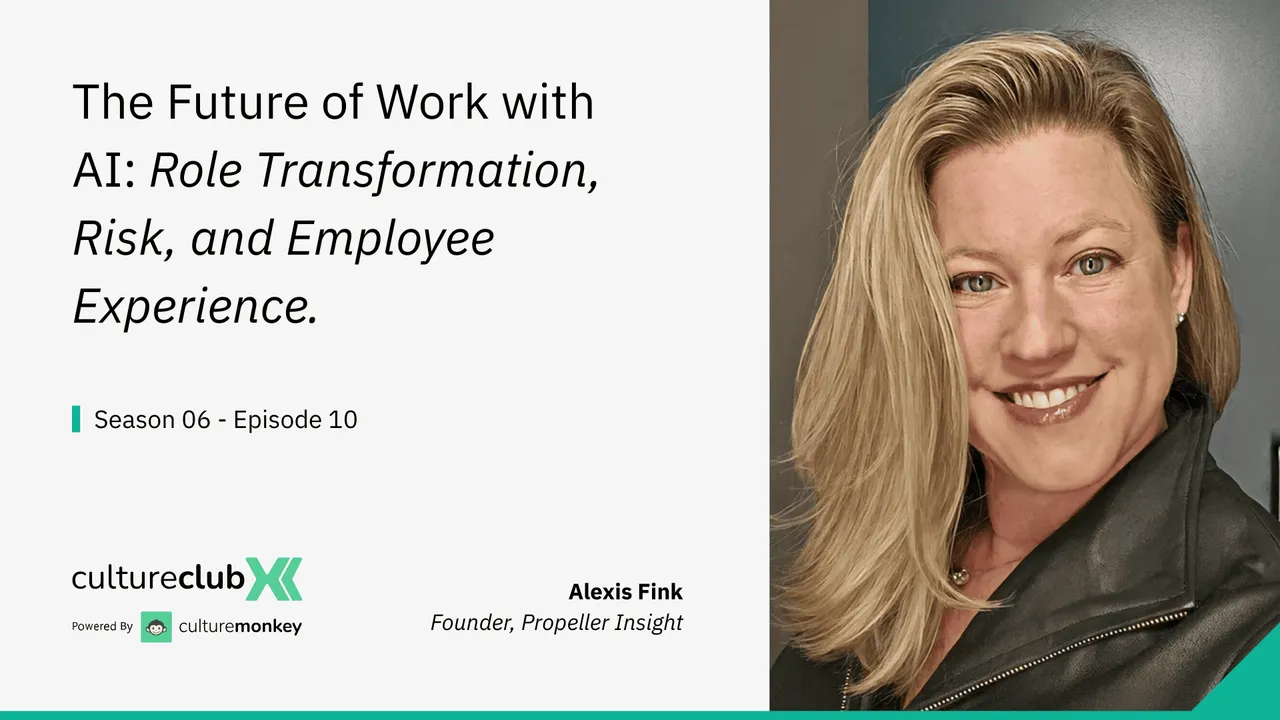 S06 E10Alexis FinkWill AI replace jobs or augment them? | Alexis Fink, former VP People Analytics at MetaFewer than half of successful AI implementations cut headcount, says Alexis Fink, former VP of People Analytics at Meta, citing Stanford research. Repetitive, well-described, lower-risk work such as scheduling is the most exposed; elsewhere AI lifts the quality of work. The hard part is process redesign, change management and employee anxiety, not the technology.
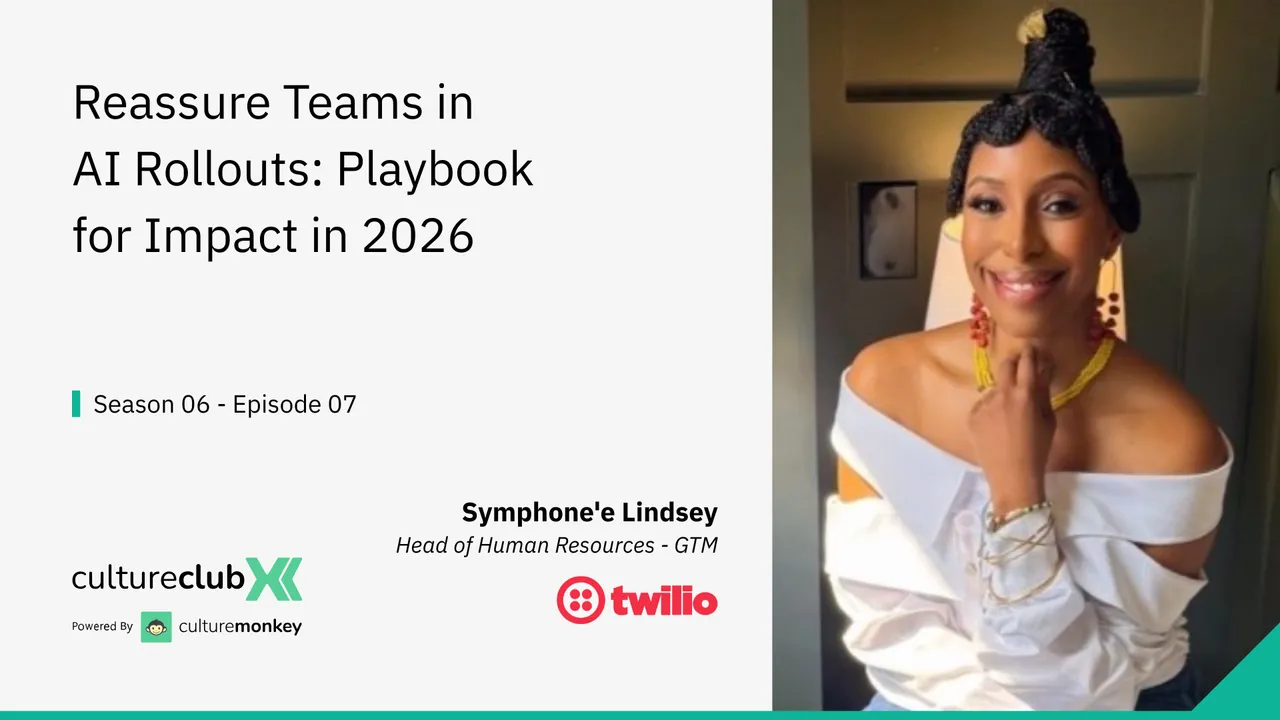 S06 E07Symphone'e LindseyHow do you reassure employees during an AI rollout? | Symphone'e Lindsey, TwilioIntroduce AI rather than impose it, says Symphone'e Lindsey, Head of HR, GTM at Twilio. Explain the why, show how it helps people grow, and build integration pauses into the rollout: set periods with no new tools where teams can experiment and ask questions. Then use pulse surveys to spot trust and adoption risks early.
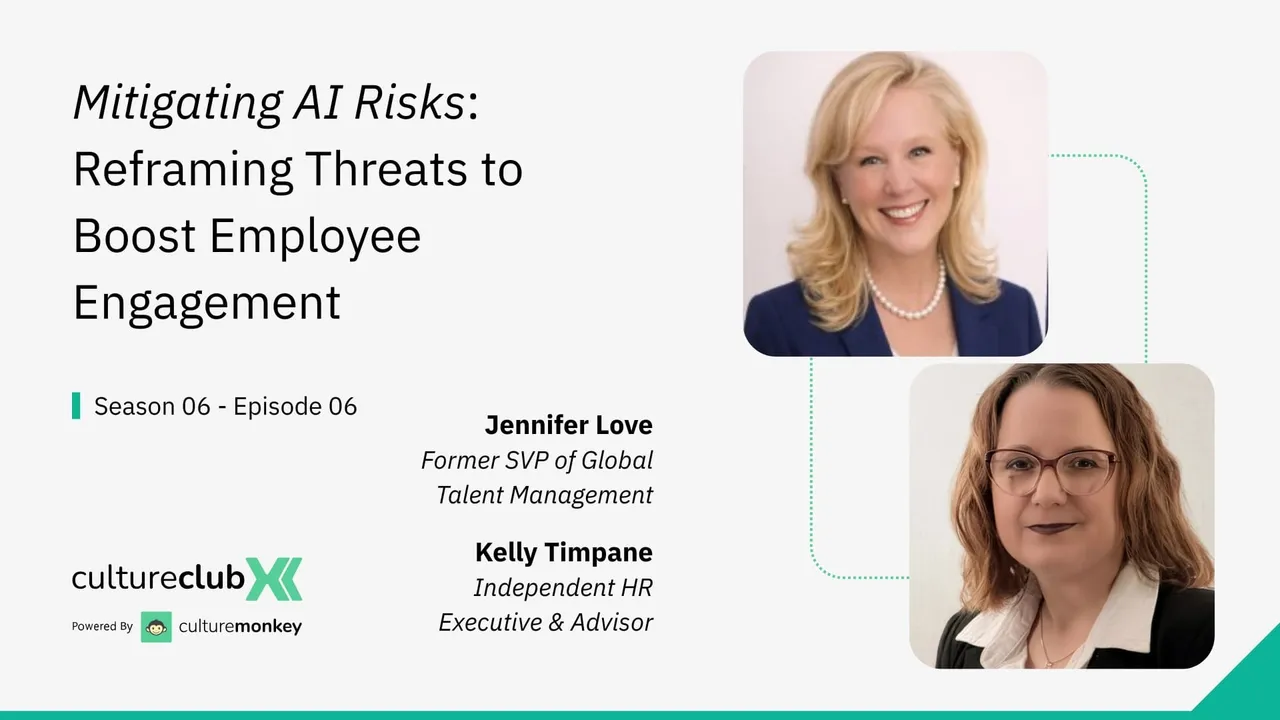 S06 E06Jennifer LoveHow do you adopt AI without losing employee trust? | Jennifer Love and Kelly TimpaneSet an enterprise AI strategy and governance before rolling out tools, say Jennifer Love and Kelly Timpane. Adoption fails when departments launch tools ahead of a company-wide plan, and trust erodes. Frame AI as a colleague that gives people time back, equip managers with talking points and training, and use pulse surveys to track anxiety.
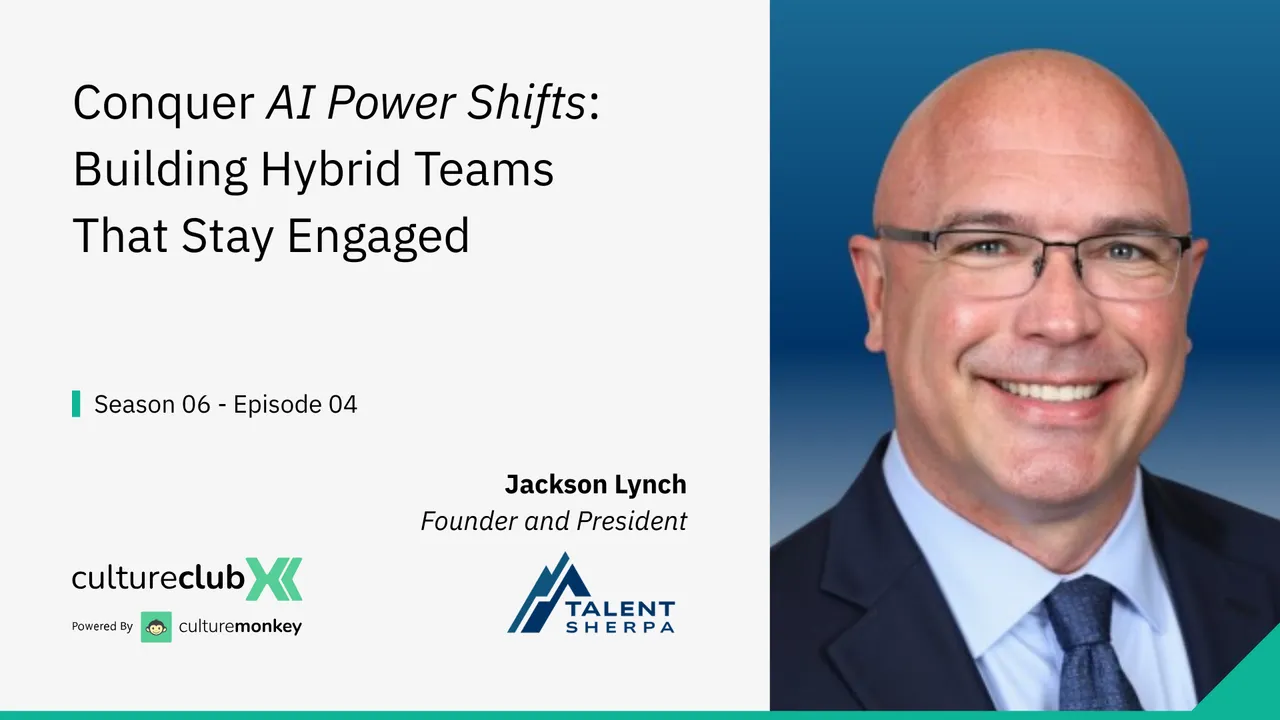 S06 E04Jackson LynchHow CHROs Should Redesign Roles as AI Reshapes WorkTasks get automated, roles get redesigned, conflating the two is where organizations lose people. Jackson Lynch, four-time CHRO and founder of Talent Sherpa, delivers a systems-design playbook for CHROs to redesign work alongside AI while protecting culture, engagement, and development pathways.
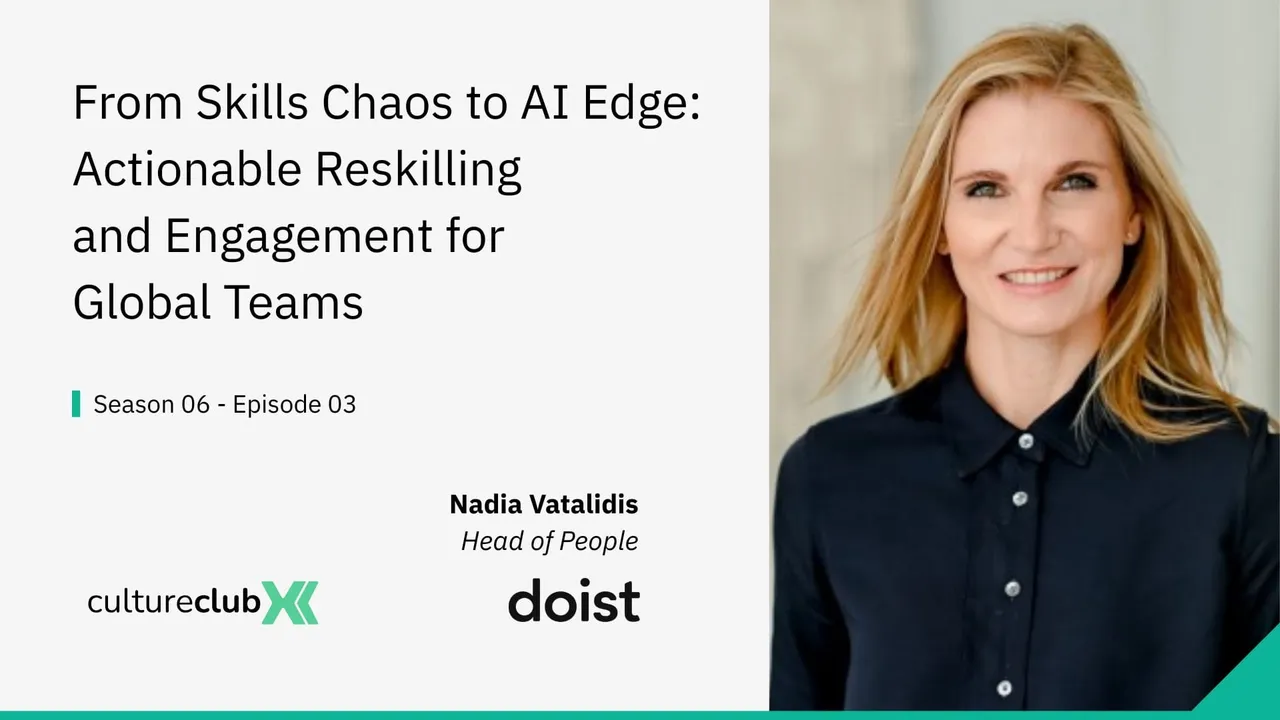 S06 E03Nadia VatalidisWhy AI Reskilling Fails Without Psychological SafetyMost AI reskilling programs don’t fail because of tools. They fail because organizations skip psychological safety and behavior change. In this CultureClub X episode, Nadia Vatalidis explains why mindset, leadership behavior, and feedback loops determine whether learning actually sticks.
Put AI in HR into practice
See how CultureMonkey helps people leaders act on this, or explore the deep dive on AI in HR.
Never miss an episode
Every new episode, plus the takeaways that matter, posted on the CultureMonkey LinkedIn page as soon as they drop.
Free on LinkedIn. Unfollow anytime.